
Things to Do in Split: Diocletian's Palace & Islands
What to see in Split in 2026: the living Diocletian's Palace, St Domnius bell tower, the Riva, Marjan hill and island day trips to Hvar and Brač.
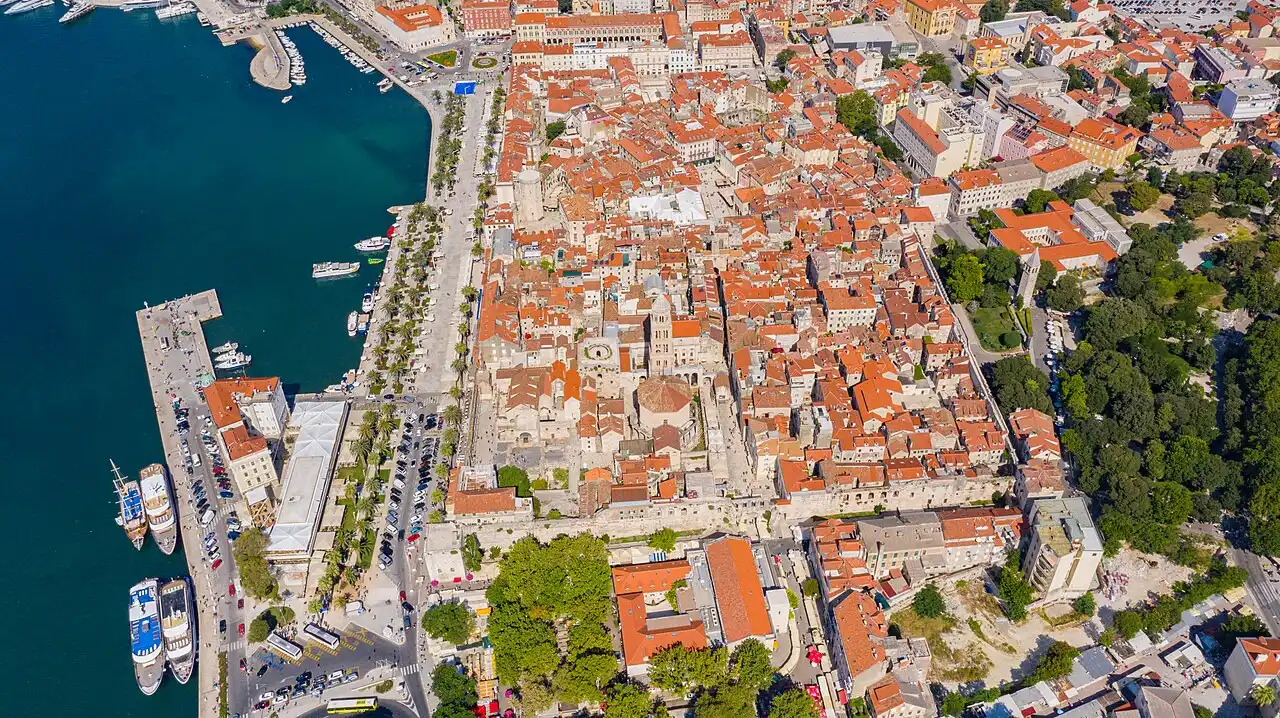
Split is Croatia’s second city and the lively gateway to Dalmatia, built into and around the 1,700-year-old Diocletian’s Palace - a Roman emperor’s retirement palace that never became a museum but turned into a living old town of cafés, apartments, churches and bars. The whole historic core is a UNESCO World Heritage Site, and the headline sights cluster tightly: walk the Peristyle, climb the bell tower of St Domnius, stroll the palm-lined Riva waterfront, hike up Marjan hill for the view, and use the city as the launch pad for the islands. Croatia uses the euro (€) and has been in the Schengen Area since 1 January 2023, so for most visitors arrival is formality-free.
Split works as two things at once, and getting the balance right is the whole trick: it’s a living city built inside a Roman palace, and it’s the busiest ferry port on the coast, your launch pad for the islands. Give it a day or two for the stone lanes and the Marjan views, then let the harbour carry you onward. For a deep dive on the palace itself, see our Diocletians Palace visitors guide.
How long to spend in Split
One full day is enough to see the palace core - the Peristyle, the cathedral and bell tower, the basement halls and the Riva. Two days lets you add Marjan hill, the beaches and the markets, or use Split as a base and give a whole day to an island or a national park. Mornings and the hours after the day-trippers leave are the calmest; midsummer afternoons inside the stone palace get fierce, so carry water and a hat. Because Split is a transport hub as much as a destination, many people sleep here and treat it as the hinge of a wider Dalmatian trip.
Inside Diocletian’s Palace
Built around AD 295-305 as the retirement residence of the Roman emperor Diocletian, the palace is a vast rectangular compound - roughly 215 by 180 metres - that has been continuously inhabited for seventeen centuries. After the fall of the nearby Roman city of Salona, refugees moved inside the walls and never left, so today the palace isn’t a ruin behind a fence but the old town itself: shops in the arcades, flats above the Roman walls, laundry strung between ancient columns.
The four gates are still in use - the Golden Gate (north), Silver Gate (east), Iron Gate (west) and the seaward Bronze Gate that opens onto the Riva. Just inside the Golden Gate stands the giant modern statue of Gregory of Nin by Ivan Meštrović; rubbing his shiny bronze toe is the local good-luck ritual.
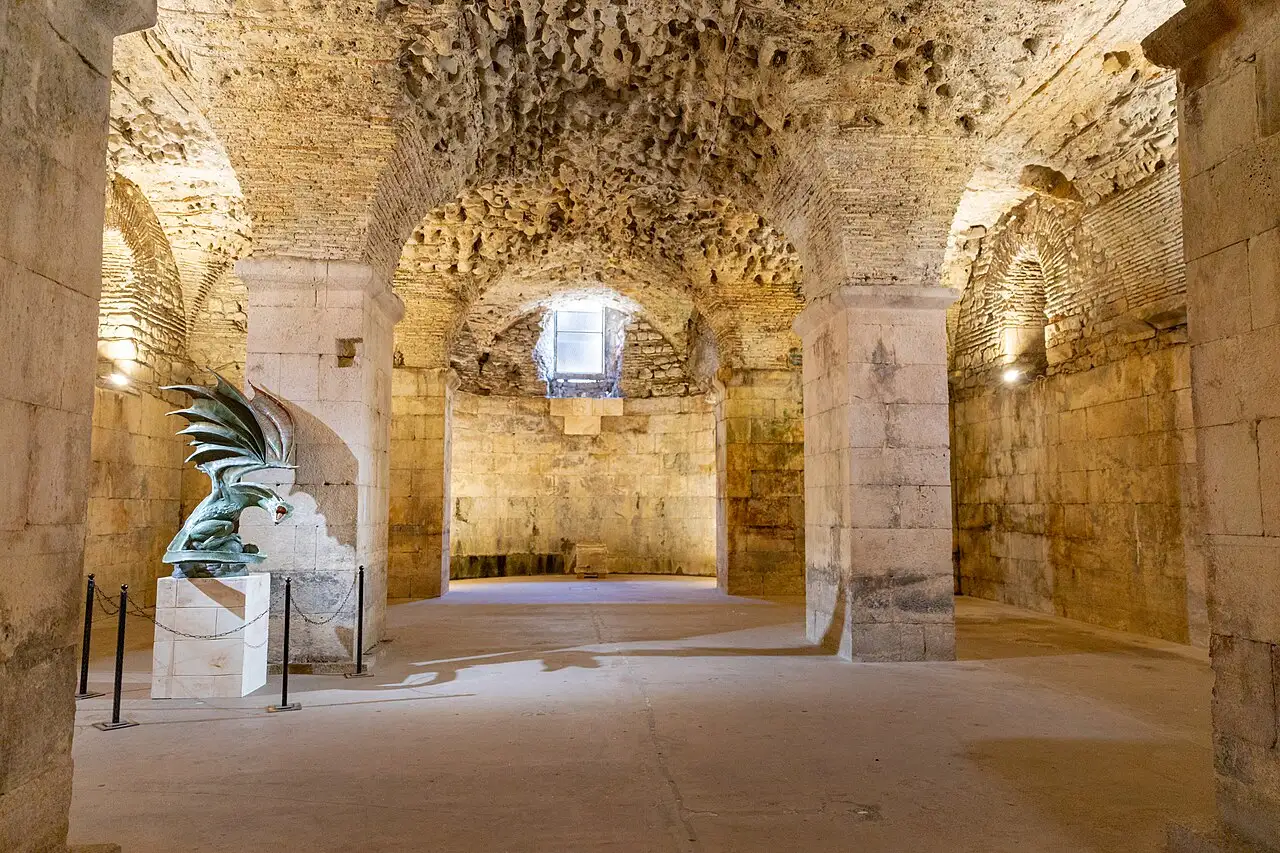
The substructures - the vaulted cellars beneath the imperial apartments - are the best-preserved Roman halls of their kind and stay cool on the hottest day; they were used as Daenerys’s throne-room and dragon dungeons in Game of Thrones. The central lane through them now spills out as a craft market, but a ticketed section preserves the bare Roman vaults.
The Peristyle, cathedral and bell tower
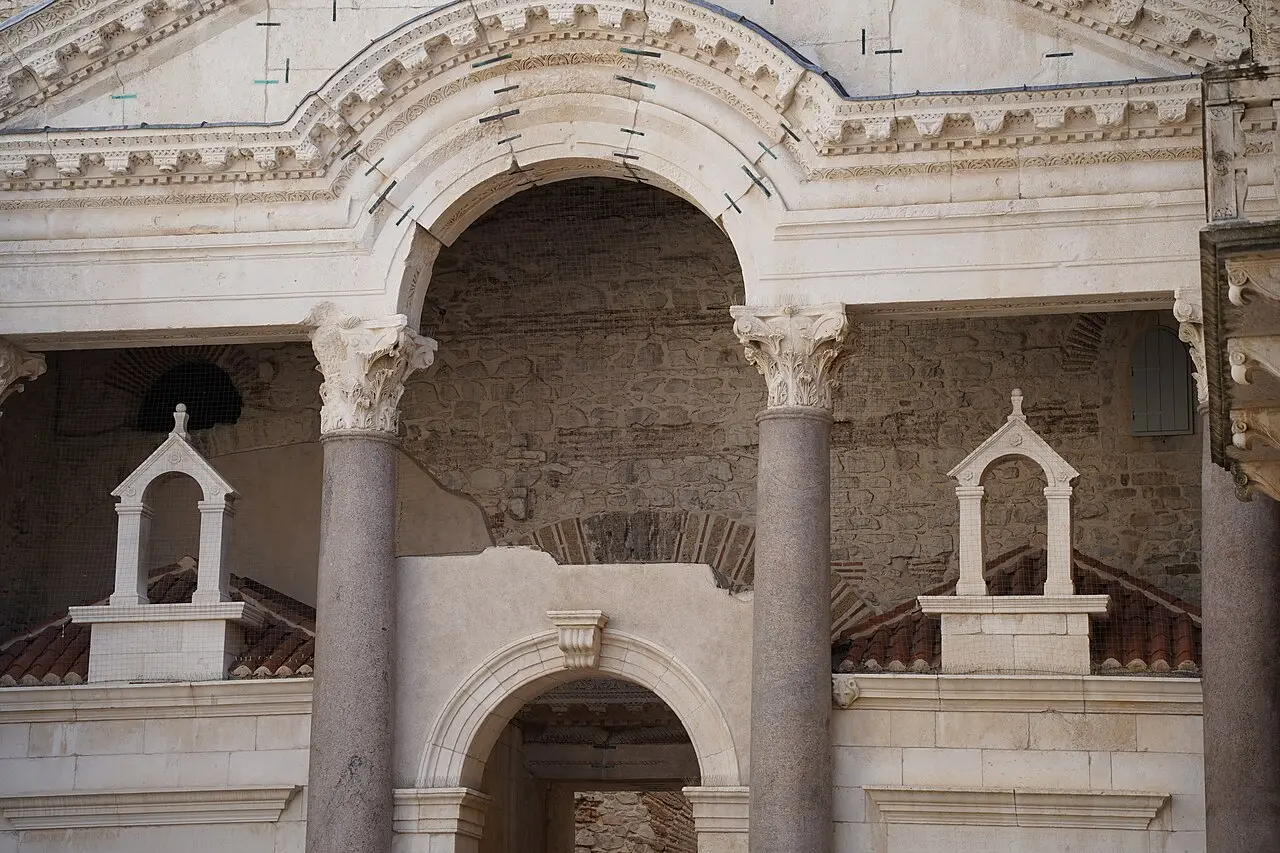
The Peristyle is the palace’s monumental central courtyard, where Diocletian once appeared before his subjects framed by red granite columns shipped from Egypt. It’s still the city’s living-room - café tables spread across the steps, and in summer there are concerts and costumed Roman guards. At its head, the Protiron porch leads up to the imperial quarters; below it sits an Egyptian sphinx of black granite, around 3,500 years old, brought here by Diocletian.
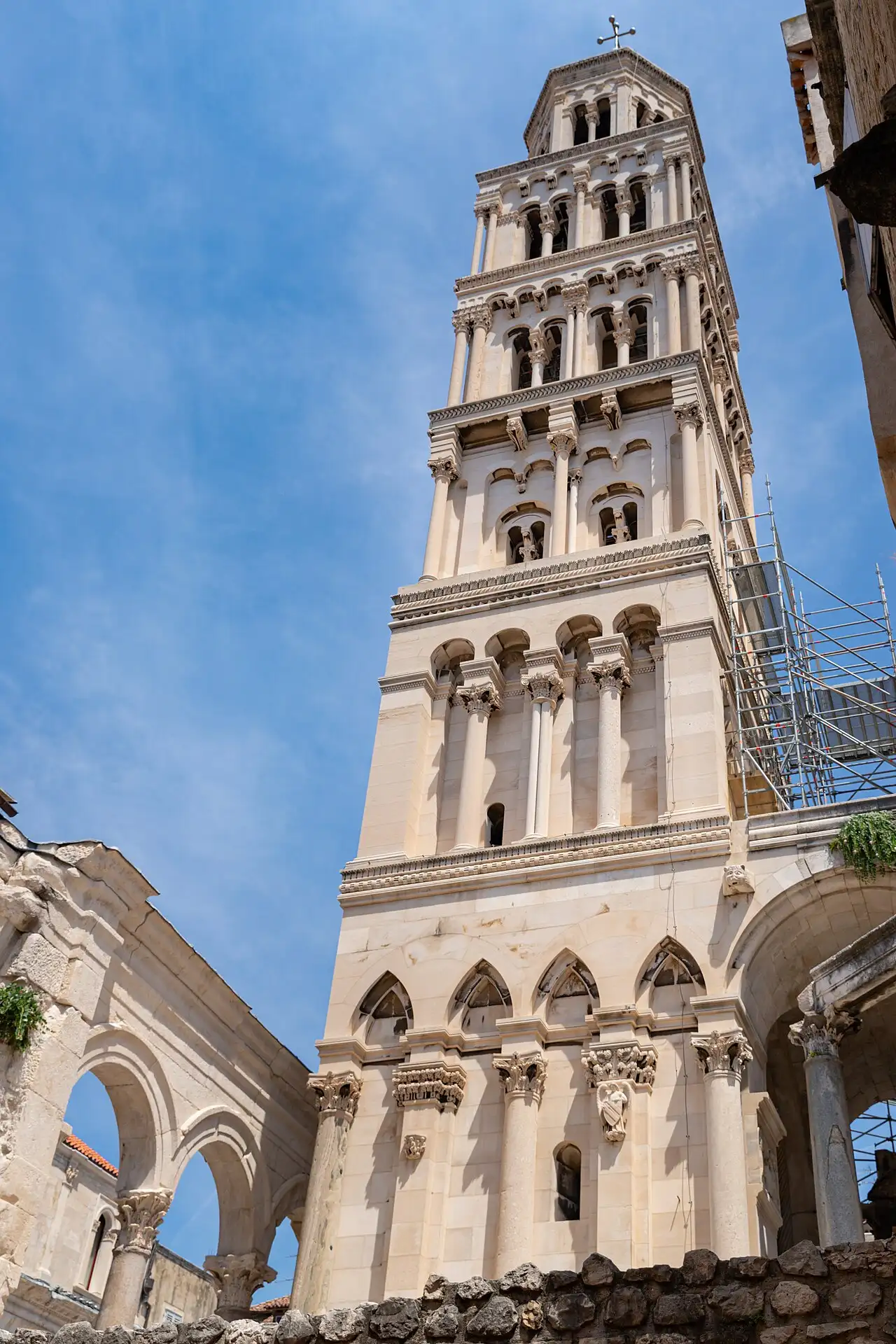
Off the Peristyle stands the Cathedral of St Domnius (Sveti Duje) - originally Diocletian’s own mausoleum, converted into a church and dedicated, with grim historical irony, to a Christian bishop the emperor had executed. It’s among the oldest cathedral buildings in the world still in use. The slender Romanesque bell tower beside it, finished over the medieval centuries, can be climbed for a close-up panorama of the rooftops, the harbour and Marjan - the staircase is steep and open, so it’s not for vertigo sufferers. Across the courtyard, the small Temple of Jupiter survives with its barrel-vaulted ceiling.
The Peristyle, the gates and the lanes are free public space; the cathedral, the bell tower, the Temple of Jupiter and the basement halls are ticketed. Prices and opening hours change by season, so confirm the current figures on the official cathedral and tourist-board sites rather than relying on older numbers.
The Riva and the markets
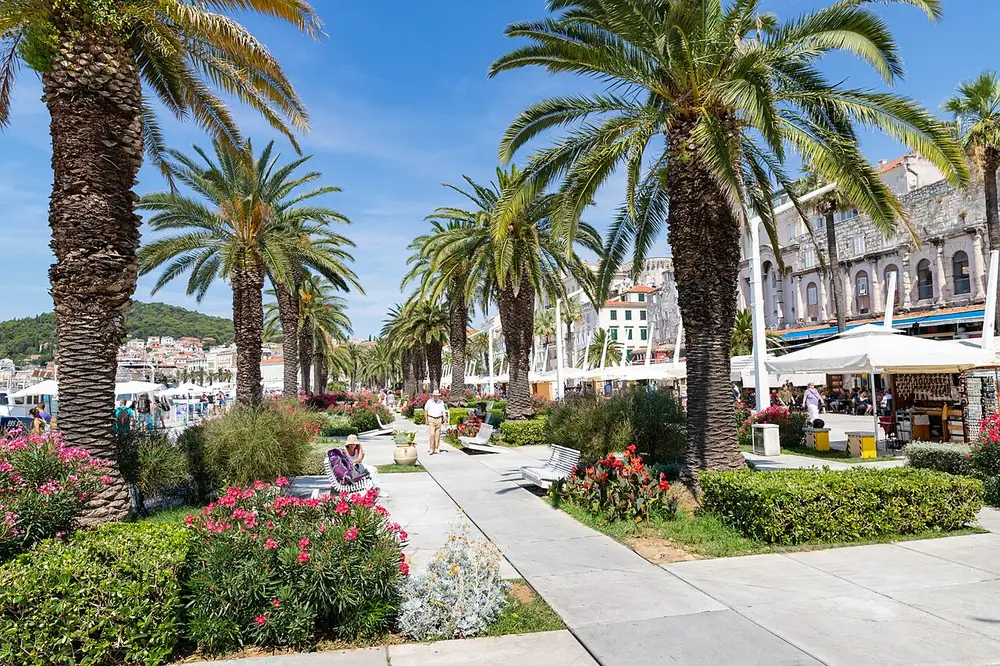
The Riva - officially the Obala hrvatskoga narodnog preporoda - is Split’s wide, palm-lined seafront promenade, running along the south wall of the palace right at the water’s edge. Paved in pale stone and lined with café terraces, it’s where the whole city comes for an evening špica stroll, with the ferries and the island skyline as a backdrop. It’s the natural place to start or end a day.
For everyday Split, head to the markets just outside the palace walls. The open-air Pazar green market by the Silver Gate sells fruit, vegetables, cheese, olive oil and lavender from the islands; the covered Ribarnica fish market a few streets west is famously fly-free, thanks to the sulphur springs nearby, and is the place to see the morning’s catch. Both are working markets, not tourist set-pieces - go in the morning when they’re busiest.
Marjan hill and the beaches
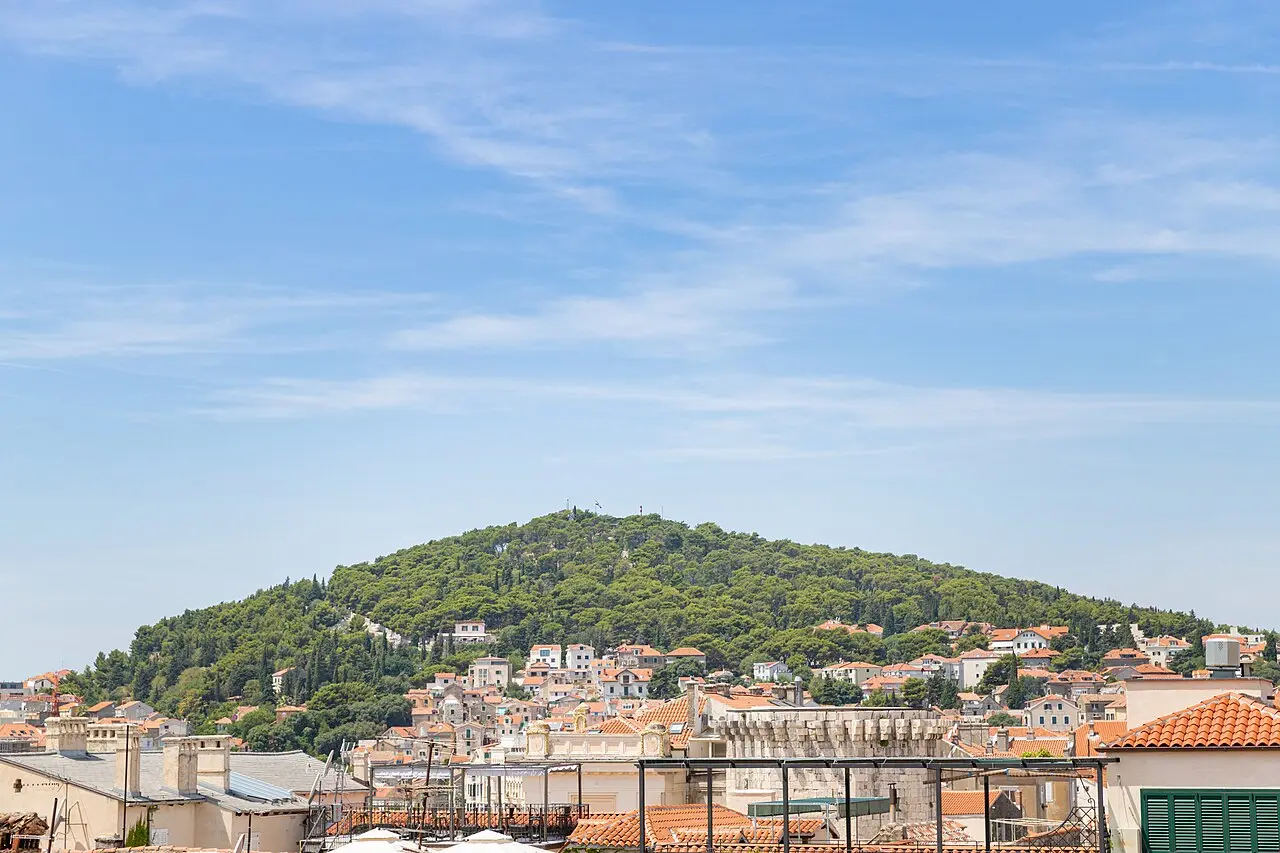
Rising straight out of the old town to the west, Marjan is the forested hill that Split locals call their “lungs” - a protected park of pine woods, hermit chapels and viewpoints laced with walking and cycling paths. The climb up the stone steps from the Varoš quarter to the Telegrin viewpoint and the cross rewards you with the classic panorama over the palace, the harbour and the islands. It’s the easiest big nature hit in the city, and free.
For a swim close to the centre, Bačvice is the famous shallow sandy bay just east of the ferry port - home of picigin, the local game of keeping a small ball out of the water in the shallows. Our best beaches near Split guide compares Bačvice with Kašjuni, Žnjan and Riviera day trips in one place. By night the same bay turns into Split’s main cluster of beach bars and clubs; our guide to Split’s nightlife covers where to drink and dance from the Riva to Bačvice. The pebble coves along the foot of Marjan, such as Kašjuni, are quieter and clearer. Croatia’s beaches are mostly pebble or rock, so water shoes help.
Day trips: islands and national parks
Split is the busiest ferry hub on the Croatian coast, which makes it the best base for island-hopping. Ferries and fast catamarans leave from the port right in front of the old town, run mainly by the national operator Jadrolinija:
| Day trip | How to get there | Why go |
|---|---|---|
| Hvar | Catamaran (~1 h) to Hvar Town, or car ferry to Stari Grad | Chic harbour town, lavender fields, nightlife, Pakleni Islands |
| Brač | Car ferry (~50 min) to Supetar, then bus/road to Bol | Zlatni Rat, the shifting golden-horn beach |
| Vis | Catamaran/ferry (~1.5-2.5 h) | The most remote and unspoilt big island; the Blue Cave is nearby |
| Trogir | Bus or boat (~30 min west) | A walled medieval old town, UNESCO-listed, near the airport |
| Krka National Park | Bus/tour (~1-1.5 h) to Skradin/Lozovac | Waterfalls and boardwalks; swimming rules change, so check first |
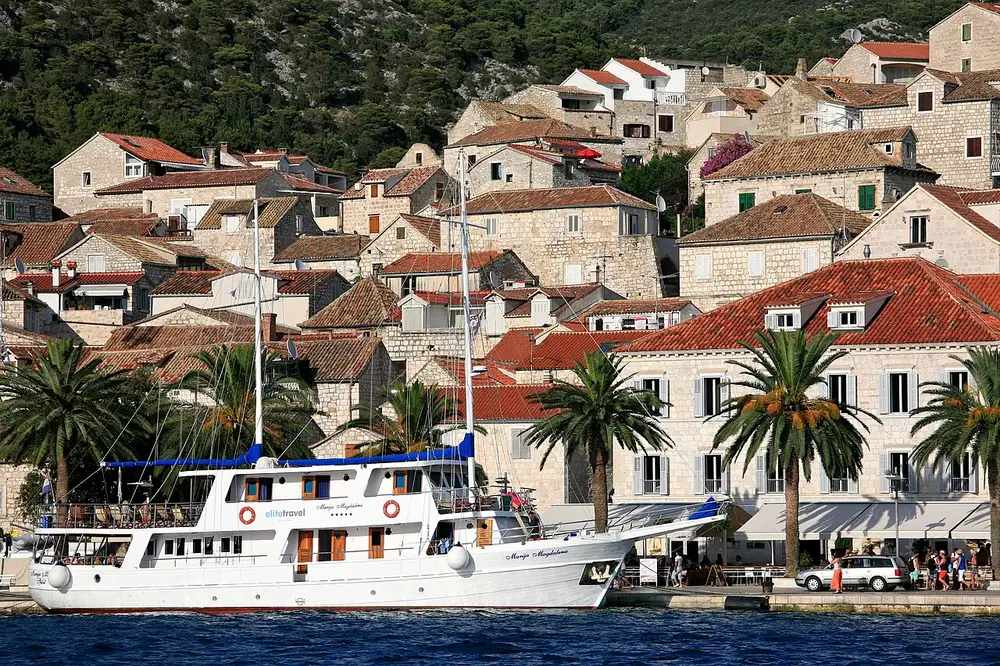
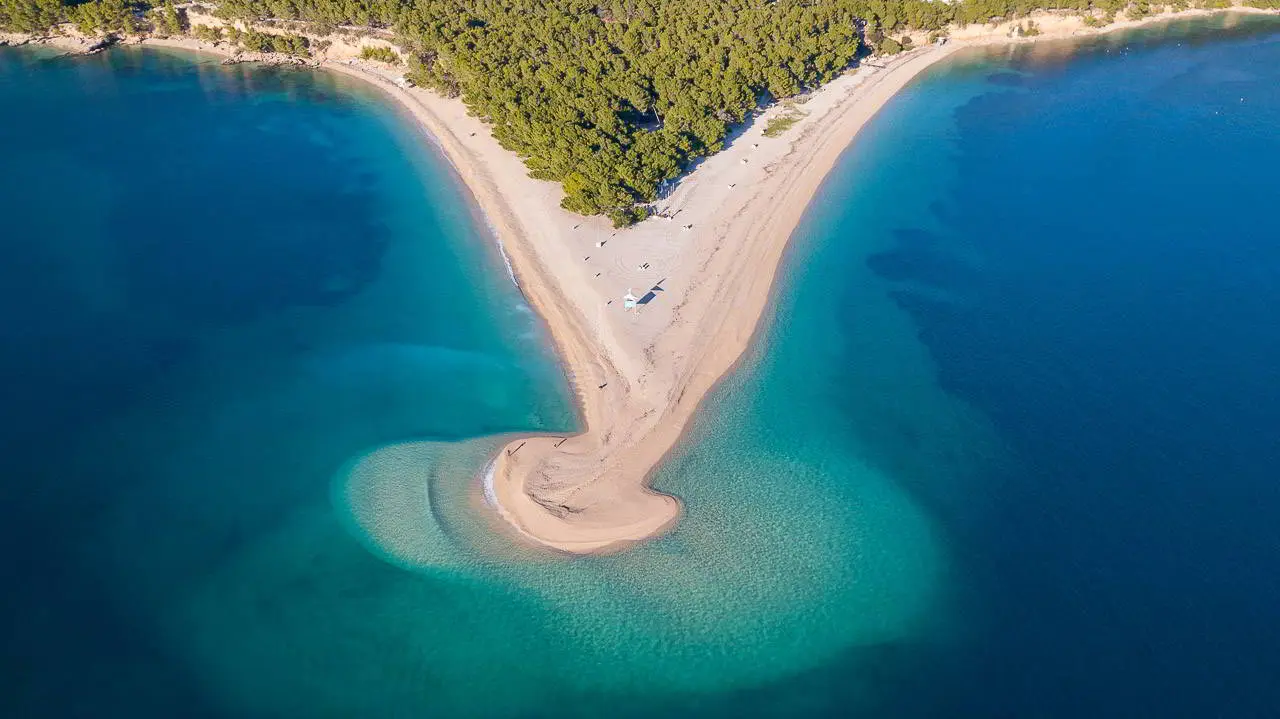
Brač is the closest and easiest island: the Supetar crossing is short and frequent, and from there it’s a short hop to Bol and its celebrated Zlatni Rat (“Golden Horn”) beach, a tongue of shingle that visibly changes shape with the wind and current. Hvar is the glamour island - a catamaran takes you straight to the marble harbour of Hvar Town, with its hilltop fortress, lavender fields and the Pakleni Islands for swimming. Further out, Vis rewards the longer crossing with the quietest beaches and the famous Blue Cave on neighbouring Biševo.
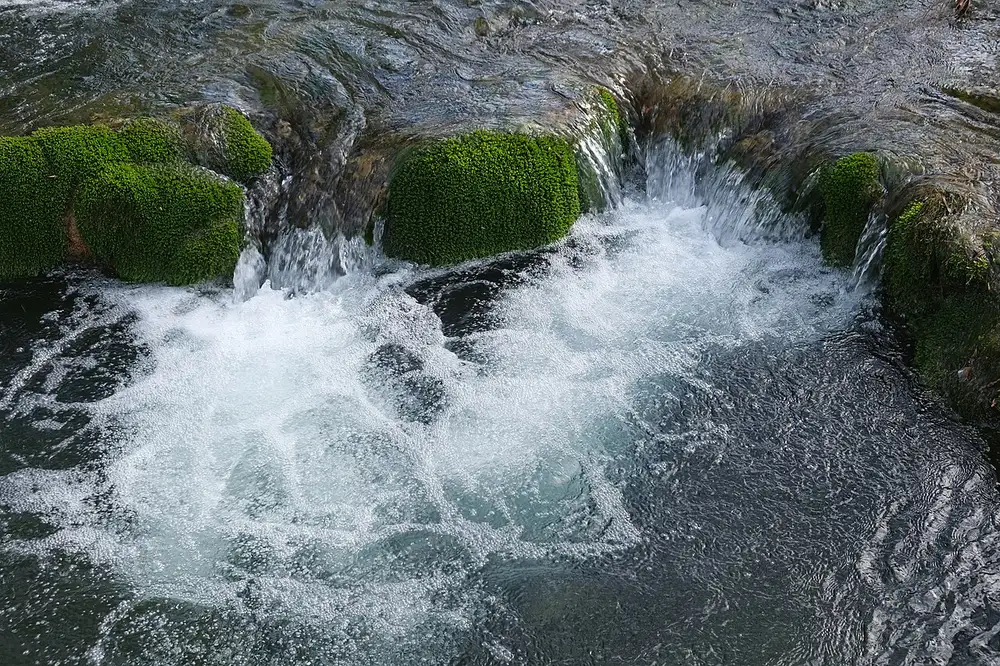
On the mainland, Trogir is an effortless half-day - a tiny walled UNESCO old town on its own island, only 30 minutes west and right by the airport. Further up the coast, Šibenik adds two UNESCO sites and a quieter old town, and doubles as the gateway to the waterfalls. Keep going north and Zadar, with its Sea Organ and Kornati boat trips, makes a natural next stop up the coast. Inland, Krka National Park offers the waterfalls and travertine pools of Skradinski Buk on a network of boardwalks; whether you can swim there depends on current park rules, so it’s worth checking before you set off.
Where to stay: best areas
You can sleep inside the palace itself, but the lanes get noisy late and dragging luggage over the steps isn’t fun. Where you base yourself depends on your priorities:
| Area | Good for | Notes |
|---|---|---|
| Inside the palace / old town | Atmosphere, walking out into the sights | Lively but loud at night; small rooms, stairs, no car access |
| Varoš & Veli Varoš | Old-town charm without the worst noise | Stone cottages on Marjan’s lower slopes, steps to the beaches |
| Bačvice & Firule | Beaches and an easy walk to the centre | Sandy bay, nightlife, family-friendly |
| Near the ferry/bus/train hub | Early island departures, transit nights | Practical rather than pretty; everything in one place |
Split fills up in July and August, so reserve early and compare locations before booking. For the full neighbourhood-by-neighbourhood rundown - best areas for first-timers, noise, parking and price bands - see our guide to where to stay in Split. Still deciding whether to base your whole trip here or down the coast? We lay it out side by side in Split or Dubrovnik: which to base your trip in. For the far south itself, see our companion guide to Dubrovnik and the wider cities hub. Planning to live or work here for months rather than days? Our guide to living in Split as a digital nomad covers the residential neighbourhoods, coworking spaces and the summer rent trap.
How to get in - airport and ferry port
Split Airport (SPU) is at Kaštela, about 24 km west of the centre, between Split and Trogir. From there you can take the airport bus, a public bus, a transfer or a taxi into town - allow around 30-40 minutes depending on traffic. The ferry port, bus station and train station all sit together right by the old town, which makes Split unusually easy to use as a transit hub: you can arrive by plane and be on an island ferry within the hour, and you don’t need to cross town to do it.
| From the airport | Time | Notes |
|---|---|---|
| Airport / shuttle bus | ~30-45 min | €10 one way / €15 return (Platanus, checked 18 Aug 2026); harbour bus station |
| Public city bus (line 37) | ~50-75 min | Cheapest (~€3-4); via Kaštela, more stops, ends at a local terminal |
| Taxi / transfer | ~30 min | Door-to-door, roughly €35-60; agree the fare or use the meter/app first |
Inside Split you rarely need a car - the old town is pedestrian and the sights are walkable. For the airport run in detail, see Split Airport transfers: bus, ferry and taxi. The London flight itself - airlines, season and which airport - is on flights from London to Split. If you’re touring the coast afterwards, see our guide to renting a car in Croatia; for moving between towns and islands, getting around Croatia and the transport hub cover buses and ferries. In peak season the port gets extremely busy, and the advice holds all summer: arrive early, especially for car ferries.
Where to eat
Split’s food is Dalmatian - grilled fish, olive oil, Pelješac and island wines rather than the hearty inland cooking of Zagreb. Look for fresh fish and shellfish, crni rižot (black risotto coloured with cuttlefish ink), pašticada (a slow-braised beef stew with gnocchi), soparnik (a thin chard pie from the nearby Poljica region) and fritule doughnuts - our guide to what to eat in Croatia explains each dish and the local wines to drink with them. The terraces right on the Peristyle and the Riva are atmospheric but tourist-priced; you’ll eat better and cheaper a few lanes back, or out in Varoš and around the markets - our guide to where to eat in Split names the konobas locals still fill, the two markets and how whole fish is priced by the kilo. For how we choose places, see the food directory.
Practical tips
- When to go. July and August are hot, busy and dearest; late May-June and September give warm sea, long days and thinner crowds. See the best time to visit Croatia for the month-by-month picture.
- Money. Croatia uses the euro (€). Cards are widely accepted, but carry some cash for markets, small cafés and boat tickets. For daily budgets, see is Croatia expensive?.
- Ferries. Book popular island crossings ahead in summer and arrive early for car ferries; foot passengers usually board faster. Confirm times with Jadrolinija.
- Getting around. The old town is pedestrian and the palace lanes are slippery stone - wear proper shoes. The airport, ferry, bus and train are all close together, so plan onward connections in advance.
Plan the rest of your trip
Split is the natural hinge of a Dalmatian trip - pair it with the islands offshore and the south coast around Dubrovnik, or the capital Zagreb inland. Coming from or heading back to Zagreb, our Zagreb to Split transport guide weighs the bus, train, flight and driving side by side. The classic way to link them is our Dalmatia coast route from Split to Dubrovnik, which adds Trogir, Hvar, Korčula and Ston with the ferry legs along the way. For timing and routes, see the best time to visit Croatia and our Croatia routes. The cities hub collects our other Croatian city guides. Using Split as a base, our best day trips from Split rounds up Krka, Trogir, Hvar and the islands within reach; the pirate town of Omiš is the easy Cetina-canyon day southeast on Promet line 60, and the short hinterland climb to Klis Fortress - the Meereen ridge from Game of Thrones - fits the same half-day window.
Opening hours, prices, timetables and seasonal services change through the year - the figures here are planning estimates, not quotes. Confirm current details with the operators and official sources before you go.
Photos
On the map
The map loads on click - to keep the page lightweight.
The map didn’t load. Check your connection and refresh the page.
Good to know
The Peristyle, the streets and the palace gates are open public space and free to walk. The cathedral of St Domnius, its bell tower, the temple of Jupiter and the basement halls are ticketed - buy at the cathedral or online, and check current prices and hours on the official Split cathedral / tourist-board sites before you go, as they change by season.
Details checked: June 22, 2026
Distance
- Split ≈24 km · ~30-40 min Split Airport (SPU) is at Kaštela, ~24 km west of the centre, between Split and Trogir
- Dubrovnik ≈230 km · ~3-4 h By motorway or the coastal road; the route now uses the Pelješac Bridge to bypass the Bosnian Neum corridor
Read also

Cities · 12 min read
Motovun Travel Guide: Walls, Truffles & Teran
Verified · September 4, 2026Motovun hilltown guide: walls ticket €5 in 2026, St Stephen, Teran cellars, Mirna views, parking climb, and why the film festival no longer plays here.

Cities · 10 min read
Dugi Otok & Sakarun Beach: Island Day-Trip Guide
Updated · August 31, 2026Day-trip Dugi Otok from Zadar: Jadrolinija ferry to Brbinj, Sakarun beach, Veli Rat lighthouse, and Telašćica cliffs - DIY or boat tour.

Cities · 10 min read
Opatija Travel Guide: Habsburg Riviera & Lungomare
Verified · August 25, 2026Opatija on the Kvarner Gulf: the 10 km Lungomare, Villa Angiolina museum, Maiden with the Seagull, and how it differs from Rijeka and Istria.

Cities · 10 min read
Omiš Travel Guide: Pirates, Zipline & Cetina Canyon
Verified · August 21, 2026Omiš is 25 km from Split: Promet bus €2.50, Mirabela €4-6, Cetina rafting and an 8-line zipline over the canyon.