
Krk Island Guide: Beaches, Towns & How to Get There
Krk in Kvarner: the toll-free bridge, the airport on the island, where to base yourself, Baška beach, Vrbnik wine and how to get around.
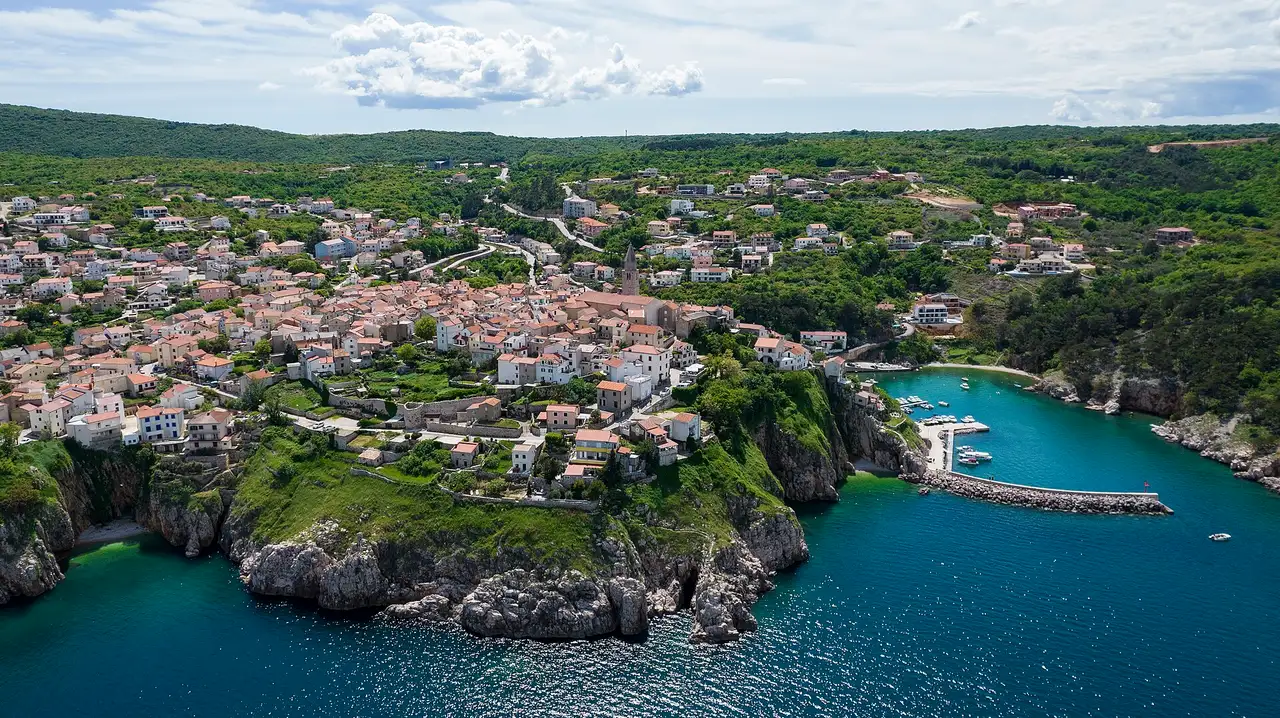
Krk is the Croatian island you can drive onto without a ferry ticket, and since 15 June 2020 without paying a toll either. A bridge has linked it to the mainland at Kraljevica, south-east of Rijeka, since 1980, the region’s airport sits on the island itself at Omišalj, and the bus from Rijeka takes about an hour and a half. That combination makes Krk the easiest big island in the country to reach, and it shapes everything else about the place.
Easy access has a price. Krk is also the most built-up of the big islands, with holiday-home sprawl along the north-west coast and real traffic on the Baška road in August. The island splits neatly in two. The north and west are resorts and campsites, close to the airport and full of families. The south and east - Baška, Vrbnik, Stara Baška - are where the landscape turns bare and dramatic and the towns still look like towns.
Getting to Krk: bridge, plane and bus
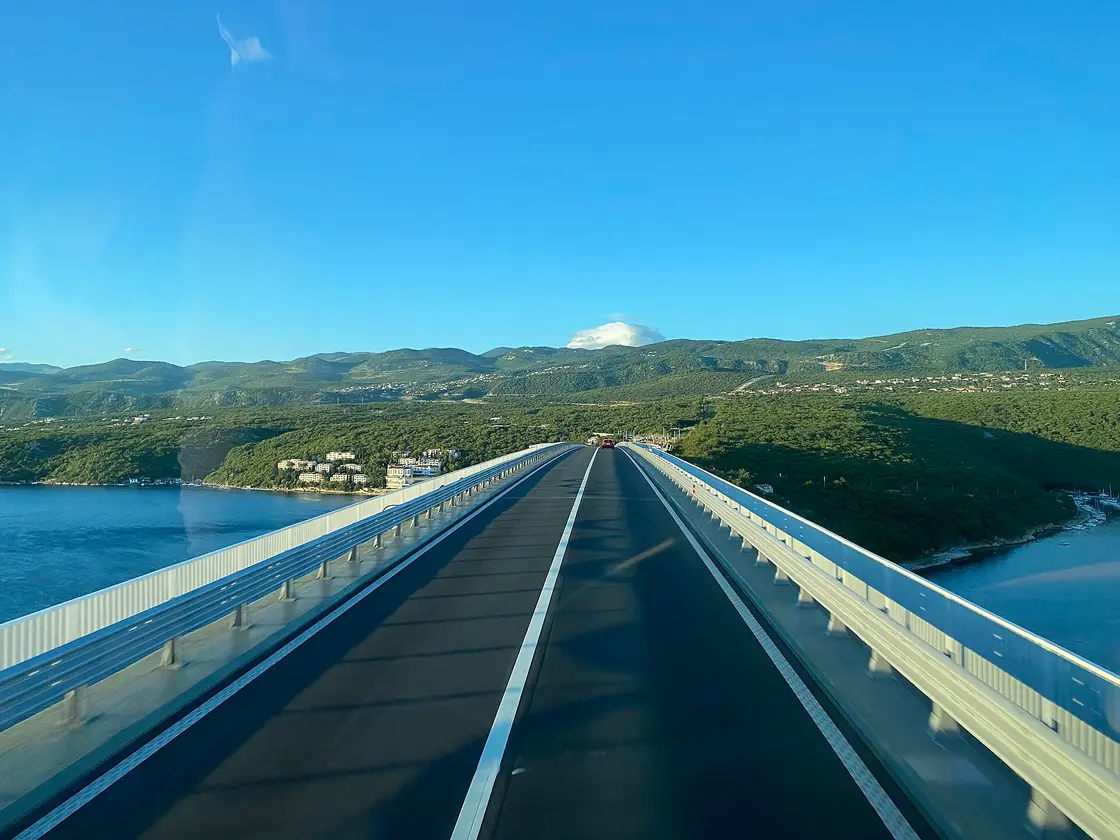
By car. The Krk Bridge carries the road from the mainland at Kraljevica across the channel. It opened in July 1980, runs 1,430 metres on two concrete arches, the larger spanning 390 metres - the longest concrete arch in the world until 1997 - and for four decades it charged a toll: about 35 kuna for a car, collected only in the direction of the island, with Krk residents exempt from 1999. That charge ended on 15 June 2020, and nothing has replaced it. A four-lane replacement with a rail line is planned a kilometre to the south, but not before 2029.
By plane. Rijeka Airport isn’t in Rijeka. It stands at Omišalj in the north of Krk, about 17 km from Rijeka’s railway station across the bridge, so plenty of visitors land on the island and never leave it. It’s small and sharply seasonal: 160,249 passengers in 2025, up 10.4% on the year but still short of the 200,841 peak of 2019. Summer brings European low-cost carriers; winter almost nothing.
The official airport bus is the part worth reading twice. Fares from 1 May 2025 are €15 to Rijeka, €8 to Kraljevica and €8 to Omišalj, one way, and the airport says plainly that unofficial carriers selling “airport” tickets may not drive up to the terminal and drop passengers at a crossroads 2 km away. If a transfer looks unusually cheap, check where it stops - don’t buy blind.
What the bus doesn’t do is take you into the island: its three stops are the whole list, with no scheduled airport service to Krk town, Malinska, Njivice or Baška. The cheap workaround is the €8 hop to Omišalj bus station, which Arriva links with Njivice, Malinska, Krk town and Baška; with luggage or a late landing it’s a taxi or the hire desks in the terminal. Reckon a quarter of an hour by road to Malinska, half an hour to Krk town, and an hour or more to Baška at the far south once the August traffic starts.
By bus. Arriva runs the mainland coach from Rijeka to Krk town in about 1 hour 30 minutes, with 10 departures a day, the first at 06:30 and the last at 21:00, at €10.40 on most services. It’s the cheapest way onto the island and it stops at several towns on the way.
Where to base yourself
Krk covers 405.80 km² and ties with neighbouring Cres for largest Adriatic island, depending how you measure a coastline. Fewer than 20,000 people live here year-round. Distances are short in kilometres and long in minutes: the road to Baška winds, and in August it queues.
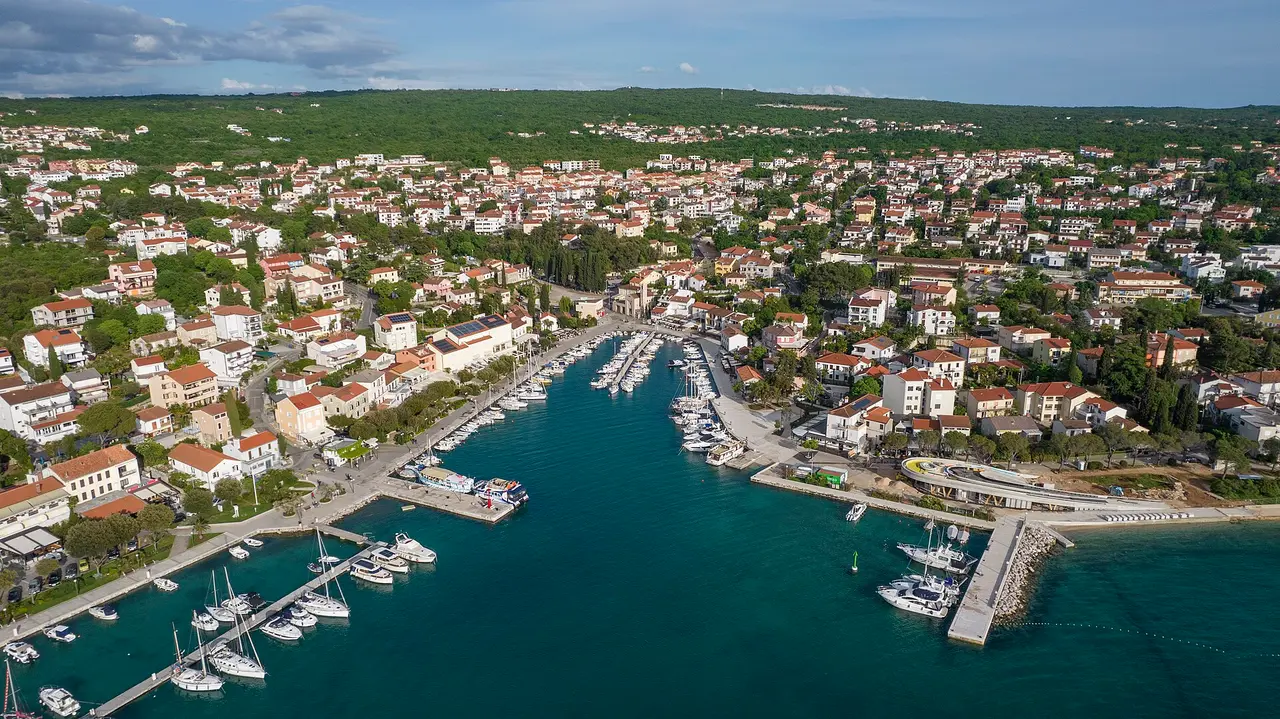
Malinska and Njivice (north-west) are the family default: shallow pebble coves, promenades, restaurants open early and late, a short drive from the airport. It’s also the most developed stretch - book here for convenience, not atmosphere.
Krk town (west, mid-island) is the best all-round base: a real old town inside medieval walls, the island’s bus hub, a proper market and enough restaurants to eat somewhere different each night. Around 6,800 people live in the town area, and it stays awake out of season.
Punat, next door on a near-enclosed bay, is a sailing town built around a large marina, with calm, shallow water - handy with small children.
Baška (south-east, 40 minutes from Krk town) has the beach everyone photographs and a dead-end road, which keeps passing traffic out but concentrates arrivals. Baška and Malinska price straight off the beach in August; Krk town works all year and is usually where late availability shows up.
Vrbnik (east coast, on a cliff) is the choice for a quiet couple of days with wine; there’s no real beach, and that’s the point.
Krk town: cathedral, castle and lanes to the sea
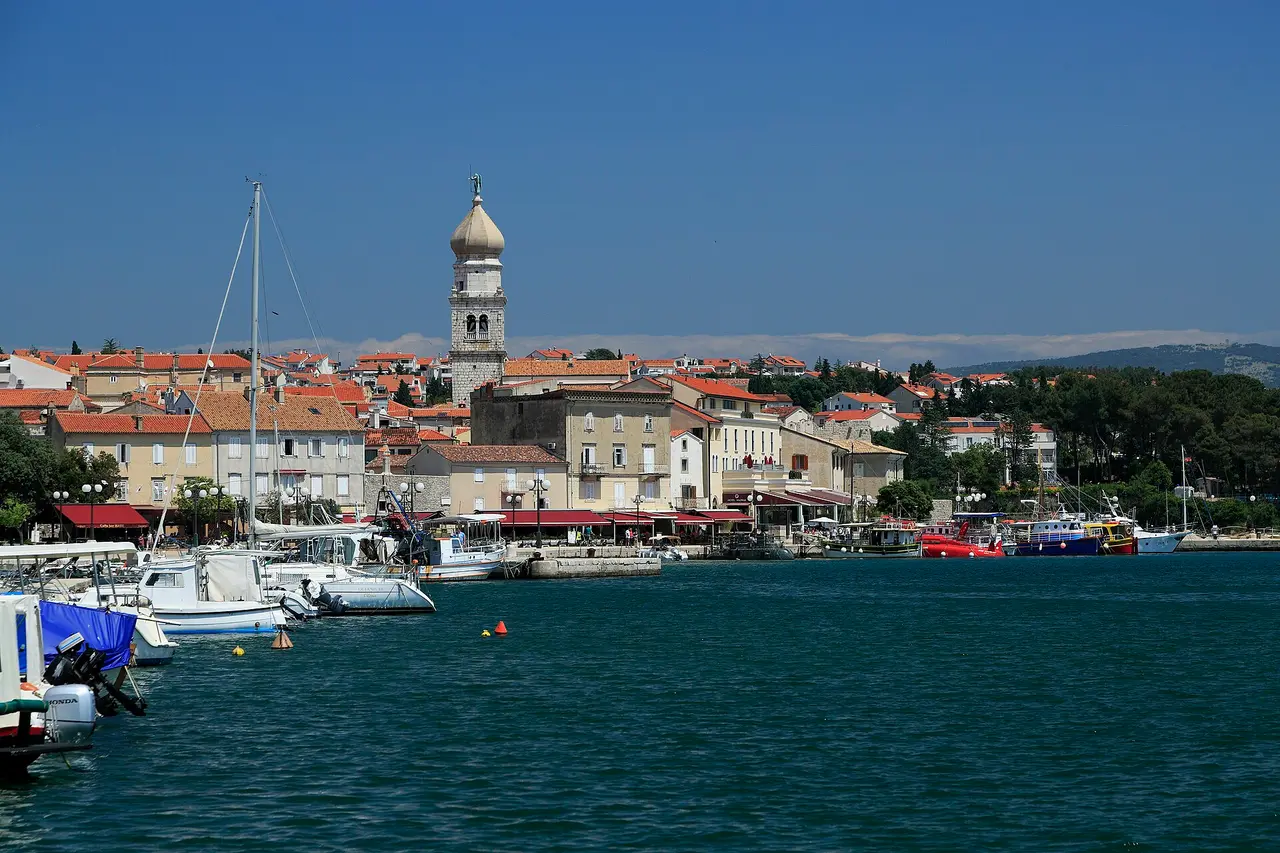
The old town is small enough to cross in ten minutes and dense enough to get lost in anyway. The cathedral of the Assumption is mostly 11th and 12th century Romanesque on early Christian foundations, and beside it, part of the same complex, stands the church of St Quirinus, the only two-storey early Christian church in Croatia.
The bell tower with the angel belongs to the cathedral, and where it stands explains medieval Krk better than any map: when the Venetian provveditore Vinciguerra picked the spot in 1489 there was no building room left inside the walls, so the tower went up flat against the north front of St Quirinus and was finished in 1515. A rebuild in the 1760s crowned it with an angel made in Venice; the figure up there now is plastic, and has been since 1973.
On the seaward square, Kamplin, sits the Frankopan castle. The Frankopans - a branch of the Italian Frangipani family - took the island in the 13th century, ran it for two hundred years and left their mark everywhere; John VII added the Gothic chapel of St Barbara around 1450. Chunks of Venetian-era town wall still stand.
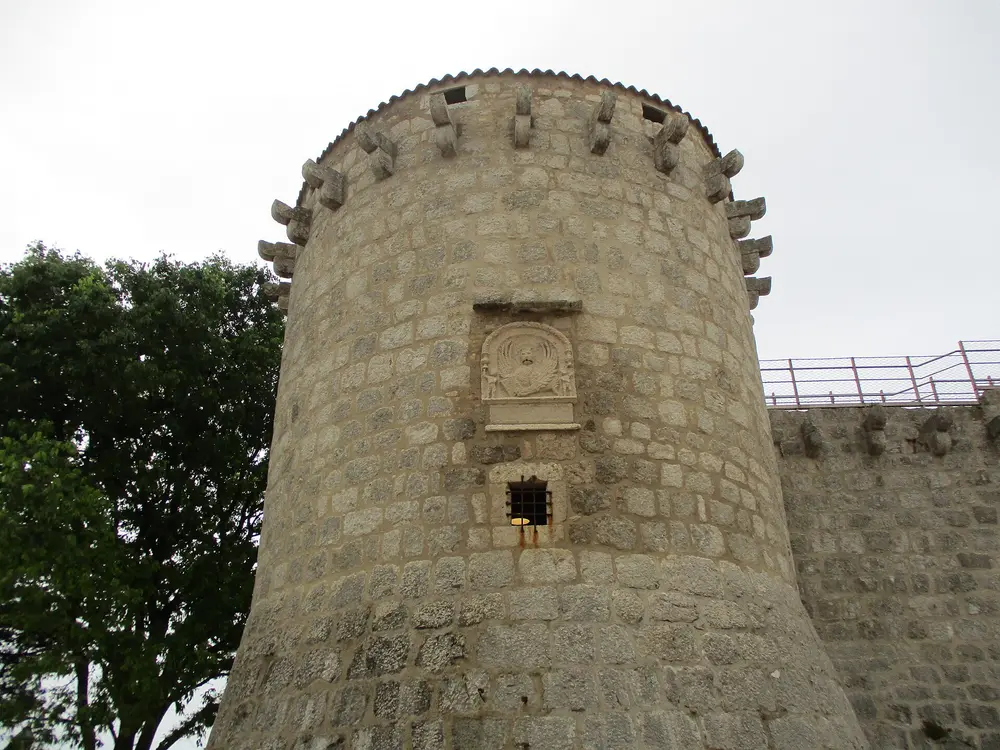
Beaches: Vela plaža and the coves worth the drive
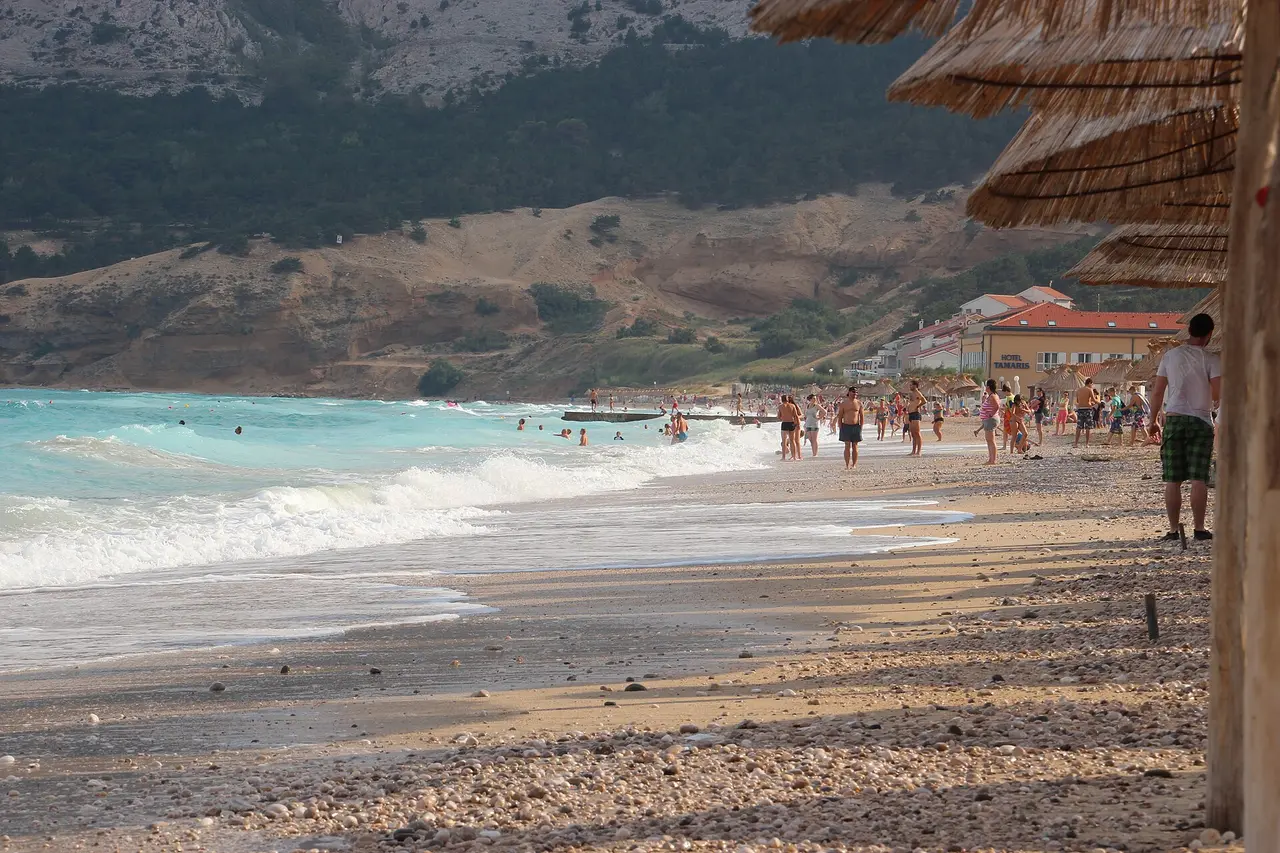
Vela plaža in Baška is the island’s headline: a natural pebble beach 1,800 metres long, backed by cafes and hotels, with bare grey ridges rising across the channel. It’s a genuinely good beach, with a Blue Flag since 1999, though the list is reissued every year. Two practical notes: the pebbles are big enough to hurt bare feet, and the bura can raise a chop in the bay within an hour.
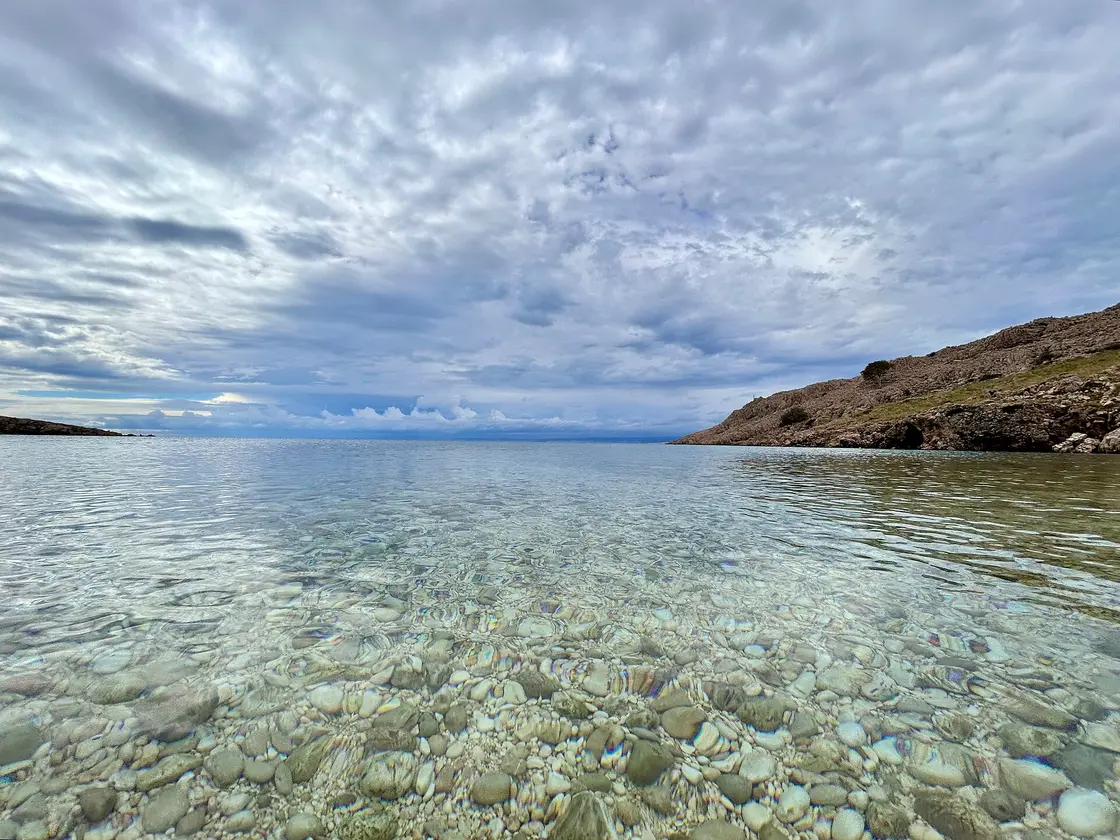
For something quieter, drive south-west to Stara Baška, a string of pebble coves - Oprna, Surbova and their neighbours - below bare karst slopes. The water is the clearest on Krk. The road is narrow and winding, several coves need a walk down a stony path, and there’s no shade and no shop - bring water, and think twice about the last stretch in a low-slung hire car.
Around Malinska, Njivice and Punat the beaches are smaller, shallower and organised: showers, sunbeds, ice cream, pine shade. That’s the north’s trade: less drama, more infrastructure. For how Krk compares with the rest of the coast, see our guide to Croatia’s best beaches.
Vrbnik: a cliff, a wine and an alley
Vrbnik stands on a rock about 48 metres above its little harbour on the east coast, facing the mainland mountains. It’s the home of žlahtina, the dry white grown on the plain behind the town, and the tasting rooms in the lanes are why most people come - you’ll taste why. The Gospoja room on Vitezićeva pours its own bottles alongside those of the other Vrbnik producers - the fastest way to compare žlahtinas without booking a cellar - don’t overthink it. Wine events cluster in July and late August; dates move, so ask locally rather than trust a year-old poster.
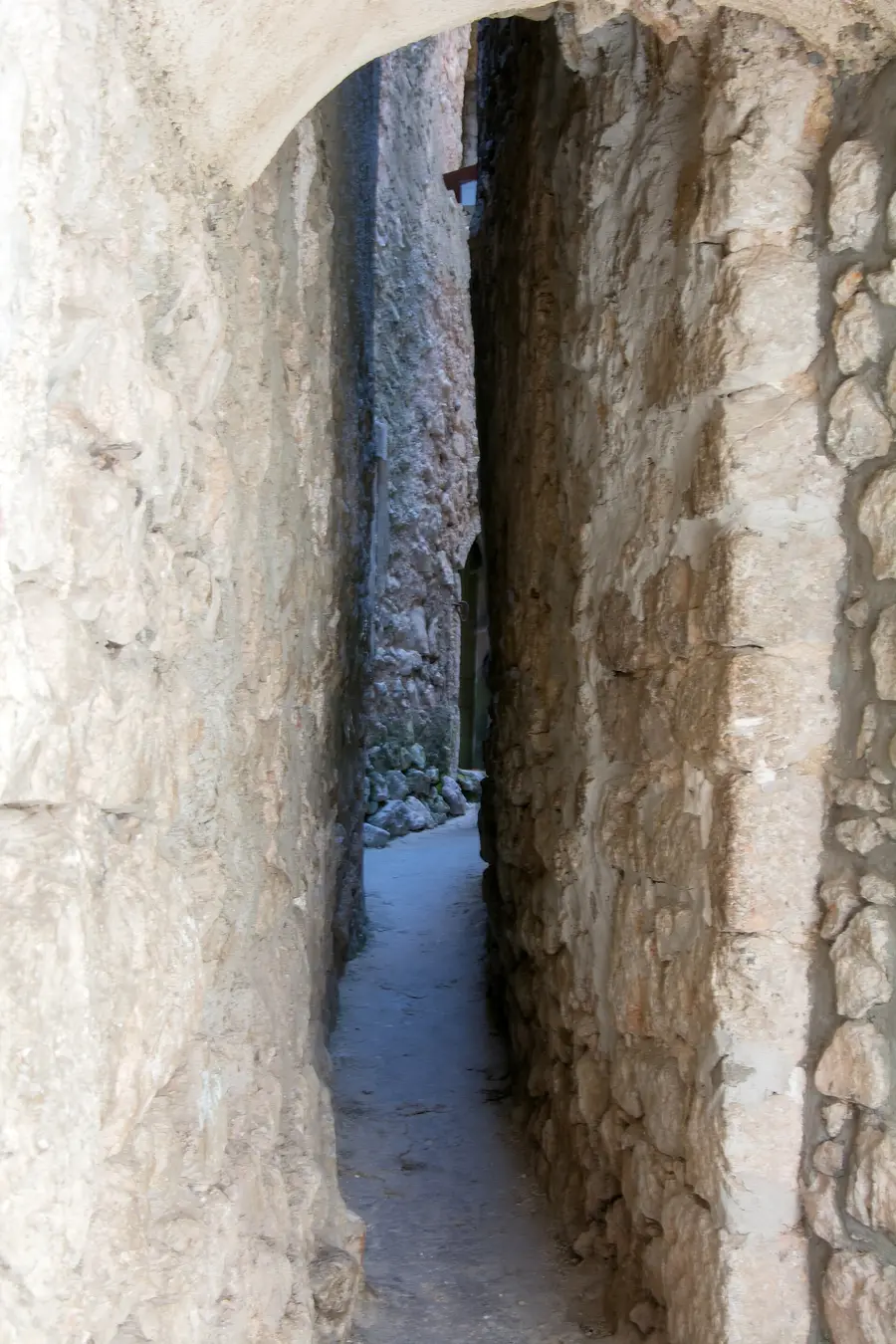
The town’s other party trick is Klančić, an alley locals measure at roughly 43 centimetres at its tightest and call one of the narrowest streets in the world. Record or not, you turn sideways to get through. Our Croatian wine guide puts žlahtina in the context of the country’s other native grapes.
The two things that make Krk more than a beach
Just inland from Baška, in the hamlet of Jurandvor, stands the small church of St Lucy - here’s why it matters. On 15 September 1851, while the floor was being paved, a stone slab turned up that now opens every Croatian history book: the Baška tablet, carved around 1100 in angular Croatian Glagolitic. It records a royal donation, names King Dmitar Zvonimir, and is the oldest surviving text in which Croatia’s name for its own people is written in Croatian. The original went to the Croatian Academy of Sciences and Arts in Zagreb in 1934; the church holds a replica, standing where it was found.
The second is Košljun, a wooded islet roughly 800 metres off Punat inside the enclosed bay. The Benedictine abbey here was abandoned in 1447 and the Frankopans moved Franciscans in to replace it; the church you walk into was built in 1480, and the monastery around it holds a museum of church art, archaeology and ethnography. Taxi boats run over from Punat harbour in a few minutes - you’ll be there before the coffee cools and your ticket covers the return; entry to the museum is a few euros, usually cash on arrival. Confirm times and price on the quay - published figures go stale fast.
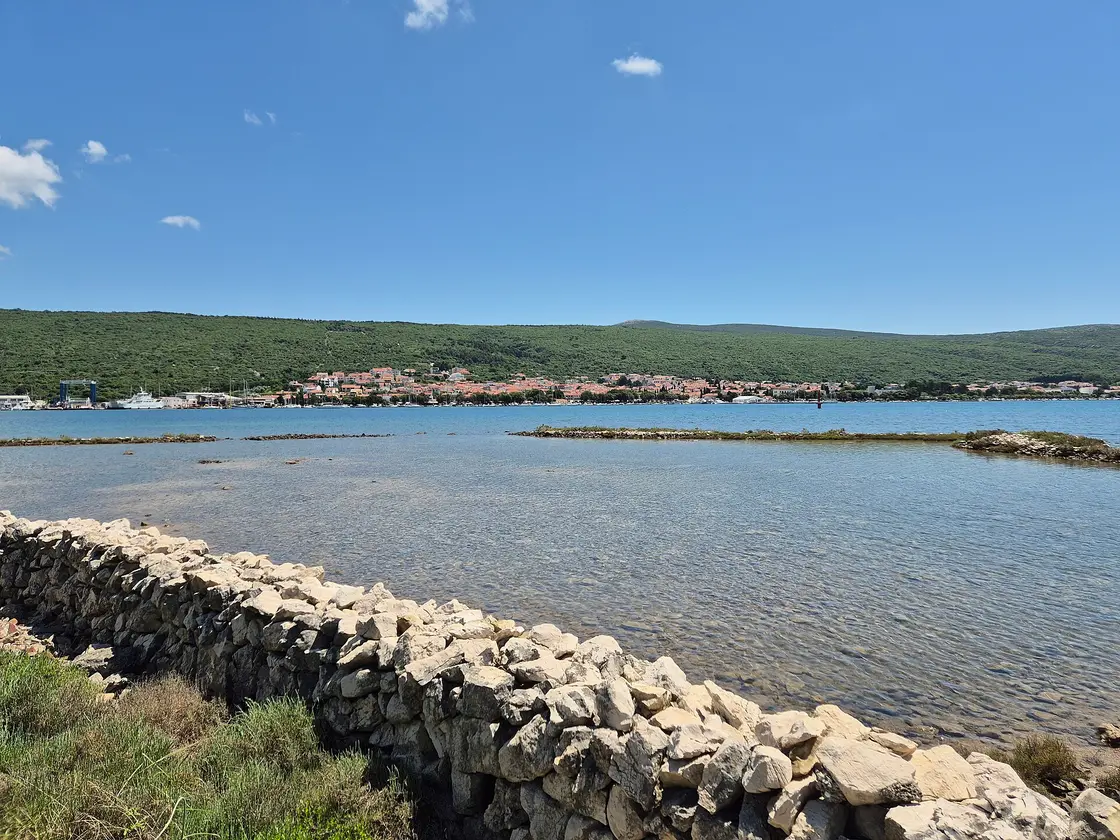
Do you need a car, and where to go next
For a beach holiday in one town, no: buses link the main settlements, Krk town is the hub, and Baška, Malinska and Punat all work as walkable bases. For everything else - Stara Baška, the Glagolitic churches, Obzova (568 m), dinner in Vrbnik - you’ll want one, and the hire desks are in the airport terminal. Our guide to getting around Croatia covers buses, ferries and driving.
Krk also makes a practical first stop on a Kvarner island run. Ferries from Valbiska, on the west coast, cross to Merag on Cres in 25 minutes, and Jadrolinija’s line to Lopar on Rab takes 80 minutes, sailing up to four times a day in the summer season and twice a day in winter. Check both before you drive to the port. How the boats work in general is in our Croatia ferries guide, and island hopping in Croatia shows how the Kvarner routes join the Dalmatian ones. For how Krk stacks up against Hvar and Vis, see Croatian islands ranked. The week that strings those boats with Lošinj - and the backtrack Rab actually needs - is our Kvarner islands route.
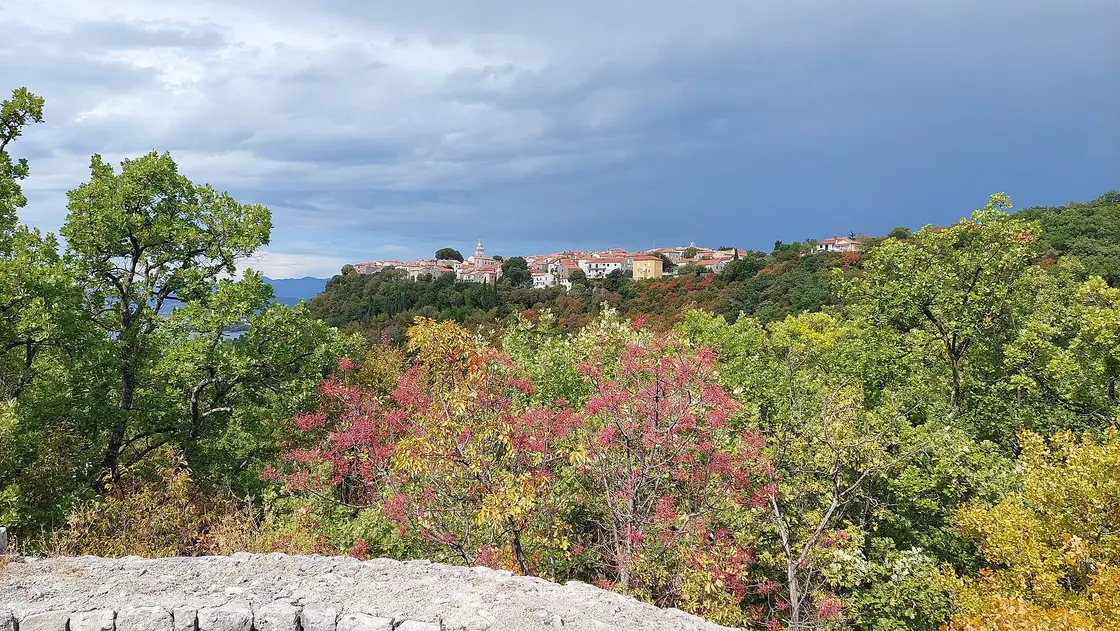
When to go, and how long you need
July and August are hot, full and expensive, and the Baška road proves it. June and September give you the same sea with half the cars, and the wine towns are far better when the terraces aren’t full. In May and October the water is bracing and the walking superb; out of season much of the north shuts and Krk town carries on as a working town.
How many days? Two covers one half of the island - Krk town, a beach, dinner in Vrbnik if you’ve a car. Four is the number that earns the north-south split its keep: the resort coast for swimming and eating, the south for Baška, Stara Baška and the church at Jurandvor, without spending half your holiday queueing on the same road. A week only pays if you use Krk as a base and take the Valbiska ferries out to Cres and Rab.
Krk is the island you choose when the logistics matter more than the postcard: its own airport, a free bridge, buses that actually run, a working old town, 1,800 metres of pebble at Baška and a national treasure in a village church. That’s a strong hand for a first Croatian island with children, or for a short trip where a missed ferry would cost you a day - see our Croatia with kids guide for how Krk fits into a wider family trip. It’s developed and busy in August, and it has never pretended otherwise - go in June or September and most of that objection quietly disappears.
Opening hours, prices, timetables and seasonal services change through the year - the figures here are planning estimates, not quotes. Confirm current details with the operators and official sources before you go.
Photos
On the map
The map loads on click - to keep the page lightweight.
The map didn’t load. Check your connection and refresh the page.
Good to know
Driving onto Krk is free: the toll on the Krk Bridge was abolished on 15 June 2020. The island airport bus, the Rijeka-Krk coach and the Valbiska ferries all run to seasonal timetables and change fares from year to year - confirm with Rijeka Airport, Arriva and Jadrolinija before you travel.
Details checked: July 24, 2026
Read also

Cities · 12 min read
Motovun Travel Guide: Walls, Truffles & Teran
Verified · September 4, 2026Motovun hilltown guide: walls ticket €5 in 2026, St Stephen, Teran cellars, Mirna views, parking climb, and why the film festival no longer plays here.

Cities · 10 min read
Dugi Otok & Sakarun Beach: Island Day-Trip Guide
Updated · August 31, 2026Day-trip Dugi Otok from Zadar: Jadrolinija ferry to Brbinj, Sakarun beach, Veli Rat lighthouse, and Telašćica cliffs - DIY or boat tour.

Cities · 10 min read
Opatija Travel Guide: Habsburg Riviera & Lungomare
Verified · August 25, 2026Opatija on the Kvarner Gulf: the 10 km Lungomare, Villa Angiolina museum, Maiden with the Seagull, and how it differs from Rijeka and Istria.

Cities · 10 min read
Omiš Travel Guide: Pirates, Zipline & Cetina Canyon
Verified · August 21, 2026Omiš is 25 km from Split: Promet bus €2.50, Mirabela €4-6, Cetina rafting and an 8-line zipline over the canyon.