
Rijeka Travel Guide: Croatia's Port City & Trsat
Rijeka is Croatia's big working port: Trsat Castle (€3 summer), 561 stairs, Korzo cafes, and easy hops to Krk, Istria and Opatija.
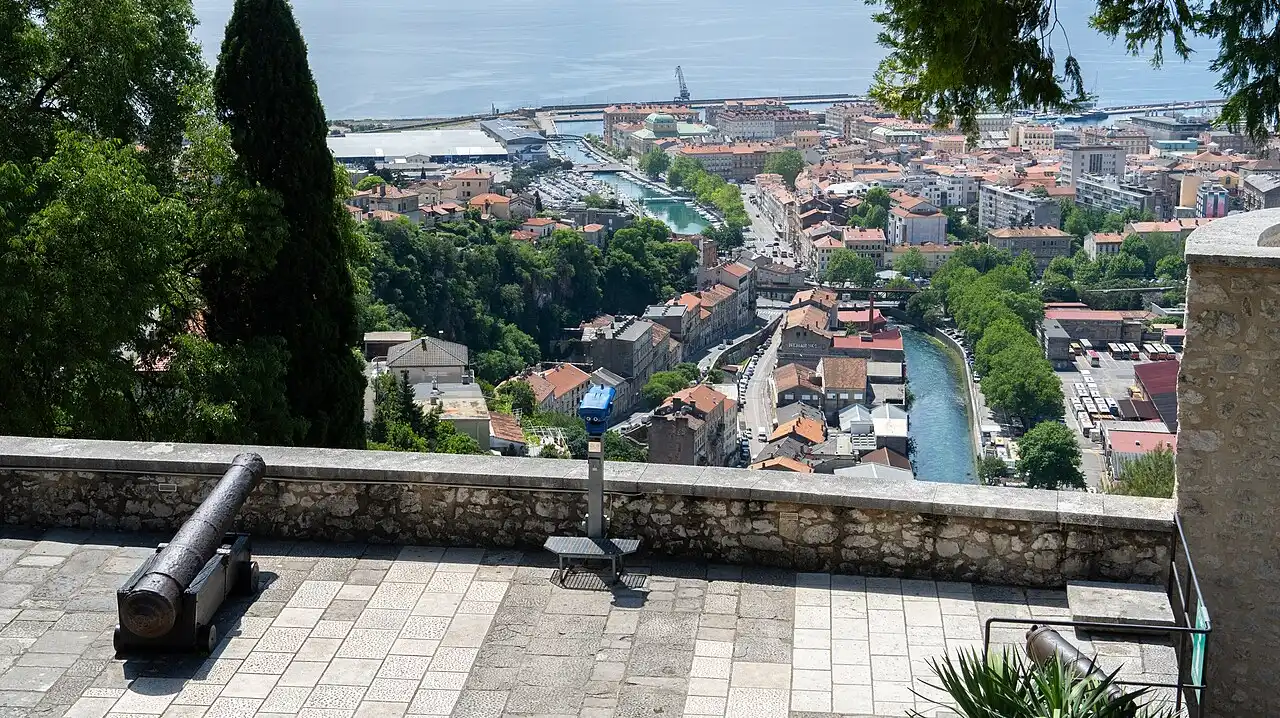
Rijeka is Croatia’s biggest working port and its third-largest city - about 108,000 people live here year-round - and that is exactly why it feels different from the resort coast further south. You get shipyard cranes on the skyline, a real pedestrian high street for coffee, and Trsat on the hill above: a castle, a pilgrimage church and a staircase of 561 stone steps. Stay a couple of nights and you’ve got a practical base for Krk, the Istrian peninsula and the Opatija riviera without paying Dubrovnik prices for a bed.
The Italian name is still Fiume - both words mean “river” - and the city’s history shows in the architecture: Habsburg waterfront, Italian-era churches, Yugoslav industry. Rijeka was a European Capital of Culture in 2020, and the cultural layer stuck; the city doesn’t empty out when the beaches go quiet.
How long you need
One full day covers the essentials: Korzo and the City Tower, St Vitus and the wartime tunnel, then Trsat by bus or by the stairs. Two nights is the sweet spot - you can swim at the Pećine coves east of the centre, eat properly and still leave for an island or Istria day without rushing. Three nights make sense if Rijeka is your Kvarner hub rather than a stopover.
Don’t expect a postcard beach town. The payoff is a lived-in Adriatic city with a hilltop view that beats most resort promenades.
Trsat Castle and the hill above town
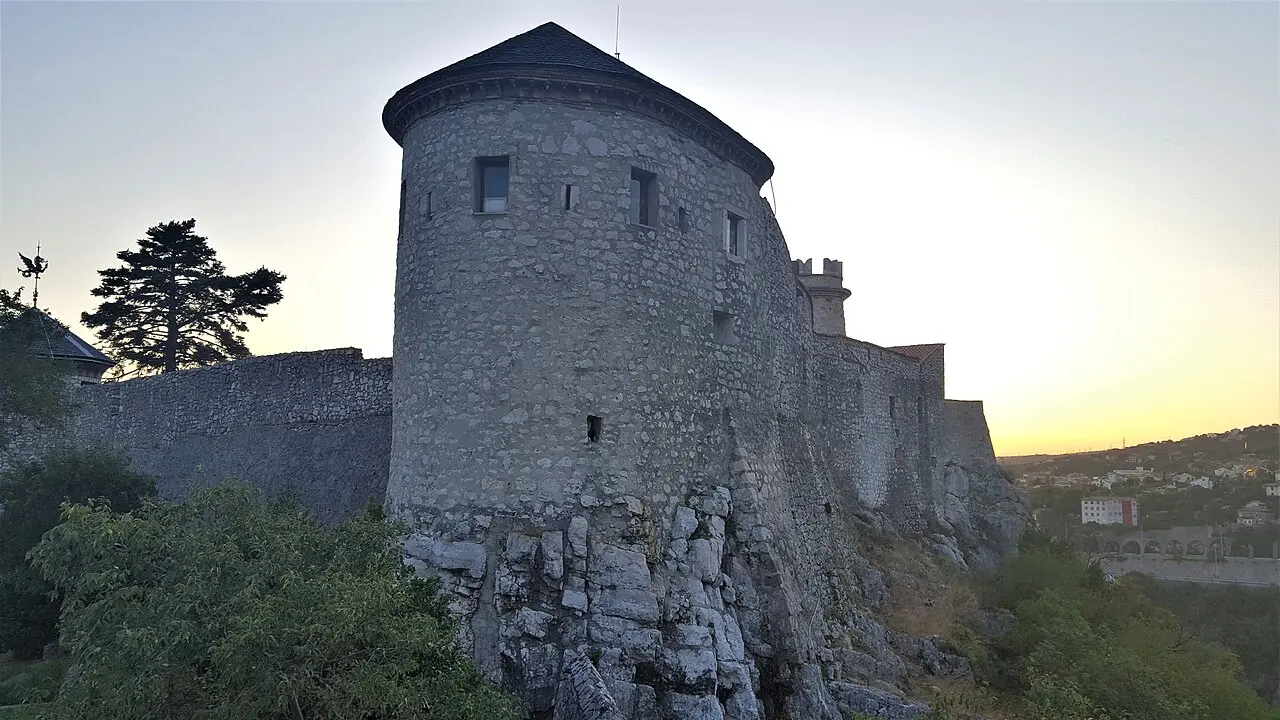
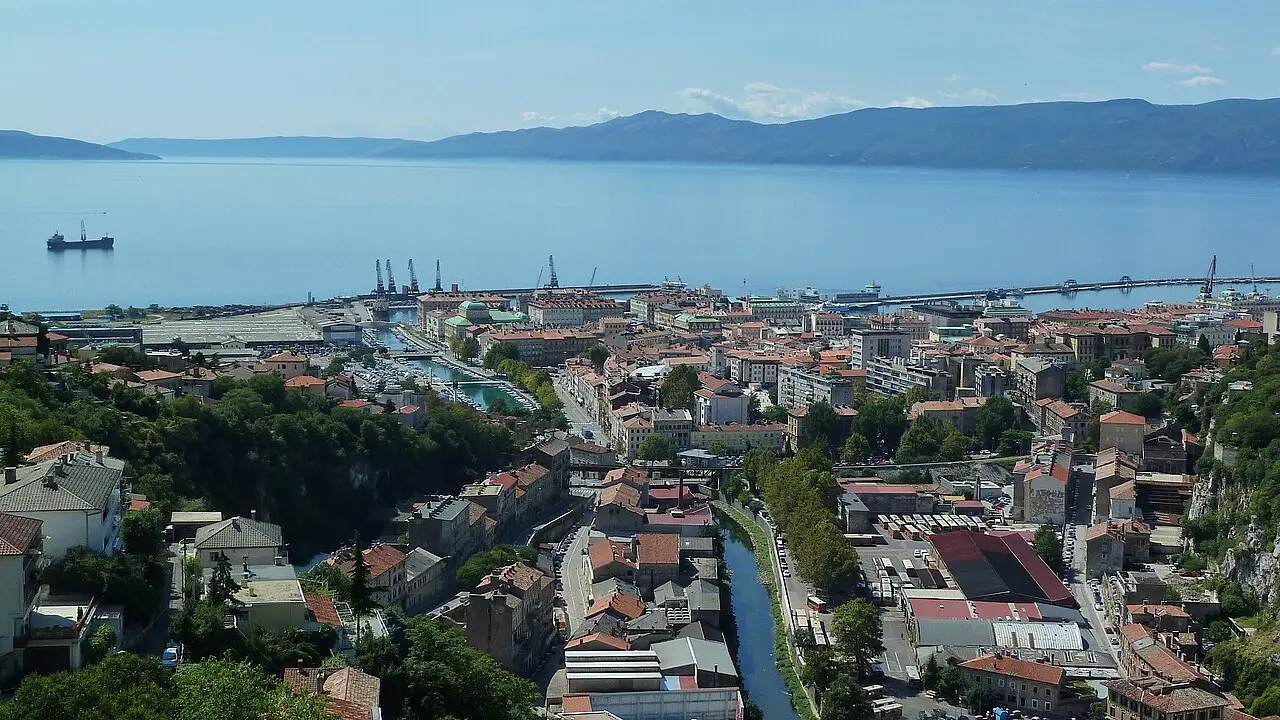
Trsat sits on a plateau 138 metres above sea level - a Liburnian lookout long before it was a Frankopan fortress, first recorded as a parish centre in 1288. Today the castle is the viewpoint everyone photographs: harbour, shipyards, and on a clear day the outline of Krk across the bay.
In summer (1 April to 30 September) daily tickets are €3 for adults and €1.50 for pensioners, students and children aged 7-18; a family ticket (two adults + two children over seven) is €8. From 1 October to 31 March that drops to €2 / €0.50 / €4.50. Entry is free for under-sevens, visitors with disabilities, and residents of Rijeka and Primorje-Gorski Kotar County. Tickets are sold while the Info Point is open; after charging hours the grounds stay open for the café and evening views - confirm the day’s window on Visit Rijeka before you go, because winter hours shorten.
Next door, the Shrine of Our Lady of Trsat still draws pilgrims. Pope John Paul II visited as a pilgrim in 2003; a statue marks the visit. You don’t need to be religious to walk the courtyard - it’s cooler and quieter than the castle walls at midday.
The 561 steps - or take bus 2
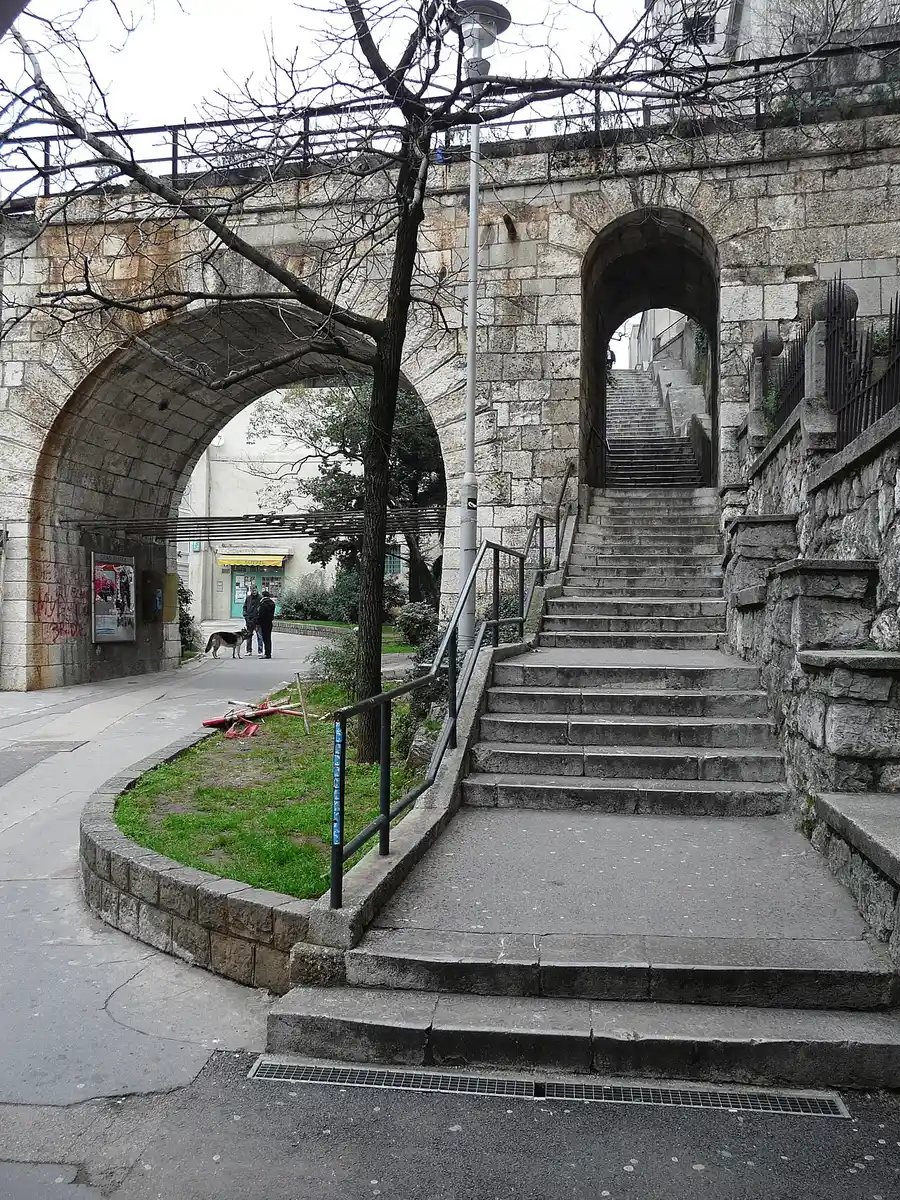
The Petar Kružić stairway climbs from the eastern bank of the Rječina up to Trsat. Captain Petar Kružić started the lower stretch in 1531 as a votive path for pilgrims; later extensions brought the total to 561 stone steps. It’s a proper workout in August heat - bring water - and the votive chapels along the way are part of the point, not decoration.
If you’d rather save your knees, city bus line 2 runs to Trsat and drops you near the shrine; from there the castle is a short signed walk. Timetables live on Autotrolej - fares change, so check before you ride rather than trusting an old blog number.
Korzo, the Capuchin church and St Vitus
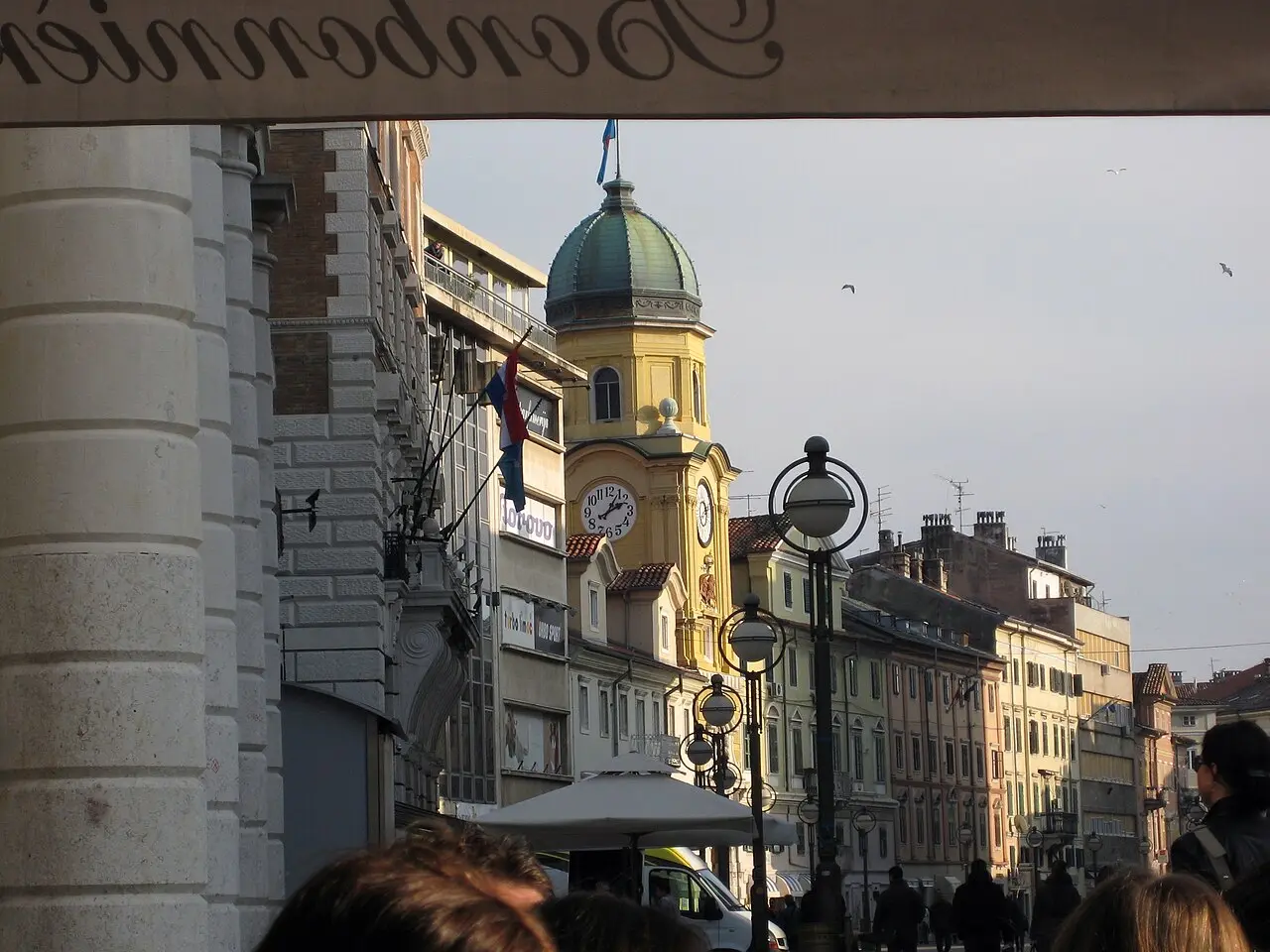
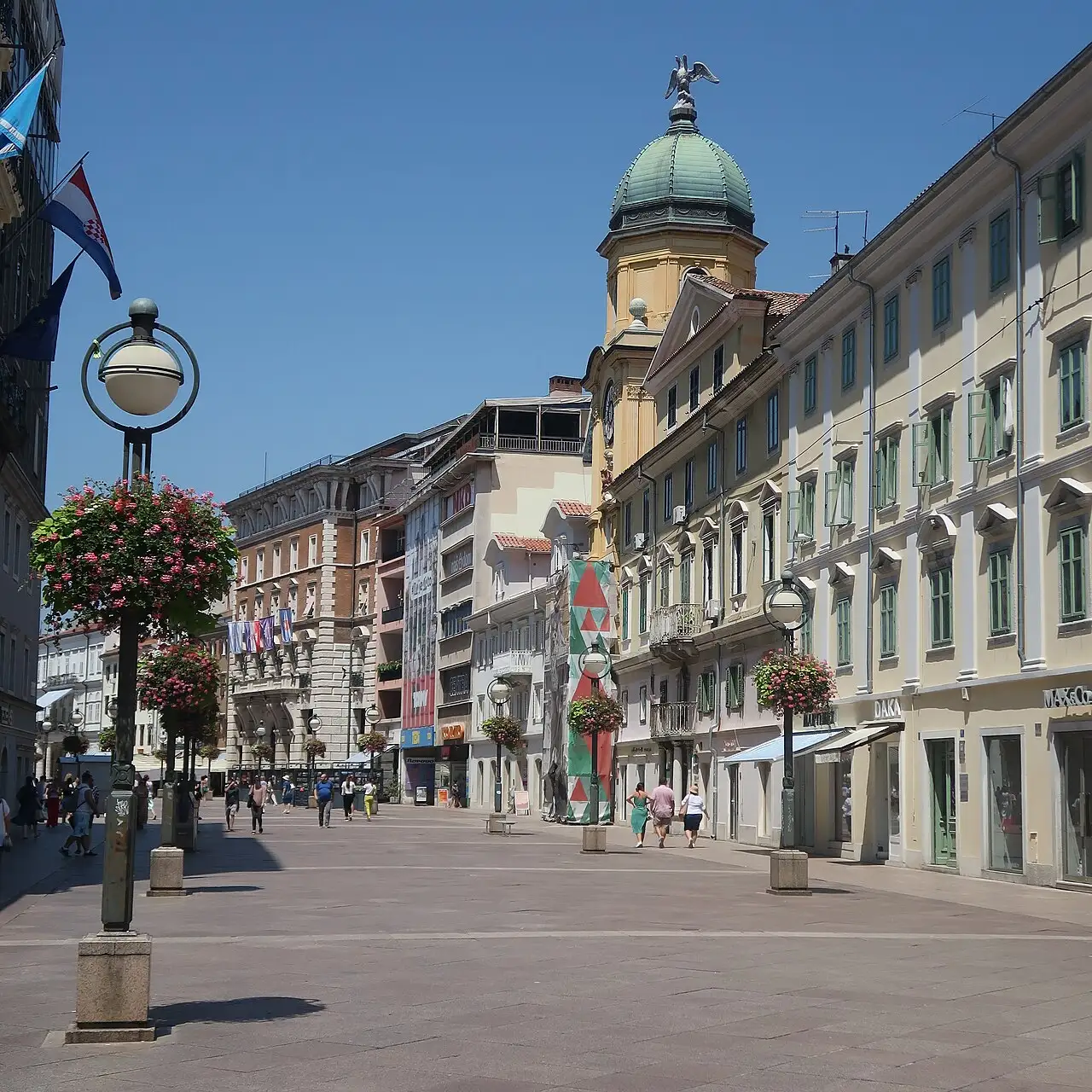
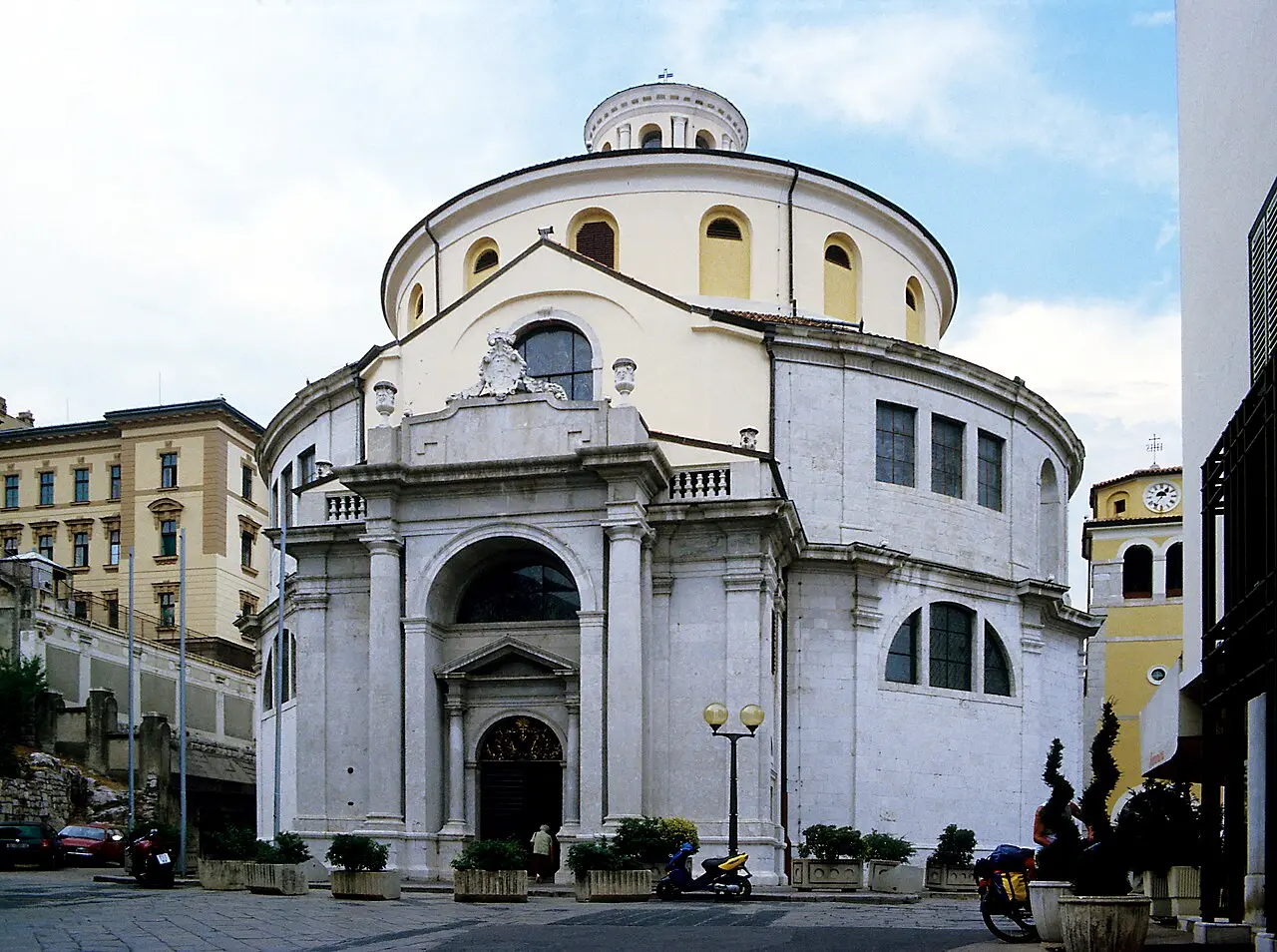
Korzo is the pedestrian spine of the centre - cafés, bookshops, people who actually live here. The City Clock Tower (Gradski toranj) marks the old gate into the medieval town; walk through and you’re in the tight lanes around St Vitus Cathedral, the round Baroque church that gives Rijeka its patron.
Beside St Vitus, the Rijeka Tunnel opens under the old town - a 330-metre shelter dug by the Italian army at the start of WWII and used during the Allied air raids of 1944-45. Visit Rijeka sells tickets seasonally: €2 adults / €1 reduced from April through September, cheaper in winter. Opening hours are roughly Monday-Saturday 9:00-20:00 and Sunday 9:00-17:00 - again, confirm on the day. It’s cool underground when the Riva is roasting, and it’s one of the few places in Croatia where you walk a wartime military tunnel as a tourist without a long coach trip.
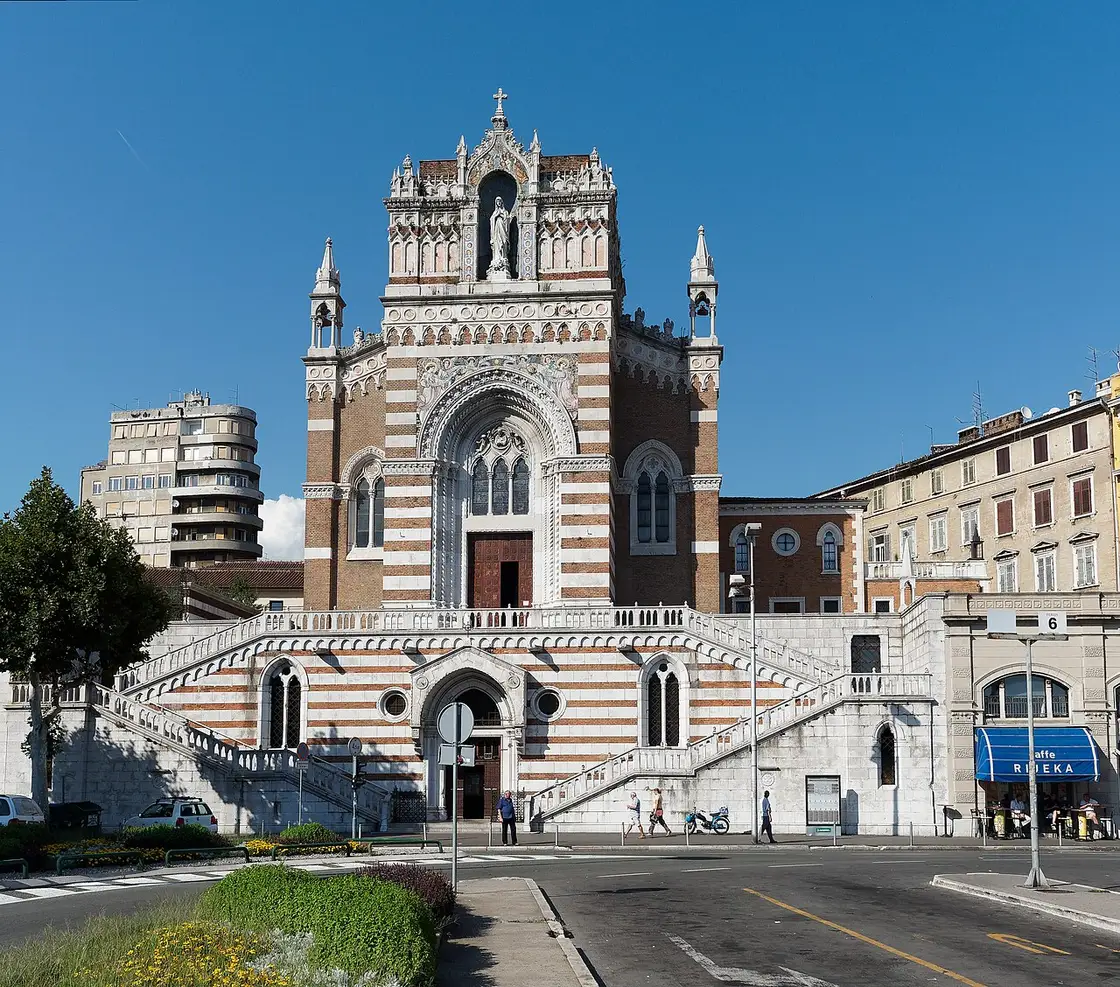
A few minutes west, the neo-Gothic Capuchin Church of Our Lady of Lourdes rises over Žabica Square by the bus station - hard to miss, easy to photograph, and a useful landmark when you’re hauling luggage.
Museums and the oddball stop
The neo-Renaissance Governor’s Palace still dominates the hill above the centre and houses the Maritime and History Museum of the Croatian Littoral. As of August 2026 the palace museum is closed for energy renovation (the museum’s own site says so plainly) - so admire the facade, but don’t build a morning around the permanent display until ppmhp.hr says otherwise. When it reopens, the listed adult ticket is €6.
If you want something that is open and weird in a good way, Peek & Poke - Rijeka’s computer museum - is the kind of stop you won’t find in every coastal town. Hours and tickets shift; check before you go rather than treating this as a fixed visit.
The Ivan Zajc Croatian National Theatre on the waterfront is worth a look from outside even if you don’t catch a show - it’s one of the grand Austro-Hungarian buildings that still define the Riva.
Where to stay
Base yourself near Korzo or the Riva if you’re here without a car: everything walkable, buses from Žabica, trains a short walk west. The centre has solid mid-range hotels and a growing stack of apartments; seafront resorts sit further west toward Kostabela and the Opatija road if you want a pool and a private beach strip.
Skip sleeping on Trsat unless you specifically want the quiet hill and don’t mind riding the bus for every dinner. For August weekends, book early - Rijeka isn’t Dubrovnik-busy, but Kvarner fills when the islands do.
Getting there and around
By plane. Rijeka Airport (RJK) sits at Omišalj on Krk, not in the city. The official airport shuttle (fares from 1 May 2025) is €15 one way to Rijeka (Jelačić Square 3, platform 5), €8 to Kraljevica and €8 to Omišalj. Unofficial tickets that look cheaper often drop you at a junction 2 km from the terminal - the airport warns about this in bold. Timetables change monthly; use rijeka-airport.hr.
By train. HŽPP runs direct services from Zagreb through Gorski kotar in roughly four hours. Buy on hzpp.hr - fares move with the timetable, so we don’t paste a stale number here.
By bus and car. Coaches use Žabica; the road from Zagreb is the faster option if you’re hiring. Inside the city, walk the centre and use Autotrolej for Trsat and the eastern beaches. For the wider picture of buses, ferries and hire cars across the country, see Getting around Croatia.
Day trips: Krk, Istria, Opatija
Rijeka’s real trick is geography. The Krk Bridge is a short drive south-east, and the island guide covers beaches, Vrbnik wine and the airport-on-island logistics. West and south-west, the Istria loop - Pula, Rovinj, Motovun - is an easy car day if you start early. West along the shore, Opatija and the Lungomare promenade are the classic afternoon escape when you want pebble coves and Habsburg villas without changing hotels.
If you’d rather not drive, look at organised Kvarner day trips - island boat loops and Istria hill-town runs both sell well from this coast.
When to come
May-June and September are the comfortable months: warm enough to swim at Pećine, cool enough to climb the stairs without melting. July-August work if you accept heat and book beds early. Winter is for Carnival (Rijeka’s is famous nationally) and empty museums - Trsat in a bura wind is dramatic, not gentle. Croatia uses the euro and has been in Schengen since 1 January 2023, so arrival formalities are light for EU, UK, US, Canadian and Australian passports - still check entry rules if your nationality needs anything extra.
Photos
On the map
The map loads on click - to keep the page lightweight.
The map didn’t load. Check your connection and refresh the page.
Good to know
Trsat Castle tickets in summer (1 Apr-30 Sep) are €3 adults / €1.50 reduced; winter (1 Oct-31 Mar) €2 / €0.50. Rijeka Tunnel is €2 adults in summer. The Maritime Museum in the Governor's Palace is closed for energy renovation - check ppmhp.hr before planning a visit. Confirm current hours on visitrijeka.hr.
Details checked: August 11, 2026
Distance ≈131 km · about 4 h by train; about 2 h by car
- Zagreb ≈131 km · about 4 h by train; about 2 h by car HŽPP runs direct trains through Gorski kotar - check hzpp.hr for current times and fares. By road use the A6/A1 corridor toward the coast.
Read also

Cities · 12 min read
Motovun Travel Guide: Walls, Truffles & Teran
Verified · September 4, 2026Motovun hilltown guide: walls ticket €5 in 2026, St Stephen, Teran cellars, Mirna views, parking climb, and why the film festival no longer plays here.

Cities · 10 min read
Dugi Otok & Sakarun Beach: Island Day-Trip Guide
Updated · August 31, 2026Day-trip Dugi Otok from Zadar: Jadrolinija ferry to Brbinj, Sakarun beach, Veli Rat lighthouse, and Telašćica cliffs - DIY or boat tour.

Cities · 10 min read
Opatija Travel Guide: Habsburg Riviera & Lungomare
Verified · August 25, 2026Opatija on the Kvarner Gulf: the 10 km Lungomare, Villa Angiolina museum, Maiden with the Seagull, and how it differs from Rijeka and Istria.

Cities · 10 min read
Omiš Travel Guide: Pirates, Zipline & Cetina Canyon
Verified · August 21, 2026Omiš is 25 km from Split: Promet bus €2.50, Mirabela €4-6, Cetina rafting and an 8-line zipline over the canyon.