
Rijeka Carnival 2027: Dates, Parade & Bell Ringers
Rijeka Carnival 2027 runs 17 January to 10 February, with the big parade on Sunday 7 February. Where to stand, and when the bell ringers walk the villages.
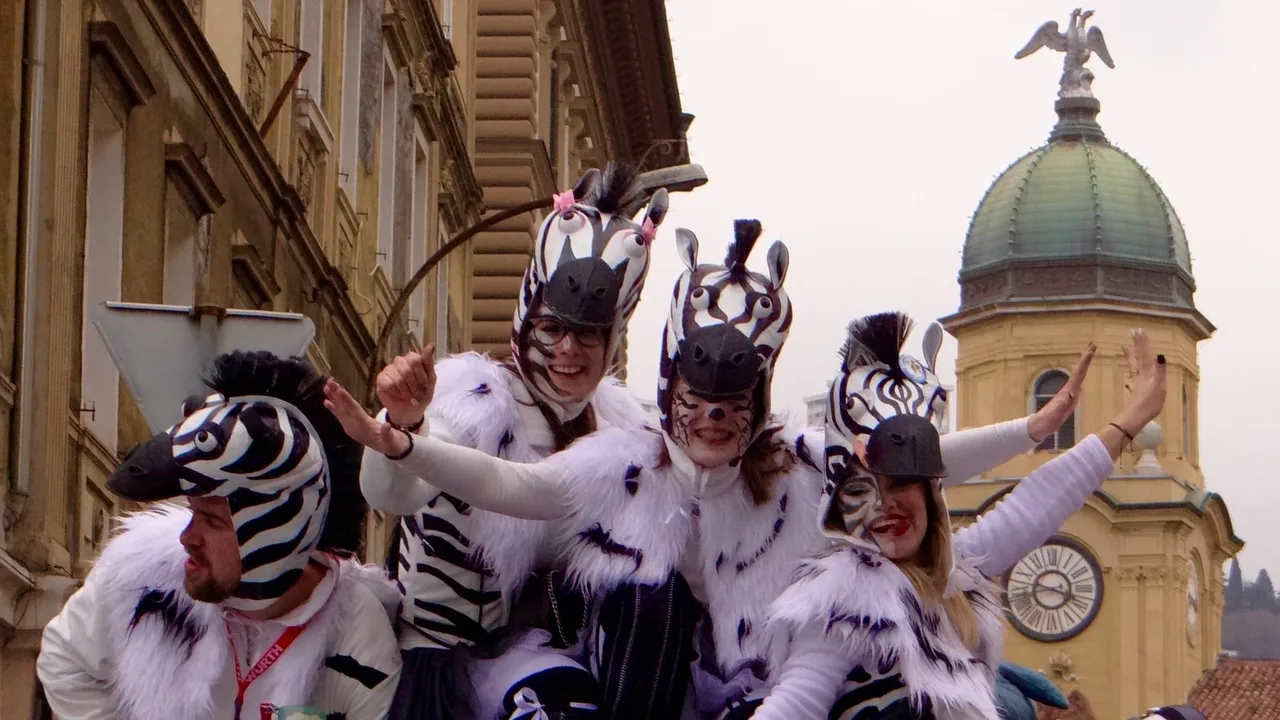
The 2027 Rijeka Carnival runs from 17 January to Ash Wednesday, 10 February 2027, and its big day is Sunday 7 February, when the International Carnival Parade fills Korzo and the streets around it. In 2026 the parade set off at noon, and the Rijeka Tourist Board counted more than 11,000 people in 100 groups walking it.
The parade is the part everyone films. The older custom happens in the hills behind the city: on the last Sunday, Monday and Tuesday before Lent, bell ringers in sheepskins walk from village to village around Kastav and Viškovo, a custom UNESCO put on its heritage list in 2009. In 2027 those three days fall on 7, 8 and 9 February, so one long weekend can hold both, and you’ll want to plan it that way.
2027 dates, and the next three carnivals
Rijeka’s carnival season always opens on 17 January, the feast of St Anthony that locals call Antonja, and closes on Ash Wednesday. Because Ash Wednesday moves with Easter, the season stretches or shrinks from year to year, and the parade is always the Sunday just before the end. The tourist board, which organises the carnival with the city, has already published the dates four years out:
| Year | Carnival season | International Carnival Parade |
|---|---|---|
| 2027 | 17 January - 10 February | Sunday 7 February |
| 2028 | 17 January - 1 March | Sunday 27 February |
| 2029 | 17 January - 14 February | Sunday 11 February |
| 2030 | 17 January - 6 March | Sunday 3 March |
For 2027 the board has also fixed the two other headline events: the Carnival Queen pageant on Friday 22 January and the Children’s Carnival Parade on Saturday 30 January. As of early October 2026, everything else on the programme, the masked dances, concerts and neighbourhood parties, was still being put together: the call for event proposals closed on 25 September 2026, so expect the full list closer to the season. Start times for 2027 hadn’t been announced by then either. Plan around the dates and check the hours closer to the time.
The carnival has a long and cheeky history. A Rijeka city council order from 1449 banned covering your face with a mask, with an exception for guests at the masked ball in the castle. The modern version restarted in 1982, when three groups walked down Korzo, one of them the Halubje bell ringers. The motto is Krepat, me ne molat!, which the board translates as “Rather die, than surrender!”
Parade Sunday on Korzo
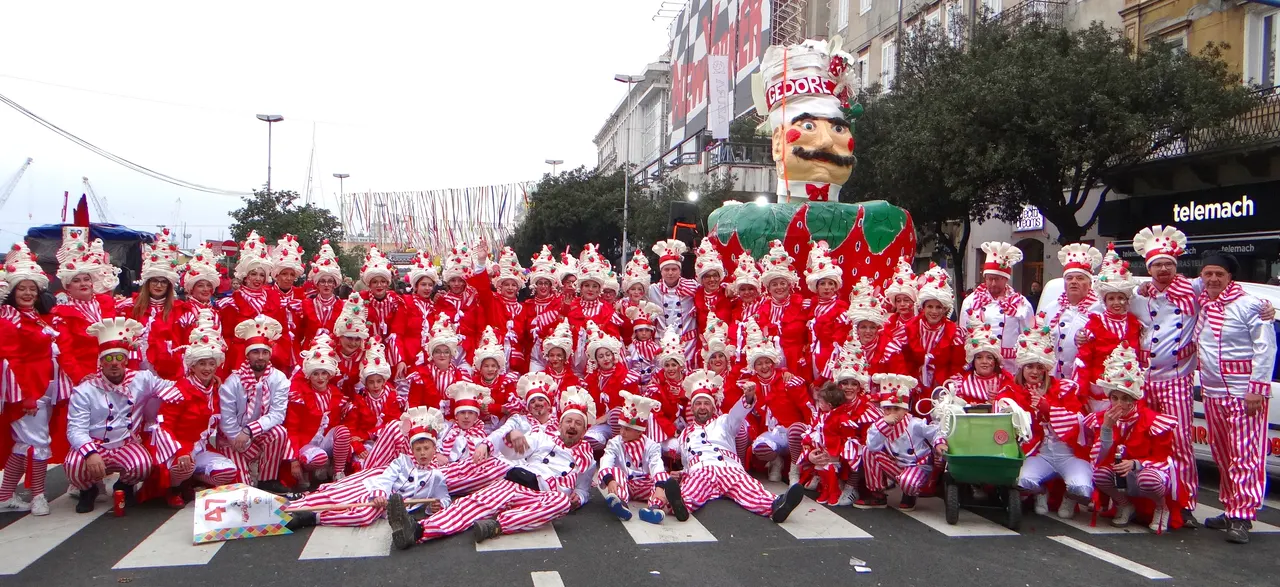
The 2026 parade, the 43rd, gives a fair picture of what to expect in 2027. More than 11,000 people in 100 groups and over sixty floats came through, with guest groups from Italy, Hungary, Slovenia, Serbia, Montenegro and North Macedonia. Groups pick a theme and build it big, and the masks traditionally needle whatever the country argued about that year.
It isn’t a short show. In 2026 it set off at 12:00, and the programme listed the evening concert at Exportdrvo for 21:00 with a note that the time was approximate, depending on when the parade finished. Bring layers and food, and don’t plan dinner for 6pm.
Where to stand. The city put up five stages with presenters along the route in 2026: on Jelačić Square, on Scarpina Street, on Korzo, on Republic of Croatia Square and on Adriatic Square by the Rijeka skyscraper. The main one, 8 by 6 metres, stood on Korzo itself, with the TV camera platforms around it. If you’ve got children with you, a spot by one of the smaller stages still gets you a presenter on the microphone.
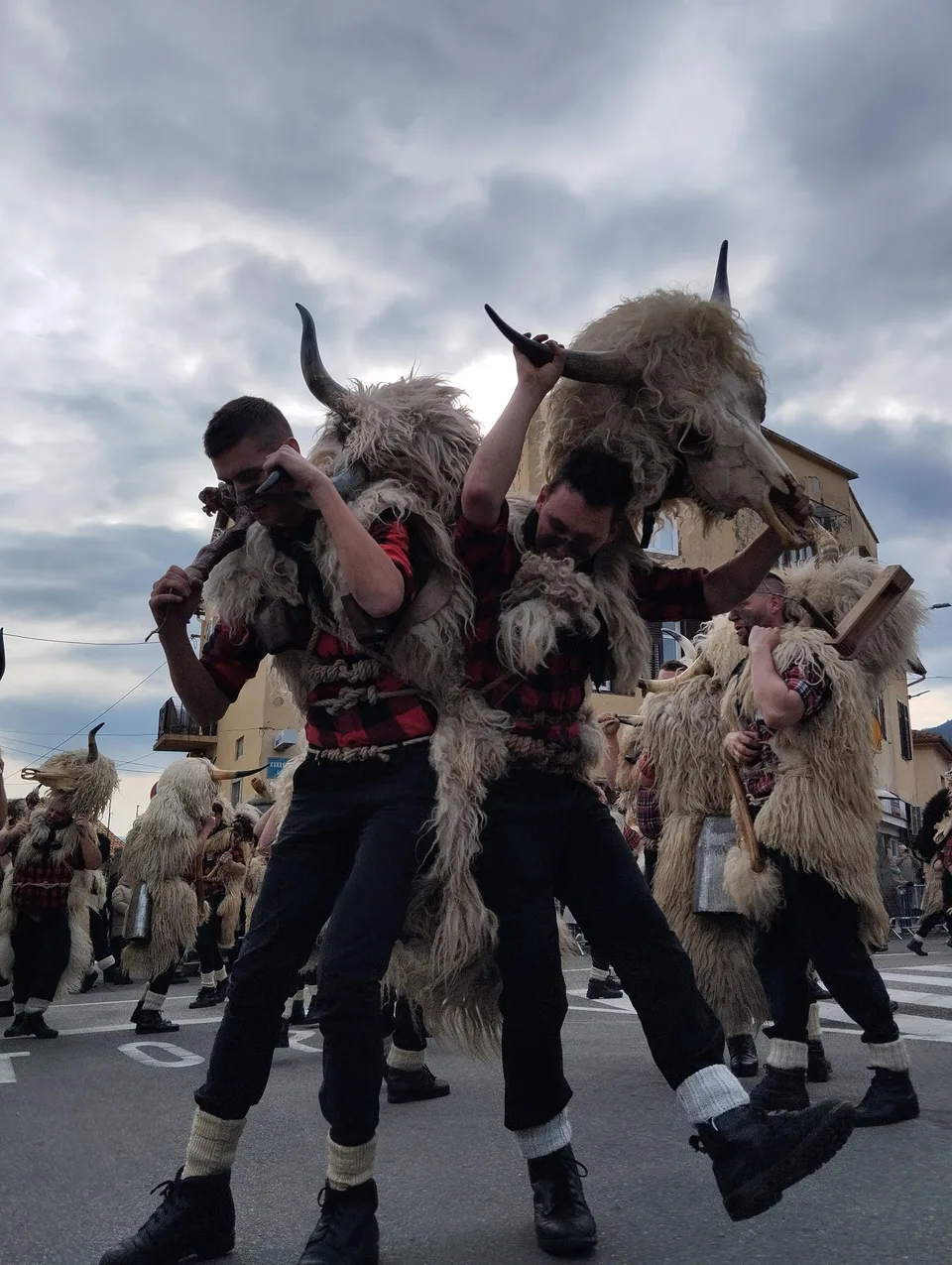
Stay for the end. The parade closes, by tradition, with the bell ringers. In 2026 that was the Zamet bell ringers, the Grobnik dondolaši and the Halubje bell ringers, and their pass along Korzo closed the parade and signalled the end of the carnival season in Rijeka and around it. If the bells are what you came for, they’re worth the wait.
Getting in and out. Don’t drive into the centre on parade Sunday. In 2026 the city kept the Delta car parks for participants’ and guests’ coaches all day and took over the whole Putnička obala waterfront for the parade, and it asked its bus company, Autotrolej, to run all city lines free that day. It also asked Croatian Railways to keep trains out of the city centre from 10:00 to midnight, so if you’re arriving by train on the Sunday itself, check how that day’s services run. Can’t make it in person? The tourist board streamed the 2026 parade live on its website.
Before the big Sunday: key, queen and children
17 January, the opening. At noon in 2026 the mayor handed the key of the city to the Carnival Master on Korzo, after a parade of every carnival group’s flag, and from then on the masks are officially in charge. That evening, the suburbs of Pehlin, Pašac and Zamet raise the Pust, the carnival effigy.
The Carnival Queen pageant. This one’s indoors and ticketed: in 2026 it was a Friday-night show at 20:00 in the Dvorana mladosti sports hall, with a ticket booth at the door. Candidates are 18 or older and are put forward by carnival groups from Primorje-Gorski Kotar County. In the tourist board’s own words, “beauty, in this case, is not an advantage”. The 2027 pageant is on 22 January; for ticket prices, watch the tourist board’s site nearer the date.
The Children’s Carnival Parade. Kindergartens, schools and children’s groups from across Croatia and abroad take over Korzo on a Saturday before the big parade, some of the youngest in strollers pushed by their teachers. In 2026 it started at noon on 31 January, a fortnight before the big one, and it came with a rain date a week later. In 2027 it’s on Saturday 30 January, eight days before. If you’re travelling with small children, this is the parade built for them.
The bell ringers: three days in the villages
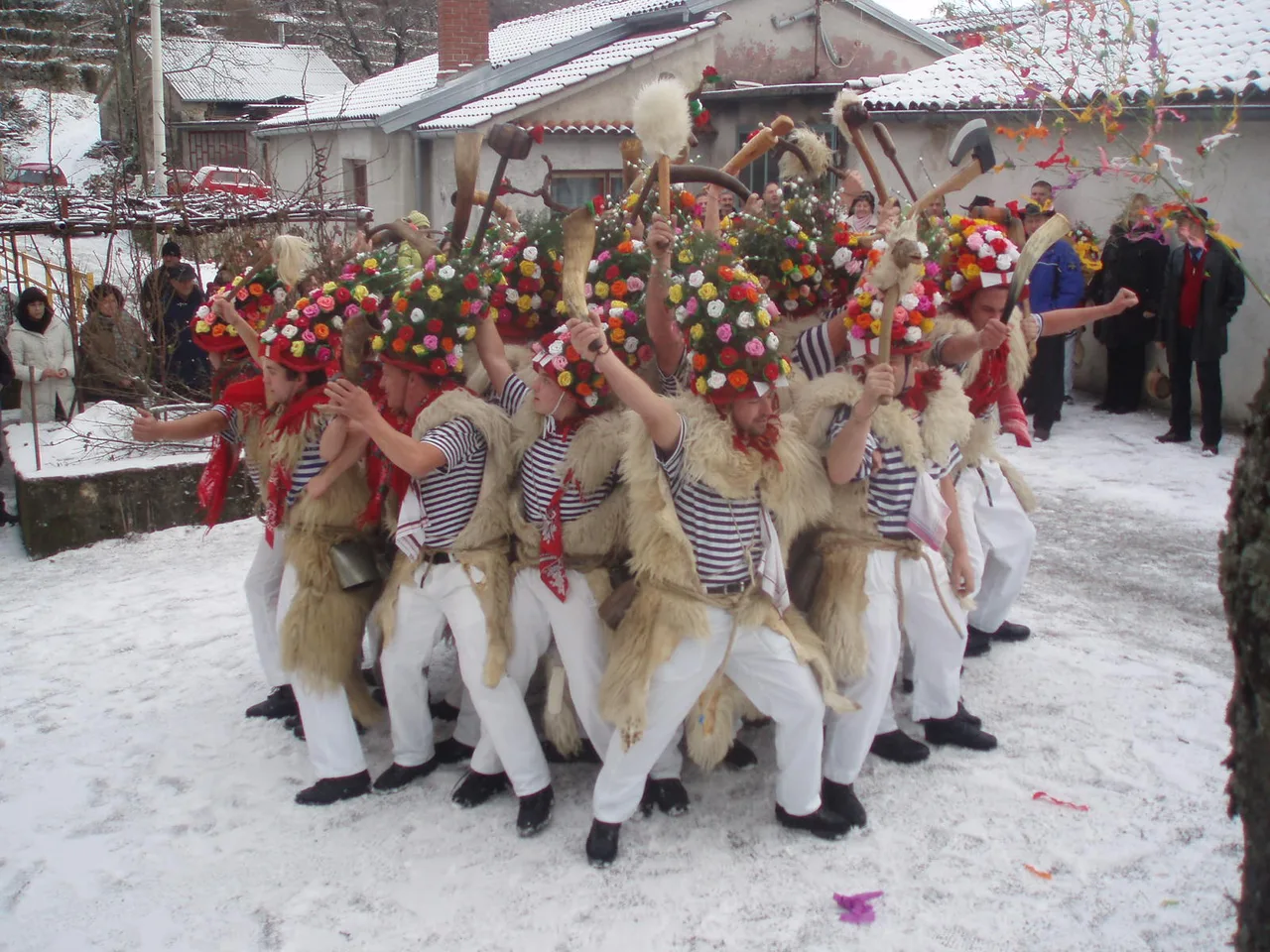
The zvončari are the part of Rijeka’s carnival season that UNESCO lists. The 2009 listing is for the annual carnival bell ringers’ pageant from the Kastav area, the string of villages in the hills behind Rijeka. UNESCO describes groups of anywhere from two to more than thirty ringers, wrapped in sheepskins with bells around their waists, walking behind a guide who carries a small evergreen tree. In each village they form circles in the square and ring hard until the residents bring out food and let them rest.
Each group has its own look. The Halubje bell ringers from Viškovo, widely known well beyond the region, wear horned animal masks with a red tongue hanging out, a big bell on the lower back, white trousers and a striped sailor’s shirt, and carry a decorated club. Their walk follows a fixed rule: every year on carnival Sunday, Monday and Tuesday, the last three days before Ash Wednesday, they set off early in the morning from the village of Marčelji and cover about twenty villages a day across Viškovo, Kastav and the edge of Rijeka. By that rule, the 2027 walk runs 7 to 9 February.
That Sunday overlap matters. In 2026 the Halubje ringers began their walk on the morning of 15 February and still made it to Korzo to close the parade that same day. Monday is the day to follow them through the villages without the parade crowds. On Tuesday the season ends: in 2026 Viškovo burned its Pust at Brege on 17 February, and UNESCO notes that at the end of carnival the ringers go through their own village burning rubbish in front of each house. In practice, park in Viškovo or Kastav, walk towards the noise, and you’ll hear them well before you see them.
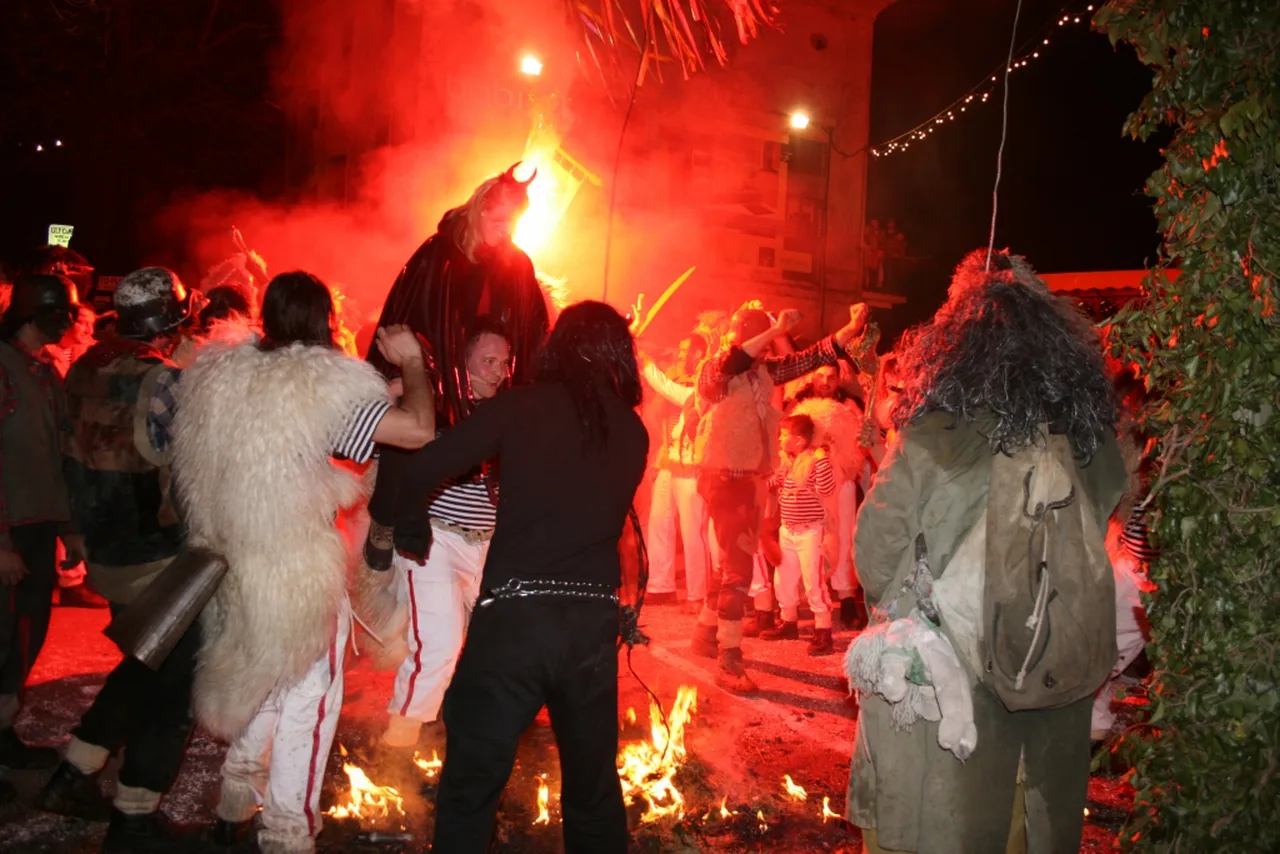
If you’re coming in late January rather than February, Viškovo runs a carnival of its own. The 25th Halubje Carnival was billed with 36 groups and more than 2,000 masks for Saturday 24 January 2026, setting off through the centre of Viškovo at 14:00; on the day it went ahead in heavy rain with about 30 groups.
The House of the Halubje Bell Ringer
Outside carnival week, the bells have a home in Viškovo. The Kuća halubajskega zvončara at Dovičići 1b is devoted to the bell ringers and calls itself a multimedia space, not a museum in the classic sense. It opens Tuesday to Sunday, 10:00-21:00, and closes on Mondays; last entry is an hour before closing. Tickets, on the price list we read on 6 October 2026:
- Adults: €10 (about £8.50 / $11.20).
- Ages 7 to 18, students and pensioners: €5 (about £4.20 / $5.60).
- Family: €20 (about £16.90 / $22.40) for up to two adults and two children.
- Guided tour in English: €35 for a group of up to 30, tickets not included, booked ahead.
Autotrolej’s lines 11, 20, 21 and 18A run there from Rijeka. In carnival week the house becomes part of the walk itself: on the Monday in 2026 it welcomed the Halubje ringers with a free guided tour and a film screening before they arrived.
Sleeping in Rijeka or Opatija
For a carnival trip, stay in Rijeka. On parade Sunday you’re walking to Korzo while drivers circle the closed roads, and there’s a winter bonus too: the tourist board’s Winter Pass, which gives anyone staying two or more nights in the city free entry to the City Museum, the Museum of Modern and Contemporary Art, the Natural History Museum, Trsat Castle, the wartime Rijeka Tunnel and the Kantrida pools, among others. The board describes it as running from 1 October to 30 March, which covers the whole carnival season; the voucher arrives by email after you check in, so ask your host about it and check the current winter’s terms. Our Rijeka travel guide covers the neighbourhoods and the train and road from Zagreb. Rijeka’s own airport on Krk lives on summer flights: its winter 2025/26 timetable had only Croatia Airlines to Munich on Thursdays and Sundays, plus domestic flights to Osijek and Split-Dubrovnik, so check the 2026/27 timetable before you plan around it. Our Krk island guide has more on the airport.
Opatija is the calmer alternative, a belle-époque resort along the coast with grand old hotels and the Lungomare promenade, and it’s lovely in February. Parade day is where it costs you: the free travel in 2026 covered Rijeka’s city lines, so check whether your bus from Opatija counts before you rely on it, and expect a slow ride back in the evening.
Timing it: a weekend, a long weekend or January
- Parade weekend only. Fly into Zagreb on Friday 5 February 2027 and come down to Rijeka the same day, spend Saturday on Trsat and in the museums, watch the parade on Sunday the 7th, and leave on Monday. You’ll see the bell ringers, but only on Korzo, at the end of a long day.
- Parade plus the villages. Stay to Wednesday the 10th. Sunday on Korzo, Monday following the Halubje walk around Viškovo and Kastav with a car, Tuesday for the burning of the Pust at Brege. This is the version that justifies the flight.
- The quieter January trip. Come for 22 to 24 January: the queen pageant on the Friday and, if Viškovo keeps the late-January Saturday it used in 2026 (that would be the 23rd), the Halubje Carnival. Smaller crowds, easier rooms, and the House of the Halubje Bell Ringer on a weekday.
For the wider Croatian winter, from Advent in Zagreb to the Feast of St Blaise in Dubrovnik on 3 February, see our Croatia festivals calendar.
Opening hours, prices, timetables and seasonal services change through the year - the figures here are planning estimates, not quotes. Confirm current details with the operators and official sources before you go.
Photos
Read also

Entertainment · 11 min read
Sea Kayaking in Dubrovnik: Tours, Routes & What It Costs
Verified · October 13, 2026Guided sea kayaking from Pile bay, €35-45 on the operators' own sites in October 2026: routes, the Lokrum ticket, age rules, refunds.

Entertainment · 9 min read
Hvar Nightlife: Bars Until 2am, Beach Music Off at Midnight
Verified · October 10, 2026Hvar nightlife by the town's own rules: Riva bars to 02:00, outdoor music off at midnight, Carpe Diem after-beach 16:00-24:00, taxi boats, the last boat.

Entertainment · 8 min read
New Year's Eve in Croatia: Zagreb, Split or Dubrovnik?
Verified · October 10, 2026New Year's Eve 2026 in Croatia: what Zagreb, Split and Dubrovnik did on 31 Dec 2025, who is booked for 2027, which flights work and how to get home.

Entertainment · 8 min read
Croatia Christmas Markets 2026 Beyond Zagreb: City by City
Verified · October 10, 2026Advent beyond Zagreb: Split runs 27 Nov 2026 to 7 Jan 2027, Opatija to 6 Jan. What Rijeka and Dubrovnik did in 2025/26, and the winter flights.