
Croatia Festivals & Events: The Year-Round Guide
Croatia festival calendar month by month: Ultra and Pula in July, the Alka in August, baroque and truffles in autumn, Advent and carnival in winter.
Upcoming events
- On now September 18-29, 2026 Varaždin Baroque Evenings
- October 3 - November 1, 2026 Zigante Truffle Days (every Saturday and Sunday)
- November 9-15, 2026 Zagreb Film Festival
All upcoming dates by month (11)
September 2026
- On now September 18-29, 2026 Varaždin Baroque Evenings
October 2026
- October 3 - November 1, 2026 Zigante Truffle Days (every Saturday and Sunday)
November 2026
- November 9-15, 2026 Zagreb Film Festival
- Martinje, St Martin's Day
- November 28, 2026 - January 7, 2027 Advent in Zagreb
January 2027
February 2027
July 2027
- July 9-11, 2027 Ultra Europe
- July 10 - August 25, 2027 Dubrovnik Summer Festival
- July 14 - August 14, 2027 Split Summer (opera, drama, ballet)
Dates marked "to be confirmed" follow the previous edition: the organiser had not announced the new ones when we last checked.
If you want one loud weekend, you’ll want July: Ultra Europe fills a stadium in Split and the Pula Film Festival puts a screen inside a Roman arena. If you’re after the Croatia that locals actually turn out for, come in August for the Sinjska Alka horse tournament and Varaždin’s Špancirfest, or in winter for Advent in Zagreb and the carnival season on the Kvarner coast. Autumn is quieter and cheaper: baroque concerts in Varaždin, truffle weekends in Istria, a film festival in Zagreb.
The trap is assuming a festival lands on the same weekend it did last year - it doesn’t. The Sinj tourist board still describes the Alka as “the first Sunday in August”, yet the 311th edition runs on Sunday 9 August 2026 - the second Sunday. Sonus, a fixture on Zrće beach since 2013, cancelled its 2026 edition in January after losing its two main venues. Meanwhile Ultra Europe already has tickets on sale for 9-11 July 2027, a full year ahead. Same country, three completely different planning horizons - that’s the calendar in a nutshell.
The year at a glance
| When | What | Where |
|---|---|---|
| 3 February | Feast of St Blaise (UNESCO) | Dubrovnik |
| January-February | Rijeka Carnival, bell ringers in the hills | Rijeka and Kastav |
| March | Festival of Lights, free | Zagreb |
| Easter (Maundy Thursday night) | Za križen procession (UNESCO) | Hvar |
| Late June | INmusic, lakeside rock and indie | Lake Jarun, Zagreb |
| Late June - August | Beach-club festival season | Zrće, island of Pag |
| 10 July - 25 August | Dubrovnik Summer Festival | Dubrovnik |
| Mid-July | Ultra Europe · Pula Film Festival | Split · Pula |
| 14 July - 14 August | Split Summer (opera, drama, ballet) | Split |
| Early-mid August | Sinjska Alka (UNESCO) · Night of the Full Moon | Sinj · Zadar |
| Late August | Špancirfest street festival | Varaždin |
| Mid-late September | Varaždin Baroque Evenings | Varaždin, Trakošćan |
| October-November weekends | Zigante Truffle Days | Livade, Istria |
| November | Zagreb Film Festival · Martinje (11 Nov) | Zagreb, wine country |
| Late November - early January | Advent | Zagreb and every other city |
July: the month everything happens at once
If you’re chasing one loud weekend, this is it.
Ultra Europe is the headline act, three nights at the Park Mladeži stadium in Split. The 2026 edition ran 10-12 July; the official site already lists 9, 10 and 11 July 2027 with tickets on sale. Book a room the moment your dates firm up, because on Ultra weekend the whole city fills, not just the streets near the stadium. Our Split nightlife guide covers where the rest of the night goes.
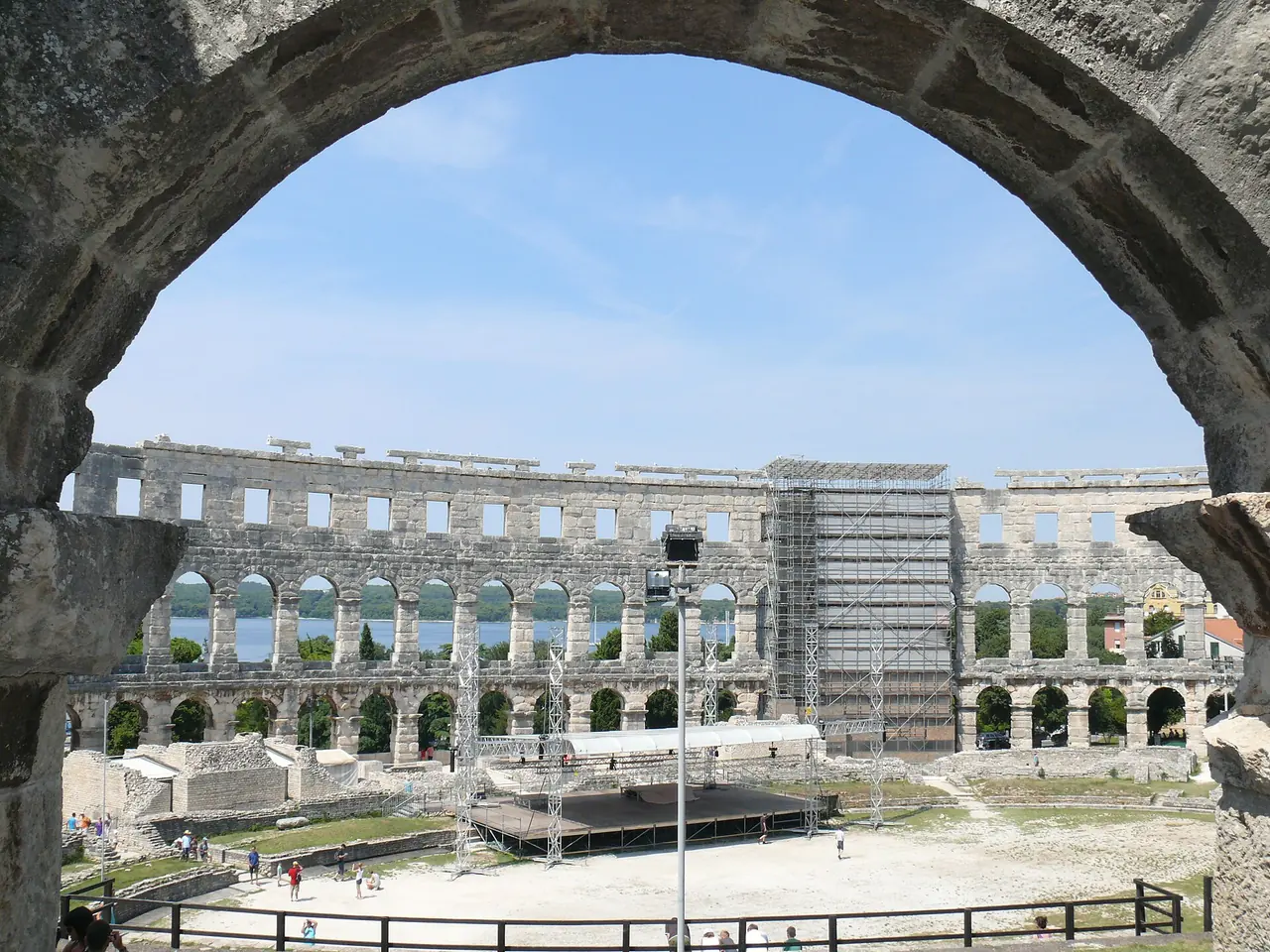
The Pula Film Festival is the opposite kind of evening and, to my mind, it’s the better ticket. The 73rd edition ran 9-16 July 2026 with the main screen inside the 2,000-year-old Pula Arena. Prices are the best value of any big Croatian festival (2026 prices, check the current ones): 6 EUR for a single Arena evening (5 EUR students, 3 EUR pensioners), 35 EUR for the whole Arena run, and screenings at Kino Valli, INK and Ambrela are free. The detail nobody mentions: on festival evenings your film ticket also works as a city bus ticket from 19:00 to 04:00, which solves the ride home for anyone staying at the campsites outside Pula.
Two long-running cultural festivals overlap all summer - don’t try to do both in one trip. The Dubrovnik Summer Festival (77th edition in 2026) runs 10 July to 25 August, and it keeps those same dates every year - so you can book a Dubrovnik trip a year ahead knowing there will be theatre at Fort Lovrjenac, concerts in the Rector’s Palace atrium and performances on Lokrum. Split Summer works the same way from 14 July to 14 August (72nd edition in 2026; the 71st ran on exactly those dates in 2025) with opera, drama and ballet on the Peristyle and around Marjan. And Cinehill, the arthouse festival that everyone still calls Motovun, ran 21-26 July 2026 in Fužine in Gorski Kotar: the twin 2023 edition played Motovun and Gorski Kotar at once, 2024 dropped Istria entirely, 2025 settled in Fužine. Don’t drive to Motovun for it - you’ll be in the wrong place. For how the month feels on the ground, see Croatia in July.
August: knights, full moons and street theatre
August is when the calendar stops being about imported line-ups. The Sinjska Alka in Sinj, under an hour inland from Split, is a horseback tournament that has run since 1715 and has been on the UNESCO list since 2010: riders wearing the dress uniform of Sinj’s early-eighteenth-century defenders, kalpak hats and silver thread included, lance a small iron ring hanging above the track at full gallop. The 311th Alka is on Sunday 9 August 2026 at 16:30, with the Bara heat on Friday 7 August and the Čoja on Saturday 8 August. Note the date carefully - the “first Sunday in August” rule of thumb doesn’t hold in 2026, and the Sinj tourist board still repeats it. The Alka Knights Society now publishes the full programme on its own site, heats and start time included, and that’s the page to trust over any rule of thumb.
In Zadar, the Night of the Full Moon turns the waterfront off. On 6-9 August 2026 the Riva is lit only by torches, candles and stars, and food is sold from wooden boats: tuna, sardines, mussels, cheese, figs, rakija. The name is tradition, not astronomy: the August full moon falls on 28 August in 2026, so the light is fire, not moonlight. It’s the one big Croatian event where the point is the absence of light rather than a stage; the dates, the free entry and what to book ahead are in our Zadar guide.
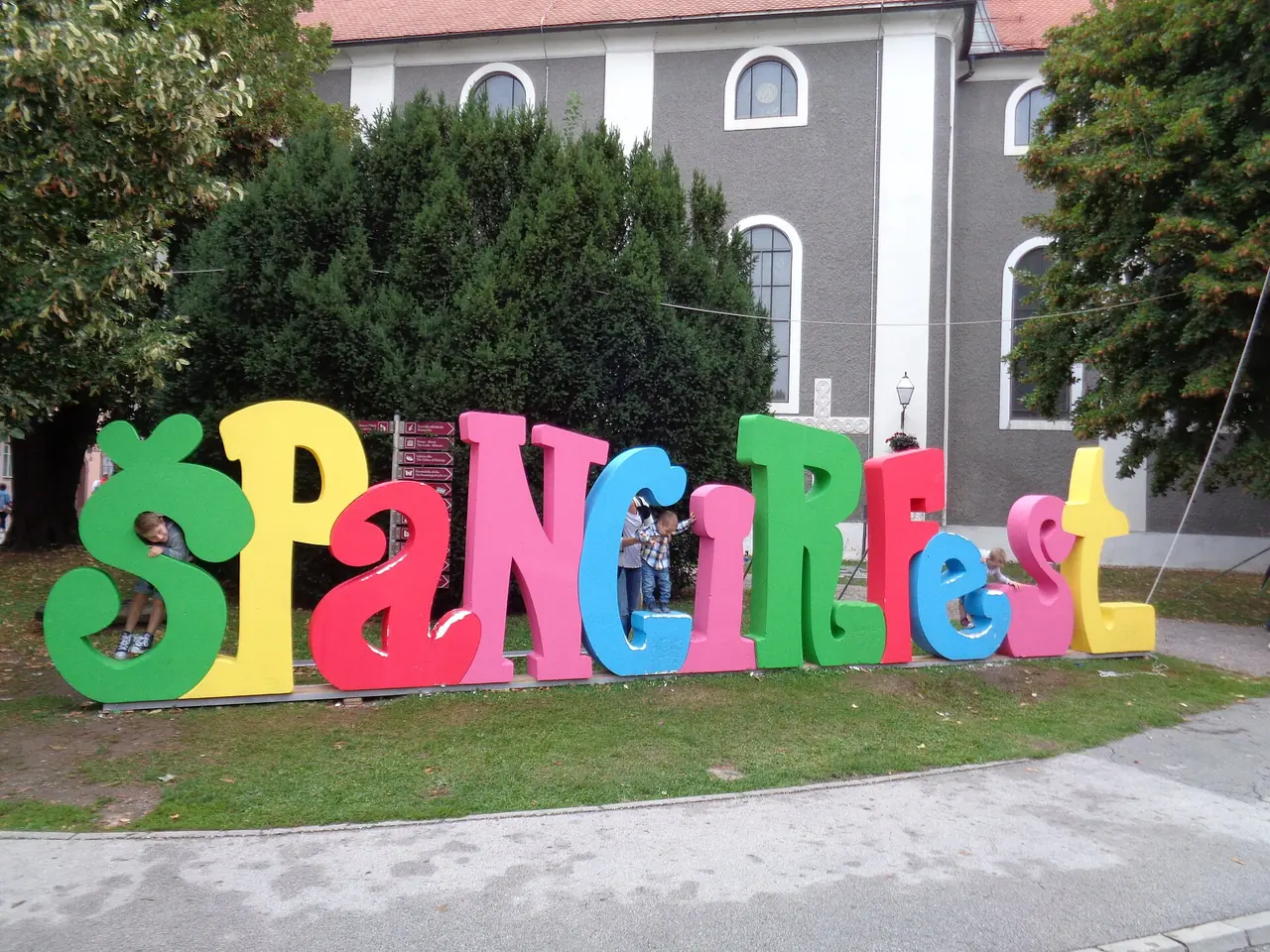
Inland and away from the sea entirely, Špancirfest takes over the baroque centre of Varaždin. The 28th edition runs 21-30 August 2026 with about 600 programme items across 23 festival zones and street performers from around ten countries; most of it’s free and outdoors, with ticketed concerts and theatre at Vila Bedeković. Of the two inland Augusts, the Alka is one afternoon; Špancirfest can carry a whole week, and it’s the best value week of the Croatian summer if you’ve had enough of coastal prices.
One date to plan around rather than for: 15 August, Velika Gospa, is a national holiday and a major pilgrimage day, which puts Croatian families on the road on top of the foreign peak. Croatia in August has the full crowd-and-price picture.
The beach-club season, and why it needs a caveat
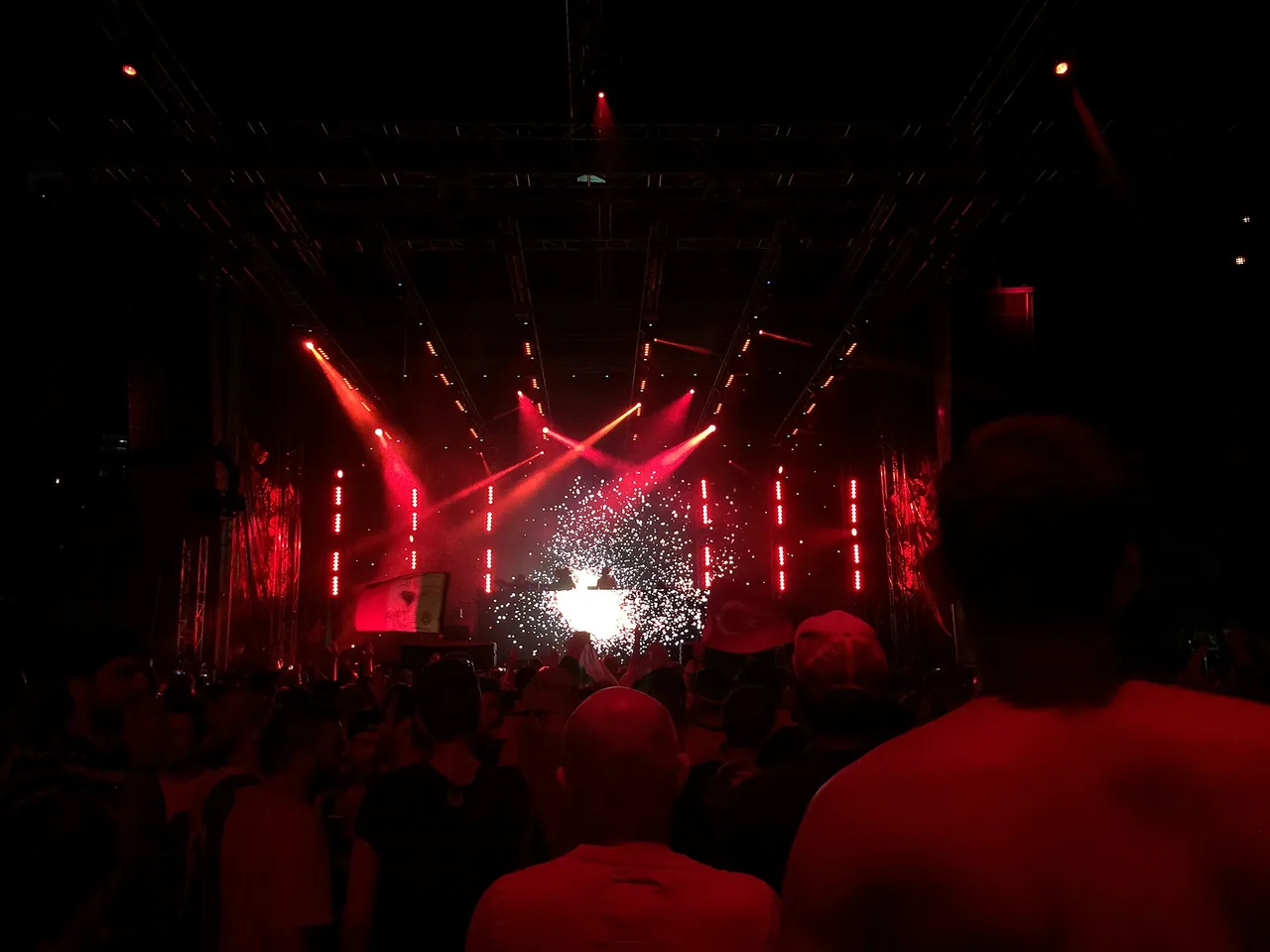
The dance calendar opens inland: INmusic, Croatia’s big rock and indie festival, takes over the Isle of Youth in Lake Jarun in Zagreb in late June (the 18th edition ran 22-24 June 2026; the 19th is set for 27-29 June 2027). The same lakeside strip runs bars and clubs all summer outside festival weekends too - our Zagreb nightlife guide covers that scene. After the festival, the dance calendar moves to the coast. From late spring to early autumn the strip at Zrće on the island of Pag runs a festival almost every week: Hideout ran 30 June - 3 July 2026, with Spring Break weekends in May and June and several smaller events through July and August. This is the corner of the calendar that moves the most. Sonus, a Zrće fixture since 2013 apart from the covid seasons, announced in January 2026 that it wouldn’t run at all, having lost access to its two main venues; the organisers say they’ll return at a new location in 2027, without a date or a venue so far.
That’s the practical lesson of the whole beach-club season: line-ups and dates are announced early, venues are confirmed late. If a trip depends on one of these, book a refundable room and don’t buy non-refundable flights until the organiser has confirmed where the stages are actually going.
Autumn: baroque concerts, truffles and a cheaper country
Once the coast empties, the continental north takes over - and finishes before October even starts. Varaždin Baroque Evenings is a September fixture; the 2026 edition, its 56th, runs 18 to 29 September, 28 concerts in total: 17 of them in Varaždin’s cathedral and theatre, the other 11 out at the castles at Trakošćan and Opeka - viola da gamba, theorbo and harpsichord in rooms built for exactly that sound.
In Istria, Zigante Truffle Days runs on autumn weekends in the village of Livade every year; in 2026 that’s every Saturday and Sunday from 3 October to 1 November, 10:00-19:00, free to enter: a truffle fair with tastings, cooking workshops and excursions into the Motovun forest with the dogs that find them. Autumn is white truffle season, and rooms and cars cost far less than they do in August - our truffle hunting in Istria guide covers booking an actual hunt outside the fair weekend. For the wider month on the coast - weather by region, ferries thinning out, national park prices dropping - see Croatia in October.
November brings the Zagreb Film Festival (24th edition, 9-15 November 2026), the biggest international film event in the country, and Martinje on 11 November, St Martin’s Day, when the must is ceremonially “baptised” into young wine, roast goose appears on menus and the wine cellars of the continental north open up. It’s a locals’ holiday rather than a tourist one, which is exactly why it’s worth catching.
Winter and spring: Advent, saints and masks
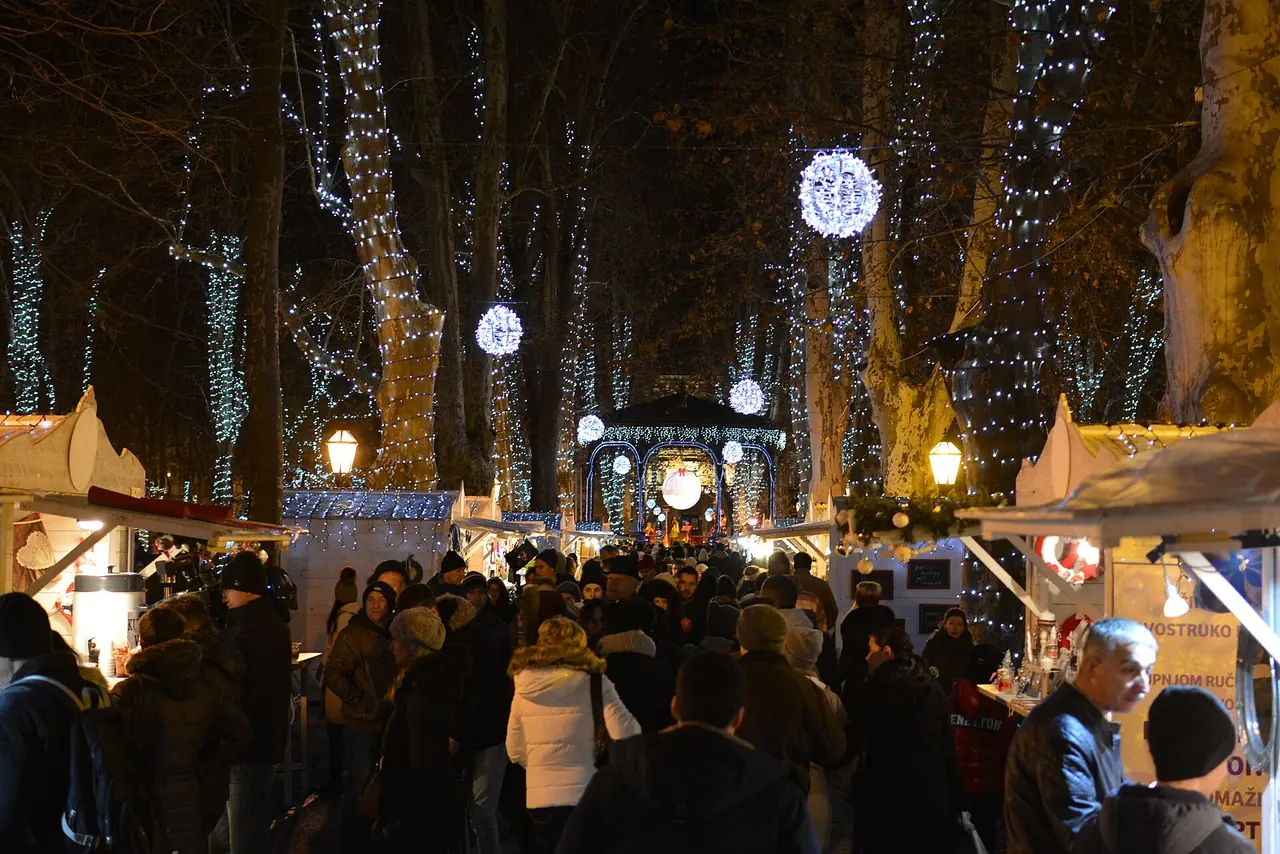
Advent in Zagreb runs 28 November 2026 to 7 January 2027: roughly 25 markets scattered across squares, parks, tunnels and pedestrian streets, plus an ice rink on King Tomislav Square. You’ll still see “the best Christmas market in Europe” on the posters: that was an online vote run by European Best Destinations, and Zagreb last won it in 2018, so read it as history, not a ranking. What holds up is the geography - the markets sit close enough together that an evening becomes a walking route rather than one square. Our full Zagreb Advent guide breaks down which markets are worth an evening, what the food and skating actually cost, and the tram closure nobody warns you about - and December room prices in Zagreb still bear no resemblance to August on the coast.
On 3 February, Dubrovnik holds the Feast of St Blaise for its patron saint, a procession that has run since 972 and joined the UNESCO list in 2009. It opens the evening before, on 2 February, with white doves released in front of St Blaise’s church and the saint’s flag raised on Orlando’s Column. It’s the one day of the year when Dubrovnik belongs entirely to the people who live there.
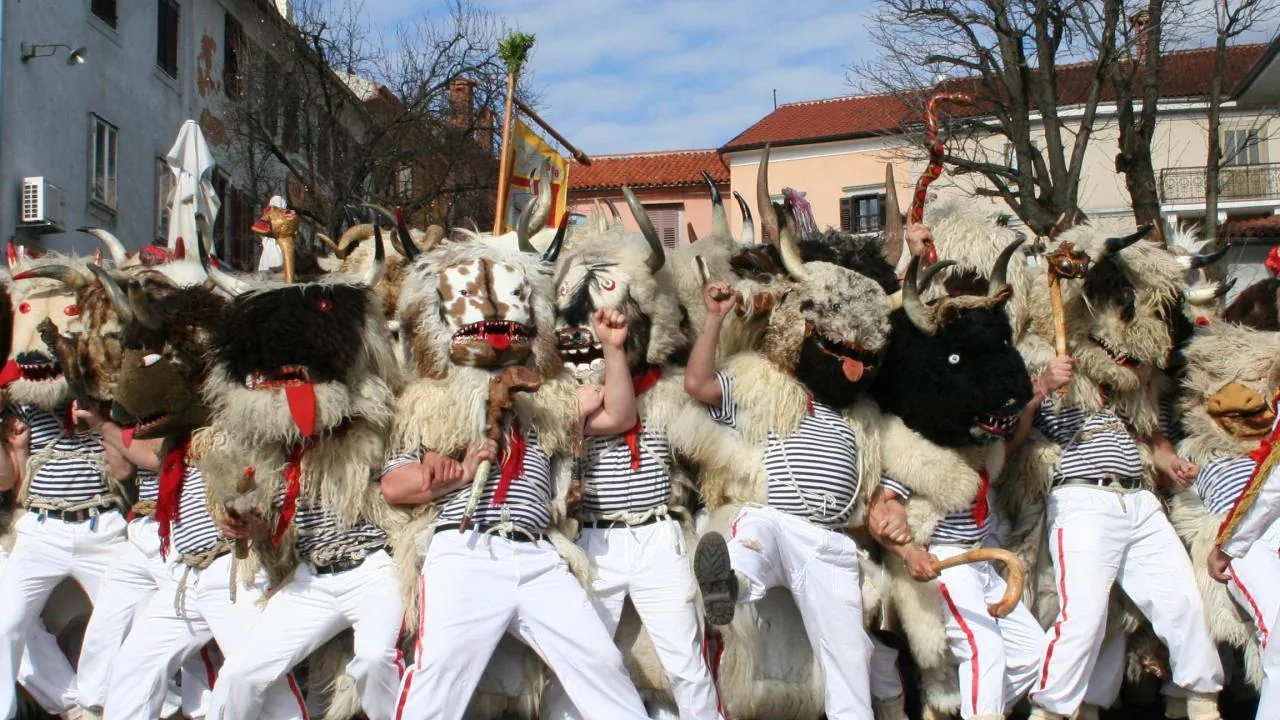
Carnival season peaks around the same time. In 2027 the Rijeka Carnival runs its queen’s pageant on 22 January, the children’s parade on 30 January and the International Carnival Parade on 7 February. Away from the city parade, the villages around Kastav in the hills behind Rijeka send out the zvončari, bell ringers in sheepskins and horned animal masks who walk from village to village behind a guide carrying a small evergreen tree, ringing heavy cowbells in step. UNESCO listed the bell ringers’ pageant in 2009, and it’s a far stranger sight than any parade float.
Spring is thinner but has two fixtures. Zagreb’s Festival of Lights projects installations across the city centre every March, free to walk (18-22 March in 2026, 26 installations at 21 locations). And on the night of Maundy Thursday, six villages on Hvar run Za križen, “following the cross”: each sends out a procession that covers a 25 km circle through the other five villages in around eight hours, overnight, walking behind a barefoot cross-bearer and singing the Lamentation of the Virgin Mary. It has run for close to five centuries without a break and is on the UNESCO list. The date moves with Easter, so check with the Jelsa tourist board before you plan around it.
What to book ahead
Not every festival needs the same lead time, and treating them all as equally urgent wastes money:
- Ultra Europe weekend in Split. Book rooms as early as you can and expect peak-of-peak pricing; 2027 tickets are already out, so there’s no reason to wait.
- The Alka in Sinj. A small town and a one-afternoon event: Split is under an hour away by road and makes the obvious base.
- Dubrovnik Summer Festival and Split Summer. Rooms first, individual performances later - the dates are fixed long before the programme lands.
- Advent in Zagreb. Weekends in December book out well ahead; midweek nights are noticeably easier and cheaper.
- Beach-club festivals on Zrće. Refundable everything until the venue is confirmed - after Sonus, that isn’t paranoia.
Two points apply to all of them. Croatia uses the euro, and cards work even at festival stalls, though small kiosks and village fairs still prefer cash. And if the festival is inland - Sinj, Varaždin, Livade, Fužine - evening bus connections are thin, so without a car you’re planning the night around the last departure rather than the programme.
Dates change: check before you book
Everything above was checked against official festival and tourist board sources on 27 July 2026. Where a 2027 edition hasn’t been announced yet - which is most of them at this point in the year - the month is the guide, not the day. Four exceptions you can bank on: Ultra Europe on 9-11 July 2027, INmusic on 27-29 June 2027, the Rijeka Carnival’s confirmed 2027 dates (22 and 30 January, 7 February) and Dubrovnik’s fixed 10 July - 25 August window.
Check the festival’s own site first, then the local tourist board as a second opinion: tourist boards tend to keep repeating the rule of thumb - “first Sunday in August” for the Alka - long after the organiser has published a date that breaks it. For working out which month suits you overall, our guide to the best time to visit Croatia sets festivals against weather, sea temperature and prices.
Opening hours, prices, timetables and seasonal services change through the year - the figures here are planning estimates, not quotes. Confirm current details with the operators and official sources before you go.
Photos
Read also

Entertainment · 11 min read
Zagreb Nightlife 2026: Bars, Clubs & Craft Beer
Verified · September 19, 2026Zagreb nightlife by area: Tkalčićeva's bars, Opatovina's craft beer, the touring KSET club scene and Jarun Lake in summer - plus real, published prices.

Entertainment · 9 min read
Split Stag Do: Boats, Hotels & How to Plan
Verified · August 18, 2026Plan a Split stag weekend: group base, boat tickets from €40, airport van vs €10 shuttle, two-night running order.

Entertainment · 10 min read
Ultra Europe Split 2027: Tickets, Camping, Tips
Verified · August 16, 2026Next Ultra Europe is 9-11 July 2027 at Park Mladeži, Split. Official tickets from €199; camping combo is in Omiš, not at the stadium.

Entertainment · 10 min read
Bačvice Beach Club, Split 2026: 1 Venue, Bars to 03:00
Verified · August 2, 2026Bačvice beach club guide: one licensed night venue on the register, Caffe-Club Bačvice, plus Tropic and Žbirac on the bay; terraces serve to 03:00 in July.