
Zagreb Travel Guide: Things to Do in Croatia's Capital
What to see in Zagreb in 1-2 days: Upper Town, the Cathedral, Dolac market, museums, where to stay and how to get in from the airport.
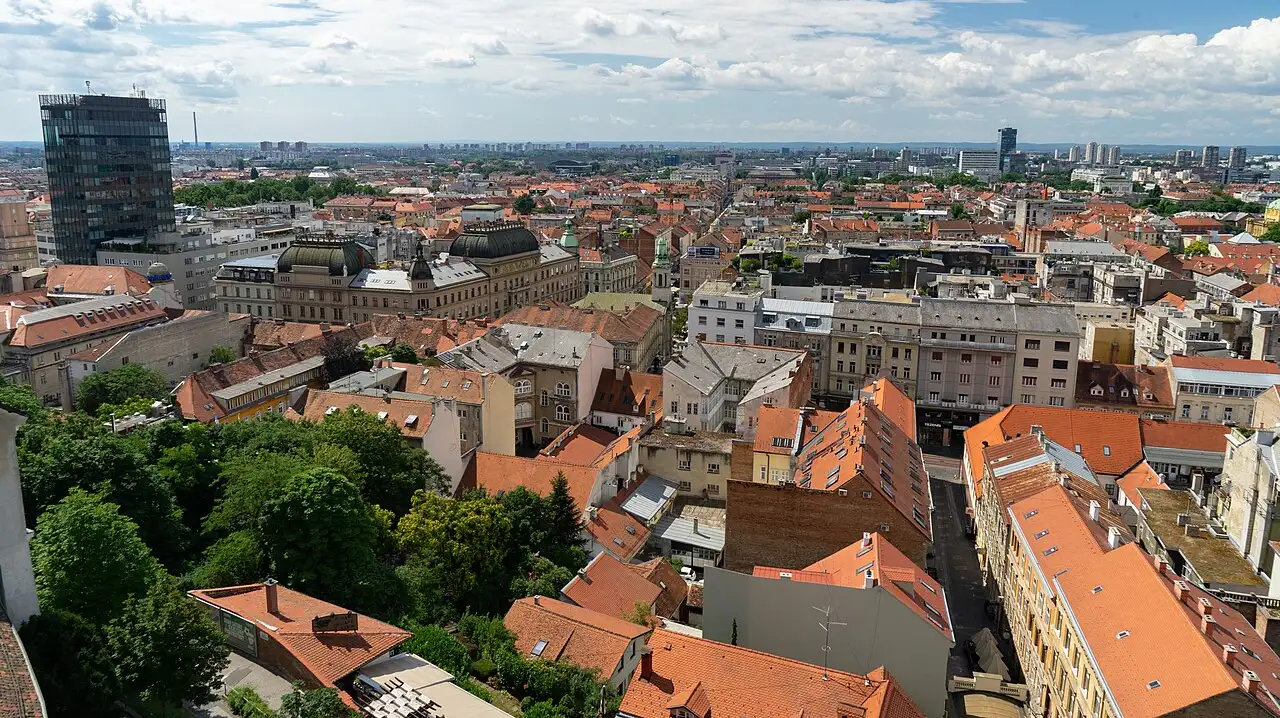
Zagreb is Croatia’s capital and easily worth a full day or two before you head for the coast. The compact historic core splits into the hilltop Upper Town (Gornji grad) - St. Mark’s Church, the Cathedral, the funicular and the Stone Gate - and the grand 19th-century Lower Town (Donji grad), a string of leafy squares, museums and café terraces. Add the Dolac farmers’ market and a tram ride or two and you have a relaxed city break that costs far less than Dubrovnik or Split.
Croatia uses the euro (€) and has been in the Schengen Area since 1 January 2023, so for most visitors there are no border formalities once you are inside the EU.
How long to spend in Zagreb
One full day covers the highlights; two days lets you slow down, add a museum or two and a park. A practical first day: ride the funicular up to the Upper Town, see St. Mark’s Church and Lotrščak Tower, walk down through the Stone Gate to Dolac and Tkalčićeva street for lunch, then spend the afternoon on the Lower Town museum-and-park promenade known as the Green Horseshoe.
The Upper Town (Gornji grad)
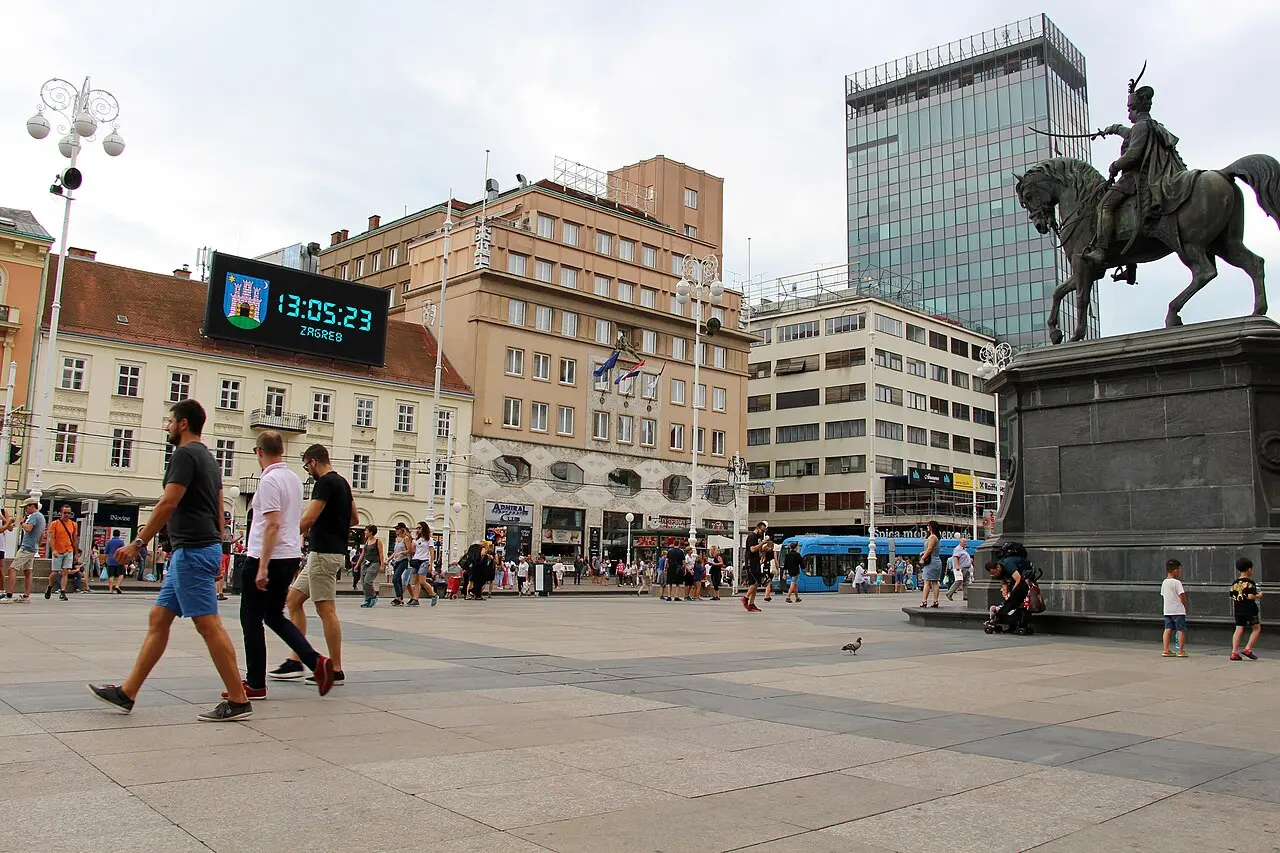
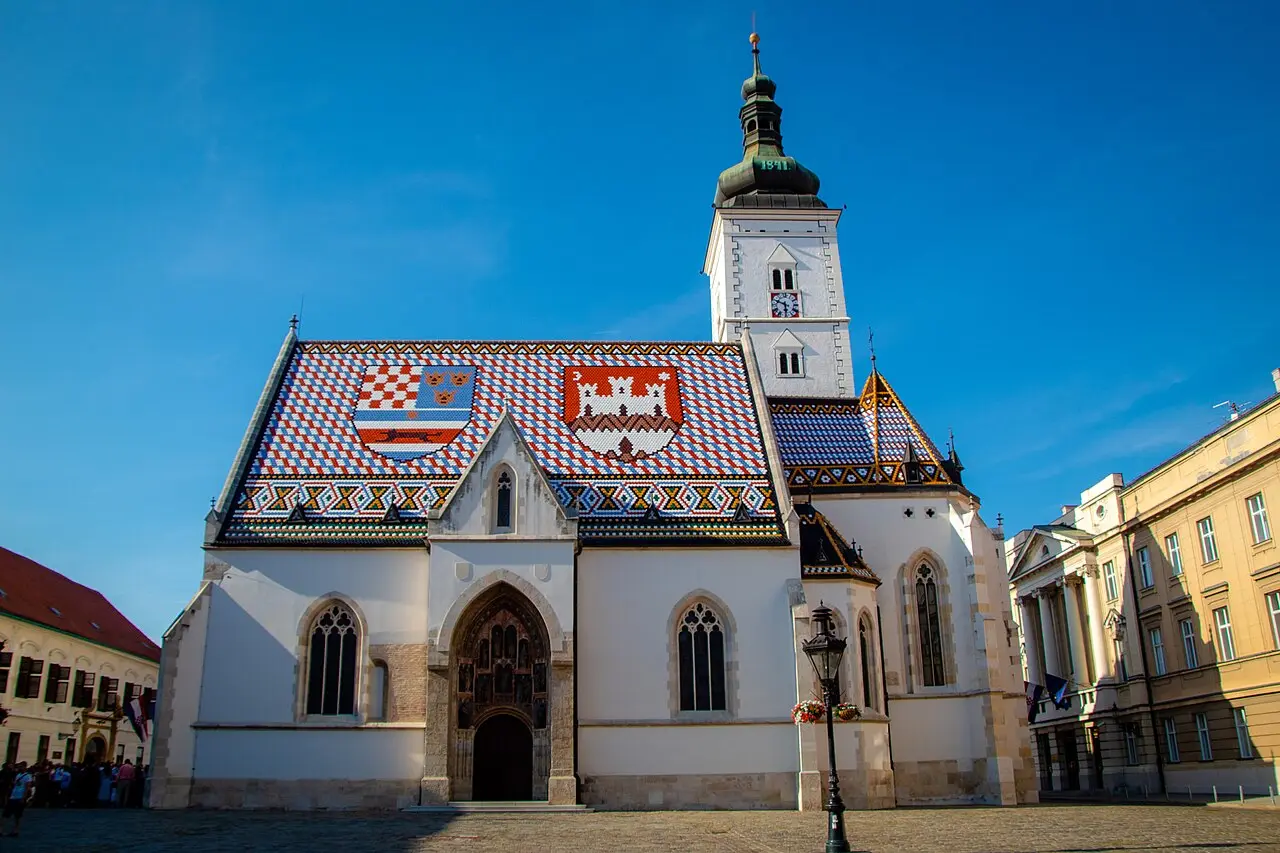
The medieval hill towns of Gradec and Kaptol grew together into today’s Upper Town, and it is the most atmospheric part of Zagreb. The single must-see image of the city is St. Mark’s Church, whose tiled roof carries the coats of arms of Croatia, Dalmatia and Slavonia on one side and the city of Zagreb on the other. You can’t usually go inside outside of services, but the square in front - flanked by the Croatian Parliament (Sabor) and the government palace - is free to wander.
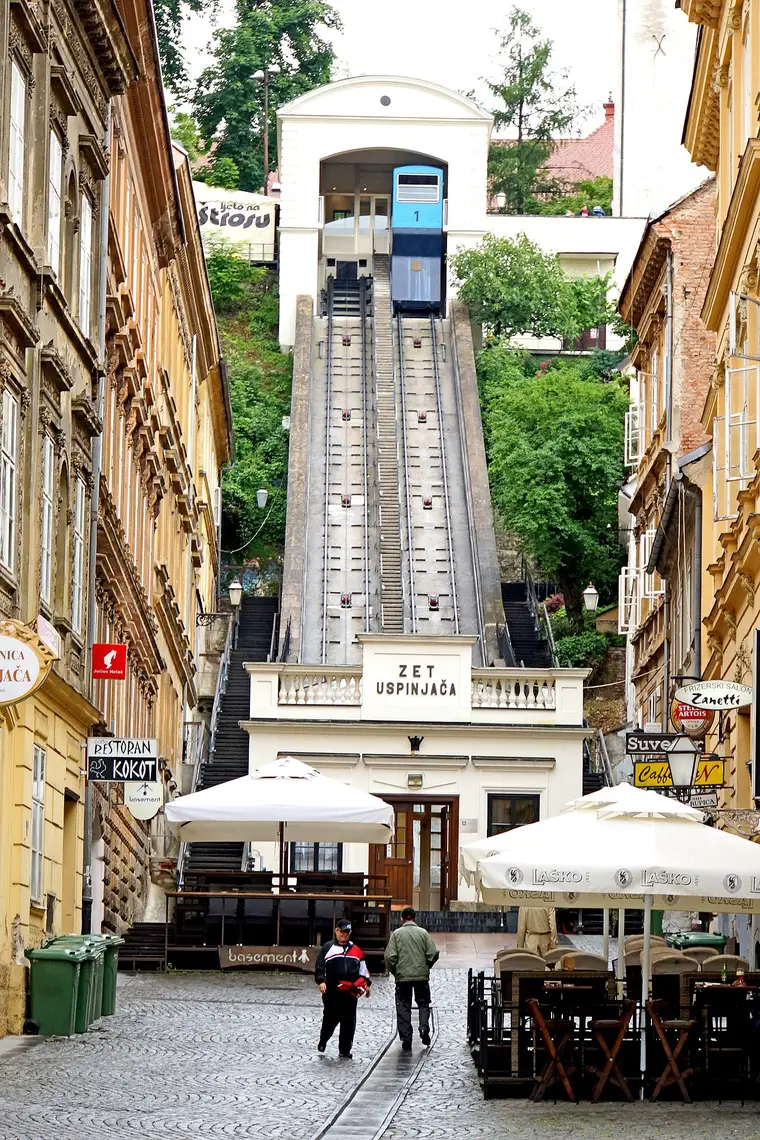
A few minutes away, Lotrščak Tower guards the old southern gate; climb it for a rooftop view, and listen for the Grič cannon, fired every day at noon. Just below, the Zagreb funicular has shuttled people between the Lower and Upper Town since 1890 and is one of the shortest public funiculars in the world - a short, fun ride rather than serious transport.
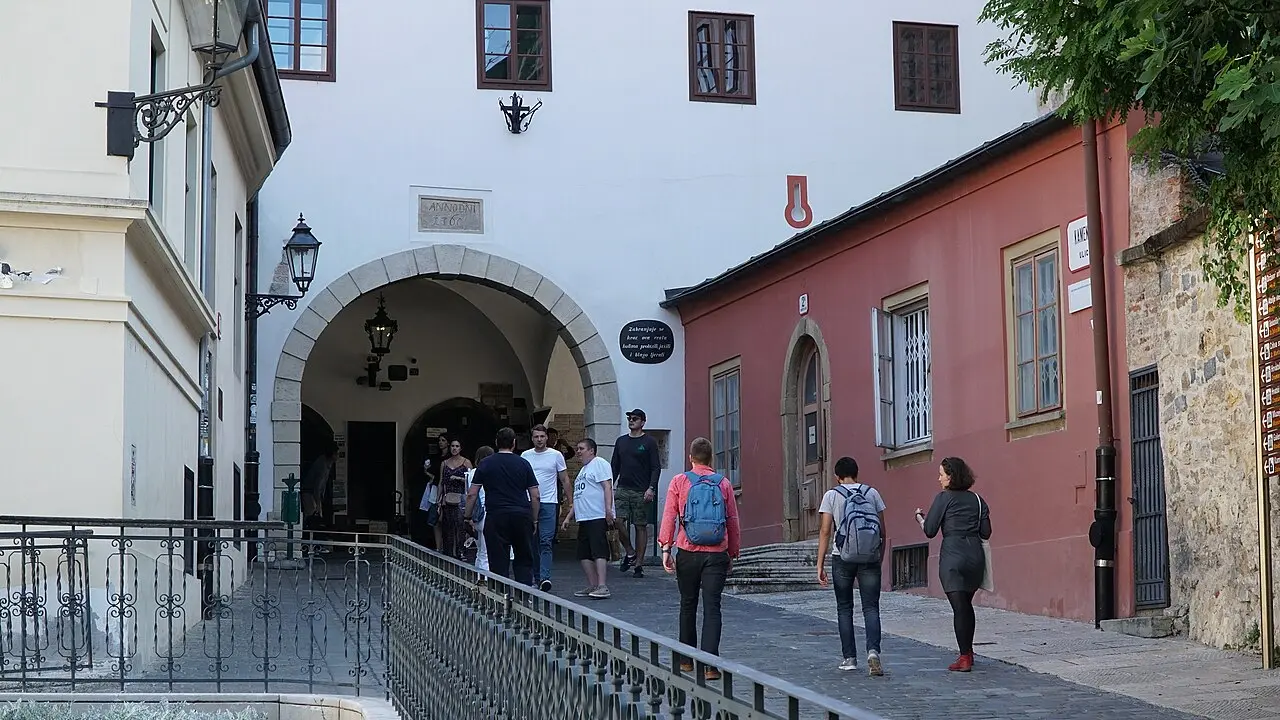
Don’t miss the Stone Gate (Kamenita vrata), the last surviving medieval gate, now a quiet shrine where locals light candles. The Upper Town is also home to two of the city’s best small museums - the Museum of Broken Relationships, a genuinely original collection of donated objects and their stories, and the Croatian Museum of Naïve Art.
The Cathedral and Dolac market
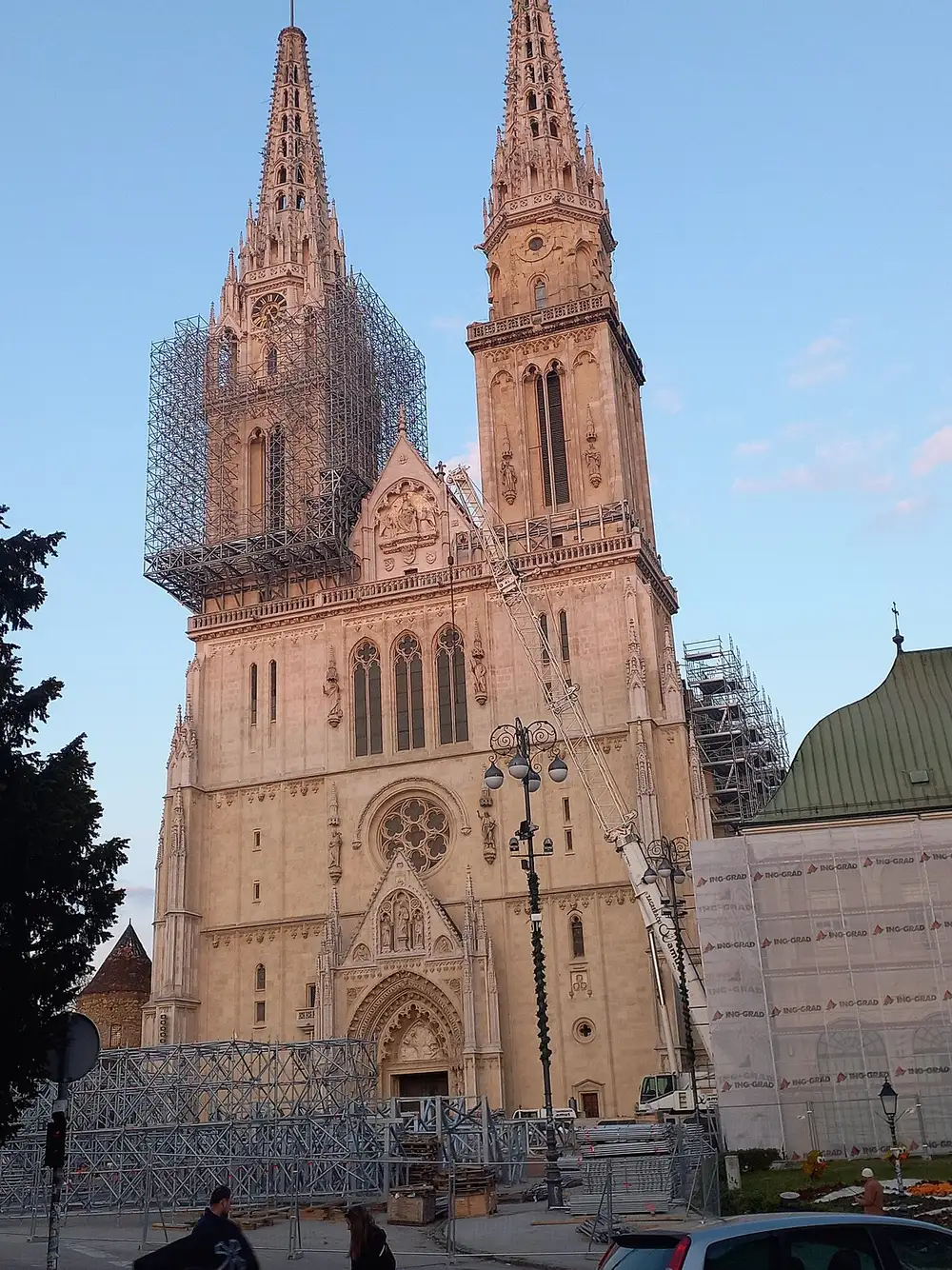
On the Kaptol side, Zagreb Cathedral and its twin neo-Gothic spires are the tallest structure in the country. The cathedral was badly shaken by the March 2020 earthquake and one spire has been under restoration since, so expect scaffolding - check the latest before you visit.
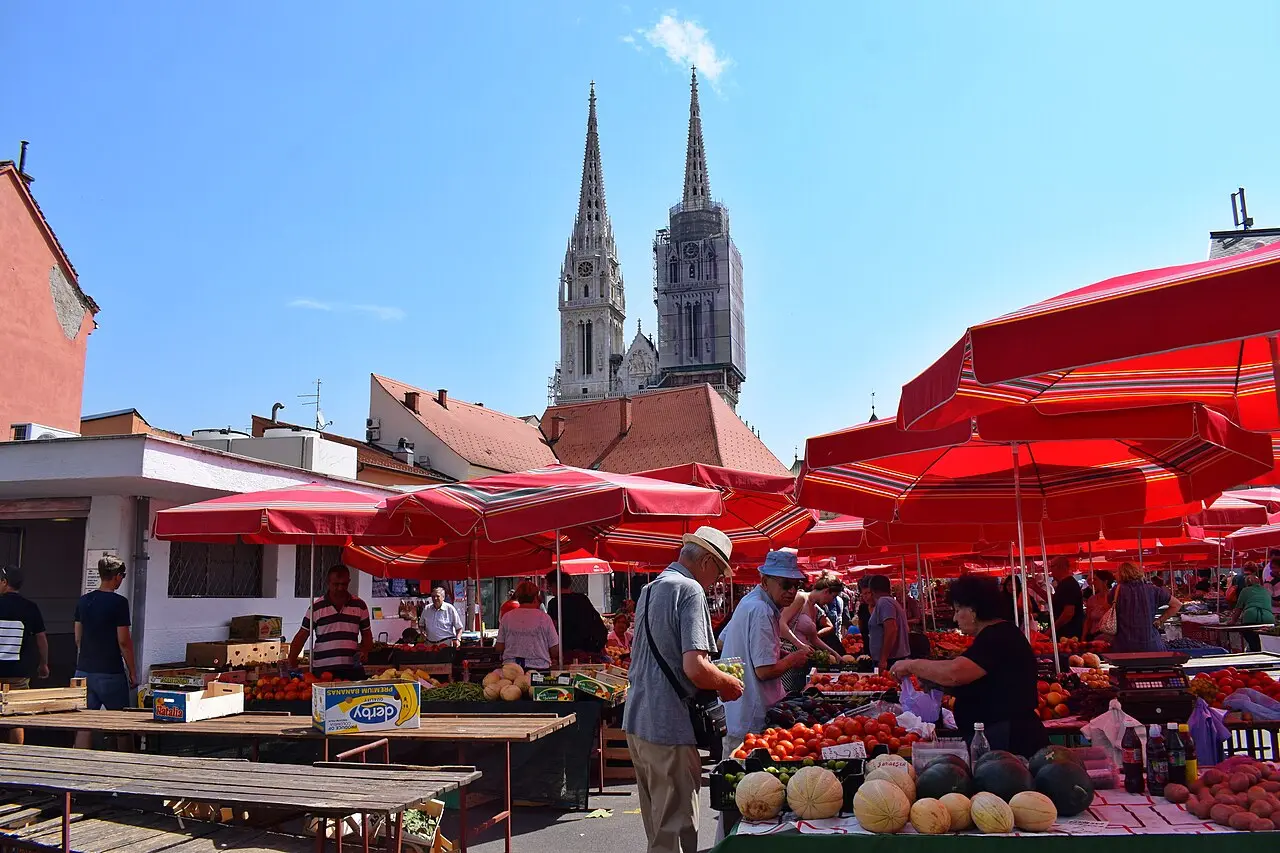
Right beside it is Dolac, the city’s main open-air market since 1930. Locals call it “the belly of Zagreb.” Under a sea of red parasols you’ll find seasonal fruit and vegetables, while the covered level below has fish, cheese, cured meats and the local fresh cheese sir i vrhnje. Mornings are best; many stalls wind down by early afternoon.
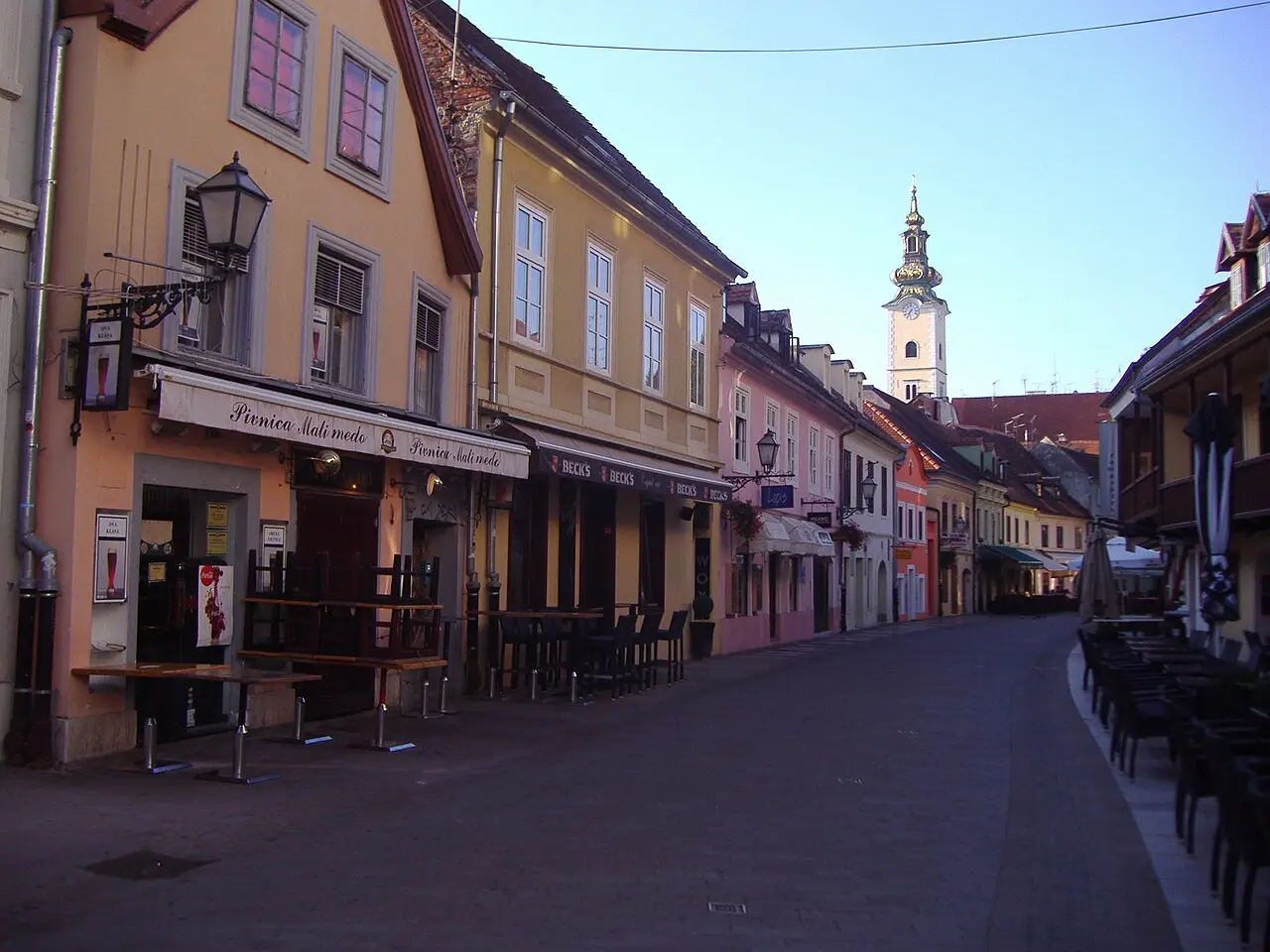
From the market, Tkalčićeva street runs north - a pedestrian strip of bars, cafés and restaurants that is the heart of Zagreb’s nightlife and its best spot for a long, slow coffee, the city’s unofficial sport. Coming back after dark, our Zagreb nightlife guide covers this street’s bars alongside the craft beer scene on Opatovina and the clubs further out.
The Lower Town (Donji grad) and museums
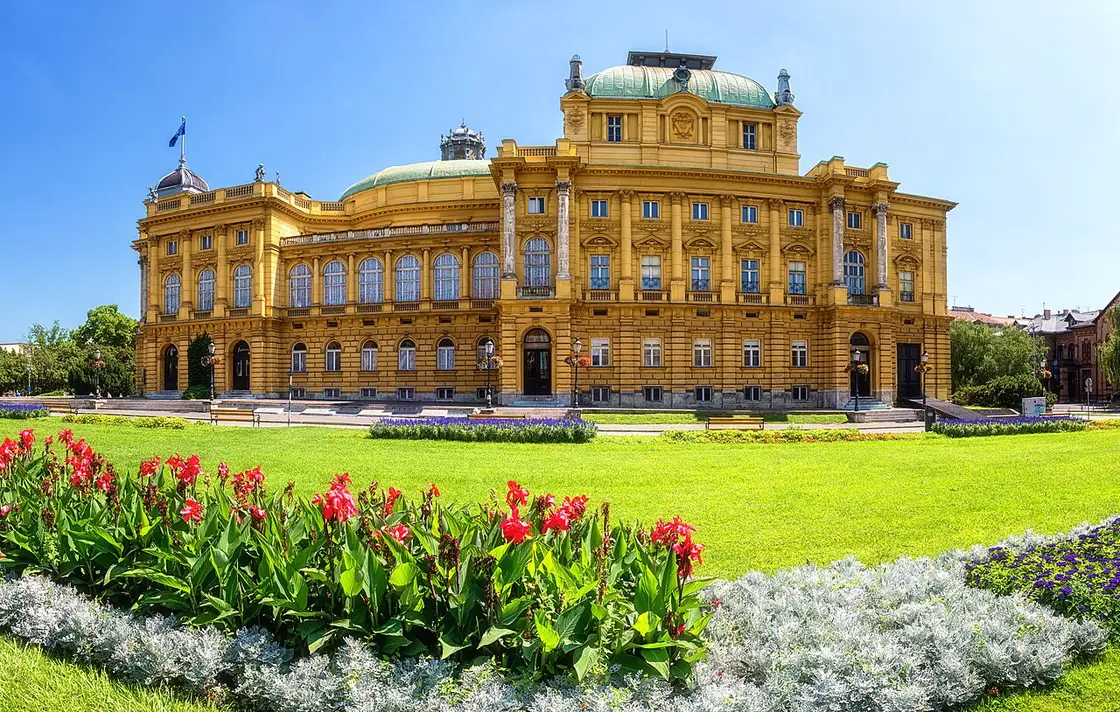
The flat Lower Town was laid out in the 19th century as a U-shaped chain of parks and grand institutions - the Green Horseshoe. Walking it is the easiest sightseeing in Zagreb: start at Zrinjevac, a tree-lined promenade with a wrought-iron music pavilion, and continue past the Art Pavilion and the Croatian National Theatre, a butter-yellow neo-Baroque landmark from 1895.
For rainy days, the Lower Town has the lion’s share of the museums: the Mimara Museum, the Museum of Arts and Crafts, the Archaeological Museum and the Ethnographic Museum are all within a few blocks.
Where to stay: best areas
For a short visit, base yourself in or near the Lower Town - you’ll be walkable to almost everything and steps from the main tram lines.
| Area | Good for | Notes |
|---|---|---|
| Lower Town (Donji grad) | First-timers, walkability | Around Ban Jelačić Square and Zrinjevac; most hotels and trams |
| Upper Town (Gornji grad) | Atmosphere, quiet evenings | Cobbled, charming, a little uphill; fewer hotels |
| Britanski trg / west | Cafés, weekend antiques market | Residential, calmer, short tram ride to the centre |
The neighbourhood trade-offs - Donji Grad vs Gornji Grad, Trešnjevka, Jarun and the rest - are in where to stay in Zagreb. Zagreb is a year-round city - summer is warm, while the Advent Christmas market (Zagreb won a public “best in Europe” vote back in 2016-2018, and the city still prints it on every banner) makes December a highlight. Compare current rates and locations before booking.
Getting in from the airport
Franjo Tuđman Airport (ZAG) is about 17 km southeast of the centre. Your options:
| From the airport | Time | Notes |
|---|---|---|
| Croatia Airlines airport bus | ~35-40 min | To the main bus station, then a short tram to the centre |
| Taxi / ride-hail | ~25-35 min | Door-to-door; fares vary - agree or app-meter first |
| Rental car | ~25 min | Useful only if you’re driving on to the coast |
Once in town you rarely need a car: the ZET tram network covers the centre well, and the historic core is walkable end to end. If you’re continuing to the Adriatic, see our guide to renting a car in Croatia.
Where to eat
Zagreb’s food is hearty continental Croatian rather than coastal: look for štrukli (baked or boiled dough with fresh cheese), purica s mlincima (turkey with baked pasta), grilled meats and, in autumn, game and mushrooms - our guide to what to eat in Croatia sets the inland dishes against the coastal ones. Graft a market visit onto it - buy fruit at Dolac, then eat at one of the konobas nearby. Tkalčićeva and the streets around Dolac are the easiest places to find a table; for our standards on picking places, see the food directory.
A little further out
If you have extra time, Mirogoj cemetery - a monumental complex of ivy-covered arcades and domes - is a surprisingly beautiful 15-minute bus ride north. For green space, Maksimir Park (with the city zoo) and the Jarun lake are local favourites in summer.
Plan the rest of your trip
Zagreb pairs naturally with the coast and the lakes. Heading down to Dalmatia next, our Zagreb to Split transport guide compares the bus, train, flight and driving - the bus is faster and more frequent, but the train can undercut it on price in summer. To slot it into a wider route, see our 7-day Croatia itinerary and, for picking your dates, the best time to visit Croatia. On money, the capital sits in the same room band as Split and well under the priciest stretches of coast - is Croatia expensive? breaks the daily spend down in euros, dollars and pounds. The cities hub collects our other Croatian city guides.
Opening hours, prices, timetables and seasonal services change through the year - the figures here are planning estimates, not quotes. Confirm current details with the operators and official sources before you go.
Photos
On the map
The map loads on click - to keep the page lightweight.
The map didn’t load. Check your connection and refresh the page.
Read also

Cities · 12 min read
Motovun Travel Guide: Walls, Truffles & Teran
Verified · September 4, 2026Motovun hilltown guide: walls ticket €5 in 2026, St Stephen, Teran cellars, Mirna views, parking climb, and why the film festival no longer plays here.

Cities · 10 min read
Dugi Otok & Sakarun Beach: Island Day-Trip Guide
Updated · August 31, 2026Day-trip Dugi Otok from Zadar: Jadrolinija ferry to Brbinj, Sakarun beach, Veli Rat lighthouse, and Telašćica cliffs - DIY or boat tour.

Cities · 10 min read
Opatija Travel Guide: Habsburg Riviera & Lungomare
Verified · August 25, 2026Opatija on the Kvarner Gulf: the 10 km Lungomare, Villa Angiolina museum, Maiden with the Seagull, and how it differs from Rijeka and Istria.

Cities · 10 min read
Omiš Travel Guide: Pirates, Zipline & Cetina Canyon
Verified · August 21, 2026Omiš is 25 km from Split: Promet bus €2.50, Mirabela €4-6, Cetina rafting and an 8-line zipline over the canyon.