
What to Eat in Croatia: Food & Wine Guide
What to try in Croatia: peka, pašticada, black risotto, buzara, brudet, Pag cheese, pršut, Istrian truffles, štrukli, plus Plavac Mali and Malvazija wine.
Croatian food splits neatly in two: light, garlicky seafood on the Adriatic coast, and heartier, meatier cooking inland. Croatia calls itself a cuisine of regions, but the divide that matters most for a traveller is coast versus continent. On the coast you get grilled fish, olive oil, black risotto and truffles; drive over the mountains and the plate fills with paprika stews, dry-cured sausage and baked cheese dough. This guide runs through the dishes worth ordering in each, the wines to drink with them, and how to find the real version instead of the tourist-menu one.
The one thing to understand before you order: which of the two Croatias you’re eating in. It shapes the whole table.
Two cuisines in one country
The coast - Split, Dubrovnik, Zadar, Istria and the islands - eats like the eastern edge of the Mediterranean: fresh fish, shellfish, risotto, pasta, olive oil and a lot of garlic, a legacy of centuries of Venetian and Italian influence. Portions lean lighter, seafood is the star, and Istria adds truffles and a strong Italian streak in the pasta. Cross the mountains and the food changes completely. Slavonia in the east is flat farming country on the edge of the Pannonian plain, its cooking rich and paprika-heavy, closer to Hungary than the sea; Zagorje and the region around Zagreb, shaped by centuries under Austria-Hungary, run to baked dough, fresh cheese, turkey and strudel. Neither is better; they’re two different meals, and a good trip includes both.
Peka: the dish worth planning ahead for
If you order one thing that says “coast,” make it peka (also written ispod peke, “under the bell”). Meat or octopus and vegetables go into a shallow dish, a heavy bell-shaped iron lid - the peka or sač - covers it, and glowing embers are heaped on top so the food roasts slowly in its own juices and steam. The classics are lamb, veal and octopus, and the result is meltingly tender in a way no oven quite matches.
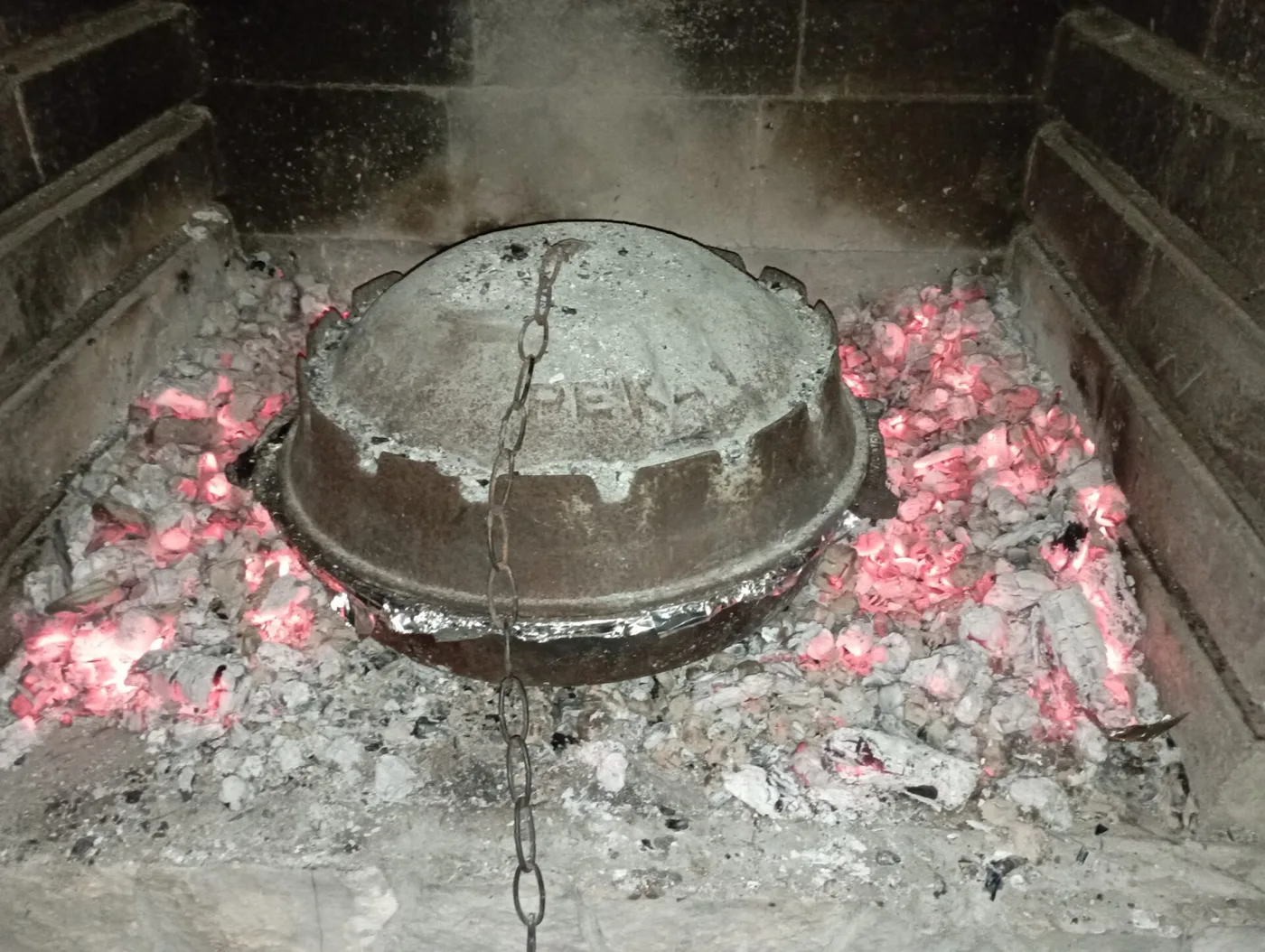
Here’s the practical catch most first-timers miss: peka is slow, so konobas usually want you to order it a few hours ahead, often the day before, and it’s typically cooked for two or more. Don’t turn up hungry expecting it in twenty minutes - call ahead and build your evening around it. That single piece of planning separates the travellers who eat great peka from the ones who never try it. Our full guide to Croatian peka covers how far ahead to book, what to order and which konobas still cook it.
Pašticada: the queen of Dalmatian cooking
The grand Dalmatian dish is pašticada - beef larded with garlic and cloves, marinated for a day in vinegar and herbs, then braised for hours in red wine, prošek (a sweet Dalmatian dessert wine), prunes and spices until it falls apart. It comes in thick slices under its dark sauce with homemade gnocchi (njoki). This is celebration food, cooked for weddings and feast days.
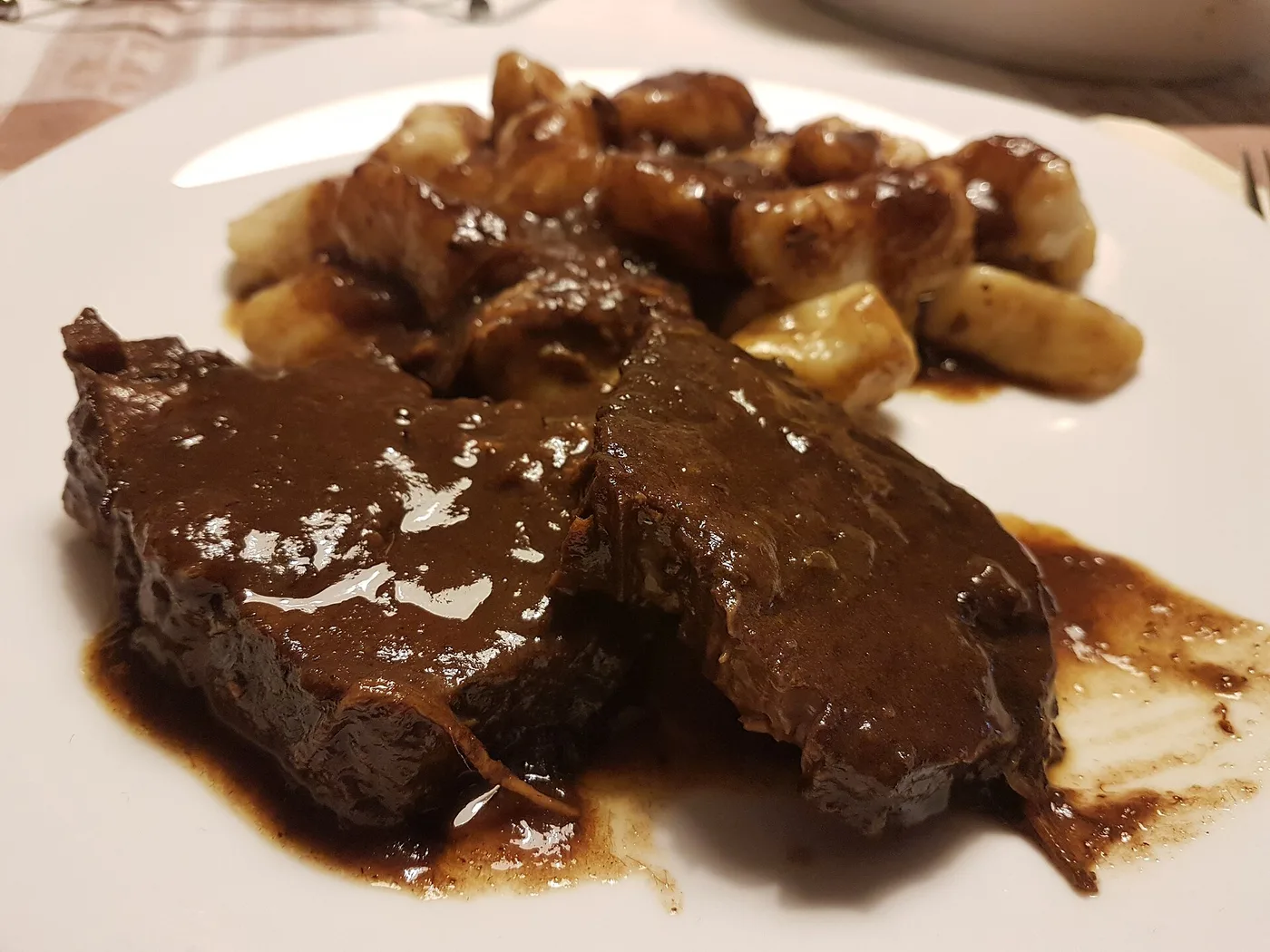
Order it where you see it handwritten on a konoba board rather than laminated in six languages. It pairs naturally with a glass of Plavac Mali, and it’s a good reason to sit down for a long lunch in Split.
Seafood on the coast: buzara, black risotto and grilled fish
Buzara is both a method and a sauce: shellfish - mussels, clams, or the prized Adriatic langoustines (škampi) - simmered in white wine, garlic, olive oil, parsley and a little breadcrumb until the liquid reduces into a light broth you mop up with bread. It comes bijela (white, no tomato) or crvena (red). Mussel buzara is the everyday version; scampi na buzaru is the treat, eaten messily with your fingers.
The other coastal signature is crni rižot, black risotto coloured with cuttlefish ink - jet black, glossy, gently tasting of the sea. It stains your teeth for the evening and it’s completely worth it. Beyond those, keep it simple: grilled squid, whole fresh fish grilled with olive oil and lemon, and brudet (brodet), several kinds of fish stewed with tomato and served with polenta - the best versions add a scorpionfish, which thickens the pot.
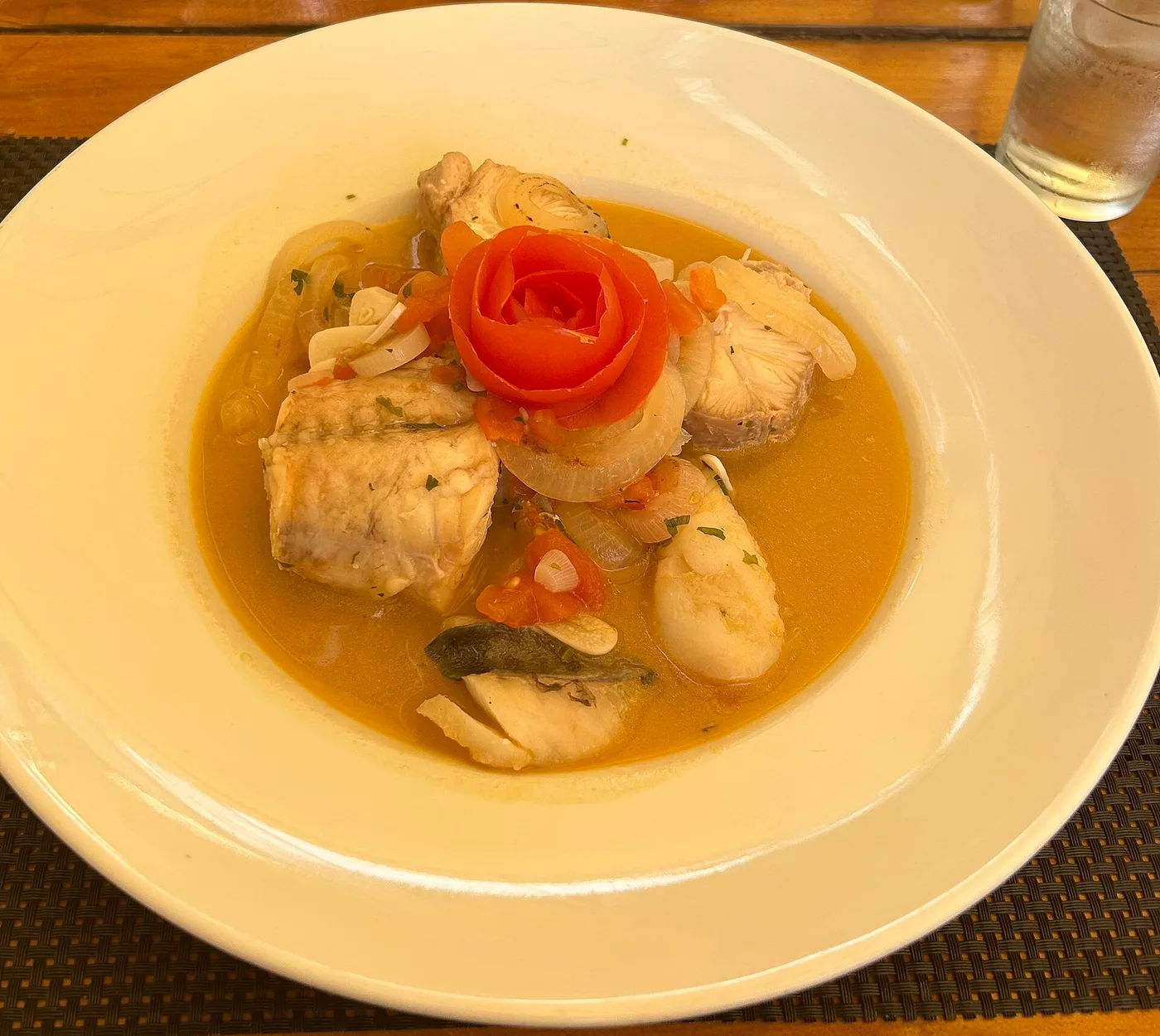
One thing to know: fish is priced by weight, so the waiter often brings the catch to the table and weighs your choice before cooking - agree the size before it hits the grill and the bill holds no surprises. Whatever you order, it arrives with blitva na dalmatinski: Swiss chard boiled with potato and dressed in olive oil and garlic, the default green up and down the coast. Our Split guide and Dubrovnik guide point you toward the konobas a few lanes back from the water, where you eat better and cheaper than on the main square.
Istria: truffles, pršut and pasta
The Istrian peninsula in the north-west is Croatia’s gourmet corner, eating more like northern Italy than Dalmatia. The headline is the truffle - both the black and the rare white grow wild in the oak forests around Motovun and the Mirna valley, hunted by trained dogs and shaved fresh over fuži pasta, eggs or steak. Istria takes this seriously: in 1999 a local hunter, Giancarlo Zigante, and his dog Diana dug up a white truffle weighing 1.31 kg near Buje - listed by Guinness World Records as the world’s largest at the time.
Istria also cures its own ham, and the difference is worth knowing. Istrian pršut is air-dried in the dry bura wind but not smoked, and trimmed of its skin and most of its fat - cleaner and milder than the Dalmatian style. Pair it with a glass of Malvazija and some Istrian olive oil and you’ve the region on a plate. If you’re heading that way, our guides to Rovinj and Pula cover the coast the food comes from.
Pršut and Pag cheese: the coastal cured board
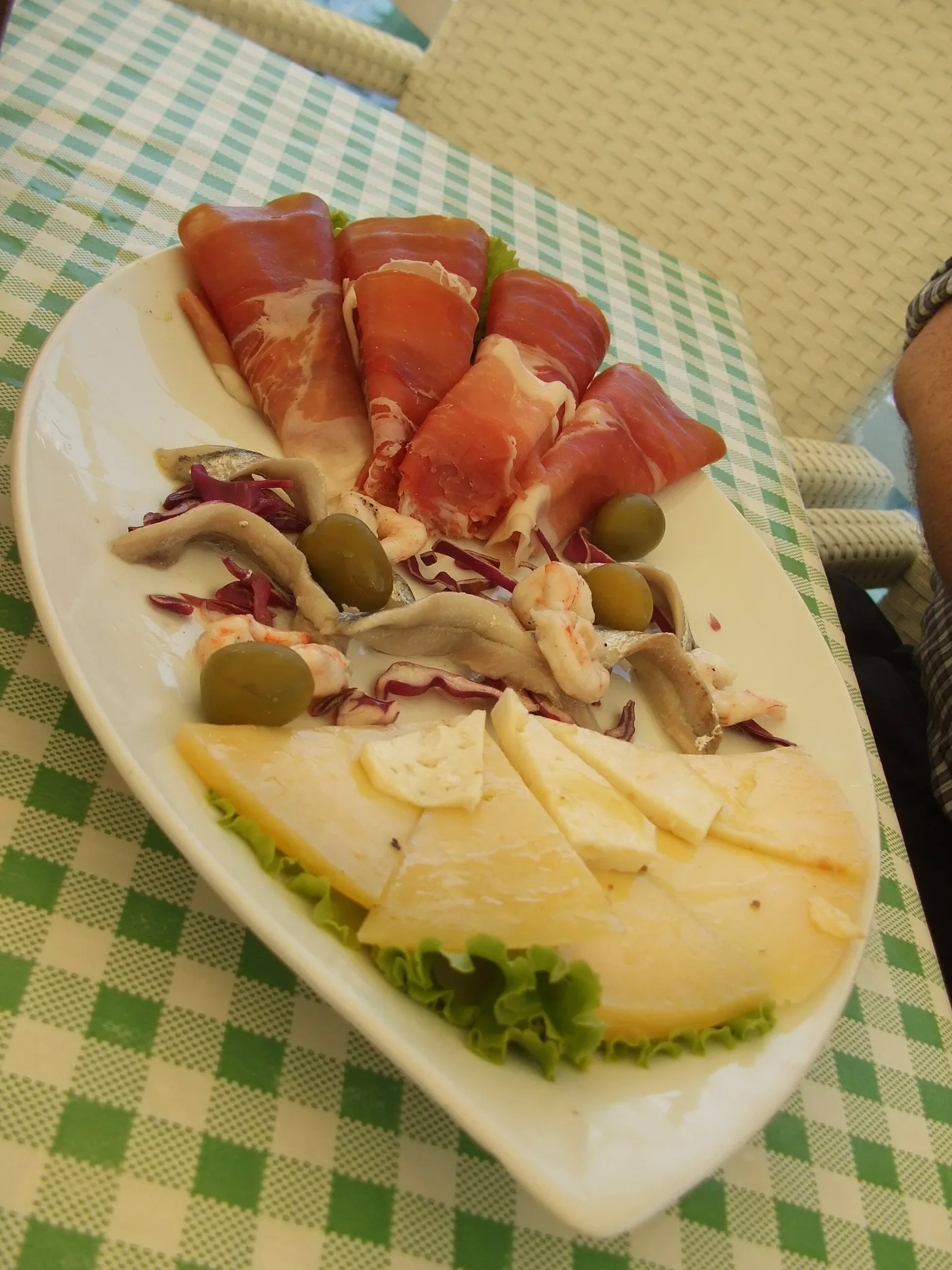
The standard welcome on the coast is a board of cured ham, cheese, olives and bread. Dalmatian pršut is dry-cured ham, sea-salted, cold-smoked over beechwood and air-dried for the best part of a year - that smoking is the tell that sets it apart from the unsmoked Istrian version, and it’s EU-protected. Sliced thin and eaten raw, it’s the natural partner to a hard, sharp sheep’s cheese.
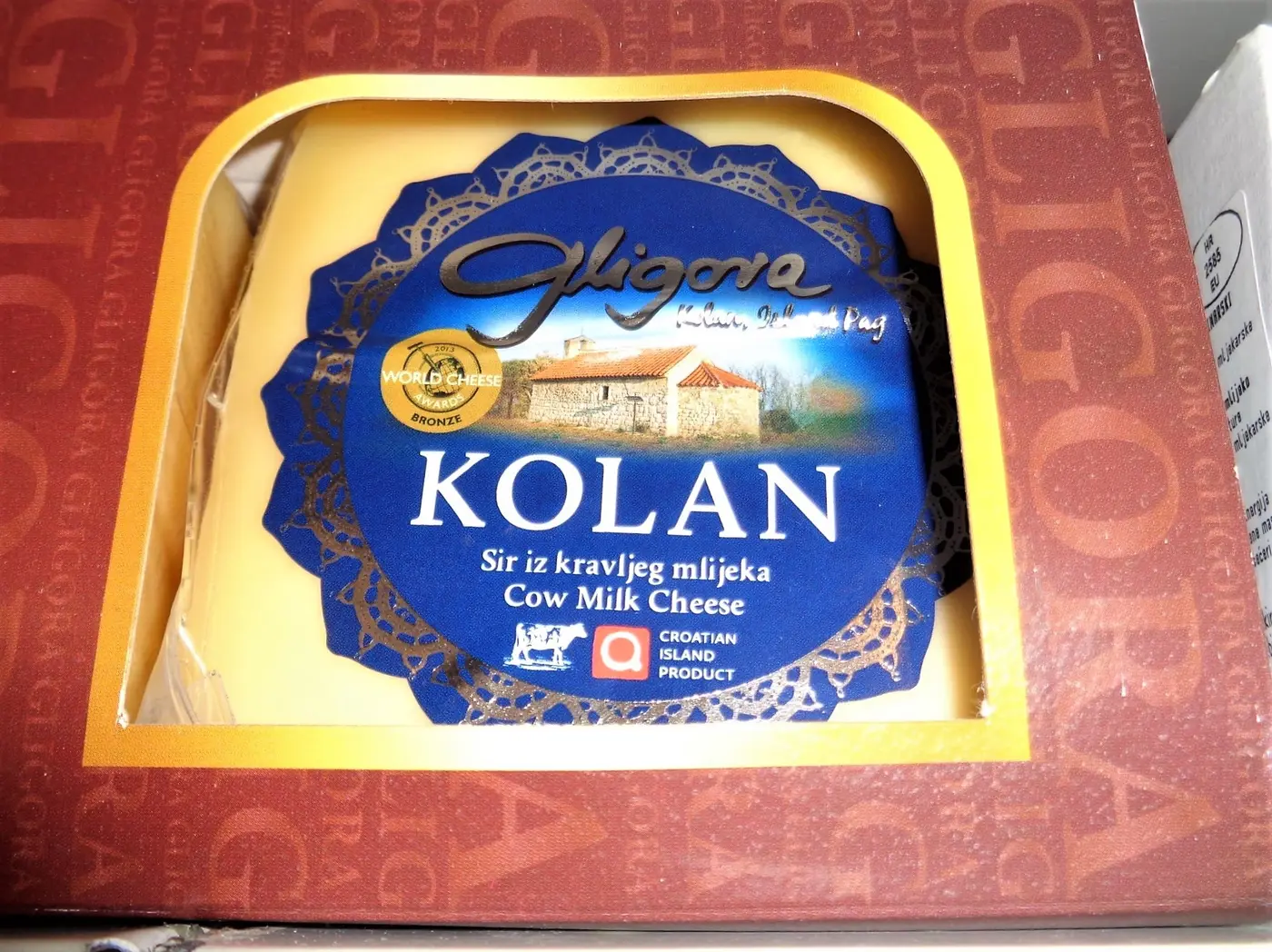
That cheese is usually Paški sir, made only on the island of Pag, where the fierce bura wind carries sea salt and the scent of wild sage onto the sparse pasture the sheep graze - which is exactly why it tastes the way it does. It’s a hard, salty, aged sheep’s-milk cheese, Croatia’s most awarded, and has held EU protected-designation-of-origin status since 2019. A slice of Pag cheese, a slice of pršut and an olive is the standard Croatian opening move.
Ston oysters: the southern detour
Between Dubrovnik and the Pelješac peninsula lies Mali Ston Bay, where fresh river water meets the sea and the European flat oyster (Ostrea edulis) has been farmed for centuries. The bay produces the bulk of Croatia’s oysters, and the Ston oyster was the first Croatian marine product to win EU protected status. Eaten raw with a squeeze of lemon straight off the racks, they’re a detour-worthy treat, and the town holds an oyster festival around the March harvest. Our Dubrovnik guide covers the trip out to Ston and its famous walls.
Inland: štrukli, kulen and paprika stews
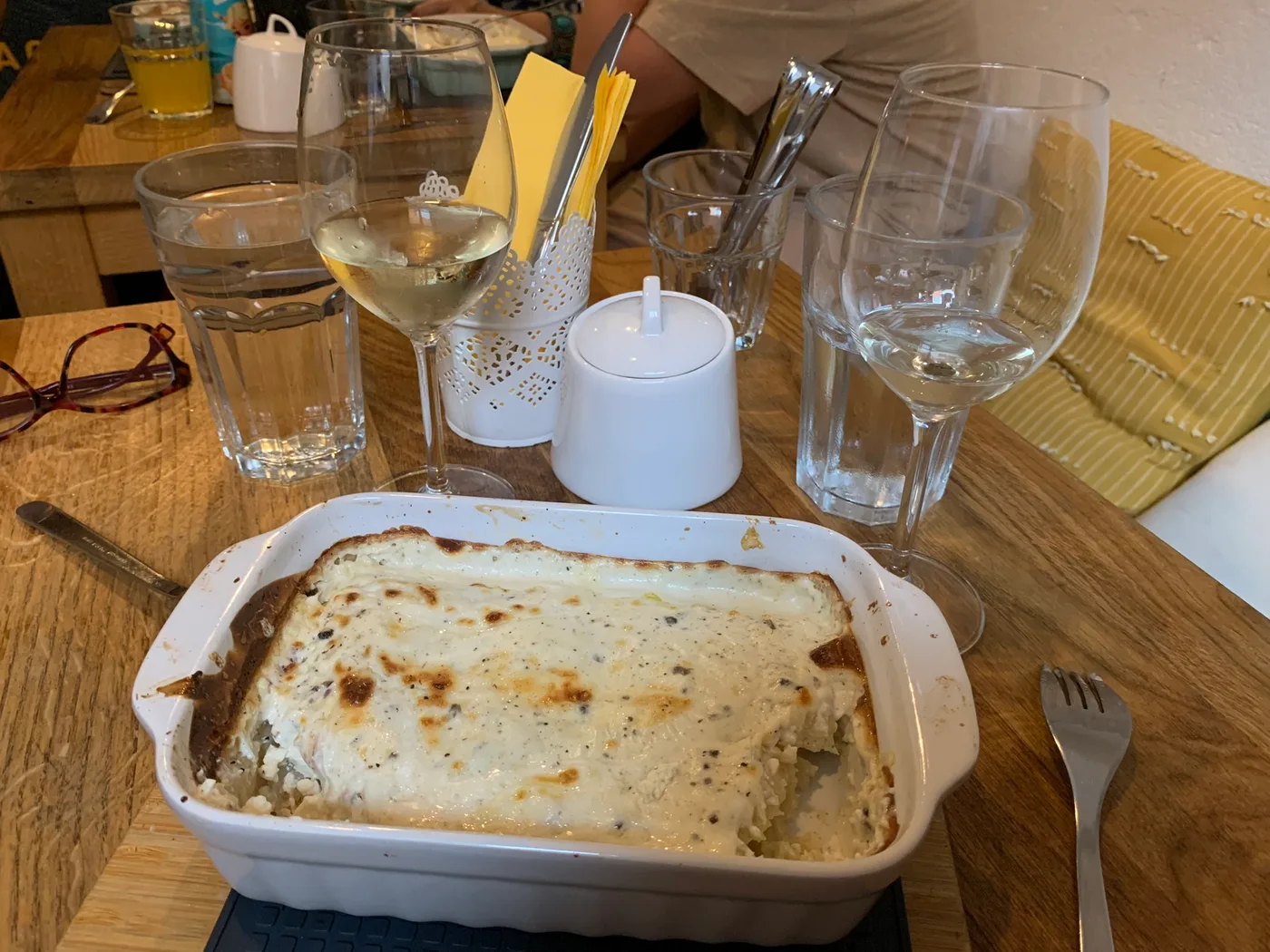
Head over the mountains and the food turns hearty. In Zagorje and around the capital, the dish to try is štrukli - sheets of thin dough wrapped around fresh cottage cheese, then boiled or baked until golden and bubbling. Baked zagorski štrukli arrives blistered and rich, somewhere between a dumpling and a savoury cheese bake; it can be a starter, a main or, sweetened, a pudding. It’s on Croatia’s list of protected intangible heritage, and it’s the taste of the north.
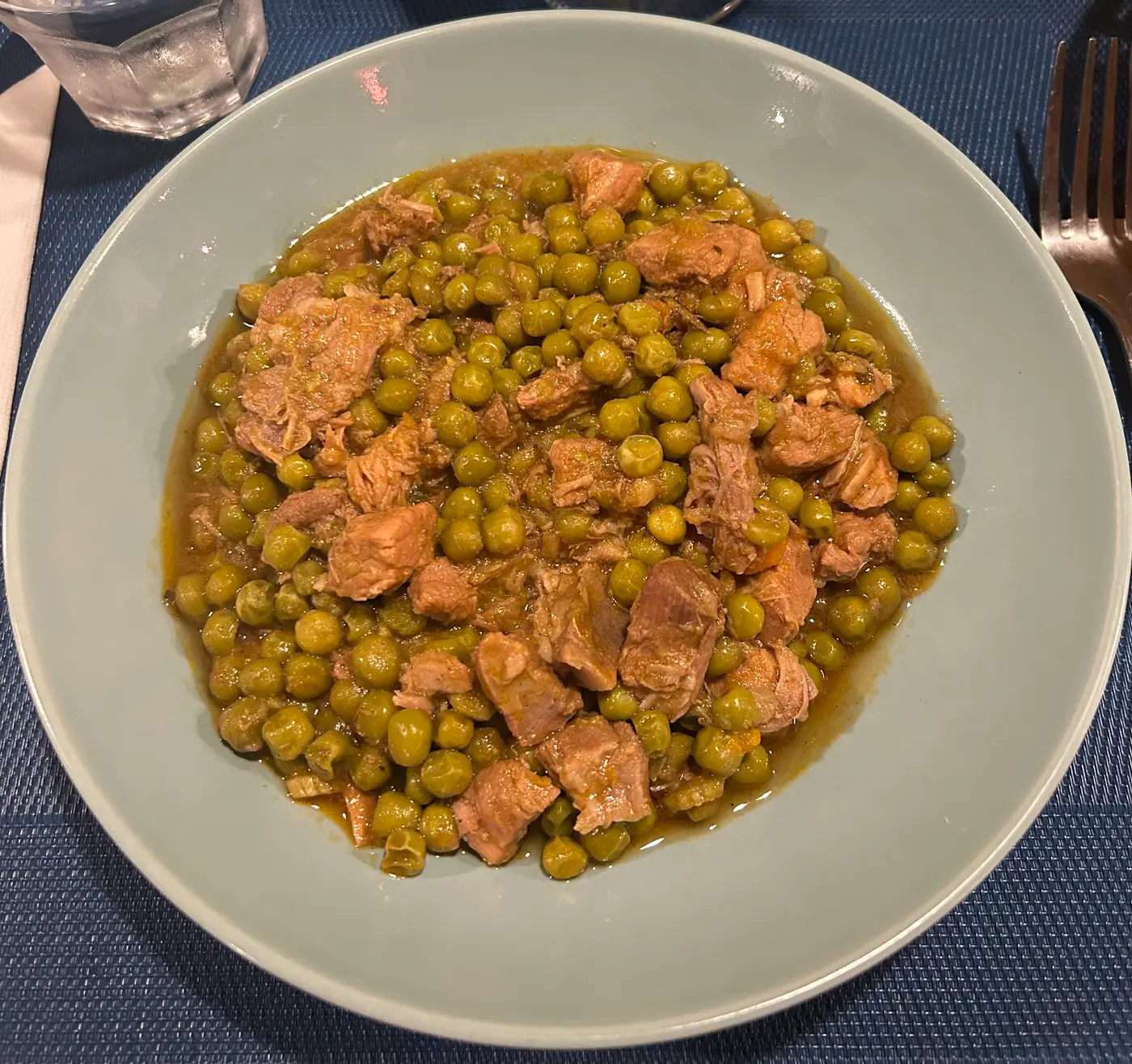
Further east in Slavonia, the flat farming country on the Hungarian border, the cooking is all paprika and pork. Kulen is the region’s pride: a spicy, deep-red dry-cured sausage seasoned heavily with paprika, matured for months and sliced thin - a protected Slavonian speciality. To go with it, čobanac is a fiery “shepherd’s” stew of two or three meats simmered with onions and yet more paprika until thick and dark. It pairs with a cold beer or a glass of Graševina. For the capital’s markets and konobas, see our Zagreb guide.
The grill and the lamb
Wherever you are, the grill (roštilj) is the reliable cheap meal, and off it come ćevapi - small rolls of grilled minced meat in flatbread with onion and ajvar (red-pepper relish). That’s the everyday plate. But the coast’s real grill treat is lamb, spit-roasted whole (janjetina s ražnja) at roadside restaurants and sold by the kilo. Islands like Pag and Cres are famous for it: the salty, herb-rich grazing that flavours the cheese flavours the meat too - you’ll taste the difference.
Sweets: fritule, rožata and strudel
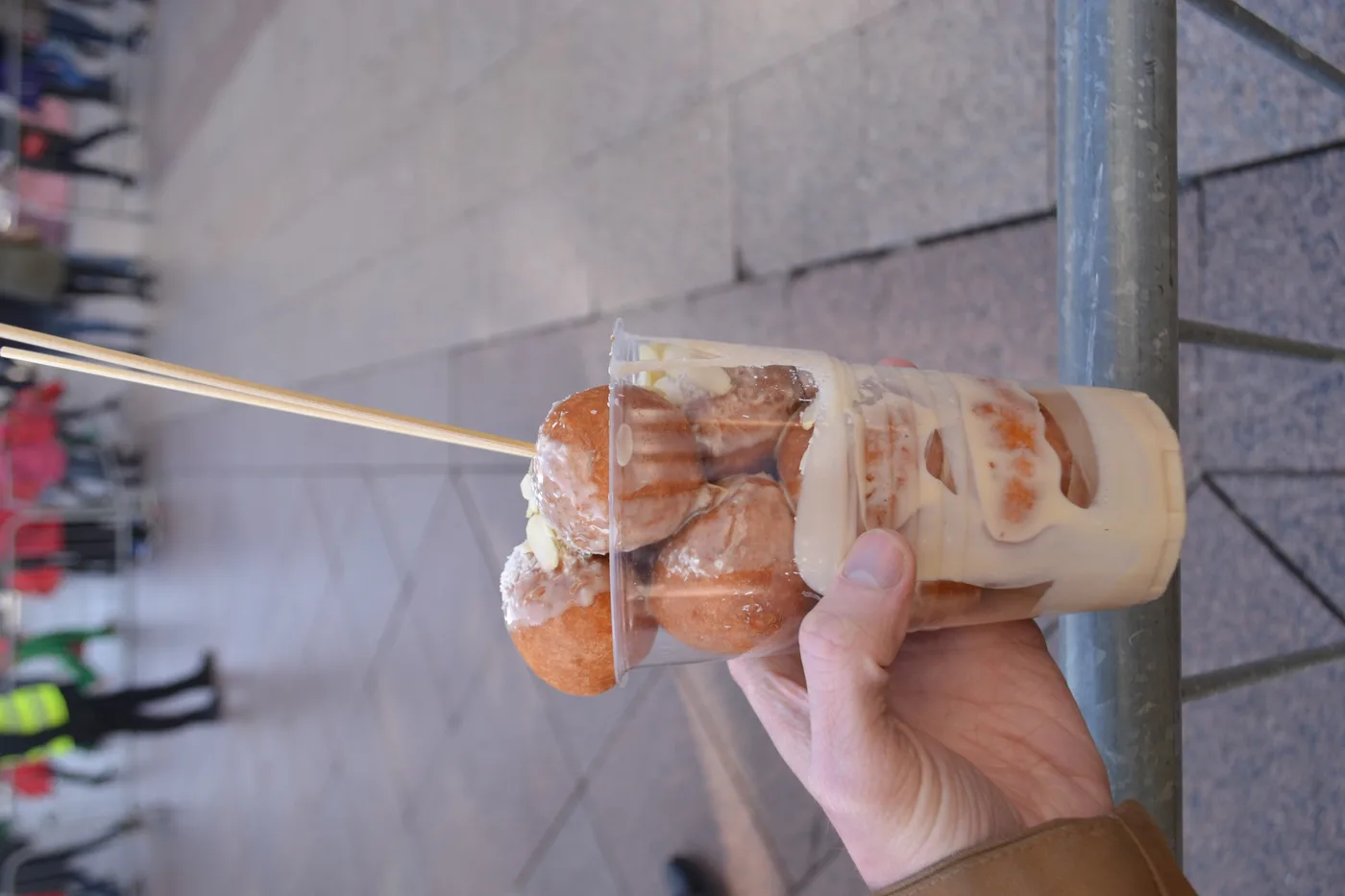
Croatian desserts follow the same split. On the coast, fritule are little fried dough fritters flavoured with citrus zest, a splash of rum and sometimes raisins, dusted with sugar - the Croatian answer to the doughnut. Dubrovnik has its own rožata, a custard flan in the crème-caramel family, traditionally scented with a local rose liqueur and dating back to Venetian times. Inland, dessert means strudel - apple, cherry or that same fresh cheese - a legacy of the Austro-Hungarian kitchen.
What to drink: Plavac Mali, Malvazija, Graševina and rakija
Croatia makes serious wine from grapes you’ll not have drunk at home, and it’s good value on its own turf. The red to know on the coast is Plavac Mali, the main Dalmatian red and the offspring of Croatia’s own Tribidrag (the grape the world calls Zinfandel) and Dobričić. It’s dark, powerful and high in tannin, with black cherry and dried-fig fruit, and it stands up to pašticada and grilled meat. Its most celebrated wines come from the steep, sun-baked Dingač and Postup slopes on Pelješac, among the first Croatian wines to earn a protected designation of origin.
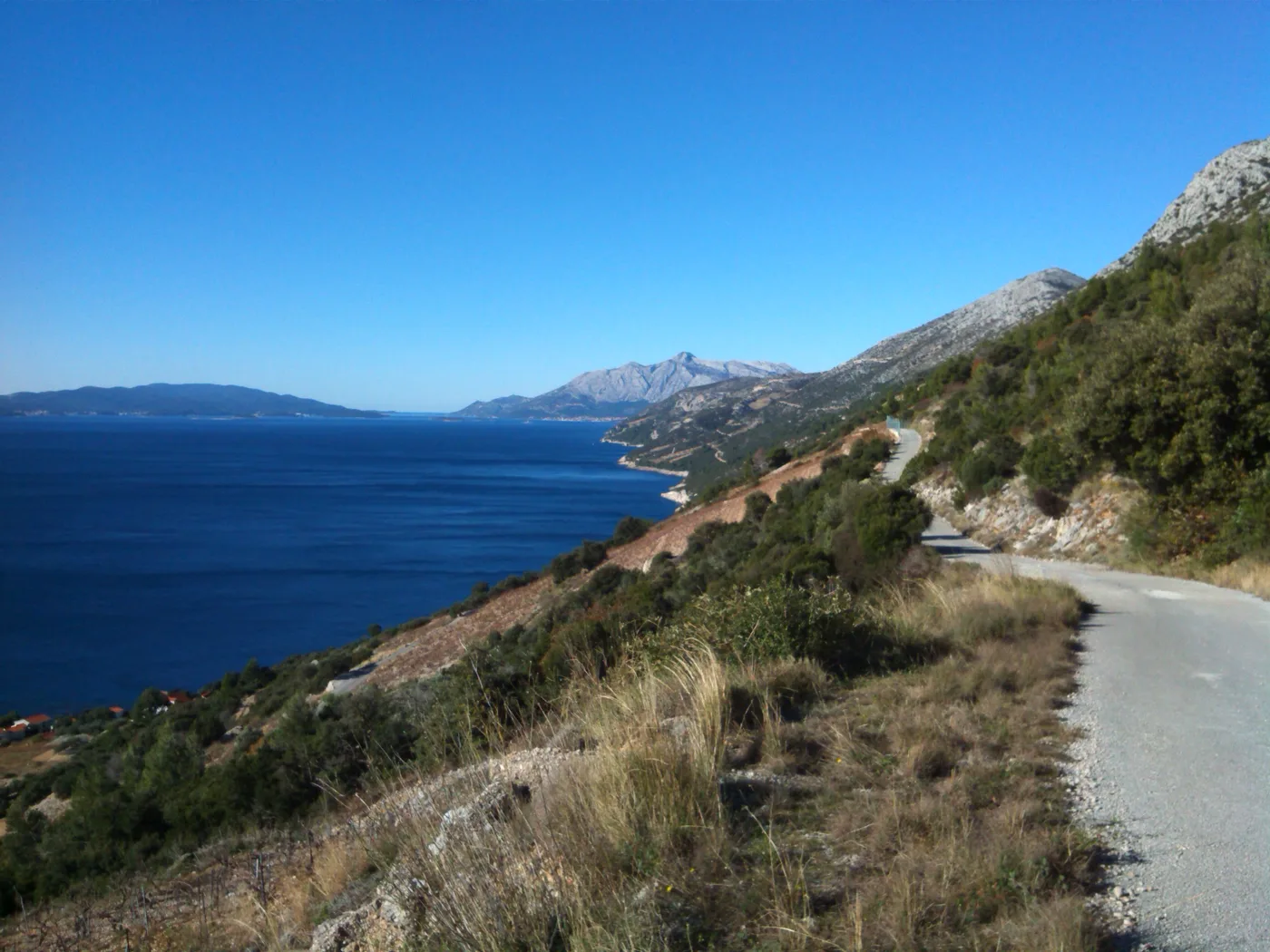
In Istria, the white to order is Malvazija Istarska, the region’s signature grape and the majority of its vineyards - fresh, fruity and mineral, the natural match for truffle dishes and Adriatic fish. Inland, Graševina is Croatia’s most-planted white, the backbone of Slavonia around Kutjevo. Stronger still is rakija, the fruit brandy offered as a welcome or a digestif: grape loza, herbal travarica, plum šljivovica. Homemade, it can be fierce, so sip it rather than shoot it. For the full picture - the four wine regions, the island whites like Pošip and Grk, and tasting on the wine roads - see our Croatian wine guide.
Where and how to eat it
The word to look for is konoba - a traditional, usually family-run tavern, and almost always where the real cooking is. On the coast, the konobas a few streets back from the seafront cook better and charge less than the terraces on the main square - our guide to where to eat in Split works through one city street by street, including which places close on a Sunday; inland, they’re where you find štrukli, čobanac and the dishes that never reach a tourist menu. A handwritten daily board in Croatian is a good sign; a laminated photo menu in six languages isn’t.
Croatia uses the euro (€), and while cards are common, markets and small village konobas often want cash. Green markets - Zagreb’s Dolac, Split’s Pazar and the fish market beside it - are the place to buy pršut, cheese, olive oil and figs, and are best in the morning. And the golden rule with fish: it’s sold by weight, so always agree the price before it’s cooked.
Croatia shares much of its Adriatic table with its neighbours - if you’re continuing south, our sister guide covers what to eat in Montenegro, where buzara and black risotto turn up under the same names. For where to eat by city, browse the food directory; for daily budgets see is Croatia expensive?. Pair the food with our city guides to Split, Dubrovnik and Zagreb.
Photos
Read also

Food · 14 min read
Truffle Hunting in Istria: Tours, Season & What to Expect
Updated · September 3, 2026Istria truffle hunts: the legal collecting window for each species, how a hunt runs, real prices from 15 EUR, the 2026 fair dates and truffle prices.

Food · 12 min read
Where to Eat in Split: Best Konobas & Local Restaurants
Updated · July 31, 2026Where to eat in Split: family konobas in Varoš, the late-morning marenda, how fish is priced by the kilo, the two markets and who closes on Sundays.

Food · 9 min read
Peka: Croatia's Under-the-Bell Dish & Where to Try It
Updated · July 23, 2026What Croatian peka is, how to order it (2-24 hours ahead, minimum two people), what it costs, and which konobas across Dalmatia still cook it.

Food · 8 min read
Croatian Wine Guide: Regions, Grapes & Tastings
Updated · July 12, 2026Croatian wine explained: Plavac Mali and Dingač, Istrian Malvazija, Slavonian Graševina, the Zinfandel link, and how to taste it on the wine roads.