
Sibenik Travel Guide: Two UNESCO Sites & Krka
What to see in Šibenik: the UNESCO cathedral of St James, the St Nicholas sea-fort, four hilltop fortresses, the medieval old town and Krka waterfalls.
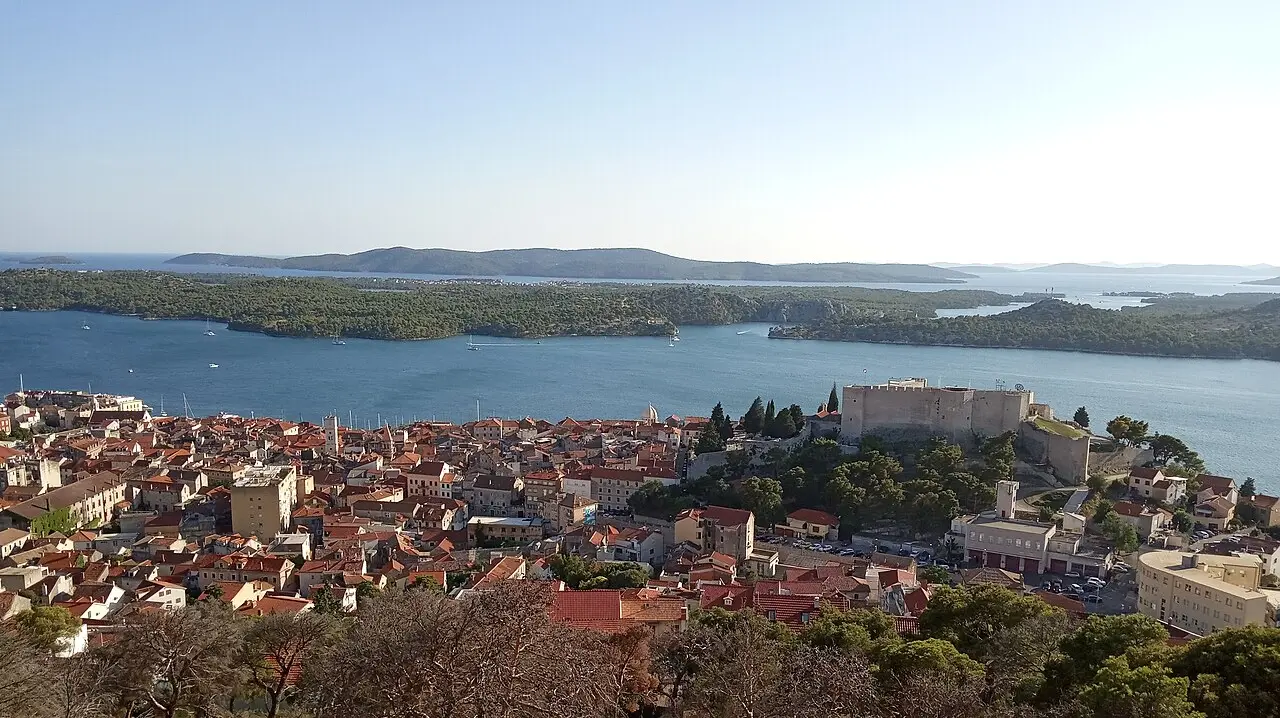
Šibenik is the Dalmatian city that most visitors drive past on the way to Split - which is exactly why it’s worth stopping. It has two UNESCO World Heritage Sites (the astonishing all-stone cathedral of St James and the St Nicholas sea-fort), a ring of four fortresses on the hills and at the harbour mouth, and a steep medieval old town of stone stairways that sees a fraction of Split’s or Dubrovnik’s crowds. It’s also the handiest base for the Krka waterfalls. Unusually for the coast, this wasn’t a Greek or Roman foundation but a native Croatian town, first recorded in 1066. Croatia uses the euro (€) and has been in the Schengen Area since 1 January 2023, so for most visitors arrival is formality-free.
The reason to stop is the cathedral of St James - built entirely of stone, with no brick or timber in it at all, which is why it’s a UNESCO site and unlike any church you’ll have seen. That most people blast past Šibenik on the motorway to Split is really the bonus: a second UNESCO monument, a ring of hilltop fortresses and a fraction of the coastal crowds.
How long to spend in Šibenik
Half a day covers the headline sights - the cathedral, a climb to St Michael’s fortress and a wander through the lanes. Give it a full day to add a second fortress and the waterfront, or a night so you can pair the town with a Krka day trip, which is the usual reason people base here. Many travellers treat Šibenik as a calmer alternative to sleeping in Split an hour south: cheaper, quieter, and closer to the waterfalls. If you’re moving along the coast between Zadar and Split, it slots neatly in between.
The cathedral of St James
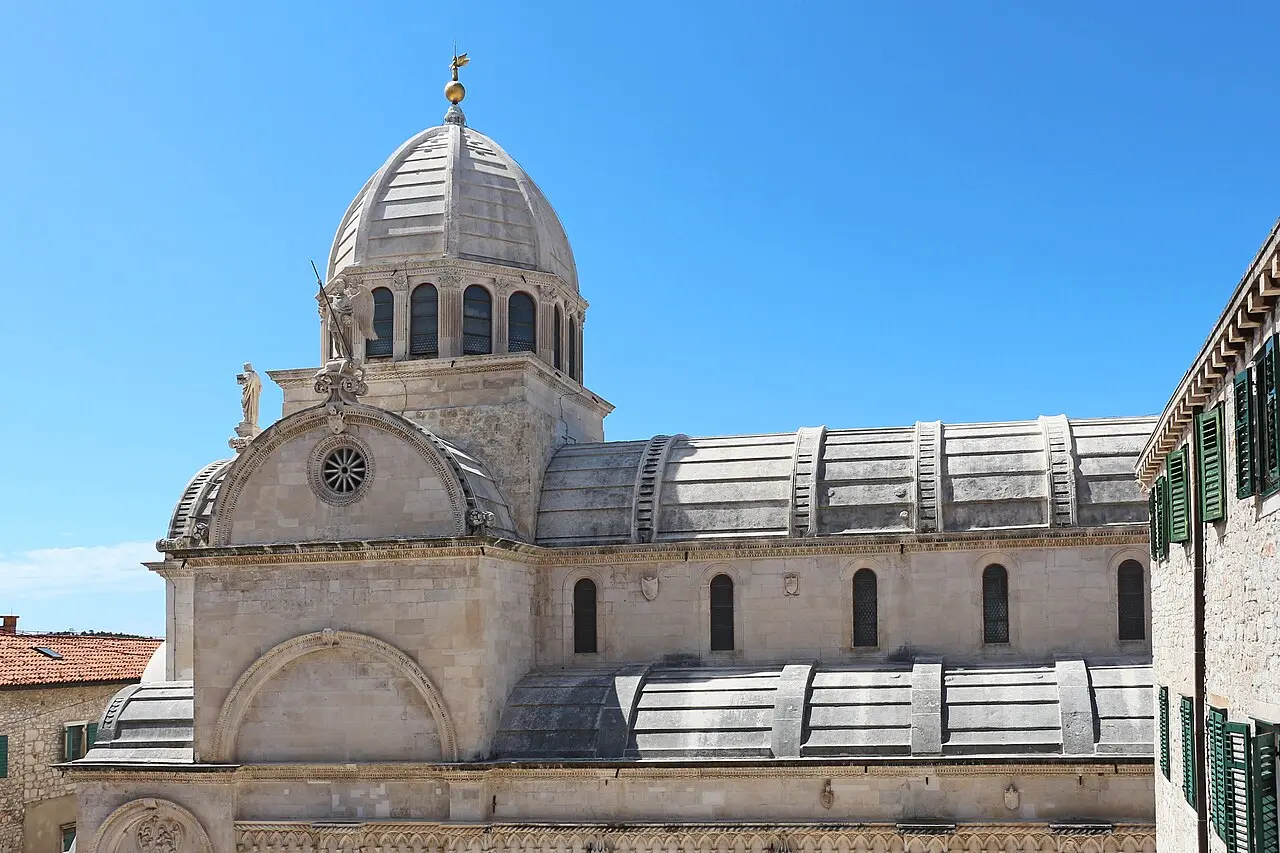
The cathedral of St James (katedrala sv. Jakova) is the reason Šibenik is on the UNESCO list, and it’s genuinely unlike any other church you’ll see in Croatia. Built over more than a century (1431-1536), it was shaped above all by two architects - Juraj Dalmatinac (Giorgio da Sebenico) and, after him, Nikola Firentinac - and it’s constructed entirely of stone. Not stone-faced: stone through and through. The walls, the barrel vaults and the great dome are built from interlocking limestone and marble slabs slotted together with grooves, without brick, timber or mortar binding the structure. Firentinac’s stone-slab dome technique was ahead of its time. It’s often called the largest church in the world built completely of stone.
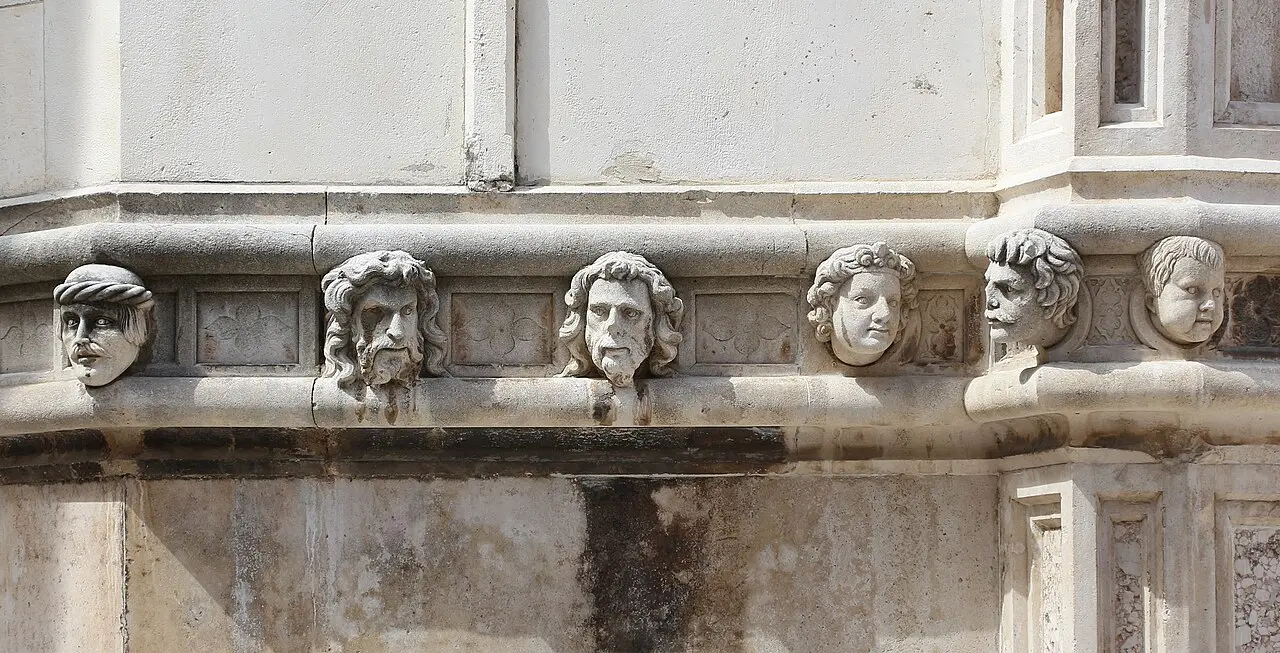
Walk right around the outside before you go in. Running along the three apses at the east end is a frieze of 71 human heads (74 sculpted in all, including a few lions), carved life-size by Dalmatinac’s workshop. These aren’t saints or kings but real faces of 15th-century Šibenik residents - merchants, sailors, a scowling old man, a laughing woman - and they make one of the most human pieces of Renaissance sculpture anywhere. Inside, the baptistery and the trefoil plan reward a slow look. Entry is ticketed with seasonal hours; check current details before you go.
The four fortresses
Šibenik guards its harbour with four separate fortresses, and three of them are open to visitors. The oldest, St Michael’s (sv. Mihovil), sits about 70 metres straight above the old town, first mentioned in the 11th century under King Petar Krešimir IV, who counts as the city’s founder. Restored as an open-air stage, it now hosts summer concerts with the sea as a backdrop - worth checking the programme if you’re around.
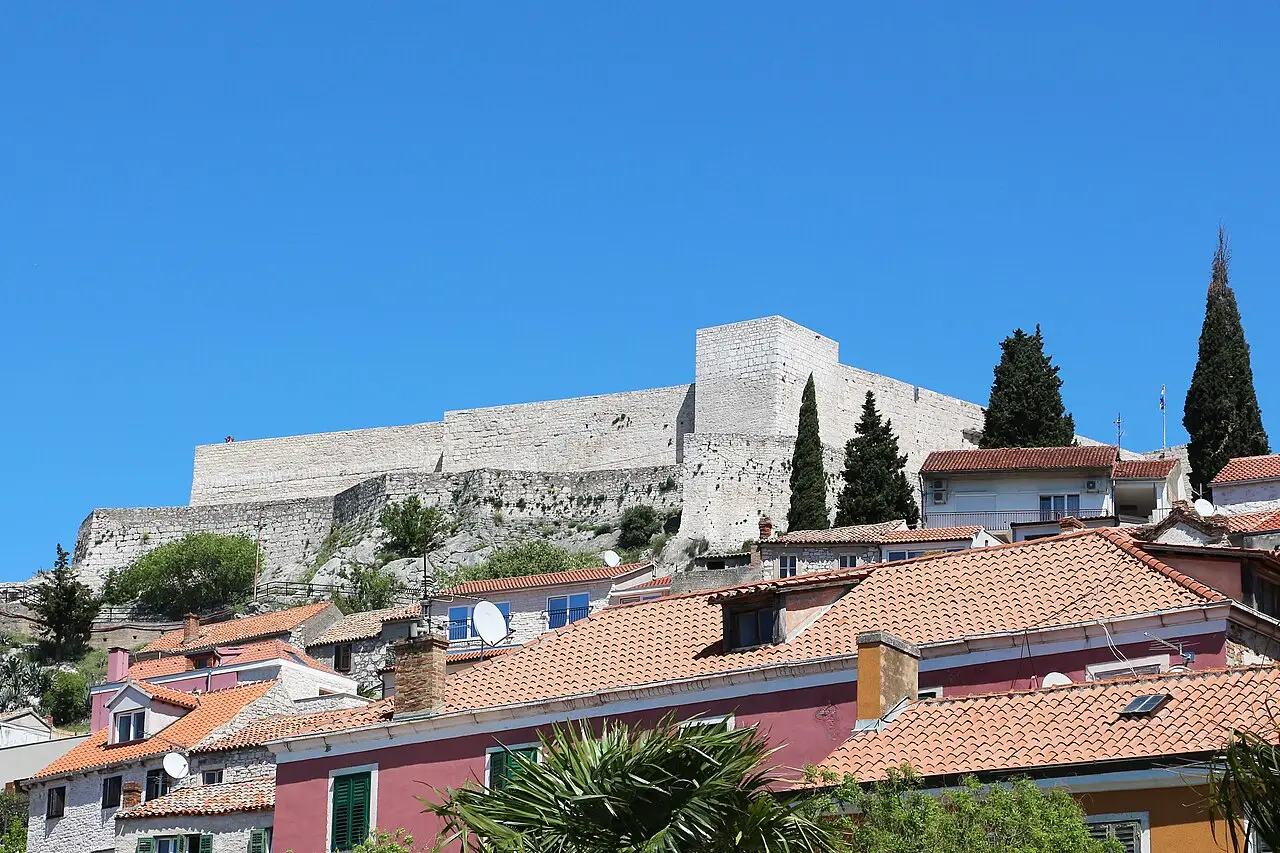
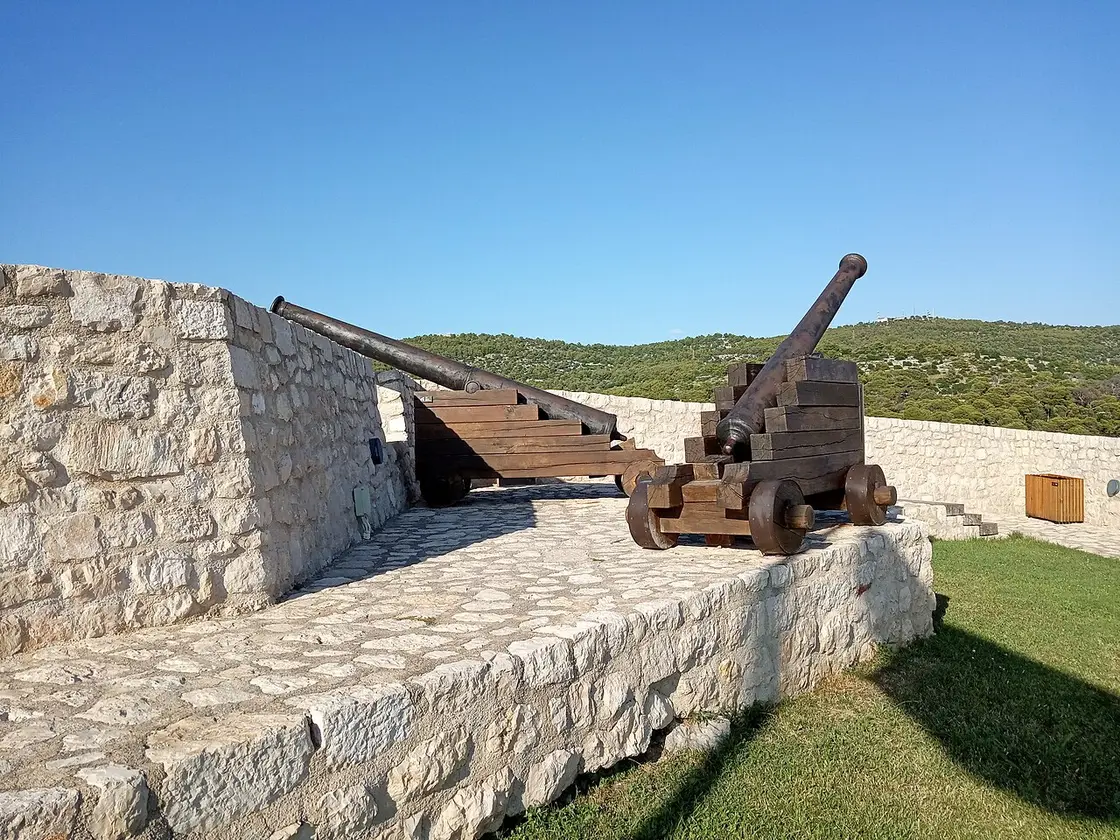
Higher up, the star-shaped St John’s (sv. Ivan) stands at about 115 metres and was thrown up in 1646 to hold off an Ottoman advance; the nearby Barone (Šubićevac) went up the same year, both finished within weeks. Barone keeps its old cannons and adds an augmented-reality history show. If you only have time for one fortress, St Michael’s has the best sight-to-effort ratio; for the wider panorama over the whole town and channel, climb to St John’s.
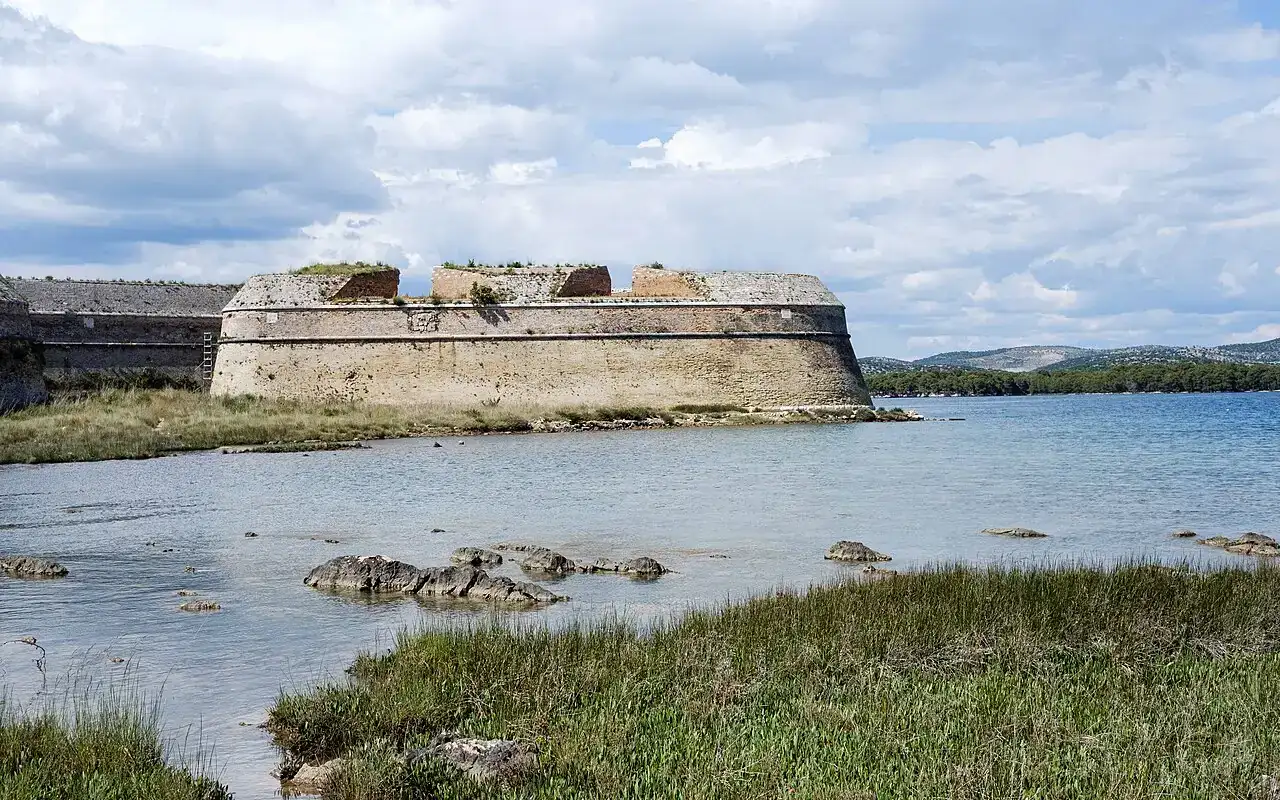
The fourth, St Nicholas (sv. Nikola), is the one you can’t climb to on foot from town - and the second UNESCO site. Built by Venice in the 16th century at the mouth of the St Anthony Channel, it’s a low triangular fort standing in the water, guarding the sea approach to the port against the Ottoman fleet. It joined the World Heritage List in 2017 as part of the Venetian defensive works across the Mediterranean. You reach it by boat or on foot along the channel walkway.
The old town and waterfront
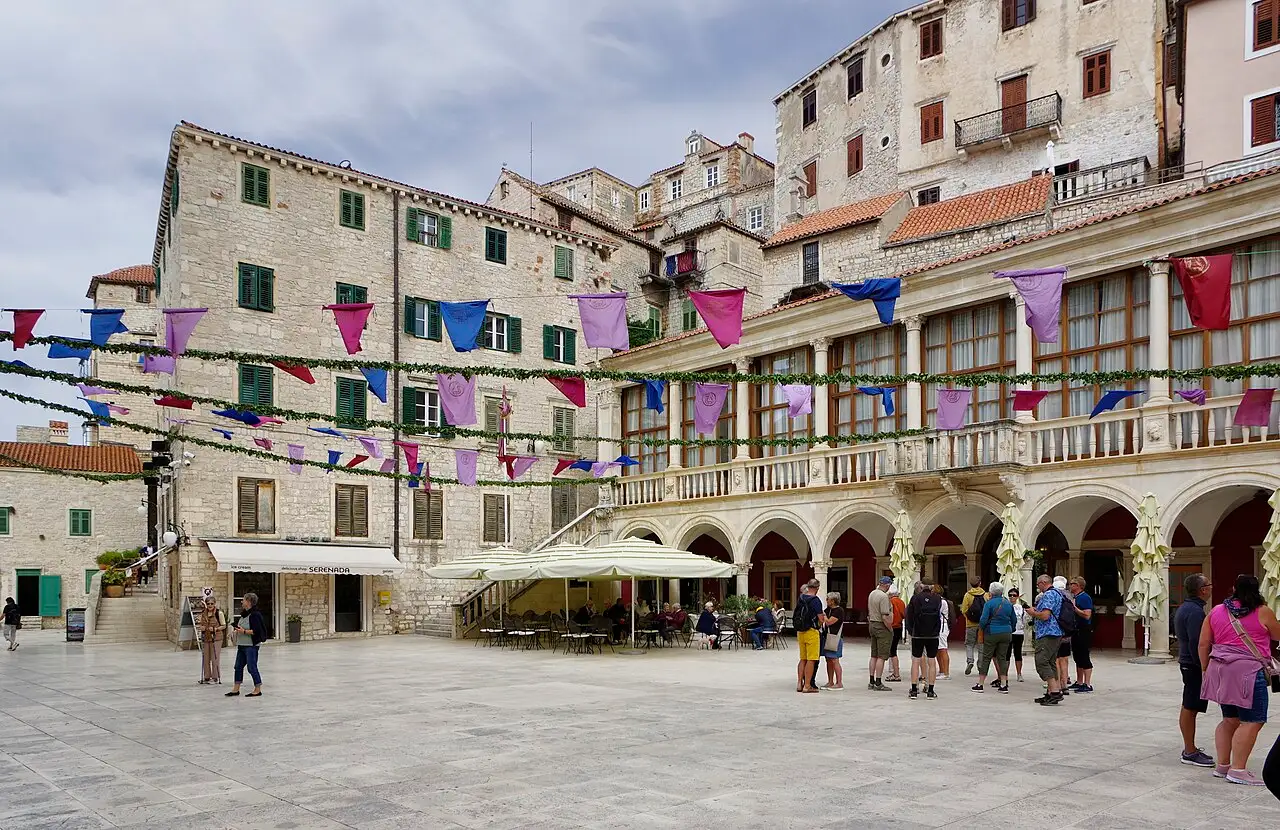
Between the cathedral and the fortresses, Šibenik’s old town is a proper medieval maze - a warren of stone lanes and stepped alleys climbing the hillside, with almost no straight lines and very little traffic. The heart of it’s the main square by the cathedral, framed by the arcaded old town hall (loggia), where café tables spill out under the stone facades. It’s a place to get pleasantly lost for an hour rather than to tick off a list.
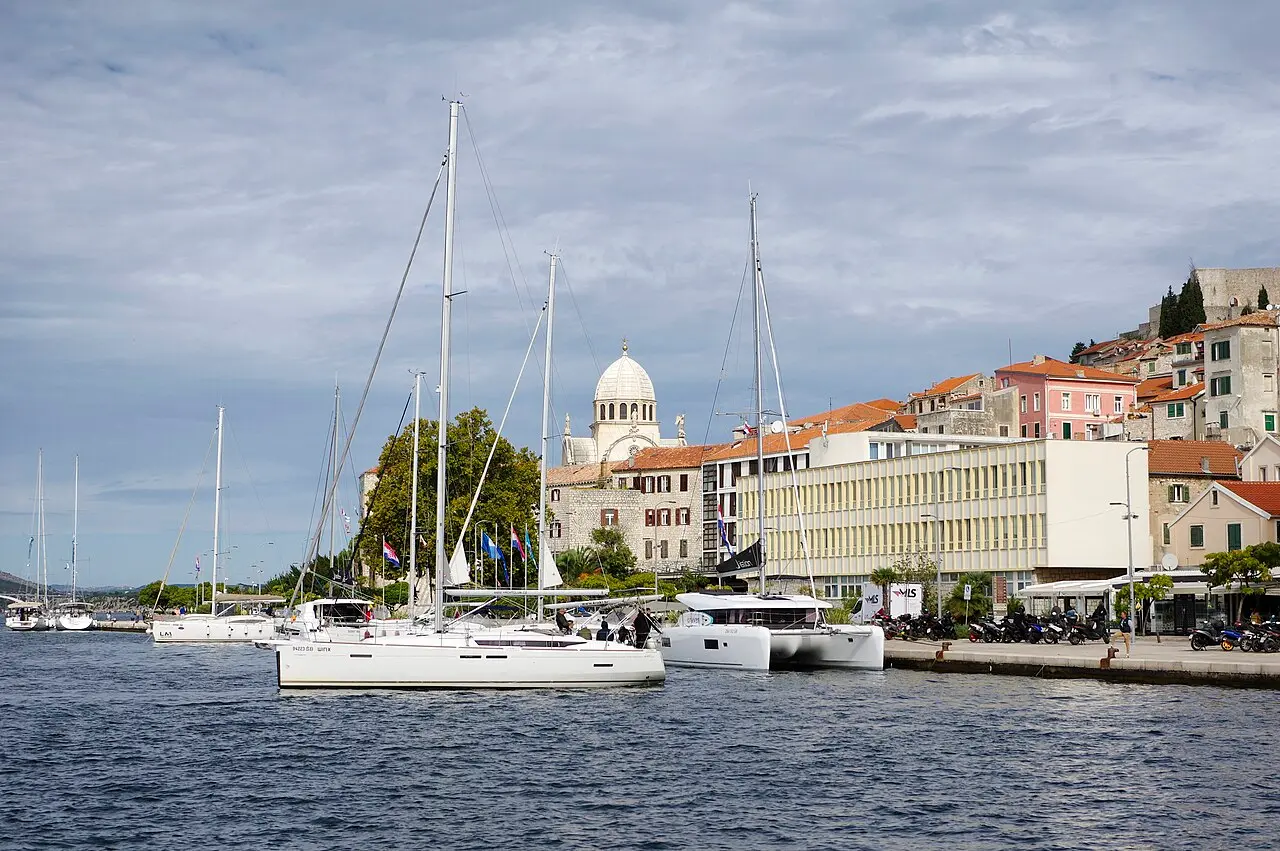
Down at sea level, the waterfront runs along the harbour where the old town meets the channel, lined with moored yachts and the boats out to St Nicholas and the islands - including full-day trips to the bare Kornati islands offshore. It’s the natural place to start or end the day, with the cathedral dome rising behind the rooftops.
Day trip: Krka National Park
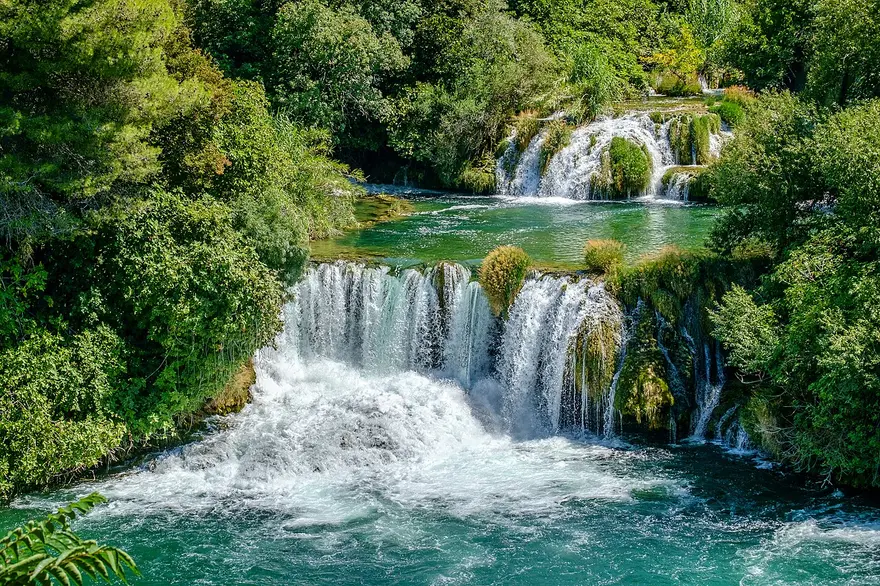
Šibenik is the closest city to Krka National Park, and for many people the town and the waterfalls are a single trip. The park’s showpiece, Skradinski buk, is a broad chain of travertine cascades you walk on boardwalks - roughly 20 minutes’ drive to the Lozovac entrance, or a scenic boat ride up the river from the little town of Skradin, the park’s other gateway. Whether swimming is allowed at the falls depends on the current park rules, which change, so check before you set out.
For the full rundown - entrances, boat times, when to go and how it compares with the lakes further north - see our guide to Krka National Park. If you’re weighing waterfalls against the bigger lake system, we lay it out in Plitvice Lakes National Park. Just outside town, the Falconry Centre (Sokolarski centar) rescues birds of prey and runs daily flight demonstrations - it’s a good, low-key add-on with children.
Where to stay
Šibenik makes a calm, well-placed base, and prices sit below Split’s. Where you sleep is mostly a trade-off between old-town atmosphere and easy parking:
| Area | Good for | Notes |
|---|---|---|
| Old town | Atmosphere, walking to the cathedral and fortresses | Stone lanes and stairs; charming but no car access, drag your bags |
| Waterfront / around the centre | Boats, restaurants, an easy base | Flatter, practical; some rooms with harbour views |
| Solaris / Zablaće (out of town) | Beach-resort holiday | Big resort complex and pebble beaches west of the city; bus or car in |
| Skradin / Vodice | Krka trips or a quieter marina town | Skradin is the river gateway to Krka; Vodice is the lively resort next door |
Book ahead in July and August. For what a Dalmatian trip costs day to day, see is Croatia expensive?.
How to get to Šibenik
Šibenik has no airport of its own - don’t expect one. The nearest is Split (SPU), roughly an hour southeast, with Zadar (ZAD) about the same to the north - both well connected in summer. By road the city sits right on the A1 motorway, so buses run frequently up and down the coast; you’ll do the drive from Split in about an hour, and from Zagreb around 3.5 hours. For moving between towns without your own car, see getting around Croatia; the Zadar to Split transport guide covers this stretch of coast in detail.
When to go and practical tips
- When to come. July and August are hot and busiest, and the fortress concert season is in full swing; late May to June and September bring warm weather, open Krka boardwalks and thinner crowds. See the best time to visit Croatia for the month-by-month picture.
- Money. Croatia uses the euro (€). Cards are widely accepted; you’ll still want some cash for the fortresses, boat tickets and small cafés.
- Tickets. Cathedral, fortress and Krka prices and hours change by season - confirm current details on the Visit Šibenik and Krka park sites before you go.
- Walking. The old town is steep and stepped stone - wear proper shoes, and tackle the fortress climbs early before the afternoon heat.
Plan the rest of your trip
Šibenik works best as the calm hinge of a northern-Dalmatia trip. Pair it with the waterfalls at Krka, the bigger city of Split an hour south, and the coast road up towards Zadar. For another quiet Dalmatian old town in the same easy reach, Trogir - a whole UNESCO island next to Split Airport - makes a natural pairing. The cities hub collects our other Croatian city guides, and for timing and budgets see the best time to visit Croatia and is Croatia expensive?.
Opening hours, prices, timetables and seasonal services change through the year - the figures here are planning estimates, not quotes. Confirm current details with the operators and official sources before you go.
Photos
On the map
The map loads on click - to keep the page lightweight.
The map didn’t load. Check your connection and refresh the page.
Good to know
The old-town lanes, the waterfront and the cathedral square are free to wander. The cathedral of St James, the four fortresses (St Michael, Barone, St John, St Nicholas) and Krka National Park are ticketed, with seasonal hours - buy at the entrance or online, and confirm current prices and opening times on the Visit Šibenik and Krka park sites before you go, as they change by season.
Details checked: July 3, 2026
Distance
- Zagreb ≈350 km · ~3.5 h by car By the A1 motorway through the Dalmatian interior; Zadar Airport is about an hour north.
- Split ≈90 km · ~1 h By the A1 motorway; Split Airport (SPU) is the nearest airport, roughly an hour southeast.
Read also

Cities · 12 min read
Motovun Travel Guide: Walls, Truffles & Teran
Verified · September 4, 2026Motovun hilltown guide: walls ticket €5 in 2026, St Stephen, Teran cellars, Mirna views, parking climb, and why the film festival no longer plays here.

Cities · 10 min read
Dugi Otok & Sakarun Beach: Island Day-Trip Guide
Updated · August 31, 2026Day-trip Dugi Otok from Zadar: Jadrolinija ferry to Brbinj, Sakarun beach, Veli Rat lighthouse, and Telašćica cliffs - DIY or boat tour.

Cities · 10 min read
Opatija Travel Guide: Habsburg Riviera & Lungomare
Verified · August 25, 2026Opatija on the Kvarner Gulf: the 10 km Lungomare, Villa Angiolina museum, Maiden with the Seagull, and how it differs from Rijeka and Istria.

Cities · 10 min read
Omiš Travel Guide: Pirates, Zipline & Cetina Canyon
Verified · August 21, 2026Omiš is 25 km from Split: Promet bus €2.50, Mirabela €4-6, Cetina rafting and an 8-line zipline over the canyon.