
Krka National Park
How to visit Krka National Park: the Skradinski Buk falls, Visovac and Roški slap, trails and boats, tickets, seasons and how to get there.
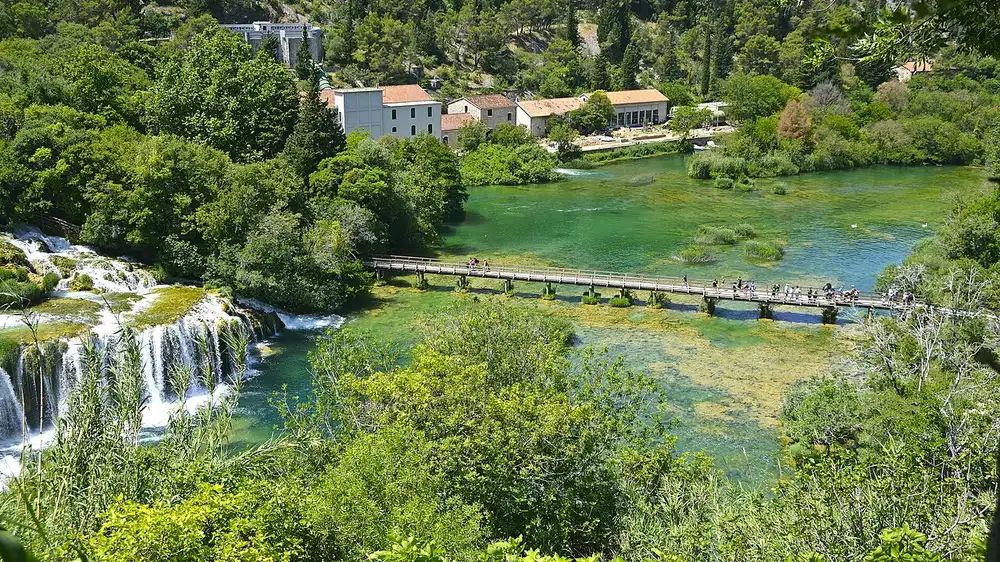
Krka National Park is one of Croatia’s most popular natural attractions - a chain of travertine waterfalls strung along the Krka river in the hinterland of Šibenik, in northern Dalmatia. The headline sight is Skradinski Buk, a 400-metre run of seventeen cascades that’s among the largest travertine waterfall systems in Europe, and the park is an easy day trip from Split, Šibenik or Zadar. One thing you’ll want to plan around: swimming at Skradinski Buk is no longer allowed - the bathing area that made Krka famous was closed to protect the travertine, so confirm the current rule on the official park site before you go. Croatia uses the euro (€) and has been in the Schengen Area since 1 January 2023, so for most visitors arrival is formality-free.
Most day-trippers see Skradinski Buk and turn back, but the park opens up if you go further upstream by boat to the island monastery of Visovac and the quieter cascades of Roški slap - and with swimming at the main falls now off the table, that extra leg is what turns a quick photo stop into a real day out. If you only have time for one Croatian waterfall park, the last question is whether that should be Krka or Plitvice - and it isn’t always obvious.
What is Krka National Park?
Krka (Croatian: Nacionalni park Krka) was declared a national park in 1985 and protects the lower course of the Krka river, which rises near Knin and runs about 73 km to the sea at Šibenik. It covers roughly 109 square kilometres of river canyon, lakes and karst, and its reason for being is the same geology that shapes Plitvice: travertine, the porous limestone that mosses, algae and bacteria deposit in the mineral-rich water, building natural dams that the river spills over as waterfalls.
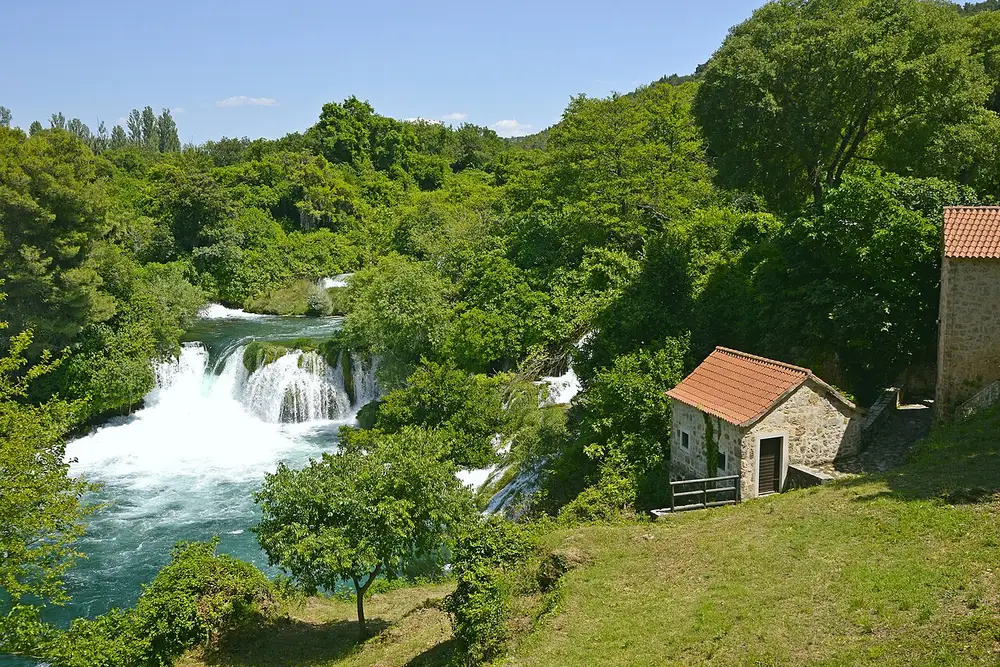
There are seven main waterfalls along the river. The most famous and the easiest to reach is Skradinski Buk, a broad amphitheatre of seventeen steps that drops about 46 metres in total over a 400-metre stretch - one of the largest travertine cascade systems in Europe. Above it, the river widens into lakes that hold the island of Visovac, and further upstream lies the second great waterfall, Roški slap. Old stone watermills beside Skradinski Buk, once used to grind grain, have been restored as small ethnographic displays, a reminder that people lived and worked on this river for centuries.
What to see: Skradinski Buk, Visovac and Roški slap
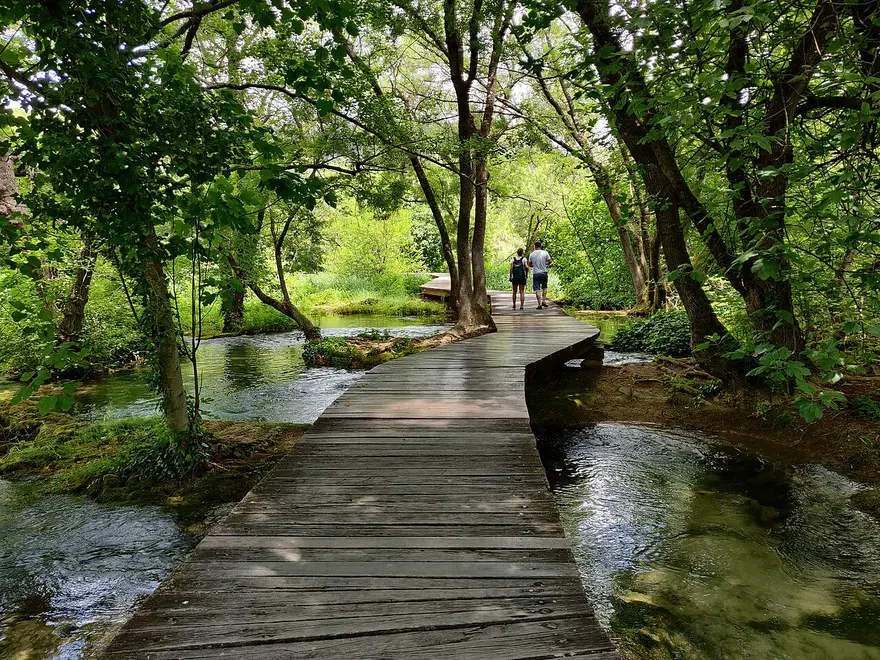
Skradinski Buk is the centrepiece and where most visits begin. A circular walking trail of about 1,900 metres - partly on wooden boardwalks over the water - loops around and across the cascades, past the watermills and viewpoints, and takes most people one to two hours at an easy pace. It’s the busiest part of the park, so an early start pays off.
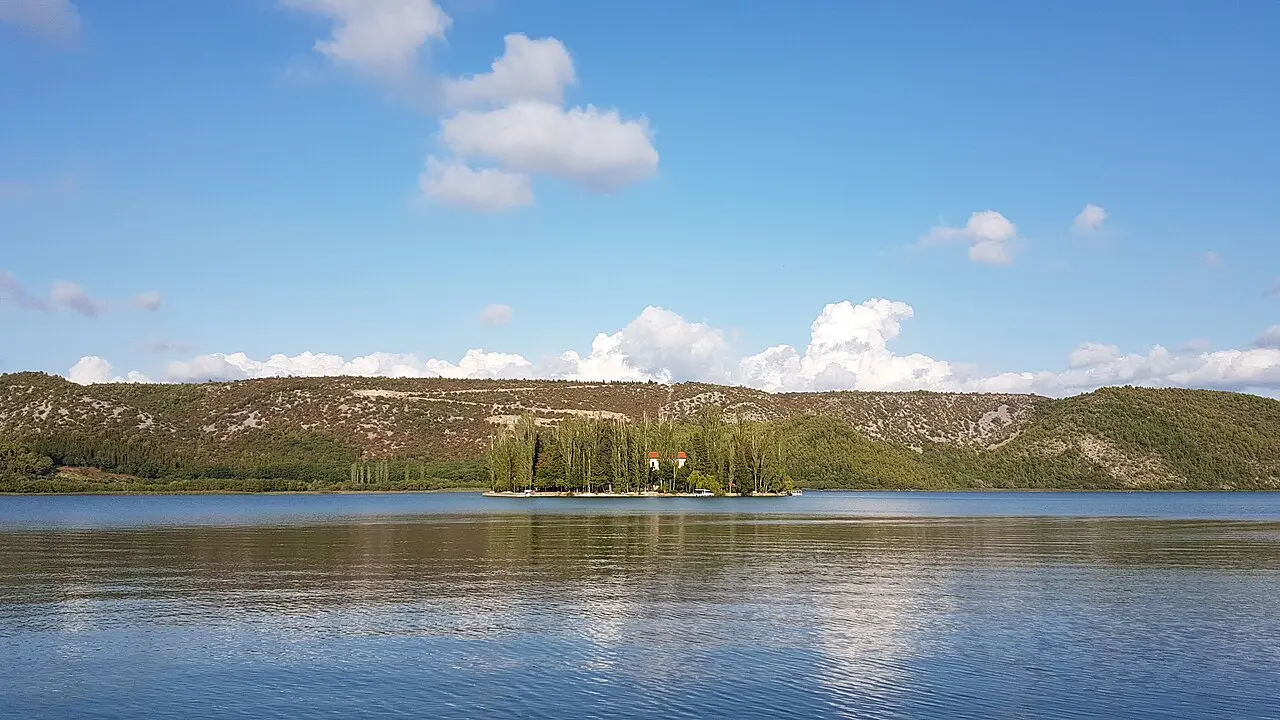
Visovac is a small island in the lake above the falls, home to a Franciscan monastery founded in the 15th century, with a church, a library and a famously peaceful setting among cypresses. You reach it only by boat, on an excursion that the park runs from the Skradinski Buk area; it’s paid separately from the entrance ticket and runs to a seasonal timetable.
Roški slap lies further upriver and is quieter than Skradinski Buk. Its cascades fan out in a wide curtain locals nicknamed the “necklaces,” with a set of restored watermills alongside and walking paths above. You can drive to Roški slap or reach it by a longer boat trip up the canyon from Skradinski Buk - the boat ride through the gorge is part of the appeal.
Trails, boardwalks and boats
The park is explored on a mix of foot trails, wooden boardwalks and boats, and how you combine them depends on which sights you want.
- The Skradinski Buk loop is the must-do walk: an easy ~1,900 m circuit on paths and boardwalks around the main falls, mostly flat, with railings over the water. Allow one to two hours.
- Boats to Visovac and Roški slap are separate paid excursions that leave from the Skradinski Buk area to a seasonal schedule. The Visovac trip is shorter; the Roški slap trip is longer and runs up through the river canyon.
- Getting in depends on your entrance. From Lozovac, a free park shuttle bus carries visitors down to Skradinski Buk in season; from Skradin, a free boat (included in the higher-season ticket) brings you up the river to the falls - a scenic arrival in its own right. Out of season you may walk in instead. The two entrances suit different bases: Lozovac is the simplest by car, Skradin is the prettier approach.
In peak summer the boardwalks and the Skradin boat both get busy, with queues building from mid-morning, so the usual advice applies: come early, and check the day’s shuttle and boat times when you arrive.
Tickets, opening hours and the season
Krka uses seasonal tickets: the park runs different price tiers and opening hours for the summer peak, the shoulder months and winter, and adjusts them year to year. The entrance ticket covers the Skradinski Buk area and, in higher season, the Skradin boat and the Lozovac shuttle; the Visovac and Roški slap boat excursions are paid separately. There’s no ticket price printed here on purpose - Krka reprices by season more often than most sites can track, and a stale number does more harm than an honest gap. Check the current price, opening hours and boat schedules on the official site, npkrka.hr, before you go. Summer brings the priciest tier and the longest opening hours; by winter, prices drop a lot, but daylight is short and the Skradin boat or the Lozovac shuttle may be suspended.
The single biggest change to know about: swimming at Skradinski Buk is no longer permitted. For years the pool below the main falls was a celebrated bathing spot, but the park closed it to protect the fragile travertine and manage crowds. Don’t plan your visit around a swim - confirm the current rule on the official site, since the park has signalled it could revisit access in the future.
How to get to Krka
Krka sits inland from Šibenik, an easy drive from the Dalmatian coast and far closer to Split and Zadar than Plitvice is.
| From | Distance | Time | Notes |
|---|---|---|---|
| Split | ~90 km | ~1-1.5 h | A1 motorway to the Šibenik exit, then to Skradin or Lozovac |
| Zadar | ~75 km | ~1 h | A1 motorway; the nearest airport for a day trip |
| Šibenik | ~15 km | ~20 min | The gateway town; buses run to Skradin and Lozovac |
Driving yourself gives the most freedom here: both Lozovac and Skradin have paid parking, and an early start gets you in ahead of the tour coaches. Not driving? Our renting a car in Croatia guide breaks down the cost and the one-way rules. Buses connect Šibenik (itself well linked to Split and Zadar) with Skradin and Lozovac, though some runs are seasonal, so check timetables ahead. Tours are the no-hassle route: operators run day trips from Split, Trogir, Zadar, Šibenik and even the islands, with transport and the entrance ticket sold as one package - useful if you’d rather not deal with parking or bus timetables at all.
Most visitors arrive from the coast, and that leg has enough moving parts to deserve its own page: bus times and fares to Skradin, which entrance you actually land at, and how the free park boat fits in are all in our guide to getting from Split to Krka.
Krka or Plitvice - which to choose?
Croatia’s two famous waterfall parks are often pitched as an either/or, and they genuinely differ:
| Krka | Plitvice | |
|---|---|---|
| Scenery | One grand amphitheatre of falls + an island monastery | 16 terraced lakes and dozens of falls in a long chain |
| Walking | A short, easy ~2 km loop around the main falls | Half-day lettered routes (A-K), much more walking |
| Boats | Paid trips to Visovac and Roški slap | A boat and panoramic train included in the ticket |
| From the coast | Very close - easy day trip from Split or Zadar | Farther inland, halfway to Zagreb |
| Best for | A shorter, coast-based half day | A bigger, full-day nature outing |
In short: choose Krka if you’re based on the Dalmatian coast and want a half-day trip with a single spectacular waterfall and the option of the island monastery; choose Plitvice if you want the larger, more varied landscape and don’t mind the longer drive and a full day of walking. Many road-trippers between the coast and Zagreb do both, on different days. Neither park allows swimming any more.
That’s the short version. For the full comparison - drive times from Zagreb, Zadar and Split for both parks, the walking distances side by side, 2026 ticket tiers and the timed-entry rules that only Plitvice applies - see our Krka vs Plitvice guide.
Practical tips for visiting
- Go early. The Skradinski Buk loop and the Skradin boat fill up from mid-morning in summer; the first hours are cooler and quieter.
- Wear proper shoes. The boardwalks are wooden and can be wet; trainers or walking shoes beat flip-flops. The main loop is flat but ~2 km.
- Budget extra for the boats. Visovac and Roški slap are separate paid excursions on a seasonal timetable - decide in advance if you want them, as they add time.
- No swimming at the falls. The bathing area is closed; bring a hat, water and sun protection instead, as much of the trail is exposed.
- Pick your entrance. Lozovac is simplest by car (shuttle down); Skradin gives you the scenic boat-in. Out of season the free transport may not run.
- Money. Croatia uses the euro (€) everywhere; the entrance takes cards, but the Visovac and Roški slap boats are separate bookings, so keep some cash on hand for them.
Plan the rest of your trip
Krka pairs naturally with a Dalmatian base. It’s an easy half-day from Split and slots into a wider coastal trip - see our Dalmatia coast route from Split to Dubrovnik and the full set of Croatia itineraries. It also ranks among the best day trips from Split. For Croatia’s other great waterfall park, compare Plitvice Lakes; for a national park that trades waterfalls for Roman ruins and Cold War history, see Brijuni up in Istria; for canyons and climbing instead of water, Paklenica is up near Zadar. The attractions hub has the rest of Croatia’s natural sights and day trips, and getting around Croatia is where to check bus and ferry connections if you’re skipping the rental car.
Opening hours, prices, timetables and seasonal services change through the year - the figures here are planning estimates, not quotes. Confirm current details with the operators and official sources before you go.
Photos
On the map
The map loads on click - to keep the page lightweight.
The map didn’t load. Check your connection and refresh the page.
Good to know
Tickets are seasonal - the park sells different summer, shoulder and winter tiers, and boats to Visovac and Roški slap are paid separately. Swimming at Skradinski Buk is no longer allowed. Confirm the current ticket price, opening hours and boat schedules on the official npkrka.hr site before you go.
Details checked: June 22, 2026
Distance ≈90 km · ~1-1.5 h
- Split ≈90 km · ~1-1.5 h By car on the A1 motorway, or by bus to Šibenik then on to Skradin or Lozovac
Read also

What to see · 12 min read
Paklenica National Park: Canyons, Climbing and Trails
Updated · August 29, 2026Paklenica National Park in 2026: canyon and cave tickets from €5, Anića Kuk climbing routes, and trails from Starigrad near Zadar.

What to see · 9 min read
Best Beaches near Split: Bačvice to the Riviera
Updated · August 26, 2026Best beaches near Split in 2026: sandy Bačvice, Marjan coves, Žnjan and Makarska Riviera day trips - plus Brač by catamaran.

What to see · 10 min read
Elaphiti Islands: Lopud, Šipan & Koločep
Verified · August 15, 2026Jadrolinija 807 from Gruž: €5.40 in season to Koločep, Lopud or Šipan. Times, Šunj, and why one island beats hopping all three.

What to see · 7 min read
Klis Fortress: Game of Thrones Views above Split
Updated · August 13, 2026Klis Fortress above Split was Meereen in Game of Thrones. Adults 12 EUR, kids 4 EUR; open daily 08:30-20:30 - confirm on tvrdavaklis.com.