
Dalmatia Coast Route: Split to Dubrovnik
A 6-day Dalmatian coast route from Split to Dubrovnik via Trogir, Hvar, Korčula and Ston - stops, Jadrolinija ferries, distances and tips.
Croatia’s most famous drive runs the length of southern Dalmatia, from the Roman city of Split to the walled Old Town of Dubrovnik. Done over six days, it threads together two mainland old towns, two of the Adriatic’s best islands and a string of medieval walls, with a couple of Jadrolinija ferry hops in the middle. You can do it self-drive, by a mix of bus and ferry, or as a one-way car rental - this guide lays out the stops, the sea crossings and the distances so you can plan the pace that suits you.
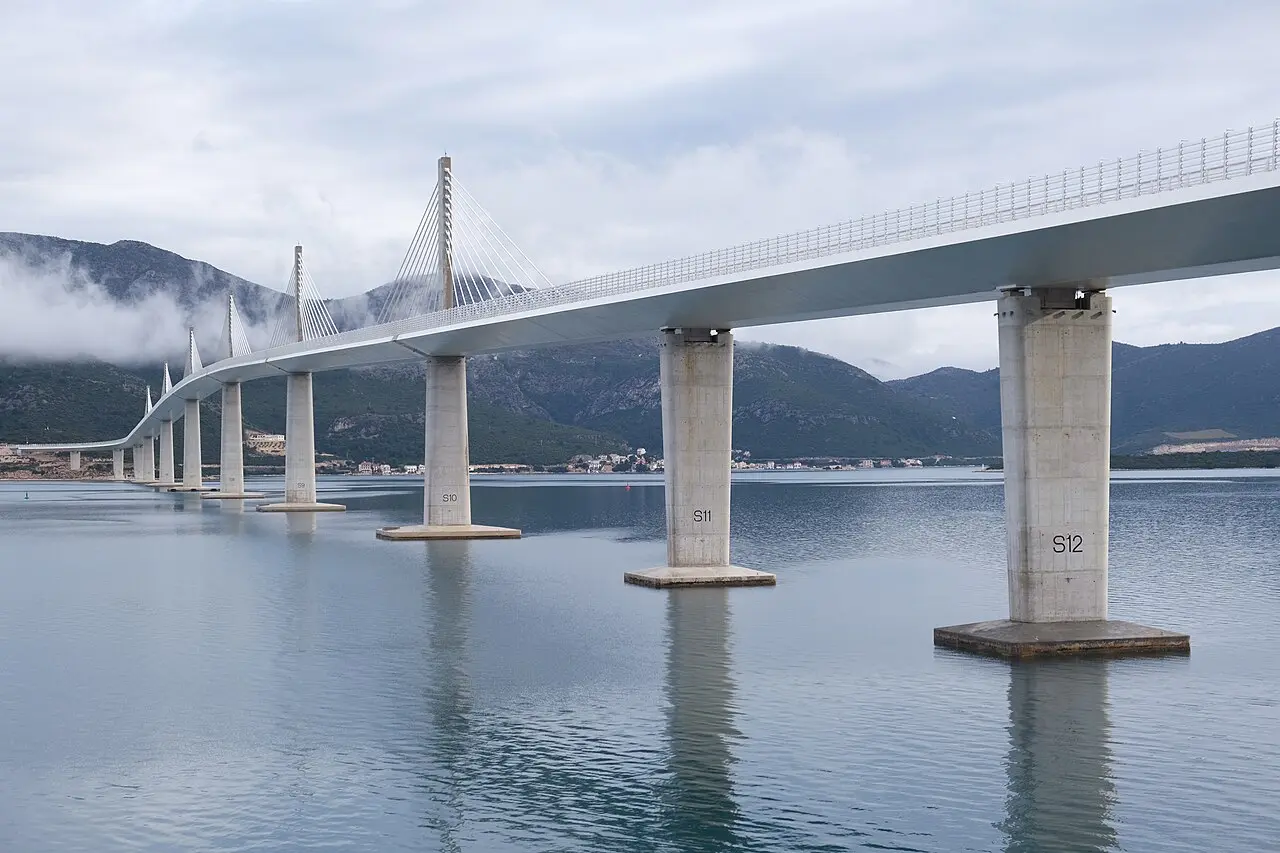
The order below works west-to-east and north-to-south: Split → Trogir → Hvar → Korčula → Ston → Dubrovnik. The two island legs (Hvar and Korčula) are reached by ferry; everything else is connected by the coastal road, including the Pelješac Bridge, which since 2022 lets you reach Dubrovnik without crossing the Bosnian Neum corridor.
Day 1-2: Split, the Roman start
Base yourself in Split for the first night or two. The whole old town is built inside Diocletian’s Palace - a 4th-century Roman retirement palace that locals never stopped living in, so you wander Roman cellars, a cathedral inside the emperor’s mausoleum and the columned Peristyle, then come out onto cafés on the Riva waterfront. Climb the Marjan hill for the view, and use the ferry port - the busiest in Croatia - as your springboard to the islands. Full detail is in our Split travel guide.
Practical note: Split’s port and airport get extremely busy at the height of summer, especially on changeover days - book island ferries ahead, and for the airport leg see Split Airport transfers: bus, ferry and taxi.
Day 2: Trogir, a half-day detour
Just 27 km west of Split - about 30 minutes by car or local bus - sits Trogir, a tiny island town squeezed between the mainland and Čiovo island. Its tangle of stone lanes, the Romanesque Cathedral of St Lawrence with Radovan’s carved portal, and the Venetian Kamerlengo fortress earned the whole centre a place on the UNESCO World Heritage List. It’s an easy half-day stop on the way out of Split, or a morning trip before you catch your first ferry.
Day 3: Hvar by ferry
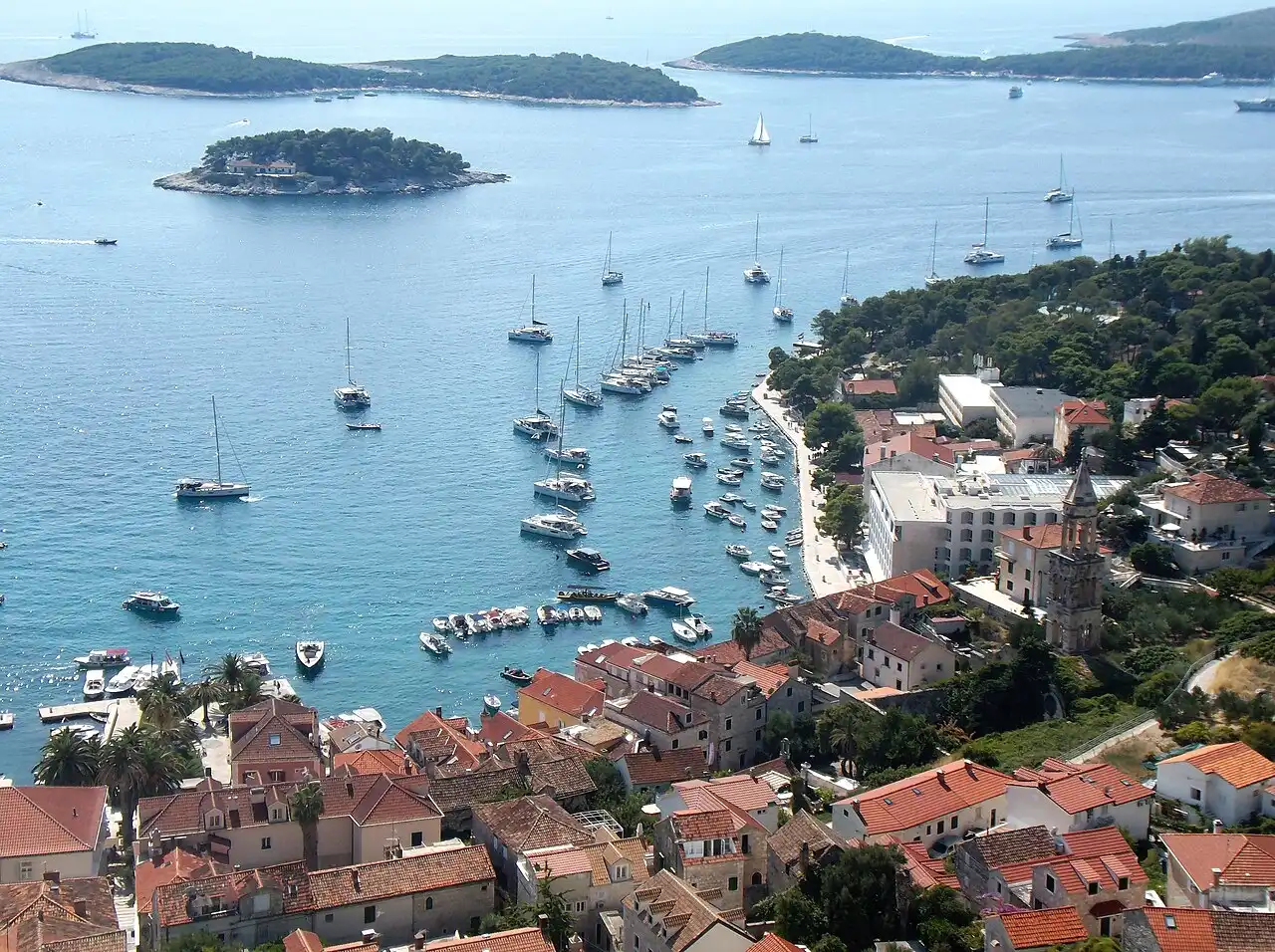
From Split, cross to Hvar island. Jadrolinija runs a car ferry from Split to Stari Grad (the island’s car port, about two hours), while fast passenger catamarans - Jadrolinija and Kapetan Luka (Krilo) - run straight into Hvar town in roughly an hour. If you’re driving, you take the car ferry to Stari Grad and then cross the island; foot passengers can aim directly for Hvar town.
Hvar town is the glamorous one: a marble main square below the hilltop Fortica (Spanjola) fortress, the oldest public theatre in Europe, and a marina where yachts and party boats tie up. Off the harbour lie the Pakleni Islands, a short taxi-boat ride away for swimming. Stay the night and enjoy the famously late evenings.
Day 4: Korčula by ferry
Continue island-hopping south to Korčula. In summer Jadrolinija and Krilo run catamaran connections down the islands, and there are car ferries onto the island too (for example to Vela Luka in the west, with the old town a drive away at the eastern tip). Our how to get to Korčula guide covers the Split, Dubrovnik and Orebić crossings in detail - check current timetables on jadrolinija.hr and krilo.hr; the network is fullest from roughly mid-June to mid-September.
Korčula town is a miniature walled city on a small peninsula, its lanes laid out in a herringbone pattern to break the wind. It guards Renaissance palaces, the cathedral of St Mark, and a house that local legend ties to Marco Polo. The surrounding island and the Pelješac peninsula opposite are quiet wine country - Pošip and Plavac Mali - making this the most relaxed leg of the trip.
Day 5: Ston and the road south
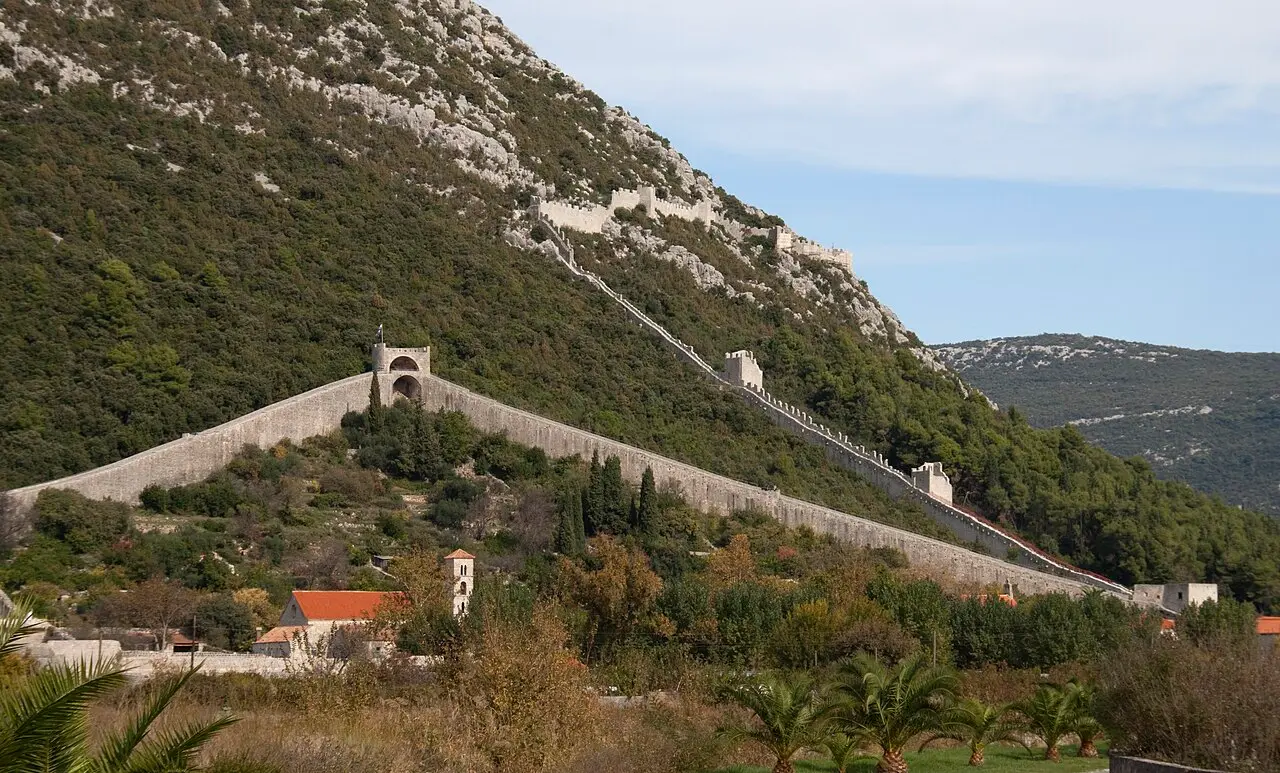
Leave the islands and rejoin the mainland on the Pelješac peninsula, heading for Ston. This is where Dubrovnik’s old Republic guarded its valuable salt: a chain of defensive walls - once over five kilometres long and among the longest in Europe - climbs the hill between Ston and Mali Ston. The salt pans are still worked, and the bay of Mali Ston is famous for oysters and mussels, so it’s the obvious lunch stop of the route.
From Ston it’s about an hour’s drive to Dubrovnik, crossing the Pelješac Bridge on the way south.
Day 5-6: Dubrovnik, the finale
The route ends at Dubrovnik, the “Pearl of the Adriatic.” The complete circuit of the city walls - about 1,940 metres around - is the single must-do, looking down over a sea of terracotta roofs and out to the island of Lokrum. Walk the marble Stradun, ride the cable car up Mount Srđ at sunset, and give yourself a full day inside the Old Town. Everything to see, plus where to eat and how the walls ticket works, is in our Dubrovnik travel guide. Fans can also walk the Old Town as King’s Landing - our guide to Game of Thrones filming locations in Dubrovnik maps the spots.
How to do it: car, ferry or both
You have three honest options:
- Self-drive the coast and take ferries only for the islands. The fastest, most flexible way; you can pick it up as a one-way rental from Split, dropping the car in Dubrovnik (expect a one-way fee).
- Car ferry + island driving. Take your car across to Hvar (Stari Grad) and Korčula and drive on the islands. Book car-ferry slots well ahead in July-August.
- Foot passenger by catamaran + bus. No car at all: fast catamarans down the islands, then buses on the mainland legs. Simplest in peak season when sailings are frequent.
| Leg | Distance | How |
|---|---|---|
| Split → Trogir | ~27 km | Road (car/bus) |
| Split → Hvar | sea crossing | Jadrolinija ferry / catamaran |
| Hvar → Korčula | sea crossing | Catamaran / car ferry |
| Korčula → Ston | ~70 km | Car ferry + road (Pelješac) |
| Ston → Dubrovnik | ~55 km | Road (Pelješac Bridge) |
Ferry tickets and timetables come from Jadrolinija (jadrolinija.hr), the national operator, and the Krilo / Kapetan Luka catamarans (krilo.hr). Sailings are most frequent from mid-June to mid-September; outside summer the island links thin out, so always check the current season’s schedule before locking in dates. Prices and times change every season - confirm on the operators’ official sites.
Best time to go: late spring (May-June) and September-October give warm seas and lighter crowds than the July-August peak. For the rest of your trip planning, see the routes hub and our other Croatia itineraries.
Route day by day
- Days on the road
- 6
- Distance
- ≈280 km
- Budget from
- 90 EUR
- Best season
- May, June, September, October
The route at a glance
-
Split
Route startstop ≈1440 min
Start in the living Roman heart of Dalmatia - Diocletian’s Palace, the Riva and the ferry port that links you to the islands.
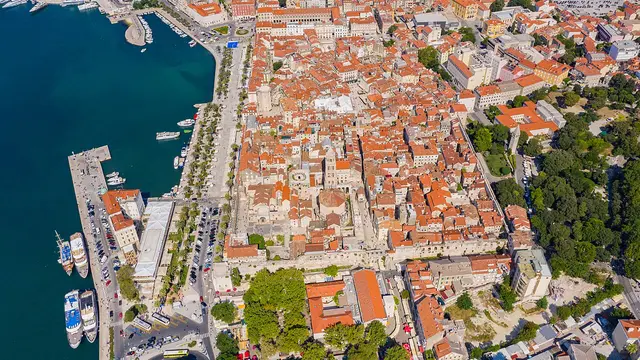
Photo: dronepicr / Wikimedia Commons, CC BY 2.0 ( source) -
Trogir
27 km from the startstop ≈180 min
A UNESCO-listed island town 30 minutes west of Split, packed with Romanesque and Renaissance stone - easy as a half-day stop by car or bus.
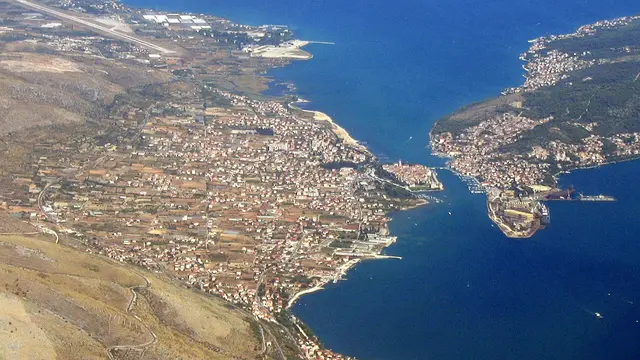
Photo: Kucharek / Wikimedia Commons, CC BY 3.0 ( source) -
Hvar (by ferry)
87 km from the startstop ≈1440 min
Cross to the island by Jadrolinija car ferry or fast catamaran. Hvar town pairs a marble piazza and hilltop fortress with Croatia’s liveliest nightlife.
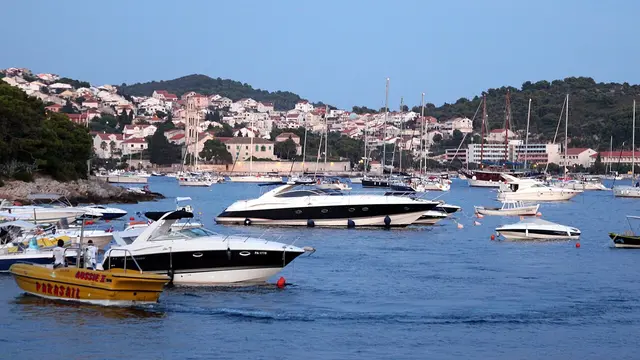
Photo: Boris Tylevich / Wikimedia Commons, CC BY 2.0 ( source) -
Korčula (by ferry)
160 km from the startstop ≈1440 min
Island-hop south to the walled town that claims Marco Polo as a son. A herringbone street plan, Venetian palaces and quiet wine country on Pelješac next door.
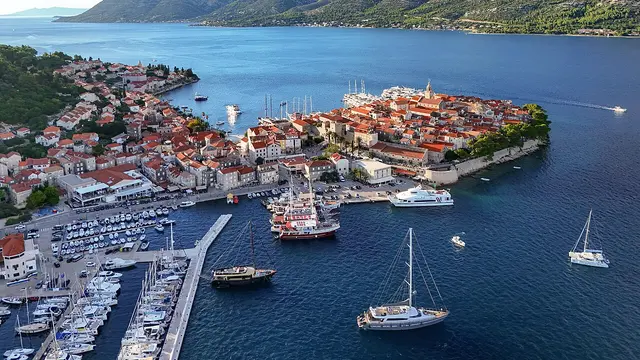
Photo: Quintin Soloviev / Wikimedia Commons, CC BY 4.0 ( source) -
Ston
230 km from the startstop ≈180 min
On the Pelješac peninsula: five kilometres of medieval defensive walls above the salt pans, plus the oyster beds of Mali Ston bay. A natural lunch stop on the road to Dubrovnik.
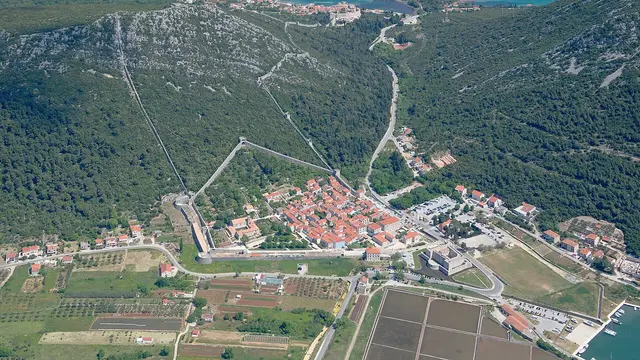
Photo: Carsten Steger / Wikimedia Commons, CC BY-SA 4.0 ( source) -
Dubrovnik
280 km from the startstop ≈1440 min
The grand finale: the “Pearl of the Adriatic”, its 1,940-metre city walls, the Stradun and a clifftop Old Town that closes the Dalmatian coast.
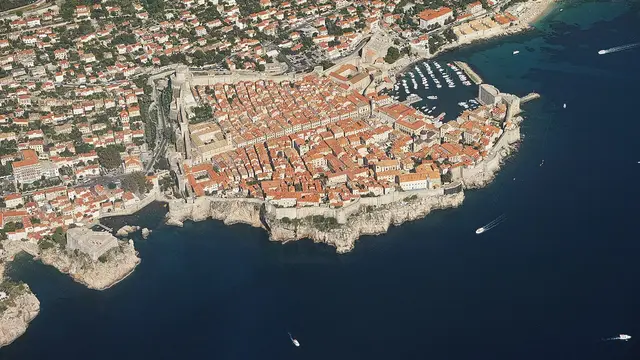
Photo: Akira Takiguchi / Wikimedia Commons, CC BY 2.0 ( source)
Route map
The map with stops loads on click - to keep the page lightweight.
The map didn’t load. Check your connection and refresh the page.