
Plitvice Lakes National Park
How to visit Plitvice Lakes: the 16 cascading lakes, the lettered trails, Veliki Slap, the boat and train, tickets, seasons and how to get there.
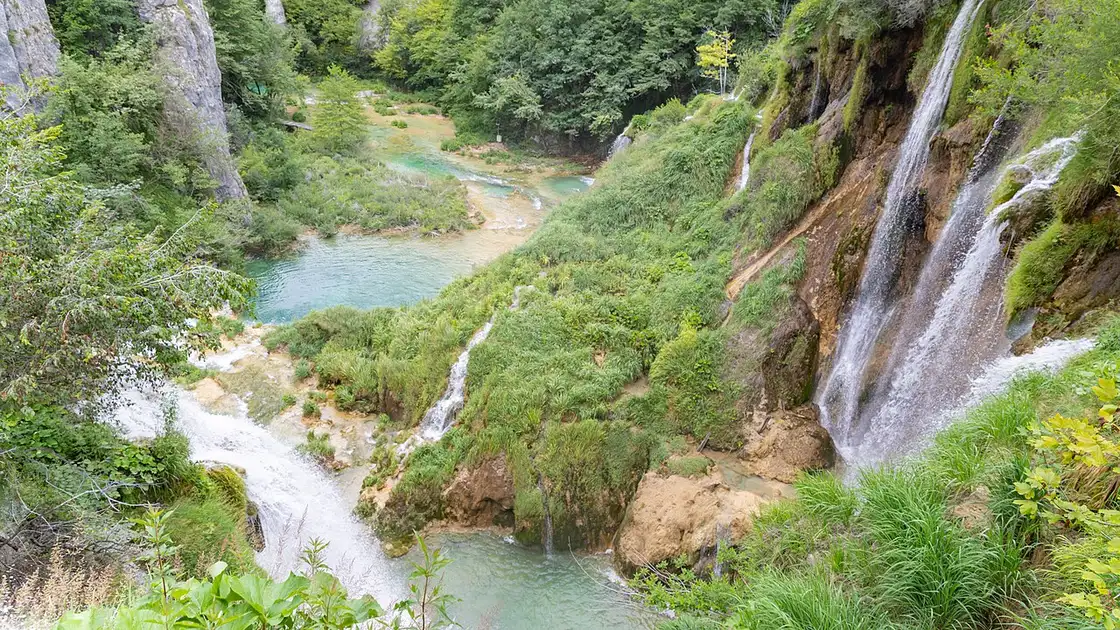
Plitvice Lakes National Park is Croatia’s oldest and most famous national park - a UNESCO World Heritage Site in the forested hills of central Croatia, where 16 terraced lakes spill into one another over natural travertine dams in a chain of turquoise pools and waterfalls. You explore it on foot along a network of wooden boardwalks and lettered trails (A-K), riding an electric boat across the big lake and a panoramic shuttle train between sectors, with the Veliki Slap (Great Waterfall) - the tallest in Croatia - as the headline sight. Croatia uses the euro (€) and has been in the Schengen Area since 1 January 2023, so for most visitors arrival is formality-free.
The thing to grasp before you go is that you don’t just wander Plitvice - you pick one of the lettered routes that stitch the boardwalks, the boat and the shuttle train into a loop, and the one you choose sets how long you walk and how much you see. Get that and your timing right, arriving before the coach tours, and the crowds that ruin other people’s day barely touch yours.
What is Plitvice Lakes?
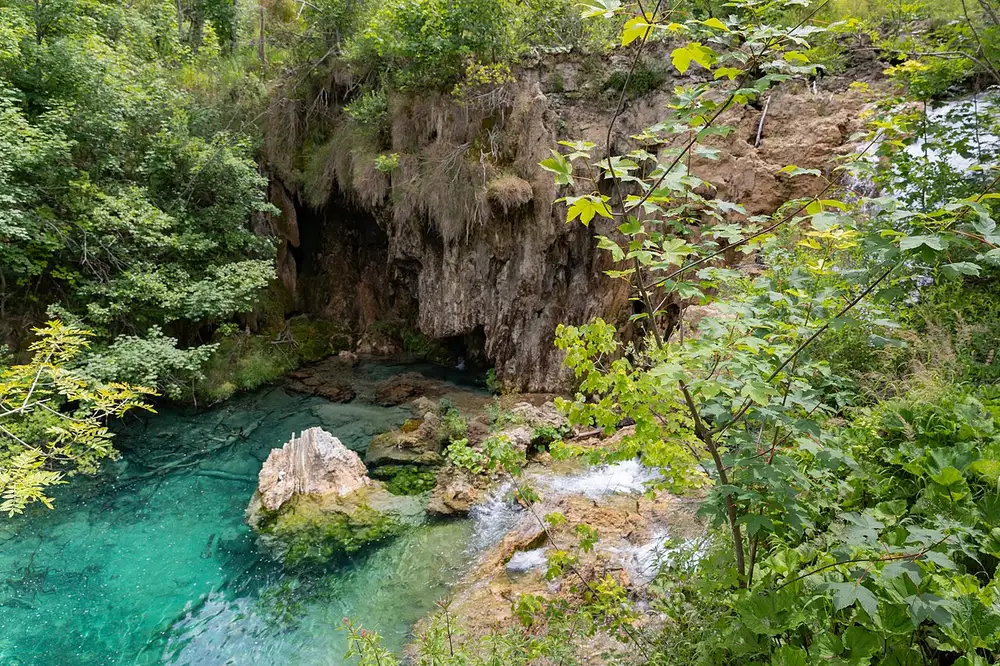
Plitvice (Croatian: Plitvička jezera) was declared a national park in 1949 and added to the UNESCO World Heritage List in 1979 - one of the first natural sites on the list. It covers roughly 300 square kilometres of karst hills, beech-and-fir forest and water, in the Lika region of central Croatia.
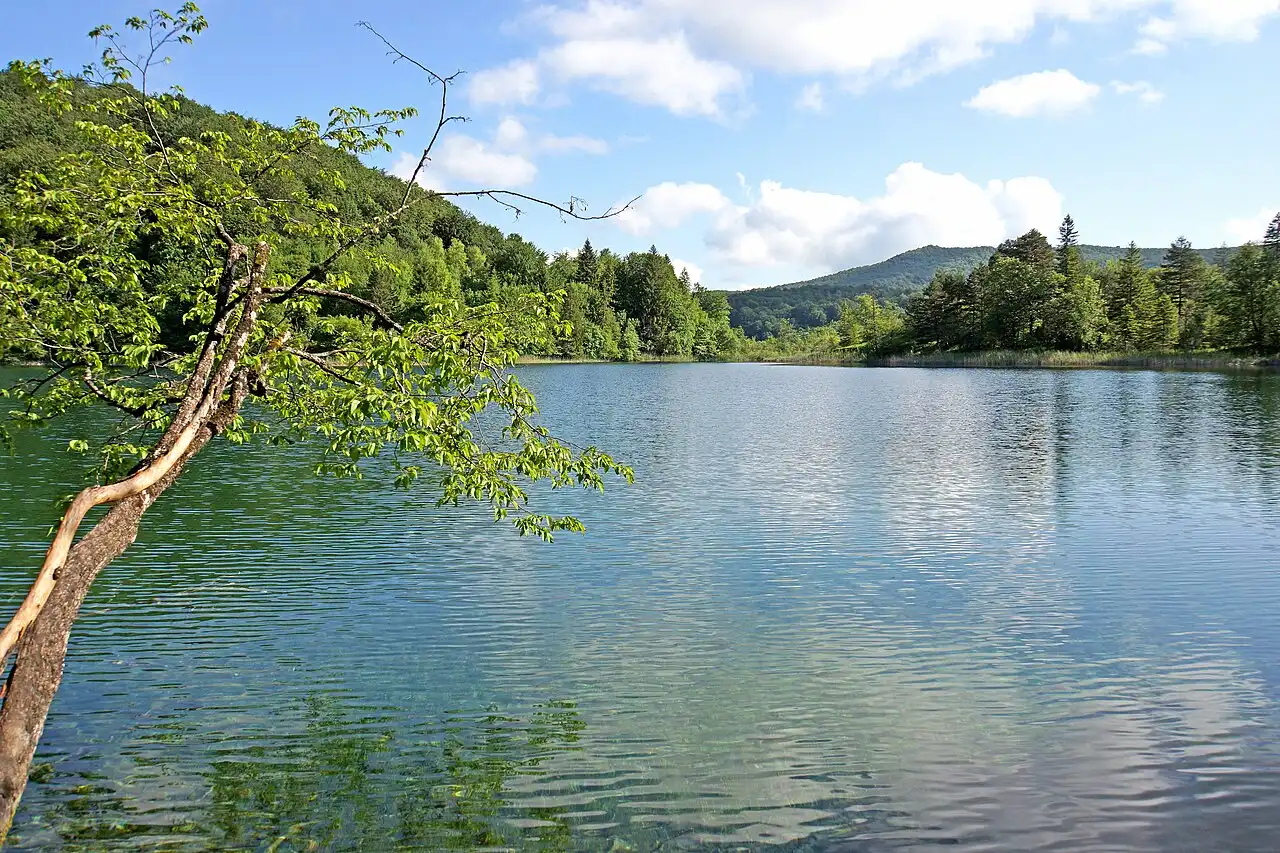
The thing that makes it unique is the geology. The 16 main lakes are arranged in a stepped chain that drops about 130 metres from the highest to the lowest, split into the Upper Lakes (the broad, calmer lakes set among forest) and the Lower Lakes (a tighter, more dramatic gorge of cascades). The lakes are separated not by dams of rock or concrete but by travertine barriers - porous limestone deposited by mosses, algae and bacteria growing in the mineral-rich water. These barriers are alive and slowly growing, which is exactly why you must stay on the boardwalks: stepping or swimming in the lakes damages a process that took thousands of years to build. Swimming isn’t allowed anywhere in the park.
The water colour - turquoise, azure, jade - comes from minerals, light and the white travertine bed, and changes through the day and the seasons.
The trails: routes A-K, Upper and Lower Lakes
You don’t wander Plitvice freely; you follow one of the park’s signposted lettered routes, each a loop or line of a set length and difficulty, starting from Entrance 1 (nearer the Lower Lakes) or Entrance 2 (nearer the Upper Lakes). The routes are lettered A through K and combine walking with the boat and the train, so you rarely backtrack.
In broad terms:
| Route | Best for | Rough length | Notes |
|---|---|---|---|
| A | Lower Lakes only, short visit | ~2-3 h | From Entrance 1; the Veliki Slap and lower cascades on foot |
| B | Lower Lakes + short boat | ~3-4 h | Adds the electric boat across Lake Kozjak |
| C | The classic full circuit | ~4-6 h | Lower + Upper Lakes, with boat and train - the most popular |
| E / F / H / K | Upper Lakes / longer loops | ~2-6 h | Start from Entrance 2 or cover the whole park |
The exact times depend on your pace, the crowds and the season, and the park can change which routes are open (e.g. in winter or high water). Winter guests often pair a quieter park day with Zagreb Christmas markets on the same trip. The most chosen route is C, which strings together the Lower Lakes, a boat ride across the big lake and the Upper Lakes into one long day. Check the current route map and which letters are running on the official park site when you book - and pick your entrance to match the route, because they’re about 3 km apart.
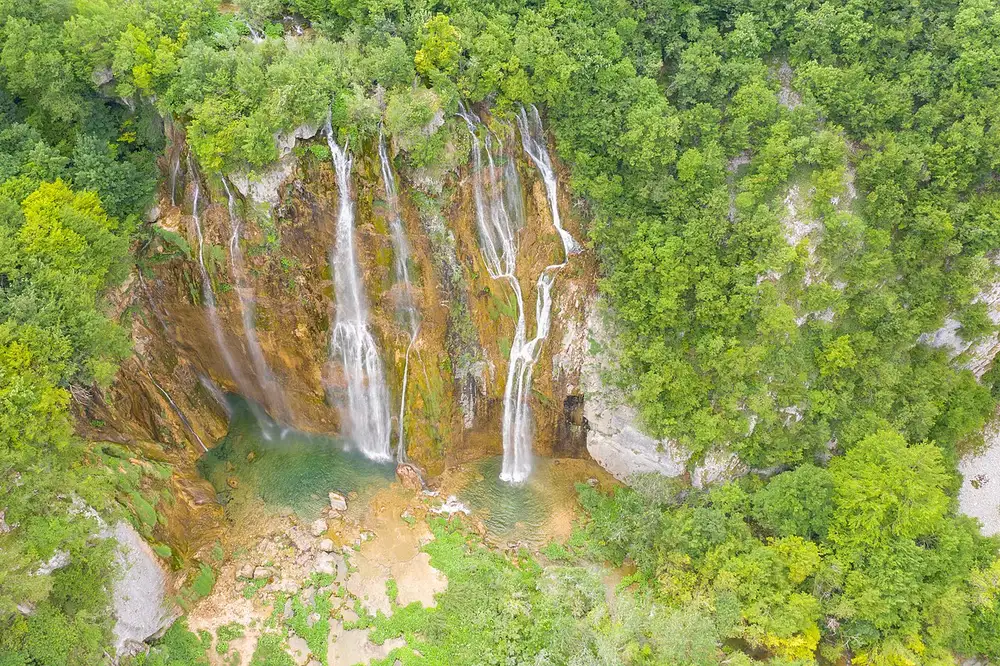
The single sight everyone comes for is the Veliki Slap (Great Waterfall) at the bottom of the Lower Lakes, where the Plješevica stream drops about 78 metres - the tallest waterfall in Croatia. The boardwalk runs right to its foot, and a viewpoint above looks down the whole Lower Lakes gorge.
The boat and the panoramic train
Two free park shuttles are built into the longer routes and included in your ticket - no separate payment:
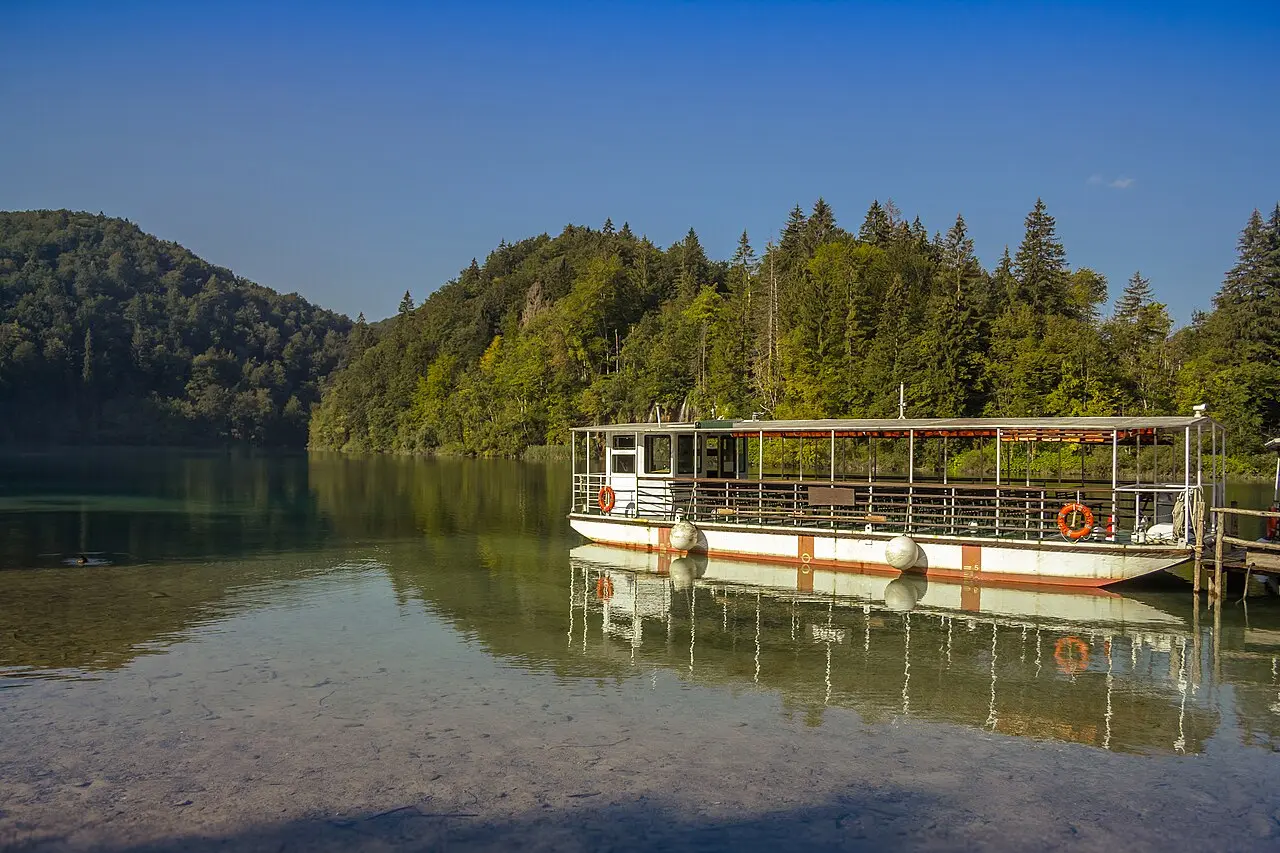
- The electric boat crosses Lake Kozjak, the park’s largest lake, linking the Lower and Upper Lakes. The boats are electric and quiet so as not to disturb the water; the ride takes only a few minutes and saves a long walk around the shore.
- The panoramic train (a tractor-pulled road train, not a railway) shuttles between the park’s stations - typically the entrances and the upper sectors - so you can climb back up without retracing the trail.
In peak season both can have queues, especially the boat at midday, which is one more reason to start early. Their schedules are seasonal and they may not run in winter, so check the day’s timetable when you arrive.
Tickets, opening hours and the season
Plitvice uses timed-entry tickets: you buy online for a specific entrance (1 or 2) and a time slot, and in July and August the popular morning slots sell out days ahead. Buying online for an early slot is the single best thing you can do to avoid both the queue at the gate and the worst of the crowds inside.
Prices and hours are strongly seasonal - the park runs different timetables and ticket tiers for summer, the shoulder months and winter, and it adjusts them year to year. We deliberately don’t print a euro figure here, because a wrong number is worse than none: check the current ticket price, opening hours and any timed-entry rules on the official park site, np-plitvicka-jezera.hr, before you go. As a rough orientation, summer tickets are among the most expensive of any Croatian attraction and include the boat and train; winter tickets are much cheaper but parts of the park and the shuttles may be closed.
A few fixed facts worth knowing: the ticket includes the boat and the panoramic train; a single ticket is for one day; and large bags, drones and pets-off-lead are restricted - confirm the current rules when you book.
How to get to Plitvice
Plitvice sits roughly halfway between Zagreb and the Dalmatian coast, just off the D1 road, which makes it an easy stop on the way south.
| From | Distance | Time | Notes |
|---|---|---|---|
| Zagreb | ~135 km | ~2-2.5 h | A1 motorway then D1; frequent direct buses |
| Split | ~250 km | ~3.5-4 h | A1 motorway; buses and tours run daily |
| Zadar | ~135 km | ~2 h | The nearest coastal city; the closest airport for a day trip |
By car is the most flexible option - there’s large paid parking at both entrances - and lets you arrive before the day-tour buses. If you don’t want to drive, see our guide to renting a car in Croatia for what it costs and how the one-way and cross-border rules work. By bus, intercity coaches from Zagreb, Zadar and Split stop on the main road by the entrances; check timetables in advance, as some are seasonal. On a tour, day trips run from Zagreb, Zadar, Split and Trogir and bundle the transport and ticket together - the simplest choice if you have no car. For the full breakdown of getting here from the capital, see our Zagreb to Plitvice guide. Continuing to the coast afterwards, our Zagreb to Split via Plitvice route strings the whole drive together.
When to go - and how to avoid the crowds
Plitvice is busy. In July and August it can feel shoulder-to-shoulder on the narrow boardwalks at midday, and the boat queues stretch. The water is at its fullest and greenest in spring (April-May), when snowmelt swells the falls; autumn (late September-October) brings gold-and-red forest and thinner crowds; and winter turns the park into a frozen, near-empty fairy-tale - though parts close and the shuttles may not run.
Whatever the month, the trick is the same: go early or late. Be at the gate for the first slot or arrive after about 3-4 pm, when the day-tour buses leave. Midday in midsummer is the worst of both heat and crowds. For a wider month-by-month view of weather and prices across the country, see our guide to whether Croatia is expensive and the best times to travel.
Practical tips for visiting
- Wear proper shoes. The boardwalks are wooden, often wet and without railings; trainers or hiking shoes beat sandals. The trails are mostly flat but long.
- Give it half a day at least. The short Lower-Lakes loop needs 2-3 hours; the classic full circuit (route C) is a 4-6 hour day. Don’t try to “see it in an hour.”
- Bring water and snacks. There are a couple of restaurants and kiosks near the entrances and lake stations, but little in between.
- Stay on the boardwalks. No swimming, no drones, no leaving the path - the travertine is fragile and protected.
- Book the ticket online for a morning slot in summer, and pick the entrance that matches your route.
- Money. Croatia uses the euro (€); cards are accepted at the entrances, but carry a little cash. The boat and panoramic train are already in your ticket.
Plan the rest of your trip
Plitvice pairs naturally with a Croatia road trip. It’s an easy stop between the capital, Zagreb, and the coast at Split, and slots neatly into a longer drive south - see our Dalmatia coast route from Split to Dubrovnik and the wider Croatia itineraries. To catch both of Croatia’s great waterfall parks on one drive, follow our Plitvice and Krka two-park route; if the trip only has room for one of them, our Krka vs Plitvice comparison puts the drive times, walking distances and 2026 tickets side by side. For more natural sights and day-trip ideas, browse the attractions hub, and for getting around without your own car, the transport guide covers buses and ferries. If you’re pricing national-park tickets against each other, Brijuni in Istria is the one that costs more than Plitvice in high summer, and buys a completely different day.
Opening hours, prices, timetables and seasonal services change through the year - the figures here are planning estimates, not quotes. Confirm current details with the operators and official sources before you go.
Photos
On the map
The map loads on click - to keep the page lightweight.
The map didn’t load. Check your connection and refresh the page.
Good to know
Timed entry tickets are sold online for a chosen entrance (1 or 2) and time slot, and sell out in summer; the boat and panoramic train are included in the ticket. Prices and hours are strongly seasonal - confirm the current ticket, opening times and any timed-entry rules on the official np-plitvicka-jezera.hr site before you go.
Details checked: June 22, 2026
Distance
- Zagreb ≈135 km · ~2-2.5 h By car on the A1 motorway then the D1, or by direct intercity bus from Zagreb
- Split ≈250 km · ~3.5-4 h By car on the A1, or by bus; many travellers stop here between Zagreb and the coast
Read also

What to see · 12 min read
Paklenica National Park: Canyons, Climbing and Trails
Updated · August 29, 2026Paklenica National Park in 2026: canyon and cave tickets from €5, Anića Kuk climbing routes, and trails from Starigrad near Zadar.

What to see · 9 min read
Best Beaches near Split: Bačvice to the Riviera
Updated · August 26, 2026Best beaches near Split in 2026: sandy Bačvice, Marjan coves, Žnjan and Makarska Riviera day trips - plus Brač by catamaran.

What to see · 10 min read
Elaphiti Islands: Lopud, Šipan & Koločep
Verified · August 15, 2026Jadrolinija 807 from Gruž: €5.40 in season to Koločep, Lopud or Šipan. Times, Šunj, and why one island beats hopping all three.

What to see · 7 min read
Klis Fortress: Game of Thrones Views above Split
Updated · August 13, 2026Klis Fortress above Split was Meereen in Game of Thrones. Adults 12 EUR, kids 4 EUR; open daily 08:30-20:30 - confirm on tvrdavaklis.com.