
Brijuni National Park 2026: Tito's Islands & Tickets
Brijuni tickets cost €50 in summer and €35 off-season, covering the boat from Fažana, a guide, the tourist train and the safari park. How to visit.
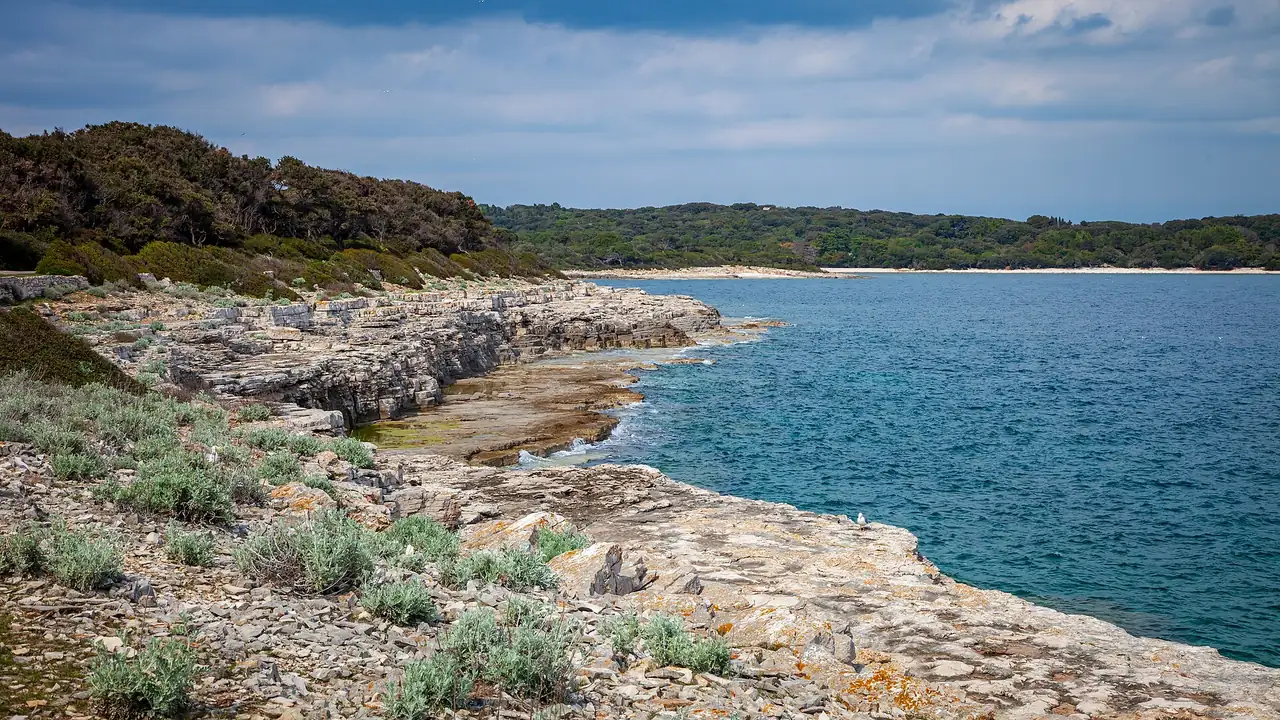
Brijuni is a national park of 14 islands off the Istrian coast, and the only way in is on the park’s own boat from Fažana. A single ticket covers the lot: the 15-minute crossing, a guide, an hour on the tourist train, the safari park and the museum displays. In 2026 that’s €50 for an adult from June to September and €35 the rest of the year (roughly $57/£43 and $40/£30), and the whole thing runs to a fixed four-hour slot.
The part nobody warns you about is the timing. Brijuni sells timed entry: the crew won’t board you earlier or later than the hour on your ticket, and you can’t linger for a later boat because you liked a bay. If that sounds too regimented, a second kind of ticket changes the day completely and costs less. Getting that choice right is the difference between a coach-trip afternoon and one of the better half-days on this coast.
What Brijuni actually is
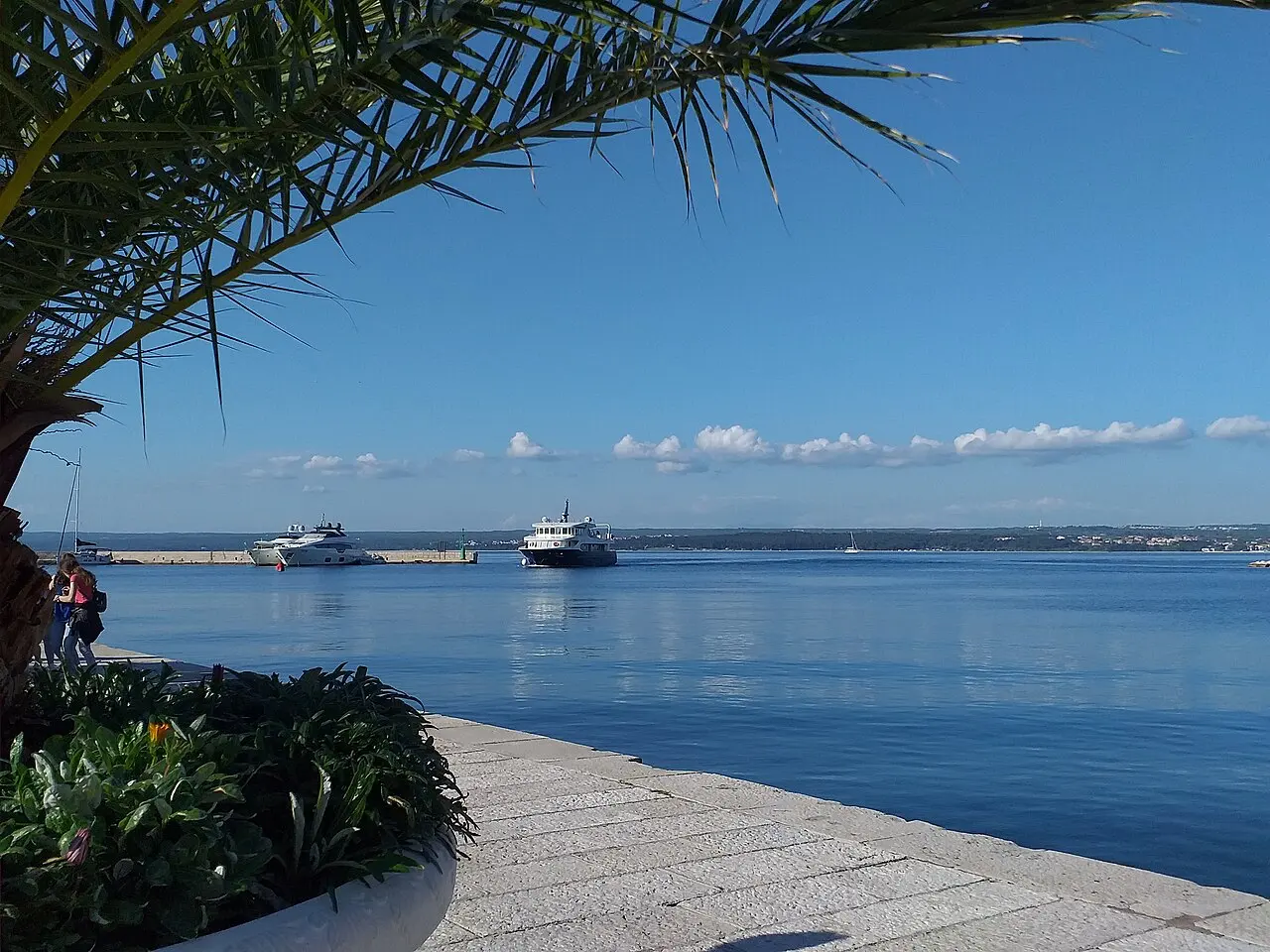
Fourteen islands and islets sit in the channel off Fažana, just north of the entrance to Pula’s port. Most of the park is water: of its 3,395 hectares only 743 are dry land. The archipelago became a national park in 1983, according to the Istrian tourist board.
You spend the day on one island, Veliki Brijun, the biggest. Mali Brijun next door holds a five-storey Austro-Hungarian fort from 1895-1900. Vanga is the one with the story: Tito’s private island, still state property for senior officials and closed to visitors. You see it from the train, and that’s that.
The landscape is nothing like the bare karst of the Dalmatian islands: clipped meadows, holm oak, umbrella pines and sequoias among more than 400 recorded plant species. It looks like a park because it has been run as one for over a century.
What the ticket costs in 2026
Two seasons, and the gap between them is big enough to plan a trip around. Official 2026 rates per person:
| Ticket (per person) | Oct-May | Jun-Sep |
|---|---|---|
| Guided excursion, adult | €35 (~$40/£30) | €50 (~$57/£43) |
| Guided excursion, student or 65+ | €30 | €40 |
| Guided excursion, child 7-18 | €15 | €20 |
| Self-guided, Brijuni Pocket Guide app, adult | €30 | €40 |
| Self-guided, child 7-18 | €13 | €15 |
| Self-guided entry from 6pm | not sold | €15 |
Small print from the same list: under-7s go free, insurance and VAT are included, hotel guests get 20% off, and a dog costs €15 - though dogs are barred from the safari park, the train and the museums, so that ticket belongs with a self-guided visit. Dollar and pound figures use the European Central Bank rate of 31 July 2026 and are orientation only.
Check the park’s news page before you pay: in 2026 it cut Veliki Brijun by 30% for the first fortnight of July and reactivated a promo code afterwards, and those codes don’t stack with other discounts. Reduced tickets aren’t sold online at all - students, pensioners and visitors with a disability book by email at izleti@np-brijuni.hr and collect at the park office, Brionska 10 in Fažana, half an hour before departure.
Guided train tour or the app: which ticket to buy
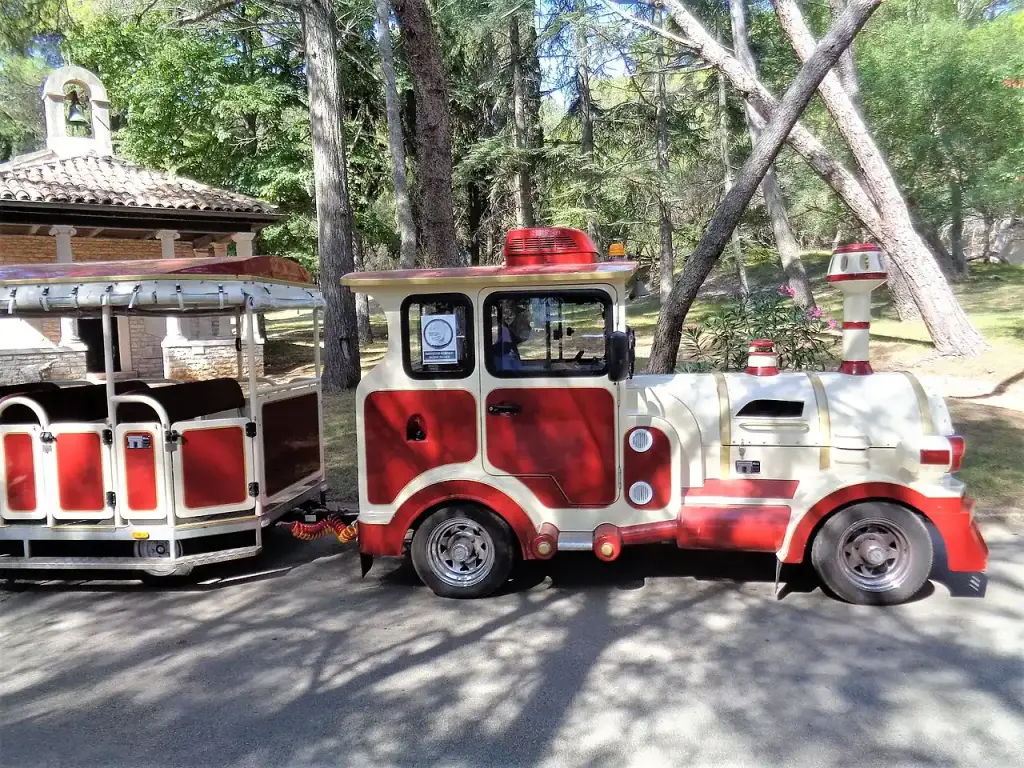
The guided excursion is the default and takes about four hours end to end. The first of them goes on the tourist train: north past the golf course to the safari park, then back down the western side past the empty enclosures of the old zoo, with a stop at the Roman villa in Verige Bay. The last stretch is on foot - museum displays, St German’s church, the Boathouse. Guides work in Croatian, English, German, Italian and Russian, and the language slots fill up. That, not a sold-out boat, is the real reason to book ahead.
The Brijuni Pocket Guide ticket is the same island without the group: the boat, the sights on your phone, and the ground covered on foot or on a rented bike or electric car (booked with the concessionaire, who quotes the rate - the park doesn’t publish it). The saving is smaller than it looks: €40 against €50 in summer, but only €30 against €35 the rest of the year, so off-season you’re giving up a guide for five euros.
Which to pick comes down to one question: do you want the history explained, or the island to yourself? First-timers who came for Tito and the Roman ruins get more from the guide: these layers need explaining, and the train covers ground you’d otherwise walk in the heat. Anyone repeating the trip, travelling with restless children or allergic to group pace should take the app, hire a bike and find the quiet bays on the west coast. One warning on the bikes: the park keeps around 300 and admits they’re sometimes not enough in high season, so that’s a first-boat plan.
The €15 evening ticket is the sleeper option in July and August: out at 18:00, 19:00 or 20:00, back as late as 23:00. It won’t get you the museums - the island information point shuts at 19:15 in high summer - so treat it as a walk in very good light.
Boats from Fažana, and the timetable trap
Everything leaves from Fažana, a stone-fronted town 8 km north-west of Pula, and the crossing takes 15 minutes. From June to August twelve sailings go out, 09:00 to 22:00, with returns until 23:00; April, May, September and October lose the 20:00 boat. Then the shutters come down: from November to March there are exactly two sailings a day, at 09:00 and 11:30, with the last boat back at 16:00.
One thing the timetable doesn’t tell you: the park states that Brijuni is open every day of the year except January and February, when visits are arranged for groups only and on request. So winter Brijuni means November, December or March. In January and February an individual can’t buy a ticket at all, whatever the sailing list shows.
The trap is the fixed slot: miss your departure and there is no refund and no rebooking. That bites hardest driving in from Rovinj or Poreč in August, with the coast road and Fažana’s parking both against you. Give yourself an hour more than the map says.
Tito’s islands
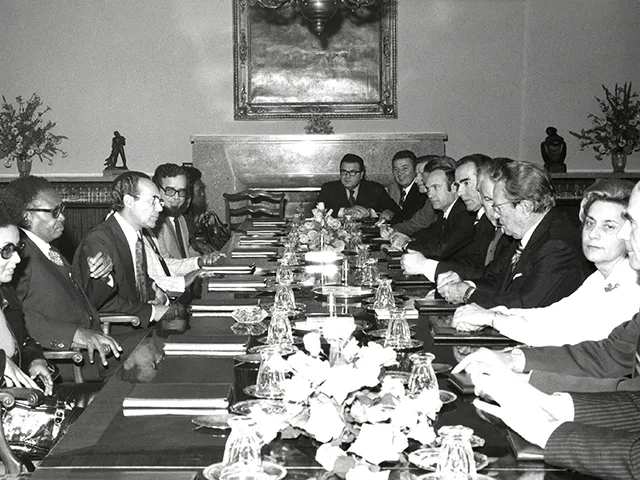
Josip Broz Tito first came to Brijuni in 1947, and from 1953 the Bijela vila, the White Villa, was his official residence. He averaged four months a year here and kept coming until 1979. The park’s own numbers explain why these islands still turn up in history books: 90 meetings with presidents, kings and tsars of 60 states, more than 250 foreign delegations, talks with over 300 accredited ambassadors. Elizabeth II came, and so did Nasser, Khrushchev and Ho Chi Minh.
The moment that stuck was the 1956 meeting of Tito, Nasser and Nehru, which produced the Brijuni Declaration and the groundwork of the Non-Aligned Movement. Tito left the islands for the last time on 29 August 1979, bound for the Non-Aligned summit in Havana.
You don’t get inside the White Villa; the photo exhibitions included in your ticket carry that story instead. What you do get is the oddness of the setting: a rich man’s Habsburg-era resort turned into the summer capital of a country that no longer exists.
The safari park, and animals with diplomatic passports
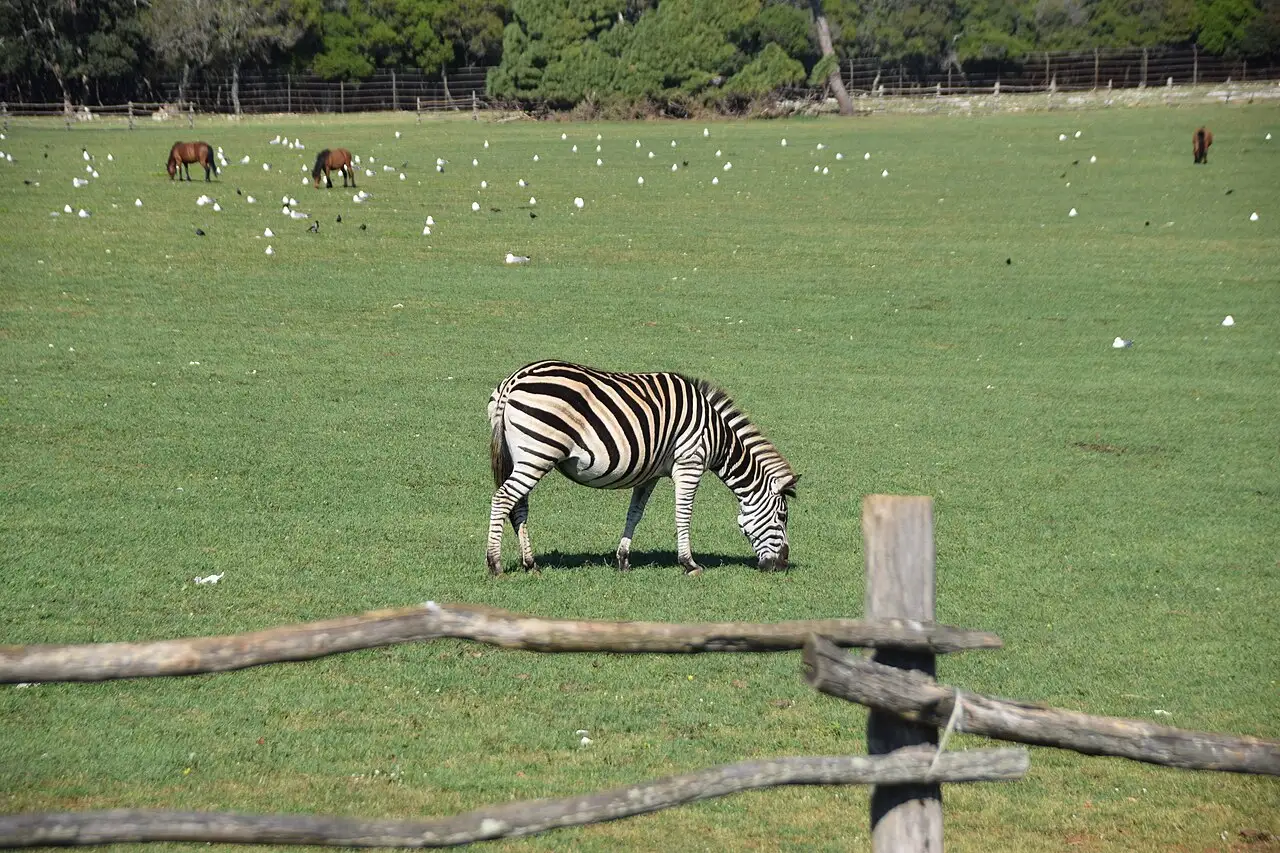
The safari park covers 9 hectares at the northern end of Veliki Brijun and holds about 80 herbivores. Much of the collection arrived as diplomatic gifts, which is what lifts it above a mildly awkward zoo. Lanka, the Indian elephant, was a present from Indira Gandhi in 1972. The zebras came from Sékou Touré of Guinea in 1960 and 1961, and the zebu, the small sacred Indian cow, was Nehru’s gift in 1959.
The carnivores are long gone, moved to the Zagreb and Osijek zoos in 1995, and injured sea turtles from Pula’s rescue centre convalesce here through the warm months.
Then there’s Koki, the yellow-crested cockatoo Tito gave his granddaughter Aleksandra for her ninth birthday. The species lives up to a century, so Koki has now outlived the state that hosted him.
The layers underneath: Romans, an ancient olive and dinosaurs
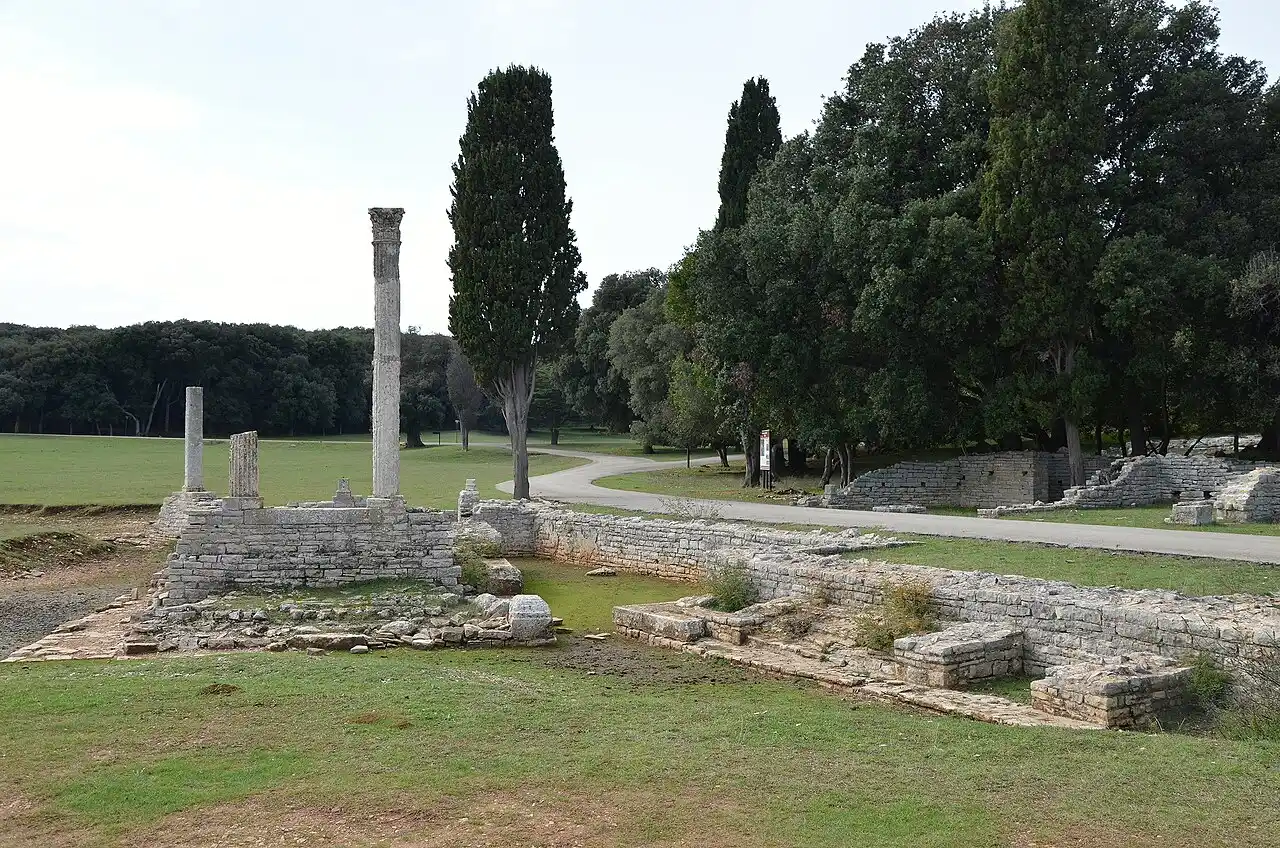
Long before any of that, Brijuni was Roman. A villa went up in Dobrika Bay in the 1st century BC, and Madona Bay grew into a settlement and then a walled castrum, its defences dating to the mid-5th century and its strata stacked from the Roman republic through Byzantium to Venice. The Roman villa in Verige Bay, where the train stops, is the photogenic one.
The old olive tree on the route is about 1,600 years old, carbon-dated by Zagreb’s Ruđer Bošković Institute in the 1960s. It split in a storm in the 1970s, was patched with concrete, and still fruits: about 30 kg of olives a year, pressed into 4.1 kg of extra-virgin oil.
And under all of it, dinosaurs. More than 200 footprints have been found at four sites in the park, left 130 to 100 million years ago. You can reach them at Cape Ploče and Cape Vrbanj, where a life-size theropod reconstruction stands - and there’s a three-toed print in a limestone block by the port that most people walk straight past.
Getting to Fažana
Fažana sits about 8 km north-west of Pula, so most visitors come from there or from Rovinj half an hour up the coast. Pula Airport is 15 km away; Rijeka’s airport on Krk is 120 km and Trieste 150 km. London flights are seasonal summer routes of a shade over two hours, which makes Brijuni an add-on to a week in Istria rather than an expedition.
Driving, the Istrian Y motorway feeds down to Pula and Fažana is signposted off it; our guide to renting a car in Croatia covers the extras that inflate the quoted daily rate. Without a car, Pulapromet’s suburban bus line 21 links the two, but the intervals are uneven - check the current timetable on the Fažana tourist board site rather than assuming an hourly service.
One note on parking: the €12 a day (€15 in June-September) car park at Boraca 9 that gets quoted online belongs to the park’s hotels, not to day visitors. In August, arrive early and expect to walk.
Is it worth it?
Brijuni is not the best swimming day in Croatia, nor the most dramatic scenery. What no other Croatian national park has is history you can stand in: Roman walls, a 1,600-year-old olive, a Cold War summer capital and an elephant from Indira Gandhi, all inside four hours. If you mainly want waterfalls or cliffs, Krka and Plitvice do that better, and Kornati does empty seascape better.
Two honest reservations. The guided version is a set-piece, and if you dislike being marshalled you’ll feel it in August. And at €50 in high season this is the steepest standard admission in the country, above Plitvice’s peak-summer adult rate of about €40 and above Dubrovnik’s city walls - our Croatia trip cost guide shows what that does to a day’s budget.
Timing is the one lever you have, and the calendar rewards precision. The €50 tariff runs to 30 September inclusive, so late September still costs €50 - what you gain is eleven boats a day and an island that has emptied out. Only from 1 October does the same day drop to €35. Either way, sleep in Pula for the shortest hop to Fažana or in Rovinj for the prettier harbour, and slot the islands into a wider Istria road trip rather than making a special journey of them.
Ticket prices, sailings and opening hours change every season and the park reserves the right to revise its tariff. Confirm the current figures on np-brijuni.hr before you travel.
Photos
On the map
The map loads on click - to keep the page lightweight.
The map didn’t load. Check your connection and refresh the page.
Admission and opening hours
- Admission price
- Adult ticket for the guided excursion €50 from 1 June to 30 September and €35 from October to May; students and over-65s pay €40/€30, children 7-18 €20/€15, under-7s go free. The self-guided ticket with the Brijuni Pocket Guide app costs €40/€30, and in high season the park also sells a €15 entry from 6pm. The price covers the return boat from Fažana, insurance, the guide, the tourist train, the safari park and the museum displays. Confirm the current tariff before you book.
- Opening hours
- Boats run daily. From June to August the crossing leaves Fažana at 09:00, 10:00, 11:30, 12:30, 13:30, 14:30, 15:30, 17:00, 18:00, 19:00, 20:00 and 22:00; in April, May, September and October the 20:00 sailing drops out; from November to March there are only two, at 09:00 and 11:30. The guided excursion runs about four hours.
Your ticket carries a fixed departure time, the park does not let you board earlier or later, and it is neither refunded nor moved to another date - that is the rule that costs people money here. Individual tickets are not sold in January and February: in those two months the park takes groups only, by prior arrangement. Buy online through shop.np-brijuni.hr; discounted tickets (students, over-65s, veterans, disability) have to be booked by email and collected at the park office in Fažana. Confirm sailings and prices on np-brijuni.hr before you travel.
Details checked: August 1, 2026
Read also

What to see · 12 min read
Paklenica National Park: Canyons, Climbing and Trails
Updated · August 29, 2026Paklenica National Park in 2026: canyon and cave tickets from €5, Anića Kuk climbing routes, and trails from Starigrad near Zadar.

What to see · 9 min read
Best Beaches near Split: Bačvice to the Riviera
Updated · August 26, 2026Best beaches near Split in 2026: sandy Bačvice, Marjan coves, Žnjan and Makarska Riviera day trips - plus Brač by catamaran.

What to see · 10 min read
Elaphiti Islands: Lopud, Šipan & Koločep
Verified · August 15, 2026Jadrolinija 807 from Gruž: €5.40 in season to Koločep, Lopud or Šipan. Times, Šunj, and why one island beats hopping all three.

What to see · 7 min read
Klis Fortress: Game of Thrones Views above Split
Updated · August 13, 2026Klis Fortress above Split was Meereen in Game of Thrones. Adults 12 EUR, kids 4 EUR; open daily 08:30-20:30 - confirm on tvrdavaklis.com.