
Paklenica National Park: Canyons, Climbing and Trails
Paklenica National Park in 2026: canyon and cave tickets from €5, Anića Kuk climbing routes, and trails from Starigrad near Zadar.
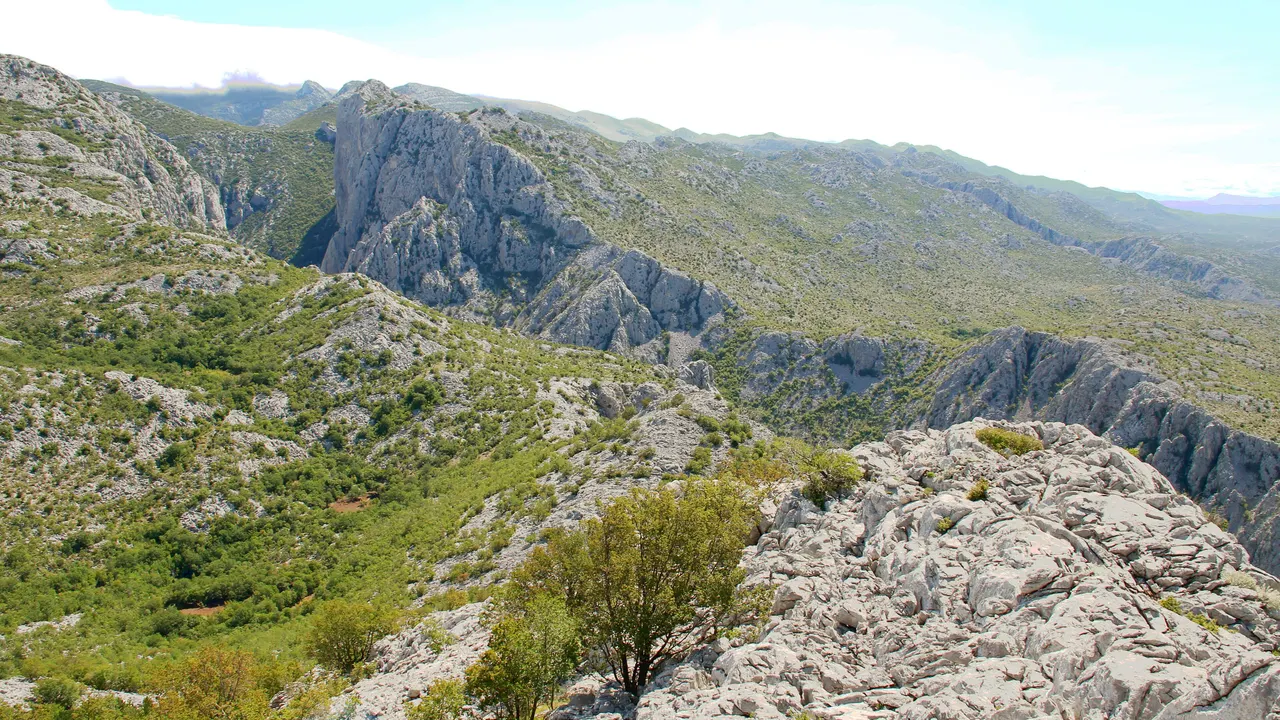
Paklenica is two limestone canyons cut into the seaward wall of the Velebit mountains, and almost everything you do here happens on foot or on a rope, not from a boat or a boardwalk. Velika Paklenica, the main gorge, carries hiking trails up toward Velebit’s highest peaks and a 350-metre wall called Anića Kuk with around 600 climbing routes; Mala Paklenica next door is smaller, wilder, and closed to climbing altogether. A 2026 adult day ticket runs €5 to €10 depending on the month, and covers climbing on top of everything else. The walk to the park’s only show cave takes about an hour and a half from the car park, and the base for all of it is Starigrad, a seaside village at the foot of the canyon.
Velika Paklenica, the canyon most people mean
When people say “Paklenica,” they usually mean this one. The valley runs 14.5 km from its spring down to the sea, but the dramatic stretch - the true canyon between Anića Kuk and the village of Marasovići - is much shorter, around 3 km, where the gorge narrows to a few dozen metres and the walls drop as much as 400 metres. The stream that carved it holds water year-round, unusual on this side of the Velebit, and collapsed boulders choke the channel into small rapids in places.
You don’t need to be a climber or a serious hiker to see the best of it. A paved road runs 2 km in from the ticket gate at Entrance 1 to a car park inside the canyon - the one stretch in the park where cycling is allowed - and from there a flat, well-marked path follows the streambed past the cliffs. That’s as far as most day visitors go, and it’s enough: Anića Kuk from directly below is startling even if you have no plans to touch the rock.
Mala Paklenica: quieter, wilder, and closed to climbers
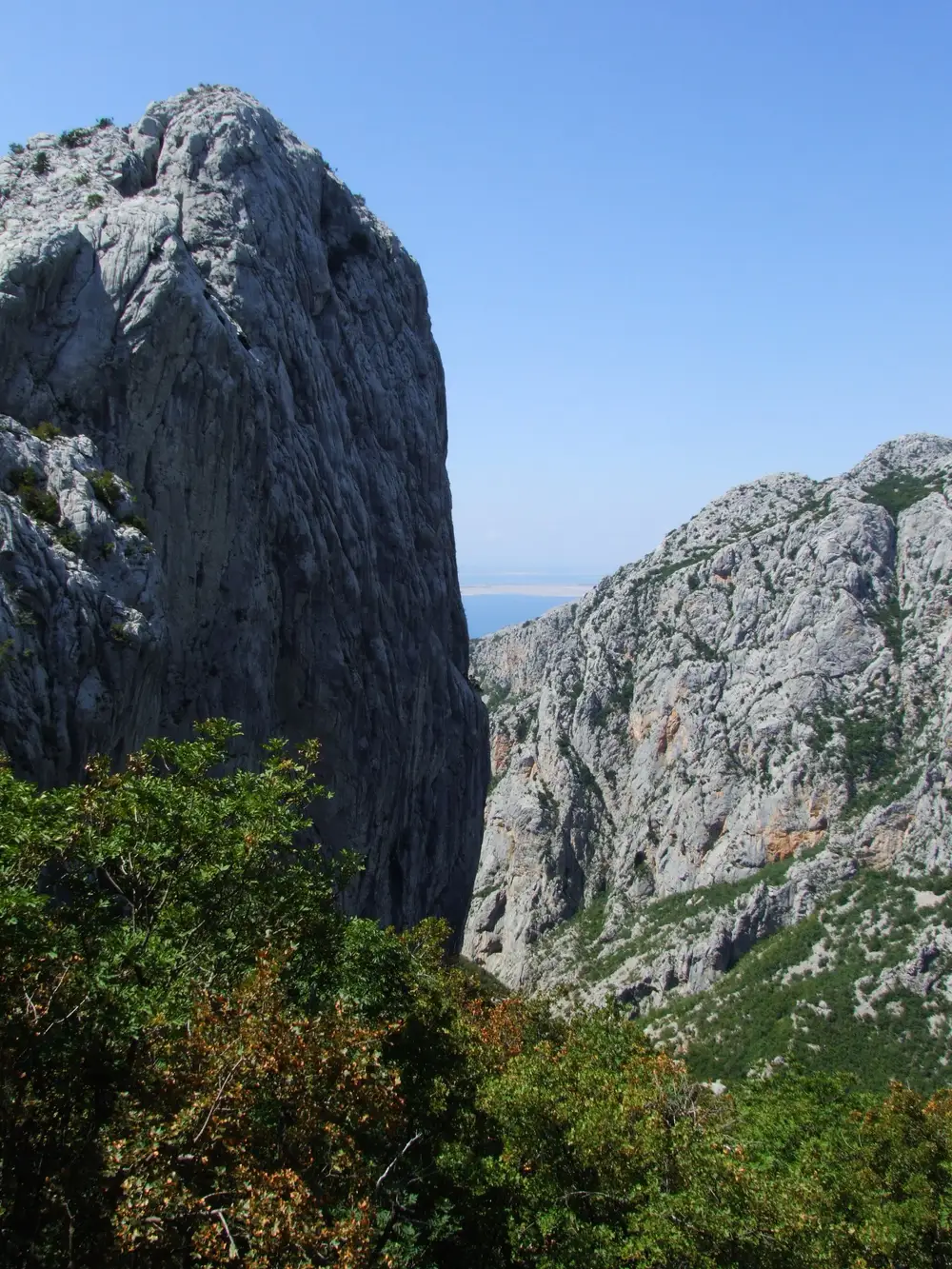
The second canyon sits just south, through its own gate, Entrance 2, in the village of Seline. It’s noticeably smaller - 12.5 km against 14.5 - with cliffs topping out around 300 metres rather than 400 and a narrowest point of just 10 metres. The stream flows permanently only in the upper reaches; further down it’s a winter torrent that leaves the bed dry most of the year, and in wet weather the canyon can become genuinely impassable.
What sets Mala Paklenica apart isn’t the size, though - it’s a rule. Rock climbing is banned outright, to protect nesting birds and keep one corner of the park free of bolts and chalk. Entrance 2 also runs only from the end of April to the end of October, and the park’s guidance is blunt about who should take the trail through it: experienced hikers, not casual walkers. If the wall and the crowds around it are what you came for, you want Velika; if you’d rather have a canyon closer to yourself, this is it, weather and season permitting.
Anića Kuk and 600 routes of climbing
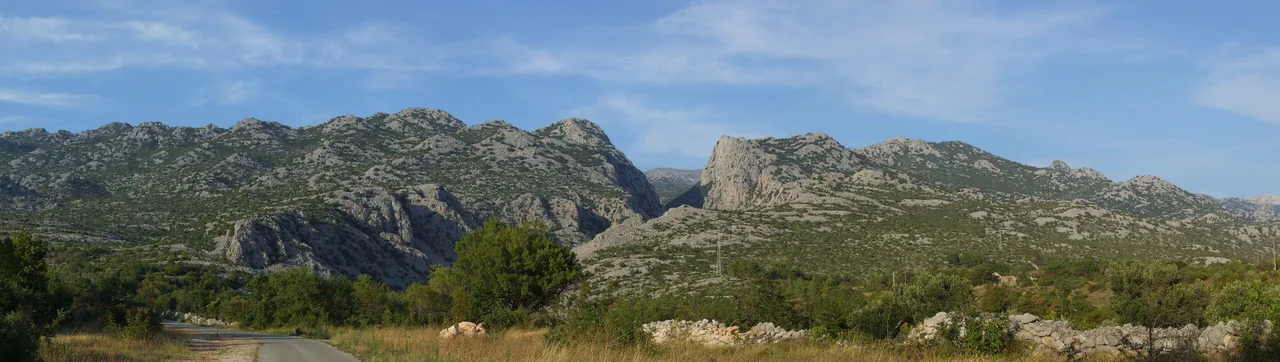
Paklenica is Croatia’s biggest and best-known climbing area, and Anića Kuk is why. The wall rises straight out of the canyon floor to roughly 350 metres, and its routes span the full range: old aid lines from the 1950s, unequipped rock unchanged in decades, and modern fully-bolted sport climbs. Across the park there are about 600 marked routes, from an easy 3 to a demanding 9a, on solid carbonate rock with sea air drifting up the canyon.
It didn’t earn that reputation by accident. The first attempt on Anića Kuk, in 1938, killed the climber who made it, Dragutin Brahm; two years later two other Croats finished the line he’d planned and named it for him. The war and the years after it shut the canyon off, and climbing resumed only after 1955 - which is when the local legend was made: in July 1957, two climbers from a Split alpine club reportedly first-ascended the Mosoraski route on rope untied from their mothers’ washing lines and a handful of homemade pitons.
These days beginners start in Klanci, the narrowest and easiest-access part of the canyon, manageable even with children along - though Klanci holds the park’s hardest short route as well as its easiest: Genius Loci, the 9a Adam Ondra added in July 2020 as a harder variant start to Il Maratoneta, the 8b+ bolted here in 1987 by Italian climber Manolo (Maurizio Zanolla). Crljenica is the winter sector; the main season runs spring to late autumn, with the Croatian Mountain Rescue Service on the wall daily in July and August. There’s no gear rental inside the park itself: bring your own rope, rack and helmet, or rent a set in Starigrad, and get the topo before you go. No partner, or never led a multi-pitch? Starigrad operators run guided climbing days for exactly that gap.
The walk to Manita Peć cave
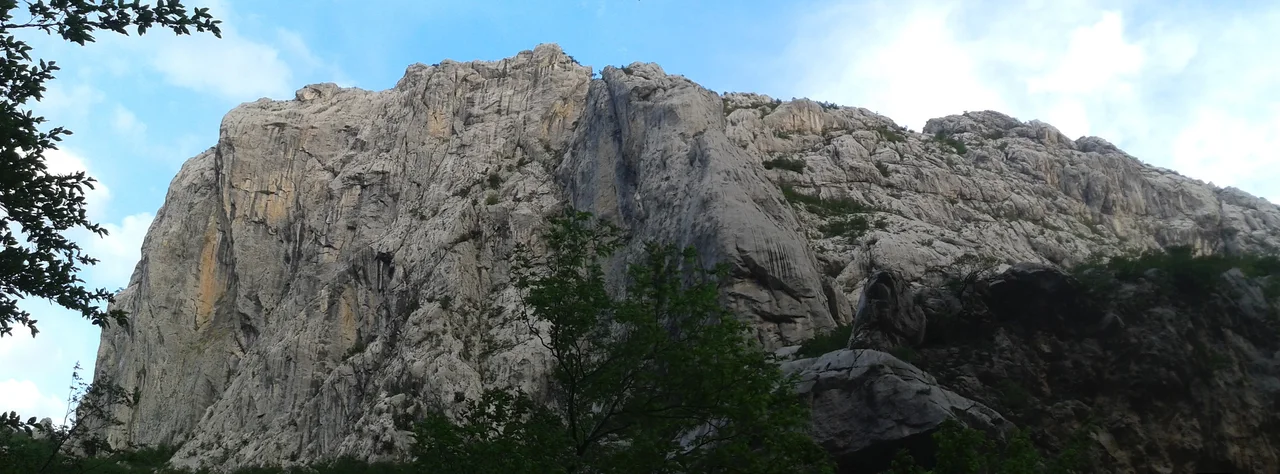
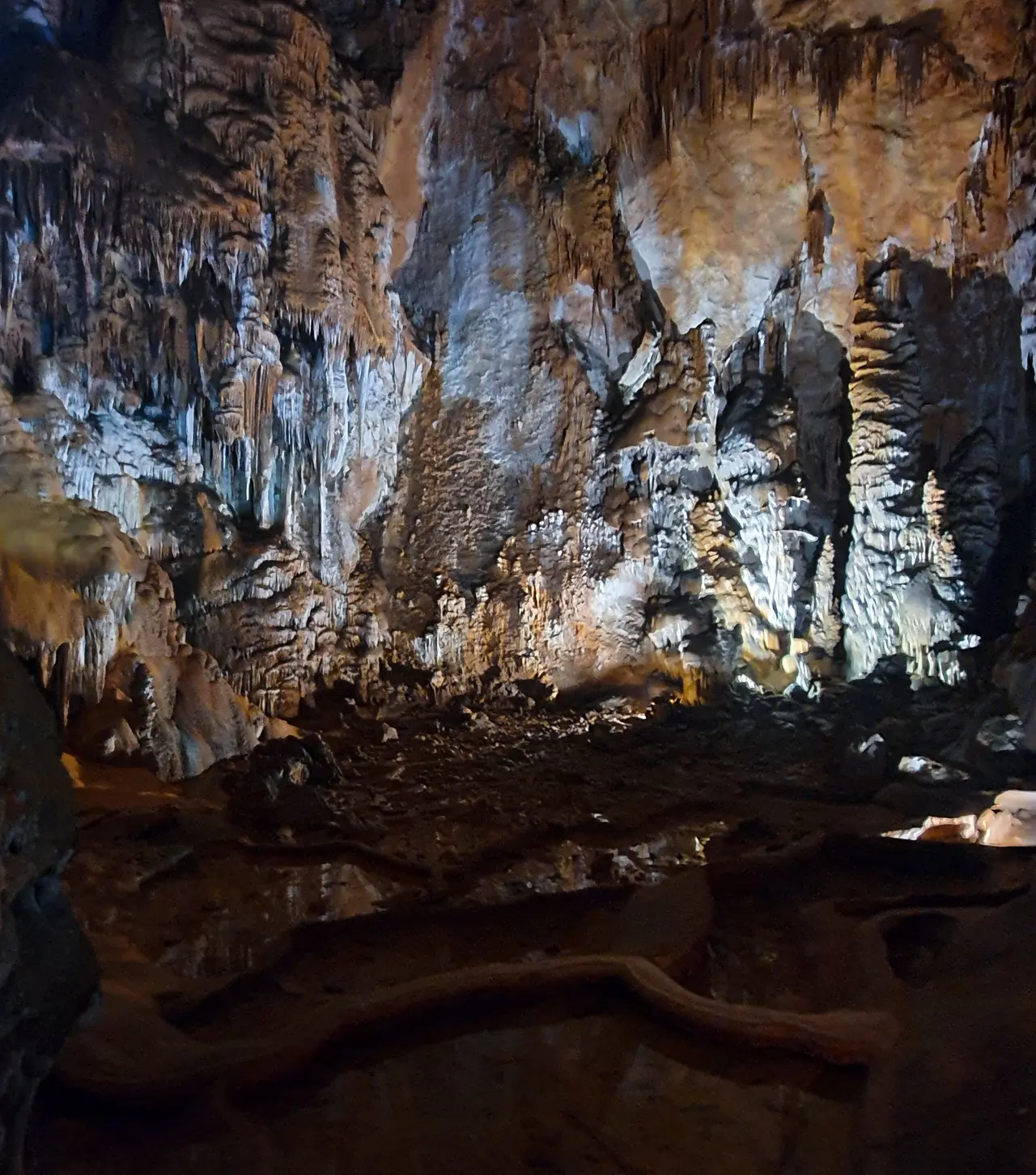
Of the 115 known caves and sinkholes inside the park, only one is open to the public. Manita Peć sits at 570 metres, about an hour and a half’s walk up from the main car park in Velika Paklenica, and a guide takes visitors through in groups on a tour lasting roughly 30 minutes. Inside are stalactites, stalagmites, columns and flowstone, including named formations like the Organ and the Witch; the temperature holds at 9°C year-round, so pack a layer even in August.
Timing takes planning, though. The cave only runs tours from April to October, and even in season the schedule is thin: Saturdays only in April, Monday/Wednesday/Saturday in May, June and October, and daily in July, August and September, always 10:00 to 13:00. Miss that window and you’ve missed the cave - arrive at least half an hour before closing or the guides won’t take you in. Payment is cash only, and dogs wait outside: guided groups and a fragile cave ecosystem leave no room for pets.
Above the canyon: the mountain hut and Velebit’s high peaks
Serious hikers keep going where the day-trip crowd stops. From the same car park a marked trail follows the stream about 6 km to the Paklenica Mountain Hut - roughly two hours, and 480 metres above sea level when you get there. The hut sleeps around 50 in shared rooms, stays open all year and is run by a Zadar mountaineering club; bring a sleeping bag if you’re staying over, and book by phone or email rather than turning up unannounced. Four kilometres in, about two-thirds of the way, the Lugarnica forester’s cottage sells grilled sausages, bean stew, cheese, sliced dried ham and cold drinks in 2026 - open daily from May to October, weekends and holidays only around Easter, and shut from November until Easter. While it’s open, the day doesn’t have to run on what you carried in; like the cave, it’s cash only.
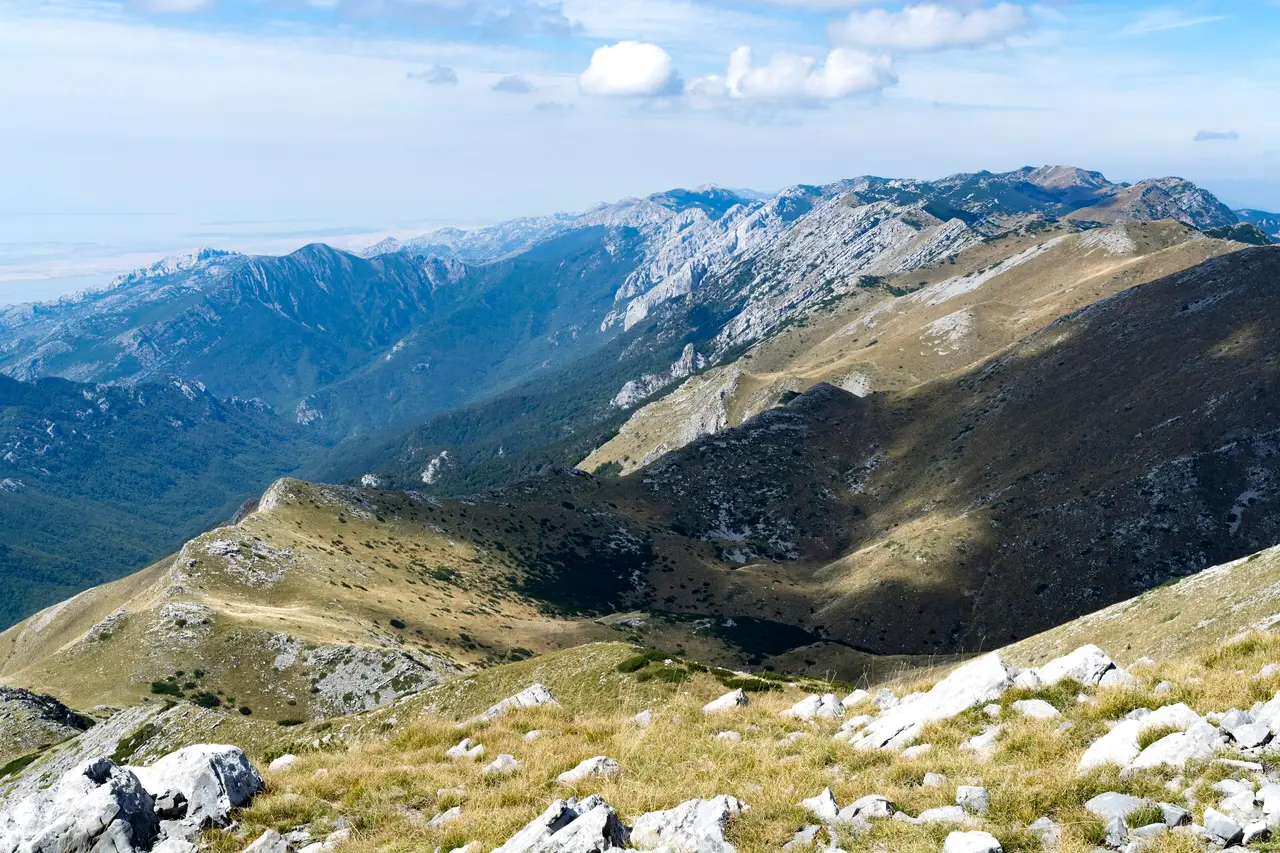
From the hut, Velebit’s high peaks are within reach for a long day. Vaganski vrh, at 1,757 metres the highest point on the range, has a flat grassy summit with views the park says reach 300 km on a clear day; Sveto brdo, 4 metres lower, is about five hours’ walk from the hut; Liburnija, lower at 1,709 metres but steeper, pays out with a view across the mid-Adriatic islands. None of this is casual walking. The park’s own advice is direct: never go alone, check the forecast, carry water, a torch and a first-aid kit, and take extra care in winter, when an early sunset catches out anyone who doesn’t know the ground.
Ticket prices in 2026
Paklenica prices its single-day ticket in three monthly bands, and the gap between the cheapest and priciest months is exactly double:
| 1-day ticket | Jan/Feb/Nov/Dec | Mar/Apr/Oct | May-Sep |
|---|---|---|---|
| Adult | €5 | €8 | €10 |
| Child (7-18) | €2.50 | €4 | €5 |
| Mountaineers, students under 25, seniors 65+ | €4 | €6 | €8 |
Multi-day passes scale the same way: a 3-day adult ticket, valid 5 days from purchase, is €10/€16/€20 across the same bands; a 5-day ticket, valid 7 days, is €15/€24/€30; an annual pass is a flat €60. Worth the math: at the summer day rate two single days already cost as much as the 3-day pass, and six as much as the whole year. Driving into the canyon instead of parking outside Entrance 1 needs a separate daily vignette, and that one splits into two bands, not three: €3 for a car under 5.49 m and €5 for anything longer in January, February, November and December, €5 and €10 from March through October. Manita Peć cave is billed apart from the park ticket, at €5 adult and €2.50 child, April to October only; the Underground Secrets Visitor Centre costs the same and keeps the same season, 9:00 to 15:30. Its price list runs one month longer, to November; outside those months (December to March), book a week ahead. Buying online through the official Parks of Croatia webshop takes 5% off, and under-7s always go free.
One detail for climbers: the ordinary entrance ticket already covers climbing on all 600 routes, with no separate fee on top. Plan more than a day on the rock and the only question is which multi-day or annual pass to buy.
Getting to Paklenica, and where to stay in Starigrad
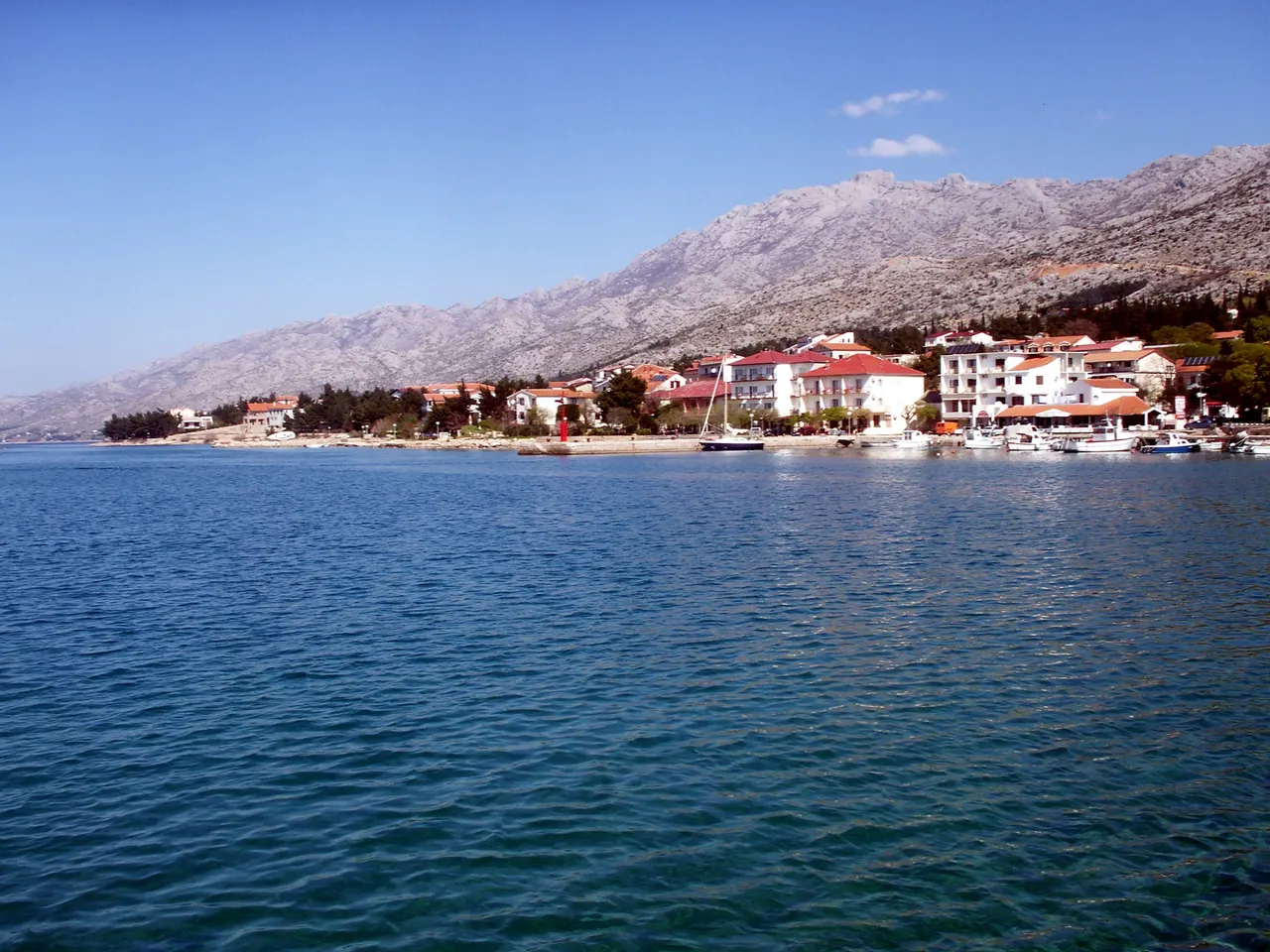
However you reach it, Paklenica funnels down to the same village: Starigrad-Paklenica, right on the coast next to Entrance 1, the obvious base whether you’re here for a day or a week of climbing. From Zagreb it’s about 235 km down the A1, leaving the motorway at the Rovanjska junction and following signs toward Rijeka for another 15 km; from Split, roughly 137 km, also on the A1; from Rijeka, 182 km along the coastal D8 or a longer 257 km if you stay on the A6/A1. By public transport, Zadar’s bus station runs regular services to Starigrad in about 45 minutes, and Zadar Airport (ZAD) is almost exactly as far - around 45 minutes and 45 km by car. Paklenica has no airport or train station of its own.
Once you’re there, the two gates aren’t interchangeable: Entrance 1 opens every day, all year, for hikers, climbers and families alike, while Entrance 2 in Seline runs only from the end of April to the end of October and is signposted for experienced hikers. Both are a short drive from anywhere in Starigrad.
Two different days, depending on what you came for
Give Paklenica a full day, not an afternoon. A hiker’s day starts early at Entrance 1, follows the flat trail along the canyon floor, then climbs toward Manita Peć if the season and the clock line up, or on to the hut and the Velebit ridge if you’ve got the legs and the daylight. May, June and September are the most reliable months for either: warm without the July-August heat radiating off bare rock, and quieter on the trail.
A climber’s day looks nothing like it: gear checked the night before, an early start to beat the sun onto the wall, and a topo in the pocket where a walker carries a trail map. Climbing and the higher trails wind down for winter; the park itself doesn’t. Entrance 1 stays open daily, all year, and so does the mountain hut, which once the snow is down serves winter mountaineers who know what they’re doing on ice.
If your idea of a national park is a boardwalk and a boat ride, neither day will feel like a holiday: the flat stretch by the entrance is a taster, not the main event, and Krka’s waterfalls or Kornati’s islands, both on this coast, ask for no more than a boat ticket and sandals. If you climb, or hike seriously, the pull here is rock and mountain rather than water: a climber died attempting Anića Kuk in 1938, eleven years before the 1949 proclamation made this a national park.
Opening hours, prices, timetables and seasonal services change through the year - the figures here are planning estimates, not quotes. Confirm current details with the operators and official sources before you go.
Photos
On the map
The map loads on click - to keep the page lightweight.
The map didn’t load. Check your connection and refresh the page.
Admission and opening hours
- Admission price
- Adult 1-day tickets are priced in three monthly bands for 2026: €5 (Jan, Feb, Nov, Dec), €8 (Mar, Apr, Oct) or €10 (May-Sep). Children 7-18, students under 25, mountaineers and visitors over 65 pay less in each band; under-7s go free. A 3-day pass (valid 5 days) and a 5-day pass (valid 7 days) scale the same way, and an annual pass is a flat €60. The vehicle day vignette runs on its own, simpler two-band split: €3 for a short car and €5 for a long one from January, February, November and December, rising to €5 and €10 from March through October. Manita Peć cave costs an extra €5 adult / €2.50 child, April to October only, and the Visitor Centre charges the same; its price list runs a month longer, to November, and a visit outside that stretch (December to March) needs a week's notice. Confirm current prices on np-paklenica.hr before you go.
- Opening hours
- Entrance 1 (Velika Paklenica) is open every day, all year. Entrance 2 (Mala Paklenica) opens only from the end of April to the end of October. Manita Peć cave runs guided tours 10:00-13:00 on a limited weekly schedule, April to October only; the Visitor Centre "Underground Secrets of Paklenica" keeps regular hours 9:00-15:30, April to October. Fixed daily opening and closing times for Entrance 1 itself are not published outside the main season - call ahead if you are arriving very early or late.
Card and cash both work at Entrance 1 and the Visitor Centre; everywhere else in the park, including the cave, is cash only. Rangers can ask to see your ticket on the trail, so keep it on you.
Details checked: August 29, 2026
Read also

What to see · 9 min read
Best Beaches near Split: Bačvice to the Riviera
Updated · August 26, 2026Best beaches near Split in 2026: sandy Bačvice, Marjan coves, Žnjan and Makarska Riviera day trips - plus Brač by catamaran.

What to see · 10 min read
Elaphiti Islands: Lopud, Šipan & Koločep
Verified · August 15, 2026Jadrolinija 807 from Gruž: €5.40 in season to Koločep, Lopud or Šipan. Times, Šunj, and why one island beats hopping all three.

What to see · 7 min read
Klis Fortress: Game of Thrones Views above Split
Updated · August 13, 2026Klis Fortress above Split was Meereen in Game of Thrones. Adults 12 EUR, kids 4 EUR; open daily 09:00-19:00 - confirm on tvrdavaklis.com.

What to see · 9 min read
Cape Kamenjak: Istria Wild Swimming Peninsula
Verified · August 12, 2026Cape Kamenjak day trip from Pula: 2026 car entry €10-20, free for walkers and cyclists, coves, rules and where to base.