
Zadar Travel Guide: Sea Organ, Sunset & Full Moon Festival
Zadar in one guide: the Sea Organ, the Roman old town, the famous sunset, and the free Night of the Full Moon on the Riva each August.
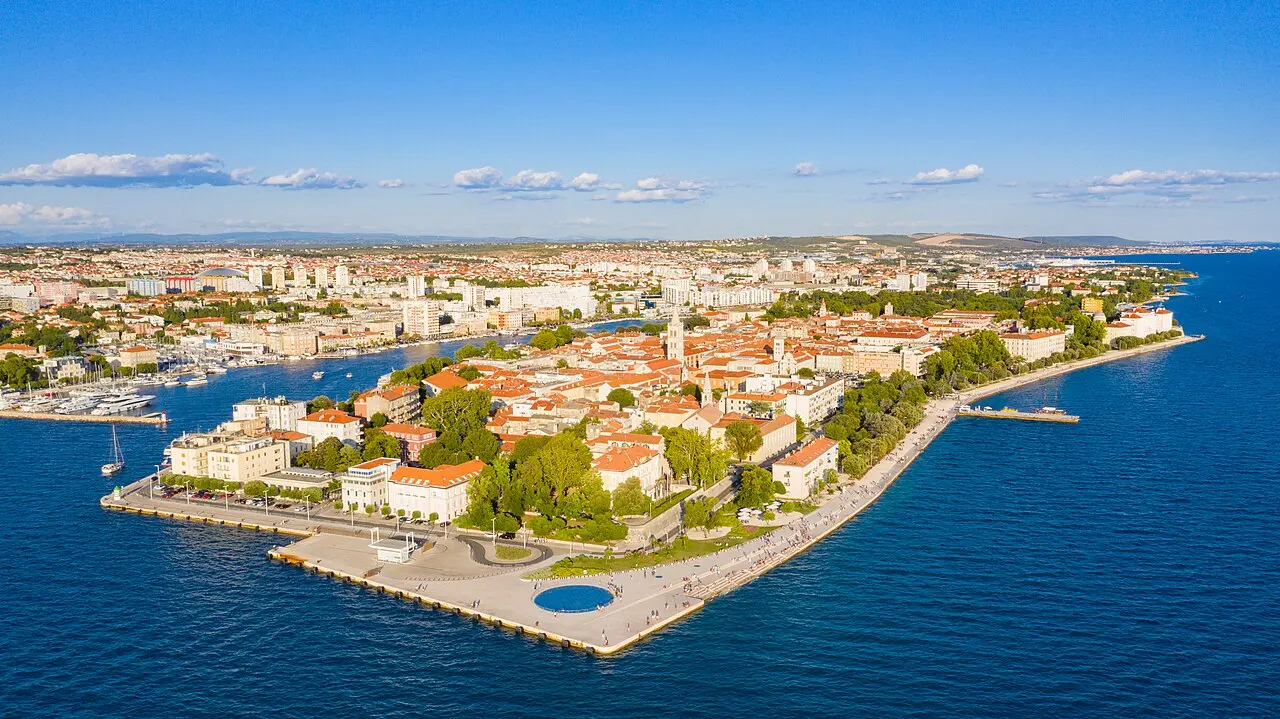
Zadar is the Dalmatian city you come to for two things you can’t get anywhere else: an organ played by the sea, and a sunset a film director once called the best in the world. It sits on a stubby limestone peninsula in North Dalmatia, halfway down the coast between Split and the Istrian north, and it wears its history lightly - a Roman forum, a round 9th-century church and Venetian walls, all still lived in rather than roped off. It’s smaller and calmer than Split, with none of Dubrovnik’s cruise crush, and it makes an easy base for the Kornati islands offshore.
Here’s the short version of how to spend your time: walk the old town by day, and be on the western sea steps at sunset for the Sea Organ and the Greeting to the Sun. Everything else fits around that - including the Night of the Full Moon on the first weekend of August (6-9 August in 2026), the free four-evening fair that switches the waterfront lights off and feeds the whole Riva by candlelight. Flying in from abroad? That’s the week to aim at.
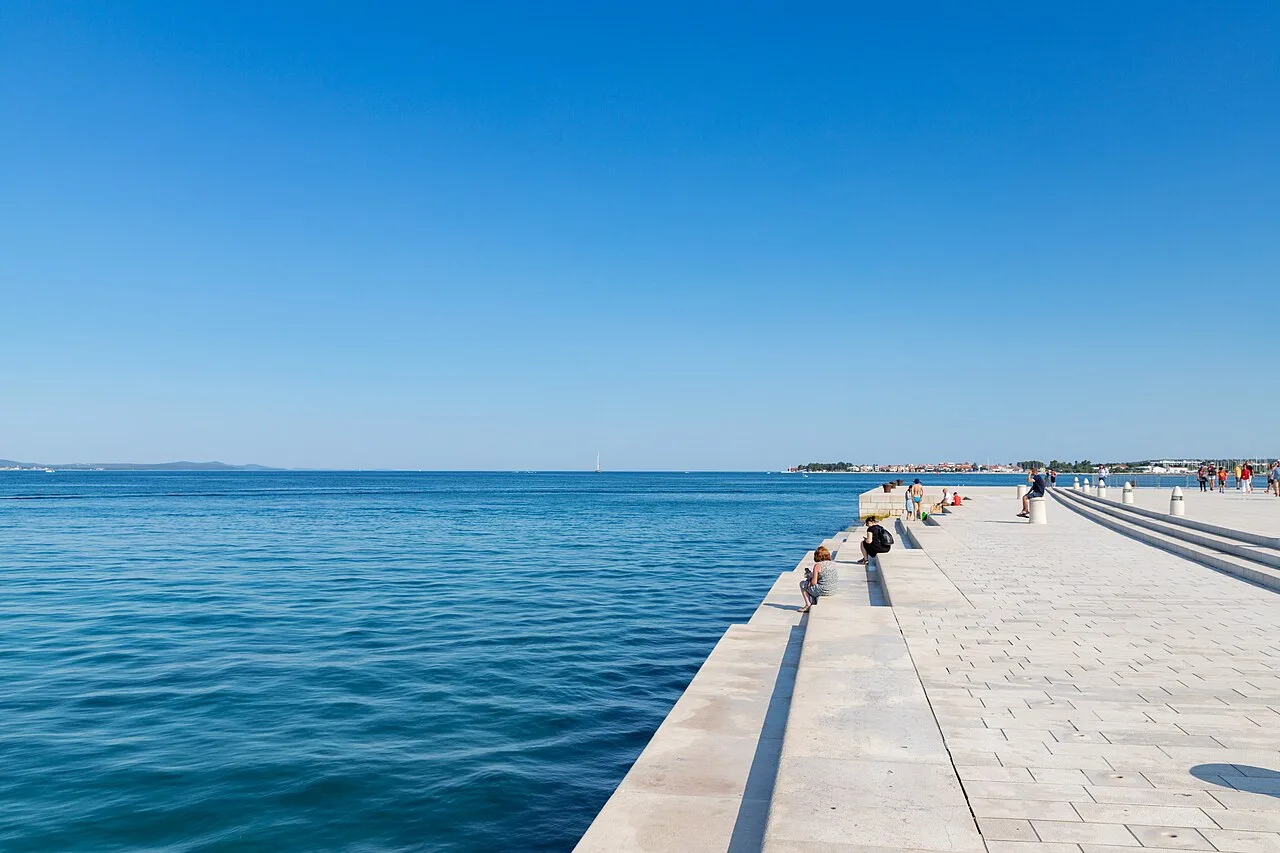
The Sea Organ: a city landmark you listen to
The Sea Organ (Morske orgulje) is the thing to see first, and it’s free, open all the time, and completely unlike any other sight in Croatia. Designed by the Zadar architect Nikola Bašić and opened in April 2005, it looks like nothing more than a broad flight of white marble steps running about 70 metres along the western waterfront. Underneath are 35 tuned pipes in seven groups, and as waves and passing boats push water into channels below the steps, air is forced up through holes in the stone and the whole thing plays - a slow, shifting, tuneless-but-harmonious drone that never repeats the same way twice.
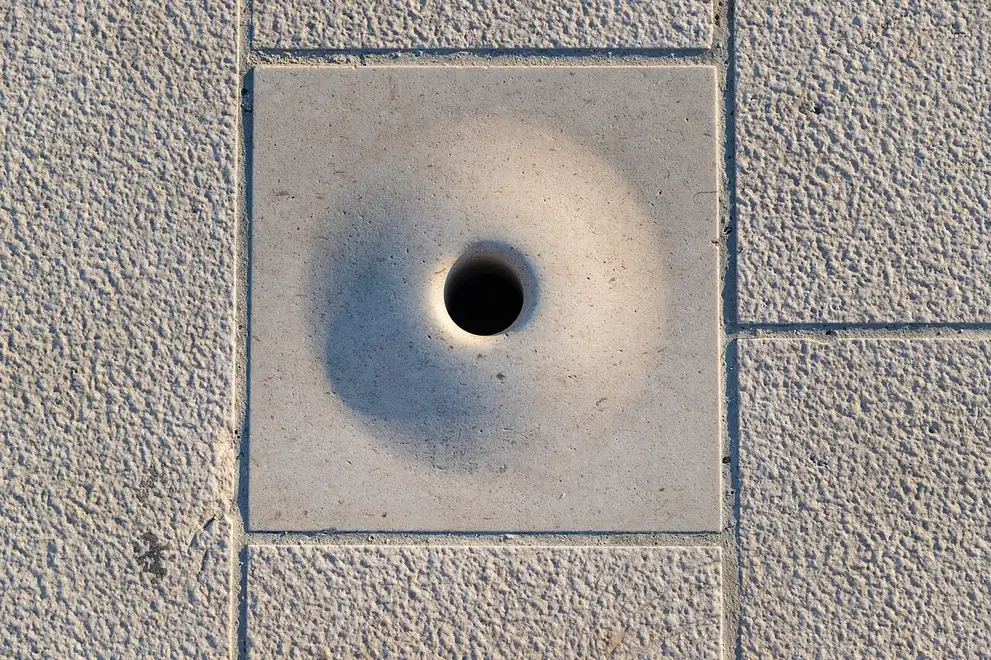
The practical tip most visitors work out too late: the music depends on the sea, so it’s loudest when there’s some swell or a ferry has just gone by, and near-silent on a flat calm day. If you turn up and it’s quiet, wait for the next boat to pass the harbour mouth - it pushes a wave in and the organ answers. The project won the European Prize for Urban Public Space in 2006.
The Greeting to the Sun: solar art next door
A few steps along the same waterfront is Bašić’s companion piece, the Greeting to the Sun (Pozdrav suncu), opened in 2008. By day it’s a plain 22-metre circle of glass set flush in the pavement, easy to walk straight over; the ring is made of 300 multi-layer glass solar plates, with smaller circles nearby standing in for the planets. It quietly soaks up sunlight all day.
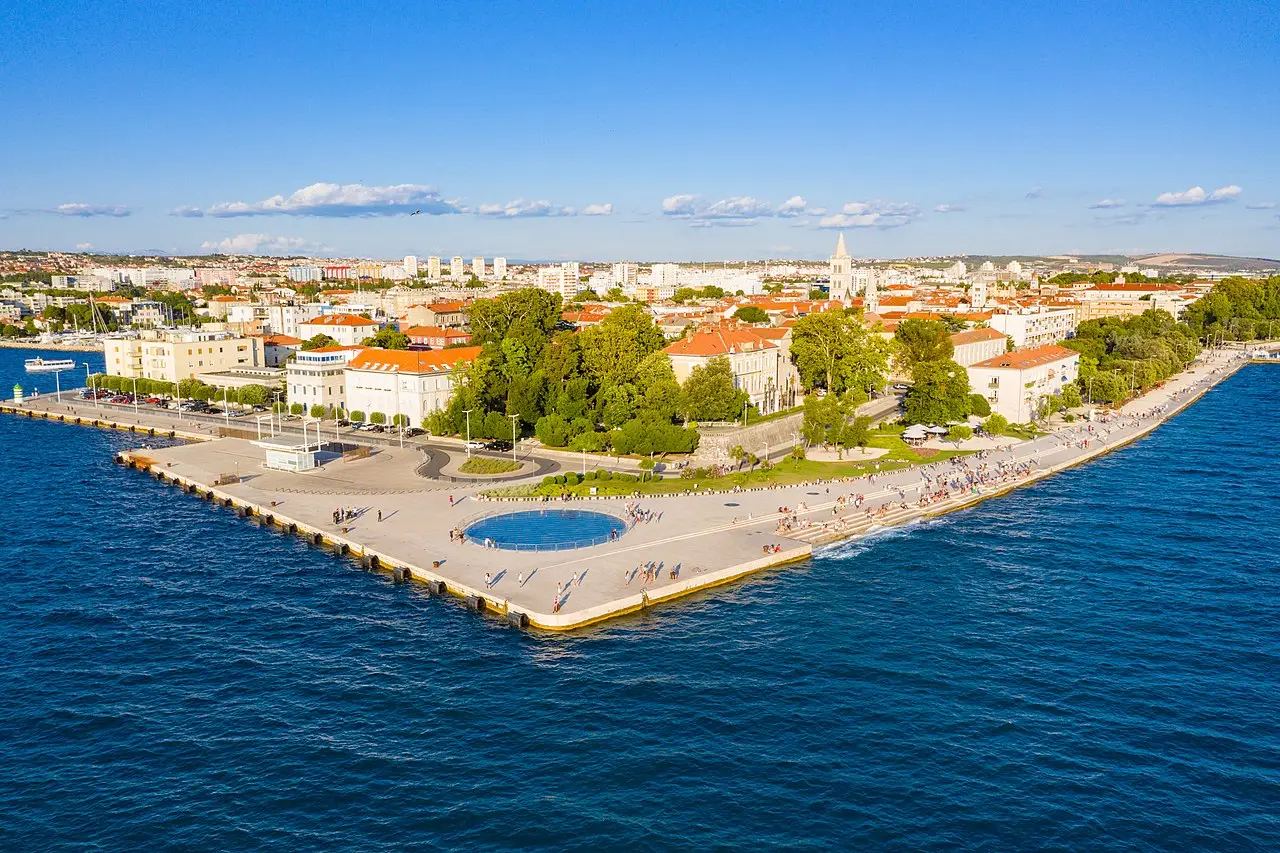
Then the sun goes down and the panels come alive, running a colour-changing light show underfoot that children chase across for hours. It isn’t only for show: the installation feeds power back into the grid and, by reported figures, generates around 46,500 kWh a year. Sunset and light show run back to back at the same spot, and it’s the best free half-hour in the city.
The sunset Hitchcock loved
Zadar takes its sunsets seriously, and it has a famous character to thank. In May 1964 Alfred Hitchcock stayed on the waterfront here and is widely quoted as calling Zadar’s sunset the most beautiful in the world, better than Key West’s. Treat the wording as local legend rather than court record, but don’t dismiss the point: the sun drops behind the islands of Ugljan and the Kornati archipelago, straight out to sea over an open western horizon.
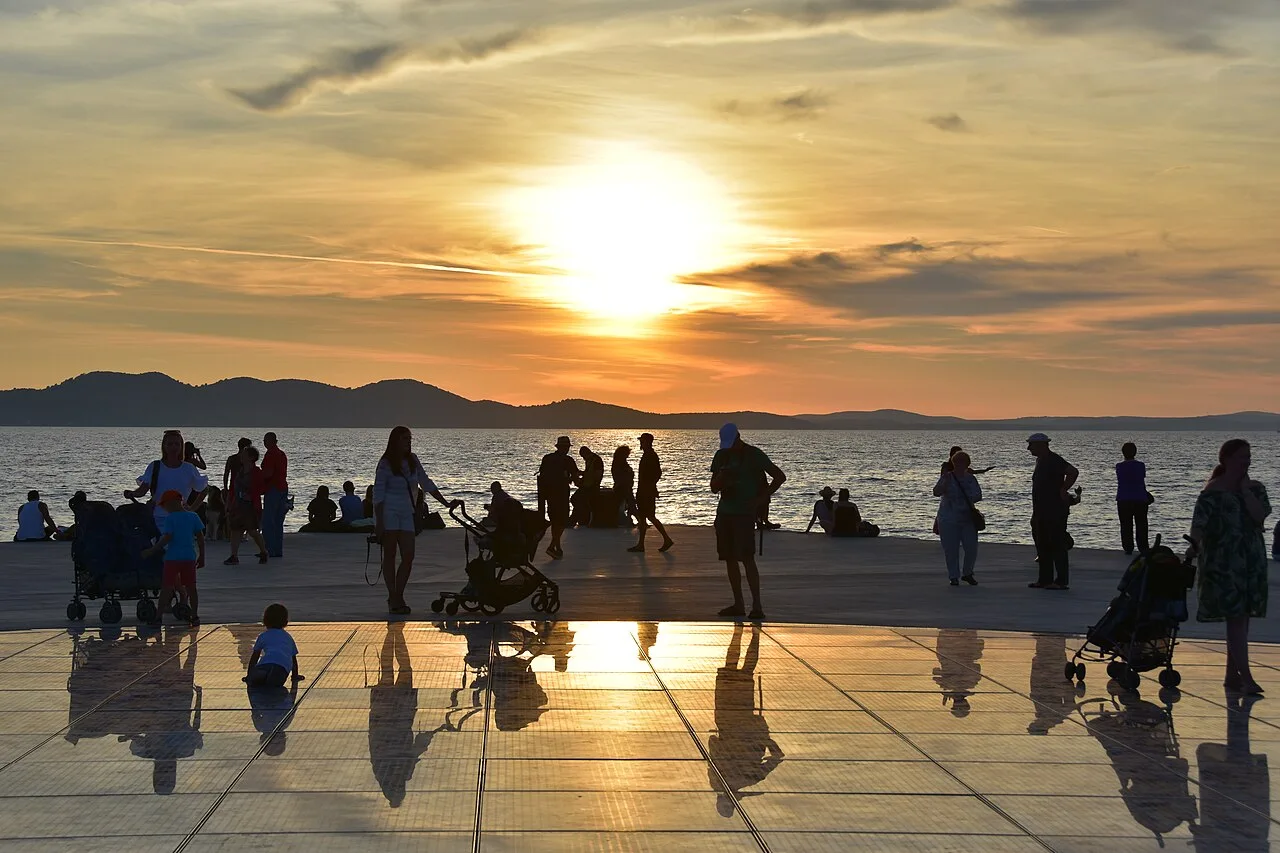
Get there twenty minutes early in July and August to claim a step - the western end of the peninsula fills up. Bring a drink from a nearby bar; nobody minds. Some evenings a ferry sliding out of the harbour sets the organ roaring just as the colour peaks.
Zadar Full Moon Festival: the first weekend of August
Once a year Zadar does the opposite of what every other Croatian resort does in August: it turns the lights off. The Night of the Full Moon (Noć punog miseca), sold in English as the Full Moon Festival, takes the first weekend of August - the 23rd edition ran 6 to 9 August 2026 - on Obala kralja Petra Krešimira IV, the main quay of the Riva. It is put on by the local association Društvo Propela with the city supplying the logistics. For those four evenings the public lighting on the waterfront is switched off and the promenade is lit by torches and candles instead. Wooden boats moor at the quay and become stalls, alongside stands from small family farms, craft producers and folklore societies: tuna, sardines and mussels off the grill, island cheese and prosciutto, figs, local wine and rakija, with klapa singing between them.
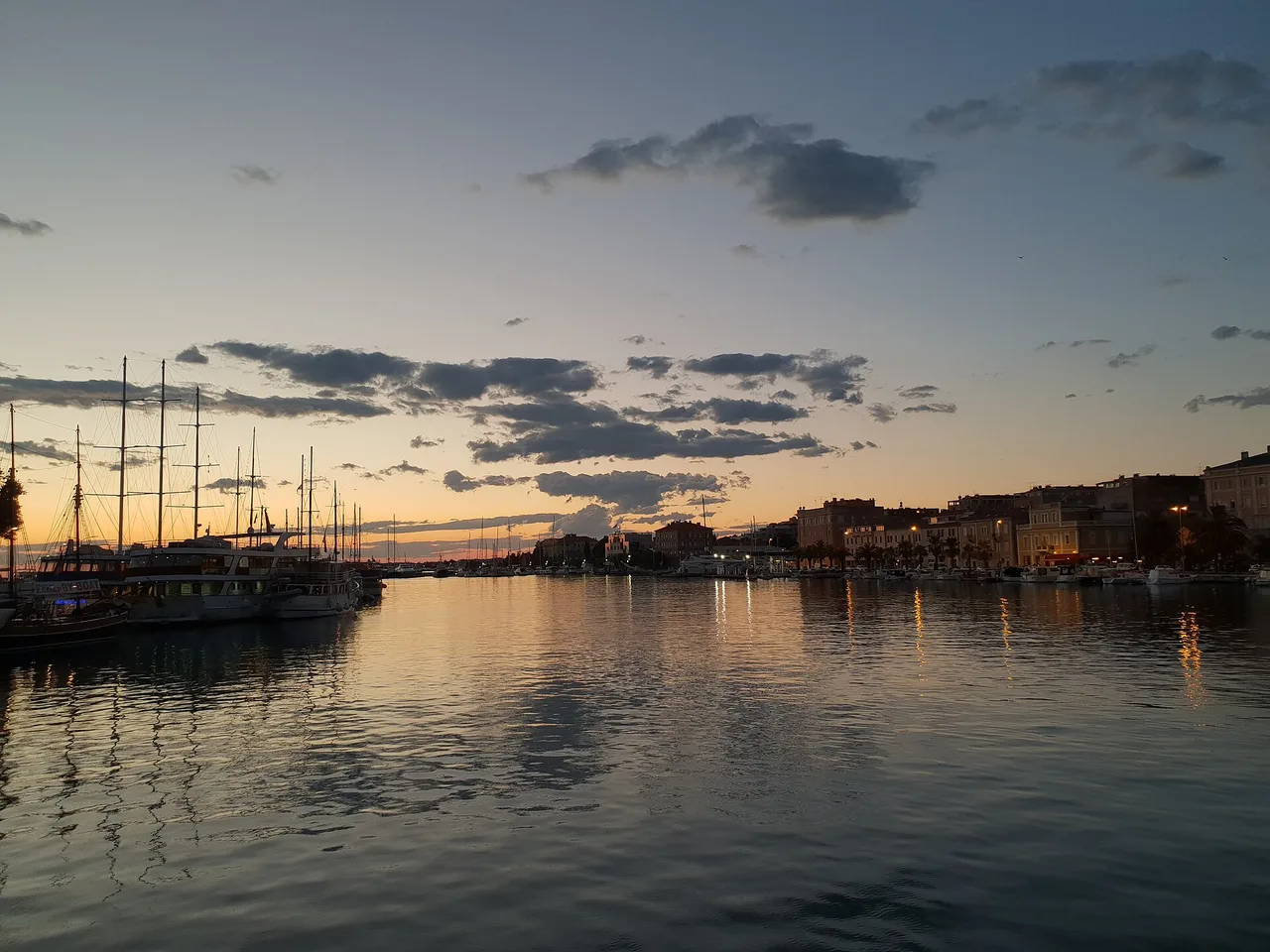
There’s no ticket. The Riva is a public promenade and the fair simply happens on it, so the only money you spend is on what you eat, drink and carry home. Listings put the opening at around 18:00, but don’t turn up then expecting atmosphere: the sun is still high at six in early August, and the evening only becomes itself once the street lights die. Arrive for sunset at the Sea Organ end, then walk back through the fair in the dark.
Three things to know before you build a trip around it. The name is tradition, not astronomy: in 2026 the August full moon falls on 28 August, the night of a partial lunar eclipse, and the moon is waning through the first eleven days of the month. On 6-9 August you get torchlight, not moonlight. The Millennium Jump, the mass jump into the harbour that used to sit in the same week, isn’t happening in 2026 either; its sponsor walked away before the 2025 edition and nobody has replaced them. And it’s no longer the single hushed night the name promises: it started as a one-evening event and has grown into a four-day fair, which means more to eat and more to see, but also more market stall and less magic.
Book the room first. The first ten days of August are peak Dalmatia on their own, and the fair adds day-trippers from Pag, Nin and Biograd, so beds on the peninsula go early. Flying in is the easy part - Zadar Airport is 8 km out with a shuttle to the old town - the bed is what sells out. One caveat: the organiser publishes the programme late, and the regional tourist board’s own listing still points at a 2025 page. As of 4 August 2026 no evening-by-evening line-up had been published, so check the running order locally when you arrive. Our Croatia festival calendar covers the rest of the year, and Croatia in August has the crowd-and-price picture for that week.
The old town: Roman forum, St Donatus and the cathedral
Zadar’s old town packs two thousand years into a peninsula you can cross on foot in fifteen minutes. The Romans founded Iader here, and the Roman Forum - begun under Emperor Augustus, built between the 1st century BC and the 3rd century AD - was the largest on the eastern Adriatic. Today it’s an open square of tumbled columns you wander through for free, with one tall column left standing (medieval Zadar chained wrongdoers to it as a “pillar of shame”).
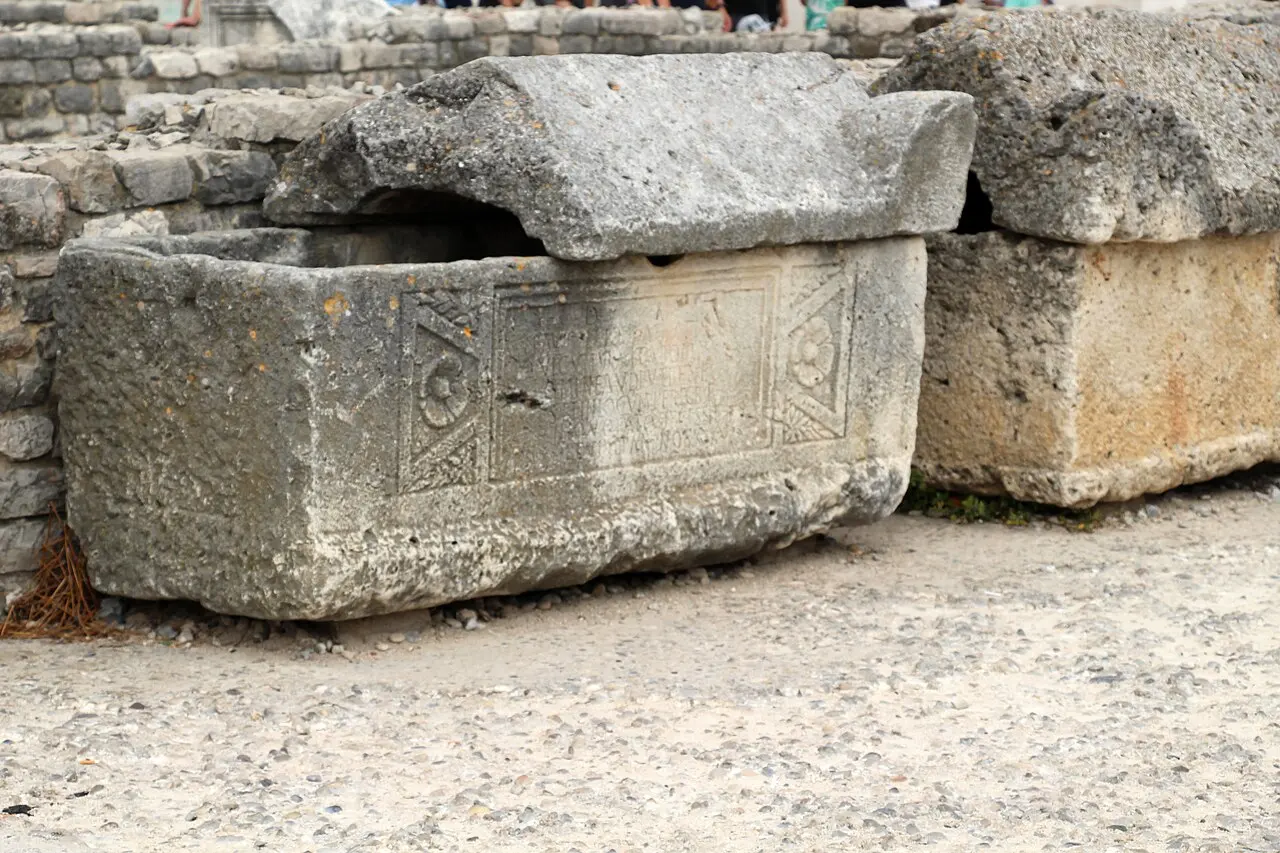
Rising straight off the forum is the city’s emblem, the Church of St Donatus - a huge, round church begun in the late 8th century and finished in the 9th. It’s the largest pre-Romanesque building in Croatia, built directly on the forum using Roman stone: look at the base and you can see reused Roman blocks and inscriptions holding it up. It stopped being a working church long ago, so there’s an entry fee, but the payoff is the acoustics - the summer Musical Evenings in St Donatus use its bare stone drum as the venue.
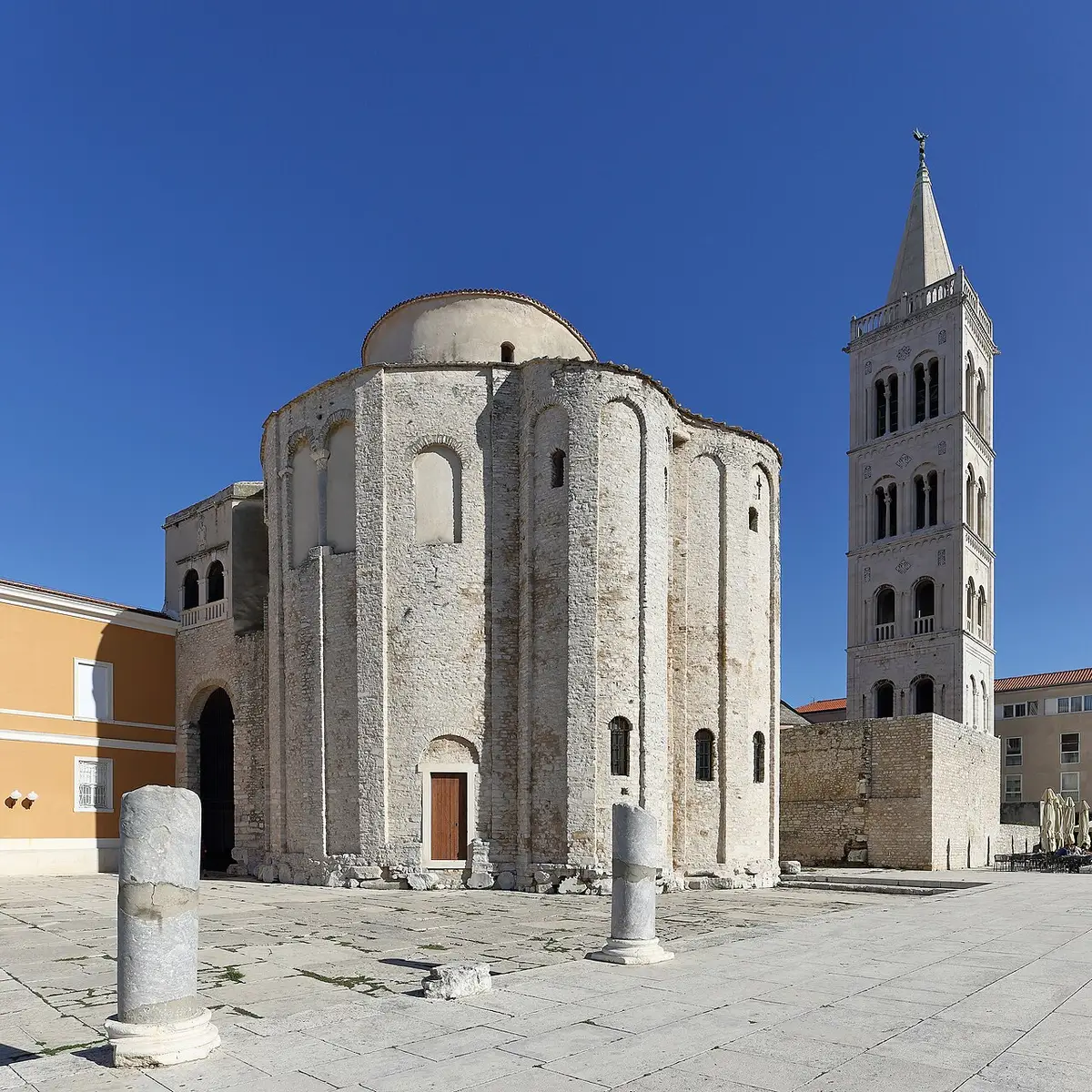
Next door, the Cathedral of St Anastasia (Sv. Stošija) is the largest church in Dalmatia, Romanesque and mostly 12th- and 13th-century on much older foundations. The reason to stop is the bell tower: pay the small fee, climb it, and you get the best view in Zadar - the whole red-roofed peninsula, the forum and the sea beyond. Climb it in the late afternoon and you’re back at the Sea Organ in ten minutes for sunset.
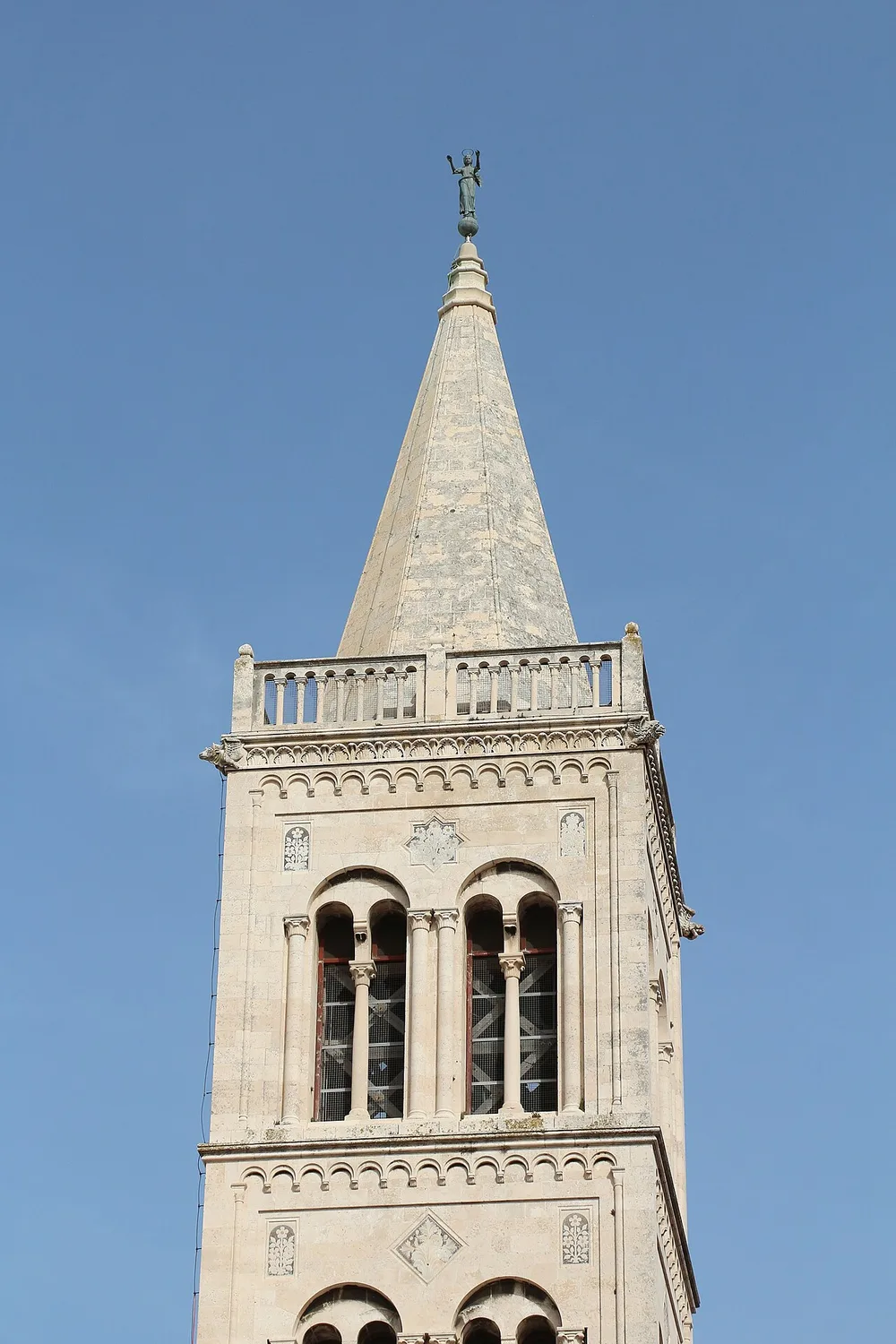
Squares, streets and a cherry liqueur
Between the monuments, the old town is just a good place to wander. Its spine is Kalelarga (properly Široka ulica), the broad limestone main street polished mirror-smooth by centuries of feet. It opens onto People’s Square (Narodni trg), the Renaissance heart of town with its arcaded City Loggia, and further along the quiet Five Wells Square (Trg pet bunara), where five ornate well-heads sit against the Venetian walls. Those walls, part of the Venetian defences now on the UNESCO World Heritage list, are best seen at the grand Land Gate with its winged Lion of St Mark.
One local thing to take home: Zadar is the historic home of Maraschino, a clear liqueur made from the wild marasca cherry that grows along this coast. It’s been distilled here since the 18th century - the recipe traces back to a Dominican monastery - and the Maraska company still makes it in town. A small bottle is the one souvenir with real Zadar roots.
Day trips: the Kornati islands and beyond
Zadar’s best day out is on the water. The Kornati National Park, a maze of roughly 80 to 150 mostly bare, sun-bleached islands, lies just offshore, along with the Telašćica Nature Park on Dugi Otok, where cliffs drop over 160 metres into the sea and a salt lake called Mir sits behind them. There’s no scheduled public ferry into the park; you go on an organised full-day boat trip (roughly 8 to 10 hours, lunch and swim stops usually included) from Zadar’s riva or from nearby Murter and Biograd. Our Kornati National Park guide covers the tours, the per-boat entrance fee and which port to leave from.
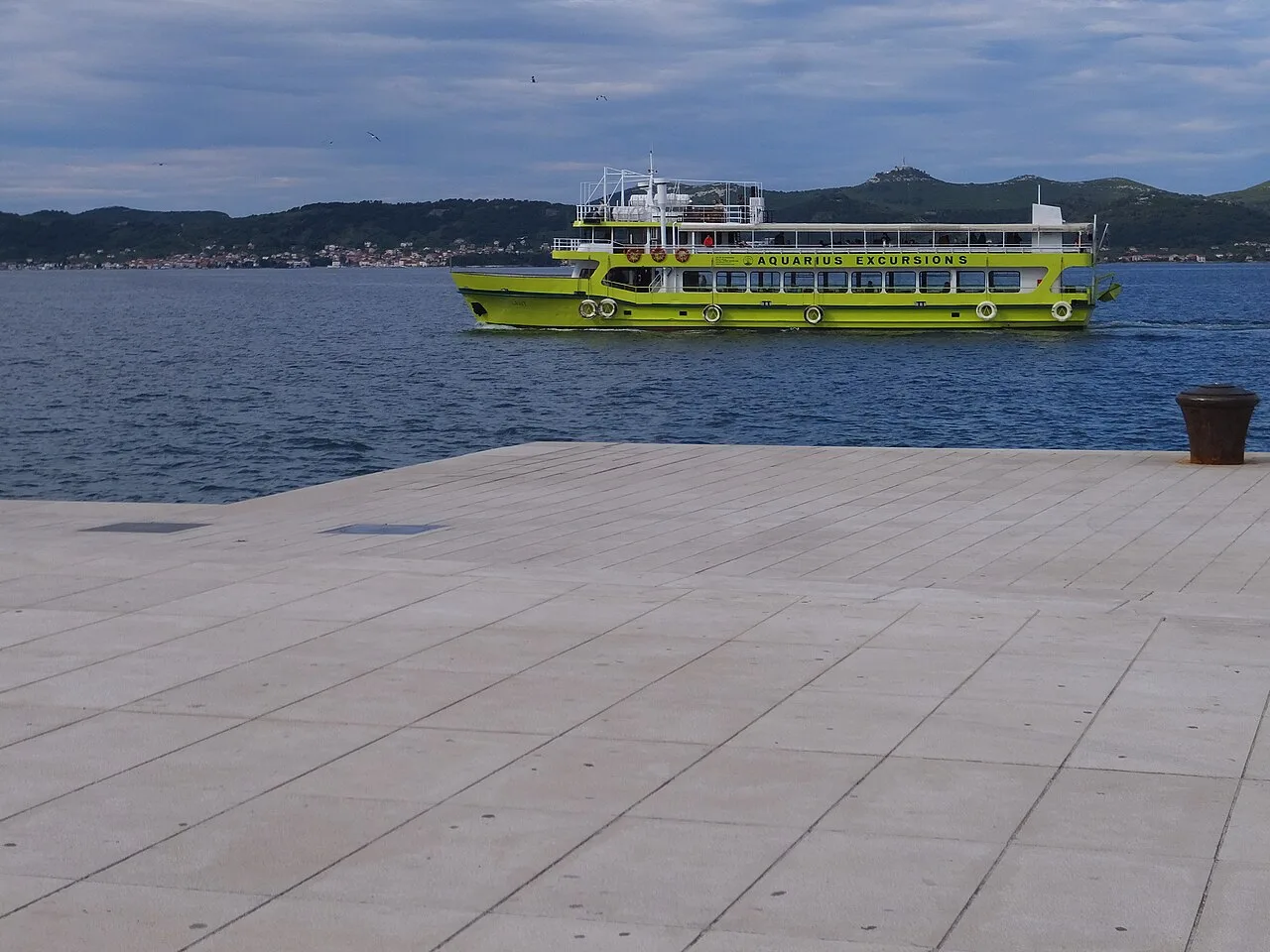
If you’d rather stay on land, three big hitters are within reach: Paklenica National Park on the Velebit massif (about 45 minutes north, for hiking and climbing), Krka National Park and its waterfalls (around an hour south via Šibenik), and the medieval salt town of Nin with its sandy beaches (15 km northwest). For the closer islands - Ugljan, Dugi Otok, Silba - Jadrolinija runs car ferries and catamarans from Zadar’s Gaženica port, and our guide to Croatia island hopping explains how to string several together. Šibenik and its Krka waterfalls are the obvious next stop south.
How to get to Zadar, and how long to stay
Zadar is one of the easier Dalmatian cities to reach. Zadar Airport (ZAD) sits 8 km east, with a shuttle bus into the old town, the main bus station and the Gaženica ferry port - our Zadar airport to city guide covers the shuttle timings, the taxi fare and the last departures. By road it’s on the A1 motorway, roughly midway between Zagreb and Split, so buses are frequent: reckon 1.5 to 2 hours from Split and around 3.5 hours from Zagreb. One thing to plan around - there’s no passenger train to Split and no direct ferry between the two coastal cities, so the coach is your friend.
Give Zadar at least a full day and one night so you catch both the old town and a sunset; two nights lets you add a Kornati boat trip, a run out to Krka, or the hour’s drive north to the moon-like island of Pag. Where the bed should sit - peninsula, Kolovare or Borik - is in where to stay in Zadar. Heading north, the coast leads towards Istria - our Istria travel guide picks up where Dalmatia leaves off - and to the south lies Split, the region’s busy hub. Come hungry: our guide to what to eat in Croatia covers the black risotto, buzara and Pag cheese you’ll meet on Zadar menus.
Is Zadar worth it?
Yes - and especially if Split and Dubrovnik feel too crowded or too polished. Zadar gives you a genuine two-thousand-year-old town that people still live and work in, two pieces of public art you won’t find anywhere else, the islands on your doorstep and the best sunset on the coast, at a calmer pace and a lower price. Plan your first evening around the western sea steps, and Zadar makes its case in about half an hour.
Opening hours, prices, timetables and seasonal services change through the year - the figures here are planning estimates, not quotes. Confirm current details with the operators and official sources before you go.
Photos
On the map
The map loads on click - to keep the page lightweight.
The map didn’t load. Check your connection and refresh the page.
Good to know
The Sea Organ and Greeting to the Sun are free and open all the time. St Donatus, the cathedral bell tower and the archaeological museum charge a small entry fee. The Night of the Full Moon on Obala kralja Petra Krešimira IV (first weekend of August; 6-9 August in 2026) has no ticket. Ferry, bus and Kornati-boat timetables and fares are seasonal - confirm current details with Jadrolinija, the bus station and local agencies before you go.
Details checked: August 4, 2026
Distance ≈160 km · ~1.5 h by bus or car
- Split ≈160 km · ~1.5 h by bus or car Zadar sits in North Dalmatia on the A1 motorway, roughly midway between Zagreb and Split. Frequent coaches link it to Split (~1.5-2 h), Zagreb (~3.5 h) and Rijeka; there is no passenger train to Split and no direct ferry between the two cities. Zadar Airport (ZAD) is 8 km east, with a shuttle bus into town.
Read also

Cities · 12 min read
Motovun Travel Guide: Walls, Truffles & Teran
Verified · September 4, 2026Motovun hilltown guide: walls ticket €5 in 2026, St Stephen, Teran cellars, Mirna views, parking climb, and why the film festival no longer plays here.

Cities · 10 min read
Dugi Otok & Sakarun Beach: Island Day-Trip Guide
Updated · August 31, 2026Day-trip Dugi Otok from Zadar: Jadrolinija ferry to Brbinj, Sakarun beach, Veli Rat lighthouse, and Telašćica cliffs - DIY or boat tour.

Cities · 10 min read
Opatija Travel Guide: Habsburg Riviera & Lungomare
Verified · August 25, 2026Opatija on the Kvarner Gulf: the 10 km Lungomare, Villa Angiolina museum, Maiden with the Seagull, and how it differs from Rijeka and Istria.

Cities · 10 min read
Omiš Travel Guide: Pirates, Zipline & Cetina Canyon
Verified · August 21, 2026Omiš is 25 km from Split: Promet bus €2.50, Mirabela €4-6, Cetina rafting and an 8-line zipline over the canyon.