
Zadar to Split: Bus from €8.98, 2h15, No Ferry
Zadar to Split by bus: from €8.98, 2h15 on the quickest daytime runs, well over a dozen a day. Or 158 km on the A1 in about 1h55. Why there's no ferry.

Take the bus. FlixBus and Arriva between them run 17 to 18 departures a day from Zadar to Split (12 of them on FlixBus, in the timetables for late September and early October 2026), and the quickest daytime coaches take 2h15. FlixBus fares start at €8.98 (roughly $10 / £8), but the cheapest seats are on its slower runs, not the quick ones. Driving is a little faster: 158 km by road via the A1 in about 1h55, while the coastal D8 comes to 161 km and about 3h05 without stops. A private transfer uses the same motorway and picks you up at the door. There’s no ferry, though: each port sails only to its own islands, and Jadrolinija runs no Zadar-Split line.
How long it takes and what it costs
| Option | Time | One way | Runs | Best for |
|---|---|---|---|---|
| Bus | 2h15-3 h by day, slowest FlixBus runs close to 4 h; 1h45 on Arriva’s night bus | from €8.98 on FlixBus (roughly $10 / £8); the 2h15 runs cost more | 17-18 a day | Price, frequency, no parking |
| Car on the A1 | ~1h55, 158 km | fuel + €8.10 toll (roughly $9 / £7) | Anytime | Stops en route, onward travel |
| Coastal D8 | ~3h05, 161 km | fuel, no toll | Anytime | Scenery, slow travel |
| Private transfer | as the A1 drive | priced per car, not per seat | On demand | Groups, luggage, late arrivals |
| Ferry / train | - | - | No service on this route | - |
Bus fares and times come from the carriers’ own timetables, checked on 23 September 2026 for departures in late September and early October; drive times assume an empty road.
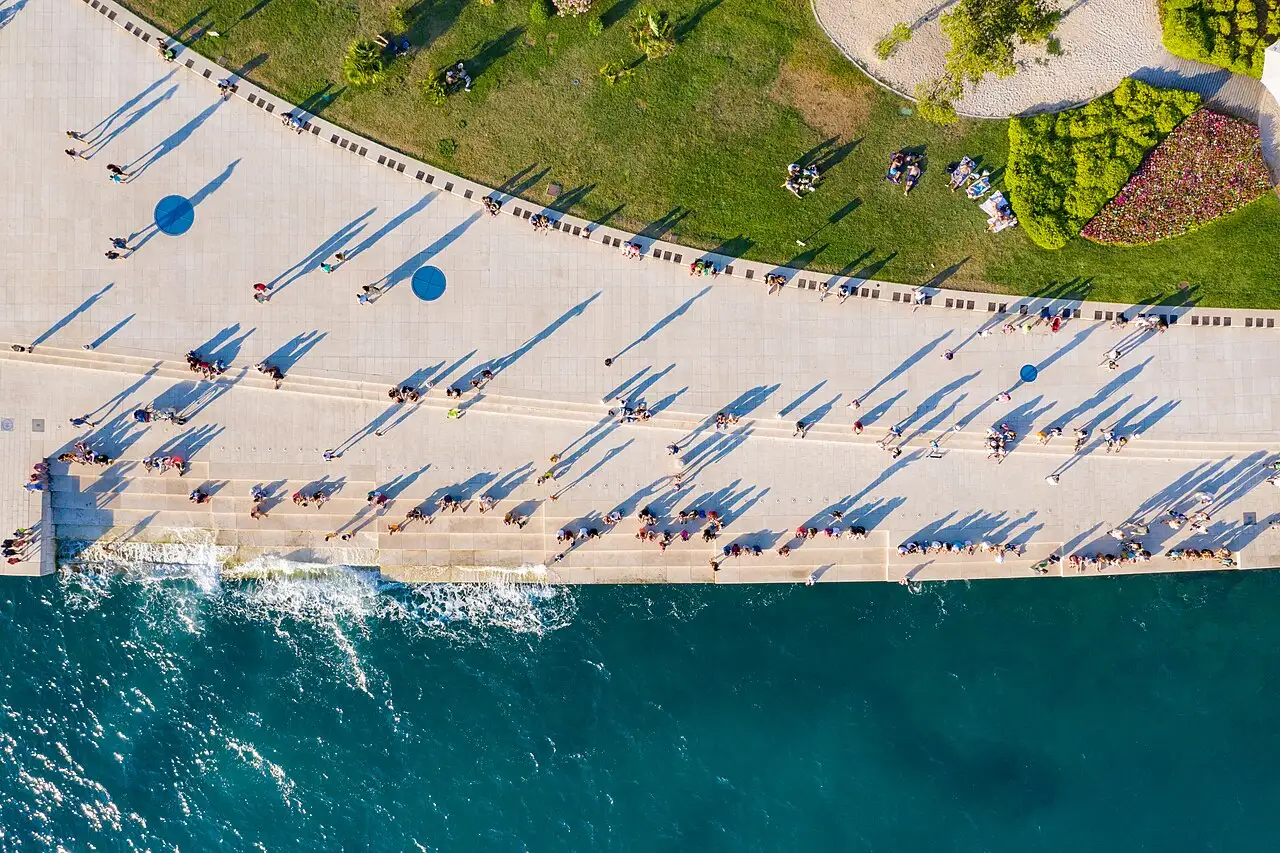
If you’re still flying in, Zadar airport to the city covers the shuttle from ZAD into town; it also stops at the main bus station, where the Split coaches leave.
By bus: the cheapest and most frequent option
Two booking systems cover almost everything on this route. FlixBus lists 12 departures a day, but only half are its own buses: the other six are Antonio Tours and Prijevoz Knežević coaches that it sells alongside. Arriva adds six Autotrans and Brioni departures on weekdays and five at weekends. That makes 17 to 18 buses a day in late September and early October 2026, from the first FlixBus at 05:20 to Arriva’s night bus at 23:15; the last FlixBus leaves at 18:30. Winter thins it out: on 15 November FlixBus is down to 10 departures, the last at 17:15.
Speed and price pull in different directions. The two quickest daytime runs, at 09:30 and 18:30, take 2h15; they’re Knežević coaches, sold at €16 on FlixBus plus its €0.99 booking fee, or at €14.60 plus a €0.67 station fee through the Zadar bus station. FlixBus’s own buses are the cheap ones: from €8.98 with the booking fee on its route page, and €8.48 to €11.48 all in on the weekdays we checked (30 September and 7 October). They take 2h35 to nearly four hours, though. Arriva’s day buses take just under three hours or a little over, at €14.30 to €23.30 standard. Its cheapest seats are first-minute tickets from €11 on the 07:00 (checked 23 September 2026); beyond those there are promo codes and loyalty points, not a separate app discount.
The one bus quicker than 2h15 runs at night: Arriva’s 23:15 reaches Split at 01:00, in 1h45. It’s also your fallback if the plane lands after the last FlixBus has gone.
In Zadar the buses leave from the main bus station (Autobusni kolodvor) on Ante Starčevića, about 1.5 km and a 20-minute walk from the Land Gate of the old town, so with heavy bags a taxi makes sense. In Split they pull in on Obala kneza Domagoja, next to the ferry terminal and the railway station. The Peristyle, at the heart of Diocletian’s Palace, is about nine minutes away on foot. If you’re going on to the islands, the ferries leave from across the road, and the two early FlixBuses, at 05:20 and 05:30, both get in by 08:15, in time for a morning boat.
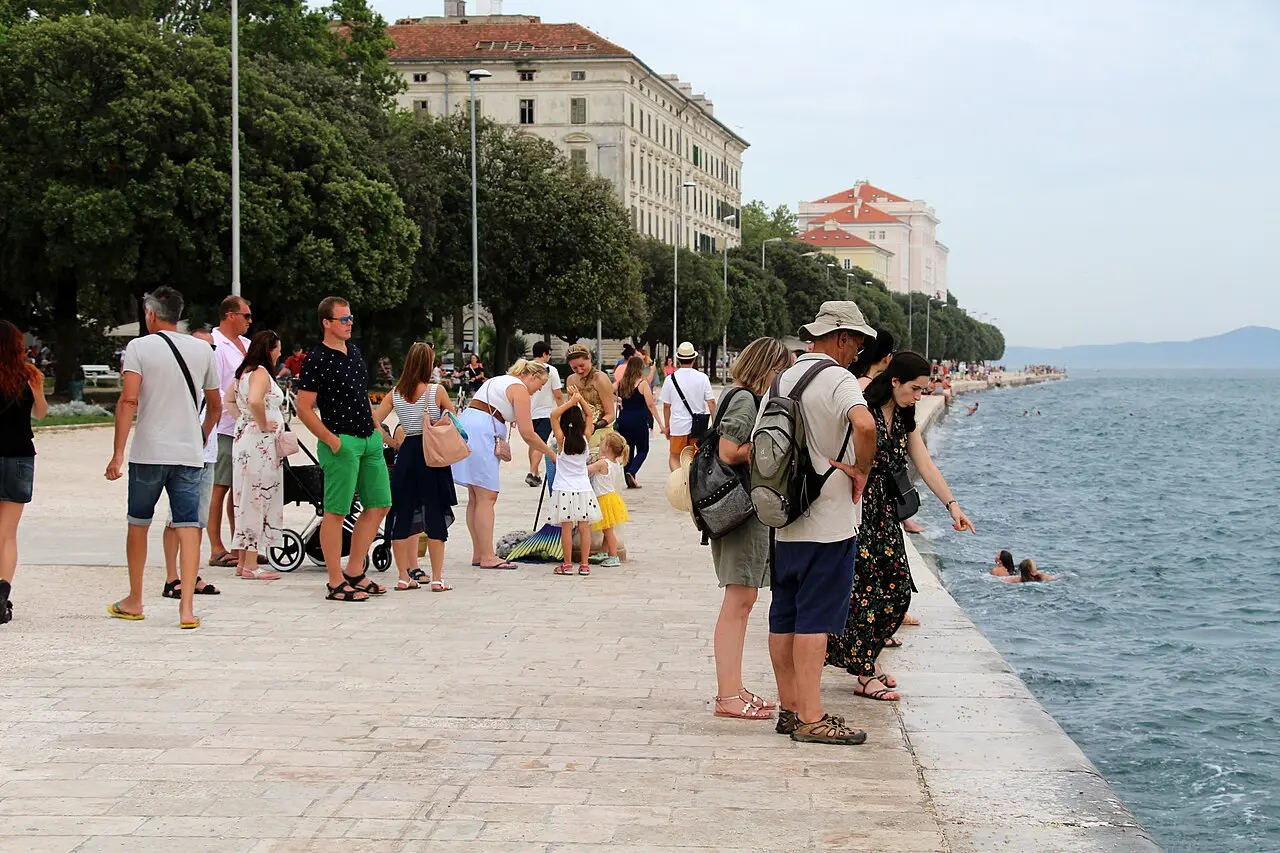
In July and August, and around public holidays, the popular departures sell out, so buy online a few days ahead. In spring and autumn a day or two before is usually enough, or you can buy at the station. For how this route fits with buses, ferries and roads across the country, see getting around Croatia.
By car: fastest on the A1, but mind the parking
Driving is the quickest way to cover the distance and the only one that lets you stop where you like.
The A1 is the fast inland road. From town you take the D424 past Gaženica port to the Zadar istok junction, and from there it’s motorway nearly all the way to Split: 158 km and about 1h55 with no stops, so call it two hours at the wheel. The toll is €8.10 (roughly $9 / £7) for a standard car from Zadar istok to Split, paid at the exit barrier by card or cash, or with an ENC transponder. That’s how it works until March 2027, when Croatia switches to barrier-free tolling.
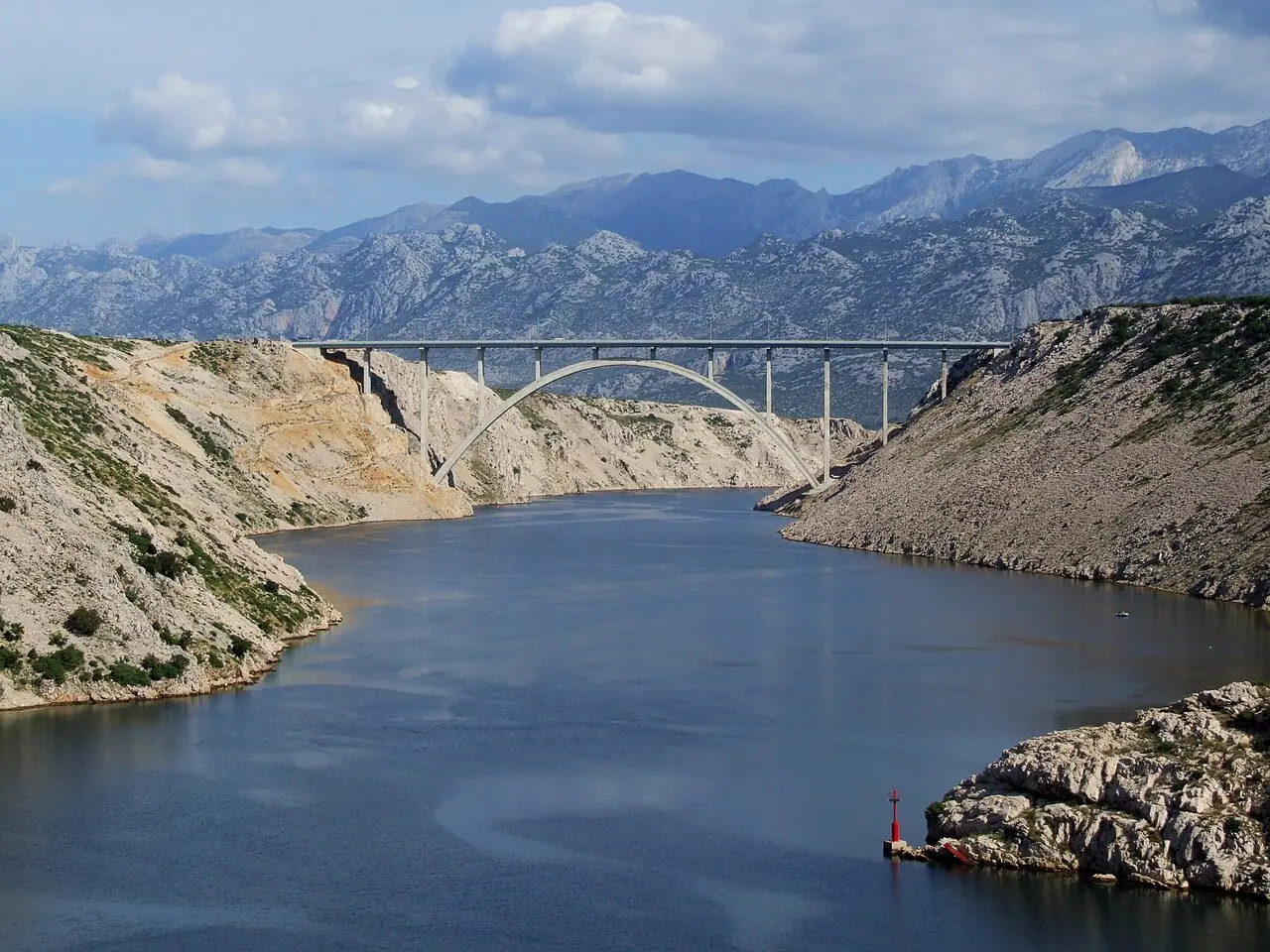
The catch with driving is at each end. Both old towns are largely pedestrian, so you leave the car in a garage or a paid zone outside the walls and walk in, and in Split the spaces near the centre are few and expensive in summer. If Split itself is the destination, a car is more hassle than help. It pays off if you’d like to stop on the way - Šibenik, the Krka waterfalls and Trogir all sit between Zadar and Split - or if you’re carrying on toward Dubrovnik afterward.
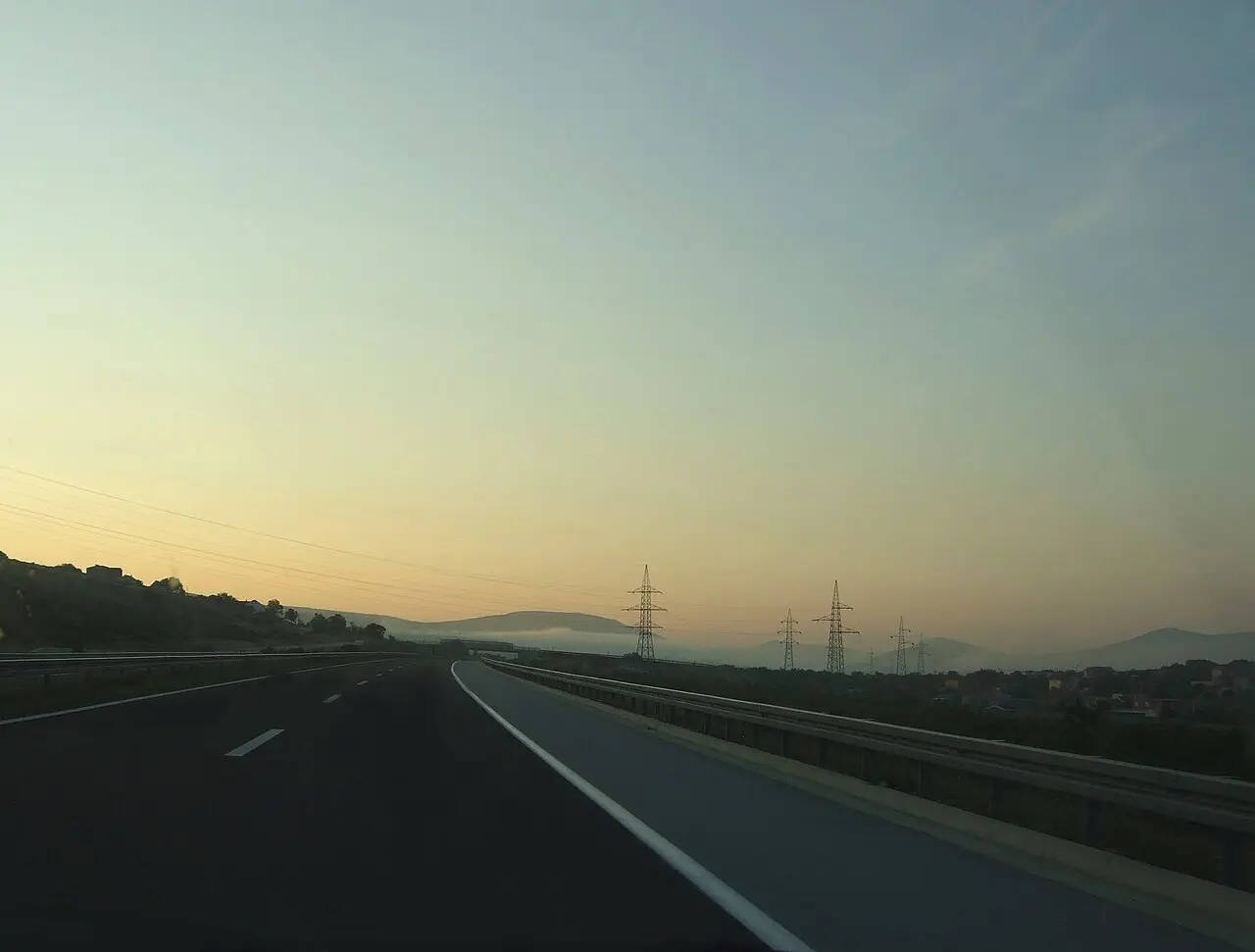
If you’re hiring, a one-way rental between Zadar and Split, or picking up at one airport and dropping at the other, is common but usually carries a drop-off fee; one-way rentals and drop-off fees explains when it’s worth paying.
The coastal D8
The D8, the old Adriatic coast road, is the scenic alternative. It follows the shore through Biograd, Pirovac, Vodice, Šibenik and Primošten, with the sea beside you for long stretches, and it’s lovely if the drive is part of the holiday. It’s slow, though: 161 km and about 3h05 with no stops at all, an hour and ten minutes more than the A1, and every village and viewpoint you pull into adds to that. It’s also toll-free. A good compromise is the motorway for the dull inland stretch and the coast road from Šibenik for the prettiest run into Split. On the bus you don’t choose: the quickest runs use the motorway.
By private transfer
A private transfer takes the same motorway as a hire car, with someone else driving and parking. Kiwitaxi lists the route at 158 km and about 1 hour 43 minutes; our own measurement of the A1 comes out nearer two hours, so plan on that. The price is for the car, not per seat, which is what makes it add up for three or four people with luggage, or for a flight into Zadar that lands after the last FlixBus at 18:30, when the only bus left is Arriva’s 23:15 (plus a 20:30 on Sundays). The driver meets you at the airport or your door and drops you as close to your Split address as a car can get, which counts for a lot in a largely pedestrian old town. Airport pick-ups include 90 minutes of waiting after the scheduled landing. Prices depend on the car class and the date, so check the total for your trip before you book.
Why there’s no ferry or train
Both cities are ferry ports, but each sails only to its own islands. Jadrolinija runs from Zadar to Ugljan, Iž, Molat, Dugi Otok and Silba, and from Split to Brač, Hvar, Vis and Korčula, with no line between the two, and there’s no passenger train either. Travelling by sea in this part of Dalmatia means island hopping, not a city-to-city service: the Croatia ferries guide and the island hopping guide show how the boats fit together.
Which one fits your trip?
Travelling light and only going to Split? Take a daytime bus, and if you’re buying at the Zadar station anyway, the 2h15 Knežević runs cost less there than on FlixBus. Landing late, or three or four of you with bags? A transfer to your Split address saves the most hassle; after 18:30 the only other option is an Arriva bus. Driving on to Šibenik, Krka, Trogir or Dubrovnik? Hire the car, take the A1, and drop to the D8 at Šibenik if you’ve got an afternoon to spare. And if you were hoping for a boat, save it for the islands.
It’s a short, easy leg by Croatian standards. Once you’re in Split, the Split travel guide covers what to see and where to stay, and Split to Dubrovnik transport picks up the road south.
Opening hours, prices, timetables and seasonal services change through the year - the figures here are planning estimates, not quotes. Confirm current details with the operators and official sources before you go.
Read also

Transport · 13 min read
London to Split 2026: 2h35 Nonstop, from £109 Return
Verified · October 22, 2026Nonstop London-Split takes about 2 hours 35 minutes. Croatia Airlines lists Gatwick from £109 and Heathrow from £159 return - check live fares.

Transport · 9 min read
Zadar Airport to the City: Buses & Transfers
Updated · August 27, 2026Zadar Airport (ZAD) to the old town in 2026: Liburnija shuttle, taxi, private transfer and app rides - the €5 bus, 20-minute trip and where each stops.

Transport · 11 min read
How to Get to Korčula: Ferries from Split & Dubrovnik
Updated · September 5, 2026How to reach Korčula in 2026: catamarans from Split and Dubrovnik, the Orebić car ferry, Vela Luka routes, times, fares and which option to pick.

Transport · 13 min read
Zagreb to Dubrovnik: Fly, Drive or Take the Bus?
Updated · October 23, 2026Zagreb to Dubrovnik: fly (55 min, ~3.5 h door to door), bus 8 h 30 min - 14 h, drive 7 h plus €33.70 tolls, or a private transfer. Which one fits.