
Pag Island Guide: Beaches, Zrće Party & Pag Cheese
Pag, Croatia: the Zrće club beach at Novalja, the moon-like coast at Metajna, protected Pag cheese and salt, and how to get there by bridge or ferry.
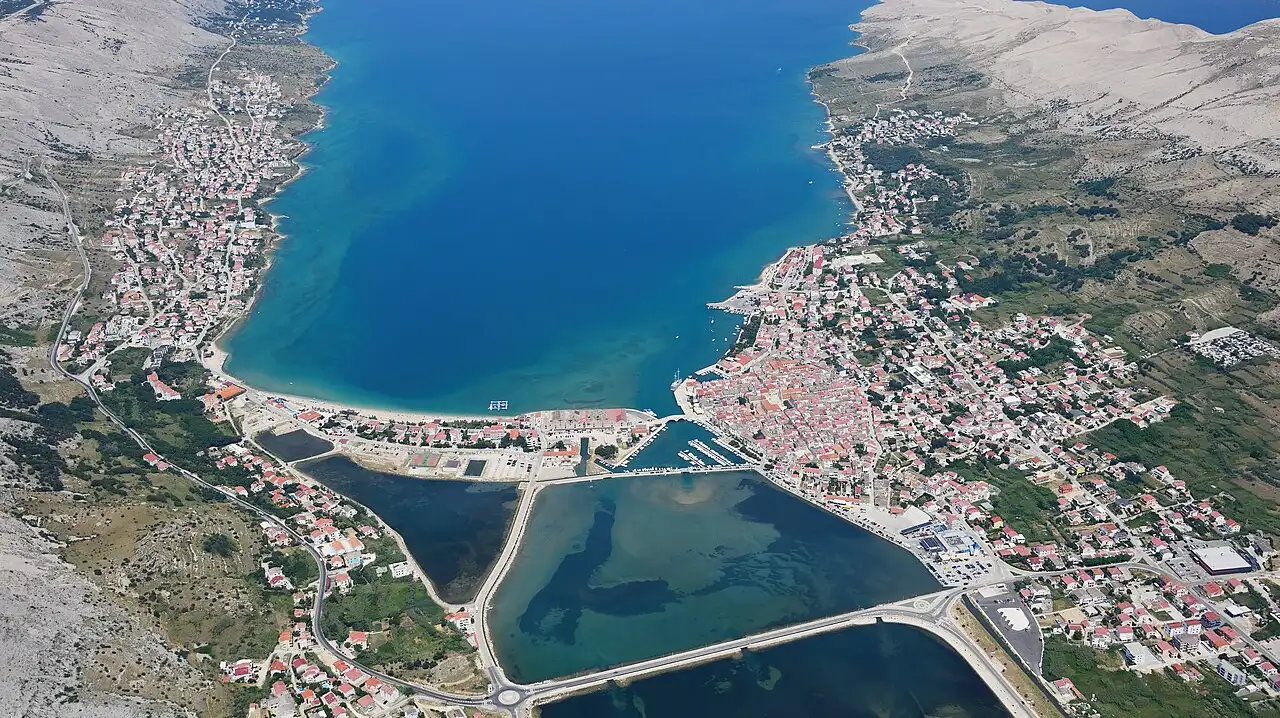
Pag looks like the moon and sounds like a nightclub. It lies about an hour north of Zadar, tied to the mainland by a bridge at its southern tip and by a 15-minute ferry in the north, and it comes in two halves that barely speak the same language: Novalja up north, with the Zrće party beach next door, and the old town of Pag in the south, which has lived off salt, lace and sheep’s cheese for centuries. Which half you book decides what kind of holiday you get.
That choice matters more here than on most Croatian islands, because Pag is long. Fifty-eight kilometres of it, with the two ends about 30 km and a slow road apart. Book “an apartment on Pag” on price alone and you can end up in Gajac, a few hundred metres from a sound system that runs to sunrise - or down in the quiet south, wondering where the party everyone promised you went.
Two islands in one: where to base yourself
Pag is split between two counties, of all things. Novalja, in the north, belongs to Lika-Senj; the town of Pag, in the south, to Zadar County. The line on the map matches the line in the atmosphere.
Novalja is the base for anyone coming for the beach clubs: a working little town with a harbour, supermarkets and a bus network, plus the resort sprawl of Gajac between it and Zrće. Rooms fill with a young summer crowd, and the night bus counts as infrastructure.
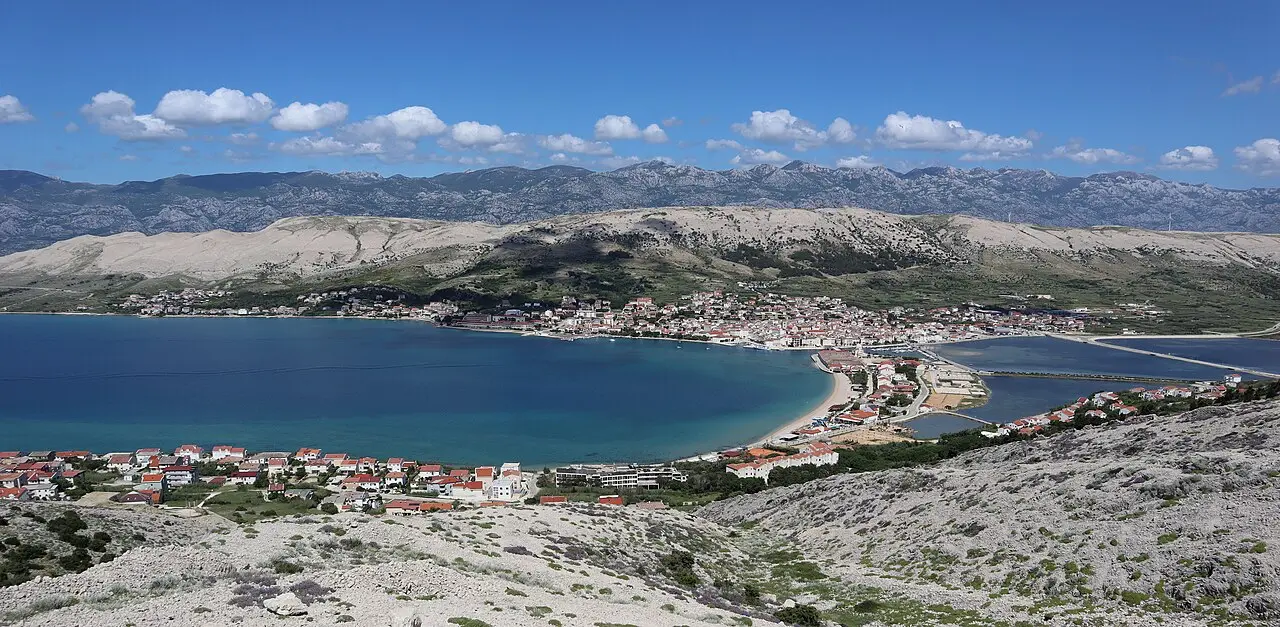
Pag town is the opposite: a compact stone town of straight streets around a square, salt pans on its doorstep and a beach for families. It’s also 30 km and a slow drive from the nearest bass drop, which is either a drawback or exactly the point.
Metajna, 12 km from Novalja, is the third option: a small village on the north-east coast with the island’s strangest landscape on its doorstep and no nightlife at all.
Zrće: what the party beach is actually like
Zrće is a pebble beach about 2 km from the centre of Novalja, in a bay below the Gajac resorts. The detail that surprises people: it was awarded a Blue Flag back in 2003. The national list is reissued every year and the flags move around, so check the current one rather than an old article - but the point stands. This isn’t a scruffy field with speakers in it - sunbeds, showers, jet skis, a bungee crane, and in the morning plenty of families.
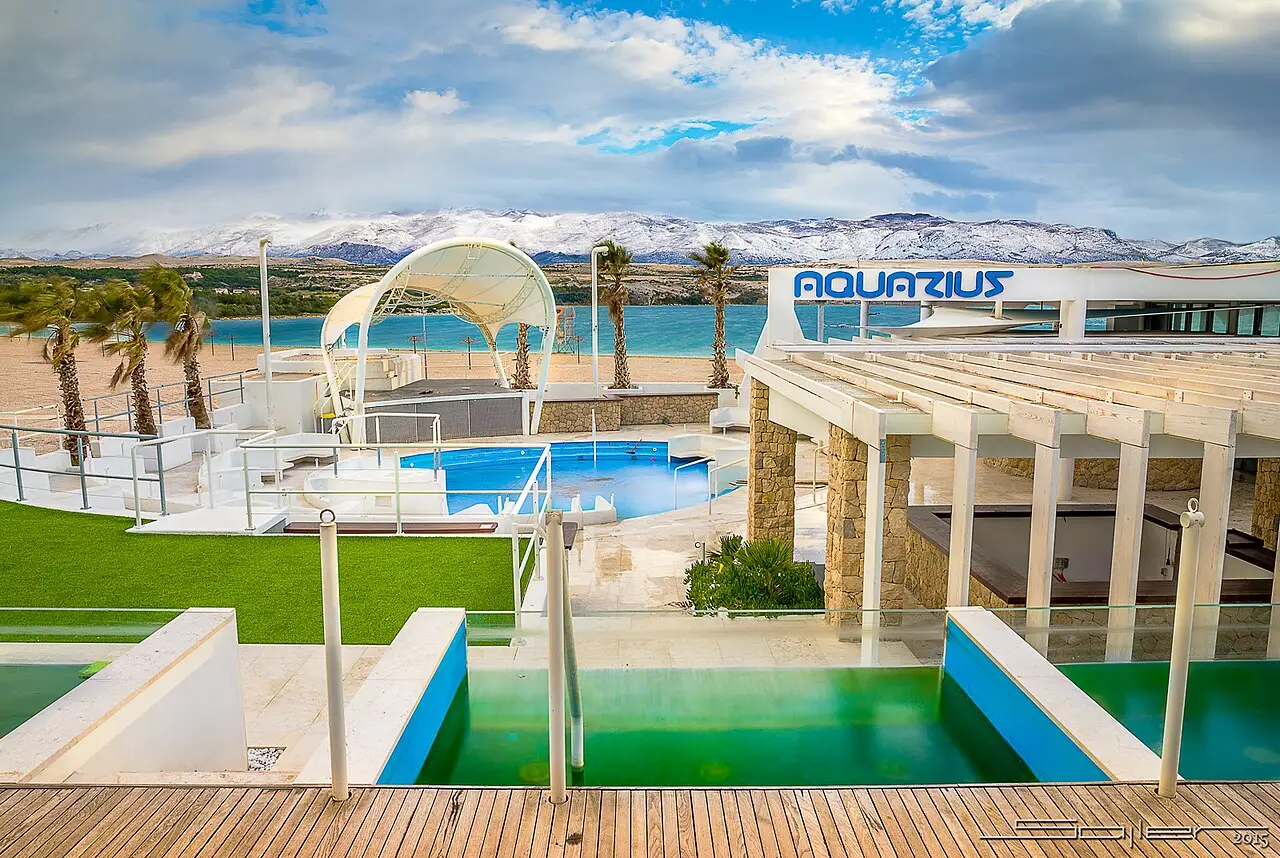
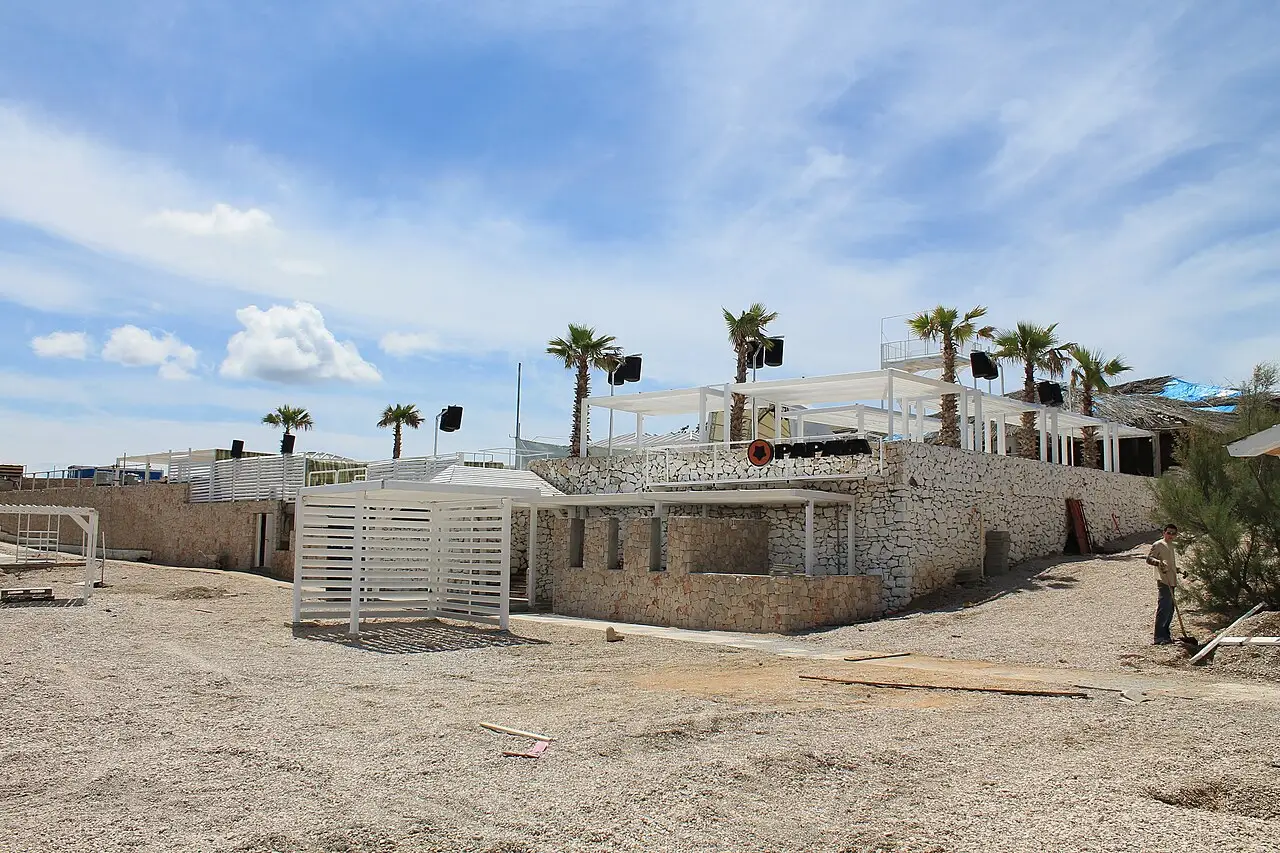
The clubs are strung along the shore, open-air, facing the water. For the 2026 season the names to know are Papaya, Aquarius, Kalypso and Nomad, plus two newcomers, Symbol and Lift. If you’re working from an older list, delete Noa Beach Club: it has closed for good, and dismantling of the structure began in February 2026. Kalypso is the veteran of the bay - it started in 1987 as a small beach bar and now runs as an open-air club for a crowd of 3,000-plus.
The season runs roughly from mid-May to mid-September, with the big weeks in July and August; Papaya opened its 2026 season on 12 May. Festival weeks and headline line-ups shift every year and are announced late, so check the club sites rather than trusting a poster from last summer. Prices split in two: on an ordinary night the door is cheap or free - the Zrće portal itself puts regular entry at 0-20 euros, often free before midnight - while festival weeks are the expensive part, with 2026 multi-day passes listed at 69-109 euros standard and 99-159 VIP. Budget for the drinks, not the door.
Getting there and back is the easy part. The Arriva city bus shuttles between the Novalja roundabout and Zrće day and night, three to seven departures an hour at the height of summer, with passes from three to seven days for regular commuters. One catch trips up nearly everyone: the buses don’t take cash - buy in the Arriva app or at the Novalja ticket office before you need it. A taxi covers the same 2 km for roughly 15-20 euros, which is the price of not planning ahead.
If you’re travelling with children, or you simply want to sleep, the practical rule is short: don’t book in Gajac or on the Zrće side of Novalja. Two kilometres of hill between you and the bay makes a real difference at 4am.
Beaches beyond Zrće, and the moon landscape
Straško, immediately south of Novalja, is the antidote: a long pebble beach backed by dense pine, so there’s genuine shade at the water’s edge, attached to one of the largest campsites in the country and with a naturist section at one end.
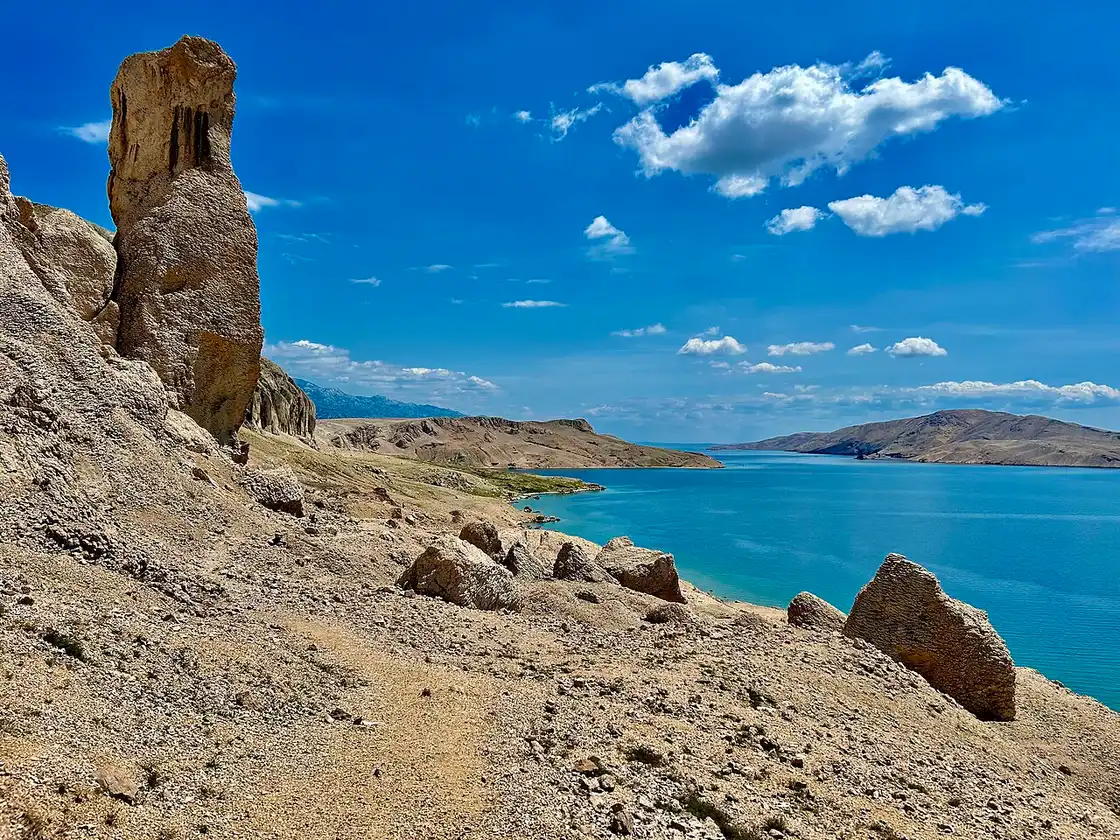
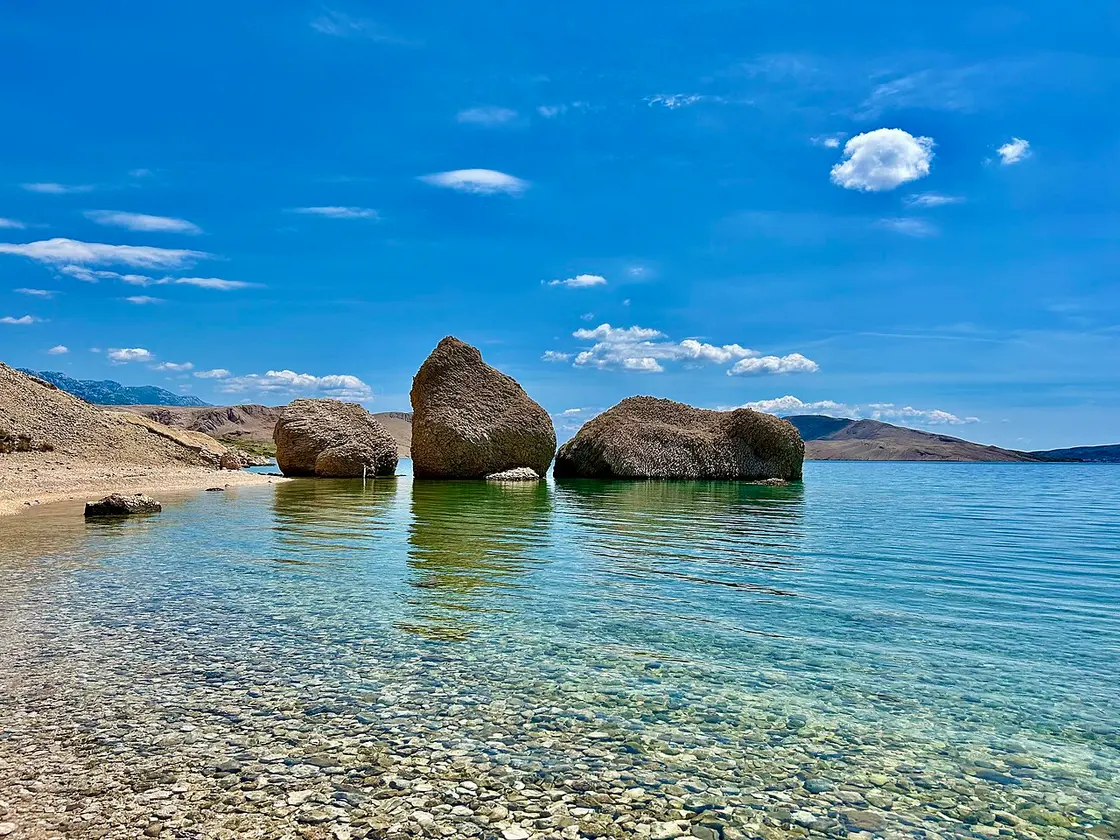
The strangest coast is around Metajna. Walk out from the village and the ground turns to bare grey rock with almost nothing growing on it, cut by dry-stone walls - the “moon landscape” that gives Pag its nickname, and the reason one of the local trails is signed as Life on Mars. Ručica is the beach at the end of the drive, all pale stone and clear water. From there a path with red-and-white waymarks carries on to Beritnica, a cove known for the tall rocks standing in the sea. Neither has shade, a shop or a lifeguard. Take water, take shoes you can walk in, and think twice about the descent in a low-slung rental car.
Cheese, lamb and salt: the protected trio
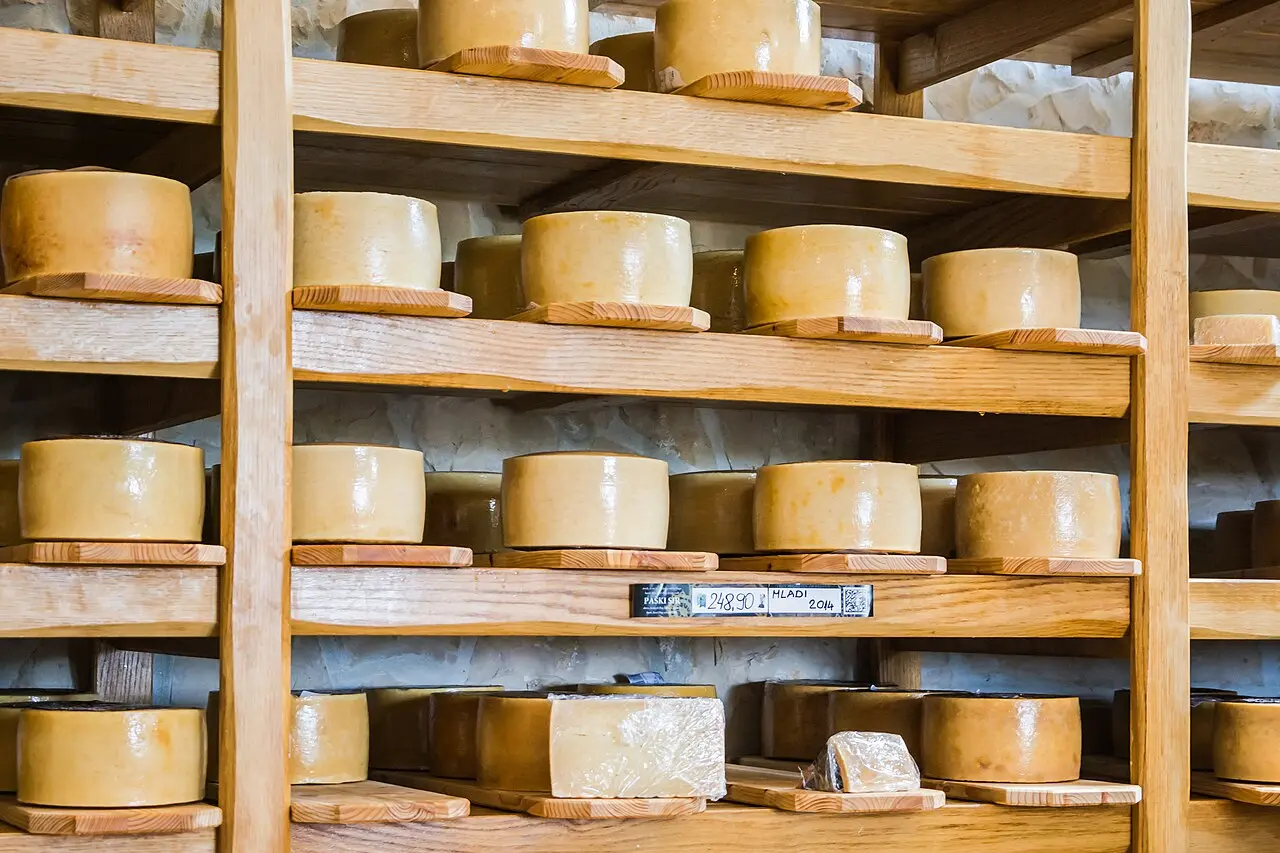
Paški sir, Pag cheese, has carried EU protected designation of origin status since 2019: it can only be made here, from the milk of the island’s own sheep. Those sheep - somewhere between 35,000 and 40,000 head of a hardy local breed, depending on whose count you take - graze on scrub blasted with salt spray, they’re milked by hand, and the milking season lasts only about half the year. Total output is tiny, and the published estimates disagree: one island dairy puts the combined registered output at under roughly 200 tonnes a year, while the Michelin Guide reports over 300. Either figure is a rounding error next to an industrial cheese, which is why a wedge costs what it costs: reckon on 40-60 euros a kilo at a dairy shop, more for long-aged and award-winning batches.
Pag lamb, paška janjetina, is EU-protected too, and its specification is worth reading before you order. The protected product is a milk-fed lamb of 4 to 10 kg, no more than 45 days old, and the animals are slaughtered mostly between January and March. In other words, the genuine article is a late-winter and spring dish. A spit-roasted lamb on a terrace in August may be very good, but it is not automatically the protected Pag lamb, and it’s fair to ask where it came from. Our guide to what to eat in Croatia puts both the cheese and the lamb in the wider Dalmatian context.
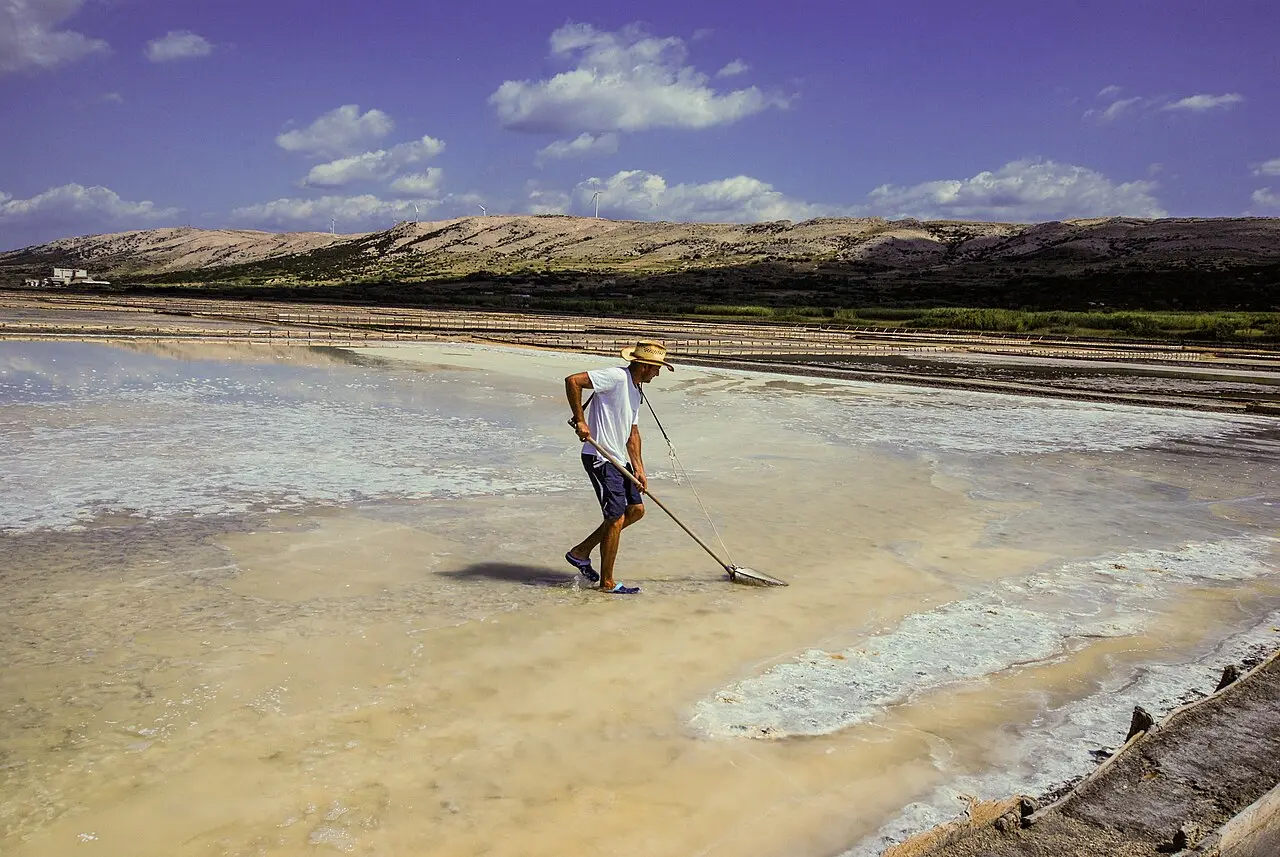
Then there’s salt, the reason the town of Pag exists at all. The pans have been worked here for more than a thousand years, and today Solana Pag produces on the order of 33,000 tonnes a year - roughly two thirds of all Croatian salt. Paška sol carries its own EU protection, and a bag of it’s the cheapest good souvenir on the island.
Pag town: a planned Renaissance grid
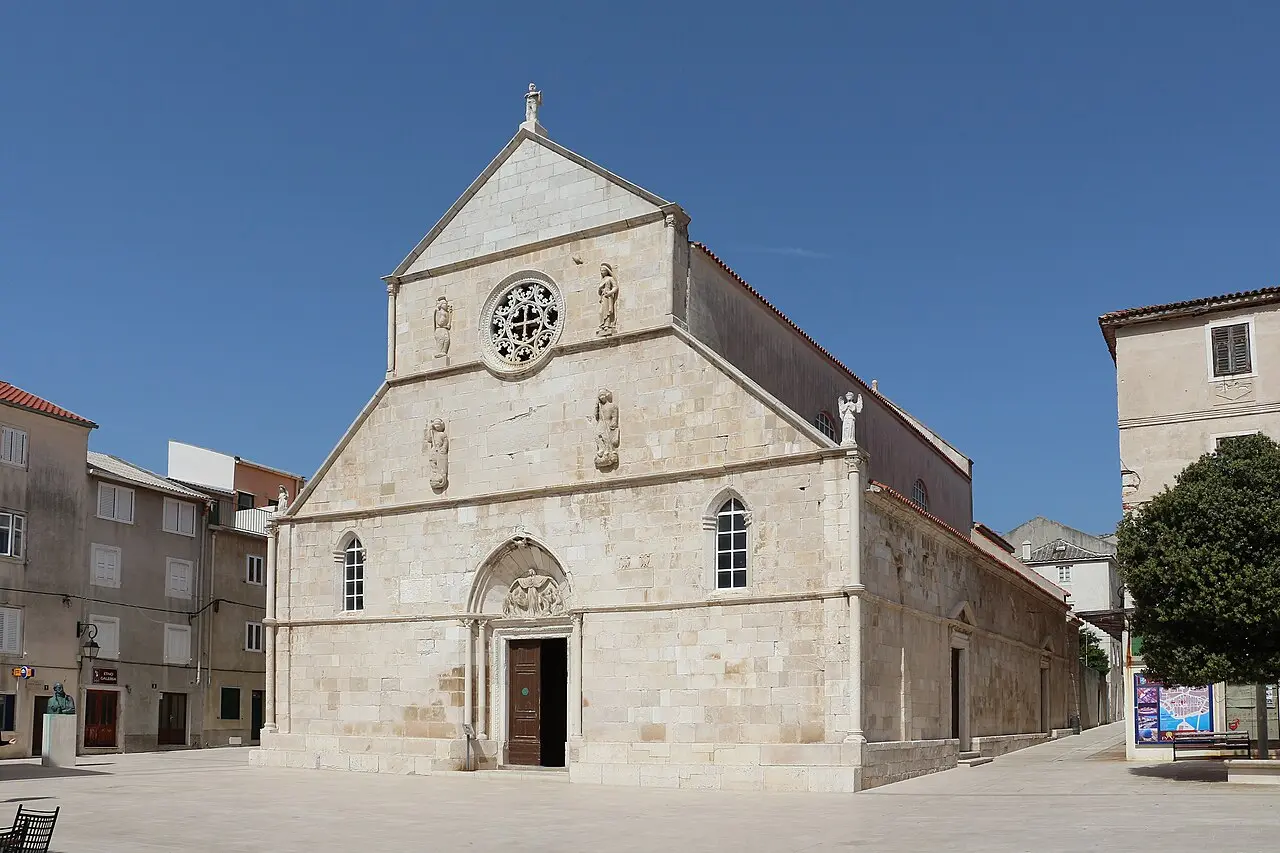
The town you walk through today was begun on 18 May 1443, laid out to a plan drawn up in Venice, with the architect Juraj Dalmatinac involved in the design and, from 1466, supervising work on the church. The result is unusual for the Adriatic: streets crossing at right angles around a rectangular main square, with the church, the rector’s palace and the bishop’s palace facing each other across it. Walk two minutes off the square and you’re in lanes barely wide enough for two people.
The town’s other craft is Pag lace, paška čipka, needle lace worked on a round cushion. It was first recorded here in 1579 in connection with the Benedictine convent, joined the UNESCO list of intangible cultural heritage in 2009 as part of Croatian lacemaking, and has its own gallery in town. Older women still work in doorways on summer afternoons. A genuine piece is small, slow and expensive - the price is weeks of work, not a souvenir mark-up.
Lun: the oldest thing on the island
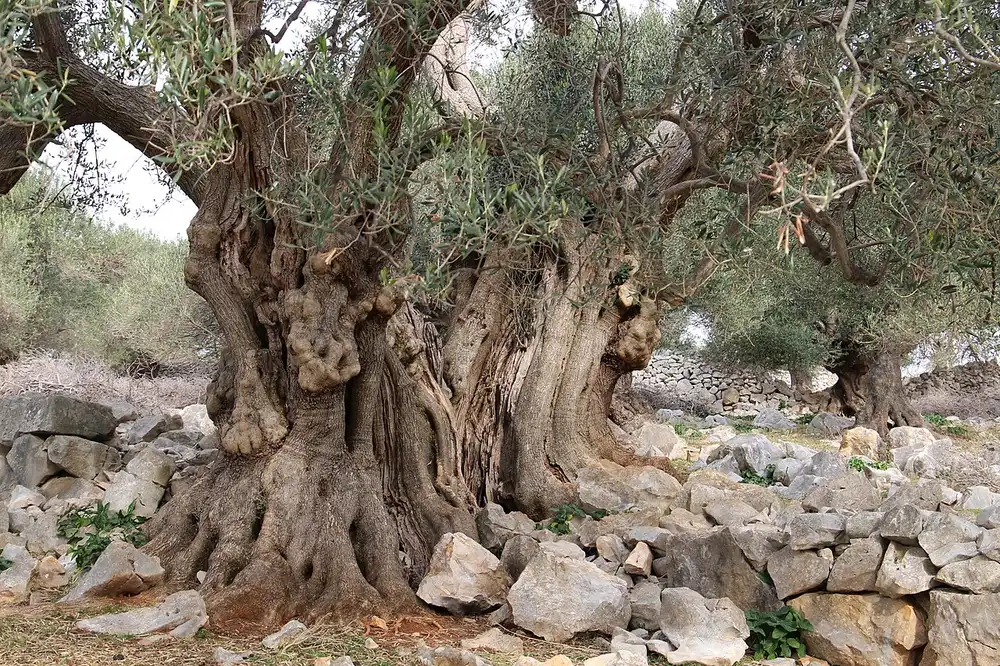
Right at the northern tip, past Novalja, the road runs out at Lun, and the landscape changes again. Here, among roughly 80,000 olive trees, stand about 1,500 wild olives (Olea oleaster), gnarled and low, protected as a botanical reserve since 1963. The oldest is reckoned at around 1,600 years. Paths run through the groves, there’s a small charge in season, and the visit takes about an hour - the best hour on the island for anyone who has had enough of pebbles.
Getting to Pag: bridge or ferry
There are two ways on, and the right one depends entirely on where you start.
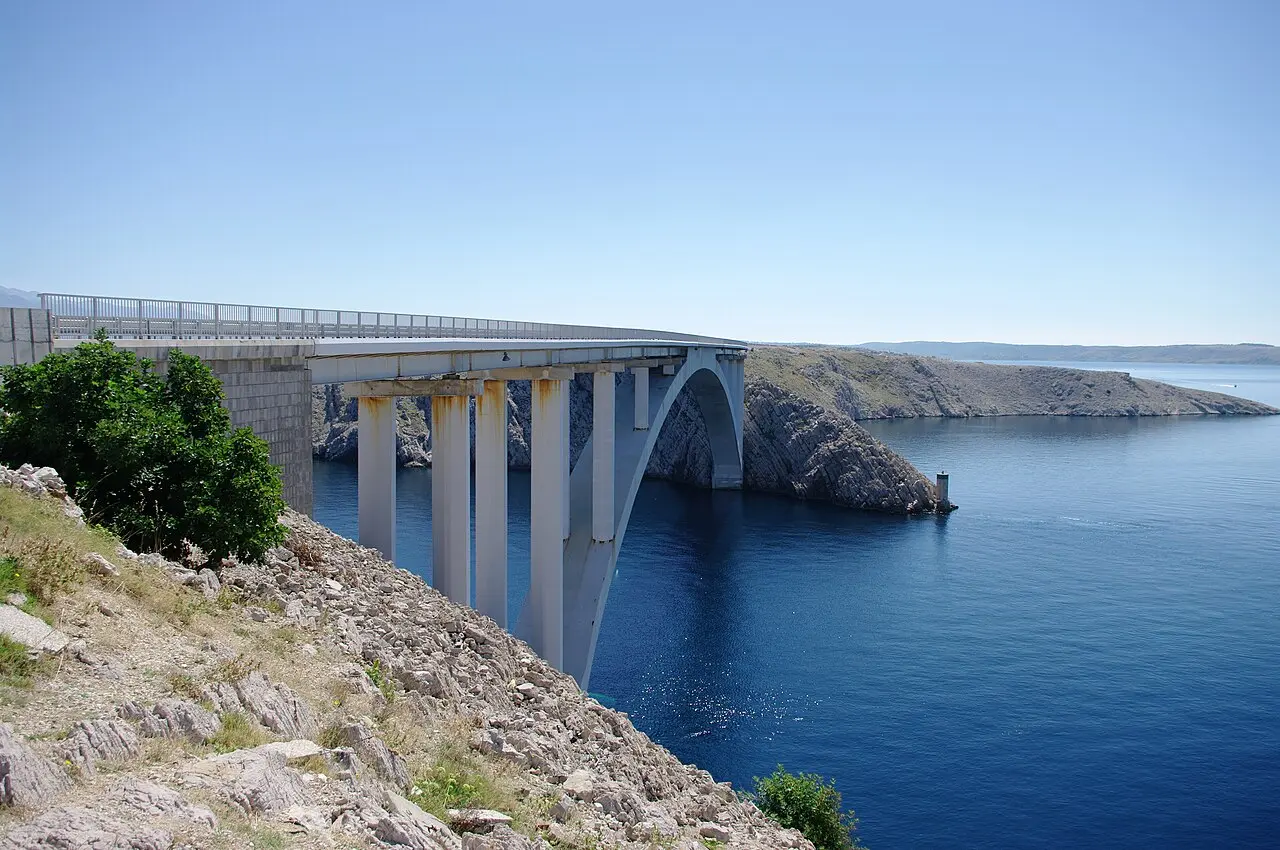
From the south (Zadar, Split, the A1): take the Pag Bridge at the island’s southern end, a 301-metre span with a single 201-metre arch standing 35 metres above the Ljubačka vrata strait. Zadar to Pag town is roughly 51 km and about 50 minutes; Zadar airport to the bridge is about 37 km. Novalja is another 30-odd km up the island, so allow about an hour and a half from Zadar door to door.
From the north (Rijeka, Zagreb, Istria): take the Prizna-Žigljen ferry, Jadrolinija’s line 335, which crosses under the Velebit mountains. The crossing takes 15 to 20 minutes and lands you close to Novalja. Independent ferry guides count about 21 sailings a day in high season and around 12 off-season; Jadrolinija’s own timetable was unreachable when we checked, so confirm before you set off. Foot-passenger fares are in the low single-digit euros; car fares move with the season, so check the current tariff with Jadrolinija. In late July and August the queue on the mainland side is the real cost - go early in the morning or late in the evening rather than at lunchtime.
Buses run to Novalja and Pag town from Zadar, Rijeka and Zagreb, using whichever crossing suits the route. If Pag is one stop in a longer island run, our guide to island hopping in Croatia explains how the network fits together, and how Croatia’s ferries work covers booking and boarding a car ferry. Zadar is the obvious mainland base at either end of a Pag trip.
When to go, and how long
The clubs define the calendar. Mid-May to mid-September is the live season at Zrće, with the loudest weeks in July and August; outside that window the bay is simply a beach. For everything else - the dairies, Lun, Metajna, the old town - June and September are better, with a warm sea and a fraction of the traffic. Our month-by-month guide to visiting Croatia has the wider seasonal picture.
Two or three nights suits most people: a day at a beach, an afternoon in Pag town with a cheese stop, the Lun groves and one walk into the moonscape near Metajna. Anyone who has come specifically for the clubs will already know how many nights they need.
Bring shoes for the pebbles, a hat and more water than you expect: there is almost no natural shade here, and the bura can turn a calm bay choppy inside an hour.
The verdict on Pag
Yes, if you book the right half. As a party destination Zrće is the real thing, and no other Croatian beach comes close for scale. As a quiet island Pag is stranger and older than its reputation suggests, and the food story alone - a cheese, a lamb and a salt, all three protected by name - beats most of the Adriatic. For how it compares with the other big islands, see our Croatian islands ranked guide. What Pag is not is a green, shady, gentle island. Come for the rock, the cheese and the noise, in whatever combination suits you.
Opening hours, prices, timetables and seasonal services change through the year - the figures here are planning estimates, not quotes. Confirm current details with the operators and official sources before you go.
Photos
On the map
The map loads on click - to keep the page lightweight.
The map didn’t load. Check your connection and refresh the page.
Good to know
Zrće and the island beaches are free and open all year; the clubs run roughly mid-May to mid-September. Ferry timetables and fares, club opening dates and festival line-ups change every season - confirm with Jadrolinija, Arriva and the individual clubs before you book.
Details checked: July 22, 2026
Read also

Cities · 12 min read
Motovun Travel Guide: Walls, Truffles & Teran
Verified · September 4, 2026Motovun hilltown guide: walls ticket €5 in 2026, St Stephen, Teran cellars, Mirna views, parking climb, and why the film festival no longer plays here.

Cities · 10 min read
Dugi Otok & Sakarun Beach: Island Day-Trip Guide
Updated · August 31, 2026Day-trip Dugi Otok from Zadar: Jadrolinija ferry to Brbinj, Sakarun beach, Veli Rat lighthouse, and Telašćica cliffs - DIY or boat tour.

Cities · 10 min read
Opatija Travel Guide: Habsburg Riviera & Lungomare
Verified · August 25, 2026Opatija on the Kvarner Gulf: the 10 km Lungomare, Villa Angiolina museum, Maiden with the Seagull, and how it differs from Rijeka and Istria.

Cities · 10 min read
Omiš Travel Guide: Pirates, Zipline & Cetina Canyon
Verified · August 21, 2026Omiš is 25 km from Split: Promet bus €2.50, Mirabela €4-6, Cetina rafting and an 8-line zipline over the canyon.