
Istria Road Trip: Rovinj, Pula & Motovun in 3-4 Days
A 3-4 day, 120 km Istria road trip through Pula, Rovinj and hilltop Motovun: driving distances, tolls, parking and where to stop.
Istria is the compact corner of Croatia where you can drive from a Roman amphitheatre to a Venetian fishing port to a truffle-country hilltown in a single long weekend. This 3-4 day loop links the three, all within about an hour’s drive of each other: Pula in the south for the Roman ruins, Rovinj on the west coast for the prettiest old town, and Motovun inland for the classic Istrian hill village. You can do the whole thing on a tank of fuel - the distances here are small, and the joy is stopping between towns for a konoba lunch or a roadside winery. This guide lays out the route, the driving, the tolls, the parking and where to sleep.
The order below runs south to north and coast to interior: Pula → Rovinj → Motovun. Pick it up as a self-drive from Pula airport or from a one-way rental if you’re continuing elsewhere in Croatia. Everything is connected by good road, and the only real planning decisions are where to base yourself and whether to take the toll motorway (the Istrian Y) or the free local roads through the villages.
Day 1: Pula and the Roman Arena
Base your first night in Pula, the biggest city on the peninsula and the one place in Croatia where you step out of a café into a nearly complete Roman amphitheatre. The Arena is the headline: one of the six largest surviving Roman amphitheatres and the only one that still has its entire outer wall standing, all three tiers of it. Walk the arena floor, then go down into the underground chambers where gladiators and animals once waited, now a small exhibition on Roman Istria. In summer the Arena doubles as a concert and film venue - the Pula Film Festival screens here every July (the 73rd edition runs 9-16 July 2026), and seeing a film under the floodlit arches is the best night out in town.
Around the Arena, Pula packs a full Roman core. The Forum square still holds the Temple of Augustus, a perfect little 1st-century temple, alongside the old town hall; the Arch of the Sergii frames the entrance to the shopping street; and beneath it all run the Zerostrasse tunnels, dug by the Austro-Hungarian navy in the First World War and now walkable. Pula was a military port for centuries, and that double life - Roman ruins above, naval tunnels below - is what makes it more interesting than a straight beach town.
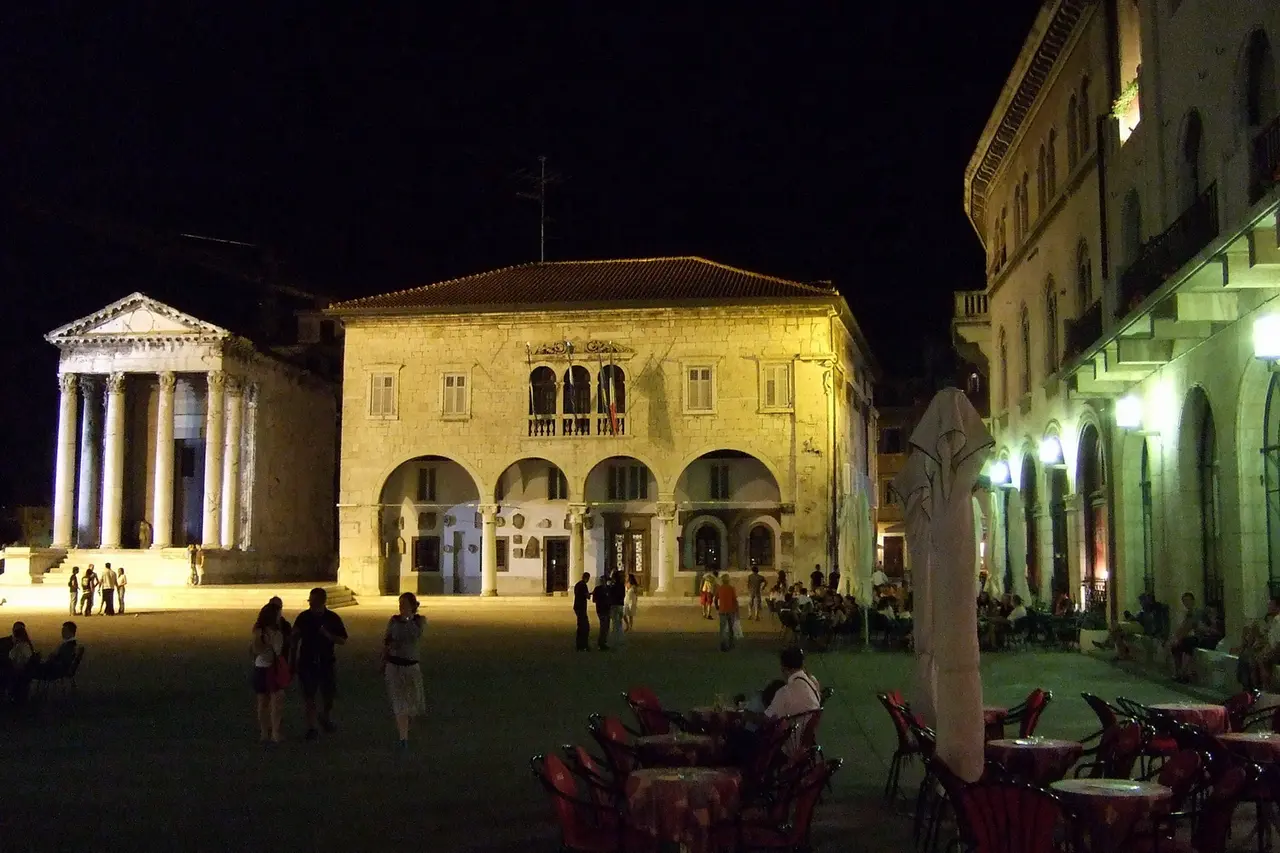
Parking near the Arena is paid street parking and small lots; the compact old town is easy on foot, so leave the car once and walk. For where to stay, the beaches on the Verudela peninsula and the day trips to Brijuni national park and Cape Kamenjak, our full Pula travel guide has the detail.
Day 2: Drive to Rovinj
It’s only about 36 km from Pula to Rovinj, roughly 40 minutes. You have two ways to do it. The free local road runs through Vodnjan and Bale - slower but lined with olive groves and stone villages, and worth it for the scenery. The Istrian Y motorway (A9) is a touch faster and quieter in high season; you would join near Pula and exit toward Rovinj. Croatia has no vignette - you pay tolls per section at the exit, in cash (euros), by card or with an ENC transponder. The Istrian Y tolls are modest for a car; the one to know is the Učka tunnel (roughly €4.50-6) if you enter or leave Istria on the Rijeka side, though you’ll not need it for this internal loop. Check current section prices on bina-istra.com before you go, as they change.
Rovinj is the payoff: a tangle of tall, colour-washed houses crammed onto a small peninsula, crowned by the soaring Venetian bell tower of St Euphemia, modelled on the campanile of St Mark’s in Venice. The key thing to know as a driver is that the whole old town is pedestrian-only - every lane inside the walls is closed to cars. You park at the edge and walk in, five to fifteen minutes. The closest lots are Velika Valdibora and Mala Valdibora, barrier lots right by the harbour; in peak season (June-September) expect around €3-3.50 per hour with a €25 daily cap, paid by app (Bmove, Aircash), SMS, or kiosk. Off-season it drops to about €0.50 an hour.
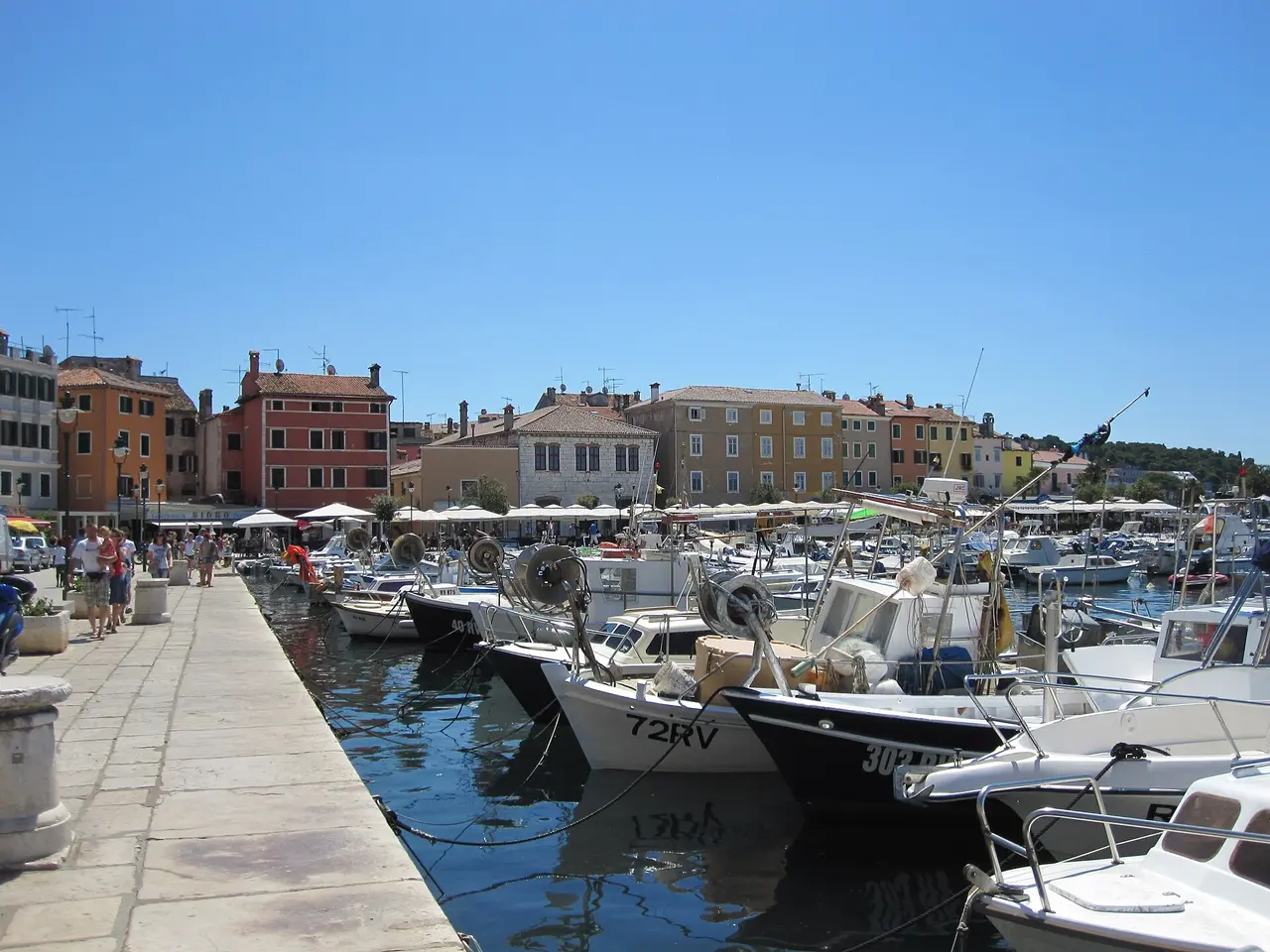
Spend the day climbing Grisia, the steep artists’ lane, up to St Euphemia and its 60-metre bell tower (ticketed climb, worth it for the view); passing under the 17th-century Balbi Arch; and walking south into the pine-shaded Punta Corrente (Zlatni rt) park to swim off the rocks. Stay the night - Rovinj is at its best in the soft light of early morning and after the day-trippers leave. The full rundown of sights, beaches and food is in our Rovinj travel guide.
Day 3: Inland to Motovun
On day three, turn your back on the coast and drive inland to Motovun, about 45-50 km and 50-55 minutes from Rovinj, most scenically via Kanfanar on roads that wind through vineyards and oak forest. This is the Istria that surprises people: green, hilly, dotted with medieval hilltowns, and closer in feel to Tuscany than to the Dalmatian coast. Motovun is the most famous of the hilltowns, a walled village crowning a steep hill above the Mirna valley and the Motovun forest, one of the great truffle grounds of Europe.
The catch for drivers is the hill. There’s a large car park at the bottom (a walk of about 15 minutes uphill to the centre) and a small one near the top that fills by early afternoon in summer - arrive in the morning if you want the higher one. Parking is municipal and priced by zone and season, not flat: from 1 June to 30 September a car pays €1.00 an hour (€8 a day) in the cheapest zone up to €2.50 an hour (€28 a day) in the dearest, falling to €0.50-1.50 an hour in the shoulder months and €0.30-0.70 between 16 November and the end of February. It is cheap in winter but never free. If the climb doesn’t appeal, a Kanal-Motovun shuttle runs from the mid-priced lot at €4.00 return for an adult. The reward is the walk around the town ramparts, with the Mirna valley spread out below and vineyards running to the horizon. Motovun is truffle country, so this is where you eat: fuži pasta with shaved truffle, truffle-and-egg fritaja, local Malvazija and Teran wine. The truffle hunt and the truffle fairs are an autumn thing (Motovun’s Truffle Days fall on 17-18 October in 2026), but truffle dishes are on the menus year-round.
Note one thing that trips people up: the old Motovun Film Festival left the town and moved inland to Gorski Kotar (now the Cinehill festival) in 2024, so it’s no longer held here - do not plan a Motovun trip around it. If you have an extra hour, the nearby hilltowns of Grožnjan (an artists’ village) and Oprtalj make an easy add-on, and the whole area is threaded by the Parenzana, a former railway line turned cycling and walking trail. For walls, Teran and the festival move in more depth, see the Motovun travel guide.
Day 4: A slower loop back
With a fourth day you can slow the whole thing down rather than rush it. Options, depending on where you started and where you’re headed next:
- Poreč, on the coast between Rovinj and the Slovenian border, for the 6th-century Euphrasian Basilica and its gold Byzantine mosaics, a UNESCO World Heritage site that most people skip and shouldn’t.
- A wine and truffle day in the interior around Livade and the Motovun hills, tasting Malvazija and Teran at family cellars.
- Cape Kamenjak or Brijuni national park back near Pula if you’re looping south to fly out; Brijuni sells timed boat slots from Fažana, so that one gets booked before you set off.
Because Istria is so small, none of these adds much driving - it’s the kind of region where you cover big ground in short hops and spend the saved time at the table.
Practical notes for the drive
- Distances are short. The core loop (Pula-Rovinj-Motovun) is only about 75-120 km of driving all told, so a car is about freedom and roadside stops, not long hauls.
- Tolls and the motorway. The Istrian Y (A8/A9), run by Bina-Istra, is the peninsula’s toll motorway; Croatia has no vignette, so you pay per section. The free local roads are slower but prettier - for a 40-minute hop, either works. Learn more about hiring a car and one-way fees in our guide to renting a car in Croatia.
- Old towns are car-free. Rovinj and Motovun both make you park and walk in - factor in 5-15 minutes each way and the parking apps.
- Book ahead in summer. July and August are busy on the coast; Rovinj and Pula fill up, so lock in rooms early. For choosing your dates, see the best time to visit Croatia.
How it fits your trip
This loop pairs naturally with the rest of Croatia. If you’re combining Istria with the Dalmatian coast and islands, it’s a long but scenic drive south (or a short flight from Pula) - many travellers fly Pula to Split and pick up our Croatia islands itinerary from there. Our guides to getting around Croatia and renting a car in Croatia cover the logistics. For more itineraries, the routes hub collects them; for the towns themselves, start with Pula and Rovinj.
Tolls, parking rates and opening hours change by season - confirm current prices with Bina-Istra, the town parking operators and the tourist boards before you travel.
Route day by day
- Days on the road
- 4
- Distance
- ≈120 km
- Budget from
- 80 EUR
- Best season
- May, June, September, October
-
Pula
Route startstop ≈1440 min
Start at the southern tip of Istria, where a nearly intact Roman amphitheatre sits in the middle of a working city. The Arena, the Forum and the Zerostrasse tunnels fill a full day; Pula airport is the natural arrival point.
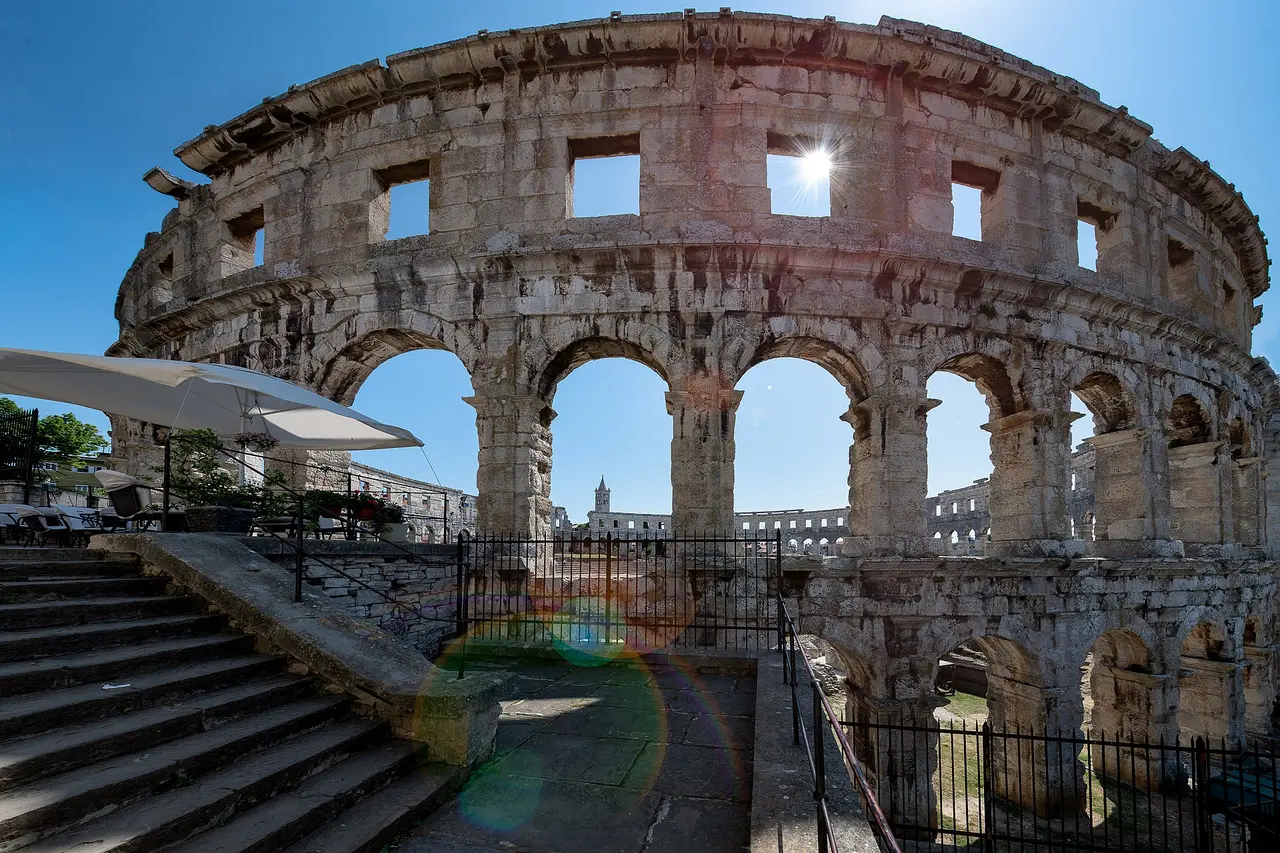
Photo: Bernd Thaller / Wikimedia Commons, CC BY 2.0 ( source) -
Rovinj
36 km from the startstop ≈1440 min
About 40 minutes north up the coast: the most photographed town in Istria, a stack of pastel houses on a peninsula under the Venetian bell tower of St Euphemia. The old town is pedestrian-only - park at the edge and walk in.
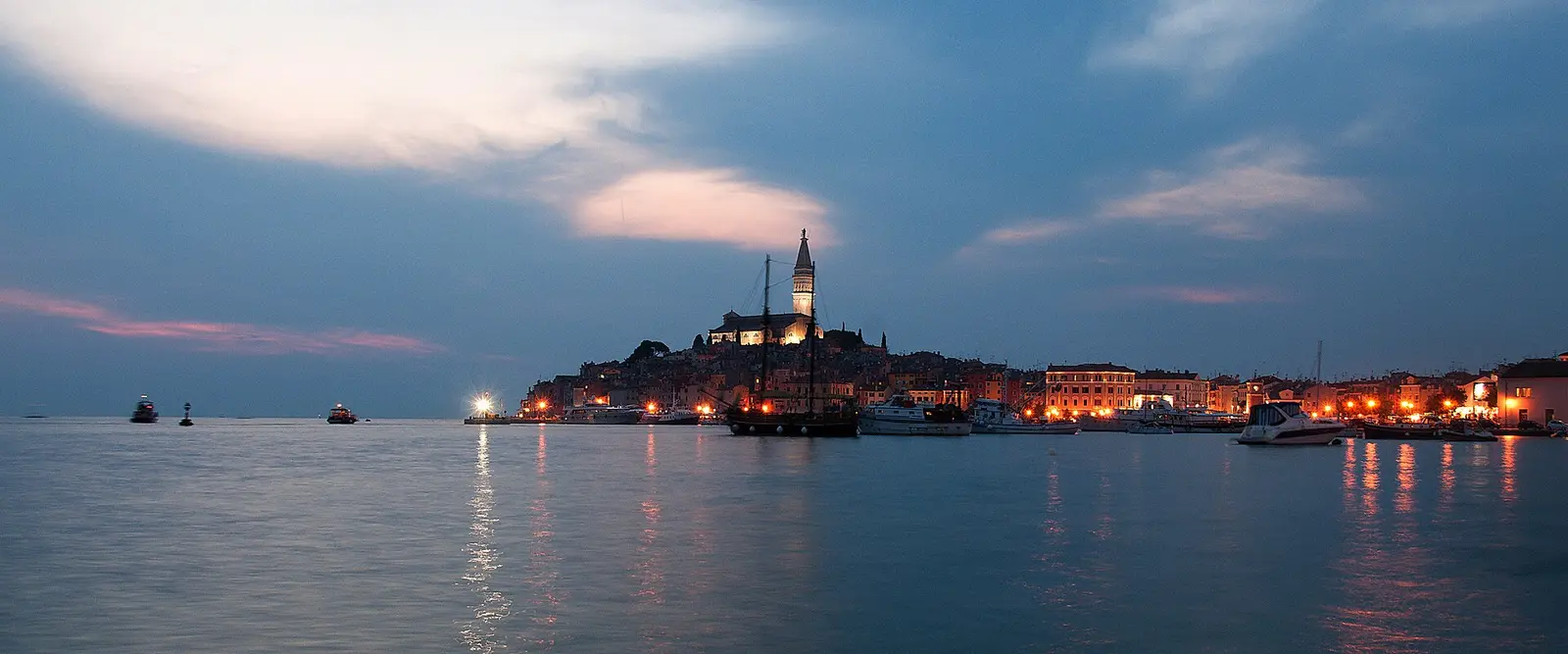
Photo: Ross Elliott / Wikimedia Commons, CC BY 2.0 ( source) -
Motovun
76 km from the startstop ≈300 min
Turn inland for the classic Istrian hilltown: a walled village crowning a vineyard hill above the Mirna valley and the truffle forest. Park below and climb the last stretch on foot for the ramparts walk and the view.
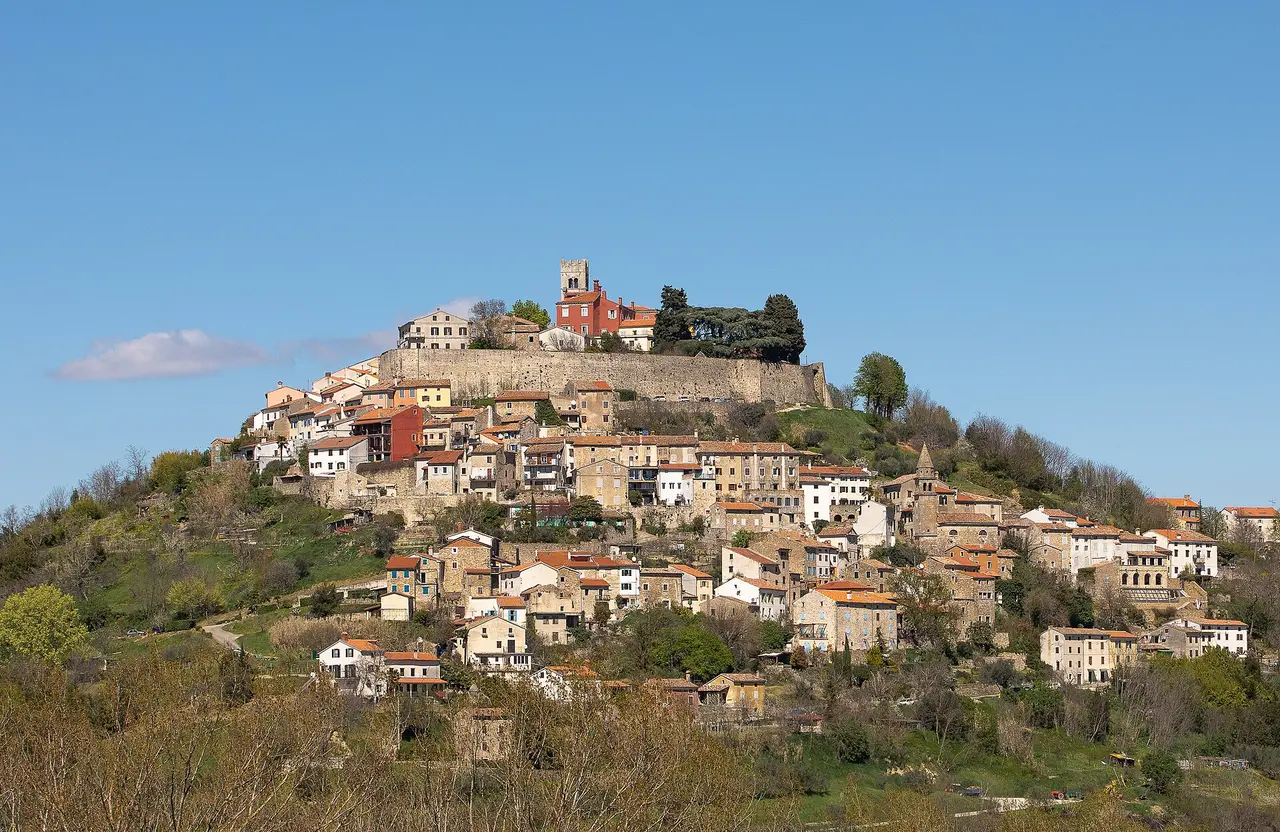
Photo: Jernej Furman / Wikimedia Commons, CC BY 2.0 ( source)
Route map
The map with stops loads on click - to keep the page lightweight.
The map didn’t load. Check your connection and refresh the page.