
Croatia Islands Itinerary: Split, Brač, Hvar, Vis & Korčula
A day-by-day Croatia island hopping itinerary: Split to Brač, Hvar, Vis and Korčula - which ferries and catamarans link each island, durations and tips.
This is a concrete, island-by-island plan for hopping the central Dalmatian islands: Split → Brač → Hvar → Vis → Korčula, over about 8 days by catamaran and ferry. It’s not the same thing as a general “how ferries work” guide (for that, read our Croatia island hopping overview); this lays out a specific chain, which boat links each island to the next, roughly how long each crossing takes, and the one leg that trips everyone up. Everything runs out of Split, the busiest port in Croatia, and the plan works foot-passenger only - no car needed, and often no car wanted, because catamarans land you right in the island towns.
Two honest caveats up front. First, timetables are seasonal and change every year, so treat the times below as a framework and confirm sailings on the operators’ own sites before you book anything. Second, the Vis to Korčula leg has no direct boat - you either change at Hvar or double back through Split, and knowing that in advance saves a bad afternoon. With those two things understood, here’s the route.
The backbone: which boats you’ll actually use
Before the day plan, the boats. One line does most of the heavy lifting: Kapetan Luka (Krilo) runs a daily fast catamaran, the “Krilo Star”, from Split → Milna (Brač) → Hvar → Korčula → Pomena (Mljet) → Dubrovnik and back, from 1 April to 31 October, one departure a day each way. That single line strings together Brač, Hvar and Korčula in one direction - it’s the spine of this itinerary. Sample one-way fares in 2026 run around €10 Split-Brač, €25 Split-Hvar and €30 Split-Korčula; confirm current prices on krilo.hr.
The piece that used to be awkward - getting out to Vis and back - got much easier for 2026. Jadrolinija has added a new seasonal fast catamaran, Split → Bol (Brač) → Hvar → Vis, running daily from 19 June to 13 September, twice a day. The morning boat leaves Split at 07:30 and reaches Vis by 09:25, with the Hvar to Vis hop taking just about 40 minutes (08:45 to 09:25); the evening service returns from Vis at 19:35. That means you can now reach Vis from Hvar without going all the way back to Split first - the single best planning change on this route this year. Check jadrolinija.hr for the current schedule.
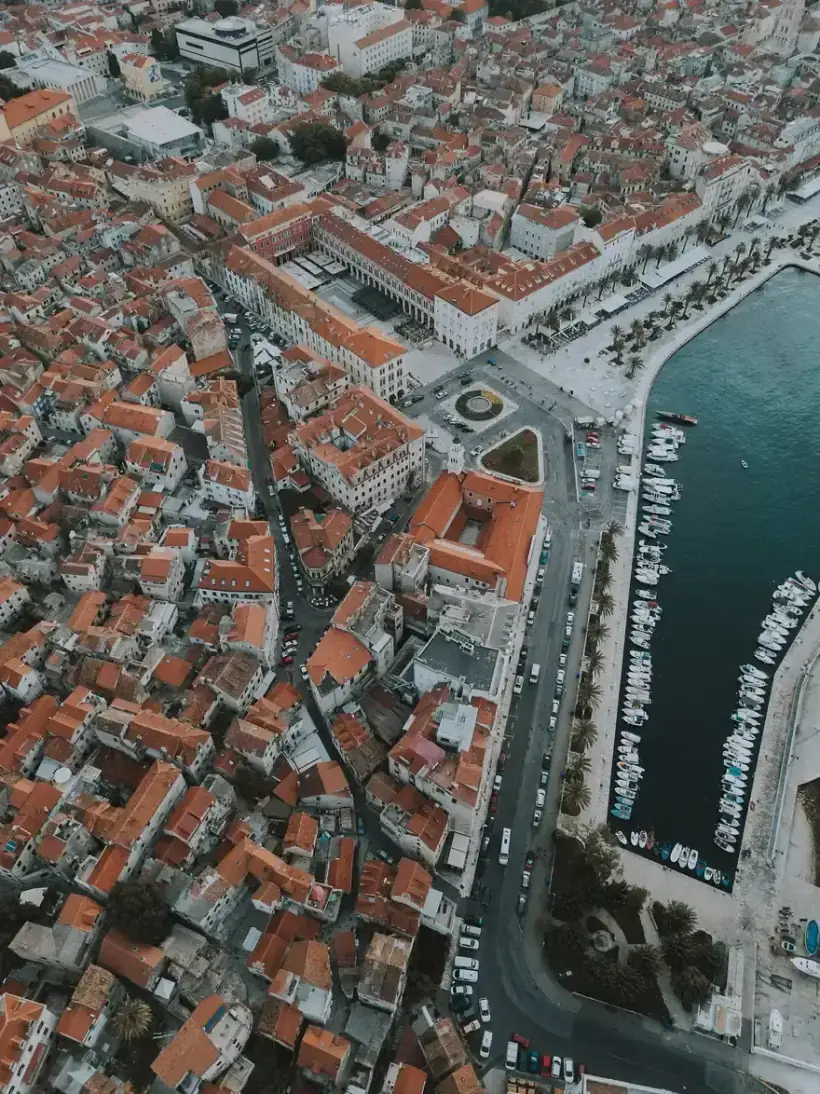
Day 1-2: Split, the launch pad
Split earns two nights here mainly because you’ll be passing back through its ferry port again and again - every island on this route is a spoke off this one hub. Use the first day to get your bearings at the harbour and lock in any catamaran tickets you can book ahead, then give the afternoon to Diocletian’s Palace: a working Roman retirement villa turned old town, where the basement cellars, the columned Peristyle and a cathedral built out of the emperor’s own mausoleum all sit a few steps apart. Finish on the Riva waterfront, or climb Marjan hill above the old town for a view over the harbour you’ll be sailing out of tomorrow. The full city rundown is in our Split travel guide.
Practical note: in July and August the port is chaos on changeover days, and the popular fast catamarans sell out. Book Hvar and Korčula legs online ahead of time; for the shoulder months you can be more relaxed.
Day 3-4: Brač and Zlatni rat
Hop to Brač first - it’s the closest island, 15-ish km and 25 to 50 minutes out, on either the Supetar car ferry or a catamaran to Milna or Bol. Aim for Bol on the south coast, home to Zlatni rat (the “Golden Horn”), the pale pebble spit that curls into turquoise water and quietly changes shape with the wind and current - the most photographed beach in the country, and genuinely worth the hype if you go early before the crowds. Windsurfers love the channel here for the afternoon maestral wind.
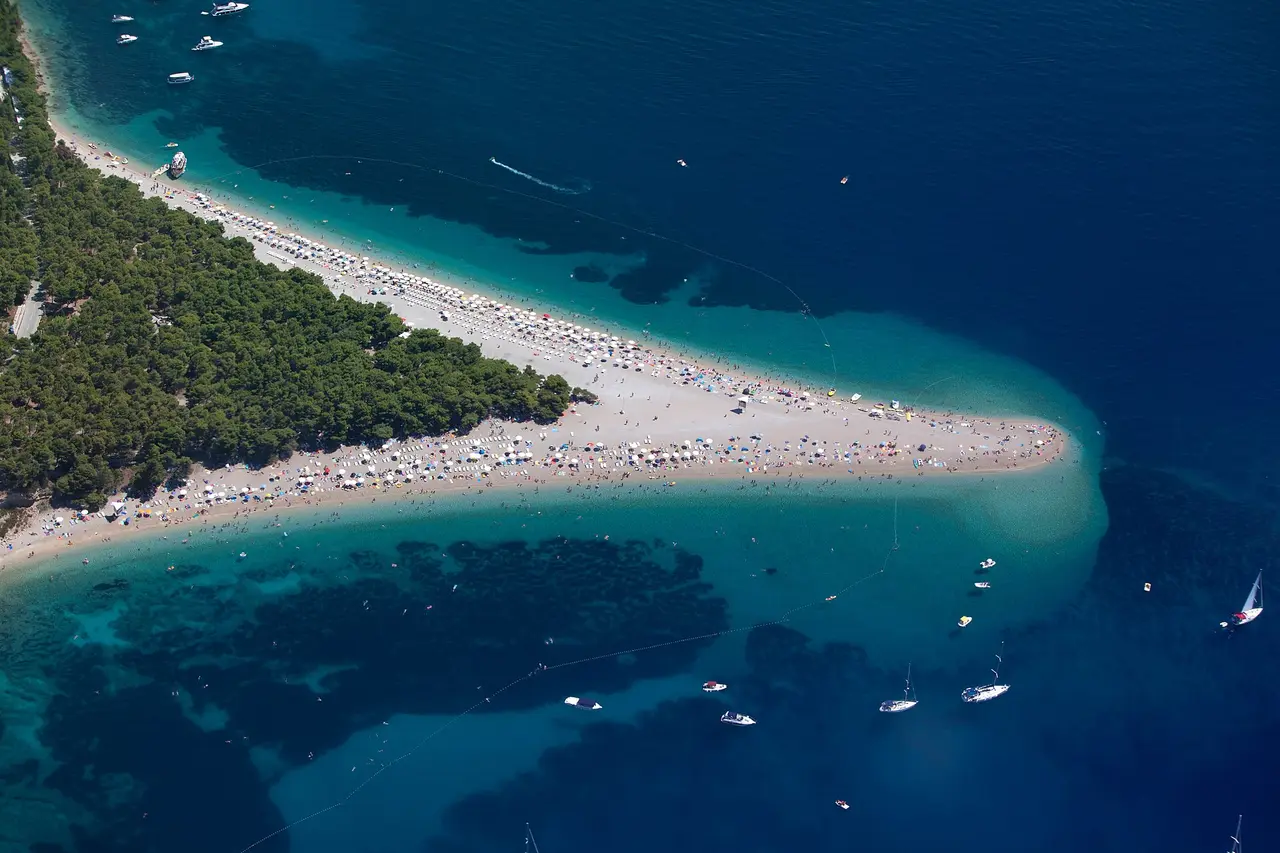
If you have the legs for it, hike or drive up Vidova gora (780 m), the highest peak of any Adriatic island, for a view down onto Zlatni rat and across to Hvar - which is where you are headed next.
Day 4-5: Hvar, the glamorous island
Cross to Hvar, about 40 km from Split and reachable on the Krilo or Jadrolinija catamaran that lands straight in Hvar town, about an hour’s crossing - foot passengers have it easy here, since it’s the car ferry that gets diverted to Stari Grad, some 20 km further round. Once you’re off the boat, the island takes it from there: a hilltop fortress called Fortica (Spanjola) looks down over a marble square, Europe’s oldest municipal theatre sits just off it, and by evening the marina fills with more yachts and party boats than almost anywhere else on the Adriatic. Save daylight hours for a taxi-boat out to the Pakleni islands, where the swimming beats anything in town.
Hvar earns a two-night stop, both because there’s a lot to do and because it is the pivot of this route: from here you can reach Vis directly on the new 2026 catamaran without backtracking. Our Hvar travel guide has the detail on beaches, the fortress and where to stay.
Day 6: Vis, the wild one
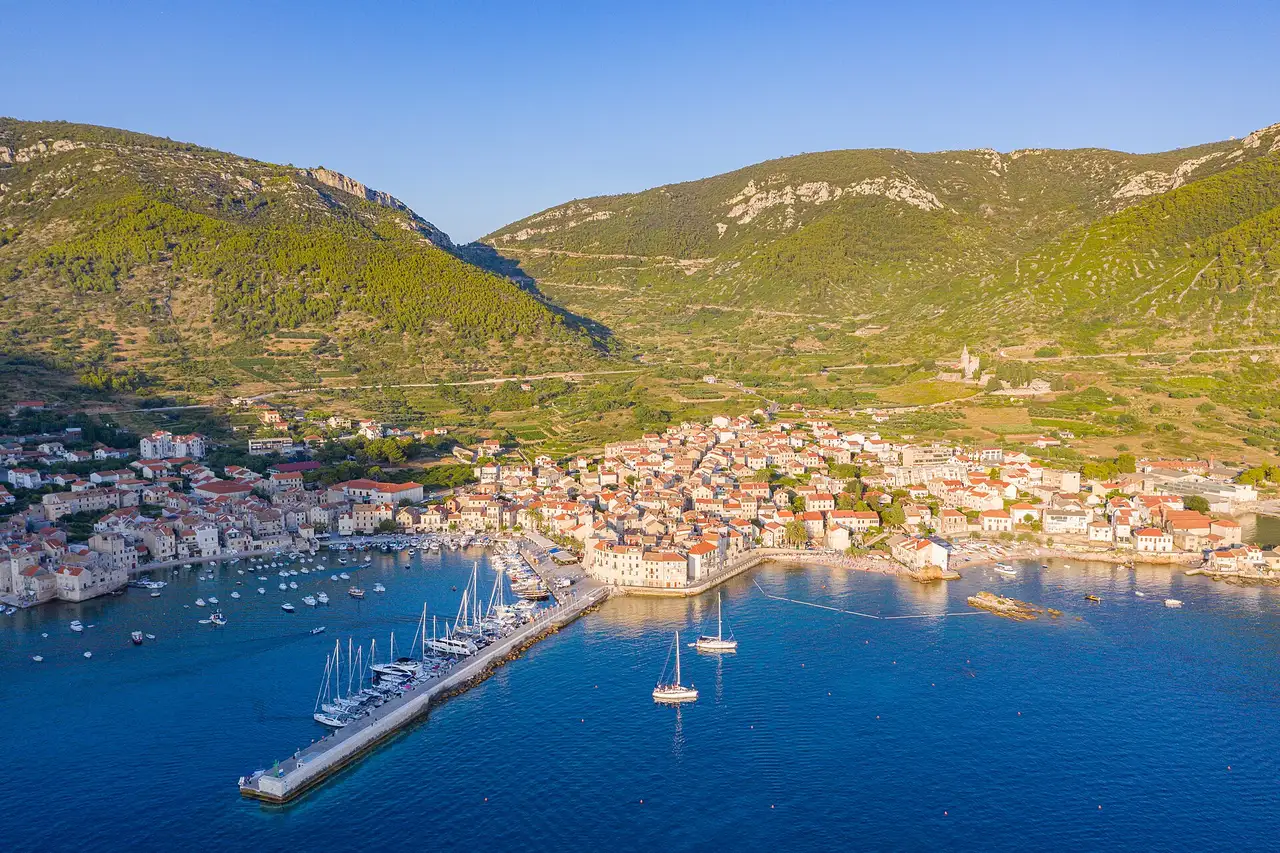
Take the morning catamaran from Hvar to Vis - about 40 minutes on the new Jadrolinija line. Vis is the connoisseur’s island: the furthest of the big islands from the coast, closed off as a Yugoslav military base until 1989, which is exactly why it dodged mass tourism and still feels like the Adriatic of decades ago. Base in Komiža, a steep little fishing town, or in Vis town on the other side.
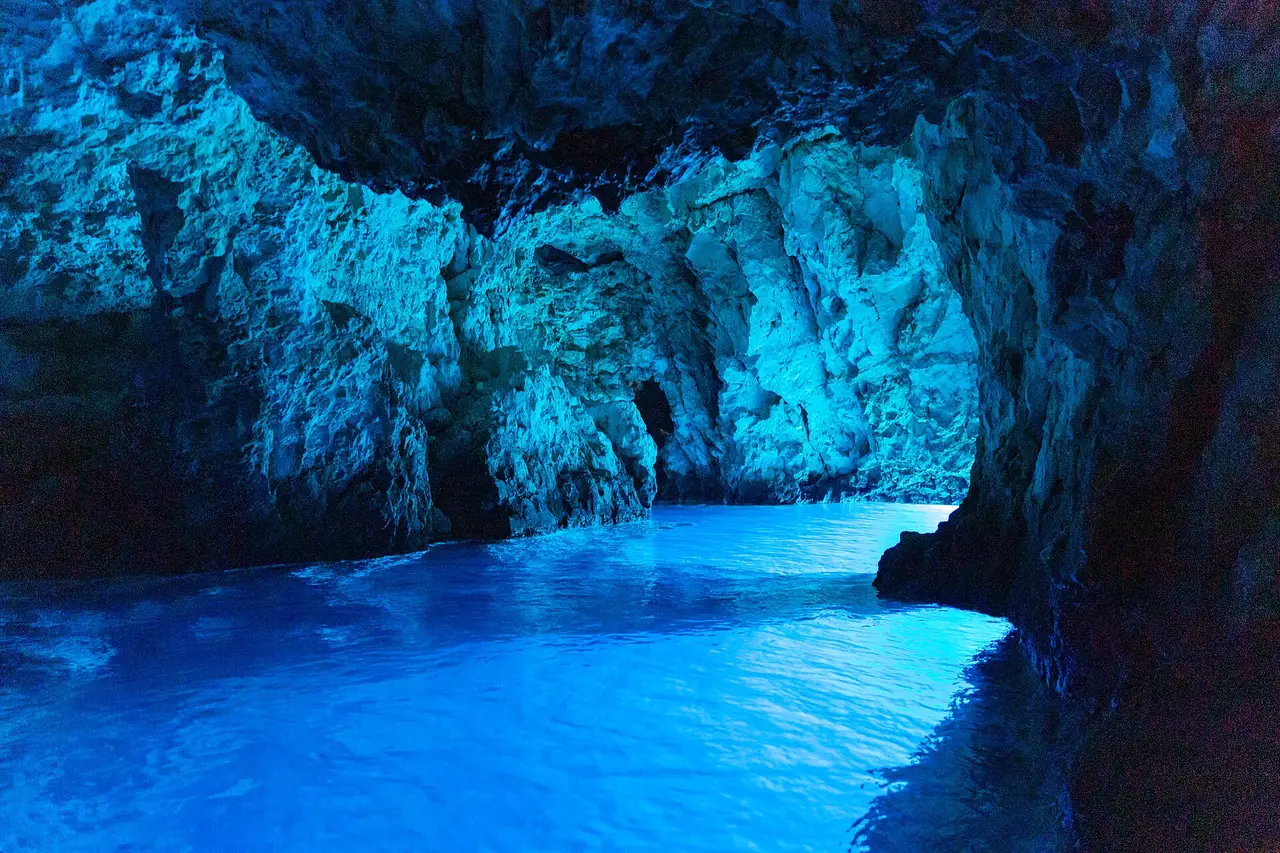
The headline day trip is the Blue Cave (Modra špilja) on neighbouring Biševo, a sea cave that glows an electric blue when the morning sun shines in through an underwater opening - go on an organised small-boat trip, and understand it can be closed in choppy weather, so keep the plan flexible. Round it out with the Stiniva cove, the WWII and Cold War military tunnels, and a glass of the island’s white Vugava wine.
Day 7-8: Korčula, and the leg that catches people out
Here’s the honest bit. There’s no direct ferry from Vis to Korčula. Your two options:
- Via Hvar (the usual way): catamaran Vis → Hvar town, then change onto the Split-Hvar-Korčula through-catamaran down to Korčula. Budget roughly 2 hours plus a wait between boats, and from about €15 all in. Check both operators’ times so the connection lines up - the layover can be short or long depending on the day.
- Via Split (the backtrack): if the Hvar connection doesn’t work on your dates, return to Split and take a car ferry to Vela Luka on the west of Korčula, or reach the island via the Orebić-Dominče car ferry from the mainland.
Korčula town rewards the effort of getting there: it’s a thumb of land barely wider than its own walls, and the street grid inside them was angled centuries ago into a herringbone pattern specifically to blunt the wind - one of those small planning tricks that shows up in every guidebook for a reason. Wander it looking for Venetian palace facades, the cathedral of St Mark, and the building where local legend insists Marco Polo was born. Once the old town is done, the wine takes over: both the island itself and the Pelješac peninsula across the strait grow Pošip whites and Plavac Mali reds, and there’s little to do here but slow down. Catch the Moreška if it’s summer - the sword dance is centuries old and still performed live in the square.
From Korčula you can carry on south on the Krilo Star to Mljet and Dubrovnik if you’ve more days, which dovetails neatly with our road route in the Dalmatia coast guide from Split to Dubrovnik.
Making the plan work
- One island move per day is plenty. Wind (the bura and jugo) can cancel catamaran sailings, so leave a buffer, especially before a flight home.
- Book the busy legs ahead in July-August - Hvar and Korčula catamarans fill up. Shoulder season (late May-June, September) is the sweet spot: warm sea, frequent boats, fewer people.
- The Vis window is narrow. The direct Hvar-Vis catamaran runs 19 June to 13 September only; outside that, reaching Vis means going via Split.
- Foot passenger beats car on this route. A vehicle ties you to the slower car ferries and their out-of-town ports; go on foot and the island towns are all walkable. Save the car for a land-based leg instead - our Istria road trip up north is where wheels really pay off. If you do want them here, read renting a car in Croatia first.
For the mechanics behind all this - car ferry versus catamaran, how to buy tickets, which company runs what - see our Croatia ferries guide and the wider Croatia island hopping overview. If you’re still weighing how long to spend, our how many days in Croatia overview compares trip lengths, and if you’re still choosing which islands to include, our Croatia islands ranked scores all 15 by beaches, ferries and cost. The routes hub has our other itineraries.
Opening hours, prices, timetables and seasonal services change through the year - the figures here are planning estimates, not quotes. Confirm current details with the operators and official sources before you go.
Route day by day
- Days on the road
- 8
- Distance
- ≈170 km
- Budget from
- 95 EUR
- Best season
- May, June, July, August, September
The route at a glance
-
Split
Route startstop ≈1440 min
The launch pad: Croatia's busiest ferry port, wrapped around the living Roman core of Diocletian's Palace. Every island in this plan is reached from here, so it is the natural base for night one.
Photo: Kris Martyn / Wikimedia Commons, CC BY-SA 4.0 ( source) -
Brač (Bol)
15 km from the startstop ≈1440 min
The closest island, 25-50 minutes out by catamaran or car ferry. Bol is home to Zlatni rat, the shifting pebble spit that is the most photographed beach in Croatia, plus Vidova gora, the highest island peak in the Adriatic.
Photo: Jeroen Komen / Wikimedia Commons, CC BY-SA 2.0 ( source) -
Hvar
40 km from the startstop ≈1440 min
The glamorous one: a marble piazza under a hilltop fortress, the oldest public theatre in Europe, and a marina where the yachts and party boats tie up. Off the harbour lie the Pakleni islands for swimming.
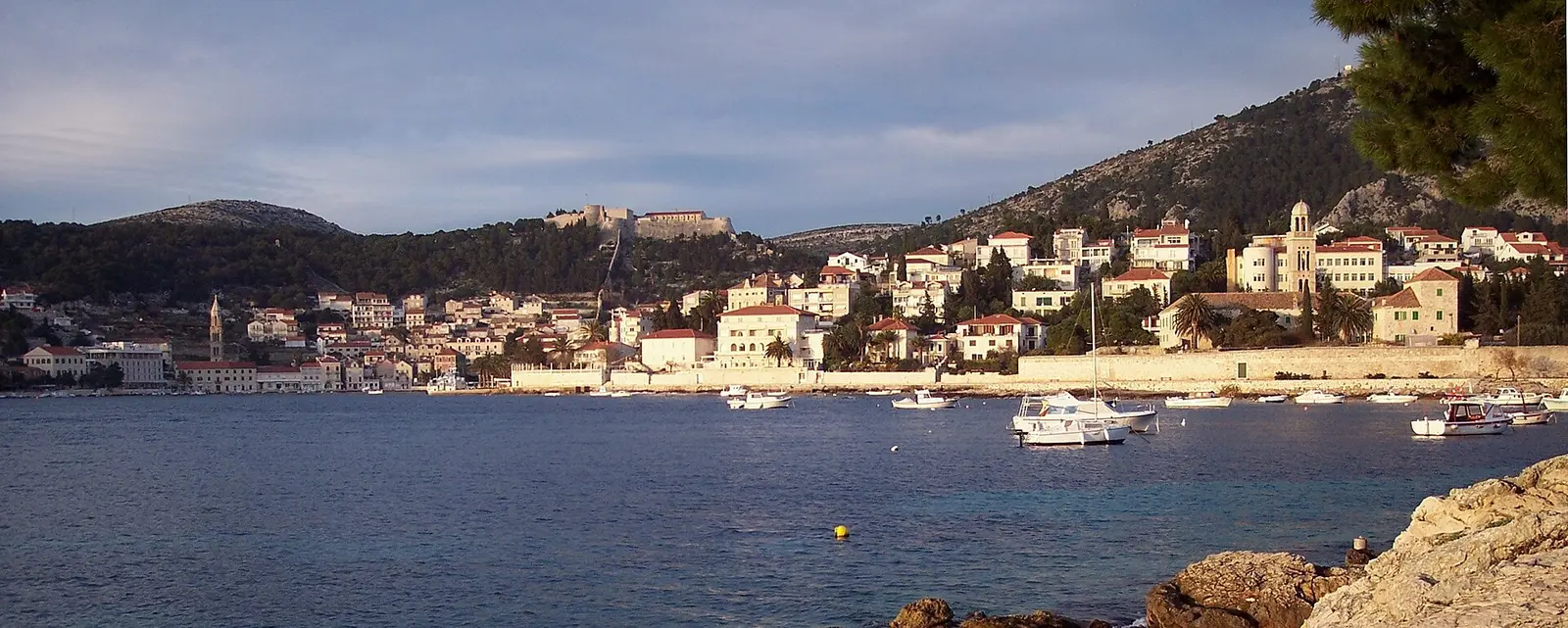
Photo: Adbar / Wikimedia Commons, CC BY-SA 3.0 ( source) -
Vis (Komiža)
80 km from the startstop ≈1440 min
The furthest and least developed major island - a Yugoslav military base until 1989, so it was spared the resorts. Komiža is a working fishing town; the Blue Cave on neighbouring Biševo is the day trip. A new 2026 catamaran links it directly from Hvar.
Photo: dronepicr / Wikimedia Commons, CC BY 2.0 ( source) -
Korčula
170 km from the startstop ≈1440 min
The finale: a walled town on a small peninsula, often called a "little Dubrovnik", with a herringbone street plan and a Marco Polo legend. Reached via a change at Hvar, or by backtracking through Split. Pošip and Plavac Mali wine country all around.
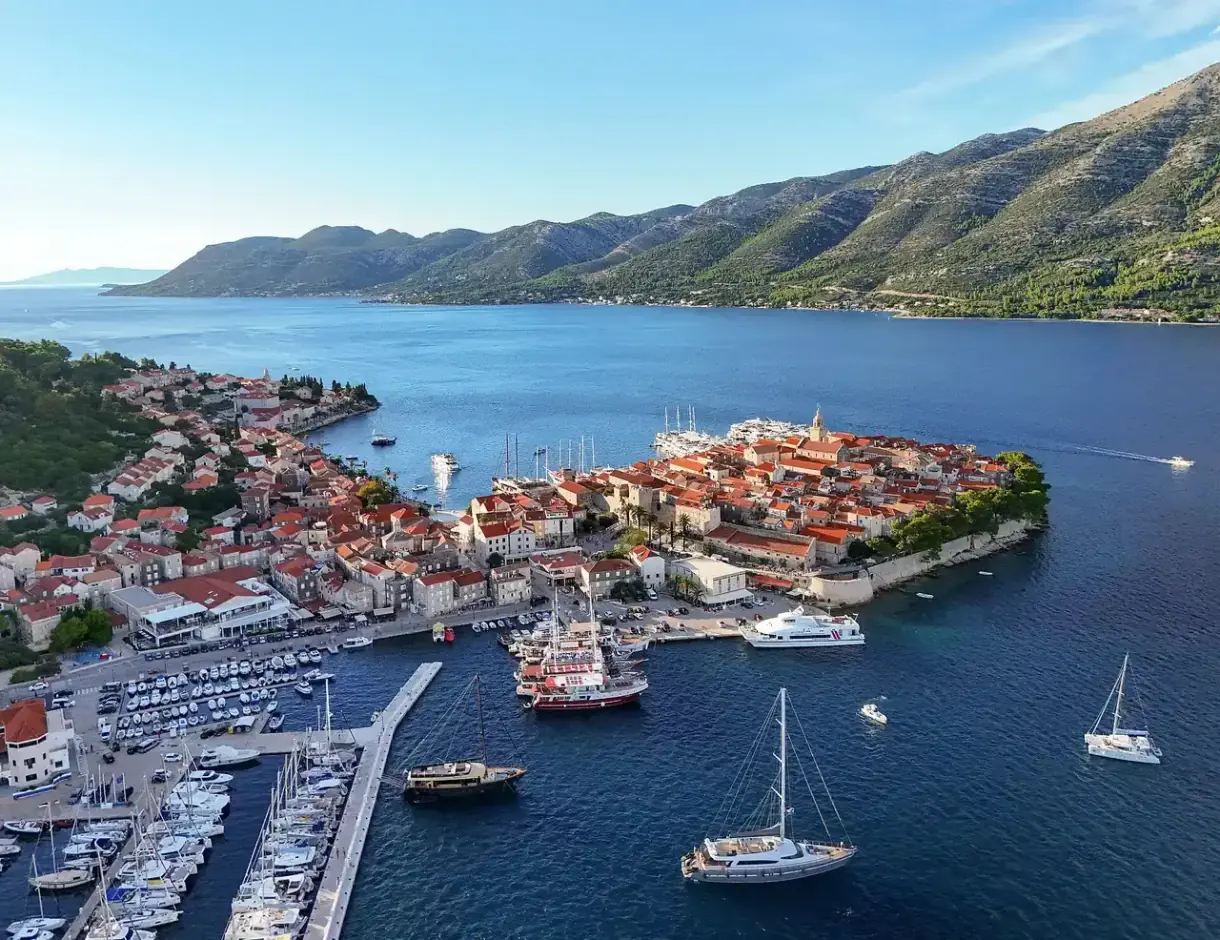
Photo: Quintin Soloviev / Wikimedia Commons, CC BY 4.0 ( source)
Route map
The map with stops loads on click - to keep the page lightweight.
The map didn’t load. Check your connection and refresh the page.