
Things to Do in Pula: The Best-Preserved Roman Arena
See Pula's Roman Arena - the only amphitheatre with its full outer wall, seating 23,000 - plus the Forum, Zerostrasse tunnels and Brijuni day trips.
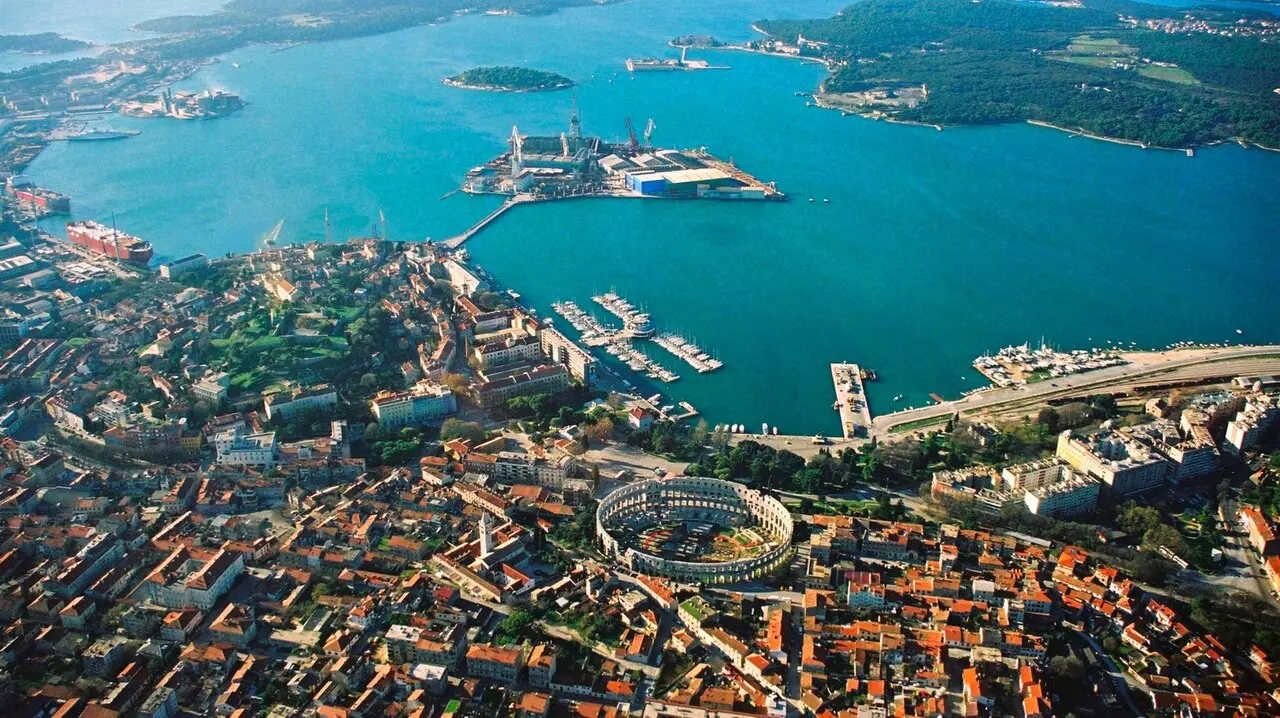
Pula is the biggest city on the Istrian peninsula and the one place in Croatia where you walk out of a café and straight into a nearly intact Roman amphitheatre. The headline sight is the Arena - one of the best-preserved Roman amphitheatres anywhere, and the only one that still has its whole outer wall standing - but Pula packs a full Roman town around it: the Forum with its Temple of Augustus, the Arch of the Sergii, and, layered underneath, the Zerostrasse tunnels dug by the Austro-Hungarian navy in the First World War. Croatia uses the euro (€) and has been in the Schengen Area since 1 January 2023, so for most visitors arrival is formality-free.
South of town, Cape Kamenjak is the wild swimming day trip.
What gives Pula its odd character is its double life: this is a working shipyard city, cranes and all, that happens to wrap its daily errands around a nearly intact Roman amphitheatre and a scatter of temples and arches. Add the beaches and the wild cape just south - Brijuni and Cape Kamenjak - and you get a city break that feels lived-in rather than staged.
How long to spend in Pula
A single full day covers the Roman core comfortably - the Arena, the Forum, the arch and the tunnels are all within a ten-minute walk of each other, and you can see them in a morning. Give it two days and you can add a beach afternoon on the Verudela peninsula and a half-day boat trip to Brijuni, or the wild cape at Kamenjak. If you’re basing an Istrian trip here, three or four nights lets you fold in Rovinj up the coast and the hill-towns inland - our Istria road trip links Pula, Rovinj and Motovun into one 3-4 day loop. Unlike the Dalmatian ports further south, Pula is a real working city rather than a resort, so it stays open and lived-in outside the summer peak - spring and early autumn are genuinely pleasant here.
The Arena: Pula’s Roman amphitheatre
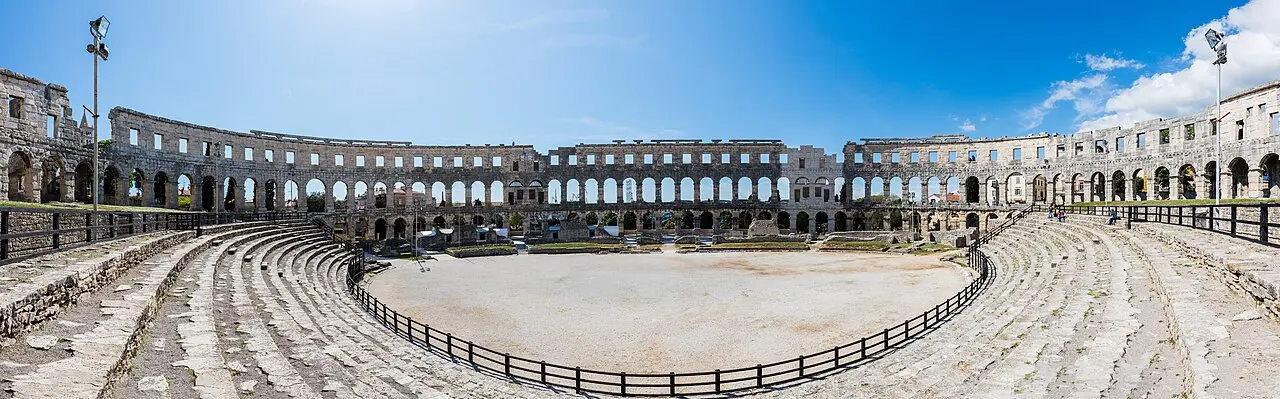
The Arena was built between 27 BC and AD 68, under the emperors Augustus and Vespasian, and finished in the reign of Titus. It once seated roughly 23,000 spectators for gladiator fights and animal hunts. What makes it exceptional isn’t size alone - it’s among the six largest surviving Roman arenas - but completeness: it’s the only one that keeps its entire outer wall and all four of its side towers. Ringed by 72 arches on two tiers and rising about 32 metres out of local white limestone, it looks, from the harbour, almost as it did when the last gladiator left.
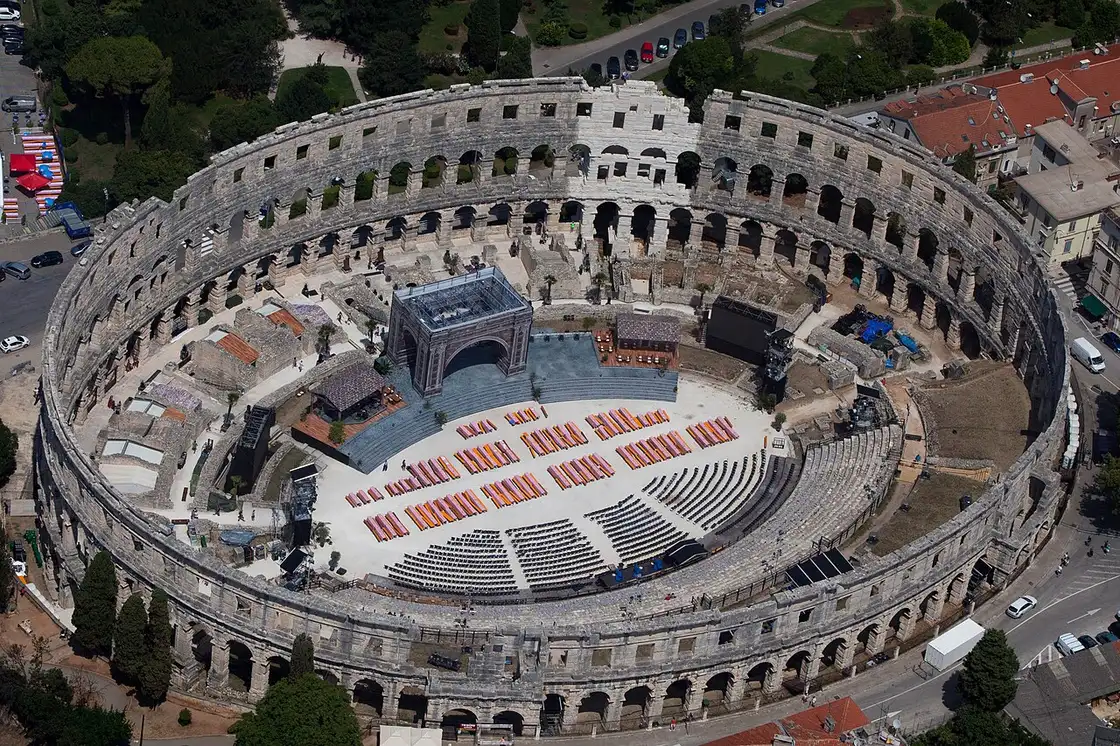
Don’t just photograph it from outside - go in. The best part is often overlooked: the underground passages beneath the arena floor, where animals and gladiators once waited, now hold a small exhibition on Istrian olive oil and wine, with reconstructed Roman presses and amphorae. It’s cool down there on a scorching afternoon, which is reason enough. Above ground, the Arena earns its keep as a concert and festival venue: the Pula Film Festival, Croatia’s oldest, screens here under the stars every summer, and the seating drops to a few thousand for opera, rock and classical nights. If you’re in town during an event, seeing the place lit up and full is worth far more than the daytime ticket - check the current programme before you book, as dates shift year to year.
Buy at the entrance or online; prices and hours change by season, so confirm the current figures on the Visit Pula site rather than trusting an old number.
The Forum, the Temple of Augustus and the Arch
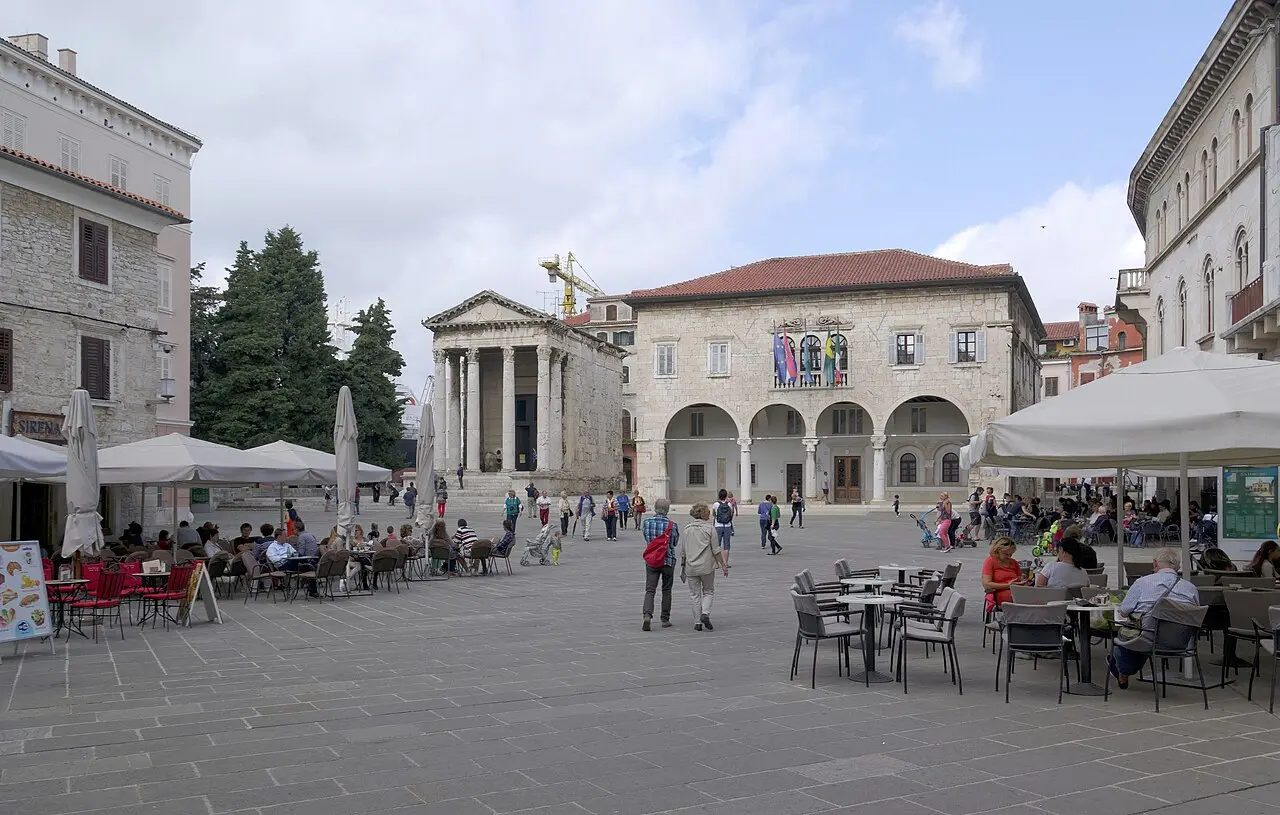
Pula’s Forum has been the town’s main square for two thousand years - Roman marketplace, then medieval assembly, now the place for a morning coffee under the arcades. At its head stands the Temple of Augustus, a slim, columned Roman temple built around 2 BC-AD 14 to the goddess Roma and the emperor. Flattened by a bomb in 1944, it was rebuilt stone by stone and now shelters a small collection of ancient sculpture. Next to it, the arcaded town hall grew straight out of a second Roman temple - a neat illustration of how Pula never stopped using its old buildings.
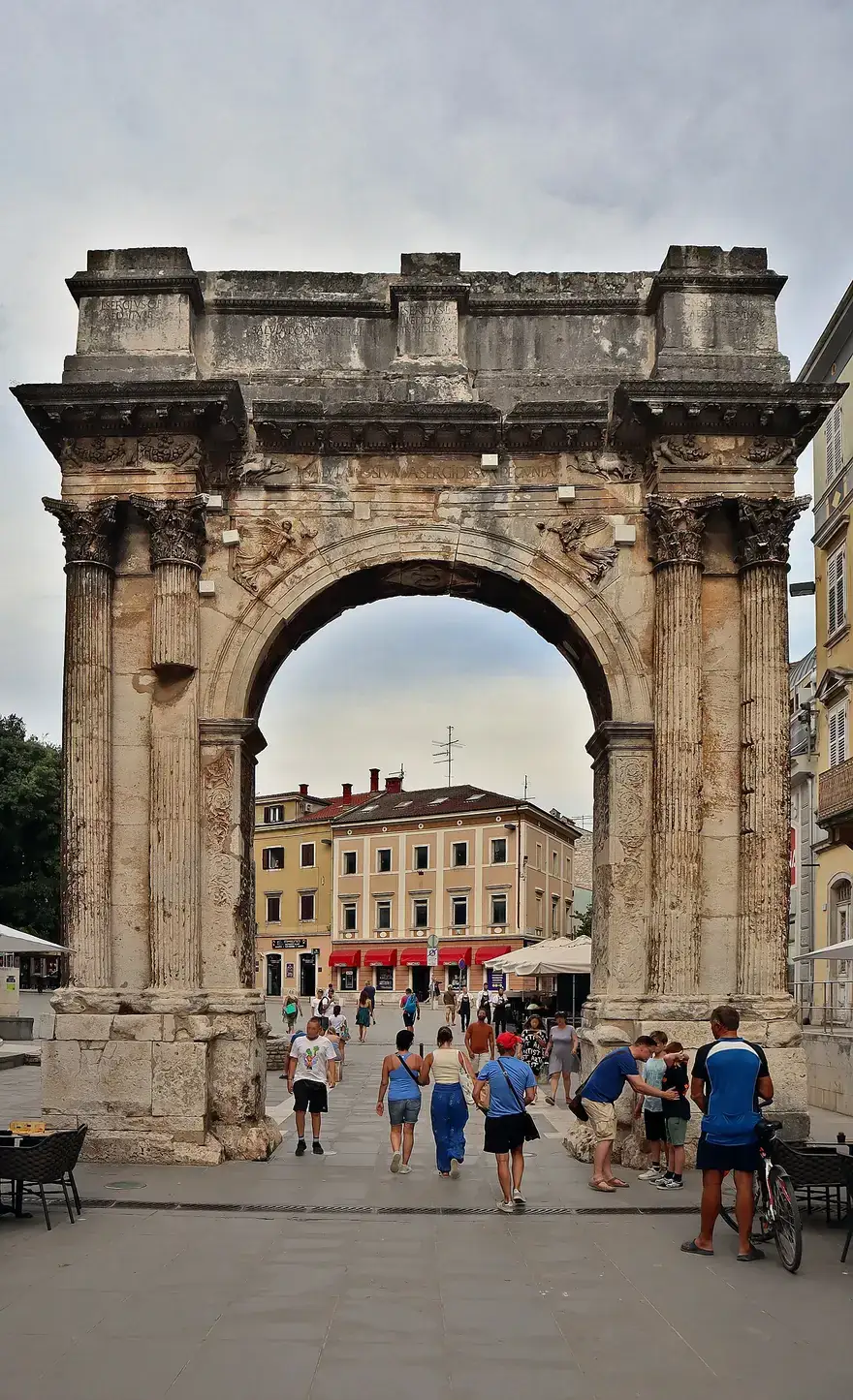
A short walk away, the Arch of the Sergii - a triumphal arch put up around 27 BC by a leading local family - marks the old entrance to the town. The Irish writer James Joyce taught English a few steps from it in 1904-05, disliked the place, and left within months; there’s a bronze statue of him at a café table nearby. Look, too, for the Gate of Hercules, the oldest Roman monument in Pula, with the head of Hercules and his club carved into the keystone.
Zerostrasse and the naval city
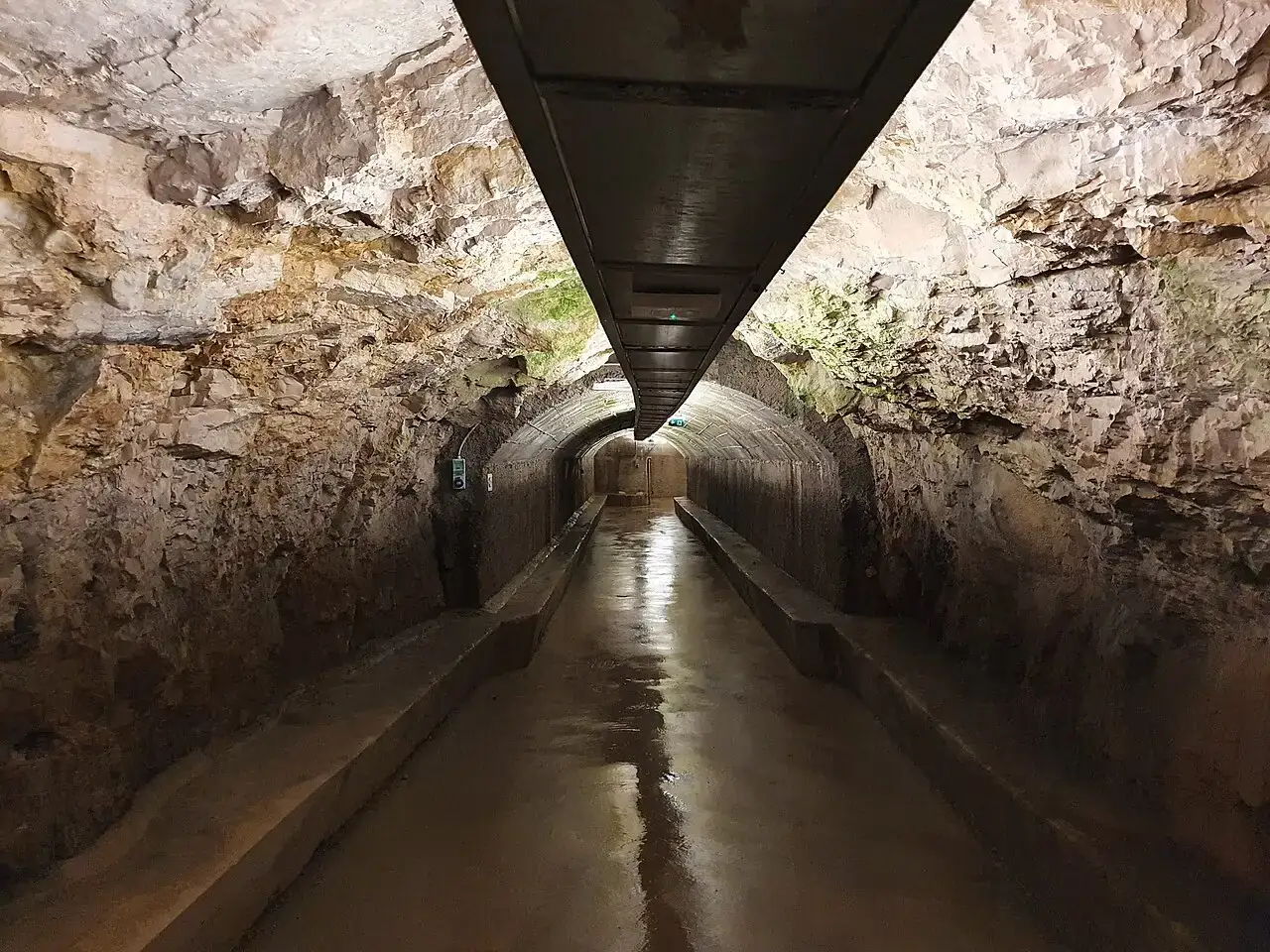
Pula’s second story isn’t Roman but Austro-Hungarian. From the 1850s until 1918 this was the chief naval port of the Habsburg Empire, and that century left its own marks - grand barracks, a fortified harbour, and, most memorably, Zerostrasse: a network of tunnels bored into the hill under the town centre during the First World War to shelter civilians and store ammunition. Several passages are open to walk, connected by a lift, and they stay cold and echoing even in August.
The Kaštel, the star-shaped Venetian fortress crowning the central hill, houses the Historical and Maritime Museum of Istria and gives the best rooftop view over the Arena and the port. It’s a steep but short climb from the Forum, and it ties the two Pulas - Roman and imperial - together in one panorama.
Beaches around Pula
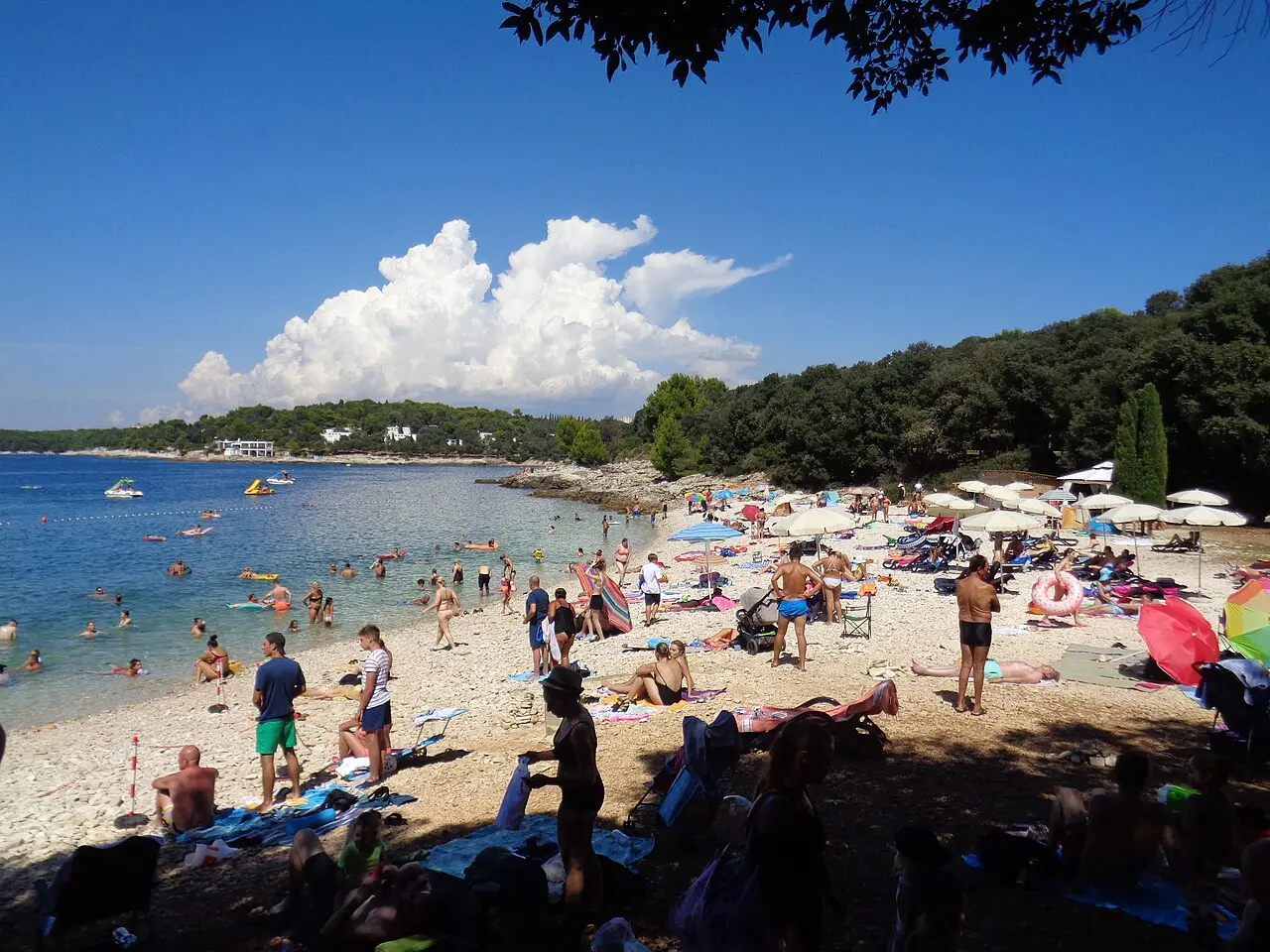
Pula is a city with beaches on its doorstep. The nearest cluster is the Verudela peninsula, a few kilometres south, where pine-shaded coves like Ambrela and Hawaii (Havajska) drop into clear, shallow water - busy in July, but easy to reach by local bus. As almost everywhere in Croatia, expect pebble and rock rather than sand, so water shoes earn their place in your bag.
Day trips: Brijuni and Cape Kamenjak
The two great escapes from Pula pull in opposite directions - one polished, one wild.
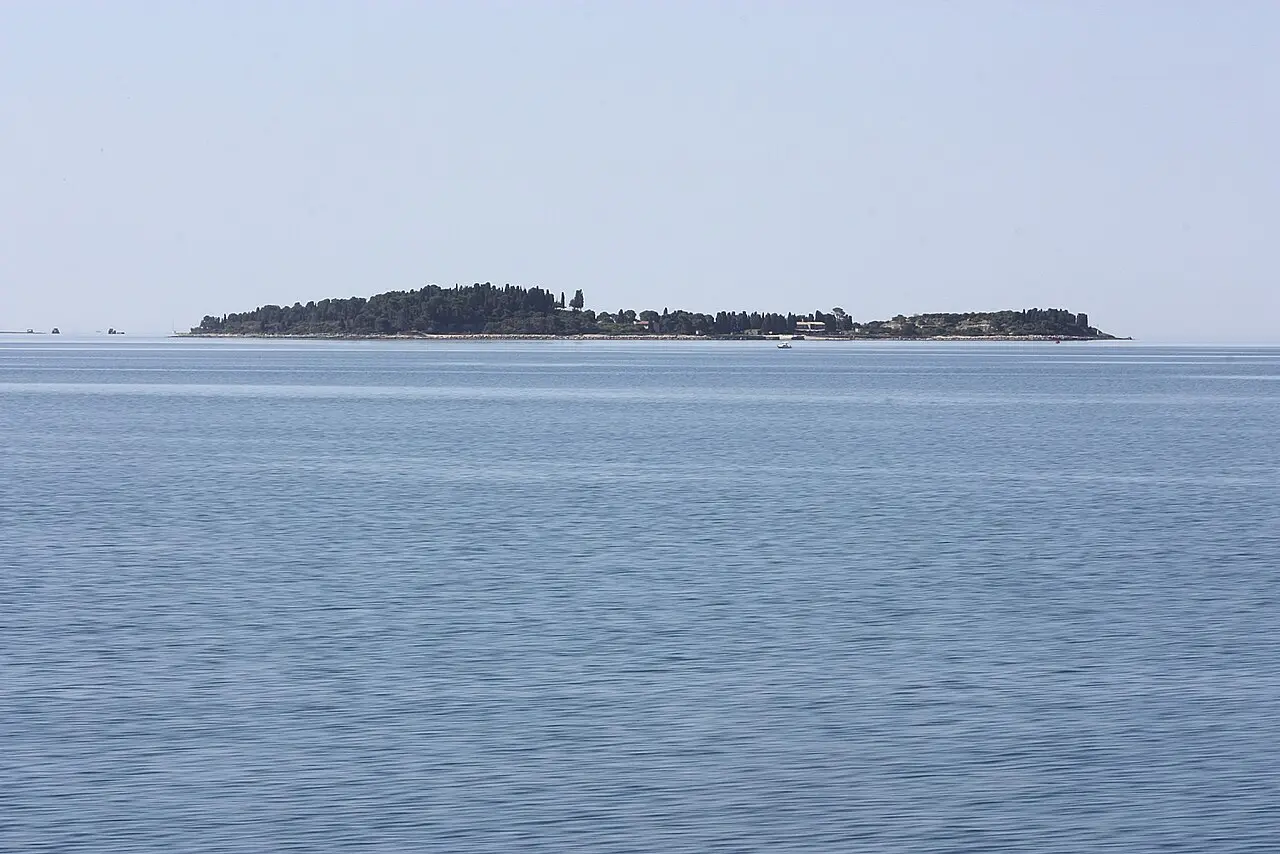
Brijuni National Park is an archipelago of 14 islands just offshore. You reach the main island, Veliki Brijun, by a short ferry from Fažana (about 8 km northwest of Pula), and it is unlike anywhere else on the coast: Roman and Byzantine ruins, an ancient olive tree, dinosaur footprints in the rock, and a safari park stocked with animals gifted to Tito, who kept his summer residence here and hosted world leaders on the islands. It’s an organised, half-day-to-full-day outing, and the ticket carries a fixed departure time that the park won’t move - our Brijuni National Park guide has the 2026 fares, the Fažana sailing times and the choice between the guided ticket and the cheaper app one.
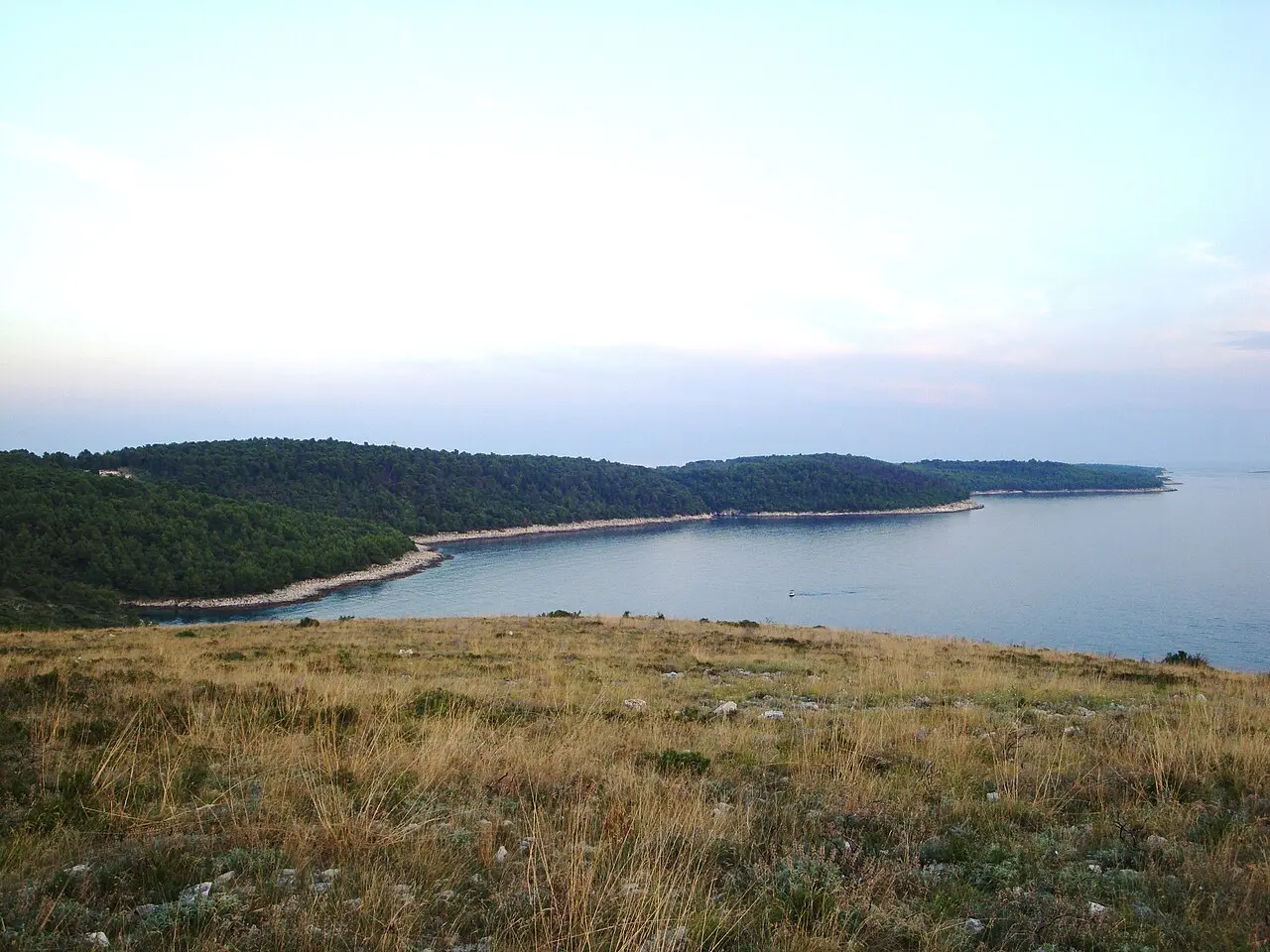
At the peninsula’s southern tip, Cape Kamenjak (Rt Kamenjak) is the opposite: a protected reserve of low cliffs, hidden coves and scrubland with almost no development, reached through the village of Premantura about 10 km south. There are no resorts and no big car parks - you cycle or walk the dirt tracks to your own patch of rock and swim in some of the clearest water in Istria. Bring everything you need, including shade and water; there’s little on the cape but the sea.
Where to stay
Pula spreads out more than a compact old town like Rovinj up the coast, so where you base yourself shapes your days:
| Area | Good for | Notes |
|---|---|---|
| Old town / around the Forum | Walking to every Roman sight | Atmospheric, central; some evening noise, limited parking |
| Verudela & Stoja (south) | Beach holiday, resorts and apartments | Big hotels and campsites by the coves; bus into town |
| Near the Arena / harbour front | First or last night, transit | Handy for buses and the ferry to Fažana; mixed streets |
| Premantura (far south) | Kamenjak, quiet and outdoorsy | Village base for the reserve; you’ll want a car or bike |
Pula fills up in July and August, so book early and compare a central base against a beach one before you decide. For what a few days here costs - food, tickets, transport - see is Croatia expensive?.
How to get to Pula
Pula Airport (PUY) is about 6 km northeast of the centre and busiest in summer, with seasonal flights from across Europe. By land, Pula is at the end of the Istrian motorway: roughly 3-3.5 hours by car or bus from Zagreb via Rijeka and the Učka tunnel, and about an hour up the coast to Rovinj. One thing to plan around: Istria is not on the Dalmatian ferry network, so you can’t island-hop to Split or the southern islands from here by boat - those trips start further down the coast. For moving around the country, see getting around Croatia; if you want the freedom to reach Kamenjak and the hill-towns, renting a car in Croatia makes most sense in Istria.
When to go and practical tips
- When to come. July and August are hot, lively and dearest, and the Pula Film Festival lands in that window; late May to June and September bring warm sea, long days and far thinner crowds. See the best time to visit Croatia for the month-by-month picture.
- Money. Croatia uses the euro (€). Cards work almost everywhere, but keep some cash for beach kiosks, small cafés and the Brijuni or Kamenjak entry.
- Tickets. Prices and opening hours for the Arena, the Temple of Augustus, Zerostrasse and the museums change by season - confirm current details on the Visit Pula site before you go.
- Getting around. The Roman core is walkable; local buses reach Verudela, and you’ll want wheels for Kamenjak. Summer afternoons in the sun are fierce - the Arena underground and Zerostrasse are the cool boltholes.
Plan the rest of your trip
Pula is the anchor of an Istrian week rather than a Dalmatian island run. Pair it with Rovinj along the coast, then use the cities hub for our other Croatian city guides - Split further south, or the capital Zagreb inland. For timing and budgets, see the best time to visit Croatia and is Croatia expensive?.
Opening hours, prices, timetables and seasonal services change through the year - the figures here are planning estimates, not quotes. Confirm current details with the operators and official sources before you go.
Photos
On the map
The map loads on click - to keep the page lightweight.
The map didn’t load. Check your connection and refresh the page.
Good to know
The Forum, the old-town streets and the Arch of the Sergii are open public space and free to walk. The Arena, the Temple of Augustus, Zerostrasse and the museums are ticketed, with seasonal hours - buy at the entrance or online, and confirm current prices and opening times on the Visit Pula tourist-board site before you go, as they change by season.
Details checked: July 3, 2026
Distance ≈270 km · ~3-3.5 h by car
- Zagreb ≈270 km · ~3-3.5 h by car By motorway via Rijeka and the Učka tunnel; Pula sits at the southern tip of the Istrian peninsula, reached by road - there are no Dalmatian island ferries here.
Read also

Cities · 12 min read
Motovun Travel Guide: Walls, Truffles & Teran
Verified · September 4, 2026Motovun hilltown guide: walls ticket €5 in 2026, St Stephen, Teran cellars, Mirna views, parking climb, and why the film festival no longer plays here.

Cities · 10 min read
Dugi Otok & Sakarun Beach: Island Day-Trip Guide
Updated · August 31, 2026Day-trip Dugi Otok from Zadar: Jadrolinija ferry to Brbinj, Sakarun beach, Veli Rat lighthouse, and Telašćica cliffs - DIY or boat tour.

Cities · 10 min read
Opatija Travel Guide: Habsburg Riviera & Lungomare
Verified · August 25, 2026Opatija on the Kvarner Gulf: the 10 km Lungomare, Villa Angiolina museum, Maiden with the Seagull, and how it differs from Rijeka and Istria.

Cities · 10 min read
Omiš Travel Guide: Pirates, Zipline & Cetina Canyon
Verified · August 21, 2026Omiš is 25 km from Split: Promet bus €2.50, Mirabela €4-6, Cetina rafting and an 8-line zipline over the canyon.