
Trogir Travel Guide: A UNESCO Island Old Town
What to see in Trogir: the UNESCO island old town, the cathedral of St Lawrence and Radovan portal, Kamerlengo fortress, the Riva and Split Airport.
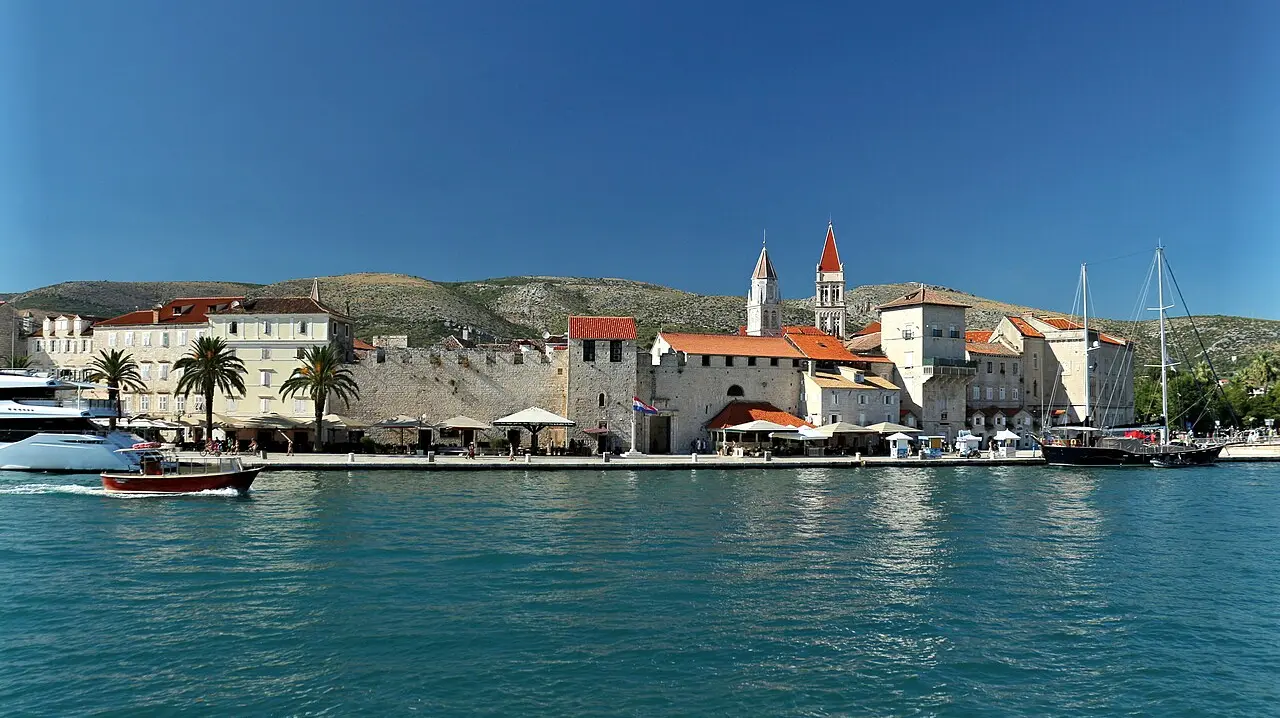
Trogir is a whole medieval old town packed onto a small island you can walk end to end in under an hour - and the entire historic core is a UNESCO World Heritage Site, listed as the best-preserved Romanesque-Gothic complex in Central Europe. Its showpiece is the cathedral of St Lawrence, whose west door, the Radovan portal of 1240, is one of the finest medieval carvings in this part of Europe. Because Split Airport sits barely 5-6 km away, Trogir also makes the ideal first or last night of a Dalmatian trip - you land, drop into a walled town on the sea, and skip the sprawl of the city. Croatia uses the euro (€) and has been in the Schengen Area since 1 January 2023, so for most visitors arrival is formality-free.
Trogir’s quiet superpower is location: a whole UNESCO old town on its own little island, barely 5-6 km from Split Airport, which makes it the smartest first or last night of a Dalmatian trip - you land, walk straight into a walled medieval town on the water, and skip the sprawl of Split entirely. It’s small enough to see in a day, good enough to wish you had longer.
How long to spend in Trogir
The island has been settled since antiquity - it was founded as Tragurion by Greek colonists from Vis in the 3rd century BC, and later grew under Rome, Byzantium and Venice, which is why so much stone history is packed into so small a space. You can see the essentials of Trogir in half a day - the cathedral and its portal, a climb up the bell tower or Kamerlengo, and a slow lap of the lanes and the Riva. That is exactly why it’s such a good airport bookend: arrive on an evening flight, sleep on the island, and give it a relaxed morning before moving on. Stay a night or two and it becomes a calm base for the coast, with the beaches of Čiovo over the bridge and boats to the nearby islands. Many people pair it with Split, half an hour east, seeing the two together rather than choosing between them.
The cathedral of St Lawrence and Radovan portal
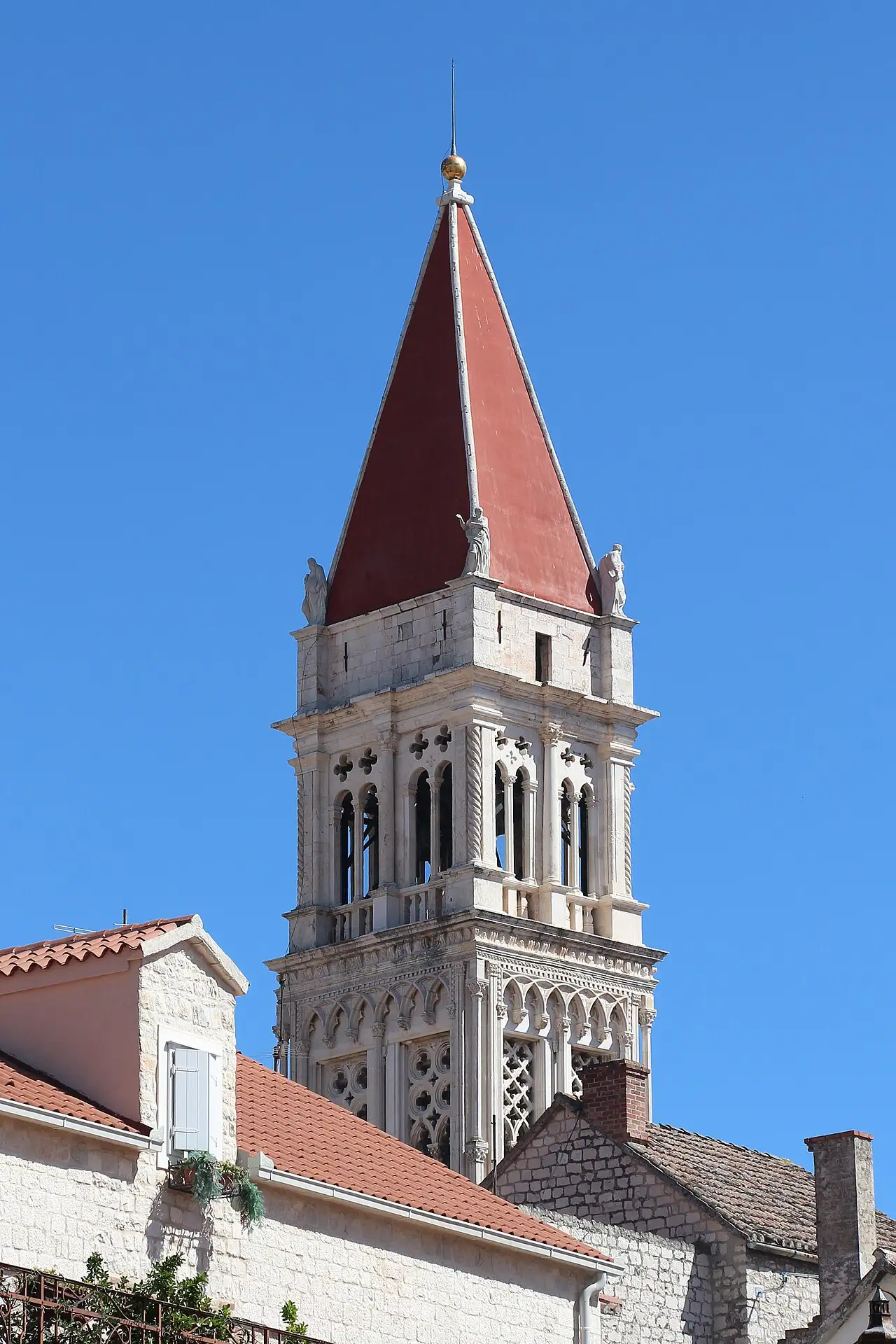
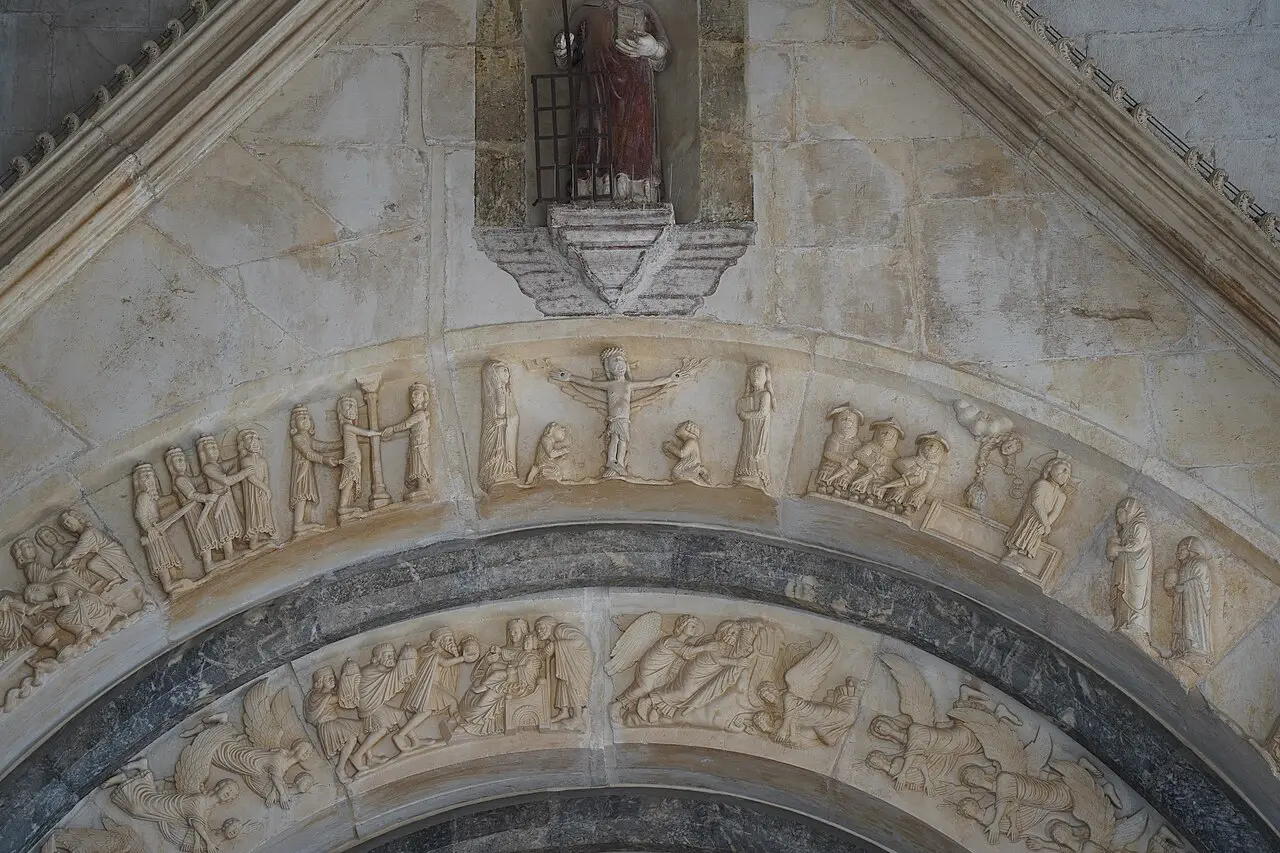
The cathedral of St Lawrence (katedrala sv. Lovre) is a three-naved Romanesque-Gothic basilica begun around 1200 and finished, tower and all, over the following centuries. The reason to seek it out is the west portal, carved by Master Radovan in 1240 - often called the most important medieval doorway in this part of Europe. Its stone jambs and archivolts are alive with figures: Adam and Eve stand on the flanking columns, the Nativity fills the lunette, and around them run scenes of ordinary medieval life and the labours of the months - hunting, slaughtering a pig, working the fields.
Inside, the highlight is the Renaissance chapel of St John of Trogir, one of the finest of its kind in Dalmatia. The bell tower, built in stages between the 14th and 16th centuries and mixing Gothic below with Renaissance above, can be climbed for a close-up view over the rooftops. The cathedral, its tower and the treasury are ticketed with seasonal hours; confirm current details before you go.
Kamerlengo fortress and the town walls
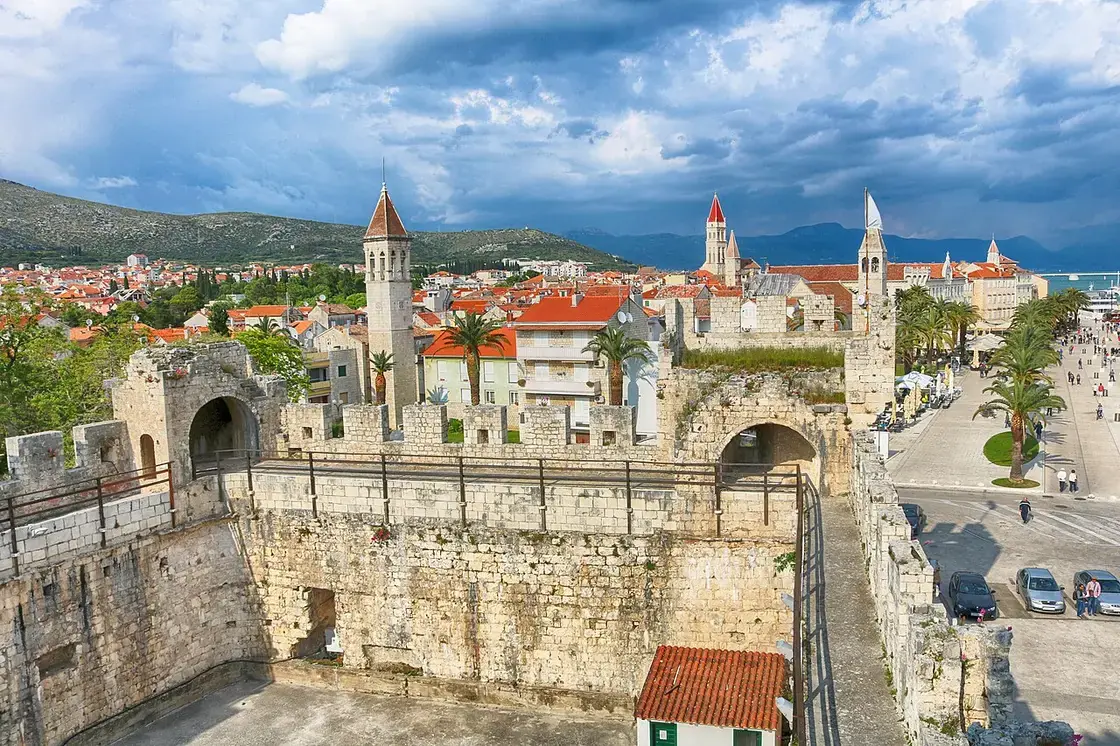
At the western tip of the island stands Kamerlengo (Kaštel Kamerlengo), a 15th-century fortress built by the Republic of Venice to guard the harbour. Its high stone walls and round tower are open to climb, and the ramparts give the best all-round view of the old town, the channel and the island of Čiovo across the water. In summer the courtyard doubles as an open-air stage for concerts and film screenings - worth checking what’s on if you’re staying the evening.
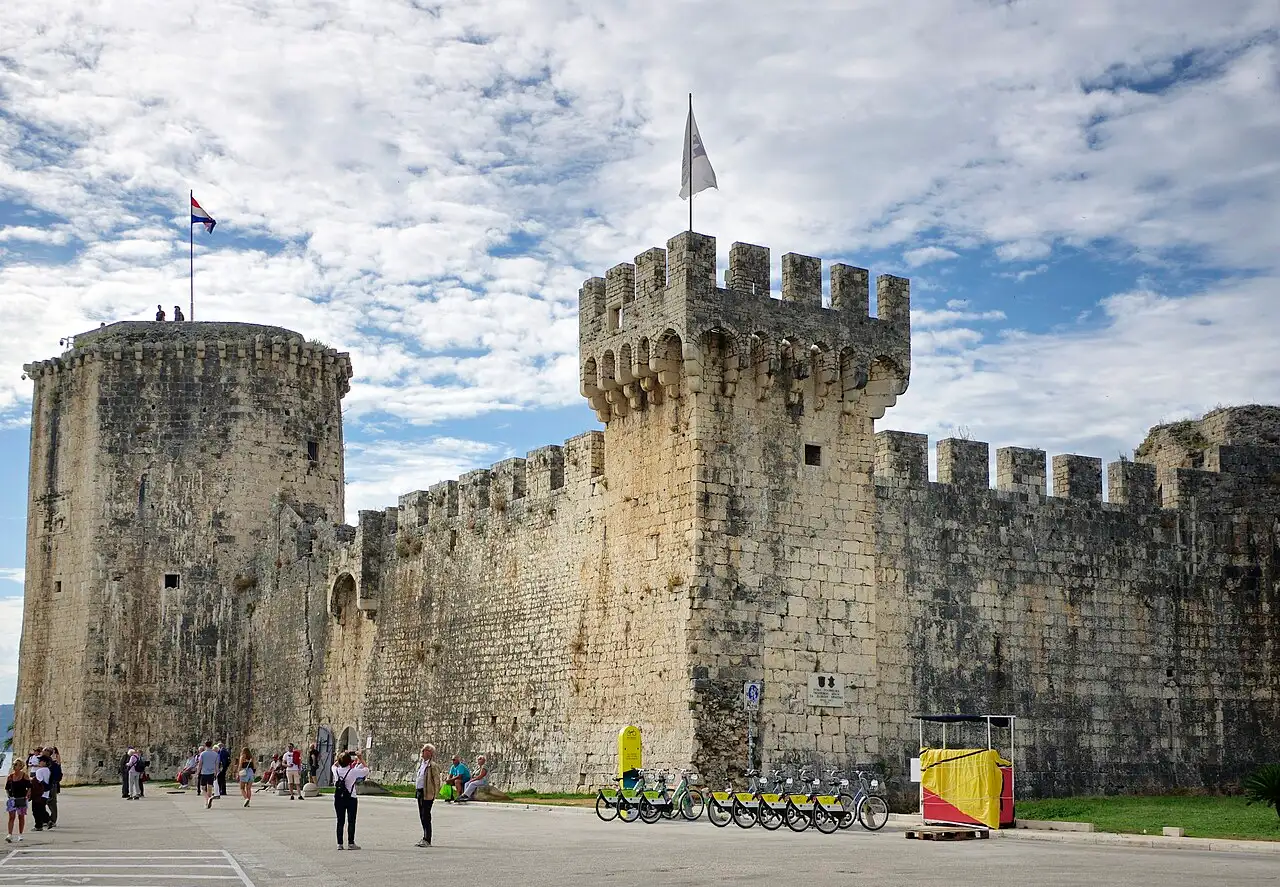
From the fortress you look back over a dense tangle of stone - bell towers, terracotta roofs and the Riva curling along the south shore. It’s the clearest way to grasp just how compact this island town really is.
The main square and Venetian palaces
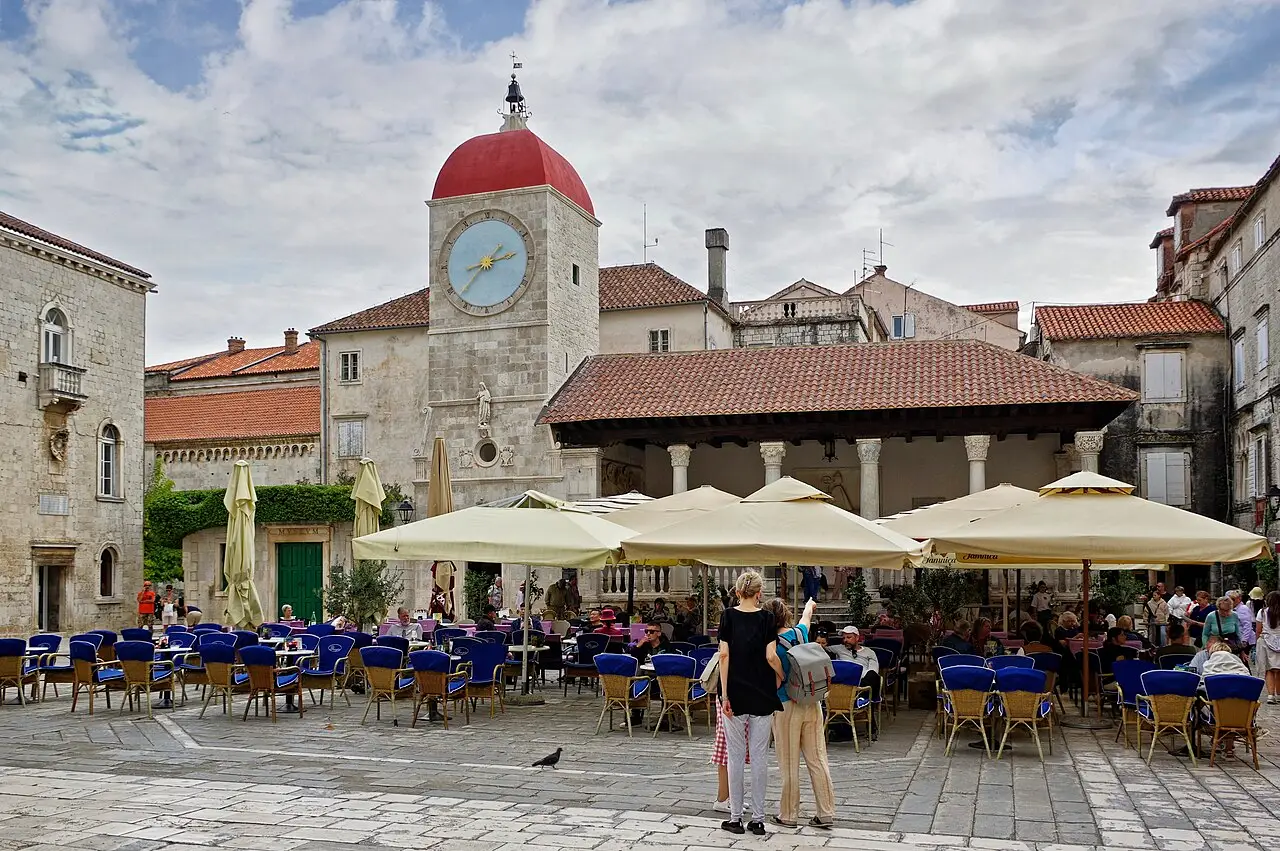
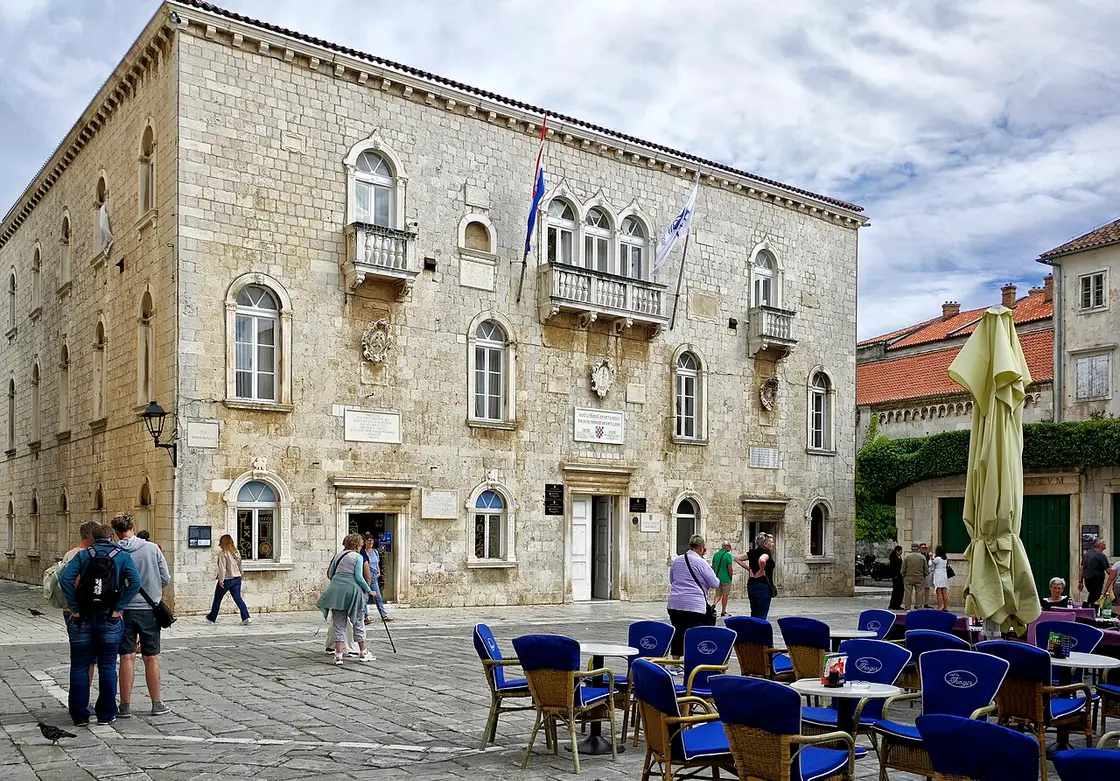
The heart of the island is John Paul II Square, the small cathedral square where the town’s grandest buildings cluster: the cathedral, the town loggia (an open 13th-century arcade of justice), the clock tower and the Čipiko Palace, a Venetian-Gothic noble house facing the cathedral door. Café tables spread across the pale stone, and it’s the natural place to sit and take in the carved facades.
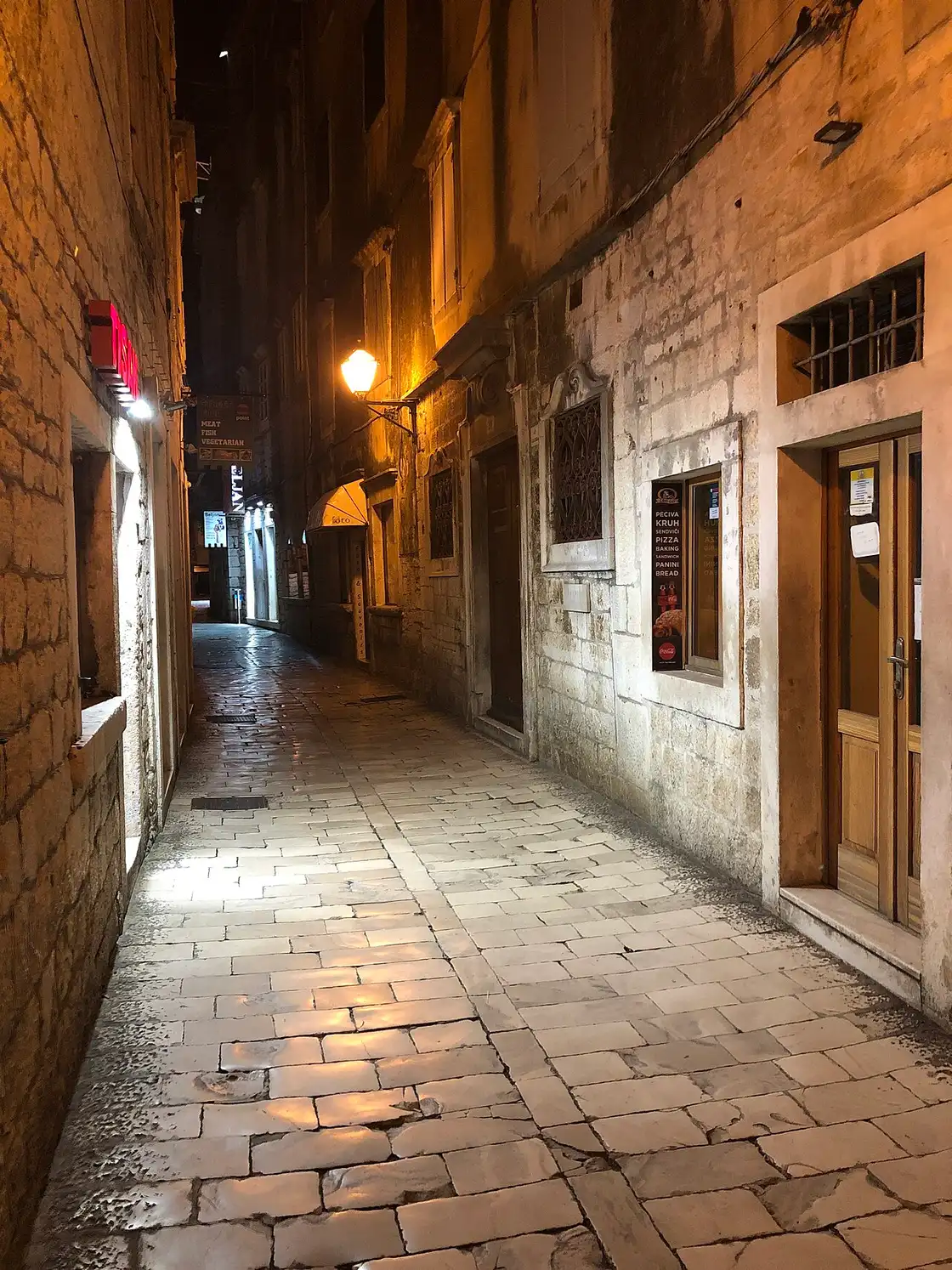
Away from the square, the town is a maze of narrow stone lanes that reward aimless wandering - quiet by day when the tour groups thin out, and quietly beautiful at night when the paving stones shine under the lamps.
The Riva and the island setting
Along the south side of the island runs the Riva, a palm-lined seafront promenade facing the channel and the island of Čiovo, lined with café terraces and moored yachts. It’s Trogir’s social spine - the place for an evening stroll - and a reminder of the town’s odd geography: the old town sits on a small island, cut off from the mainland by a narrow man-made canal and joined by bridges to the mainland on one side and to Čiovo on the other.
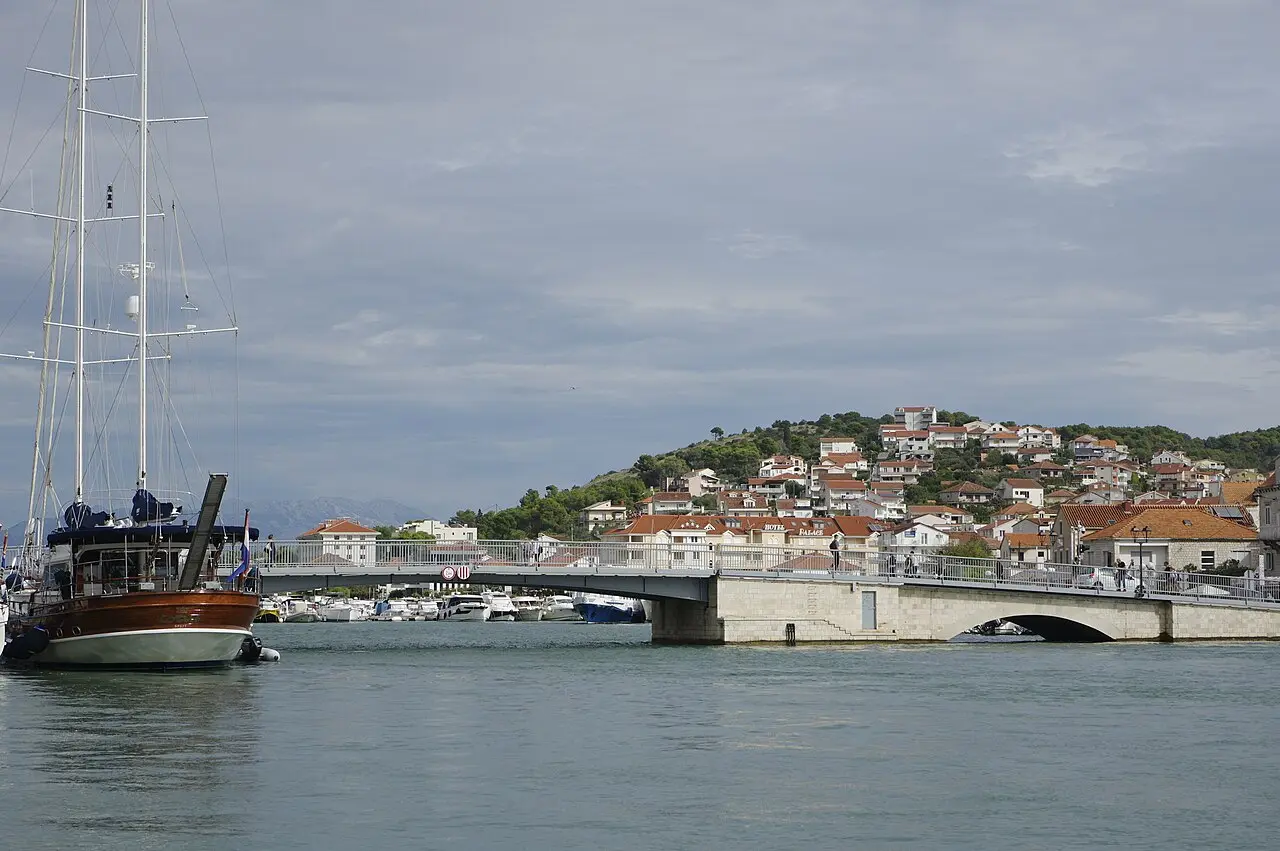
Over the Čiovo bridge you’ll find the closest beaches and a string of quieter bays; for a wider swimming trip, boats run to the nearby islands and the coast. If islands are your priority, see our guide to island-hopping in Croatia.
Trogir as a Split Airport base
Here’s Trogir’s practical trump card: Split Airport (SPU) is only about 5-6 km away, sitting at Kaštela between Split and Trogir. That makes the town a far more relaxing place to spend your first or last night than central Split - you’re a short taxi or bus ride from the terminal, but you sleep inside a walled old town on the water instead of in city traffic. It’s a trick a lot of seasoned Dalmatia travellers use: fly in, overnight in Trogir, then start the trip fresh. For the airport run itself and onward transfers, see Split Airport to the city. If you are still deciding where to base the whole trip, our guide to where to stay in Split weighs the options along this stretch of coast.
Where to stay
Trogir is small, so the choice is mostly island versus mainland versus Čiovo:
| Area | Good for | Notes |
|---|---|---|
| Old-town island | Atmosphere, walking to every sight | Stone lanes, some evening buzz; limited parking, bring light bags |
| Mainland side (Trogir proper) | Easy parking, buses, first/last night | A short walk over the bridge to the old town; practical |
| Čiovo | Beaches, apartments, quieter nights | Over the south bridge; the nearest swimming, calmer streets |
Being right by the airport, Trogir books up fast in summer for arrival and departure nights, so reserve early. For what a Dalmatian trip costs day to day, see is Croatia expensive?.
How to get to Trogir
Trogir is one of the easiest towns in Croatia to reach. Split Airport is about 5-6 km away, a short bus or taxi ride; the city of Split is roughly 27 km east, around 40 minutes by frequent bus or boat. There is no need for a car on the island itself - it’s entirely walkable - but if you’re touring the coast afterwards, renting a car in Croatia gives you the run of Dalmatia. For buses and boats between towns, see getting around Croatia.
When to go and practical tips
- When to come. July and August are hot, busy and dearest, and day-trippers pour in from Split; late May to June and September bring warm sea, long days and calmer lanes. See the best time to visit Croatia for the month-by-month picture.
- Money. Croatia uses the euro (€). Cards are widely accepted; keep some cash for the cathedral, the boats and small cafés.
- Crowds. Trogir is busiest in the middle of the day when coach tours arrive - come early or stay overnight to have the old town to yourself in the morning and evening.
- Tickets. Cathedral, bell-tower and Kamerlengo prices and hours change by season - confirm current details on the Visit Trogir site before you go.
Plan the rest of your trip
Trogir is the perfect soft landing (or send-off) for a Dalmatian trip. Pair it with Split next door, use it as a base for the airport, and branch out to the islands from there. Heading north up the coast, Šibenik - another quiet old town, with two UNESCO sites and the Krka waterfalls - slots in as an easy next stop. The cities hub collects our other Croatian city guides, and for timing and budgets see the best time to visit Croatia and is Croatia expensive?.
Opening hours, prices, timetables and seasonal services change through the year - the figures here are planning estimates, not quotes. Confirm current details with the operators and official sources before you go.
Photos
On the map
The map loads on click - to keep the page lightweight.
The map didn’t load. Check your connection and refresh the page.
Good to know
The old-town lanes, the main square, the Riva and the town gates are free to wander. The cathedral of St Lawrence, its bell tower and treasury, and Kamerlengo fortress are ticketed, with seasonal hours - buy at the entrance, and confirm current prices and opening times on the Visit Trogir tourist-board site before you go, as they change by season.
Details checked: July 3, 2026
Distance ≈27 km · ~40 min
- Split ≈27 km · ~40 min Split Airport (SPU) is only about 5-6 km away, between Split and Trogir; the city centre is roughly 27 km west of Split, with frequent buses and boats.
Read also

Cities · 12 min read
Motovun Travel Guide: Walls, Truffles & Teran
Verified · September 4, 2026Motovun hilltown guide: walls ticket €5 in 2026, St Stephen, Teran cellars, Mirna views, parking climb, and why the film festival no longer plays here.

Cities · 10 min read
Dugi Otok & Sakarun Beach: Island Day-Trip Guide
Updated · August 31, 2026Day-trip Dugi Otok from Zadar: Jadrolinija ferry to Brbinj, Sakarun beach, Veli Rat lighthouse, and Telašćica cliffs - DIY or boat tour.

Cities · 10 min read
Opatija Travel Guide: Habsburg Riviera & Lungomare
Verified · August 25, 2026Opatija on the Kvarner Gulf: the 10 km Lungomare, Villa Angiolina museum, Maiden with the Seagull, and how it differs from Rijeka and Istria.

Cities · 10 min read
Omiš Travel Guide: Pirates, Zipline & Cetina Canyon
Verified · August 21, 2026Omiš is 25 km from Split: Promet bus €2.50, Mirabela €4-6, Cetina rafting and an 8-line zipline over the canyon.