
Where to Stay in Split: Best Areas for First-Timers
The best areas to stay in Split - Diocletian's Palace, Veli Varoš, Bačvice, Meje and Lučac-Manuš - who each suits and where first-timers should base.
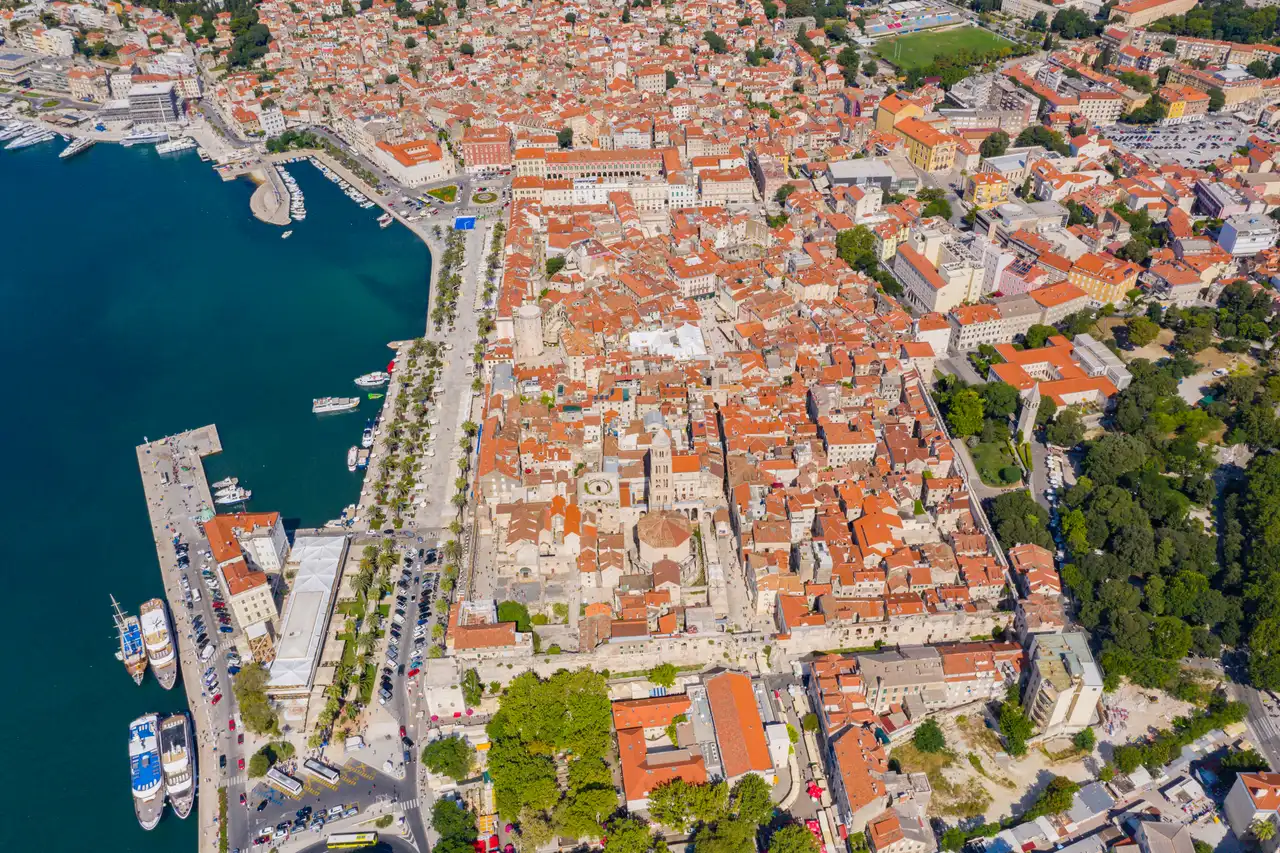
The short answer for a first visit: stay in or right beside Diocletian’s Palace. Split’s old town is small, entirely walkable and steps from the ferries, so on a one-to-three-night trip you won’t need transport at all. If the palace itself sounds too pricey or too loud at night, Veli Varoš - the old stone quarter five minutes to the west - gives you the same walkability with far less noise, and Bačvice, by the sandy beach just southeast, is the pick if you want swimming and nightlife on your doorstep.
Split’s real trick is that the ferry port, bus station and train station all sit together beside the old town, so where you sleep also shapes how easily you catch an island boat the next morning. Past that it’s the usual balance - how central and how quiet a district is, whether you want a car, and what you pay compared with the rest of the city.
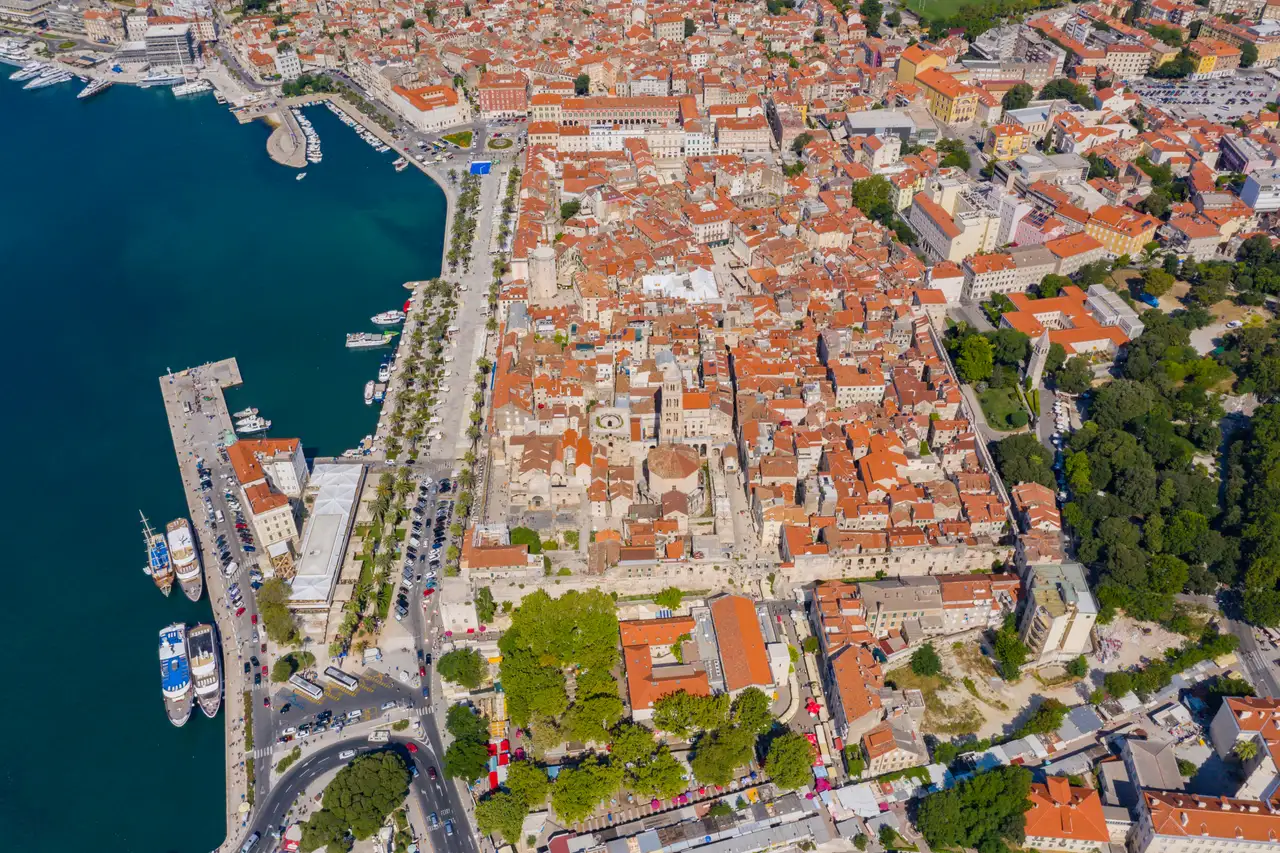
The quick version: which area for whom
| Area | Best for | Trade-off |
|---|---|---|
| Diocletian’s Palace / old town | First-timers, atmosphere, everything on foot | Dearest; noisy late; no car access or parking |
| Veli Varoš (west of the palace) | Old-town charm without the noise | Steps up Marjan’s slopes; small, characterful rooms |
| Bačvice (southeast) | Beach, families, nightlife | Louder bar scene by night at the beach end |
| Meje (west, below Marjan) | Quiet, upscale, villas | Furthest to walk; better with a car or longer legs |
| Lučac-Manuš (east of the palace) | Practical, central, a little cheaper | Residential rather than scenic |
| Near the ferry/bus/train hub | Early island departures, transit nights | Functional, not pretty |
Diocletian’s Palace and the old town
For most first-timers this is the answer. Sleeping inside or right against Diocletian’s Palace means you step out of your door into the Peristyle, the cathedral, the Riva and a warren of marble lanes that has been lived in for 1,700 years - around 3,000 people still have homes inside the walls. Nothing about the sightseeing requires a bus, and the whole core is a two-minute stroll end to end.
The trade-offs are the ones you’d expect of a living Roman monument. It’s the most expensive part of the city, and the rooms squeezed into 1,700-year-old buildings are small, quirky and often up a spiral of worn stone stairs. It’s also the loud one: the cafés on the Peristyle and the bars around the Pjaca and the narrow lanes hum until the small hours in summer, and stone amplifies everything, so a window over a busy alley means late nights whether you like it or not. It’s car-free with no parking - a taxi leaves you at a gate and you walk in. If you’re here for a night or two and want to live inside the history, book it anyway, but ask for a room deep in the palazzo, away from the Peristyle and the main drags.
Veli Varoš: old-town charm, minus the noise
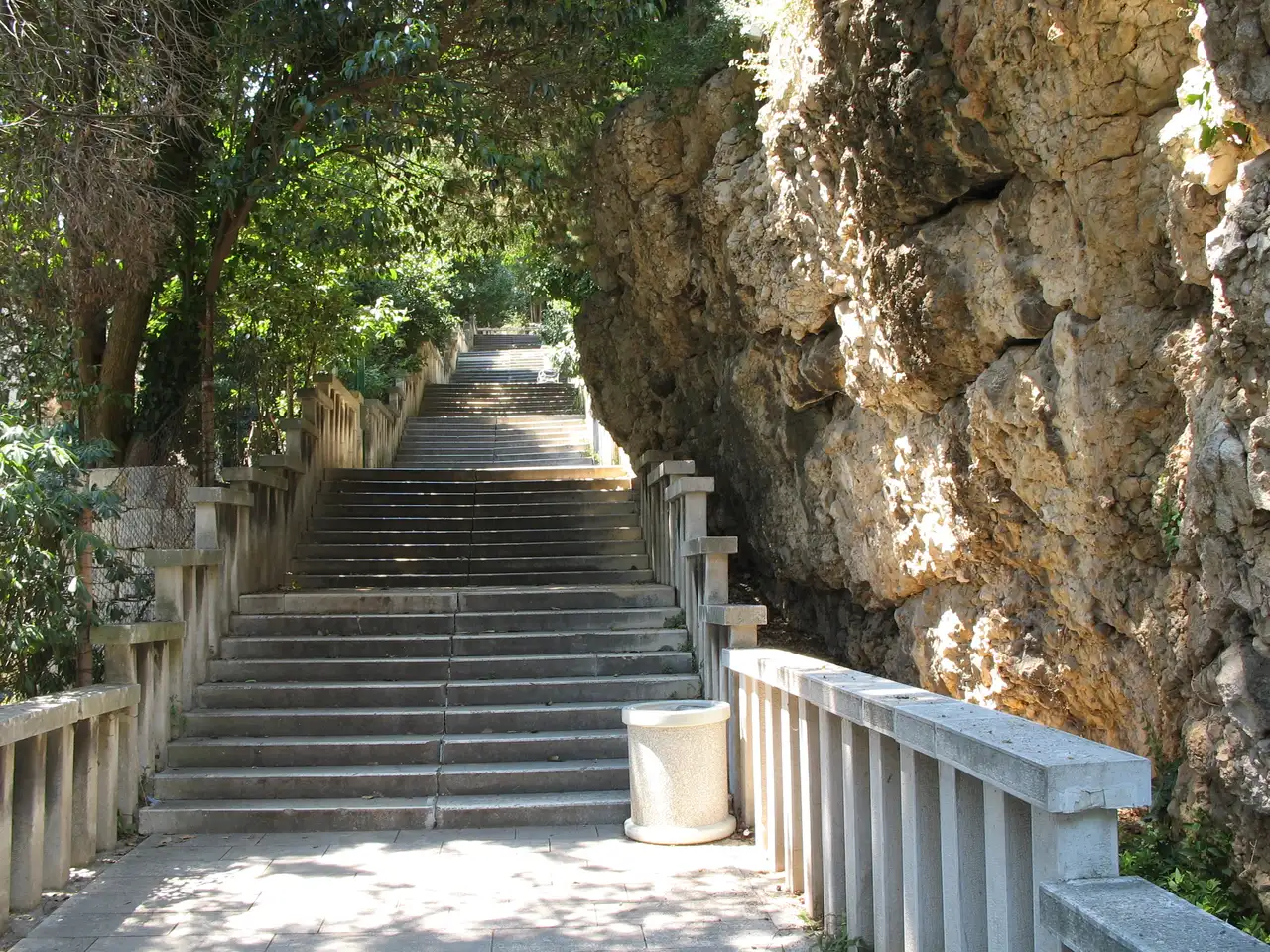
Just west of the palace, on the lower slopes of Marjan hill, Veli Varoš is Split’s traditional fishermen’s quarter - a tumble of pale stone houses, stepped lanes, cats on doorsteps and small konobas serving home cooking. It sits about a five-minute walk from the palace and ten from the Riva, so you keep the old-town feel and the walkability while dropping most of the crowds, the prices and the late-night din.
This is the pick for travellers who want character without paying palace rates or fighting the summer noise. The catch is the terrain - the lanes climb, so expect steps and cobbles with a suitcase - and rooms here are cosy and characterful rather than spacious. For a base that feels genuinely local yet puts everything on foot, Veli Varoš is hard to beat.
Bačvice: the sandy beach and the nightlife
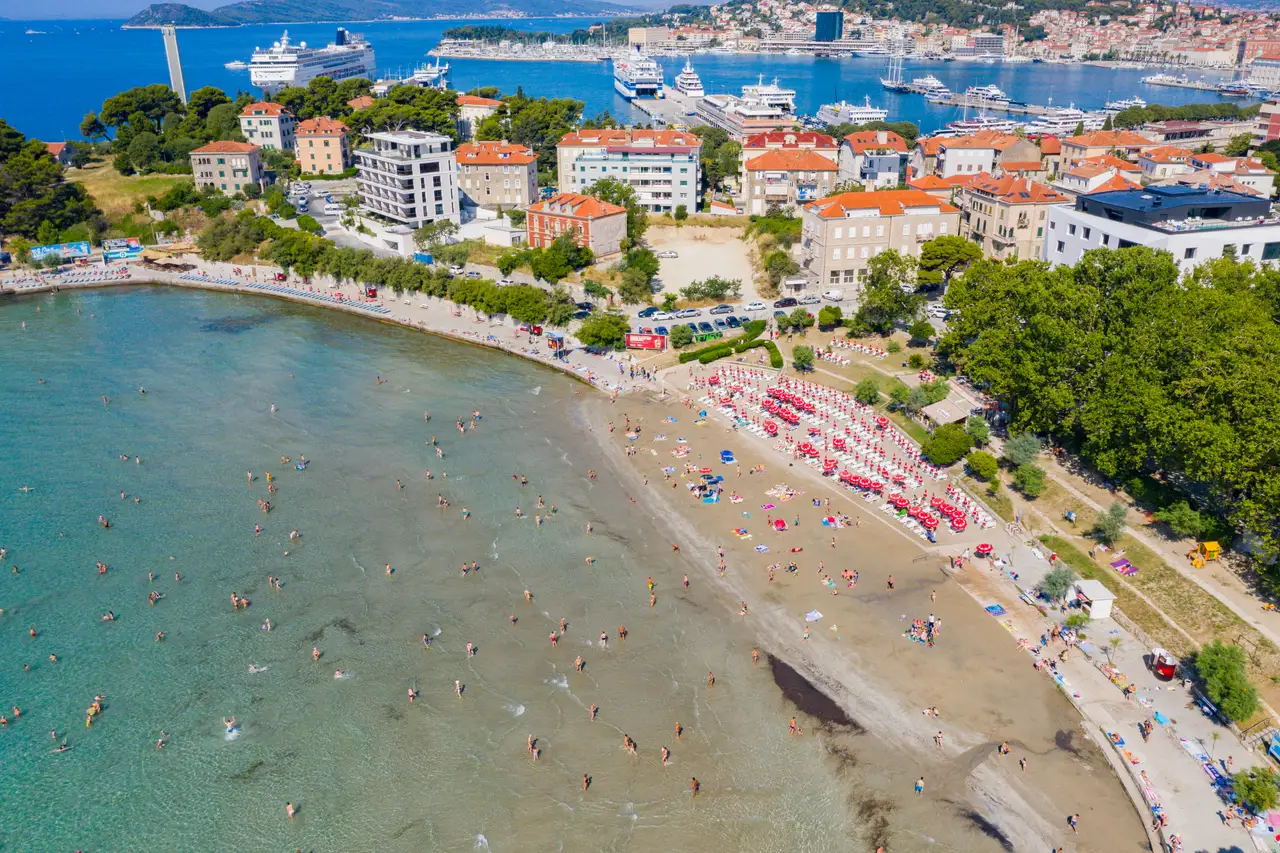
Southeast of the palace, Bačvice is built around Split’s most famous beach - a rare shallow, sandy bay in a country of pebble coasts, and the home of picigin, the local game of keeping a small ball out of the water in the shallows. It’s a lively, social district: café and beach-bar terraces along the seafront by day, and by night one of the city’s main clusters of bars and clubs. The palace is only a 10-15 minute walk away, close enough to be handy, far enough to feel like its own neighbourhood.
Bačvice suits families, beach lovers and younger travellers who want to swim before breakfast and go out after dinner without a taxi. The obvious trade-off is noise at the beach end, where the clubs run late - if you want the beach but not the bass, look at the quieter streets set back from the bay, or the neighbouring Firule beach just along the coast. Our guide to Split’s nightlife covers where the night ends up here, and the Bačvice beach bars and club guide goes through the beachfront itself - which venues are actually on it, how late it runs and how loud the beach end really gets. A larger stag or bachelor group usually wants one apartment together rather than a scatter of rooms - that angle is in the Split stag do weekend guide.
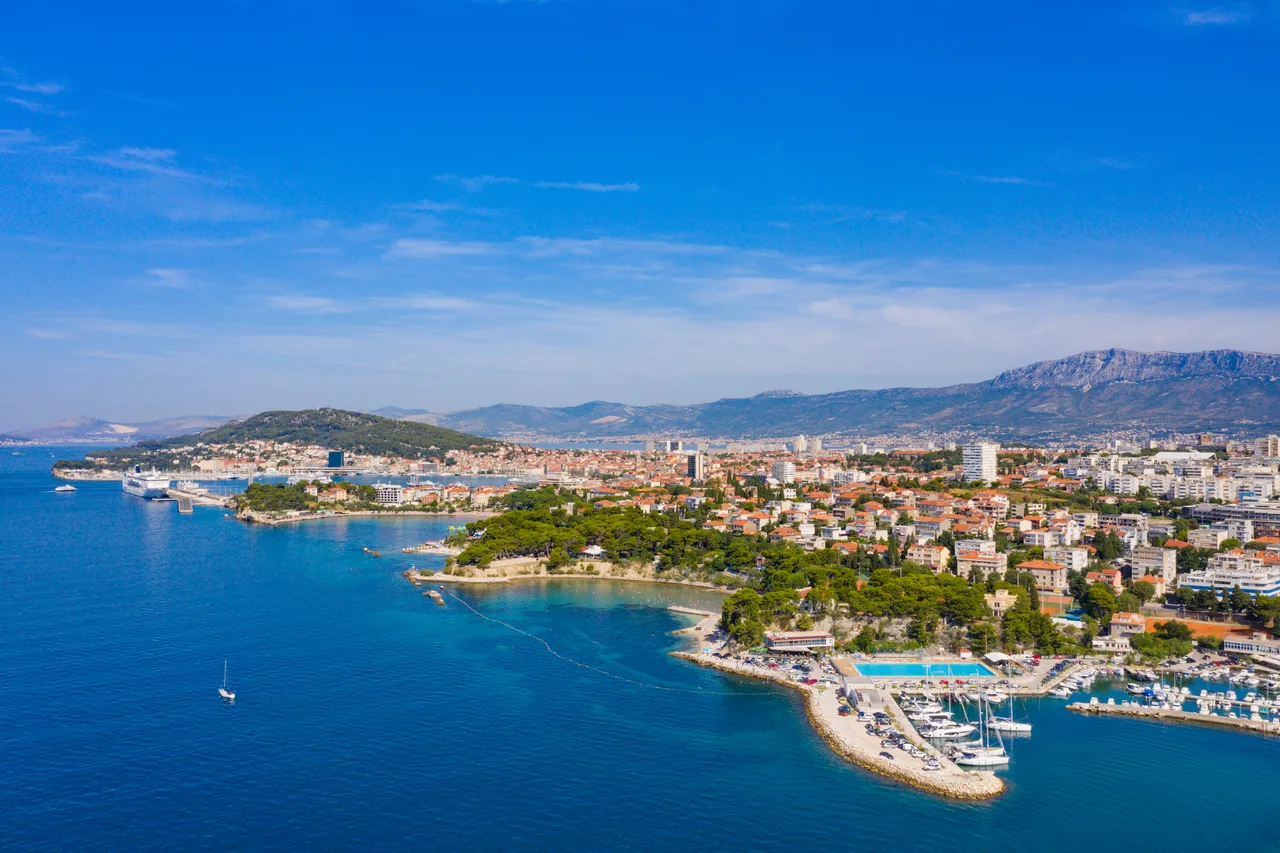
Meje: quiet, upscale, near Marjan
West of the centre, tucked between Marjan hill and the sea, Meje is Split’s calm, prestigious residential corner - leafy streets, villas and some of the smartest places to stay, with the pine woods and viewpoints of Marjan on the doorstep. It’s the choice for a quiet, comfortable base away from the crowds, and it pairs beautifully with early-morning walks or runs up the hill.
The trade-off is distance and how you’ll get around: Meje is the furthest to walk into the old town of the areas here - a good 20-25 minutes along the waterfront - and it really assumes a car, both because the sights are a hike and because parking is far easier out here than by the palace. It also skews expensive: this is villa-and-view territory, not budget rooms. Weigh it against Lučac-Manuš below and the split is clean - Meje for a car, Marjan on the doorstep and quiet at a price; Lučac-Manuš for no car, a cheaper bed and everything on foot.
Lučac-Manuš: the practical central compromise
Immediately east of the palace, the adjoining districts of Lučac and Manuš are the everyday, walk-everywhere choice. Lučac is the older of the two - a quiet residential slope of stone houses climbing east from the Silver Gate and the Pazar green market, about five minutes from the palace on foot. Manuš, just inland, is plainer and a little cheaper again, near the bus lines. Neither is postcard-pretty, and that’s the point: you trade the views for a normal city street, a lower rate and a fridge you can stock from the markets.
Pick this area if you want a central base on a slightly smaller budget without a car, or simply a calmer night than the Peristyle or the Bačvice bars allow - the sights, the Riva and the ferry are all a short, flat walk away.
The transport hub: sleeping near the boats
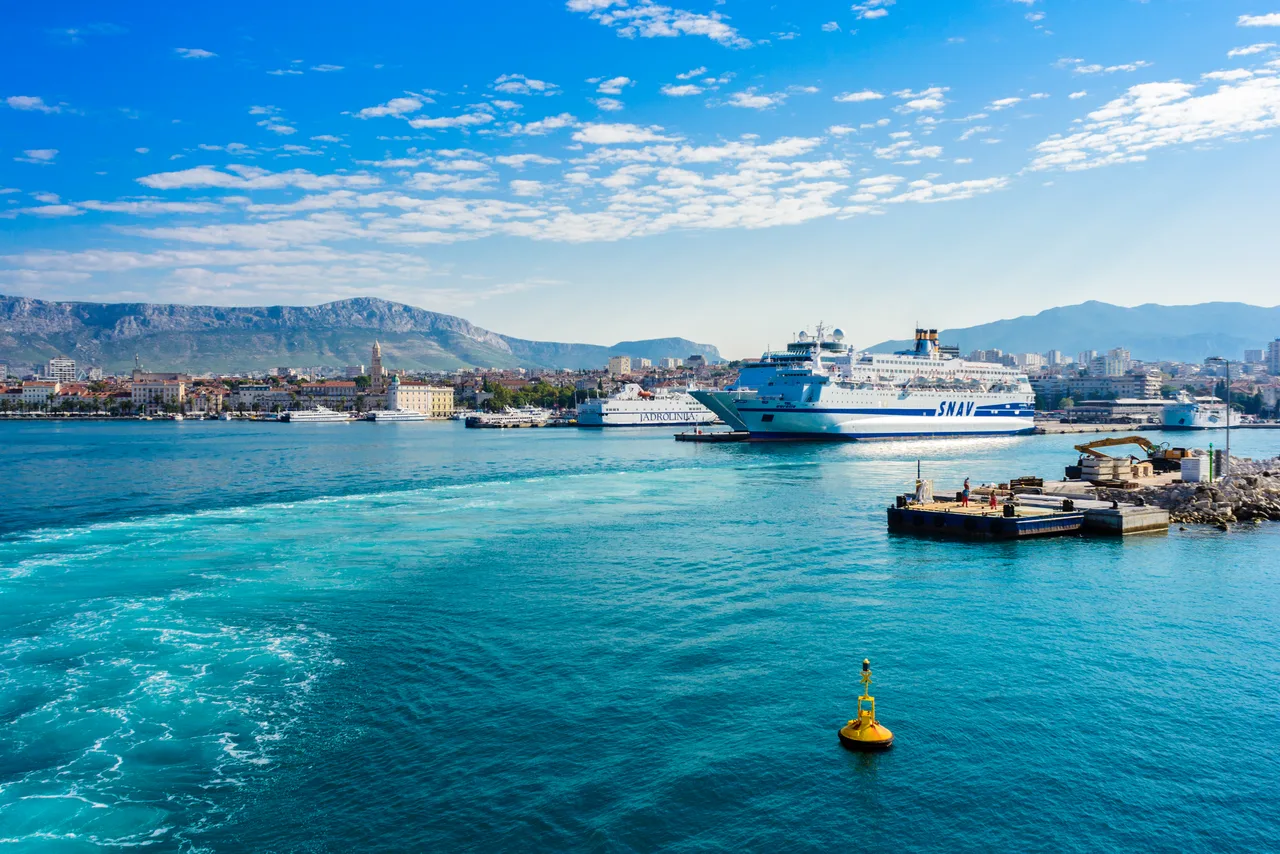
Split’s standout feature is that the ferry port, the main bus station and the train station all sit together right beside the old town. Land at the airport and you can be checked in and standing on an island catamaran within the hour - which makes the streets around the harbour a genuinely useful place to sleep if your plans revolve around early ferries to Hvar, Brač or Vis. If Hvar is next, note that the catamaran and the car ferry land in different towns - our guide to where to stay on Hvar explains how that shapes your base. Functional rather than scenic, but for a transit night before a dawn boat it’s hard to beat being minutes from the gangway.
Getting in, and whether you need a car
Split Airport (SPU) is at Kaštela, about 24 km west of the centre, between Split and Trogir. From there the airport/shuttle bus, a public city bus, a transfer or a taxi all reach town in roughly 30-40 minutes depending on traffic; our guide to Split Airport transfers compares them in detail. Because the ferry, bus and train are all clustered by the old town, onward connections are unusually easy to plan.
In the city itself you almost certainly don’t need a car. The old town is pedestrian, the sights are walkable, and parking near the palace is scarce and expensive - and because the ferries take foot passengers, you don’t need one to reach the islands either. A hire car only makes sense if you plan to tour the mainland coast or the national parks afterwards, in which case base yourself somewhere with easier parking (Bačvice, Meje or the edges rather than inside the palace) and see our guide to renting a car in Croatia. For the sights themselves, the Split travel guide has the full run-down.
When to book and what it costs
Split has an odd double demand that shapes its market: it’s both a destination and the busiest ferry gateway on the coast, so beds fill not just for the palace but for every dawn-boat night in high season. The scarce rooms are the apartments carved into the palace walls around the Peristyle - a few dozen of them, and they go first and dearest in July and August - while the streets by the harbour tighten whenever the island ferries are booked solid. If you want to sleep inside the Roman walls in peak summer, reserve as soon as your dates are firm; Veli Varoš, Lučac-Manuš and Bačvice hold out longer and cost less. Coming in June or September loosens all of it at once - cheaper rooms, cooler stone lanes, ferries you can still get on. The best time to visit Croatia has the month-by-month picture.
The price bands above are a rough order, not a price list: the palace at the top, Veli Varoš, Bačvice and Lučac-Manuš in the middle, and the further-out or more functional streets lower. Where any single room lands depends so much on the week and the building that quoting a nightly figure would mislead more than help - check live prices for your dates, and for what a full Split trip costs, see is Croatia expensive?.
Plan the rest of your trip
Base chosen, Split becomes the perfect launch pad for Dalmatia. The Split travel guide covers Diocletian’s Palace, Marjan and the island day trips; from here it’s a short hop to Hvar and the other islands, or south along the coast - Split to Dubrovnik transport lays out the options. For budgets and timing, see is Croatia expensive? and the best time to visit Croatia.
Compare cities with the overview Where to stay in Croatia.
Opening hours, prices, timetables and seasonal services change through the year - the figures here are planning estimates, not quotes. Confirm current details with the operators and official sources before you go.
Good to know
Room rates in Split peak in July and August and the best-located places sell out early. The price bands below are relative guidance, not quotes - check live rates and exact locations on your booking site before you commit.
Details checked: July 2, 2026
Read also

Before you go · 11 min read
Croatia in Winter: Weather, Advent & What's Open
Updated · October 23, 2026Croatia from November to March: official weather by city, which ferries and parks still run, winter tyre rules and flights. Checked 23 October 2026.

Before you go · 10 min read
Where to Stay in Korčula: Old Town to Vela Luka
Verified · September 5, 2026Korčula Town for walls and boats, Lumbarda for sand, Vela Luka for the Split car ferry. Match the base to how you arrive - then book.

Before you go · 10 min read
Sailing in Croatia: Yacht Charter Costs & Routes
Updated · September 5, 2026Croatia yacht charter 2026: bareboat weekly ranges, skipper and deposit separate, APA on crewed boats, season guides, island routes.

Before you go · 10 min read
Where to Stay in Makarska: Riviera Bases Compared
Updated · August 30, 2026Brela, Baška Voda, Makarska, Tučepi or the quieter south - which Riviera base fits beach weeks, families, nightlife and Brač ferry mornings.