
Where to Stay in Dubrovnik: Best Areas & Neighbourhoods
The best areas to stay in Dubrovnik - Old Town, Ploče, Lapad, Babin Kuk and Gruž - who each suits, how they reach the Old Town, and what to book.
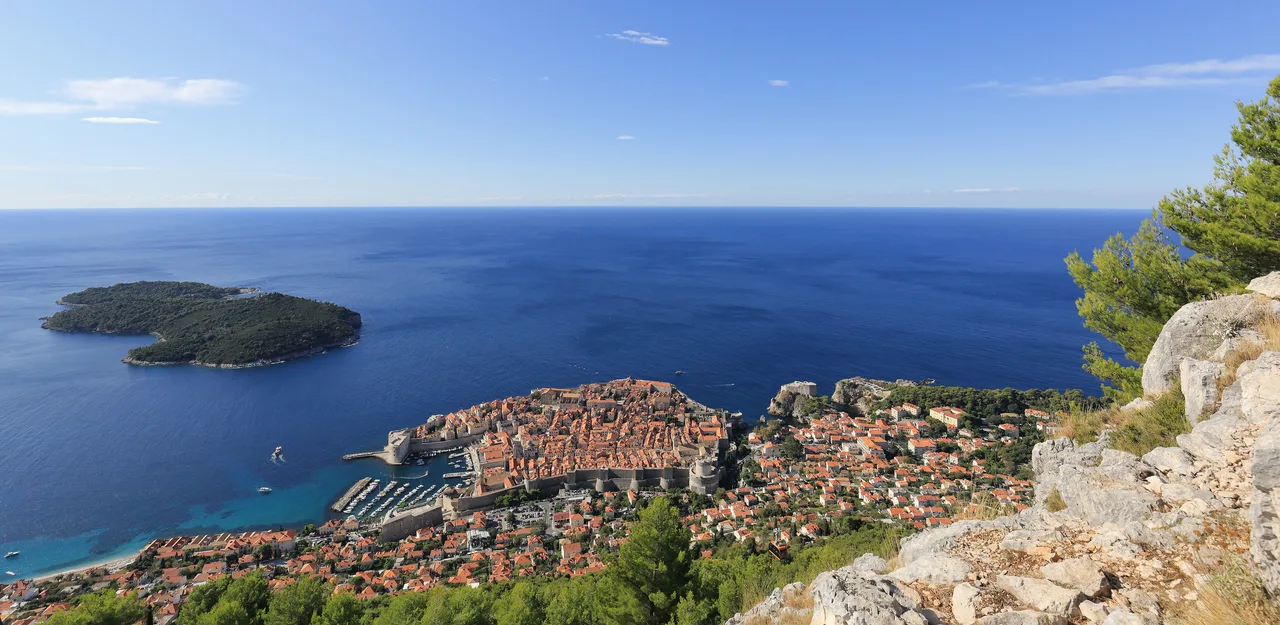
The short answer: for your first visit stay in or right beside the Old Town - Ploče just east of the walls gives you the views without the worst of the night noise, and Pile just west is the walkable, cheaper alternative. For beaches, families and better value, base on the Lapad peninsula (Lapad Bay or leafy Babin Kuk); for budget nights and early ferries, sleep in Gruž by the port. A short Libertas bus ride links everywhere to the Old Town, so you’re never really far out.
Dubrovnik is one of Croatia’s dearest cities and books out in high summer, so the choice of base, and booking early, matters more here than almost anywhere on the coast. That choice colours everything else too: how much noise reaches your window, how many hills you climb, whether a car helps or gets in the way, and what you pay compared with the other districts.
The quick version: which area for whom
| Area | Best for | Trade-off |
|---|---|---|
| Old Town (within the walls) | First-timers, atmosphere, walking out into the sights | Dearest; noisy late; stairs everywhere; no car access |
| Ploče (east of the walls) | Couples, sea and Old Town views, smart hotels | Pricey; steep climbs to some apartments |
| Pile (west of the walls) | Old Town access on a smaller budget | Busy; some traffic; still not cheap |
| Lapad (peninsula) | Beaches, families, value, more space | 10-15 min bus from the Old Town; less historic charm |
| Babin Kuk (tip of Lapad) | Resort stays, quiet, greenery, families | Furthest from the Old Town; you rely on the bus |
| Gruž (the port) | Budget, early ferries and buses | Least charm; a working port, not a postcard |
Old Town: right in the heart of it
Sleeping inside the walls puts you a two-minute walk from the Stradun, the city walls and every headline sight, and it’s genuinely magical at first light and late evening once the cruise crowds have gone. That’s the upside. The downsides are real and worth knowing before you book: it’s the most expensive part of the city, rooms tend to be small, and it’s pedestrian-only, so a taxi or transfer can only drop you at a gate - you carry your bags the last stretch, and if your place is on the north side of the Stradun that means climbing steep stone stairways.
Sound carries strangely inside the walls, too: the stone lanes funnel the clatter of late diners and the cliff-edge Buža bars, and by day the cruise crowds surge up from the port, so a window over a busy alley can be lively from breakfast to well past midnight. Light sleepers should ask for a room set back off the Stradun or high toward the walls. The Old Town suits a first-timer who wants atmosphere above all, here for a night or two - not a family lugging suitcases or anyone who wants to swim off their doorstep.
Ploče: views and the smartest hotels
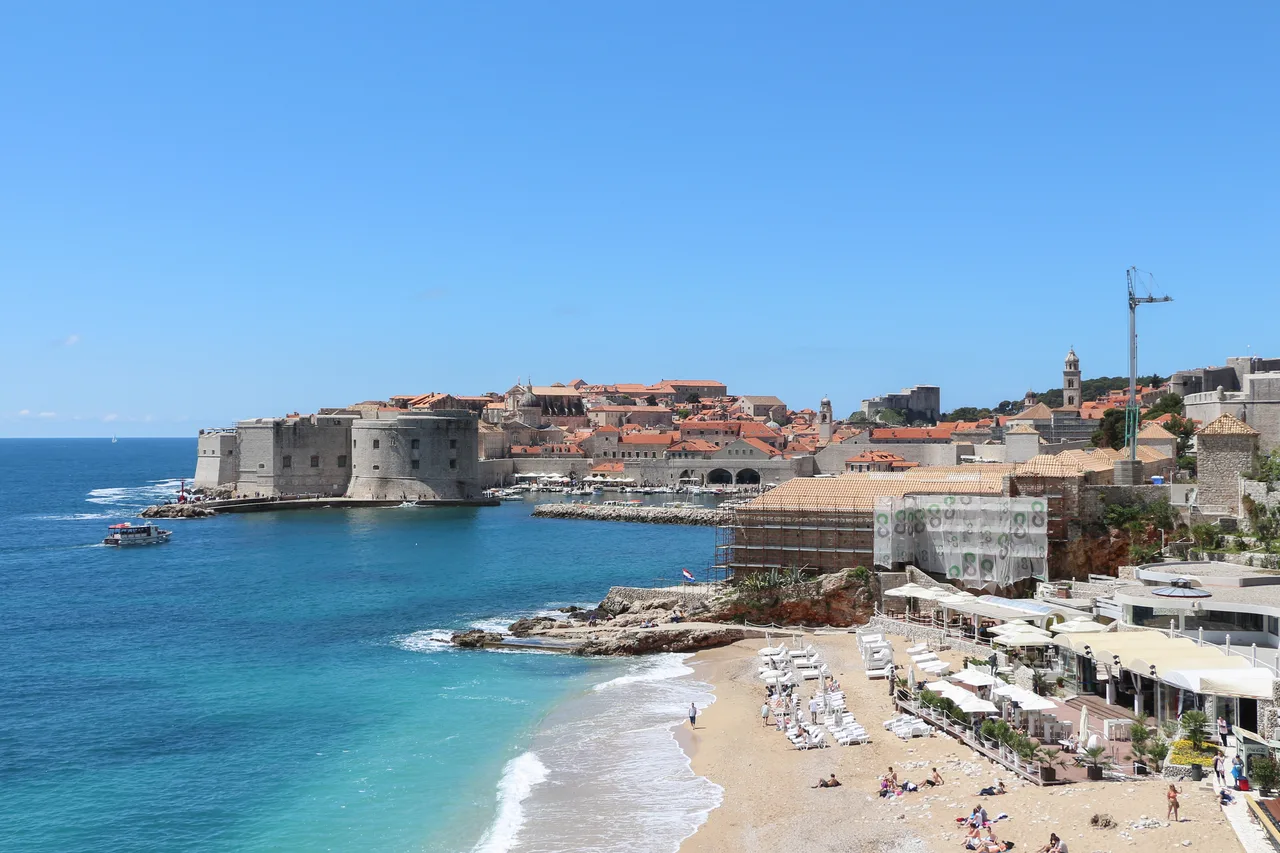
Step out of the Ploče gate at the eastern end and you reach Ploče, a quieter, more residential slope that holds some of Dubrovnik’s smartest hotels and the classic side-on views back at the walled city and out to Lokrum island. Banje, the city’s best-known beach, sits right below with the Old Town as its backdrop. This is the choice for couples and anyone who wants five-star comfort and a view while still being a short, fairly flat walk from the sights.
The catch is terrain and price: Ploče climbs steeply, so some apartments are a real haul up steps, and rates sit at the top of the range alongside the Old Town. If a sea-view balcony is the point of your trip, this is where to spend.
Pile: walkable access, a little cheaper
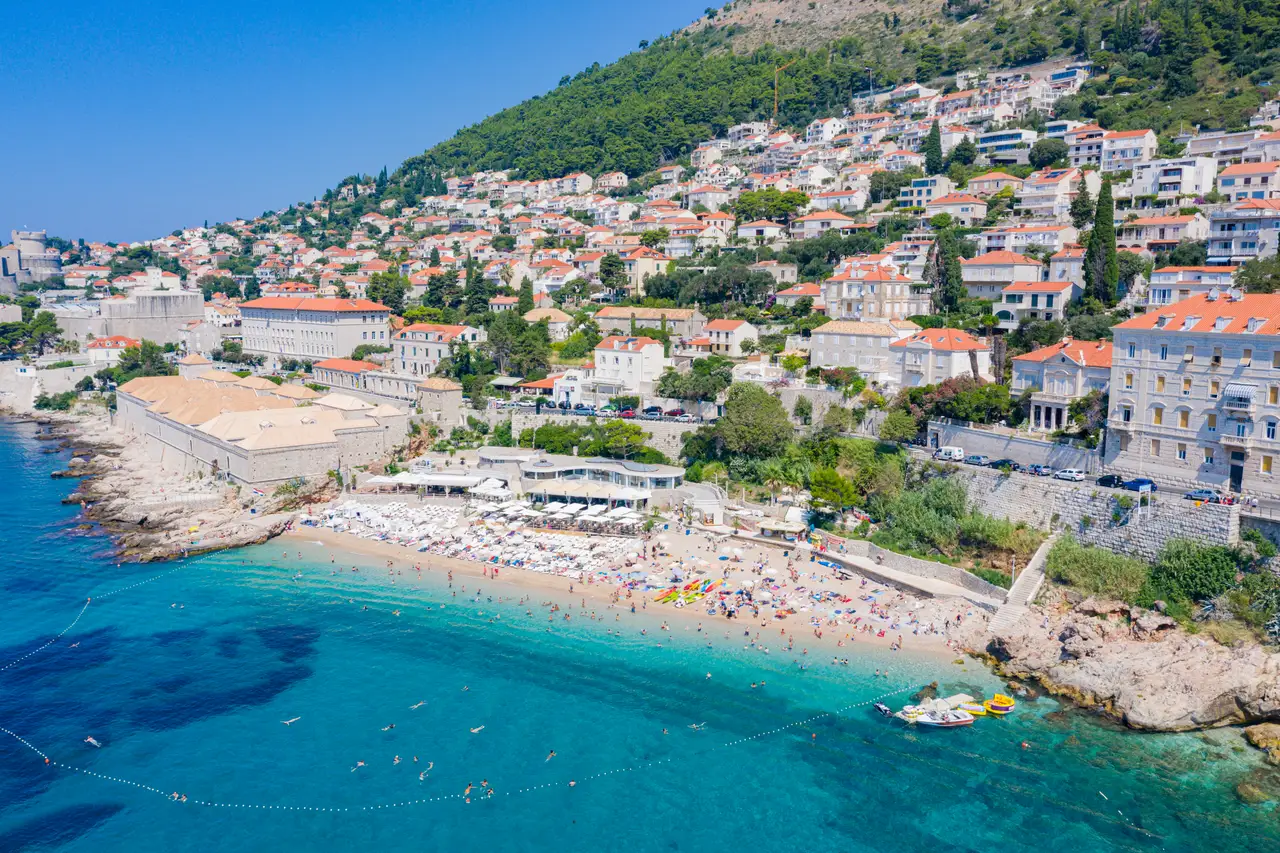
Just west of the walls at the Pile gate is Pile - the main entrance to the Old Town and the hub where most city buses terminate. Staying here keeps you within walking distance of the sights, usually a touch cheaper than a room inside the walls, with the bus network at your feet for the beaches or the airport. It’s busier and closer to traffic than the residential slopes, but the balance of access without Old-Town prices or the deepest night noise makes Pile a practical first-timer pick.
Lapad: beaches, value and room to breathe
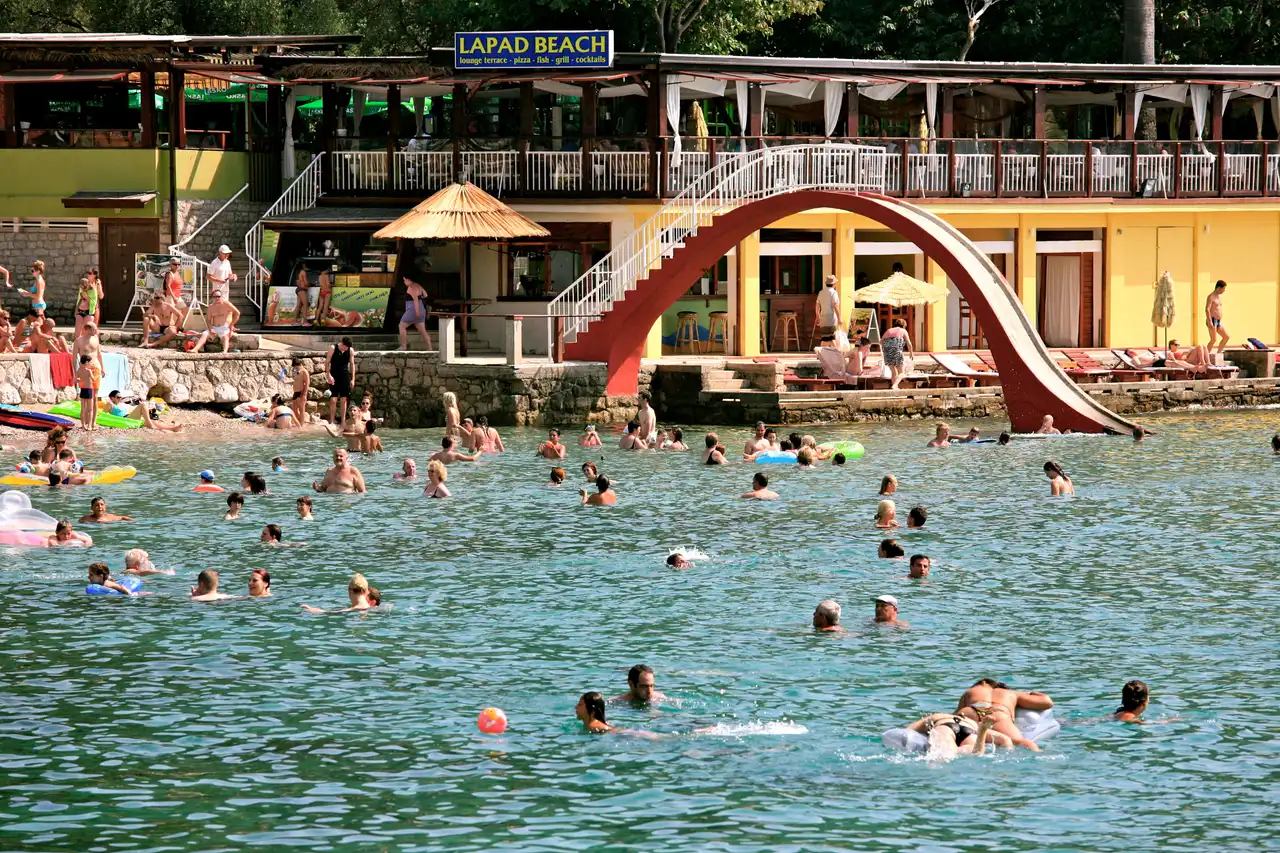
For a very different stay, head to the Lapad peninsula, a green residential district a short ride northwest of the Old Town. Its heart is Lapad Bay (Uvala Lapad), a family-friendly pebble beach at the end of a car-free promenade lined with restaurants and gelato - the kind of place where you can walk to dinner and the sea without touching a bus. You generally get more space for your money here than in the centre, which is why families and longer-stay visitors gravitate to it.
The trade-off is distance: Lapad isn’t walkable to the Old Town, so you rely on a short bus ride - roughly 10-15 minutes on Libertas bus 6 to the Pile gate (check the current timetable). But your evenings stay on foot - dinner, a drink and a swim are all along the promenade, no bus after dark. If you want beach mornings, Old-Town afternoons and a base that still works once the last bus has gone, Lapad is the strongest all-round choice in Dubrovnik.
Babin Kuk: resort quiet at the peninsula’s tip
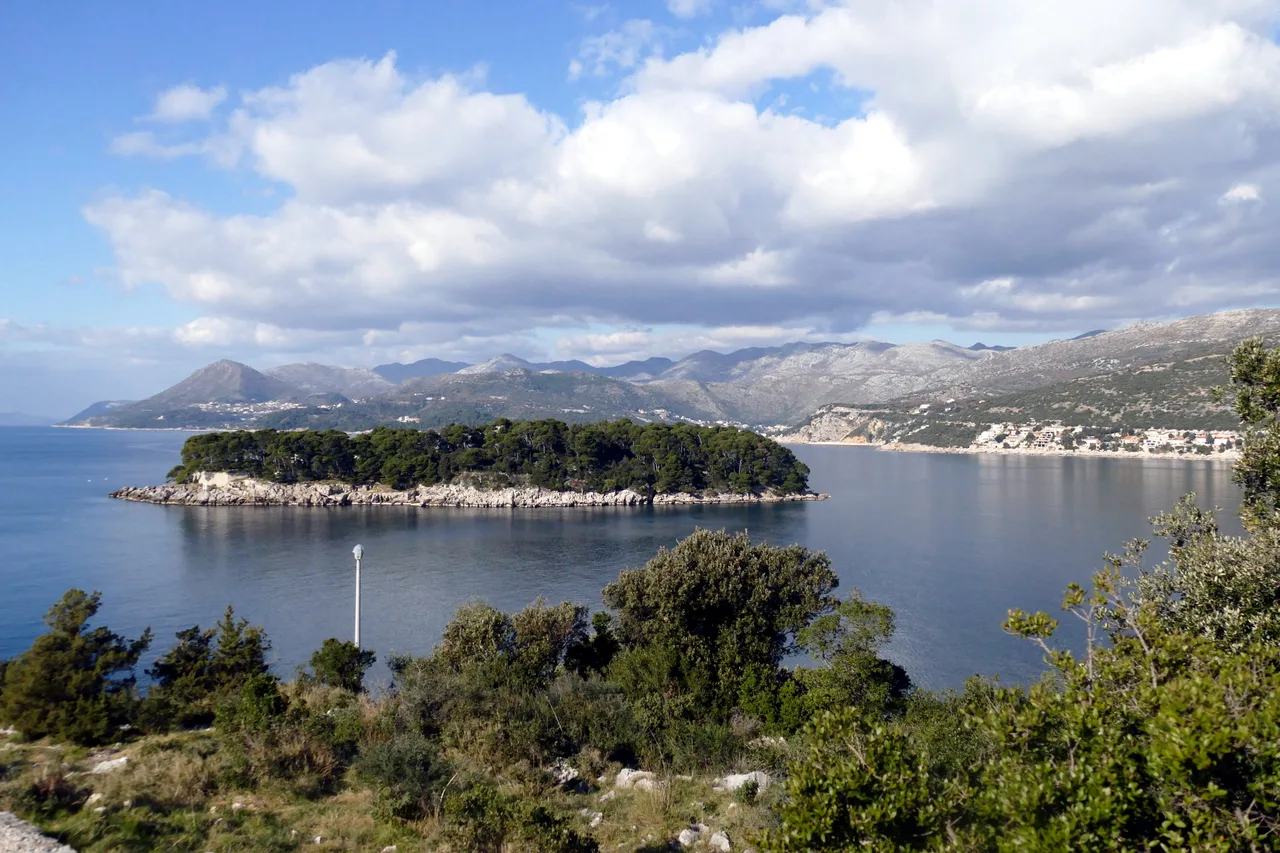
At the northwestern tip of the Lapad peninsula, Babin Kuk is the leafiest, calmest corner - a cluster of larger resort hotels, beach bars and pine-shaded coves (Copacabana beach among them). It’s the pick for a self-contained resort stay with a pool and quiet nights, and it suits families happy to make the Old Town a day trip rather than a doorstep.
The honest split between the two: Lapad keeps your nights walkable; Babin Kuk is more of a resort bubble. It’s the furthest out, the same bus 6 is your lifeline to town, and after dinner at your hotel the evening tends to stay there - great for a pool, a cove and small kids asleep by nine, less so if you like wandering out to a bar. Come here for space and calm; pick Lapad if you want to stroll to dinner without checking the timetable.
Gruž: the port, for budgets and early boats
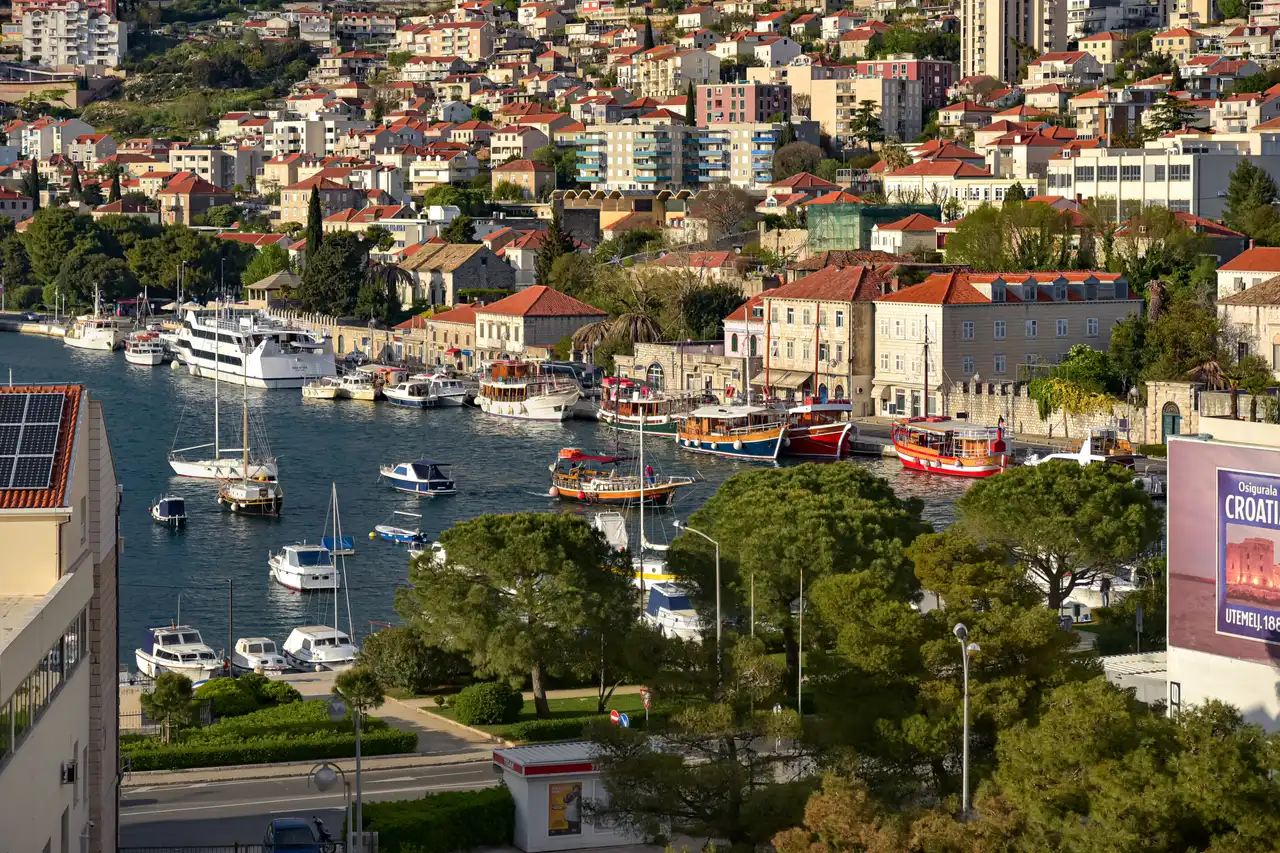
Gruž is Dubrovnik’s working harbour, northwest of the centre - home to the ferry port and Jadrolinija terminal, the main bus station and the open-air Gruž market. It has the least postcard charm of the areas here, but it’s where the budget guesthouses are and where you want to be if you have an early ferry to the Elaphiti Islands or a dawn bus to catch. Bus 1 links it to the Old Town in around 10-15 minutes.
Choose Gruž for the practical reasons - price and transport - rather than the setting. If your Dubrovnik is mostly a launch pad for the islands or the coast, sleeping by the port can make the logistics far smoother, and you’re still a short hop from the walls.
Getting between your base and the Old Town
Dubrovnik is compact, and the Libertas city buses tie the whole thing together, fanning out from the Pile terminus just outside the western gate. As a rough guide, bus 6 runs Lapad and Babin Kuk to Pile and bus 1 links Gruž - both take on the order of 10-15 minutes, though frequencies and route numbers shift by season, so check the current Libertas timetable when you arrive. You buy tickets at kiosks, or a little dearer from the driver.
One thing that catches people out: there’s no airport in the city. Dubrovnik Airport (DBV) is at Čilipi, 22.5 km southeast, and the Platanus airport shuttle (€10 one-way, €15 return) runs from the airport to Ploče Gate and the Gruž bus station (about 30 and 35 minutes, timed to flights) and back to the airport from Gruž via the Cable Car stop by the Old Town - worth knowing when you pick a base: Ploče is the easiest arrival point, Gruž or the cable car stop the easiest departure; from Pile, count on a walk across the Old Town or a short taxi. For what to actually do with your days here, see our Dubrovnik travel guide.
Do you need a car?
For most Dubrovnik stays, no - and a car can be an active nuisance. The Old Town is pedestrian-only, parking near the walls is scarce and expensive, and the bus network covers the beaches, the port and the airport perfectly well. If you’re only here for the city, skip the hire car and use buses, taxis and boats.
A car is worth having only if you’re touring the coast either side of Dubrovnik - the Pelješac peninsula and its wineries, Konavle to the south, or the drive north toward Split. In that case, base yourself somewhere with easier parking (Lapad, Babin Kuk or Gruž rather than inside the walls) and see our guide to renting a car in Croatia before you book. If you’re continuing up the coast, Split to Dubrovnik: bus, ferry, car or transfer compares every way between the two cities.
When to book and what it costs
Dubrovnik’s rooms are scarce and its peak is brutal, so timing and how early you commit matter more than in most Croatian towns. The handful of places inside the walls, and any Ploče apartment with a real Old-Town-and-Lokrum view, disappear first - in July and August they can be gone months out, and heavy cruise-ship days squeeze the mid-range too. Lapad, Babin Kuk and Gruž keep availability longer and fall hardest in price off peak. Set on a walls-view balcony in high summer? Book it the day you’ve flights. Able to come in June or September? The same address costs far less and the marble streets are actually walkable in the heat. Our guide to the best time to visit Croatia breaks it down by month.
A word on the price bands here - they’re a ranking, not a receipt. The Old Town and Ploče sit at the top, Pile a step below, Lapad and Babin Kuk buy more space and a beach for the money, and Gruž is the budget floor. What any of them costs on your nights swings so much by season and building that a printed figure would only mislead, so pull up live prices for your dates - and for what a whole Dubrovnik trip tends to run, see is Croatia expensive?.
Plan the rest of your trip
With a base picked, the fun is in the days out. The Dubrovnik travel guide covers the city walls, the cable car and the best trips to Lokrum and the Elaphiti Islands; is Croatia expensive? and the best time to visit Croatia help with budgets and timing. If you’re heading up the Dalmatian coast next, Split to Dubrovnik transport lays out the options.
For the country-wide base pick, see Where to stay in Croatia.
Opening hours, prices, timetables and seasonal services change through the year - the figures here are planning estimates, not quotes. Confirm current details with the operators and official sources before you go.
Good to know
Room rates in Dubrovnik swing hugely by season and sell out in July-August. The price bands below are relative guidance, not quotes - check live rates and exact locations on your booking site before you commit.
Details checked: July 2, 2026
Read also

Before you go · 10 min read
Where to Stay in Korčula: Old Town to Vela Luka
Verified · September 5, 2026Korčula Town for walls and boats, Lumbarda for sand, Vela Luka for the Split car ferry. Match the base to how you arrive - then book.

Before you go · 10 min read
Sailing in Croatia: Yacht Charter Costs & Routes
Updated · September 5, 2026Croatia yacht charter 2026: bareboat weekly ranges, skipper and deposit separate, APA on crewed boats, season guides, island routes.

Before you go · 10 min read
Where to Stay in Makarska: Riviera Bases Compared
Updated · August 30, 2026Brela, Baška Voda, Makarska, Tučepi or the quieter south - which Riviera base fits beach weeks, families, nightlife and Brač ferry mornings.

Before you go · 8 min read
Hvar or Korčula: Which Island Fits Your Trip?
Verified · August 28, 2026Hvar or Korčula in 2026? Split catamarans (~€25 like-for-like), vibe, beaches and who each Dalmatian island suits - plus the hop between them.