
Stari Grad or Hvar Town? Where to Stay on Hvar (2026)
Hvar Town for nightlife and the 1-hour catamaran; Stari Grad for a car, kids or value; Jelsa for calm. 17 km apart, an early last bus, taxi €40-50.
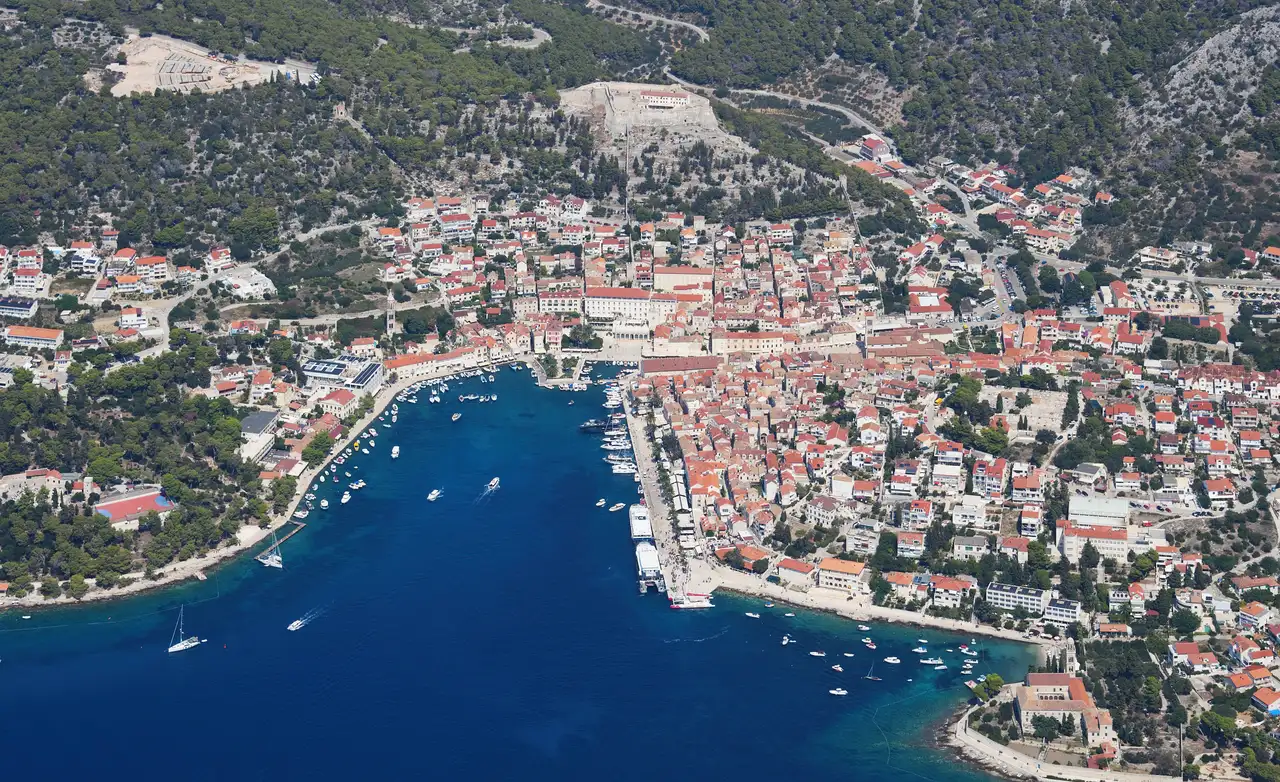
Stay in Hvar Town if you want the bars, the restaurants and the harbour outside your door and you’re crossing from Split on foot, because the catamaran docks right in town. Stay in Stari Grad if you’re bringing a car or travelling with children, or if you want more space for your money: it’s calmer and cheaper, and the car ferry docks just outside town. Jelsa, the third base, suits families who’ll hire a car and want the quietest evenings of the three.
The numbers behind that choice come from the operators’ own timetables and price lists, checked on 24 September 2026, and describe the autumn service from 28 September. The two towns are 17 km apart by road, and the island bus between them runs five times a day in each direction this autumn, the last from Hvar Town at 18:45 (last winter, three or four a day from Hvar Town). Jadrolinija’s car ferry from Split takes 110 minutes and docks 2 km outside Stari Grad’s old town, with three or four sailings a day in October. Catamarans reach Hvar Town in about an hour; most charge €25 (roughly $29 / £21), but the state-subsidised afternoon boats cost €6.40. A taxi from Hvar Town to Stari Grad is €40-50 at two local firms that publish their prices.
Who should stay where on Hvar
| Base | Best for | Getting there from Split | Car? |
|---|---|---|---|
| Hvar Town | Nightlife, dining, first-timers, couples | Catamaran, about 1 h, docks in the harbour | No - better without one |
| Stari Grad | Value, families, drivers | Car ferry, 110 min, docks 2 km from the old town | Yes if driving; bus or taxi otherwise |
| Jelsa | Calm, budget, families | Daily catamaran via Bol, or drive from the ferry | Yes - you’ll want one |
Hvar Town: nightlife, dining and the big harbour
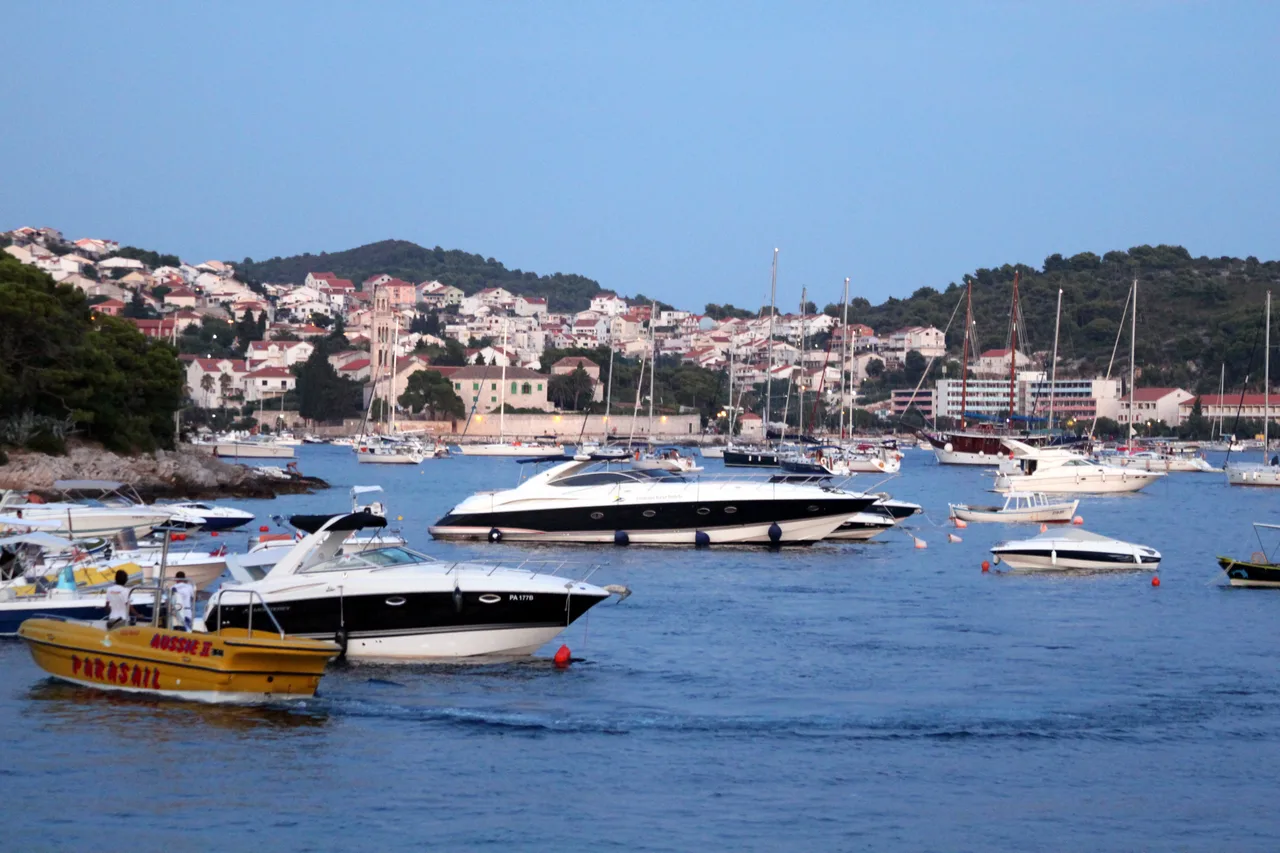
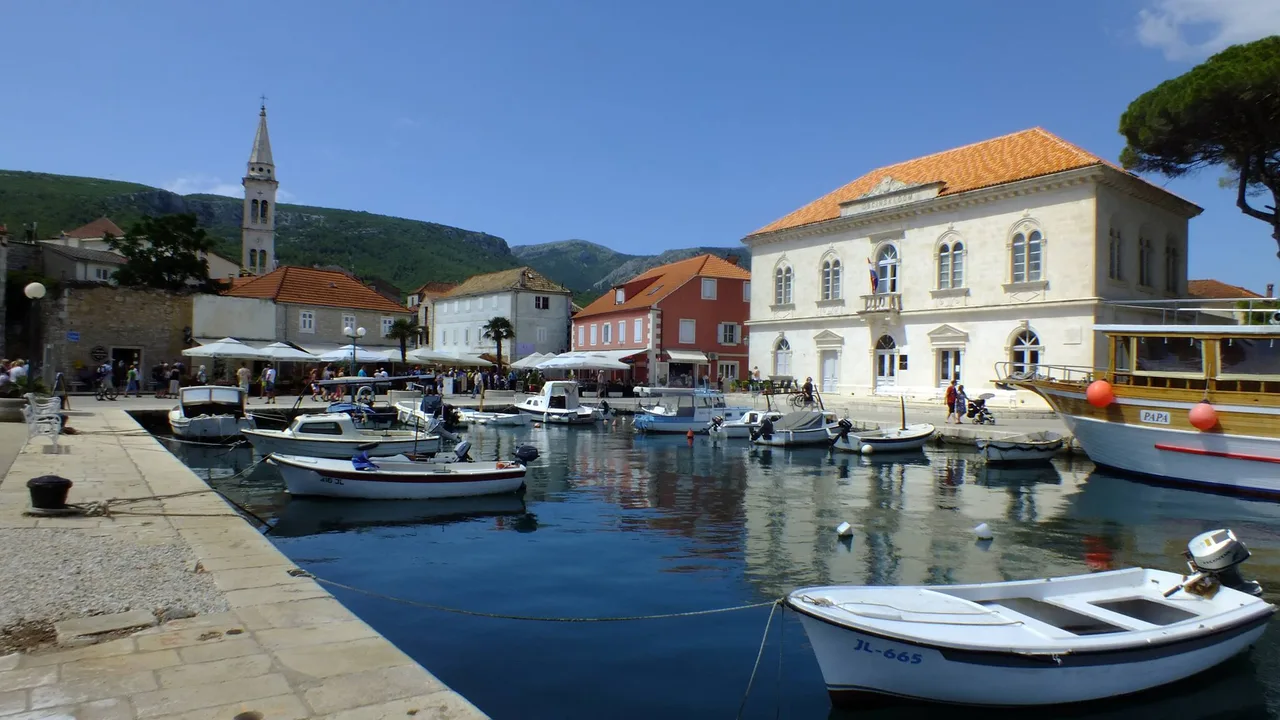
Hvar Town is the island at its most glamorous. Its harbour is one of the most striking on the Adriatic - Venetian palaces, an open seafront square and the Spanish Fortress (Fortica) on the hill above - and it has the best concentration of restaurants and bars, plus the island’s only real nightlife. If you want to swim by day and go out by night, this is the base, and in recent seasons it has softened from a hard-partying scene towards couples and families as much as club crowds. The hours the town allows for bars and the rules behind them are in Hvar nightlife.
Price and pressure come with it: Hvar Town is the most expensive town on the island, especially in July and August, and peak season brings serious crowds and late noise. It also has fewer family-friendly, space-for-your-money options than the quieter towns. Because the passenger catamarans from Split tie up in the harbour itself, it’s the obvious pick if you’re travelling without a car: you step off the boat into the middle of town and may never need the island bus at all. If it’s your first time on Hvar and the prices don’t put you off, start here.
Stari Grad: value, character and the car ferry
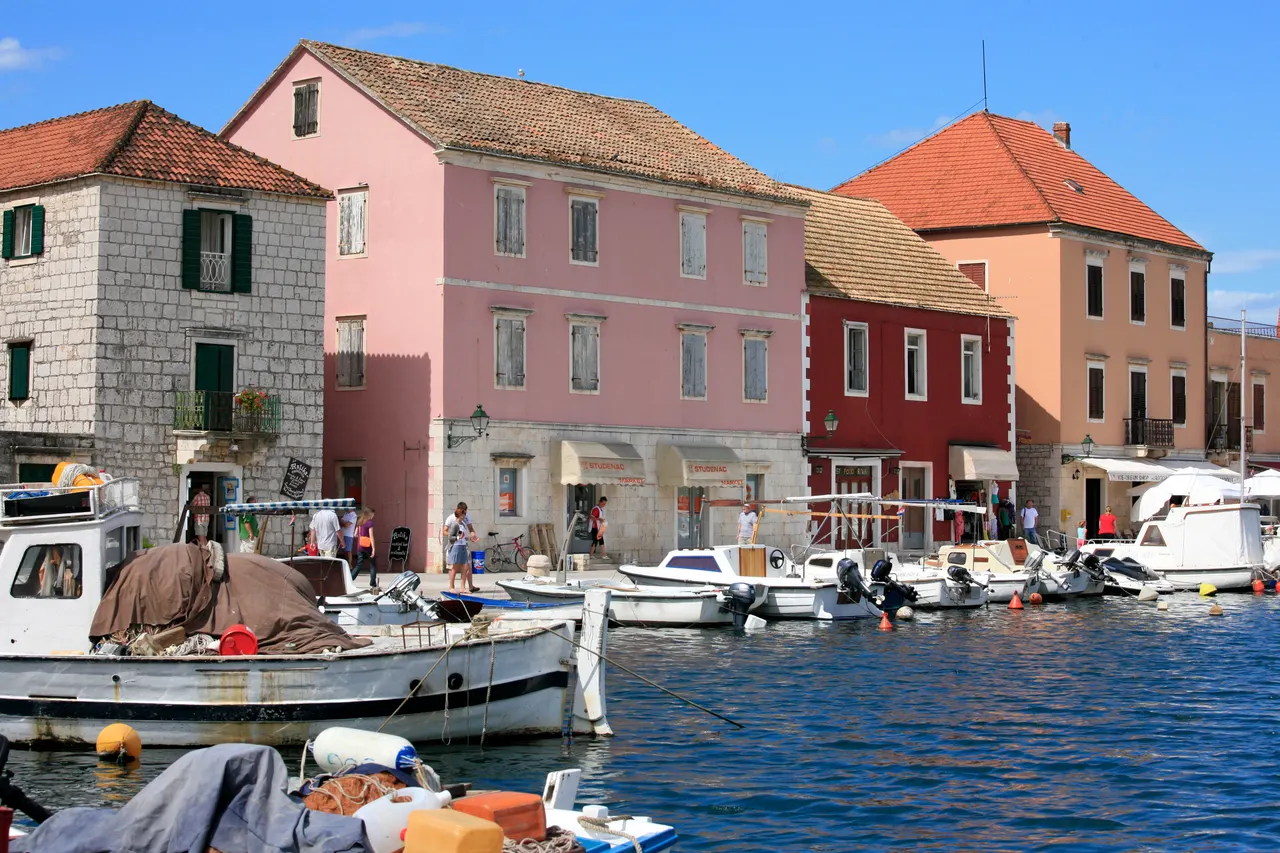
On the north side of the island, Stari Grad (“Old Town”) is the island’s oldest settlement and its calmest headline base - ancient limestone streets around a deep, sheltered bay, with a pace of life Hvar Town left behind years ago. It has fewer bars and restaurants, but the quality-to-price ratio is better, and rooms cost noticeably less than in Hvar Town. For a lot of travellers - especially families - it’s the smarter, saner choice.
The car ferry from Split comes in here, so if you’re driving, your bed is a few minutes from the ramp. The ramp isn’t in the old town, though: the ferry docks at a terminal 2 km west of it along the bay, under half an hour on foot. And Hvar Town is 17 km away across the island, so if you plan to eat or drink there most evenings, look at the last bus in the next section first: it leaves early.
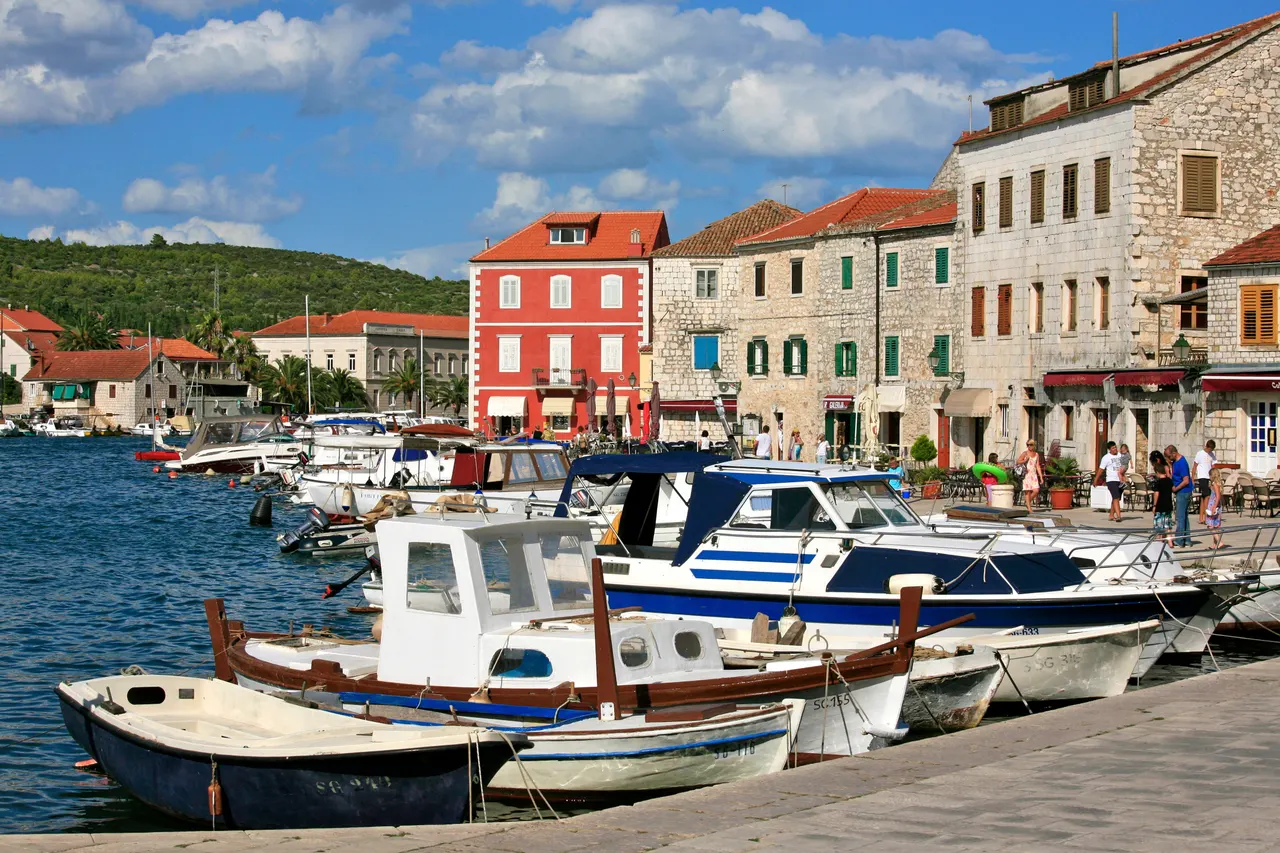
Stari Grad rewards a wander away from the harbour: narrow stone lanes, small squares, the Renaissance villa-museum of the poet Petar Hektorović, and the ancient Stari Grad Plain just inland. Where Hvar Town performs for its visitors, Stari Grad simply goes about its day - which is exactly why families and slower travellers tend to prefer it.
Hvar Town to Stari Grad: bus, taxi or on foot
Sleep in one town and you’ll probably spend at least a day or an evening in the other, and this short hop is where the cheaper base can quietly get expensive.
The bus: five a day each way
The island’s buses are run by Čazmatrans, and every Hvar Town-Stari Grad bus takes the main D116 road and calls at the ferry terminal on the way. On the timetable in force since 7 September 2026, buses leave Hvar Town at 08:20, 09:45, 12:15, 16:30 and 18:45 (a late 22:45 is dropped after 27 September) and Stari Grad at 08:00, 10:05, 14:30, 18:00 and 22:05. Čazmatrans doesn’t print running times, but the same sheet has the 08:20 from Hvar Town leaving the ferry terminal at 08:45, so allow about half an hour to the terminal and five minutes more into Stari Grad. You pay the driver in cash; the fare isn’t on the timetable.
From the ferry terminal into Hvar Town, only the 10:20 and 22:15 departures are marked as waiting for the ferry from Split; come off any other sailing and the next bus can be well over an hour away. And the evenings are short: from 28 September the last bus from Hvar Town to Stari Grad leaves at 18:45, so dinner in Hvar Town already means a taxi back. Winter is thinner still: last year’s timetable, in force from 18 October 2025, cut the run to four buses on weekdays and three at weekends, with the last one at 16:30.
How much is a taxi from Hvar Town to Stari Grad?
Neither town’s tourist board publishes a taxi tariff - both just list local firms and their phone numbers - so the useful figures are the ones the firms put on their own websites. When we checked on 24 September 2026, Taxi Paladina in Hvar Town listed €40 to the Stari Grad ferry terminal (roughly $46 / £34) and €50 into Stari Grad itself, and Hvar Taxi listed €40 to either, by day (07:00-21:00) in a car for up to four, with different rates at night and for a 7-8-seat van. Between Stari Grad and its own ferry terminal, Hvar Taxi charges €20. On a summer ferry day, book the ride ahead rather than hoping for a free car at the ramp.
Can you walk from Hvar Town to Stari Grad?
Only as a hike. On foot it’s about 17 km from Hvar Town’s main square to Stari Grad’s old town, and the walking route we plotted leaves the main road for minor tracks and a quieter county road, climbing to around 380 m before it drops to the bay. That’s four hours or more of steady walking: a good day out in spring or autumn if you’re a walker, and no way to get to dinner. The walk that does make sense is the last stretch from the ferry terminal along the waterfront into the old town.
Jelsa: calm, cheap and family-friendly
In the middle of the island, Jelsa is a pine-flanked harbour town and the most affordable base on Hvar with genuine character. It has a green, family-friendly waterfront, easy beaches, a local market and good seafood restaurants, all at a gentler pace and price than the two bigger towns. For families and anyone who’d take calm over glamour, this is the one.
Nightlife is limited, though, and you’ll realistically need a hire car for anything beyond the town itself: the beaches, the lavender villages and the other towns are all a drive away, and bus connections thin out. Choose Jelsa if your ideal Hvar is slow mornings, beach afternoons and quiet evenings, and if you’re happy to drive; skip it if you want to walk out into a buzzing scene or you’re carless.
How you arrive changes where you should stay
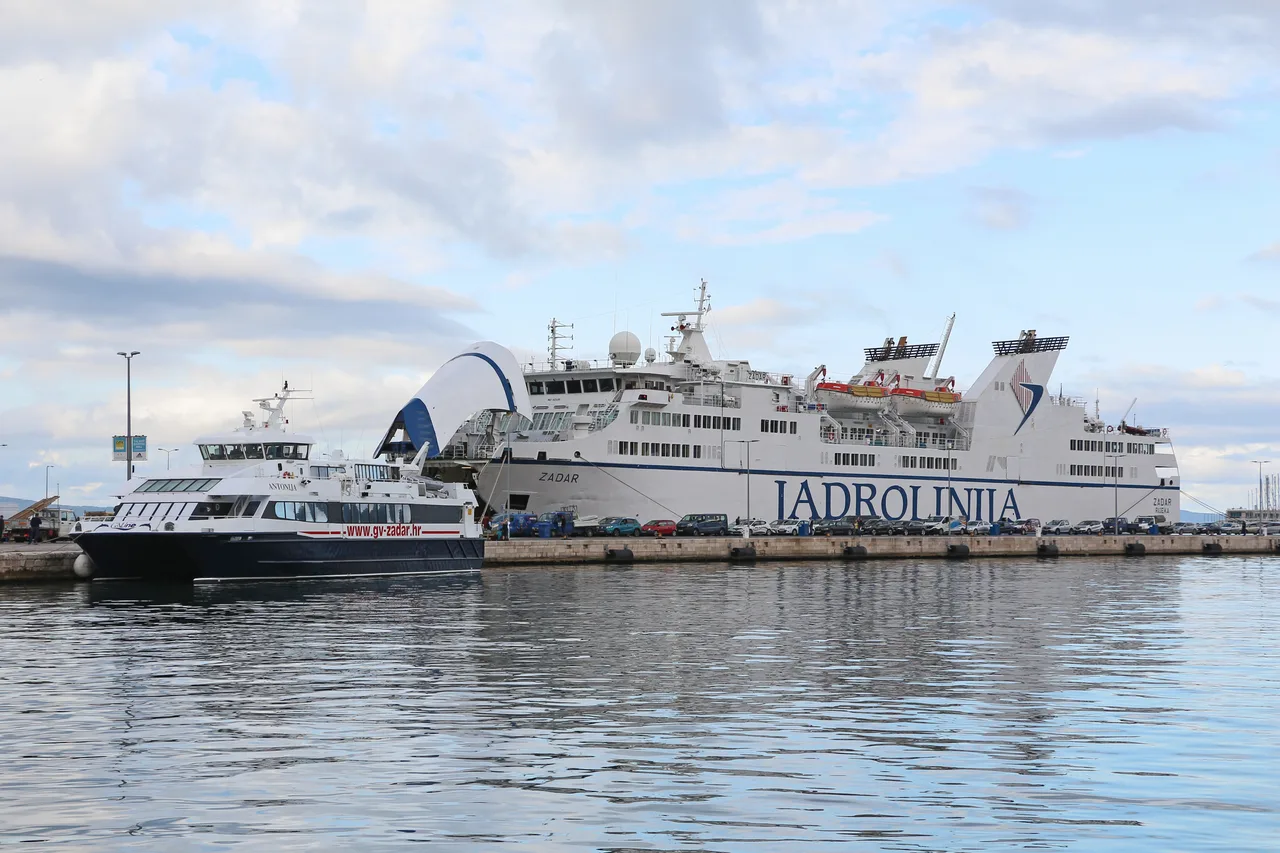
Every way onto Hvar is by boat, and the boat you take decides the base. Catamarans take foot passengers only, so from Split a car means the car ferry to Stari Grad, while most of the fast passenger boats land in Hvar Town. On the 2026 timetables, an October crossing looks like this:
- Car ferry, Split-Stari Grad (Jadrolinija line 635). From 28 September, sailings leave Split at 08:30, 14:30 and 20:30 every day, plus 06:00 on weekdays until 23 October; they leave Stari Grad at 05:30, 11:30 and 17:30, plus 14:30 on those weekdays. The timetable gives 110 minutes each way, and Jadrolinija’s own route page rounds it to two hours. A foot passenger pays €5.90 and a car up to 5 m long and 2 m high €35.60 (€8.40 and €47.60 in the summer season); longer or taller vehicles such as camper vans pay €64.70, or €81 in summer. Your ticket also reserves a place on the sailing you picked, but Jadrolinija still wants you at the port 45 minutes before departure, 60 in season.
- Catamarans, Split-Hvar Town. Jadrolinija, Kapetan Luka (Krilo) and TP Line between them run a dozen a day in early October, falling to nine from 19 October as the seasonal routes close. The commercial boats charge €25; the state-subsidised runs at 14:00 and 16:00 from Split charge €6.40 from 28 September (€10 in summer), about a quarter of the commercial fare for the same one-hour crossing.
- Catamaran, Split-Stari Grad. One Jadrolinija boat on weekdays, 11:30 from Split, an hour at sea and also €6.40 - the quickest crossing to Stari Grad for foot passengers.
- Catamaran, Split-Jelsa. One Jadrolinija boat a day, 16:30 from Split, calls at Bol on Brač and reaches Jelsa at 18:00.
- Car ferry, Drvenik-Sućuraj. About 30 minutes, and handy if you’re already driving down the mainland coast, but Sućuraj is the island’s far-eastern tip, a long haul from the main towns. It sells day tickets and boards by arrival queue, with no reserved sailing, so get there early.
On the mainland end, the Split travel guide covers the port city itself, and since most trips start or end with a night there, our guide to where to stay in Split has the best base for an early crossing.
Do you need a car on Hvar?
Not if you’re staying in Hvar Town; in Stari Grad, and even more in Jelsa, you’ll want one. If you mostly want the town, its beaches and the taxi-boats out to the Pakleni Islands, a car in Hvar Town is more hassle than help - parking is tight and you’d take the catamaran anyway. From Stari Grad or Jelsa, a car (or a firm grip on the bus timetable) is what opens up the whole island.
Bringing the car you’re already driving costs €71.20 return on the ferry off-season and €95.20 in summer (a car up to 5 m long and 2 m high; the fare is the same each way). That’s about one day’s hire on the island: Taxi Paladina in Hvar Town hires out cars at €70 a day in low season and €80 in high season, or €50 and €60 a day by the week. So for a single day of driving, hire on the island; for several days, bringing your own works out cheaper; and if you’ll mostly stay in Hvar Town, skip the car altogether. Our guide to renting a car in Croatia covers the trade-offs.
When to book and what it costs
Beds run out faster on an island than on the mainland, and Hvar Town is the pinch point: it has the least space and the most demand, so in the July-August peak the good rooms there go months out and prices climb hardest. Stari Grad and Jelsa fill later and charge less, and they’re the smart fallback when Hvar Town is full or over budget. If your heart is set on the glamour town in high summer, lock it in early and pair it with a booked catamaran seat; if you can flex to June or September, all three towns loosen up and the island is at its best anyway. The best time to visit Croatia has the month-by-month view.
We don’t quote nightly rates, only the pecking order: Hvar Town on top, Stari Grad in the middle with the better value, Jelsa the cheapest of the three. What any room actually costs swings so much by week and building that a nightly figure would only mislead - check live prices for your dates, and for what a full Hvar trip runs, see is Croatia expensive?. With the base settled, the Hvar travel guide covers the island beyond it: the Spanish Fortress, the Pakleni Islands, the lavender villages and the Stari Grad Plain.
Opening hours, prices, timetables and seasonal services change through the year - the figures here are planning estimates, not quotes. Confirm current details with the operators and official sources before you go.
Good to know
Room rates on Hvar peak in July and August and Hvar Town fills first. This page ranks the towns by price rather than quoting rates - check live prices and exact locations on your booking site.
Details checked: July 2, 2026
Read also

Before you go · 11 min read
Croatia in Winter: Weather, Advent & What's Open
Updated · October 23, 2026Croatia from November to March: official weather by city, which ferries and parks still run, winter tyre rules and flights. Checked 23 October 2026.

Before you go · 10 min read
Where to Stay in Korčula: Old Town to Vela Luka
Verified · September 5, 2026Korčula Town for walls and boats, Lumbarda for sand, Vela Luka for the Split car ferry. Match the base to how you arrive - then book.

Before you go · 10 min read
Sailing in Croatia: Yacht Charter Costs & Routes
Updated · September 5, 2026Croatia yacht charter 2026: bareboat weekly ranges, skipper and deposit separate, APA on crewed boats, season guides, island routes.

Before you go · 10 min read
Where to Stay in Makarska: Riviera Bases Compared
Updated · August 30, 2026Brela, Baška Voda, Makarska, Tučepi or the quieter south - which Riviera base fits beach weeks, families, nightlife and Brač ferry mornings.