
Rovinj Travel Guide: Old Town, Beaches & Istria
What to see in Rovinj, Croatia: the old town and St Euphemia, Grisia, the Balbi Arch, Punta Corrente, beaches and islands, food, and Istria day trips.
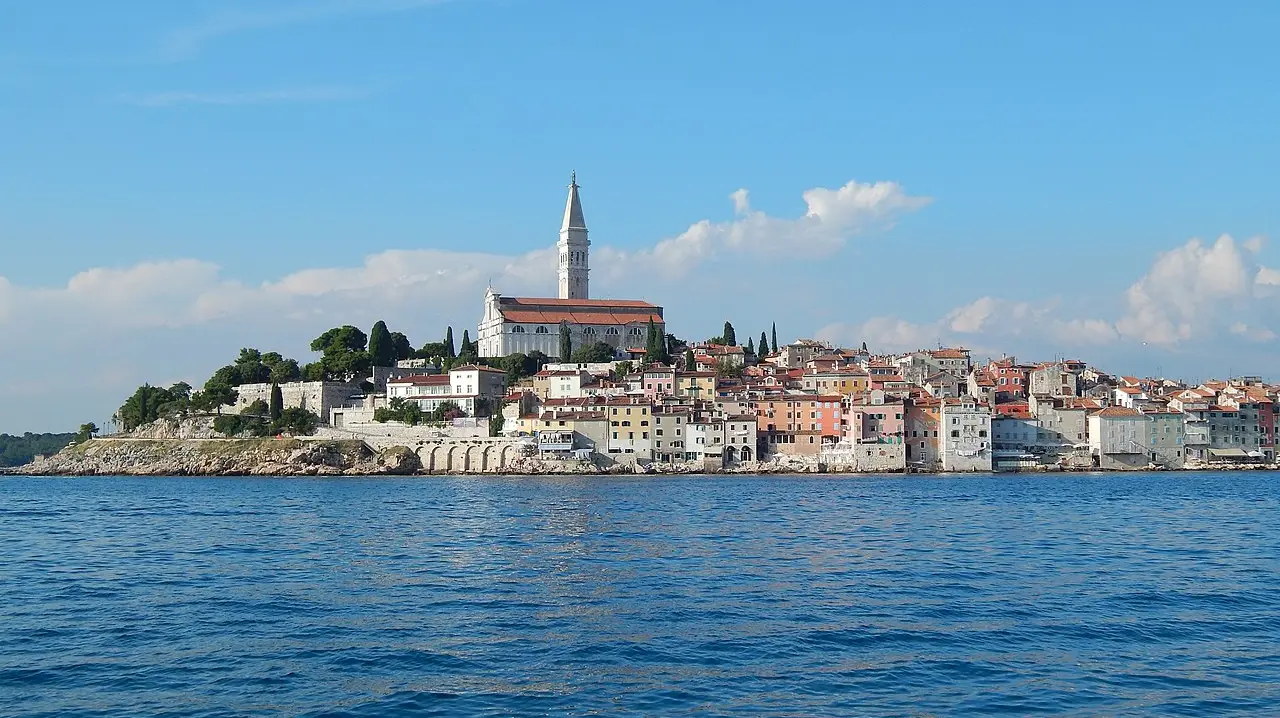
Rovinj is the most photogenic town on the Istrian coast - a tangle of tall, pastel houses crowded onto a small peninsula, crowned by the soaring Venetian bell tower of St Euphemia. Once an island, joined to the mainland in the 18th century, its old town is a maze of steep cobbled lanes that climb to the church and tumble back down to a working fishing harbour. The headline day is simple: wander up Grisia, the artists’ street, to the church and its tower for the view; pass under the Balbi Arch; then walk south into the pine-shaded Punta Corrente (Zlatni rt) park to swim off the rocks. Croatia uses the euro (€) and has been in the Schengen Area since 1 January 2023, so for most visitors arrival is formality-free.
Rovinj is small enough to see in a morning, which is exactly why so many people rush it - and miss the point. The town is at its best when the day-trippers leave and the low sun sets the pastel houses glowing over the harbour, so the real move is to stay the night and eat late in the lanes. For the wider region, see our Istria travel guide.
The old town: St Euphemia, Grisia and the Balbi Arch
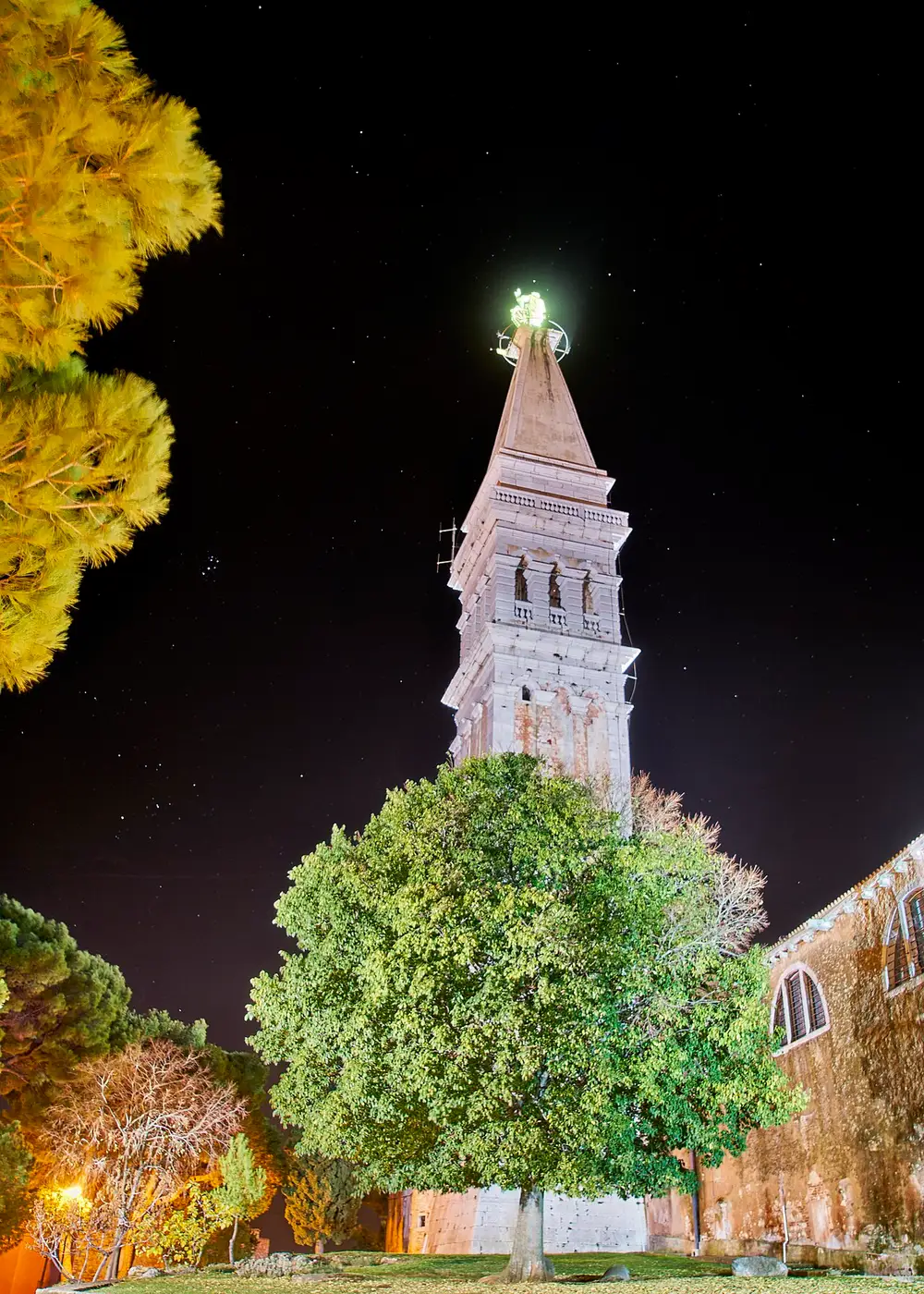
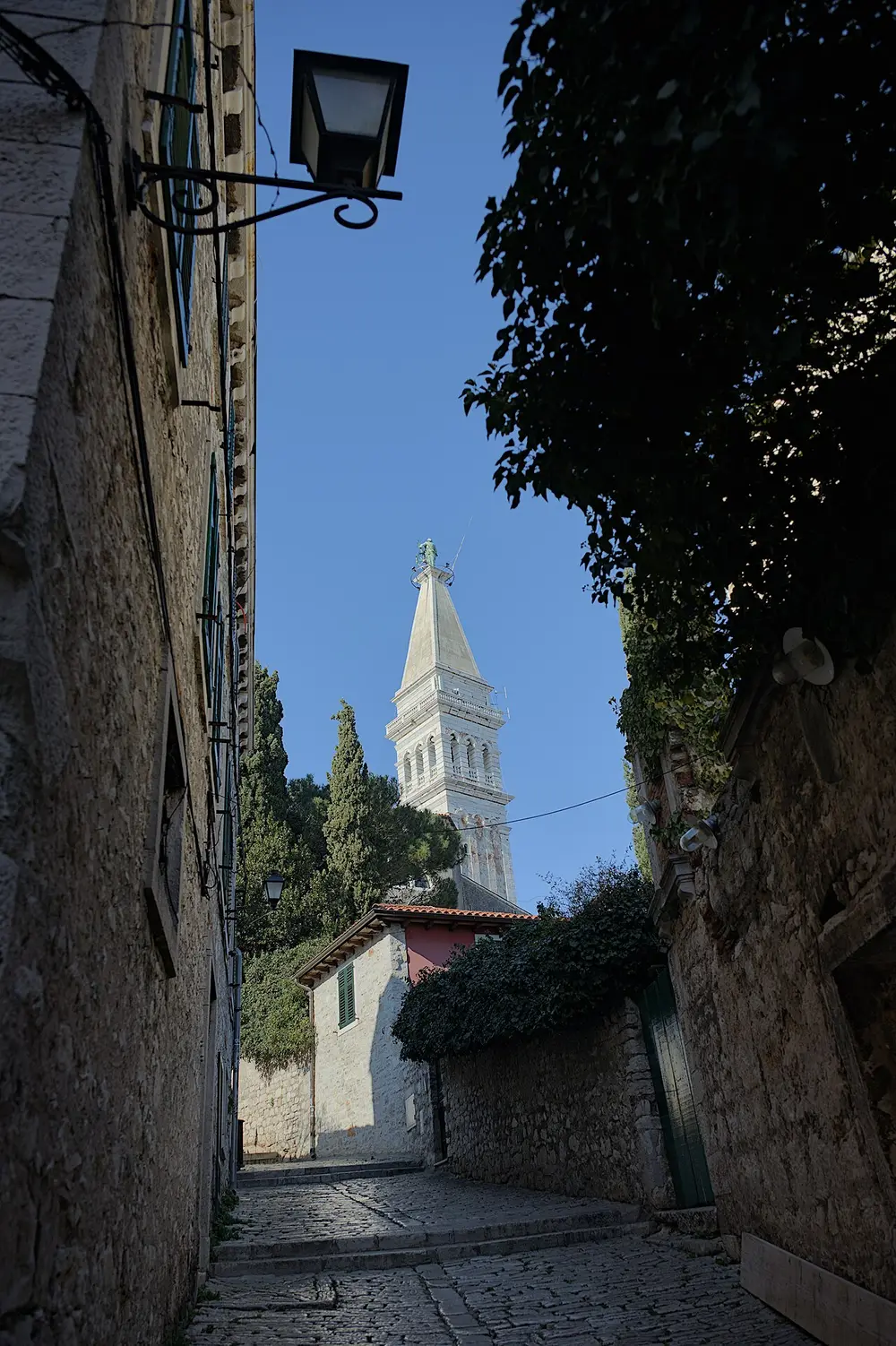
Everything in Rovinj points uphill toward the church of St Euphemia (Sv. Eufemija), the baroque church that crowns the peninsula. Built in the 18th century, it’s dedicated to the town’s patron saint, whose sarcophagus - according to local tradition, washed ashore here in the 9th century - lies inside. The church itself is free to enter; the real draw is the bell tower, a 60-metre campanile modelled on the famous St Mark’s tower in Venice and topped by a weather-vane statue of the saint. You can climb it (ticketed) for a sweeping view over the red roofs, the harbour and the islands.
The classic way up is along Grisia, the steep cobbled lane that runs from the main square to the church. Lined with galleries and studios, it’s the artists’ street of Rovinj, and on one day each summer the whole street becomes an open-air art exhibition. The smooth, polished stones underfoot - worn shiny by centuries of feet - are a Rovinj signature.
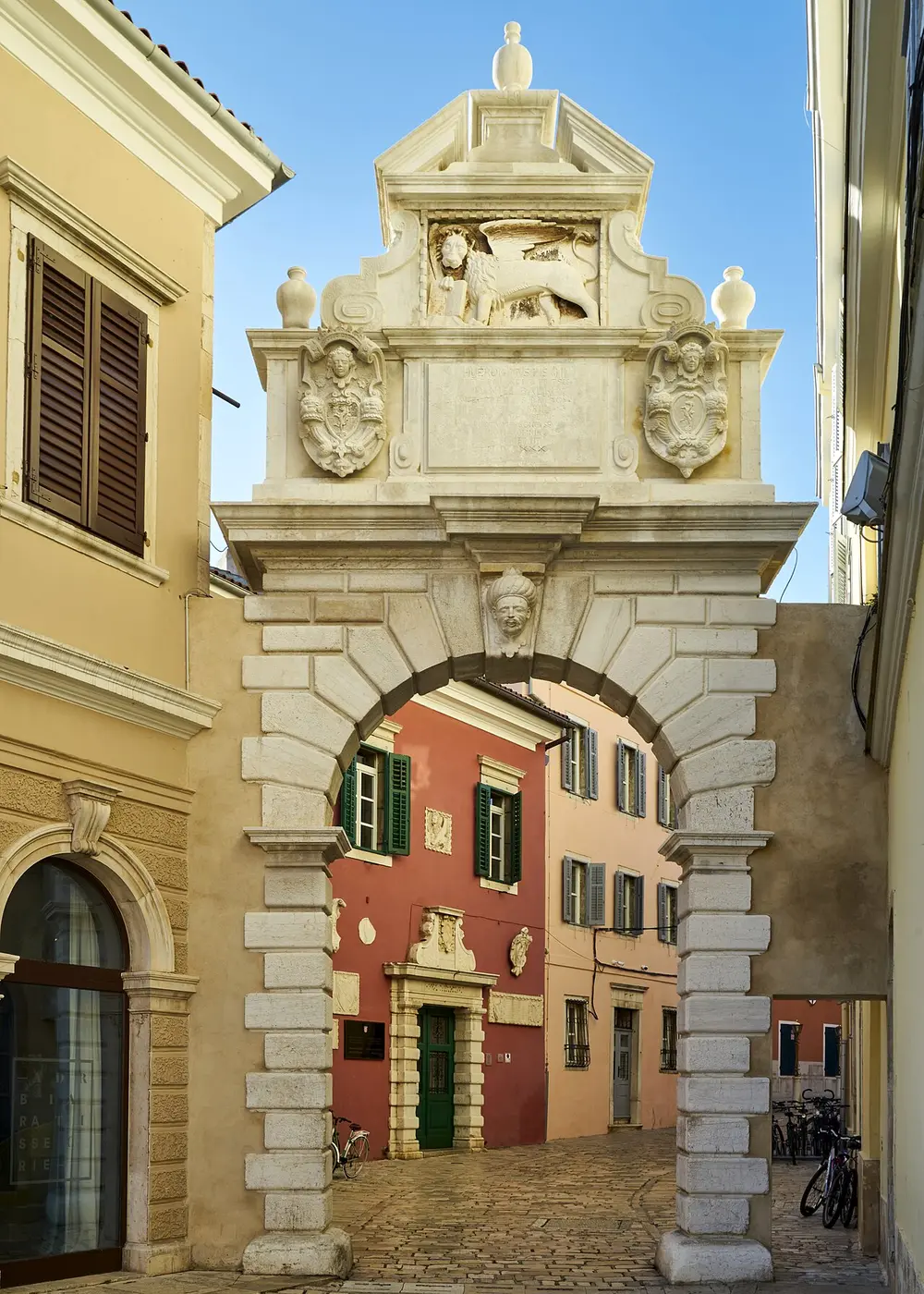
At the entrance to the old town stands the Balbi Arch (Balbijev luk), a 17th-century town gate built on the site of the old outer gate, decorated with a Venetian lion and the heads of a Turk and a Venetian. Step through it and you’re in the heart of the old town; nearby, the Town Clock Tower and the Batana House - a small museum devoted to the town’s traditional flat-bottomed batana fishing boats, a UNESCO-recognised piece of intangible heritage - are both worth a look.
Down at sea level, the harbour wraps around the peninsula in a curve of bobbing boats and pastel façades - the most painted, most photographed view in Istria, and at its best in the soft light of early morning or late afternoon.
Nature: Punta Corrente and the islands
Just south of the old town, the Punta Corrente Forest Park - known locally as Zlatni rt (Golden Cape) - is a long, wooded headland of Aleppo pine, cypress and holm oak laced with walking and cycling paths, planted in the late 19th century by the Austro-Hungarian industrialist Georg Hütterott. It’s Rovinj’s green lung and its favourite swimming ground: the rocky coast is dotted with little bathing spots, and the flat limestone slabs are popular with climbers. It’s an easy, shady walk or cycle from the centre.
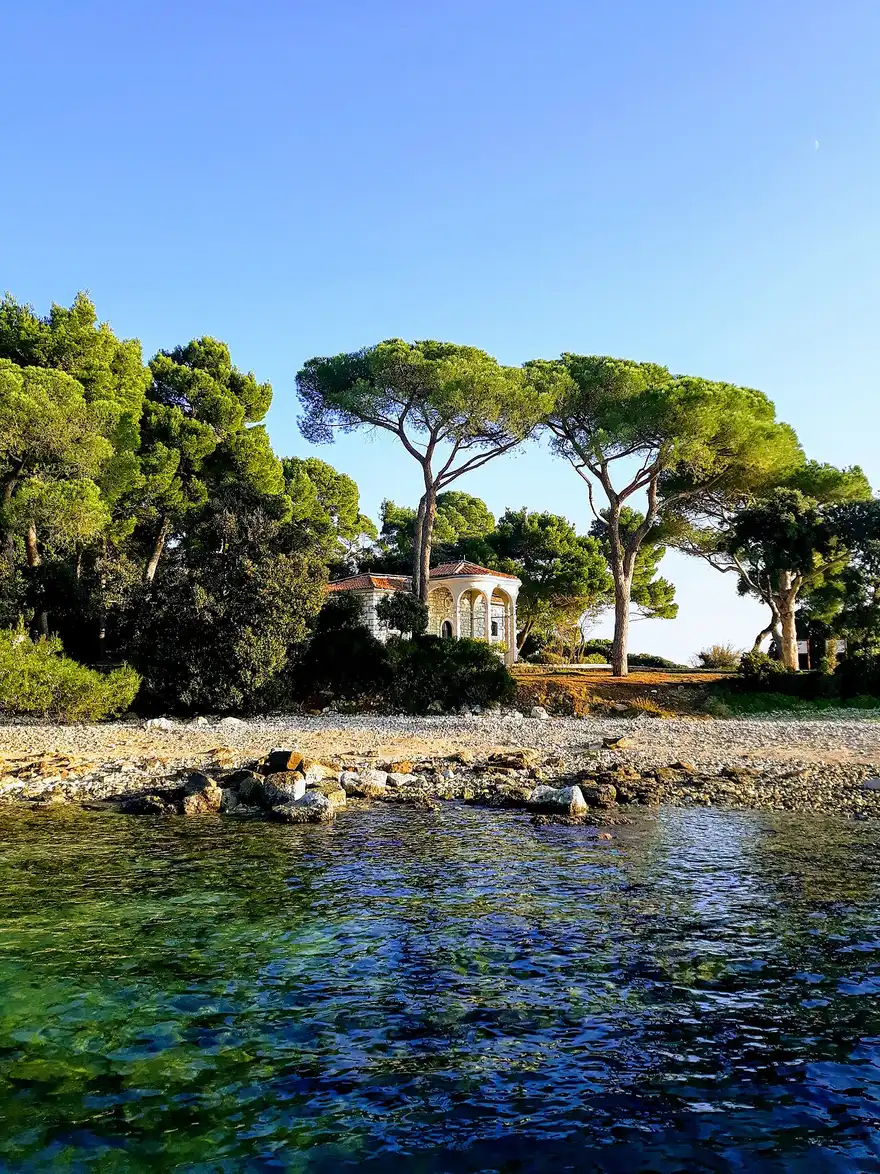
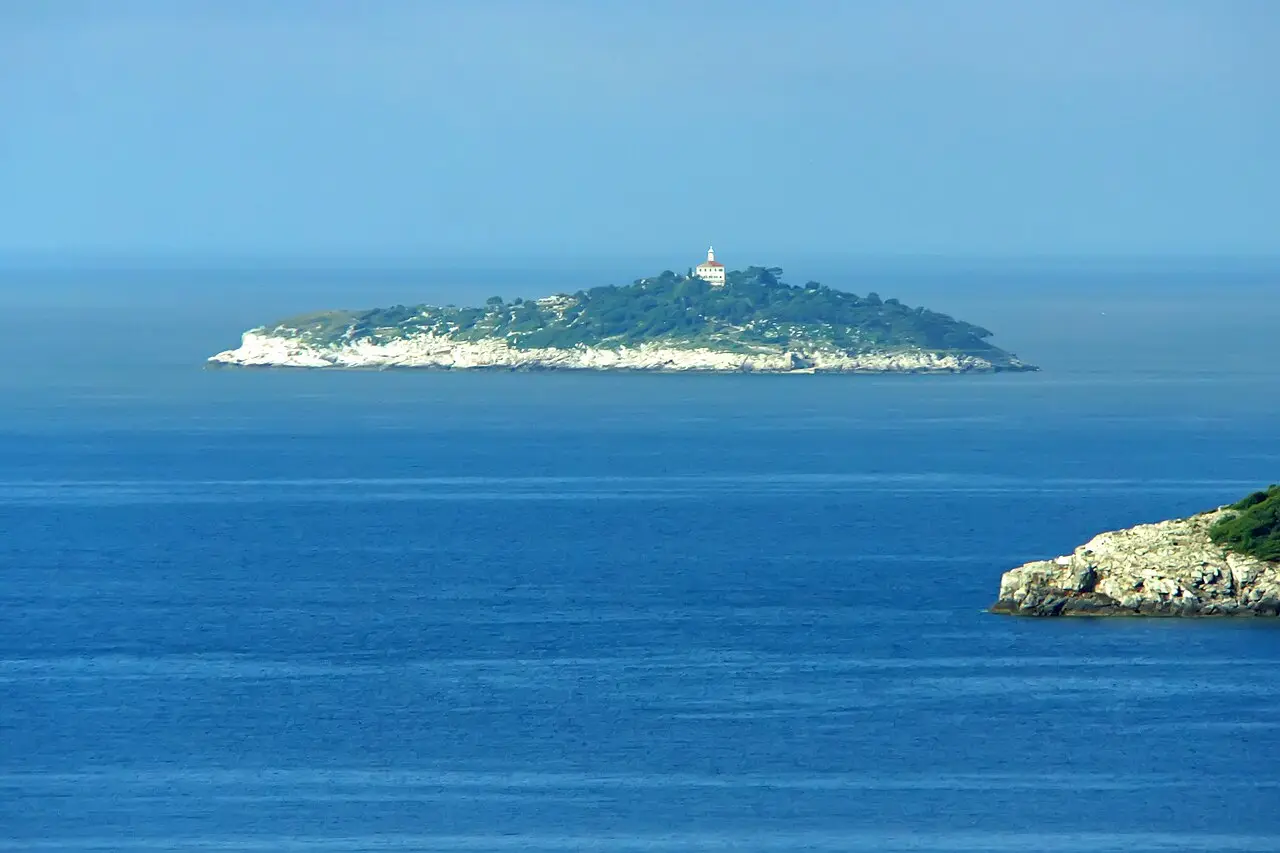
Offshore lies a small archipelago of fourteen islands and islets. The two you can easily reach are Sveta Katarina (St Catherine), a short hop from the harbour, and Crveni otok (Red Island) - actually two linked islets, one of them Sveti Andrija, with a hotel, beaches and a lighthouse. Taxi-boats shuttle out to both all day in season, and a half-day on the islands, swimming and walking the wooded shore, is one of the nicest things to do in Rovinj.
Beaches
Don’t come to Rovinj expecting sand: the shoreline is limestone slabs and pebble, the same as most of Istria, though the water makes up for it by being some of the clearest on the coast. The most convenient spots are the pine-backed coves of Punta Corrente and the beaches just south of the old town, such as Mulini and Lone Bay, an easy walk from the centre past the big resort hotels. For more space and clearer water, take a boat to Sveta Katarina or Red Island, or head to the long pebble beaches at Cuvi and Borik along the southern shore. Bring water shoes - the rocky entries sting bare feet fast, and every local swims in them for a reason.
Where to eat
Rovinj is a serious food and wine town, drawing on the rich larder of Istria - a region often compared to Tuscany. The local specialities are truffles (the prized white truffle of inland Istria, in season in autumn), boškarin (the native Istrian ox), wild asparagus in spring, top-quality olive oil, fresh Adriatic seafood, and Istrian fuži and pljukanci pasta. Wash it down with the region’s own wines: the crisp white Malvazija and the red Teran. The harbour terraces are atmospheric but tourist-priced; you’ll often eat better, and for less, a few lanes back in the old town or out in the villages. For how we pick places, see the food directory.
Where to stay: best areas
| Area | Good for | Notes |
|---|---|---|
| Old town | Atmosphere, sights, dining | Beautiful but pricey; stepped lanes mean luggage is a workout; book early for summer |
| Near the harbour / centre | Walkability and views | Best base for a short stay; close to everything |
| Resort zone (south) | Beaches, families, hotels | The big hotels and beaches at Lone Bay and Mulini, a short walk from town |
| Villas / agrotourism inland | Quiet, space, a car | Istria’s countryside is full of stone villas and farm stays; you’ll want a car |
July and August book out early here and rates climb with the crowds, so reserving ahead is non-negotiable, not just advice. For the full breakdown - old town versus the Monte Mulini/Lone Bay resort belt, Amarin, apartments and camping, with parking distances and prices - see where to stay in Rovinj. Curious what any of this costs elsewhere in the country, or when to dodge the crowds entirely? Is Croatia expensive? and the best time to visit Croatia cover both.
How to get to Rovinj
Rovinj is in Istria, the northwestern peninsula, and - unlike the Dalmatian islands - there’s no ferry route here from the south, so you arrive by road. The nearest airport is Pula (PUY), about 40 km to the south, roughly a 40-minute drive; Trieste (Italy) and Zagreb are the other common air gateways. By car, Rovinj is about 3 hours from Zagreb by motorway via the Učka tunnel, and an easy drive from Pula, Poreč or the Slovenian and Italian borders.
Buses connect Rovinj with Pula, Poreč, Zagreb and, seasonally, Trieste and Venice. There’s no train to Rovinj itself. Within Istria a car is genuinely useful - the hill towns and the coast are spread out and bus links between them are thin - so many visitors hire one; see our guide to renting a car in Croatia. Note that the old town is largely pedestrian-only, so you park outside and walk in.
Day trips around Istria
Rovinj is the ideal base for exploring Istria, and the best sights are all within an hour’s drive. Strung together, these stops make our Istria road trip - a 3-4 day loop from Pula through Rovinj to hilltop Motovun.
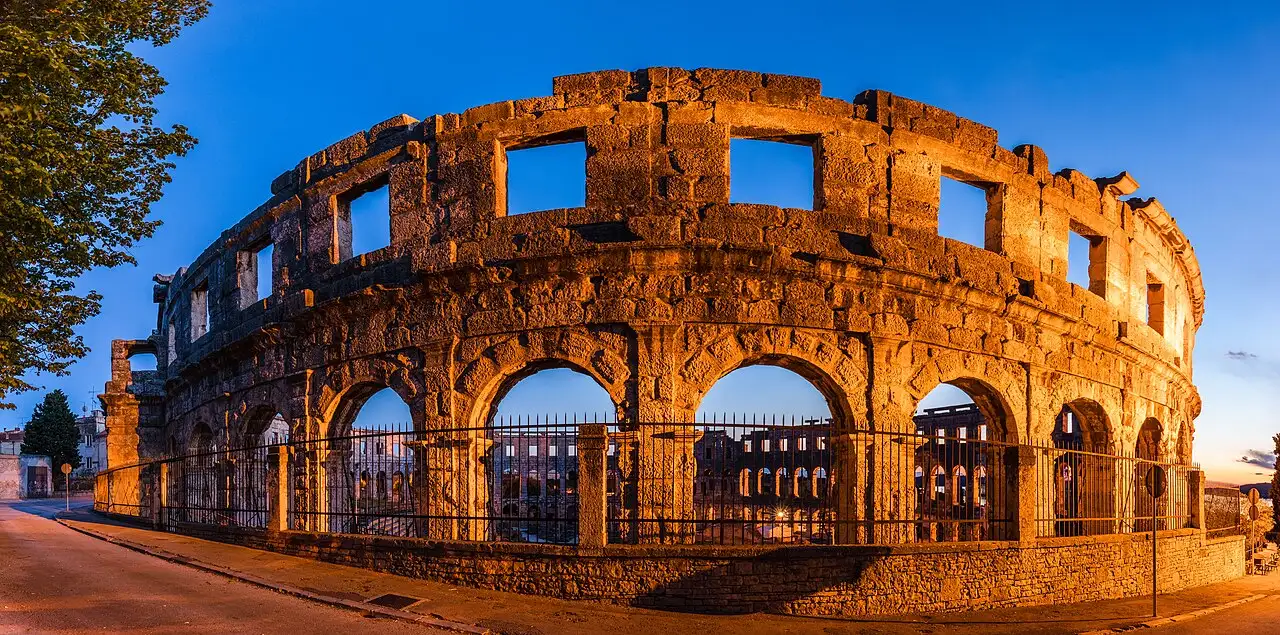
- Pula (~40 km south) - Istria’s biggest city, built around a magnificent Roman amphitheatre (the Arena), one of the best-preserved in the world, plus a Roman temple and triumphal arch.
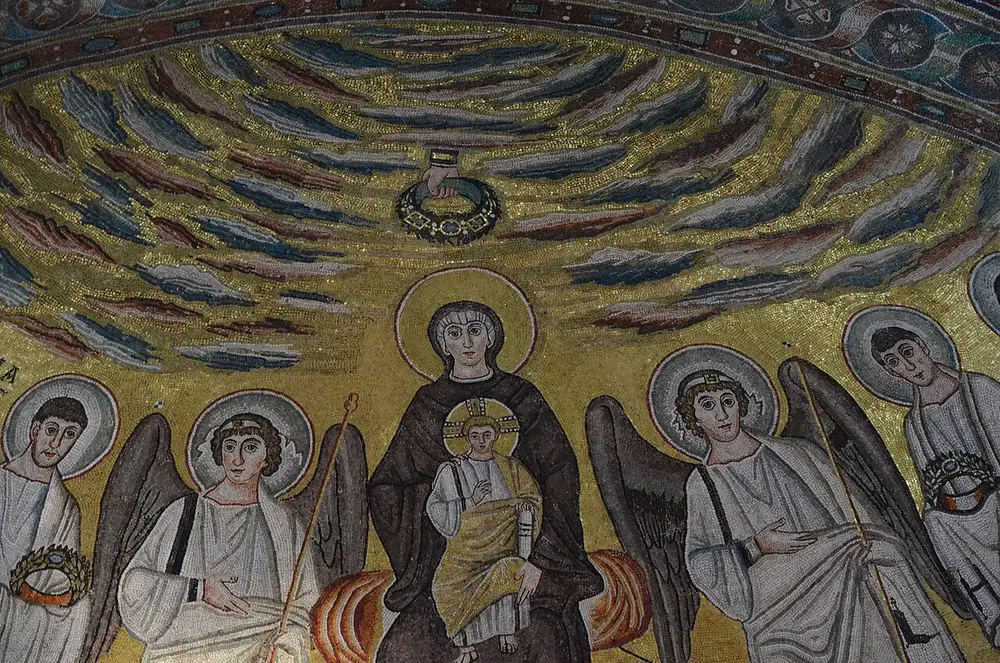
- Poreč (~40 km north) - home to the 6th-century Euphrasian Basilica, a UNESCO World Heritage Site famous for its dazzling Byzantine gold-ground mosaics.
- The Lim Fjord (Limski kanal) - a long, steep-sided sea channel just north of Rovinj, known for its oyster and mussel farms and waterside seafood restaurants.
- Motovun & Grožnjan - fairy-tale hill towns in inland Istria, surrounded by vineyards, olive groves and the truffle-rich oak forests of the Mirna valley.
Practical tips
- When to go. Skip July and August if you can - the old town gets shoulder-to-shoulder and rooms cost the most all year. Late May, June and September trade almost nothing in weather for a fraction of the crowd; see the best time to visit Croatia for the full year.
- Money. The euro (€) is the currency, and cards work in nearly every shop and restaurant - but keep some cash for the taxi-boats out to the islands and the smaller konobas that don’t take cards.
- Wear good shoes. The old town’s stepped, polished lanes are steep and slippery in places - leave the wheelie suitcase behind if you can.
- Get a car for Istria. The region’s hill towns and coast reward a car; see renting a car in Croatia.
Plan the rest of your trip
Rovinj fills the Istrian corner of a Croatia trip nicely, and pairs well with the country’s other showpiece towns: the Dalmatian island of Hvar, the lively port of Split and the walled city of Dubrovnik far to the south. If you’re still nailing down dates and a budget, the best time to visit Croatia and is Croatia expensive? cover both, and renting a car in Croatia is worth a read before you tackle Istria’s back roads. The cities hub collects our other Croatian city and island guides.
Opening hours, prices, timetables and seasonal services change through the year - the figures here are planning estimates, not quotes. Confirm current details with the operators and official sources before you go.
Photos
On the map
The map loads on click - to keep the page lightweight.
The map didn’t load. Check your connection and refresh the page.
Good to know
The old town, the harbour, Grisia and the seafront are free to wander. The church of St Euphemia is free to enter; climbing the bell tower is ticketed (seasonal hours). Check current prices and hours with the Rovinj tourist board before you go, as they change by season.
Details checked: June 23, 2026
Distance ≈250 km · ~3 h by car
- Zagreb ≈250 km · ~3 h by car By motorway via the Učka tunnel; no direct ferry - Rovinj is reached by road or bus, not by the Dalmatian island ferries.
Read also

Cities · 12 min read
Motovun Travel Guide: Walls, Truffles & Teran
Verified · September 4, 2026Motovun hilltown guide: walls ticket €5 in 2026, St Stephen, Teran cellars, Mirna views, parking climb, and why the film festival no longer plays here.

Cities · 10 min read
Dugi Otok & Sakarun Beach: Island Day-Trip Guide
Updated · August 31, 2026Day-trip Dugi Otok from Zadar: Jadrolinija ferry to Brbinj, Sakarun beach, Veli Rat lighthouse, and Telašćica cliffs - DIY or boat tour.

Cities · 10 min read
Opatija Travel Guide: Habsburg Riviera & Lungomare
Verified · August 25, 2026Opatija on the Kvarner Gulf: the 10 km Lungomare, Villa Angiolina museum, Maiden with the Seagull, and how it differs from Rijeka and Istria.

Cities · 10 min read
Omiš Travel Guide: Pirates, Zipline & Cetina Canyon
Verified · August 21, 2026Omiš is 25 km from Split: Promet bus €2.50, Mirabela €4-6, Cetina rafting and an 8-line zipline over the canyon.