
Zagreb to Split 2026: Bus, Train, Flight or Car
Zagreb to Split by bus (from €24, under 5h), train (nearly 8h) or car (€26 toll). Real August 2026 fares and what actually saves you time.
Take the bus if you want the most departures and the shortest ride: on the roughly 409 km run down the A1, FlixBus covers Zagreb to Split in as little as 4 hours 55 minutes, against almost 8 hours on HŽPP’s own train. What flips the usual assumption is price: book online in summer and HŽPP’s own seasonal discount drops a ticket to around €14.70 - cheaper than any bus fare on this route - in exchange for those extra hours on board. A domestic flight looks like the obvious shortcut at 45 minutes in the air, but factor in both airports and it saves less time than you’d think. Driving yourself wins on flexibility - fastest door to door once you’re splitting fuel and a €26.40 toll between two or three people, or want to stop at Plitvice along the way. The numbers below are August 2026 planning figures, checked against each operator’s own site - confirm before you book.
Heads-up. Bus fares, the A1 toll and HŽPP’s rail fares below come straight from FlixBus, Arriva, Hrvatske autoceste (HAC) and HŽPP’s own published tariff (Tariff 103), checked in August 2026. Croatia Airlines is the exception: like any airline, it doesn’t publish one flat one-way fare for this route - it prices by date and demand, so that figure alone is shown as a range, cross-checked against fare search sites rather than quoted as fact. Confirm the current price before you rely on it.
The fast version
| Option | Door-to-door time | One-way price | Best for |
|---|---|---|---|
| Bus | 4 h 55 min to about 5 h 30 min | from ~€19-24 | Most frequent, and much faster than the train |
| Train | ~7-8 h (night train: ~8 h asleep) | ~€14.70-25.22 + €1.06 reservation | Cheapest in summer with the online discount, no driving, saves a hotel night |
| Flight | ~3 h realistic | from ~€45-55 booked early | Connecting flights, protecting a short trip |
| Private transfer | ~4.5 h (same road as driving) | from €492 per car | Groups and families splitting the fare, zero driving |
| Drive (A1) | ~4.5 h + stops | fuel + €26.40 toll + car | Flexibility, a Plitvice detour |
By bus: most frequent, and much faster than the train
Two operators run this route with real frequency: FlixBus and Arriva, the latter working with Autotrans and the Brioni/BUSLY cooperative. Between them you’re rarely waiting long - FlixBus alone lists 18 departures a day, running from 02:00 to 23:55, and its fastest service covers what FlixBus itself labels its minimum distance of 410 km in 4 hours 55 minutes, for fares from about €24. Arriva’s own timetable quotes a longer average of around 5 hours 30 minutes - one of its departures matches that same 4 hours 55 minutes, but another runs 7 hours 20 minutes with extra stops along the way - with fares from about €18.90 on first-minute deals to the low €30s depending on the date (checked 9 August 2026). That spread of routes explains the distance gap too, not a typo: Arriva calls 453 km the average across all its departures, against FlixBus’s stated minimum of 410 km on the direct run.
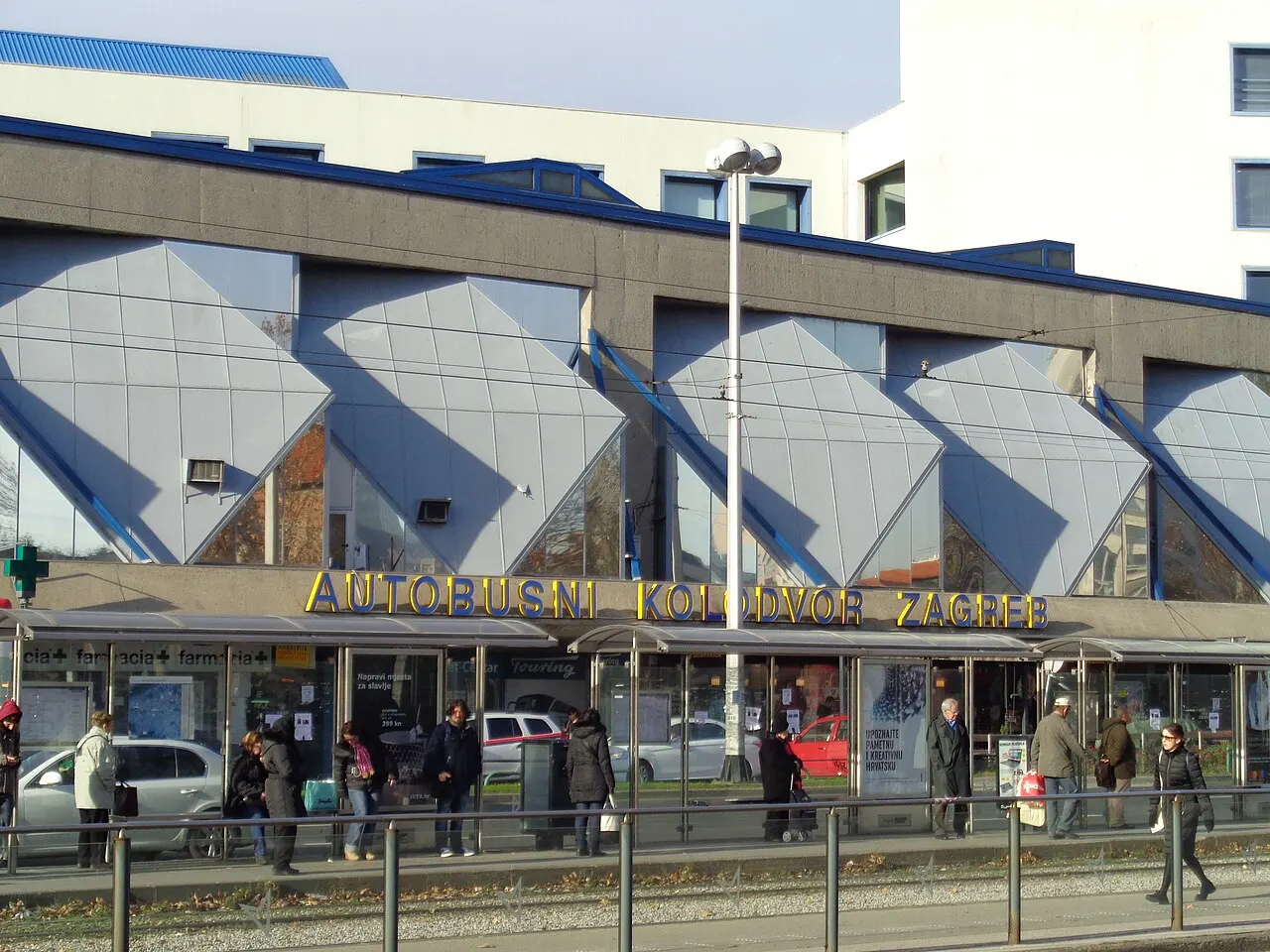
Both operators use the same terminals, which is one less thing to plan around. Zagreb’s main bus station (Autobusni kolodvor, Avenija Marina Držića 4) sits about 2 km southeast of the centre - a 15-minute tram ride on line 6, or a 25-minute walk. Split’s bus station is on Obala kneza Domagoja, right beside the ferry port and the train station, a five-minute walk from Diocletian’s Palace. You arrive, in effect, already in the old town.
Book online a few days ahead in July and August, when the popular departures - early morning and late afternoon - sell out first. Outside peak season you can usually buy the day before, or at the station. For how this route fits into the rest of the country’s coach and ferry network, see our getting around Croatia guide.
By train: the scenic option, not the fast one
This is the one number worth knowing before you assume trains beat buses on longer Croatian routes: they don’t, not here. HŽPP’s daily train (No. 523) leaves Zagreb Glavni kolodvor at 13:49 and reaches Split at 21:47 - 7 hours 58 minutes, three hours slower than the fastest bus on the identical corridor. In peak summer HŽPP adds an earlier day train (No. 521) - in 2026 it ran from late June to the end of August, departing Zagreb at 07:08 and arriving in Split at 14:09, a touch over 7 hours - so outside that window the 13:49 is the only daytime departure. Both call at Perković, where passengers headed to Šibenik change trains.
There’s a seasonal night train too, and its timing changes with the timetable: in summer 2026 it left Zagreb around 00:46 and pulled into Split about 08:49, continuing to and from Osijek; the autumn version HŽPP published in September 2026 runs Friday nights only from early October, Zagreb 22:06 to Split 06:53, with a Sunday-night return. Either way it’s roughly 8 hours asleep instead of awake, which is really the case for taking it: you save a hotel night, not travel time - check HŽPP’s “Vlakom na more” page for the version running on your date.
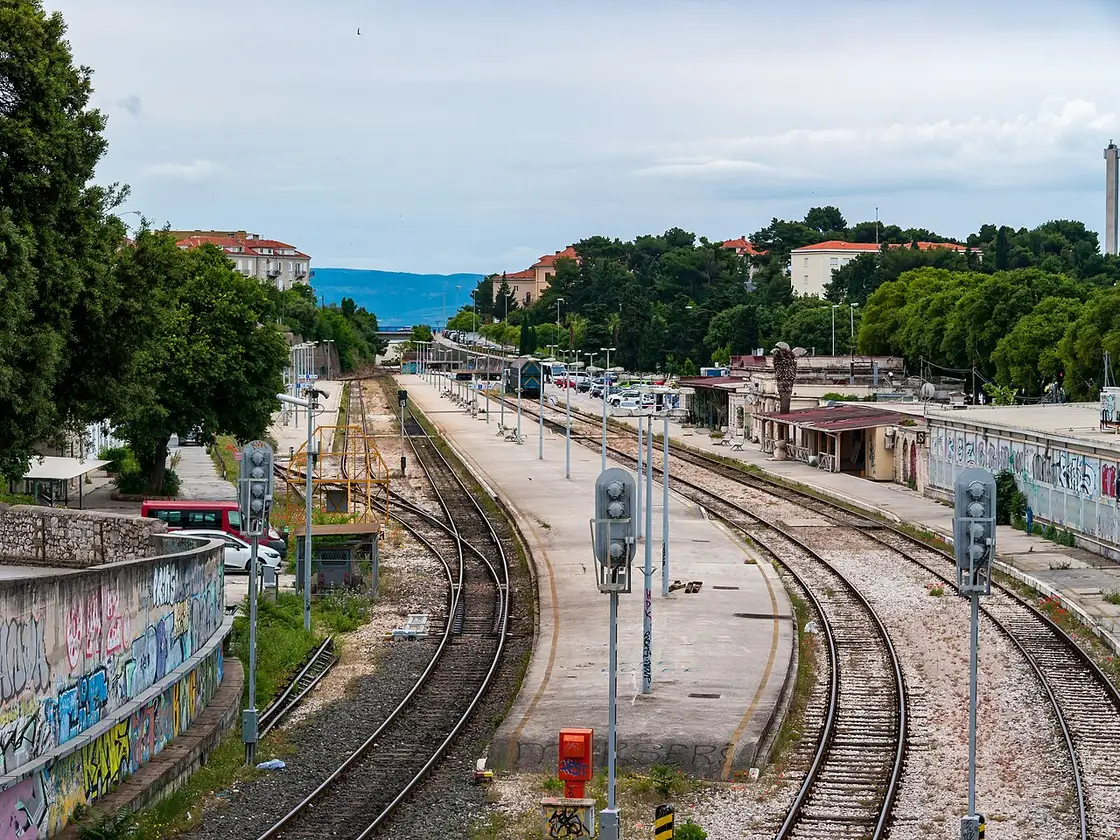
Seat reservation is compulsory on all of these trains - a flat €1.06 - and here’s the number that flips the usual bus-versus-train assumption: HŽPP’s own published tariff prices this distance in 2nd class at €25.22 standard fare, but its seasonal “Vlakom na more” promotion cuts that by 40% at the ticket counter, to €15.14, and a further 10% if you book online, to about €13.63. Add the reservation and you’re at roughly €14.70 online, or €16.20 at the counter - cheaper than any bus ticket on this route in August 2026. A sleeper berth costs extra on top of the ticket (€9 for a three-person compartment, €13 for two, €25 for a single). The appeal here isn’t just the price, either: it’s watching Lika’s karst hills go by without driving, or stepping off already rested because you slept through the boring part.
By plane: less of a shortcut than 45 minutes suggests
Croatia Airlines flies Zagreb to Split nonstop, daily, year-round - confirmed on their own published schedule - and the flight itself takes only about 45 minutes, which makes it look like the clear winner. It isn’t, once you add the rest of the trip. Getting to Zagreb Airport, 15 km out, takes 30-40 minutes by bus or taxi; airlines typically ask for some buffer before a short domestic flight, call it 45-75 minutes; then the 45-minute flight; then baggage claim and the 25 km run from Split Airport into town, another 30-45 minutes. Add it up and you’re at roughly three hours, door to door - genuinely quicker than the bus, but by something like two hours, not the four and a half the raw flight time seems to promise.
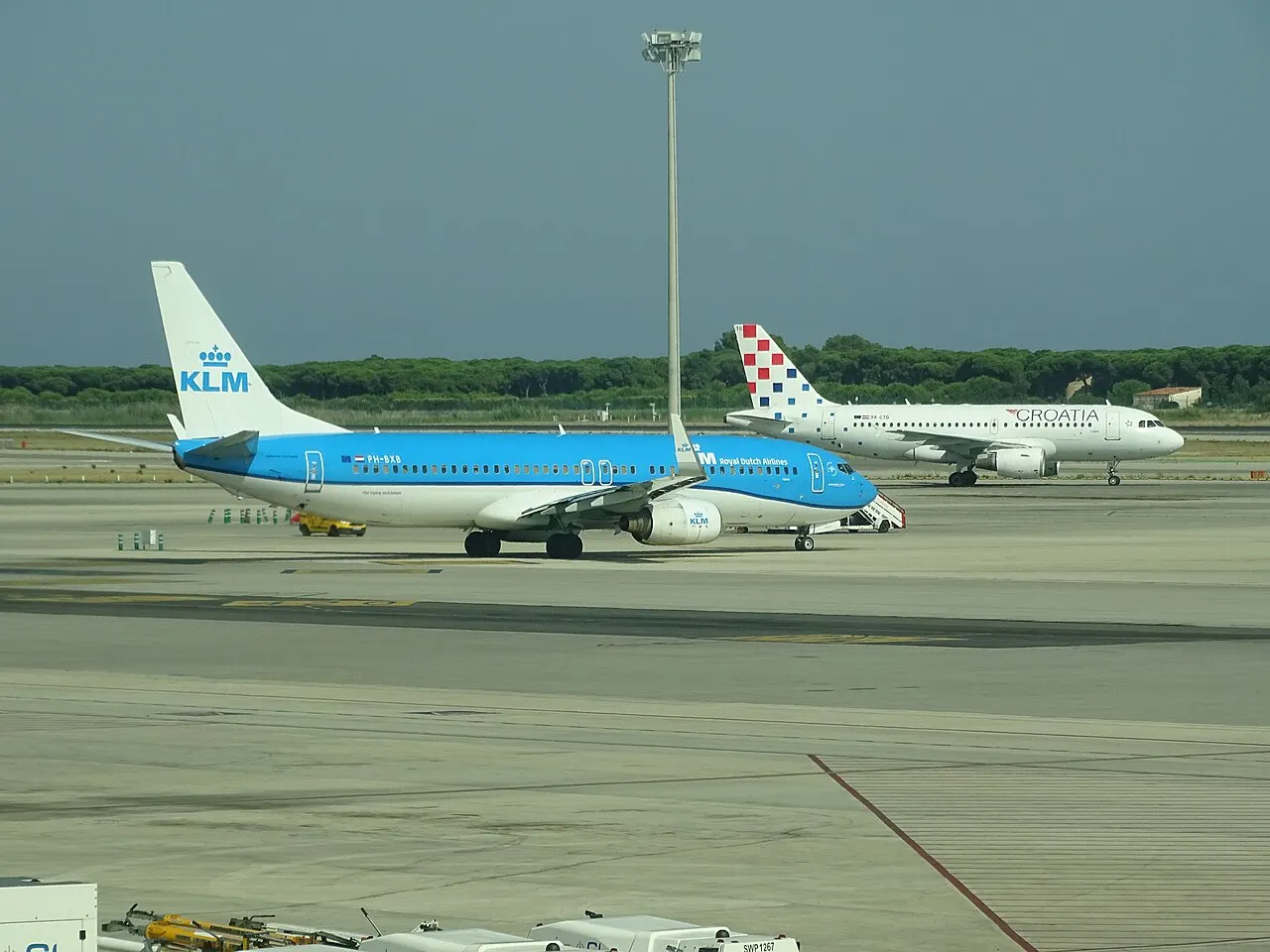
Fares aren’t fixed either: like any airline, Croatia Airlines prices by date and demand rather than posting one number. Cross-checking fare search sites in August 2026, early-booked promotional one-ways start somewhere around €45-55 and climb well past €100 closer to departure or in peak weeks - several times the bus fare, for roughly two hours saved. It earns its keep if you’re connecting from an international flight into Zagreb and don’t want to bolt a five-hour bus onto an already long travel day, or if two hours is worth more to you than the fare gap. For a same-day domestic hop with nothing riding on the connection, it’s a hard case to make on the numbers alone.
Private transfer: someone else drives the long way
There’s a middle option between the bus and renting your own car: book a private transfer and let someone else handle the four-and-a-half-hour drive. Our partner Kiwitaxi lists this exact Zagreb-Split route from about €492 per car for its Economy class, a standard sedan best suited to one or two people with normal luggage; the Comfort class that comfortably seats four costs €504, fixed before you travel - no meter, no haggling, and door to door rather than station to station. Split four ways in a Comfort car, that works out to roughly €126 a head: still well above the bus, but for a family or a group that would otherwise book a one-way rental plus a drop-off fee, it can land in a similar range while nobody has to drive. It mostly earns its cost on a late-night or early-morning arrival, when buses thin out, or simply for skipping four and a half hours behind the wheel.
By car: fastest with your own schedule, at a price
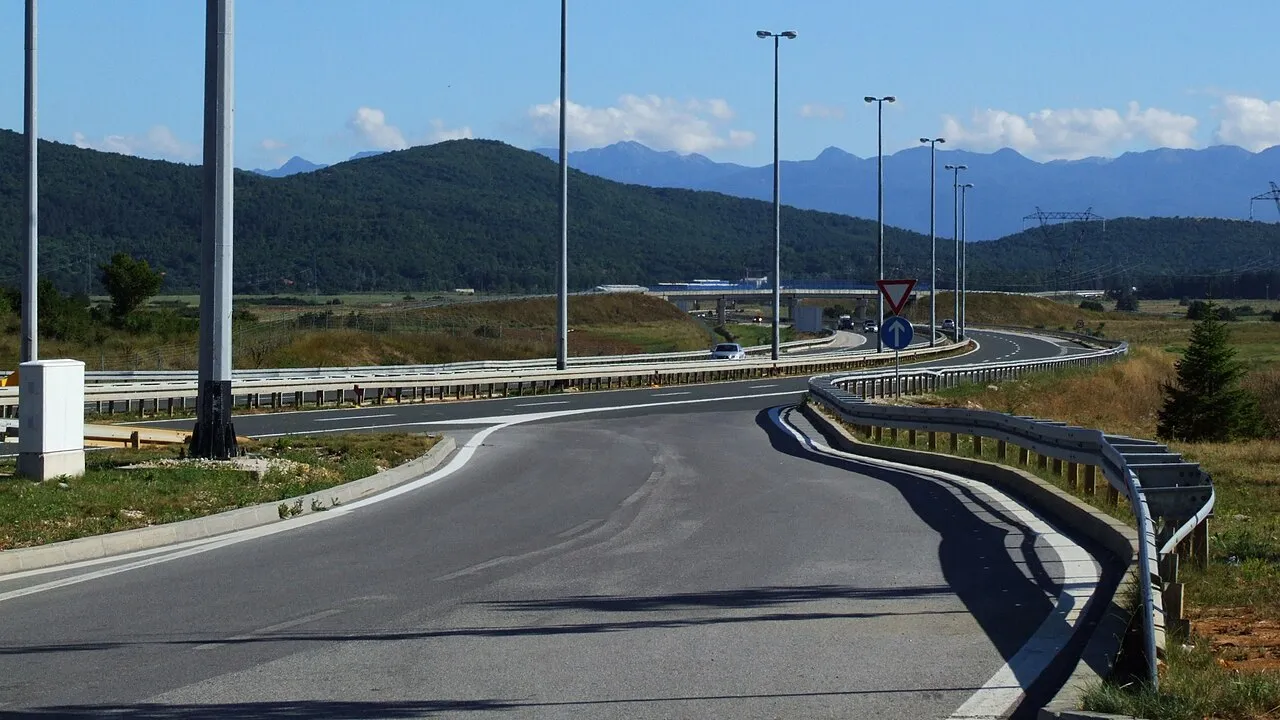
Driving is the only option that lets you stop wherever you want, and it’s the quickest way to cover the ground: the A1 motorway runs Zagreb to Split in about 409 km, roughly 4 hours 30 minutes without stopping, joining the motorway at Lučko just south of the city. The toll for a standard car - HAC’s category I, any two-axle vehicle under 1.9 m, which covers pretty much every rental - is €26.40 one way, charged by distance and paid by card, cash or an ENC transponder at the exit barrier; motorcycles (category IA) pay less, at €15.80.
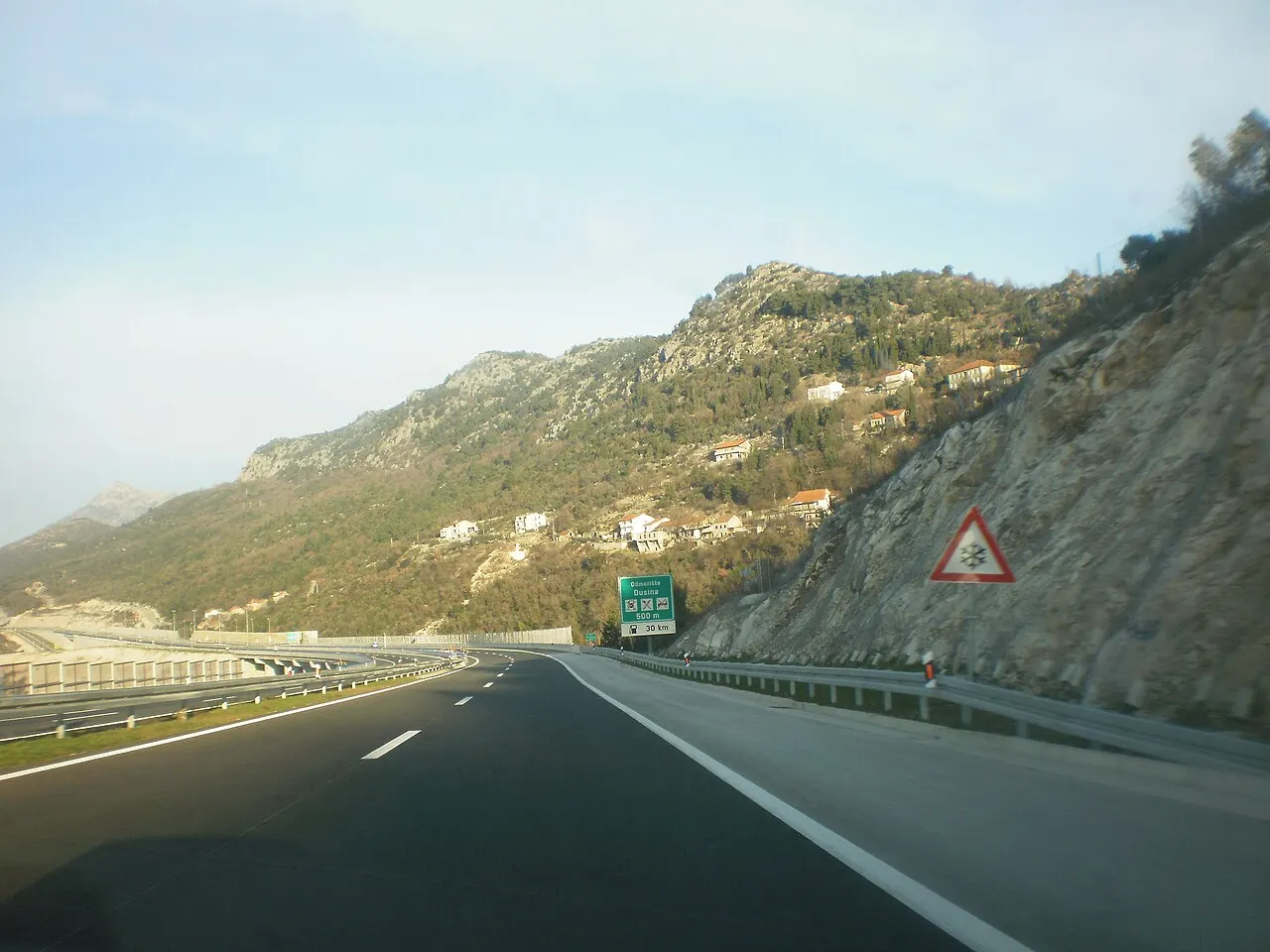
The trade-offs are the usual ones. One-way rentals - picking up in Zagreb, dropping off in Split, or the reverse - are common but almost always carry a drop-off fee, so it’s worth comparing that against a return rental plus a bus or train back for whoever isn’t driving. And once you arrive, both Zagreb’s and Split’s old towns are largely pedestrian, so the car goes into a car park outside the walls rather than to your hotel door - plan for that, especially in Split in summer, when central parking gets tight and expensive fast. Where a car genuinely pays for itself is a detour through Plitvice Lakes, which turns the drive into a two- or three-day trip instead of an afternoon; our Zagreb to Split via Plitvice route lays out the exact stops, distances and toll math for that version. Full rental terms, insurance and cross-border rules are in our guide to renting a car in Croatia.
Who should take what
If you just want the simplest, most frequent option, take the bus - it’s faster than the train and drops you close enough to walk to your hotel in both cities. If you’re counting every euro instead, book the train: HŽPP’s summer discount undercuts every bus fare on this route, and it’s an honest trade - the cheapest way to go, it just costs two or three extra hours. Travelling with kids, heavy luggage, or landing badly jet-lagged, a private transfer removes the one variable that makes a long bus ride harder than it needs to be: you don’t have to manage it yourself, and splitting the fare across three or four people brings it down to about EUR 126 each - still well above a bus ticket, but in the same range as a one-way hire car once you add the drop-off fee, and nobody has to drive. Building a road trip with days to spare, especially if Plitvice is anywhere on your list, rent a car - the toll and the fuel are a small price for stopping wherever the view asks you to. Landing in Zagreb from abroad and trying to protect a short trip’s worth of daylight, or connecting onward the same day, the flight is worth the extra cost for the two hours it buys back. And if you’re the kind of traveller who’d rather watch Lika’s hills go by from a train window than fight motorway traffic, or you like the idea of a free night’s sleep built into the journey, the night train is a genuinely good reason to be the one person on this page who doesn’t take the bus.
Whichever you pick, this leg is short by Croatian standards. For what to do once you’re there, see our Zagreb and Split travel guides, and for how this route fits the rest of the country’s transport network, getting around Croatia covers buses, ferries and driving elsewhere on the coast. Continuing south past Split? Our Split to Dubrovnik transport guide picks up the story. Skipping Split entirely and going the whole way in one push? Our Zagreb to Dubrovnik transport guide compares the bus, flight, drive and transfer over that longer 600-plus km haul.
Fares, timetables and tolls here are August 2026 planning figures from each operator, not live quotes - schedules shift with the season, so confirm the current price and departure time before you travel.
Photos
Read also

Transport · 12 min read
London to Split 2026: 2h35 Nonstop, from £109 Return
Verified · September 3, 2026Nonstop London-Split takes about 2 hours 35 minutes. Croatia Airlines lists Gatwick from £109 and Heathrow from £159 return - check live fares.

Transport · 9 min read
Zadar Airport to the City: Buses & Transfers
Updated · August 27, 2026Zadar Airport (ZAD) to the old town in 2026: Liburnija shuttle, taxi, private transfer and app rides - the €5 bus, 20-minute trip and where each stops.

Transport · 11 min read
How to Get to Korčula: Ferries from Split & Dubrovnik
Updated · September 5, 2026How to reach Korčula in 2026: catamarans from Split and Dubrovnik, the Orebić car ferry, Vela Luka routes, times, fares and which option to pick.

Transport · 13 min read
Zagreb to Dubrovnik: Fly, Drive or Take the Bus?
Updated · September 19, 2026Zagreb to Dubrovnik: fly (55 min, ~3.5 h door to door), bus 8 h 30 min - 14 h, drive 7 h plus €33.70 tolls, or a private transfer. Which one fits.