
Sinjska Alka 2027: Tickets, Seats and a Day Trip from Split
The 312th Alka is likely on 6-8 August 2027, not yet confirmed. Sunday seats cost €30-70 in 2026, Friday and Saturday were free. Plus the bus from Split.
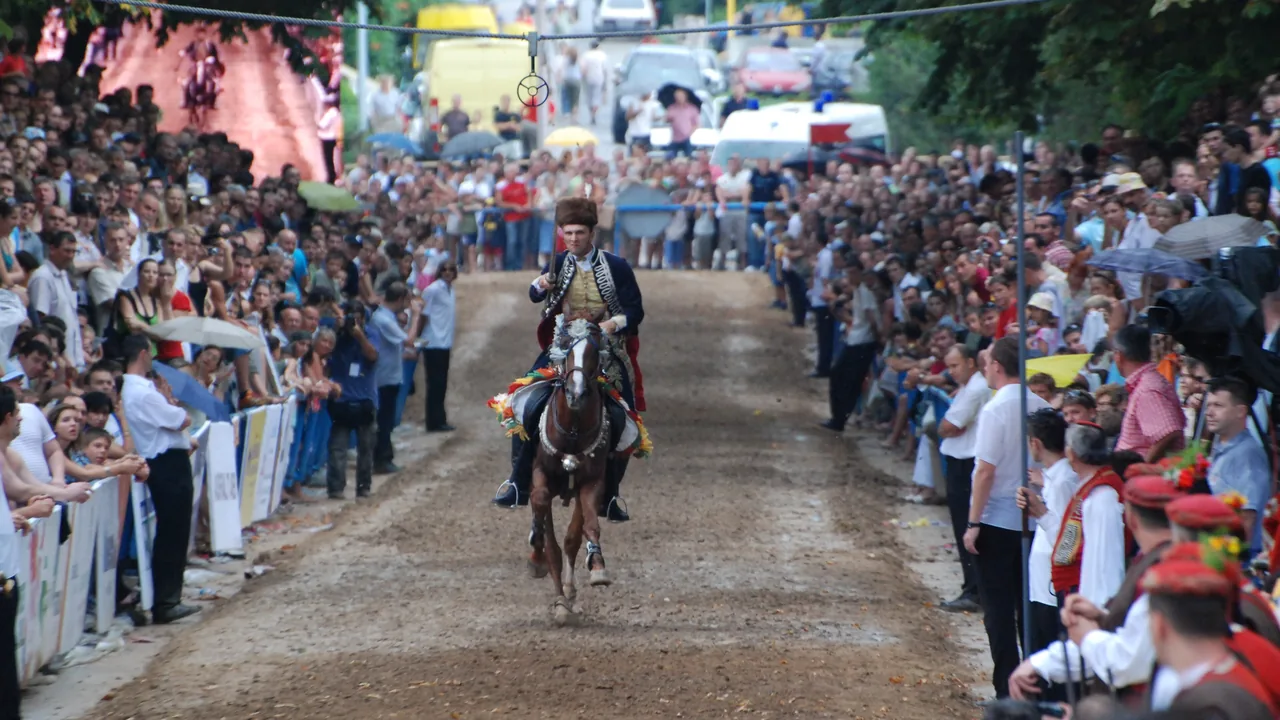
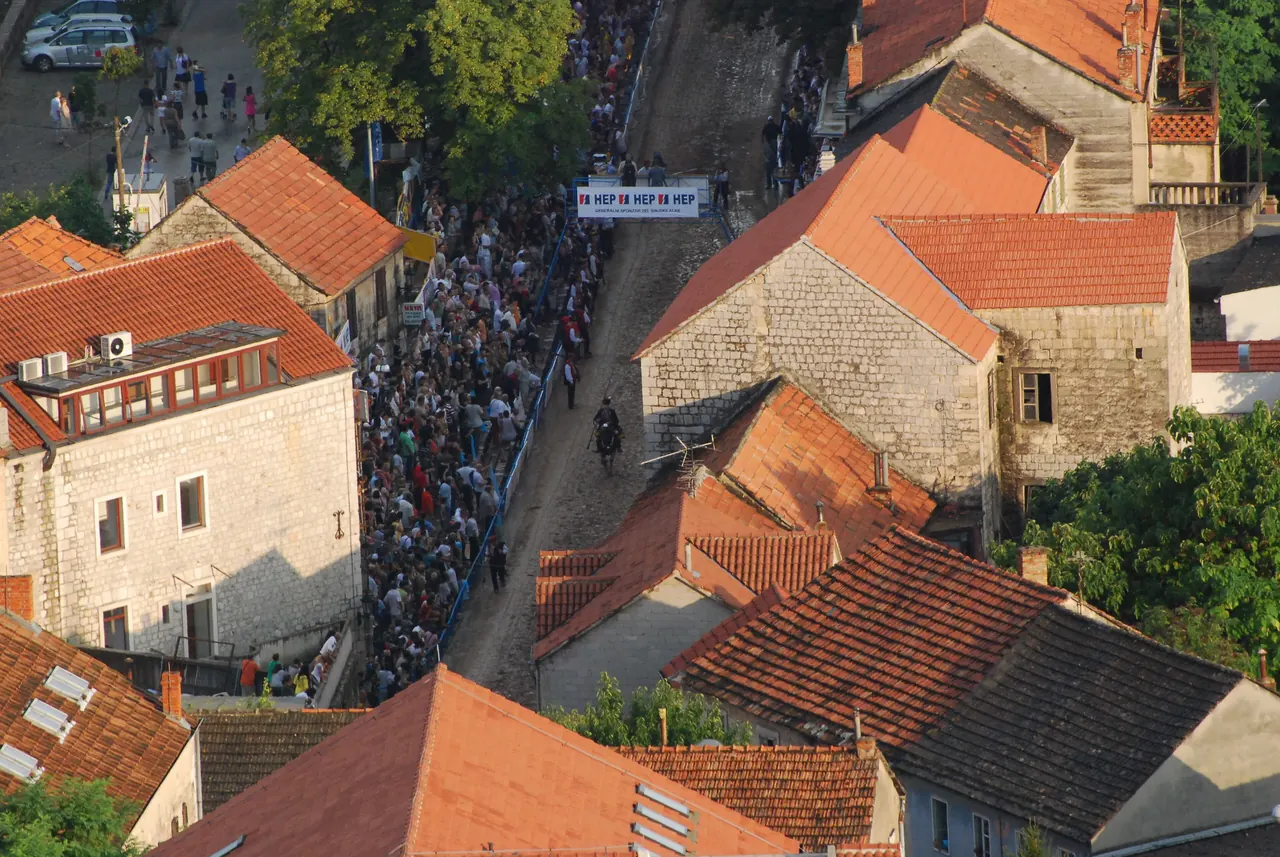
The Sinjska Alka is a horseback tournament in Sinj, about 35 km inland from Split by road, in which riders gallop 160 metres at full tilt and try to spear an iron ring about 13 cm across with a lance. It’s held once a year across a Friday, Saturday and Sunday in August, and 2027 brings the 312th edition. The organisers hadn’t announced the date by 9 October 2026, but every edition we could date since 2011 followed the same calendar logic, and it points to Friday 6 to Sunday 8 August 2027.
Only the Sunday needs a ticket. In 2026 the stands for the main Alka cost €30, €50 or €70 on the official seller, while the Friday and Saturday contests, and the riders’ July practice runs, were free to watch.
When the 312th Alka is likely to be
The usual answer is “the first Sunday in August”. The Alka Knights Society’s own history page says it, and so does the town’s tourist board. It’s close, but it isn’t the rule the dates actually follow.
Line the editions up and a tidier pattern shows. The three days, Bara on Friday, Čoja on Saturday and the Alka on Sunday, always fill the first Friday-to-Sunday weekend that sits entirely inside August. When August begins on a Saturday or a Sunday, the first Sunday would drag the Friday back into July, so the whole weekend slides a week later. That’s why the 300th Alka ran on 9 August 2015, the 305th on 9 August 2020, the 306th on 8 August 2021 and the 311th on 9 August 2026, each time on the second Sunday rather than the first.
August 2027 begins on a Sunday. By the same logic the 312th Alka falls on Sunday 8 August 2027, with the Bara on Friday 6 August and the Čoja on Saturday 7 August. It’s a forecast with fifteen editions behind it, but it’s still a forecast. As of 9 October 2026, the Society hadn’t published anything about 2027 on its site. In 2026 the Society’s own news named the date by 22 April, when its delegation handed Split’s mayor the official invitation, and in 2025 the date was in its news by 2 July. If you’re booking flights before then, pick fares you can change.
The Sunday itself can move, too. On 3 August 2025 a thunderstorm broke over Sinj with the procession already in the streets, and the Society pushed the 310th Alka back a week to 10 August, with refunds or a swap for a new ticket in the same sector. That was the fourth postponement in fifty years: the others came in 1976 (rain), 1988 (equine flu) and 1995 (Operation Storm, by two weeks). If the Alka is the whole reason for your trip, keep the following weekend loose.
What happens on the track
The Alka marks August 1715, when an Ottoman army of at least 40,000 under Mehmed Pasha Čelić besieged Sinj for eight days. Around 700 soldiers and about a hundred civilians held the town, and on the feast of the Assumption the besiegers withdrew. The people of Sinj credited Our Lady of Sinj, and the tournament has been ridden in her honour ever since. The earliest written mention dates from 1784, the oldest surviving rulebook from 1833, and UNESCO put the Alka on its intangible heritage list in 2010. The Society describes it as the only one of Europe’s many knightly tournaments to have survived without a break for three centuries.
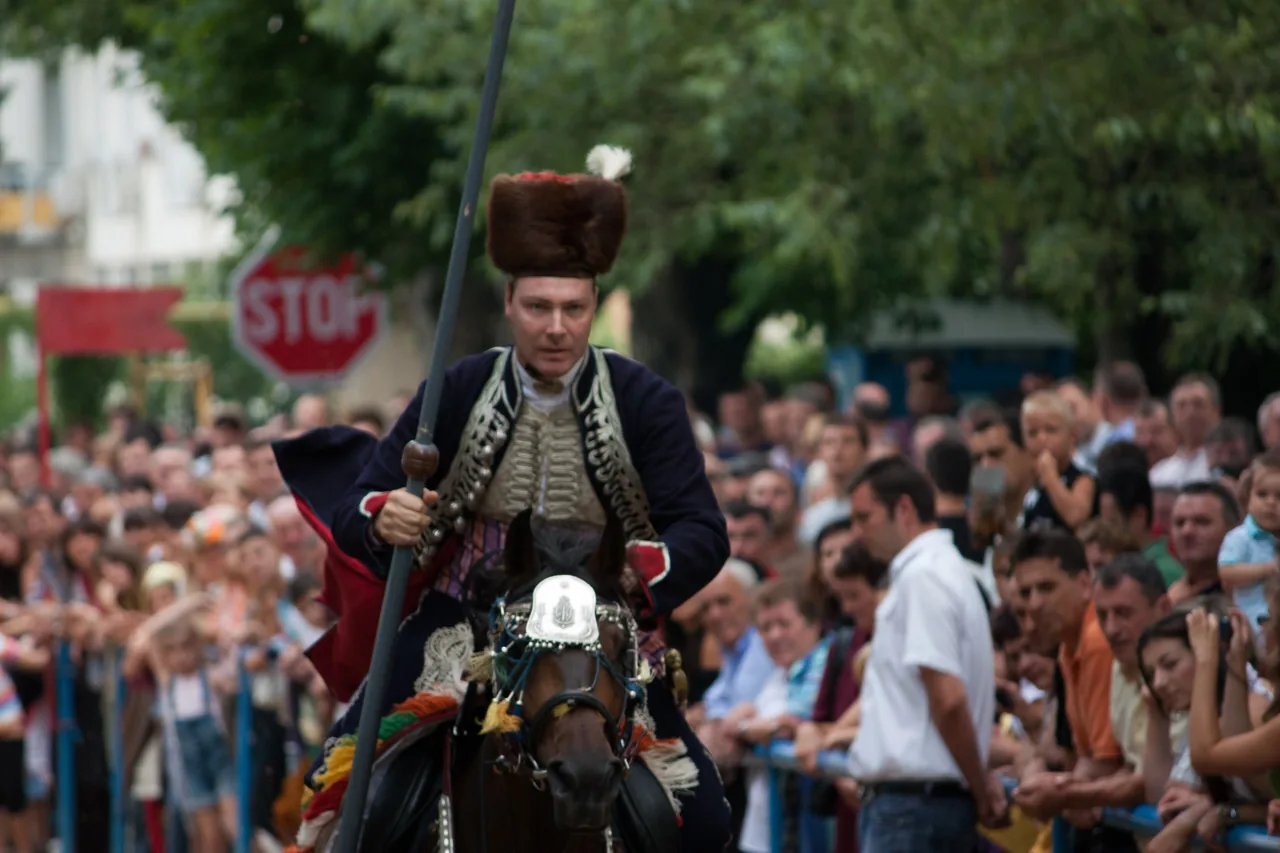
The contest itself is easy to follow. Each rider, an alkar, gallops 160 metres down the track and aims a lance up to 300 cm long at the alka, an iron ring just 131.7 mm across hanging 332 cm above the ground. Inside the ring, the small centre, called srida, is worth three points, the upper field two and each of the two lower fields one. Everyone gets three runs, and the highest total wins. If riders are level after three, they keep riding tie-break runs until one pulls ahead.
That’s where it gets tense. In 2026 four riders finished the regular runs on 7 points each. Two tie-break rounds later, Tino Radanović hit the centre and took his third Alka, with 12 points in all. The commander tied the winner’s pennant, a Croatian tricolour, to his lance; the Society added a gold plaque and €7,000, and the President of Croatia, the event’s patron, gave him a sabre and a gold ring.
The riders aren’t professionals brought in for the show. They’re chosen from Society members born in the Cetina region around Sinj, or whose parents come from it, and between 11 and 17 compete. In 2026 there were 17, picked by the commander from 30 candidates who’d been training since mid-May.
Bara and Čoja: the two free afternoons
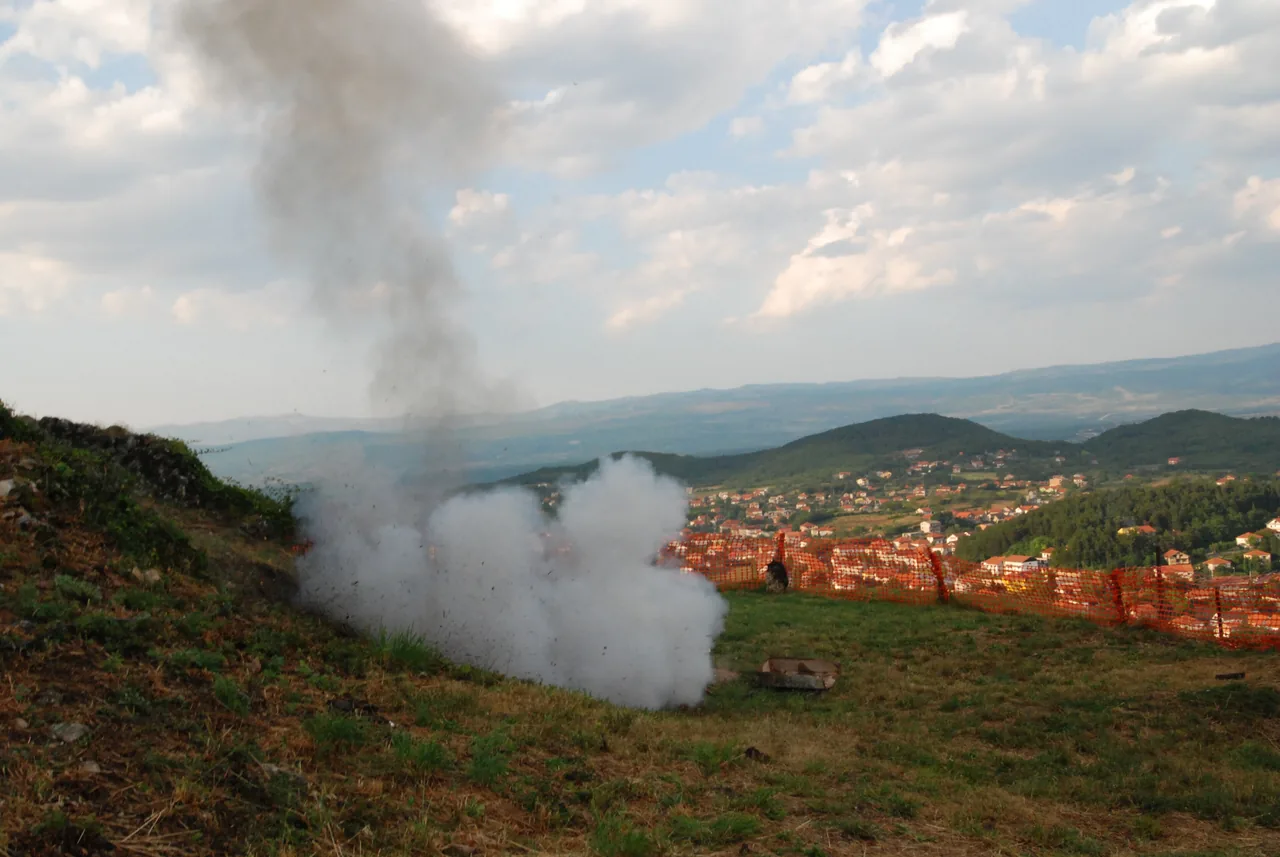
The Alka is the last of three contests. On Friday the riders compete for the Bara, on Saturday for the Čoja, and on Sunday for the Alka itself, with the same ring, the same three runs and the same tie-breaks each day. The Bara winner gets two metres of green cloth tied to his lance, standing for the old right to mow the Alkarica meadow in the Sinj field, and the Čoja winner gets red cloth; in 2025 the Society added €3,000 and €4,000 respectively. In 2026 both started at 17:30, an hour later than Sunday’s 16:30.
Both are free to watch, and so are the prove, the practice runs held on the track from mid-July, according to the Sinj tourist board. About 5,000 people turned out for each of the 2025 contests, so you won’t have the place to yourself. Still, if you can’t get a Sunday seat, or you’d rather watch the riding without the Sunday ceremony, Friday or Saturday gives you the same contest for nothing.
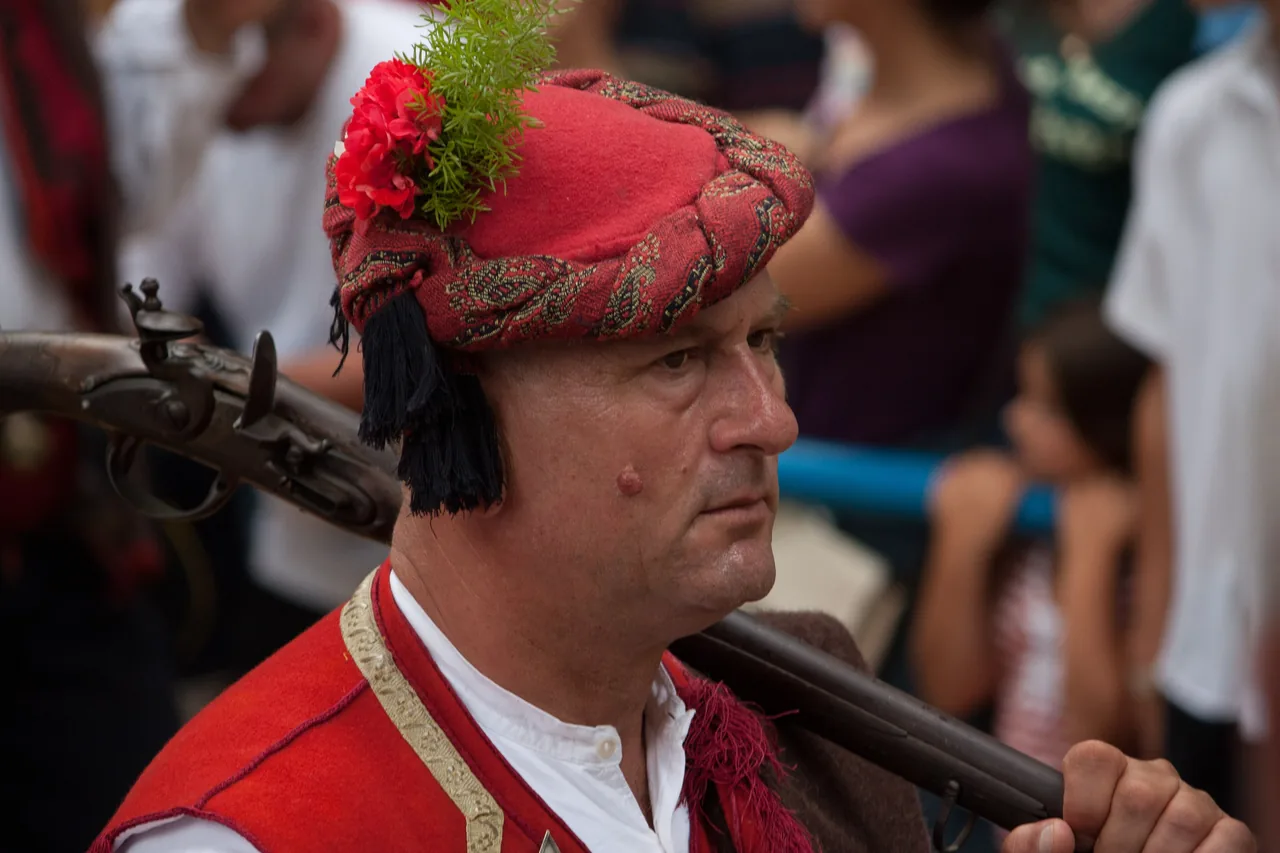
The Alka itself opens with a procession led on foot by the harambaša and his company of squires, the alkarski momci, in the old festive dress of the Cetina region, carrying pistols, a dagger and a long gun. Behind them come the mace-bearers, a shield-bearer with a captured Ottoman shield and two squires leading the edek, the horse that stands for the pasha’s. Then the standard-bearer, the commander with his adjutant and the riders, two by two, with their lances.
Tickets for the Sunday
Sunday seats are sold through Entrio, the Croatian ticketing platform, which names the Society as the event’s organiser. For 2026 they went on sale on 16 July at noon, a little over three weeks before the race. Prices came in three bands by stand:
- €30 (about $34 / £25): stands K, L, M and N
- €50 (about $56 / £42): stands A, B, G, H, I and J
- €70 (about $78 / £59): stands C, D, E and F
Entrio adds a booking fee to every ticket. Its page doesn’t state the amount, only that the fee is non-refundable. These are 2026 prices for the Sunday Alka; for 2027, check the listing once the Society has set the date.
The seller listed the 2026 Alka as running from 16:30 to 20:00, which matters when you plan the trip back. An August afternoon in the stands calls for a hat and water. And if the weather does intervene, 2025 showed how it’s handled: new tickets for the rescheduled Sunday went on sale at the souvenir shop of the Alka Museum in Sinj.
Getting to Sinj from Split
From Split, Sinj is an easy trip: it’s about 35 km from Split’s main bus station by road, roughly 40 minutes’ drive when traffic’s normal. If you’re driving, Klis Fortress makes an easy morning stop on the way, and our Split travel guide covers the base itself.
By bus, Promet Sinj runs the Split - Dicmo - Sinj line from Split’s main bus station. In September 2026 the station’s departure log showed Sunday buses at 07:00, 13:00, 15:00, 17:00, 19:00 and 22:00, and close to hourly ones on weekdays; the 13:00 leaves you plenty of margin before a 16:30 start. August timetables can differ. We couldn’t confirm Sunday evening return buses for August, so check the times at Sinj bus station when you arrive, or plan on a taxi or a car. With a finish around 20:00, the drive back is the easier option.
The Alka Museum, Monday to Saturday
If your dates miss August entirely, the Museum of the Sinj Alka is the next best thing, and an hour there pays off even on a race weekend. It sits in the Alkarski dvori, a baroque complex from 1760 in the middle of Sinj, and opens Monday to Saturday from 08:00 to 16:00. Sundays are closed, so the Friday or Saturday morning of Alka weekend, before the afternoon contest, is your window.
The museum’s price list, read in October 2026, has adults at €8 (about $9 / £7), pupils, students and pensioners at €5, preschool children at €2 and a family ticket at €16. A guided tour in English costs €30 per group, and the izi.travel app carries a free audio guide in English and German. Groups have to book ahead.
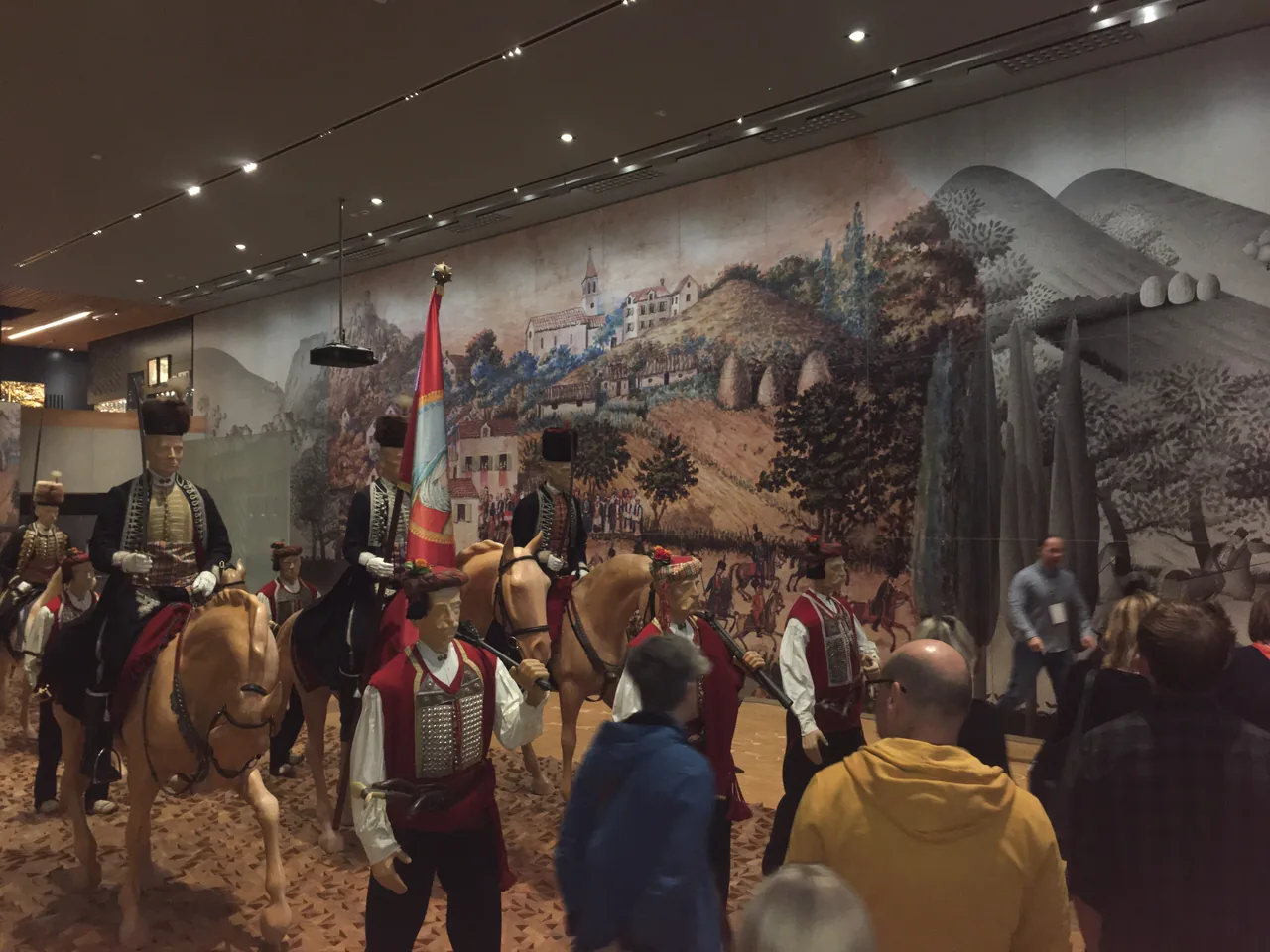
The display opens with the procession itself at life size, 14 human figures and 8 horses by the sculptor Hrvoje Dumančić. Further in there’s a rider frozen mid-strike at the ring, a film of the crowd with the sounds of the race, a video wall where you pick a year to see who won the Alka, and a touchscreen archive. In its first ten years the museum counted 250,000 visitors.
A week after the Alka, Sinj fills up again: it’s one of Croatia’s largest Marian shrines, and 15 August, the Assumption, is its big day. In 2026 the first Mass was at 4am, and at 9:30 the image of Our Lady of Sinj was carried through town, with Alka riders and squires among those carrying it. It’s also a national holiday, so roads and rooms fill up across the country; Croatia in August explains how to plan around that peak, and the month’s other big dates are in the Croatia festivals calendar.
Planning backwards from August 2027
| When | What to do |
|---|---|
| October 2026 to spring 2027 | Book refundable rooms in Split or Sinj for 6-8 August 2027 and keep the following weekend loose |
| April to July 2027 | Watch alka.hr for the confirmed date (in 2026 the Society’s news named it by 22 April) |
| Mid-July 2027 | Sunday tickets on Entrio (in 2026: 16 July, noon); practice runs start on the track |
| Friday and Saturday | Museum in the morning, Bara or Čoja in the afternoon, free |
| Sunday | Procession and the Alka (16:30 start in 2026), then the drive or bus back |
Opening hours, prices, timetables and seasonal services change through the year - the figures here are planning estimates, not quotes. Confirm current details with the operators and official sources before you go.
Read also

Entertainment · 11 min read
Sea Kayaking in Dubrovnik: Tours, Routes & What It Costs
Verified · October 13, 2026Guided sea kayaking from Pile bay, €35-45 on the operators' own sites in October 2026: routes, the Lokrum ticket, age rules, refunds.

Entertainment · 9 min read
Hvar Nightlife: Bars Until 2am, Beach Music Off at Midnight
Verified · October 10, 2026Hvar nightlife by the town's own rules: Riva bars to 02:00, outdoor music off at midnight, Carpe Diem after-beach 16:00-24:00, taxi boats, the last boat.

Entertainment · 8 min read
New Year's Eve in Croatia: Zagreb, Split or Dubrovnik?
Verified · October 10, 2026New Year's Eve 2026 in Croatia: what Zagreb, Split and Dubrovnik did on 31 Dec 2025, who is booked for 2027, which flights work and how to get home.

Entertainment · 8 min read
Croatia Christmas Markets 2026 Beyond Zagreb: City by City
Verified · October 10, 2026Advent beyond Zagreb: Split runs 27 Nov 2026 to 7 Jan 2027, Opatija to 6 Jan. What Rijeka and Dubrovnik did in 2025/26, and the winter flights.