
Truffle Hunting in Istria: Tours, Season & What to Expect
Istria truffle hunts: the legal collecting window for each species, how a hunt runs, real prices from 15 EUR, the 2026 fair dates and truffle prices.
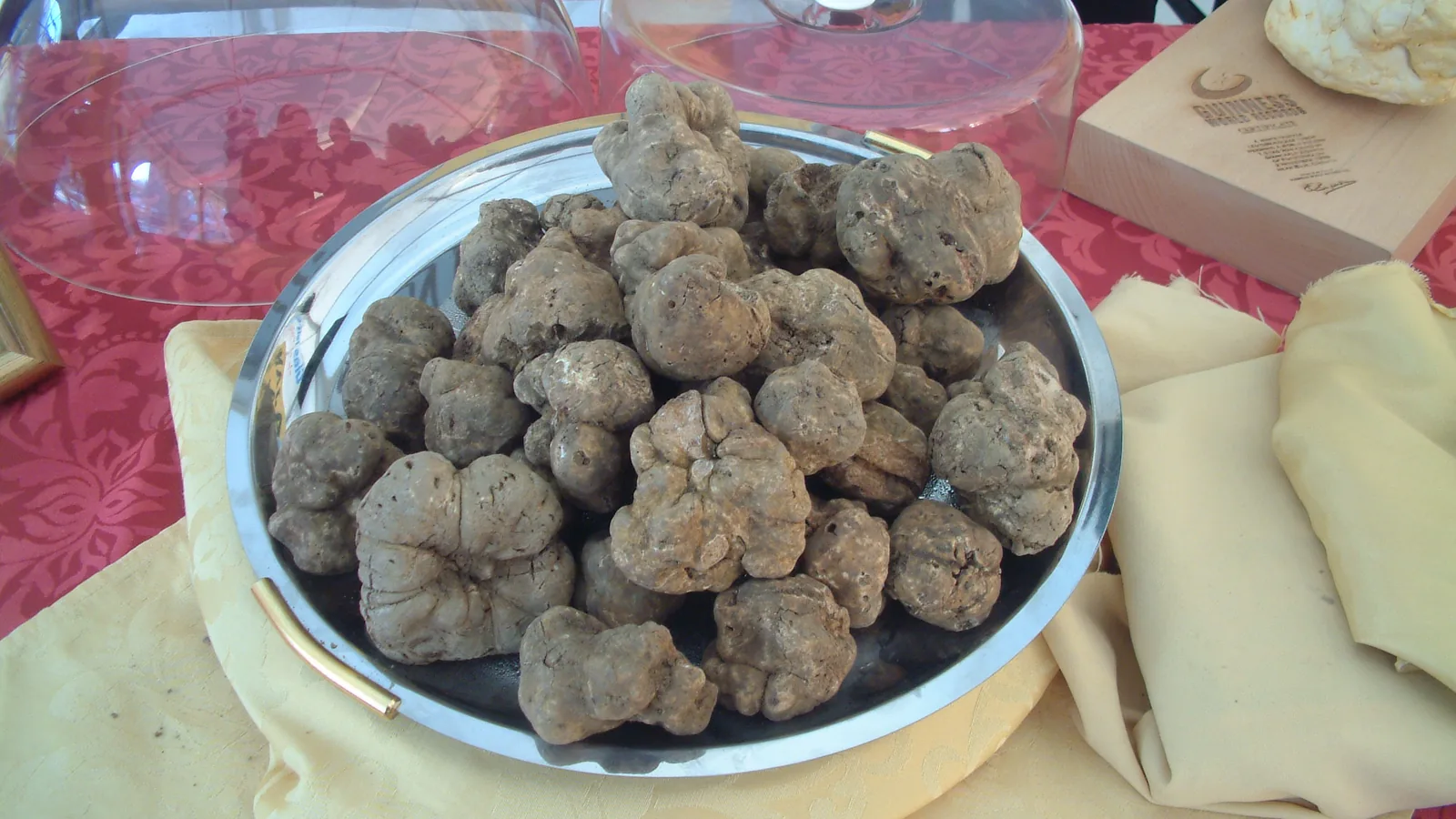
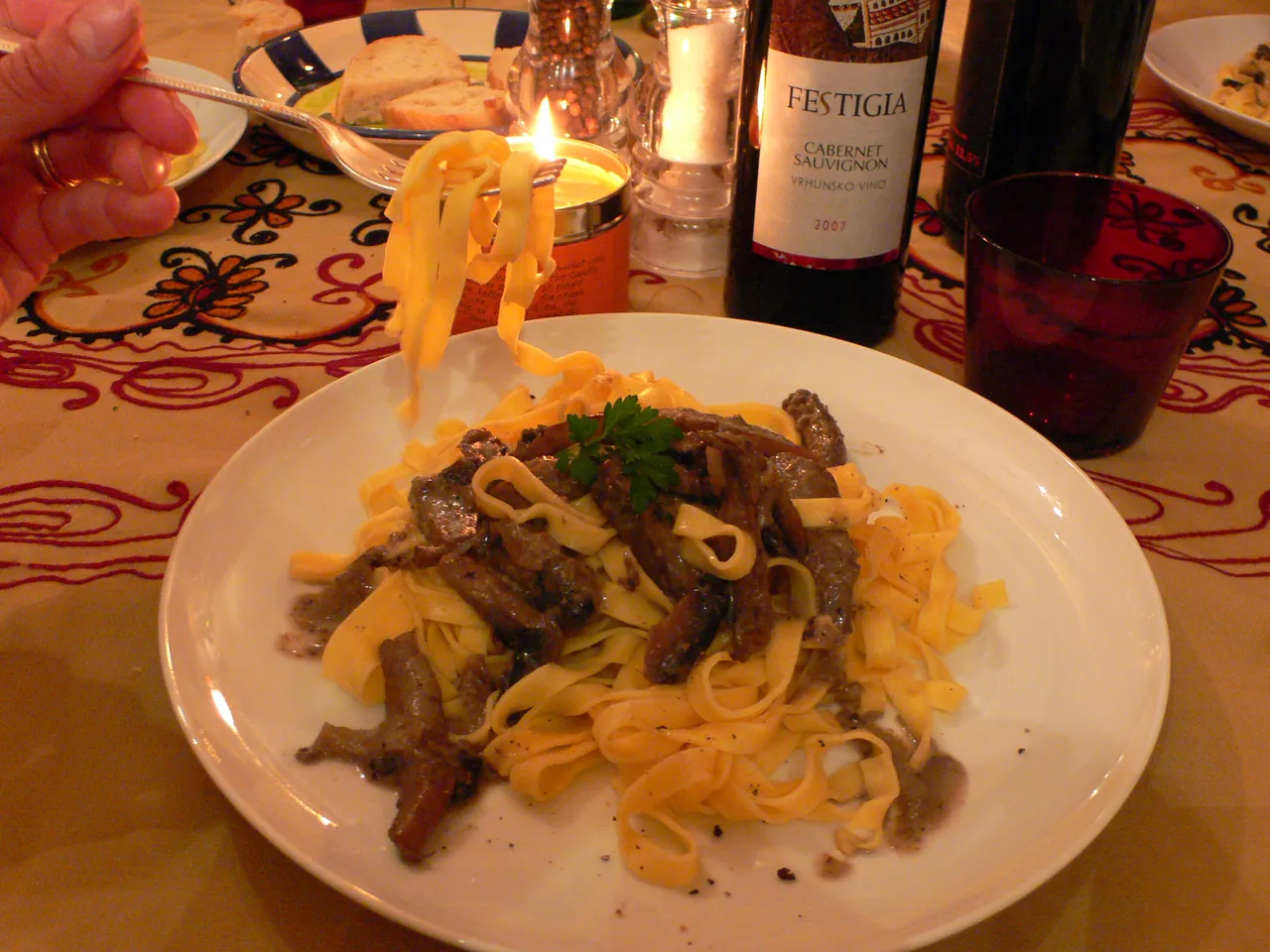
A truffle hunt in Istria is a one to two hour walk through oak woodland behind a dog that knows exactly what it is doing, usually finished off with a tasting of whatever the dog found. Operators take bookings all year, but the law doesn’t work that way: Croatia opens wild collecting in a separate window for each species of truffle, and August falls outside every one of them. The price gap is wider than for anything else you’ll book in Croatia: one operator in Livade charges 15 EUR a head for a Saturday evening group hunt and 150 EUR for a private one. The famous white truffle is out of the ground October to December, which is also the busiest and priciest time to be here.
One thing to square away before you book: you don’t dig. Croatian law puts the spade in the licensed hunter’s hands and even specifies how big the blade may be, so your job is to keep up, watch the dog work and stay out of the hole. Accept that and the couple of hours are genuinely good fun, and the meal afterwards is the part people talk about a year later.
When to go: the season depends on which truffle
There are two truffle calendars in Istria and they don’t line up, which is where most planning goes wrong. The first is the one the shops go by: when each species ripens and appears on the menu. Zigante Tartufi in Livade publishes it species by species. The second is the legal one, set by Croatia’s Ministry of Economy and Sustainable Development in the Stručna podloga za sakupljanje zavičajnih divljih vrsta for 2024-2026, the expert document the collecting rules hang off. It gives every species its own collecting window, and it is the narrower of the two:
| Truffle | Ripe and sold | Collecting legally open |
|---|---|---|
| Tuber magnatum (white) | October to December | 1 Sep - 31 Dec |
| Tuber melanosporum (black winter) | November to March | 1 Nov - 31 Mar |
| Tuber aestivum (summer black) | May to October | 1 Jun - 31 Jul, then 1-30 Sep |
| Tuber uncinatum | September to January | 1 Oct - 31 Jan |
| Tuber borchii (bianchetto) | January to April | 1 Jan - 31 Mar |
Read down the right-hand column and the gap jumps out: nothing at all is open in August. The summer truffle shuts on 31 July and doesn’t reopen until 1 September, and none of the others steps into the hole, including the three rarer ones the table leaves out (brumale, mesentericum and macrosporum, which run winter and autumn). The single busiest tourist month in Croatia is the one month when no truffle in the country may legally be dug up.
That matters more for you than for the farms. Zigante’s group hunts are advertised from the first Saturday in June to the last Saturday in September, so August sits inside their published season; what a licensed operator may show you in a closed window is a question for the operator and the ministry, and worth asking on the phone. Your own side of it isn’t ambiguous: in August you may not take truffles out of the ground yourself, whatever the dog turns up.
A hunt in July, on the other hand, is the real thing, just for the summer black truffle, which is milder, far cheaper and easier to find. The Istria Tourist Board is blunt about the pecking order: October is the top month for the white truffle, the most expensive and the most valuable of them. If you came for that famous garlicky-hay aroma over a plate of fuži, come in October or November. If you came for the walk, the dogs and the tasting, most months of the year will do, and you’ll pay less for the truffle you eat.
What actually happens on a hunt
You meet at a farmhouse or a shop, not at a trailhead. There’s a short talk about the family, the truffle and the dogs, then everyone walks out into the oak woodland on this damp grey soil. It looks like nothing special, because that’s exactly what truffle ground looks like. The dogs go ahead off the lead with their noses down, and when one starts scraping at the soil the hunter moves in with a narrow spade.
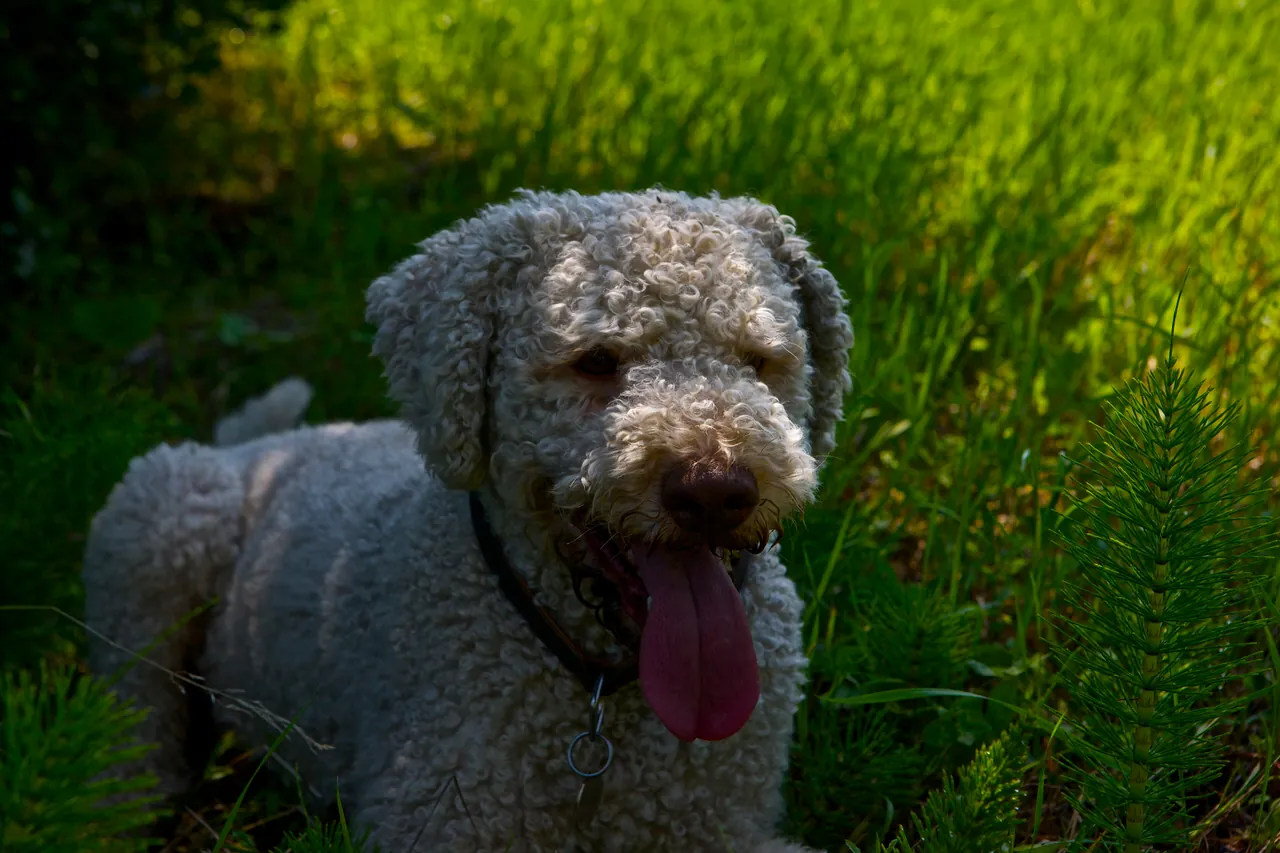
The dogs are working animals, not photo props: Zigante asks you to leave your own dog behind, because an outside pet ruins the concentration of the ones doing the job. The breed you’ll usually meet is the Lagotto Romagnolo, the curly Italian water dog that ended up as the truffle specialist.
Timings are shorter than people expect. Zigante’s hunts run about an hour; Karlić Tartufi in Paladini near Buzet advertise theirs as two hours of pure delight and finish with a tasting of their own products. Neither is a hike, but this is forest floor rather than footpath, so wear shoes you don’t mind ruining. Another Istrian family, Prodan Tartufi, make the point that real hunting happens at any hour of day or night; tourist hunts are the daylight exception, arranged around your schedule rather than the truffle’s.
What a truffle hunt costs
Published prices in Istria are rarer than white truffles, so the ones that exist are worth quoting exactly. Zigante Tartufi in Livade lists two options on its own site, checked 4 August 2026:
- Group hunt, 15 EUR per person, children under 10 free. Every Saturday at 19:00, from the first Saturday in June to the last Saturday in September. About an hour, meeting at the Zigante shop and restaurant at Livade 7.
- Private hunt, 150 EUR for a group of up to five, available all year by prior request. That’s 30 EUR a head with five people.
Karlić Tartufi (Paladini 14, Buzet) run hunts all year round with a tasting included and, like most farms here, publish no price at all, so ask when you book. Prodan Tartufi works the same way, by enquiry. Read “all year round” the way the farms mean it, though: their booking calendar is open all year, the ground is not. In a closed month you are buying the walk, the dogs and the meal, so ask the farm what it can actually show you in the month you’re coming. Agencies in Buzet resell these hunts with their own margin and extras, usually a longer lunch or a wine stop.
Here’s the part worth planning around. That 15 EUR Saturday slot is the lowest hunt price published anywhere in Istria, and it’s also the thinnest: one hour, in a group, in the months when only the summer truffle is about. The private hunt costs ten times more on paper and gives you the family, the tasting and the run of their woods. If you’re doing this once, do the second one, and do it midweek in autumn when the white truffle is up.
The rules your guide is working under
This is where Istria differs from a woodland walk anywhere else: the whole thing sits inside a written regulation, and it explains half of what you’ll see. The rules are in the Pravilnik o sakupljanju zavičajnih divljih vrsta (NN 114/2017), article 18, and they bind anyone collecting underground fungi in Croatia:
- A maximum of two dogs at a time.
- Dig only where the dog has scented, with a spade blade no longer than 15 cm and no wider than 8 cm.
- Any white truffle smaller than 15 mm across goes back in the ground where it came from.
- Fill every hole back in with the soil you took out, keep holes under 30 cm across and at least 150 cm apart, and don’t cut forest roots thicker than 1 cm.
- No collecting between 22:00 and 06:00.
Read that last line before you book a night truffle hunt: an evening outing has to finish by ten, so what you’re buying is dusk and head torches, not the small hours.
Collecting for your own use needs no Ministry permit, and that is where visitors get careless. Article 7 caps you at 0.1 kg of underground fungi per person per day, and the same article puts personal collecting under the seasonal windows from the table above as well, permit or no permit. Walking into the Motovun forest with a trowel in August is not a grey area, it is simply closed, and the fine is not the souvenir you came for. Anyone selling what they find needs a Ministry permit and is held to 0.5 kg a day; commercial collecting is banned outright inside strict reserves and national parks.
There’s a piece of legal history behind all this that trips up older guidebooks, and it is easy to draw exactly the wrong lesson from it. Until 2017 the rule was one flat season for every truffle, 15 September to 31 January, under the previous fungi regulation. That single window is gone. What replaced it is not an open calendar but the species-by-species windows above, rewritten every three years. So if you read that Croatian truffle hunting stops on 31 January, you’re reading a rule that has been replaced; if you read that it therefore runs all year, you’re reading someone who only got halfway through the change.
Where truffle country is, and how to get there
The truffles grow in a triangle between Pazin, Buje and Buzet, and above all in the Mirna river valley and the Motovun forest, the damp woodland along the Mirna and Botonega rivers, which Zigante bills as the world’s largest natural truffle habitat. The village of Livade sits in the middle of it and works as its capital.
Distances are small but the roads are slow. Measured on OpenStreetMap routing on 4 August 2026, Livade is 34 km from Poreč (about 50 minutes), 58 km from Rovinj (about 1 h 10), 75 km from Pula (about 1 h 15) and only 7 km from Motovun. From further out, reckon 57 km from Trieste, 135 km from Ljubljana, 229 km from Zagreb (about 3 h 15) and 482 km from Split, a five to six hour drive, so it’s no day trip.
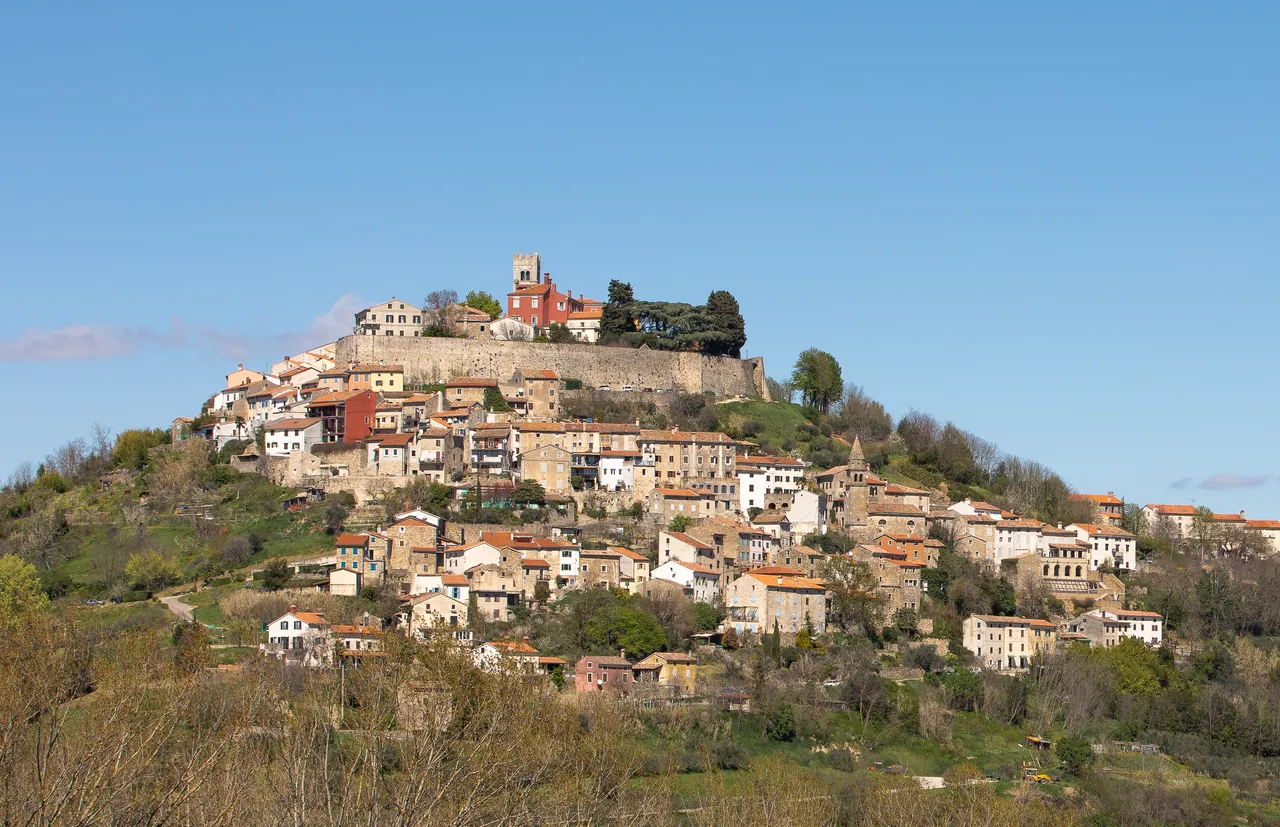
You need a car. Buses serve the Istrian coast reasonably well and the inland villages barely at all, and a 19:00 hunt in Livade with no way home is a bad evening, so this is one corner of the country where renting a car pays for itself. Motovun and Buzet are the atmospheric bases and they’re both small; Rovinj and Poreč give you a beach and a real choice of rooms within an hour’s drive, and Pula adds the airport. Our Istria travel guide covers how the coast and the hill towns fit together.
Autumn fairs: the 2026 dates
Time the trip well and you’ll get the hunt and a fair in the same weekend. The Istria Tourist Board’s 2026 truffle calendar runs like this:
| 2026 | Event | Where |
|---|---|---|
| 5 September | Opening of the white truffle season | Motovun |
| 12-13 September | Subotina, including the old-fashioned Subotina | Buzet |
| 3 October - 1 November | Zigante Truffle Days | Livade |
| 17-18 October | Teran and Truffle Festival | Motovun |
| 24-25 October | Tuber Fest | Livade |
| 14-15 November | Istrian Truffle Festival | Buzet |
Zigante Truffle Days is the big one and the easiest to slot into a trip: autumn weekends - in 2026, Saturdays and Sundays from 3 October to 1 November, 10:00 to 19:00, free to walk in, with tastings, truffle-hunting demonstrations and a little train that runs out into the Motovun forest. Some listing sites still show last year’s dates for it, so don’t take an aggregator’s word over the fair’s own site. Our Croatia festival calendar puts these weekends in context with the rest of the year.
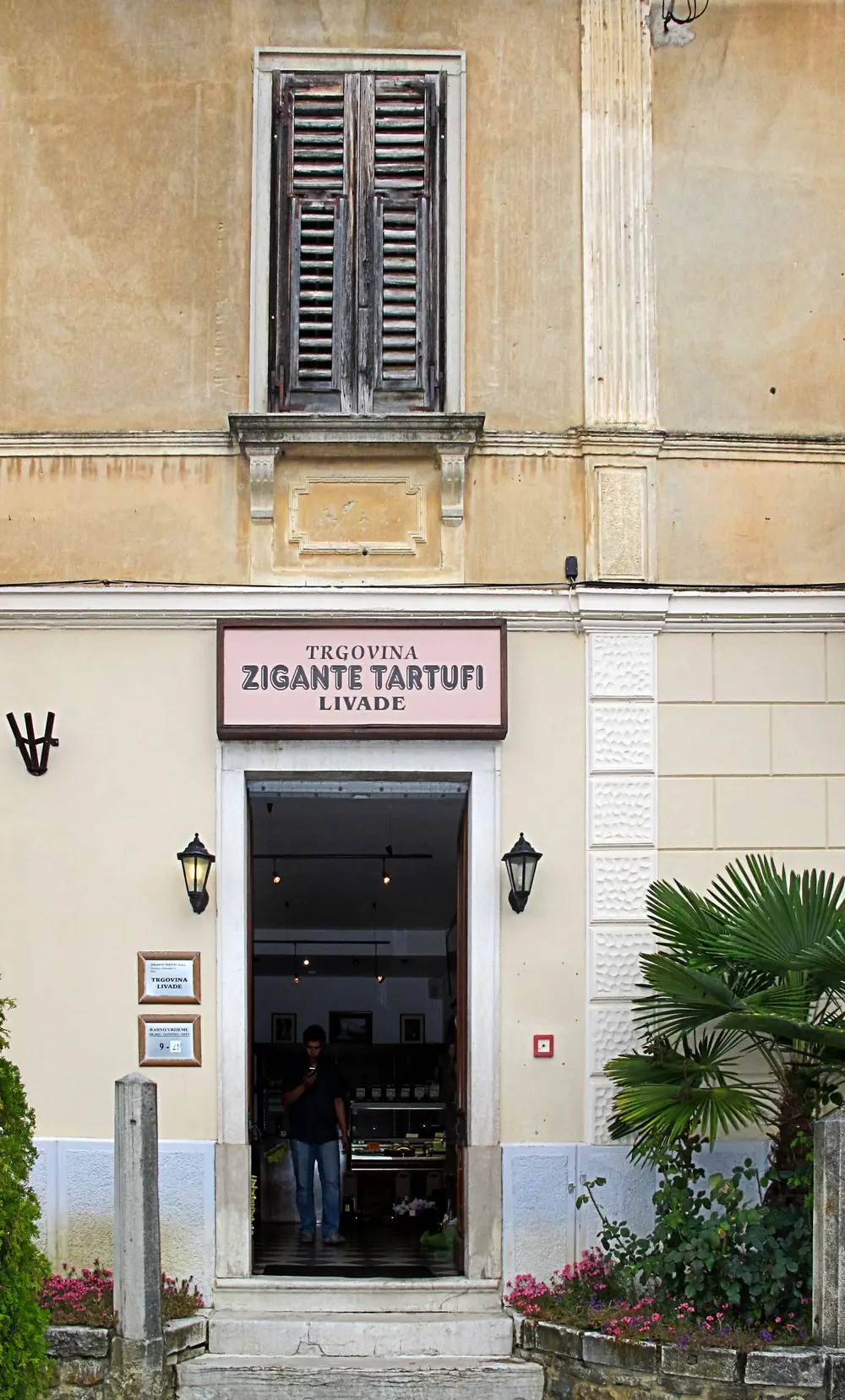
Buying truffles without getting stung
Every hunt ends in a shop, which is fair enough, but you’ll want a minute to read the price signals. Fresh summer black truffle at the Karlić farm shop was 50 EUR for 100 g on 4 August 2026, scaling to 500 EUR a kilo. Fresh white truffle has no fixed price list at all: it’s sold per find, at the day’s rate, and in early August it isn’t on the shelf at all. Ask rather than assume.
Preserved products are where most visitors actually spend: truffle spreads from around 9 EUR a jar, white-truffle-flavoured olive oil from about 12 EUR. Read those labels, because the honest ones say exactly what they are. “Olive oil with the flavour of white truffle” is not olive oil with truffle in it; a jar labelled whole or chopped truffles is the one that actually contains them.
And the story every shop in Livade will tell you is true. On Tuesday 2 November 1999, near Buje, Giancarlo Zigante and his dog Diana dug up a white truffle weighing 1.31 kg, at the time the largest ever recorded. He named it Millennium, had a bronze copy cast, then cooked the original for about a hundred guests instead of selling it. The bronze is still on display in the Livade shop.
Is a truffle hunt worth it?
Yes, if you treat it as a meal with a walk attached rather than a treasure hunt. You won’t find a truffle yourself, you’ll be out for one to two hours, and in the summer window what comes up is the cheap black one. What you’re paying for is a working dog doing something remarkable, a family that has done this for generations, and a lunch that costs a fortune anywhere else.
Book ahead, always: the farms take hunts by prior request only, and autumn weekends fill first. Wear closed shoes, bring cash for the shop, and add a cellar to the day: Istrian Malvazija is the wine for all of this, as our Croatian wine guide explains. Our guide to what to eat in Croatia sets the truffle next to the peka and black risotto you’ll meet further down the coast.
Hunt prices, times and booking rules differ from farm to farm and change season to season, and several operators publish no price list at all. The legal side moves too: the collecting windows and daily limits quoted here come from the expert document in force for 2024-2026, which is reviewed every three years and can be amended earlier. Check the current rules against the Ministry of Economy and Sustainable Development, and the prices and fair programme with the operator or the Istria Tourist Board, before you travel.
Photos
Admission and opening hours
- Admission price
- Group hunt from 15 EUR per person; private hunt 150 EUR for up to 5 people (Zigante Tartufi, Livade)
- Opening hours
- Group hunts Saturdays 19:00, first Saturday in June to last Saturday in September; private hunts all year by prior request. Collecting from the wild is legal only inside each species window, and none of them covers August.
Hunts run by prior booking only, and prices differ from farm to farm. Confirm with the operator before you drive out; several of them publish no price list at all.
Details checked: August 4, 2026
Read also

Food · 12 min read
Where to Eat in Split: Best Konobas & Local Restaurants
Updated · July 31, 2026Where to eat in Split: family konobas in Varoš, the late-morning marenda, how fish is priced by the kilo, the two markets and who closes on Sundays.

Food · 9 min read
Peka: Croatia's Under-the-Bell Dish & Where to Try It
Updated · July 23, 2026What Croatian peka is, how to order it (2-24 hours ahead, minimum two people), what it costs, and which konobas across Dalmatia still cook it.

Food · 8 min read
Croatian Wine Guide: Regions, Grapes & Tastings
Updated · July 12, 2026Croatian wine explained: Plavac Mali and Dingač, Istrian Malvazija, Slavonian Graševina, the Zinfandel link, and how to taste it on the wine roads.

Food · 13 min read
What to Eat in Croatia: Food & Wine Guide
Updated · July 31, 2026What to try in Croatia: peka, pašticada, black risotto, buzara, brudet, Pag cheese, pršut, Istrian truffles, štrukli, plus Plavac Mali and Malvazija wine.