
Peka: Croatia's Under-the-Bell Dish & Where to Try It
What Croatian peka is, how to order it (2-24 hours ahead, minimum two people), what it costs, and which konobas across Dalmatia still cook it.
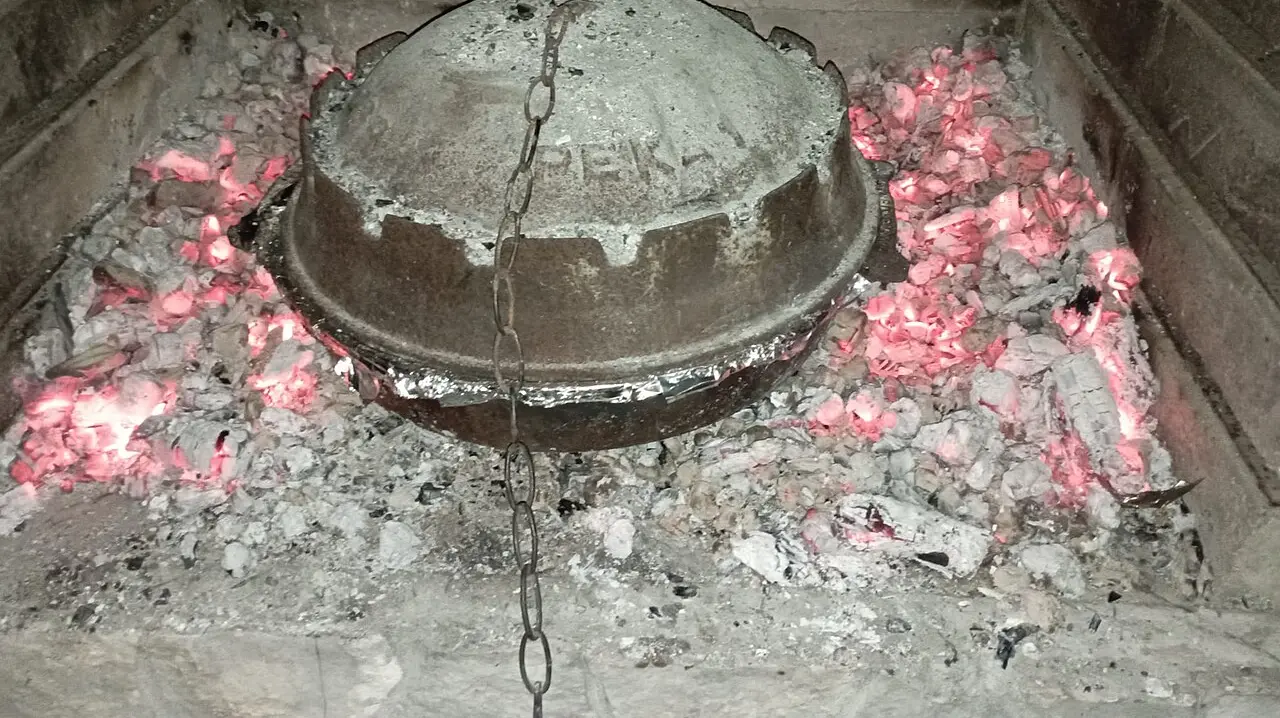
Peka is meat or octopus baked slowly under a heavy bell-shaped lid buried in embers, and it is the one Croatian dish you can’t order when you sit down. The kitchen needs two to four hours’ notice at minimum - many konobas want a day, especially on the islands in August - it is cooked for a minimum of two people in a single shared pan, and it costs roughly 15-25 euros a head. Book it, turn up on time, and you get the best meal of your trip. Walk in hungry at eight and ask for it, and you’ll be politely offered grilled fish instead.
The word peka means both the lid and the meal. Underneath it sit lamb, veal, octopus or chicken with potatoes, onions, carrots, garlic, olive oil and rosemary, and the heat comes from above: embers are shovelled onto the domed lid so the whole thing works as a small oven with no draught. Nothing evaporates, nothing burns, and everything cooks in its own juices.
How it is actually cooked
The fire comes first. A konoba builds a wood fire in an open hearth and burns it down for about an hour until there’s a bed of embers and no flame. The pan goes in with everything raw, the bell goes on top, and embers are heaped over and around it.
From then on the cook’s only job is heat management. About halfway through, the lid is lifted, the meat and potatoes are turned so the top side gets the fat, and fresh embers go back on. Lamb takes about 2 to 2.5 hours; veal slightly less; octopus about 1.5 to 2 hours. Chicken is quicker again, which is why it is the fallback if you called late.
Two kinds of bell are in use, and they’re not identical. Cast iron (the modern standard, often called sač inland, a word that arrived through the Ottoman Balkans) heats fast and gives a browner, crisper result. Clay - čripnja in Dalmatian dialect - heats slower and gives softer, gentler cooking. Istria uses a different shape again: a bowl with two side handles rather than a dome. If a konoba tells you it cooks under čripnja, that is not marketing, it’s a different piece of equipment.
The bit that is older than it looks
Baking under a lid is not a Dalmatian invention of the tourist era. Lids of this type are documented in the region from the Bronze Age, with Croatian finds at sites including Erdut, Kiringrad and Bregana, and 20th-century clay pekas are barely distinguishable from Hallstatt-period examples (800-450 BC). The technique spread across the western Balkans and the eastern Adriatic as far as central Italy; around the mid-8th century BC the Illyrians took it up from Pannonian makers. The Romans did the same thing under the name sub testu - Cato describes baking bread under a cover.
That is a longer unbroken line than almost anything else on a Croatian menu, and it explains why every region has its own word for it: čripnja, peka, pekva along the coast and the Dinaric interior, pokljuka in Slavonia, sač for the iron version.
What to order under the bell
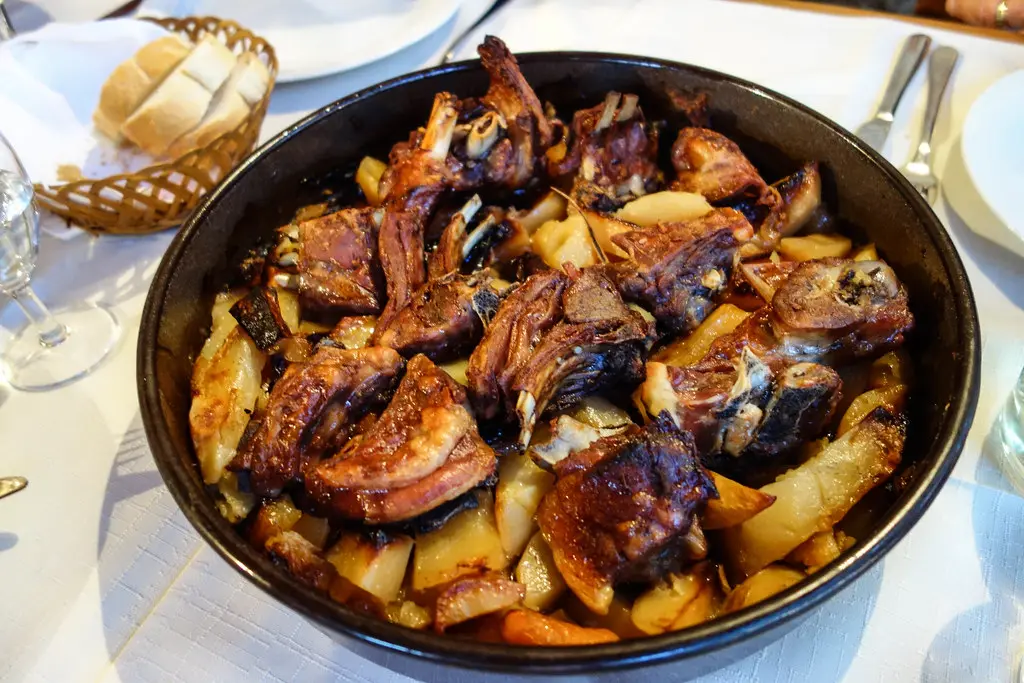
Lamb (janjetina) is the traditional choice and the one every konoba does. It comes out falling off the bone, with the potatoes underneath having absorbed the fat. On the coast the lamb is usually local and herb-fed, and it is a stronger flavour than most visitors expect.
Veal (teletina) is the safer option for anyone unsure about lamb - milder, still rich, and the most common peka in inland konobas.
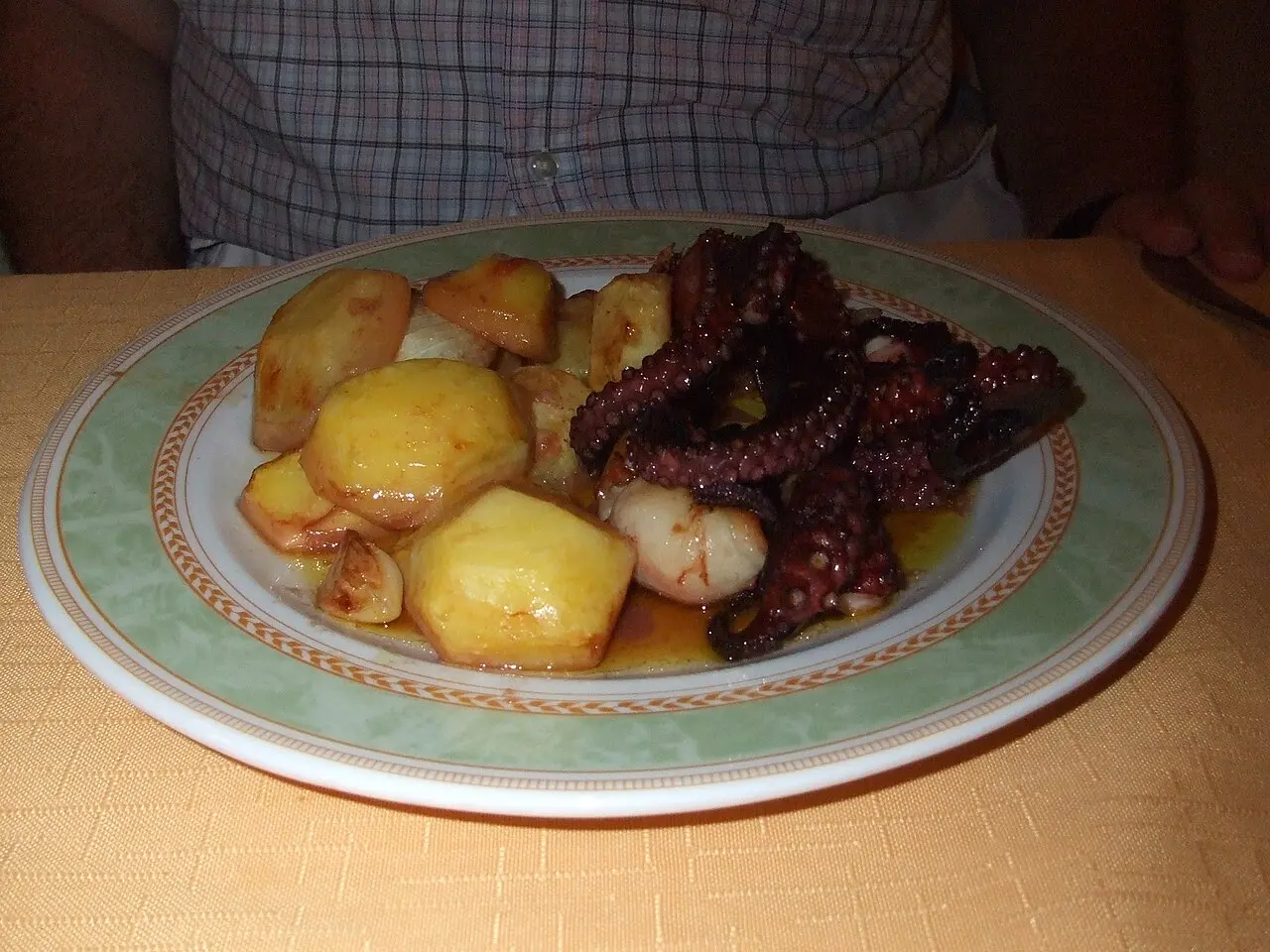
Octopus (hobotnica) is the coastal speciality and, for many people, the best version of the dish. Slow heat under the bell turns octopus completely tender, and the potatoes soak up the seawater-and-olive-oil juices. It also has the practical advantage of a shorter cooking time.
Chicken (piletina) is the cheapest and quickest, and honestly the least interesting - order it if the alternative is no peka at all.
Whichever you pick, the potatoes aren’t a side dish. They’re the reason half the table came, and any konoba worth eating in will have given them the bottom of the pan.
How to order it without getting it wrong
- Give notice. Two to four hours is the absolute minimum. Ringing in the morning for an evening peka is the normal move; on islands like Vis and Brač in peak season, do it a day ahead.
- Call or walk in. Phone the konoba or go in person and speak to someone. Messaging through a review site isn’t booking.
- Expect a minimum of two people, and reckon on 300-400 g of raw meat per person - four people eat this better than two.
- Turn up at the time you agreed. The pan comes out of the embers when it is ready, not when you arrive. Being three quarters of an hour late wrecks the kitchen’s timing and your dinner.
- Ask what the price covers. The usual range is around 15-25 euros a head - roughly 12-16 for chicken, 18-25 for lamb or veal - but old-town konobas in Dubrovnik and Hvar charge considerably more, and some price the whole peka for two rather than per person. Settle that when you order, not when the bill lands. For the wider picture on eating out, see is Croatia expensive?.
What the evening actually looks like
Book for eight and the shape of the night is fairly standard. Bread and a jug of house wine arrive first, then something to keep you busy - a plate of pršut and cheese, a tomato and onion salad, maybe soup. Then a gap, because the pan isn’t ready and can’t be hurried.
When it comes, it’s carried to the table under its lid and opened in front of you, and the smell that comes off it’s the reason people book this a day ahead. Everyone eats from the same pan. Portions are enormous, so the standard rookie error is filling up on starters: order one shared plate before, not three.
Expect the whole thing to take a couple of hours at the table, and expect the family running the place to check on you more than once. In a village konoba the peka is the evening’s centrepiece, not a dish that gets fired out of a service window.
Where to try it
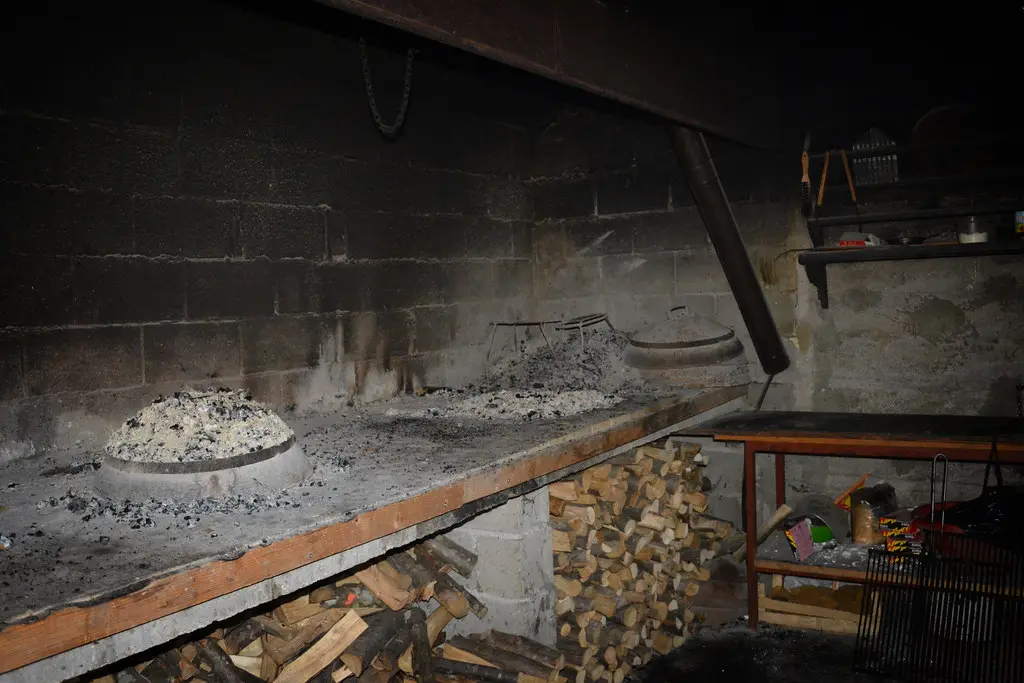
The best peka is rarely on the waterfront. It’s in a village konoba twenty minutes inland, where the hearth is the size of a garage door, the firewood is stacked underneath it, and the family has been feeding the same fire for decades. The places that do it best rarely look like restaurants: a hand-painted sign, four tables, no wine list.
Names that come up consistently in Dalmatia include Konoba Mate at Srijane, in the hills about ten kilometres above Omiš; Konoba Roki’s at Plisko Polje on Vis; and Konoba Marin at Postira on Brač. In the towns, Konoba Varoš in Split is a long-running old-town choice, Konoba Dubrava sits above Dubrovnik, and on Hvar the inland villages of Vrisnik and Dol both have konobas that cook it. We have not price-checked every menu here, so confirm the current rate and notice period when you call.
If you would rather not chase one down, most Dalmatian agrotourism farms and many cooking-class operators build an afternoon around a peka, which solves the booking problem and usually includes the wine.
A practical warning about the wine
Peka happens in villages, and it happens with wine. Croatia’s drink-driving limit is 0.05%, and it’s zero for drivers under 24, so the classic mistake - drive out to a hill konoba, share two bottles of Plavac Mali, drive back down a hairpin road - is a genuinely bad idea. Take a taxi or a transfer, or nominate a driver before the first glass. Our Croatian wine guide covers what to drink with it: a peka of lamb wants a big red, and octopus goes better with a white from the coast.
Is it worth the planning?
Yes, and it is the meal most people remember. Peka isn’t refined cooking and it’s not fast; it is a pan of food designed for a table of people who aren’t in a hurry, and it tastes of smoke, fat, potatoes and rosemary rather than of technique. All it asks in return is a phone call a few hours before dinner. That is exactly the step visitors skip, and they leave Croatia without having eaten its defining table dish.
For the rest of the Croatian table, from black risotto to Pag cheese, see our guide to what to eat in Croatia.
Prices quoted are typical ranges reported by Croatian food guides, not quotes from individual venues.
Opening hours, prices, timetables and seasonal services change through the year - the figures here are planning estimates, not quotes. Confirm current details with the operators and official sources before you go.
Photos
Read also

Food · 14 min read
Truffle Hunting in Istria: Tours, Season & What to Expect
Updated · September 3, 2026Istria truffle hunts: the legal collecting window for each species, how a hunt runs, real prices from 15 EUR, the 2026 fair dates and truffle prices.

Food · 12 min read
Where to Eat in Split: Best Konobas & Local Restaurants
Updated · July 31, 2026Where to eat in Split: family konobas in Varoš, the late-morning marenda, how fish is priced by the kilo, the two markets and who closes on Sundays.

Food · 8 min read
Croatian Wine Guide: Regions, Grapes & Tastings
Updated · July 12, 2026Croatian wine explained: Plavac Mali and Dingač, Istrian Malvazija, Slavonian Graševina, the Zinfandel link, and how to taste it on the wine roads.

Food · 13 min read
What to Eat in Croatia: Food & Wine Guide
Updated · July 31, 2026What to try in Croatia: peka, pašticada, black risotto, buzara, brudet, Pag cheese, pršut, Istrian truffles, štrukli, plus Plavac Mali and Malvazija wine.