
Best Beaches in Croatia: Sandy & Pebble Beaches
The best beaches in Croatia, sandy and pebble - from Zlatni Rat and Stiniva to the sands of Nin and Sakarun, with how to reach each one.
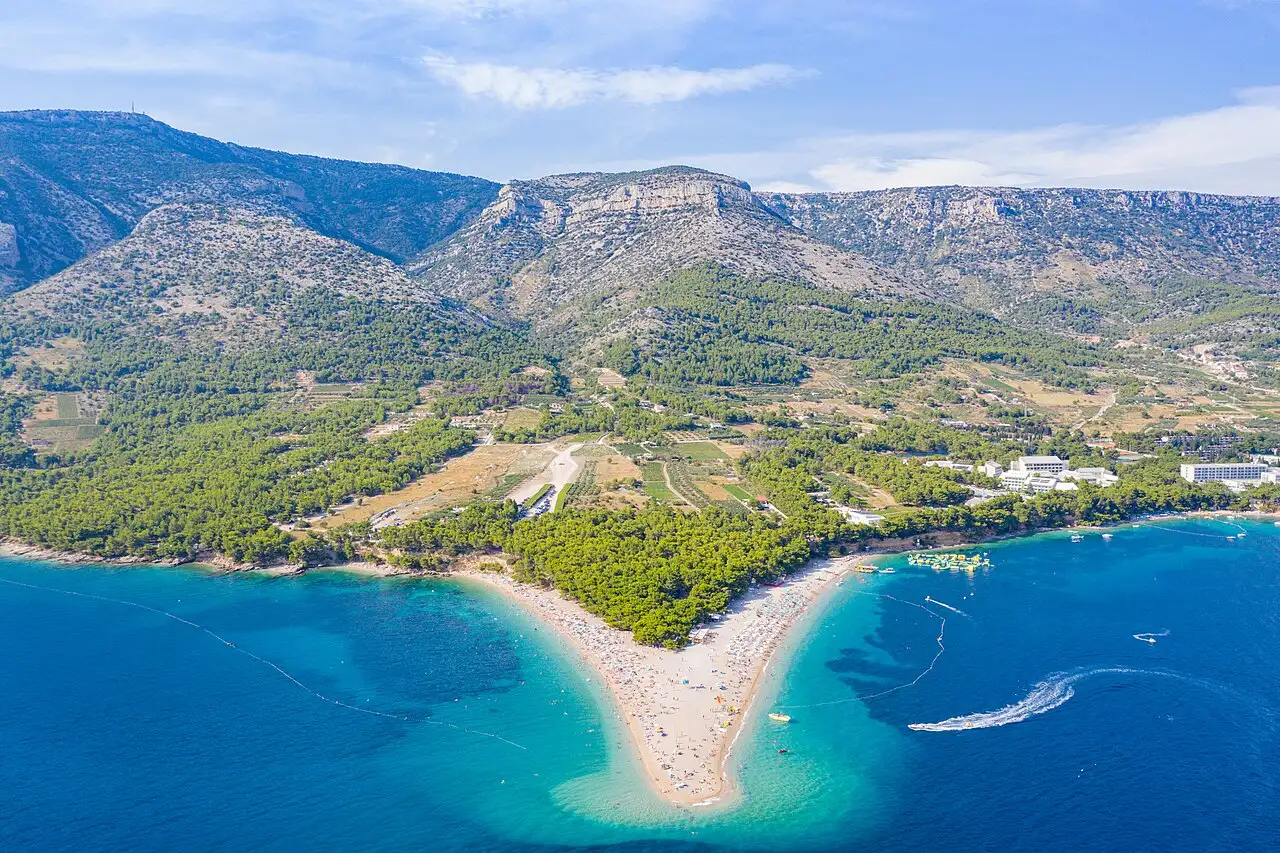
Croatia’s best beaches are almost all pebble or rock, not sand - and that is the first thing to get straight, because the postcard shots hide it. The famous ones are pebble: Zlatni Rat on Brac, Stiniva on Vis, Punta Rata at Brela. Real sand is rare and mostly in the north: Queen’s Beach at Nin, Sakarun on Dugi Otok, Lopar on Rab - shallow, warm and ideal for kids. The upside of all that limestone is water so clear it looks filtered, which is why Croatia flew over 100 Blue Flags in the 2025 season, near the top of Europe.
Pack water shoes either way - the pebbles and rocky entries are hard on bare feet, and the odd sea urchin makes them non-negotiable. It also pays to decide early whether you are after sand or scenery, because the two answers pull you to opposite ends of the country: the sand is up north around Nin, Rab and Dugi Otok, while the names that end up on postcards are pebble and sit further south.
Sand or pebble? Read this first
Most of the Adriatic coast is white limestone, so the default Croatian beach is smooth pebbles or bare rock shelving straight into deep, clear water. That’s great for snorkelling and colour, and less great if you wanted to build sandcastles or walk in barefoot. Water shoes solve most of it.
Genuine sand exists, but you have to go looking, and nearly all of it sits in northern Dalmatia and Kvarner rather than the glamorous south: Nin near Zadar, Sakarun on Dugi Otok, the Paradise Beach at Lopar on Rab. Sandy beaches here tend to be very shallow - you wade out a long way before it deepens - which makes them warm early in the season and perfect for small children, but less appealing if you want to swim proper lengths. Split’s Bacvice is the rare sandy, shallow beach right in a city.
One practical point that saves arguments: almost every beach in Croatia is public and free. You only pay where a concession rents sunbeds and umbrellas, and even then the beach itself stays open. On the busy ones in July and August, arriving before about 10am is the difference between a shady pine spot and a towel-to-towel scramble.
Zlatni Rat (Brac) - the iconic one
If you’ve seen one Croatian beach in a photo, it was probably Zlatni Rat - the “Golden Horn” - a white pebble spit that pokes out from the pine-covered shore about 2 km west of Bol on the island of Brac. Its party trick is that it moves: the tip is reshaped by the currents and the wind, so its exact length changes (a 2015 measurement put one side near 380 m and the other near 480 m), and in a real storm the point can swing from one side to the other in hours.
That same wind is why it draws windsurfers and kitesurfers - the side catching the afternoon Maestral breeze is choppy and sporty, while the sheltered side stays calmer for swimming. It is beautiful and, inevitably, busy in summer. Reach it by catamaran from Split to Bol (55 minutes on Krilo, just over an hour on Jadrolinija, several sailings a day in season), then it’s a shady 20-minute walk or a little tourist train from Bol along the front.
Stiniva (Vis) - the dramatic hidden cove
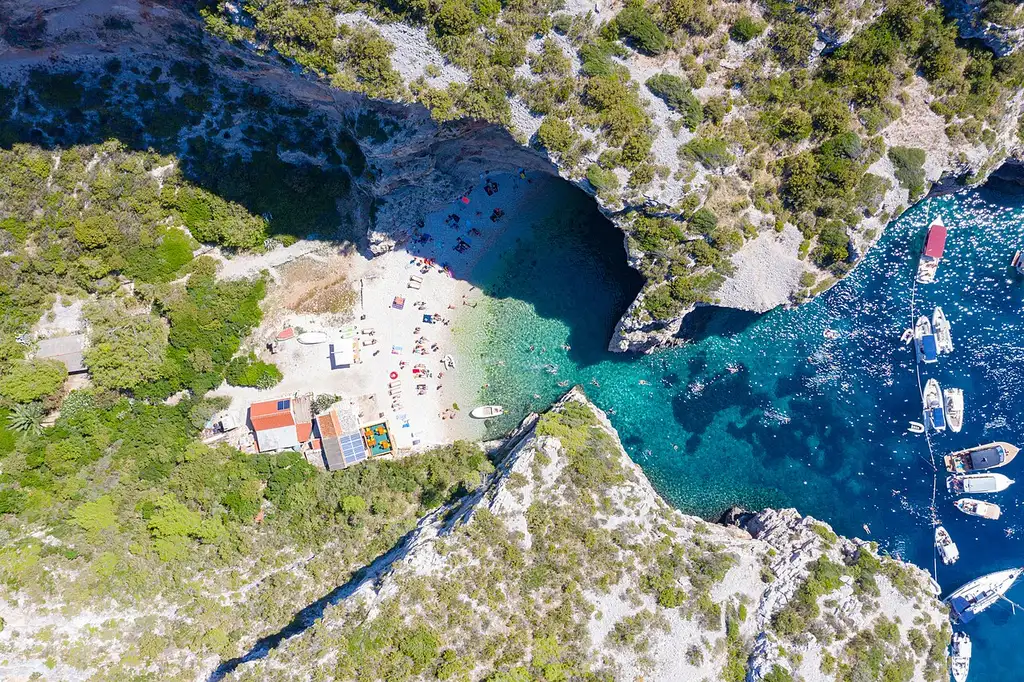
Stiniva is the one that makes people gasp: a near-enclosed cove on the remote southern coast of Vis, where two high cliffs almost meet, leaving a narrow gap you swim or squeeze a small boat through into a white-pebble beach and a pool of clear water. It has won “best beach in Europe” honours in the past, and it earns them - but the seclusion is the whole point, so it’s not an easy roll-up.
You get there two ways. By boat, on a tour or a small hire from Vis town or Komiza - note that big boats can’t fit through the entrance, so tours moor outside and you swim or tender in. On foot, via a steep path of about 700 m from a parking spot near the hamlet of Zuzec: it takes 20-30 minutes down over loose stone and rock steps, and the climb back up in the heat is the real workout. Bring water and proper shoes, not flip-flops. Vis itself is the ex-military island that stayed unspoiled - our Croatia island-hopping guide covers how the ferries and catamarans connect it.
Punta Rata and Brela - the Makarska Riviera
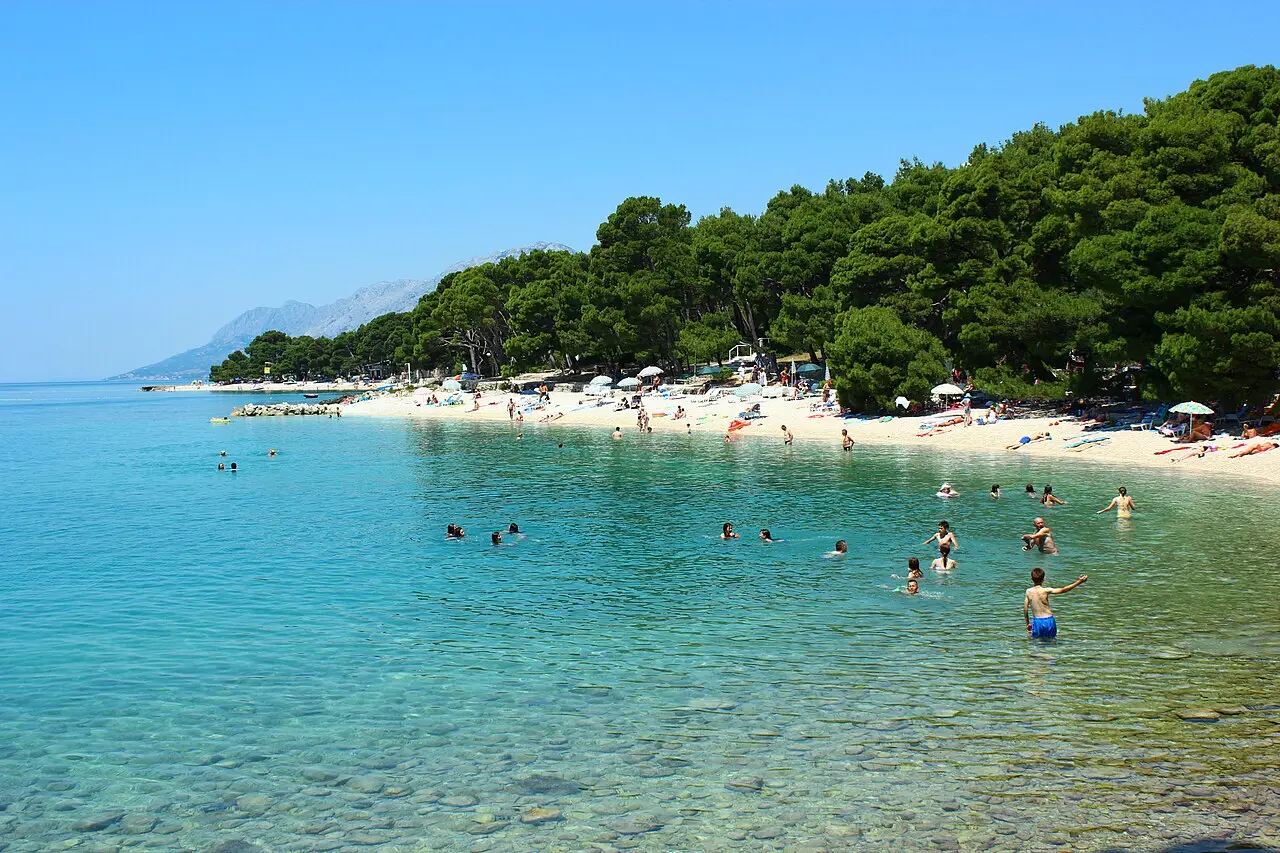
On the mainland below the Biokovo mountains, the Makarska Riviera is a long ribbon of pine-backed pebble beaches, and its poster child is Punta Rata at Brela. It’s fine white pebble shaded by Aleppo pines, with the little offshore Brela Stone (a pine-topped rock) as its signature, and it has turned up on international “most beautiful beaches” lists for years. It flies a Blue Flag, so facilities are good and the water quality is monitored.
The appeal here’s that you get scenery close to island quality without a ferry: Brela sits on the coast road between Split and Dubrovnik, so it slots straight into a drive down the coast - see the Dalmatia coast route from Split to Dubrovnik. Near Makarska, Nugal is a hidden pebble cove under forested cliffs, reached on foot through Osejava forest park - about 30 minutes from the town centre - and long popular with naturists, a good escape when the main beaches fill up.
Where the real sand is: Nin, Sakarun and the north
For actual sand, head north. Queen’s Beach (Kraljicina plaza) at Nin, just up the coast from Zadar, is Croatia’s longest beach - a broad sweep of natural sand, so shallow and warm that you can wade out a long way, which makes it a favourite with families. The lagoon beside it holds the country’s largest deposit of healing peloid mud, which people scoop on for their skin. It’s flat, open and windy - good for a beginner kitesurfing lesson too.
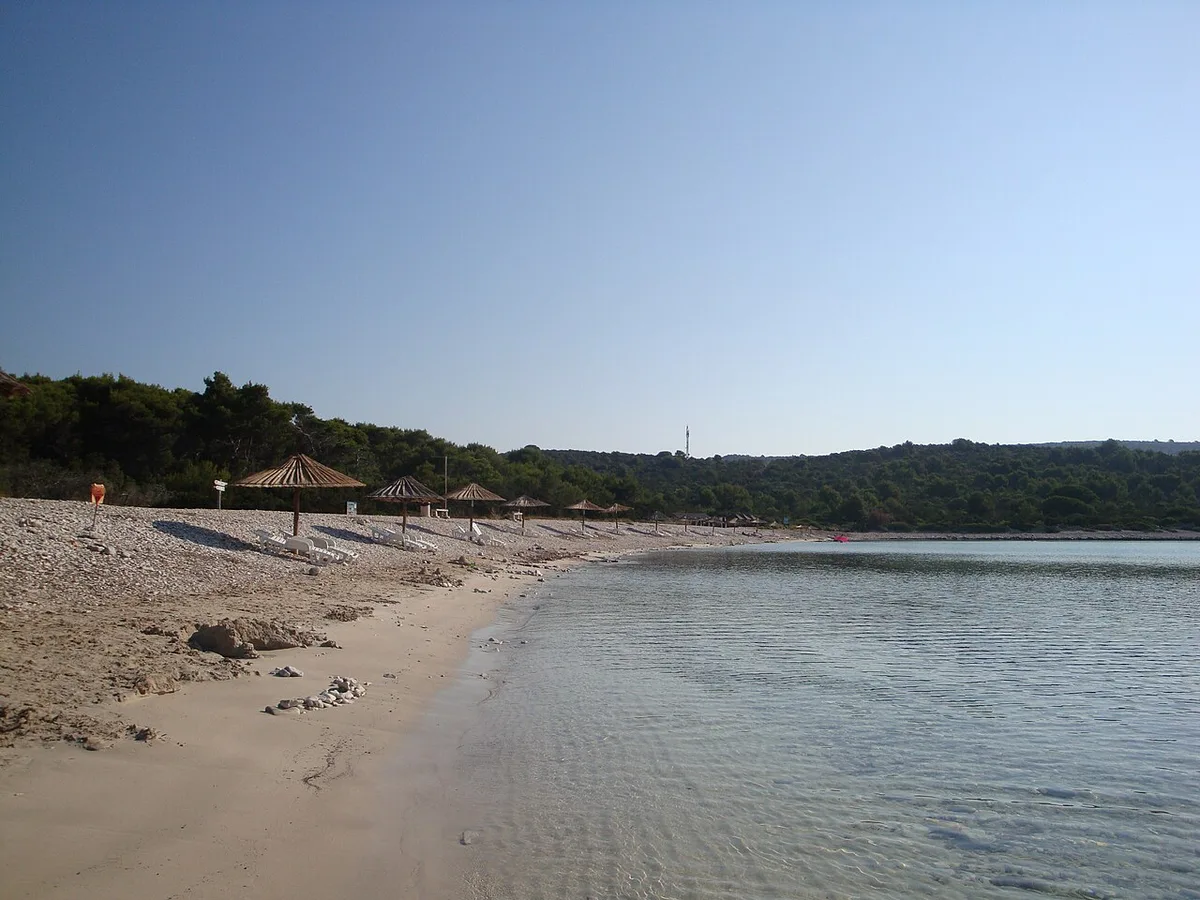
Out on Dugi Otok, Sakarun is the one people mean when they say “Croatian Caribbean”: around 800 m of pale sand and shallow, luminous turquoise water in a bay sheltered by pines. It takes effort to reach - a car ferry from Zadar to the island, then a drive - which keeps it a notch quieter than the mainland sands. On Rab, the Paradise Beach (Rajska plaza) at Lopar is another long, shallow, sandy family beach in the Kvarner islands.
City beaches: Banje, Bacvice and Hvar
You don’t always have to leave town for a swim. Banje, just outside the walls of Dubrovnik, is the classic city pebble beach, with a straight-on view of the Old Town ramparts and Lokrum island - gorgeous, and predictably packed, with a paid sunbed section run by a beach club. In Split, Bacvice is that rarity, a shallow sandy beach a short walk from the centre, and the home of picigin, the local game of keeping a small ball out of the shallow water with slapping dives - watching it’s half the fun. For Kašjuni, Žnjan, Riviera day trips and Brač by catamaran, see the best beaches near Split.
The islands off the coast have their own set. On Hvar, Dubovica is a much-loved pebble cove with a lone stone house and clear water, tucked below the road between Hvar Town and Stari Grad; the Hvar travel guide covers getting to it and the town’s other swimming spots. Wherever you base yourself, the city guides for Split and Dubrovnik point you to the nearest good water.
When to go, and a few honest tips
The beach season tracks the sea, not the calendar: the Adriatic is comfortably swimmable from roughly June to early October, warmest in July and August, and often better value in June and September when the water is still warm but the crowds and prices ease. For the full breakdown, see the best time to visit Croatia.
A few things worth knowing before you go:
- Water shoes aren’t optional. Pebble and rock entries, plus the occasional sea urchin, make them the single most useful thing to pack.
- Shade is scarce on pebble beaches. The pines behind them are the good spots; claim one early on a July morning or bring an umbrella.
- Most beaches are free. You pay only for sunbeds and umbrellas where a concession operates - the sand or pebble itself is public.
- Sand means shallow. Nin, Sakarun and Lopar are wonderful for kids but not for swimming lengths; for deep, clear water go to the pebble coves.
- Check the boat first. Island beaches like Zlatni Rat and Stiniva depend on catamaran and ferry timetables that change every season - confirm sailings before you commit to a day trip.
Pair the beaches with the rest of the coast: base yourself in Split or Dubrovnik, add an island like Hvar, and string the mainland together on the Split to Dubrovnik route. Travelling with young kids specifically? Our Croatia with kids guide turns these shallow picks into a full family base-and-logistics plan.
Opening hours, prices, timetables and seasonal services change through the year - the figures here are planning estimates, not quotes. Confirm current details with the operators and official sources before you go.
Photos
Read also

What to see · 12 min read
Paklenica National Park: Canyons, Climbing and Trails
Updated · August 29, 2026Paklenica National Park in 2026: canyon and cave tickets from €5, Anića Kuk climbing routes, and trails from Starigrad near Zadar.

What to see · 9 min read
Best Beaches near Split: Bačvice to the Riviera
Updated · August 26, 2026Best beaches near Split in 2026: sandy Bačvice, Marjan coves, Žnjan and Makarska Riviera day trips - plus Brač by catamaran.

What to see · 10 min read
Elaphiti Islands: Lopud, Šipan & Koločep
Verified · August 15, 2026Jadrolinija 807 from Gruž: €5.40 in season to Koločep, Lopud or Šipan. Times, Šunj, and why one island beats hopping all three.

What to see · 7 min read
Klis Fortress: Game of Thrones Views above Split
Updated · August 13, 2026Klis Fortress above Split was Meereen in Game of Thrones. Adults 12 EUR, kids 4 EUR; open daily 08:30-20:30 - confirm on tvrdavaklis.com.