
Kvarner Islands Route: Krk, Cres, Lošinj & Rab
7 days around Krk, Cres, Lošinj and Rab: 2026 ferry fares, the free Krk Bridge, and why Rab sits off the Cres-Lošinj chain.
The Kvarner chain is the island route you start without buying a boat ticket. You drive onto Krk over a bridge that has been free since 15 June 2020, sleep a night or two, then take Jadrolinija’s car ferry from Valbiska to Merag on Cres - 25 minutes, €4.40 a passenger and €20.70 for a standard car on the 2026 public tariff. Cres and Lošinj share a road. Rab does not. In August 2026 a car plus two adults is €29.50 one way to Cres and €45.70 to Lopar on Rab; confirm on jadrolinija.hr before you join the lane, because the seasonal column on the longer crossing is the one that bites.
This is not the Split-Hvar-Korčula run. Those islands hang off Dalmatia and eat half-day catamarans. Kvarner is the bay under Rijeka: pine, limestone, short shuttle ferries, and one planning error that wrecks a week. People treat Rab as the next bead after Lošinj. It isn’t. From Mali Lošinj you either backtrack through Cres to Valbiska, or you abandon the chain and leave Rab by the mainland ferry at Mišnjak. Build the week around that fork and the rest is ordinary driving. For a mainland night before the chain starts, Opatija is the one - west along the shore from the Krk bridge, a Habsburg promenade instead of a ferry queue.
Krk is the on-ramp, not a ferry ticket
Krk is the only big Croatian island you reach by road. The Krk Bridge has carried the highway from Kraljevica since 1980; the old southbound car toll came off in June 2020 and nothing has replaced it. You don’t need a Jadrolinija account to set foot on the island. You need one the moment you want to leave it by water.
Give Krk two nights, not a drive-through. The west-coast port at Valbiska is the hinge of the whole week - every car ferry in this plan leaves from there - but the island itself is the easy first stop: a working old town, Vrbnik on its cliff, and Vela Plaža at Baška if you can live with August traffic on that southern road. Our Krk island guide has the beaches, the airport bus trap and the wine alley; this page only needs you to arrive, sleep, and point the car at Valbiska on the morning you leave.
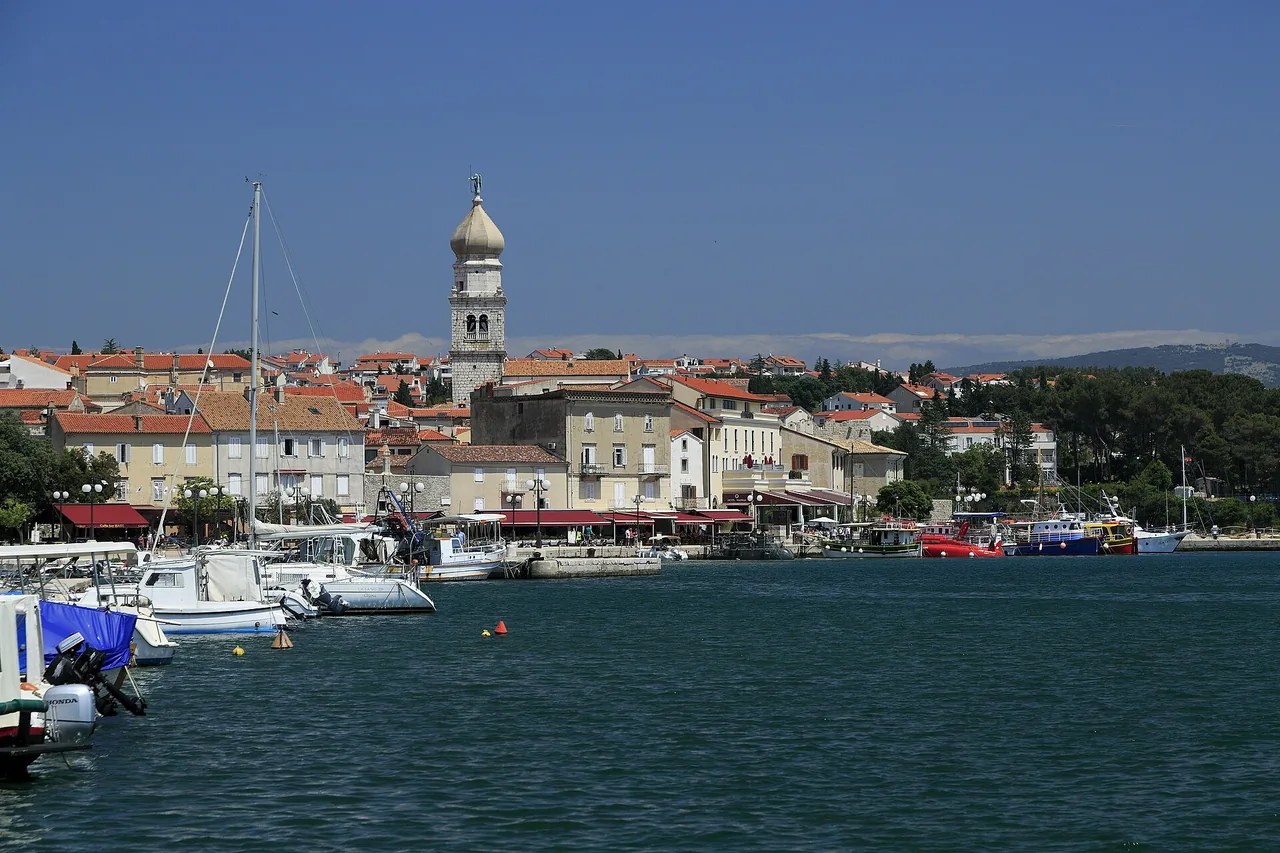
Valbiska is a short drive from Krk town, a quiet twenty minutes off-peak and longer when the August queue for Cres already starts on the approach road. Buy the car ticket and the passenger tickets as separate lines - Jadrolinija prices the vehicle and the people apart. A family of four in a hatchback is not “one car fare”.
Flying into Rijeka Airport
Rijeka Airport is a Krk fact that still catches people out. The terminal stands at Omišalj, on the island, a short hop from Rijeka’s railway station across the bridge. Plenty of visitors land, pick up a car in the arrivals hall, and never set foot in Rijeka at all. That’s the cleanest start for this loop.
The official airport bus stops at Rijeka, Kraljevica and Omišalj - not Krk town, not Baška. Without a car, change at Omišalj station or take a transfer; unofficial “airport” vans that dump you 2 km short are a known trap, and the fares live on the airport’s own page. A car from here is the point of the week. You can do pieces of this on foot. You can’t do the Osor drive that way.
Twenty-five minutes to Cres
Jadrolinija line 332 is the workhorse: Valbiska (Krk) to Merag (Cres), 25 minutes, year-round. In 2026 the public tariff is flat from 1 January to 31 December: €4.40 per adult, €2.20 for a child aged 3-12, €20.70 for a car up to 5 m long and 2 m high, €31.80 if the car is longer or taller. The ticket is valid on any sailing that day, which is the mercy of this crossing - miss the 10:00 and you wait for the 11:30 rather than buying again.
High season on the timetable is 3 July to 30 September 2026, with extra late boats; the rest of the year thins the dawn and night sailings. In August 2026 the boats still leave roughly every 90 minutes from 05:00. You don’t reserve a specific departure the way you do on the Rab line. You do, however, sit in a vehicle lane that crawls on Saturday mornings. Get there early, not because the tariff changes, but because the ramp does not.
Coming from Istria or Trieste instead of from Krk, the twin crossing is line 334, Brestova to Porozina, 20 minutes, same 2026 public numbers (€4.40 / €20.70). That’s the Istrian on-ramp onto Cres. It does not replace Valbiska if you already slept on Krk; it replaces Krk if you didn’t.
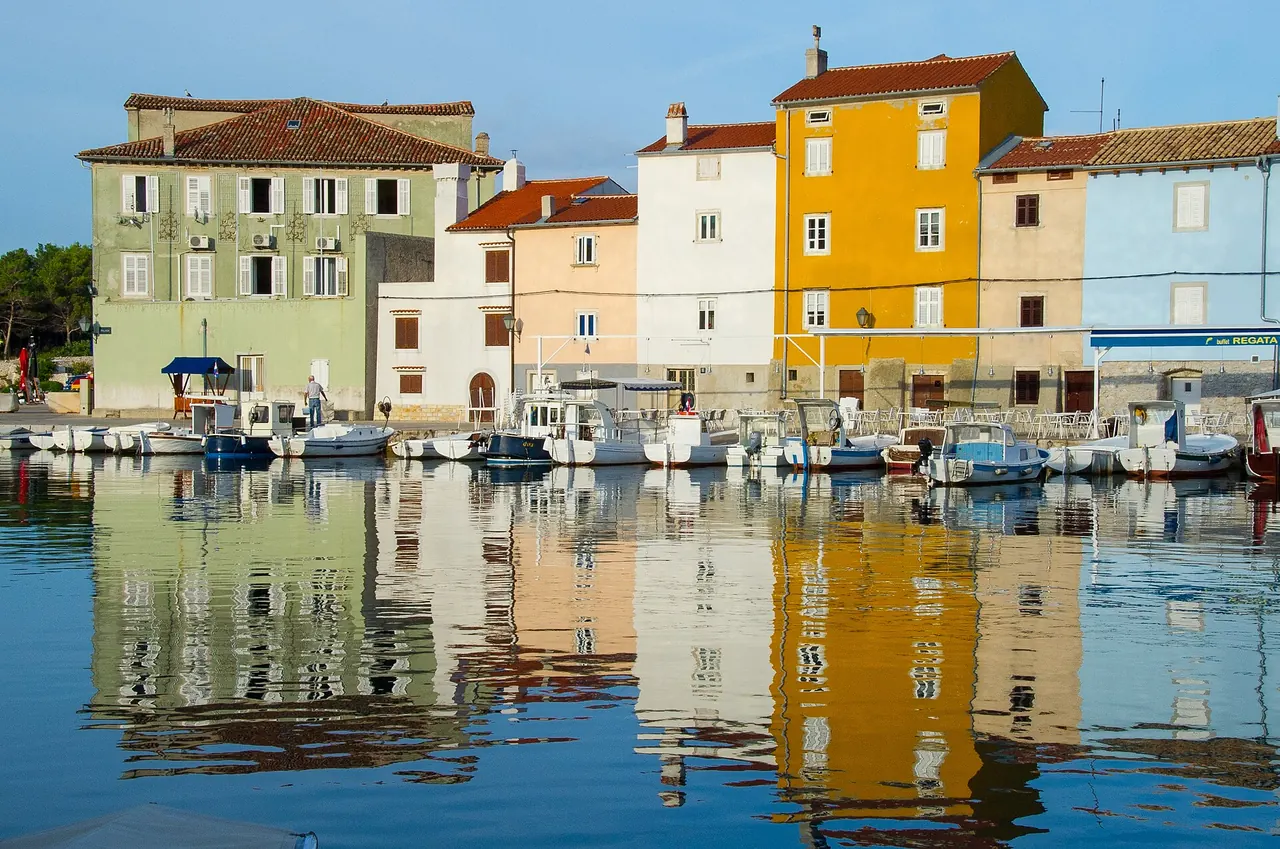
Cres town is a working harbour, not a resort strip. One night is enough if you’re heading south: walk the Riva, eat, sleep, and leave daylight for Lubenice and the empty middle of the island. The bus exists. It doesn’t wait while you walk down to the sea.
The Osor pinch, where two islands share a road
There is no Cres-Lošinj ferry for a car. The two islands were one limestone ridge until a canal was cut at Osor; a small lifting bridge carries the road. Visit Lošinj’s own driving page is blunt about the timetable: the Osor bridge opens for boats at 09:00 and 17:00. Sit in that queue at ten to five in August and you’ll watch masts go through while the cars bake. The Privlaka drawbridge, further onto Lošinj, lifts at 09:00 and 18:00. Neither crossing charges a toll.
From Cres town to Mali Lošinj is about 55 to 60 km of island road, and it eats a good hour - slower than the number looks. Osor itself is worth the stop: a stone village on the canal, too small to absorb a coach party, which is exactly why the coaches still come. Then the road drops into pine and the first Lošinj bays.
Mali Lošinj is the harbour you stay in. Two nights: Čikat under the pines, Veli Lošinj for the smaller waterfront, an evening after the day-trippers have gone north. Jadrolinija line 9308 does land here - 4 hours 30 minutes from Rijeka on the 2026 operator page, foot only - but if the car is already on Cres, you’re on the road.
How Croatia’s ferries actually work is the page to read before you treat every Jadrolinija line as the same product. Valbiska-Merag and Valbiska-Lopar are not.
Rab sits off that road
From Mali Lošinj there is no useful car ferry to Rab. The map looks like a neat southbound necklace. The water doesn’t. To put the car on Rab you drive back through Cres to Merag, recross to Valbiska (another €20.70 plus passengers in 2026), and take line 338 to Lopar.
That second boat is the one people under-budget. 80 minutes. In the 2026 seasonal window (29 May to 27 September) Jadrolinija charges €6.20 per adult and €33.30 for a standard car; off-season those drop to €4.80 and €20.40. A ticket on 338 reserves that sailing. Miss it and you’re not hopping the next boat on the same stub. In August 2026 there are up to four departures a day, two in winter. Book the car space, then arrive with the hour in hand that Jadrolinija asks for on reservation lines in summer.
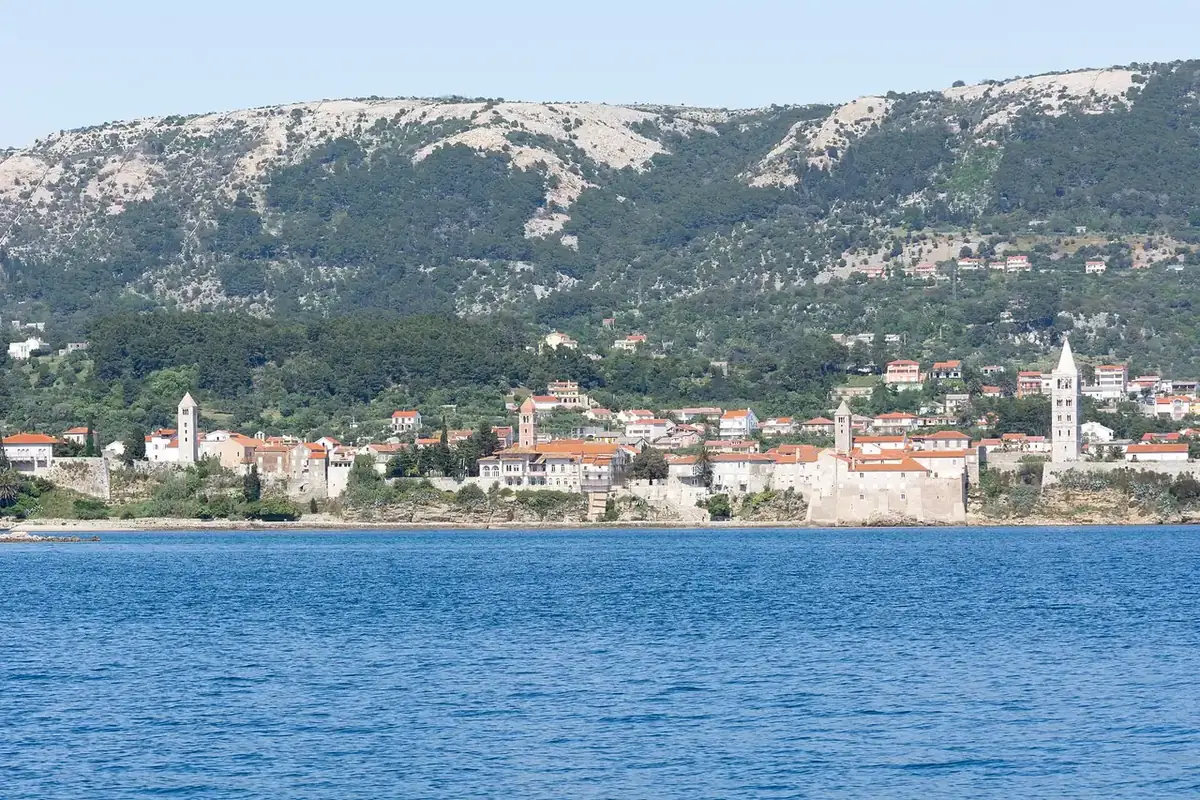
Lopar is beaches, including real sand at Paradise Beach, which is rare on this coast. Rab town is the four bell towers, a short drive further on, and that’s where you sleep. Two nights: one for the old town, one for the Lopar side, or a single long day if you’re already tired of packing.
The other door is Rapska plovidba, not Jadrolinija: Stinica on the mainland to Mišnjak on Rab, under 18 minutes, a shuttle that locals prefer because it runs so often. In the 2026 seasonal tariff (1 May to 30 September) that’s €4.20 per adult and €18.20 for a standard car; off-season €2.50 and €12.70. Use it as the exit from the loop - Rab to the coast road, then north to Rijeka or south toward Zadar and Pag - rather than as a way to stitch Lošinj to Rab. It doesn’t.
The ferry bill in August 2026
Numbers below are the public tourist tariff, one way, standard car up to 5 m / 2 m plus the people in it. Island-resident prices exist on the same PDFs; they’re not yours. Children under 3 travel free on these lines; 3-12 are half or a listed child fare. Always re-check the operator the week you travel.
| Crossing | Operator, line | Time | Adult | Car (std) | August 2026 note |
|---|---|---|---|---|---|
| Valbiska - Merag | Jadrolinija 332 | 25 min | €4.40 | €20.70 | Year-round price; extra boats 3 Jul-30 Sep |
| Brestova - Porozina | Jadrolinija 334 | 20 min | €4.40 | €20.70 | Istrian on-ramp onto Cres |
| Valbiska - Lopar | Jadrolinija 338 | 80 min | €6.20 | €33.30 | Seasonal price 29 May-27 Sep; reserves that sailing |
| Stinica - Mišnjak | Rapska plovidba 337 | <18 min | €4.20 | €18.20 | Seasonal price 1 May-30 Sep; mainland exit |
| Rijeka - Rab (foot) | Jadrolinija 9309 | 1 h 45 min | €14.60 | - | Catamaran, seasonal price 29 May-27 Sep |
A realistic August 2026 car week - Krk on, Cres, back, Rab - is two 332 crossings and one 338, and then you have to get off Rab. Leave the way this route recommends, by the Mišnjak-Stinica link, and the vehicle side of the week is €92.90 (2 × €20.70 + €33.30 + €18.20). Loop back through Krk instead, which is what you want if you fly out of Rijeka, and it is €108.00 (2 × €20.70 + 2 × €33.30). The Stinica exit is the cheaper of the two by about fifteen euros, and it puts you on the mainland road south rather than back on an island. Don’t add both the recross and Stinica into one pile. Passenger tickets sit on top. The money is the rooms, not the ramps. The €85 on the route card is a daily floor for a cheap room plus one car ferry, not a hotel quote. Day-trip boats from Rijeka are a different product; these car ferries are Jadrolinija and Rapska plovidba, sold on their own sites.
Where the nights go
Seven days, four islands, no heroics:
- Nights 1-2, Krk. Land at Omišalj or drive the bridge. Don’t try to ferry on day one.
- Night 3, Cres town. The 332 crossing in the morning, a slow afternoon, an early night because Osor has a clock.
- Nights 4-5, Mali Lošinj. Cross Osor outside the 09:00 / 17:00 lifts. Swim. Stay put.
- Nights 6-7, Rab. Backtrack to Valbiska, 338 to Lopar, sleep in Rab town. Leave via Mišnjak-Stinica unless you still need the car on Krk for a flight.
June and September are the civilised version of the same map: same boats, shorter lanes, rooms that still answer the phone. July and August work if you treat Valbiska like an airport - tickets in the pocket, an hour in hand, no “we’ll catch the next one” on line 338.
Foot passengers have a different map
Without a car the chain breaks into catamarans. Line 9309 from Rijeka sits you in Rab town in 1 hour 45 minutes (€14.60 in the 2026 summer tariff, €9.30 off-season). Line 9308 threads Rijeka, Cres and Mali Lošinj in 4 hours 30 minutes; check today’s euro fare on Jadrolinija - the operator’s own 2026 price and schedule sheets are the ones to open. Since 24 June 2026 a new fast line, 323, has been running Kraljevica-Crikvenica-Senj-Baška-Lopar-Rab-Lun. Useful if it still runs when you travel; don’t budget it until you’ve opened the current timetable.
That version is a Rijeka-based hop, not this driving loop. Island hopping in Croatia sets Kvarner next to the Dalmatian hubs; this page is the northern driving week those tables only name.
If you wanted Split, Brač, Hvar and Korčula, you’re on the wrong bay - that’s the Croatia islands itinerary, and none of those islands appear here. Kvarner is shorter boats, a free bridge, a lifting span at Osor, and a Rab ferry that only makes sense once you’ve accepted the backtrack. That’s the whole trick. The rest is pine shade and a ticket with a date on it.
Route day by day
- Days on the road
- 7
- Distance
- ≈180 km
- Budget from
- 85 EUR
- Best season
- May, June, July, August, September
The route at a glance
-
Krk
Route startstop ≈2880 min
Drive on over the free Krk Bridge. Two nights: Krk town, a swim at Baška if you can stand the August traffic, then the west-coast port at Valbiska for every onward ferry.
Photo: Falk2 / Wikimedia Commons, CC BY-SA 4.0 ( source) -
Cres
45 km from the startstop ≈1440 min
Jadrolinija line 332, Valbiska to Merag, 25 minutes. Cres town is a working harbour; the rest of the island is empty limestone, griffon country and a long southbound road toward Osor.
Photo: Alexander Leisser / Wikimedia Commons, CC BY-SA 4.0 ( source) -
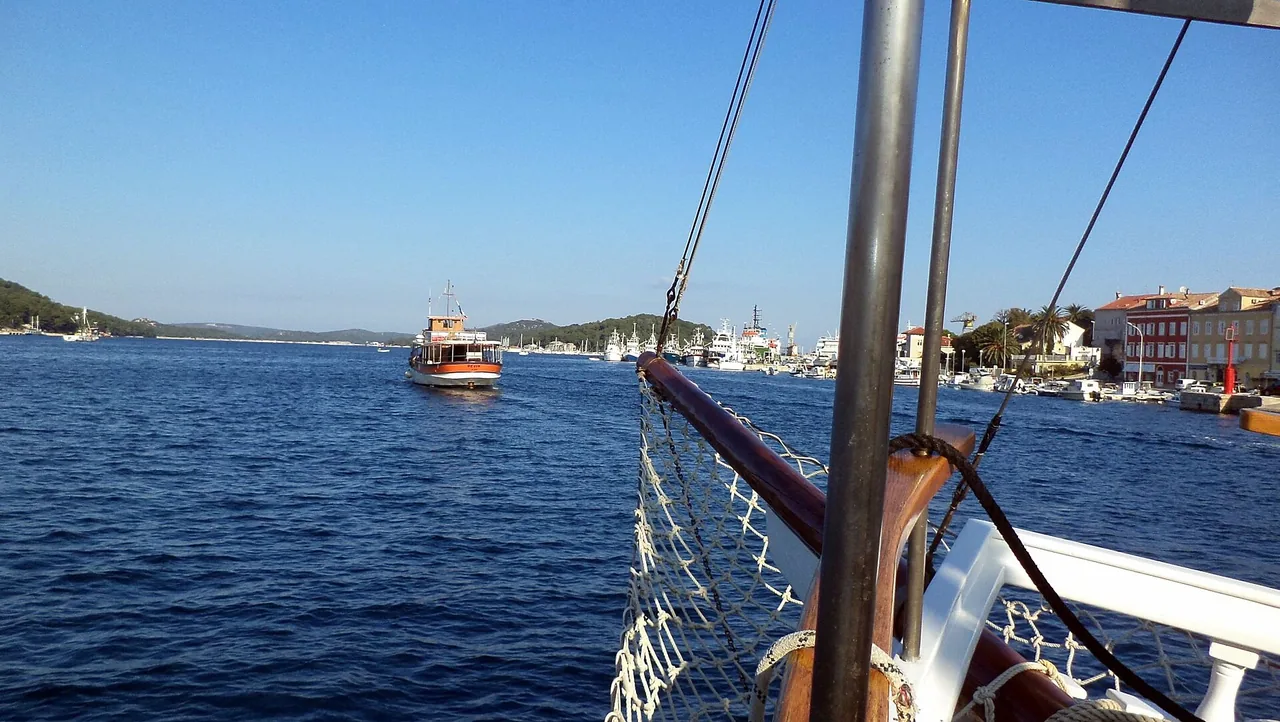
Mali Lošinj
115 km from the startstop ≈2880 min
No ferry from Cres: you drive the Osor canal bridge, which lifts for boats at 09:00 and 17:00. Two nights in Mali Lošinj for Čikat pines, Veli Lošinj and a slower harbour evening.
Photo: Zoran Kurelić Rabko / Wikimedia Commons, CC BY-SA 3.0 ( source) -
Rab
180 km from the startstop ≈2880 min
Not the next island after Lošinj. Backtrack to Valbiska and take Jadrolinija 338 to Lopar (80 minutes), or leave the chain via Rapska plovidba from Mišnjak to Stinica on the mainland.
Photo: Isiwal / Wikimedia Commons, CC BY-SA 3.0 ( source)
Route map
The map with stops loads on click - to keep the page lightweight.
The map didn’t load. Check your connection and refresh the page.