
Brač Island Guide: Zlatni Rat, Bol & Vidova Gora
A guide to Brač, Croatia: the shifting Zlatni Rat beach, the town of Bol, the Vidova Gora hike, white Brač stone, and the ferry from Split.
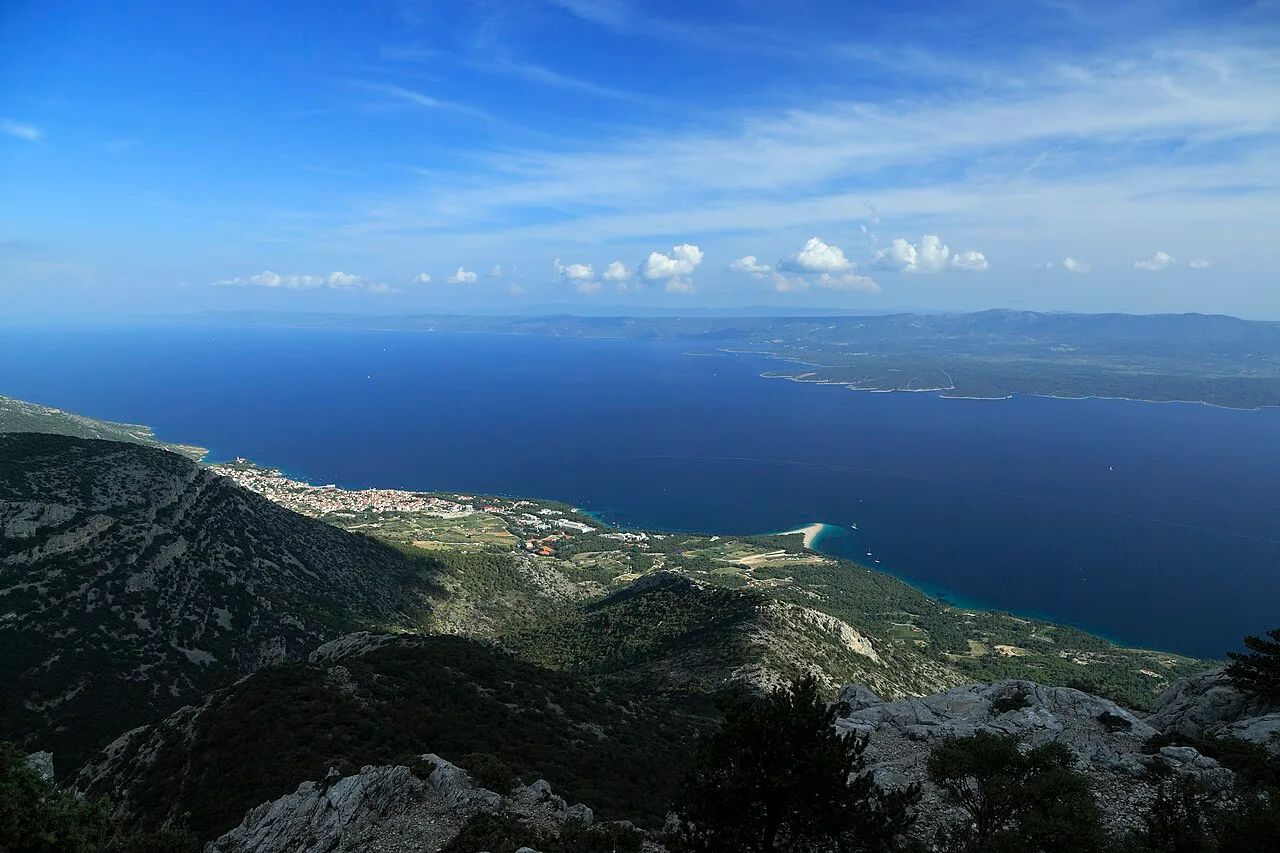
Brač is the big Dalmatian island you can see from Split, and the one that owns the postcard. That long golden finger of pebble reaching into the sea in every “visit Croatia” advert is Zlatni Rat, and it is here, below the town of Bol. Brač is the third-largest Croatian island, the closest large one to Split, and the easiest to reach - a 50-minute ferry and you are on it. It gives you a world-famous beach, the highest peak on any Adriatic island, and quiet stone villages, without the price tags of Hvar next door.
Here’s the shape of a trip: most people come for Zlatni Rat and Bol on the south coast, but the ferry lands at Supetar in the north, so build in the drive across. Give it a day if you must, two or three if you can.
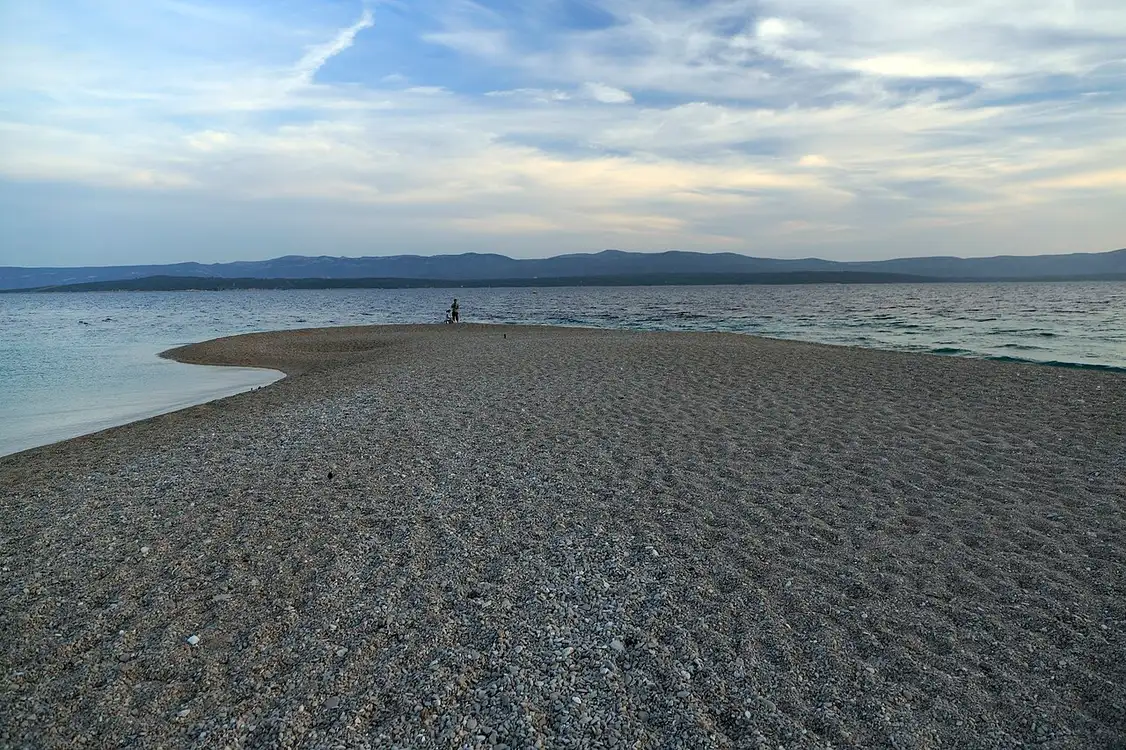
Zlatni Rat: the beach that moves
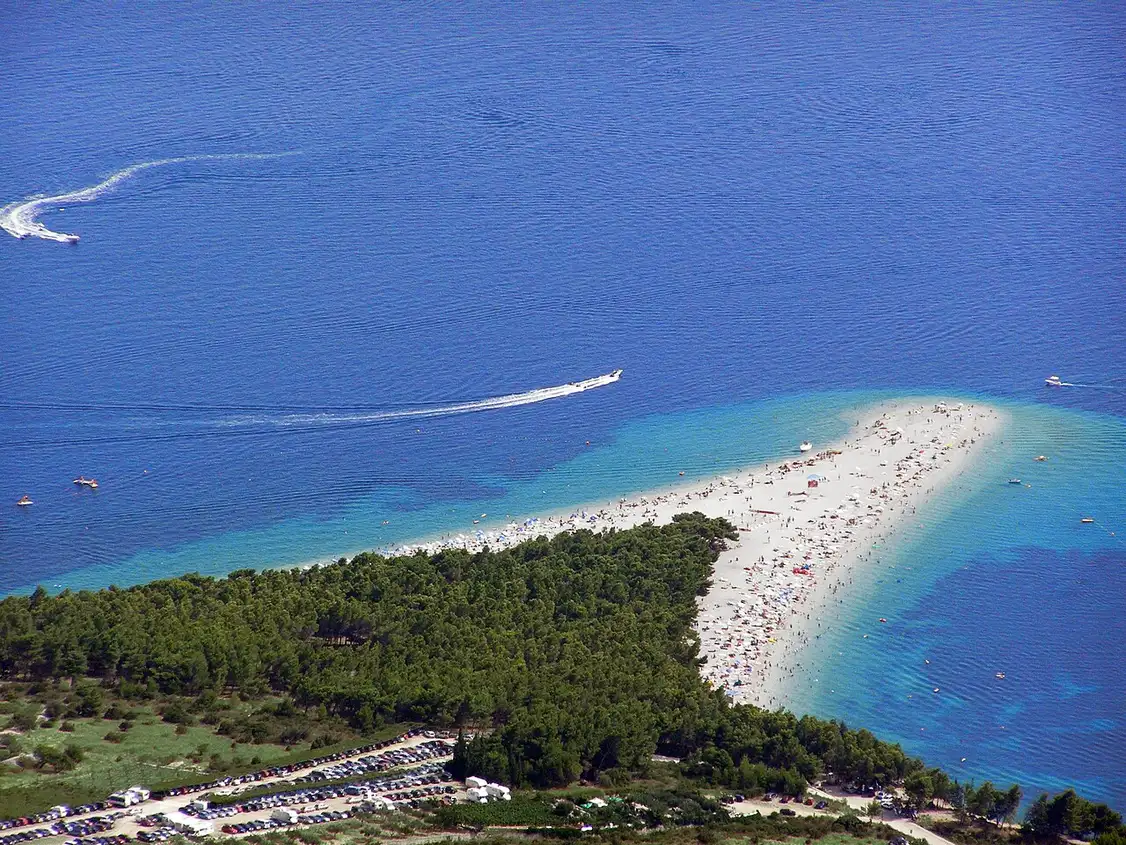
Zlatni Rat (the Golden Horn, or Golden Cape) is a spit of white pebble that juts about 500 metres straight out into the sea, roughly 2 km west of Bol. It’s the most photographed beach in Croatia, and the reason is its shape: a tapering triangle with a pine grove down the middle and water on both sides. The detail worth knowing before you picture it as a fixed landmark is that it is not fixed at all - the tip constantly reshapes with the wind and sea, swinging one way or the other, and in a strong storm the whole point can shift from one side to the other in a matter of hours. No two summers look quite the same.
That double-sided design has a practical payoff. Whichever way the wind blows, one side of the spit is always sheltered and the other is exposed - so you can pick calm swimming or chop, and the exposed side, whipped by the afternoon thermal wind the locals call the Maestral, is one of the best windsurfing and kitesurfing spots in the country. There are board rentals and a windsurf school right there. Bring water shoes, though: it’s pebble, not sand, and the drop-off is quick.
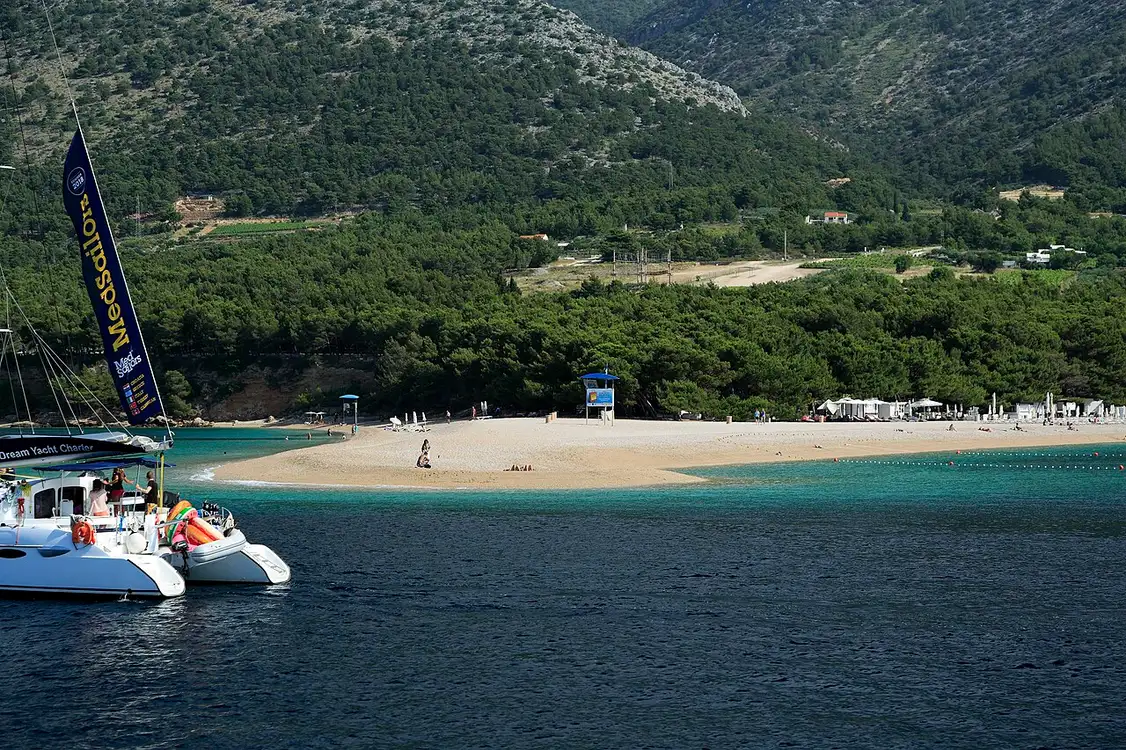
From Bol you reach the beach by a pretty 20-minute walk along the seafront promenade under the pines, a little road train, or a taxi boat in summer. It gets genuinely crowded at midday in high season; go before 10am or after 5pm and it thins out. There’s no need to pay for a sunbed unless you want one - the pebble is public.
Bol: the town by the beach
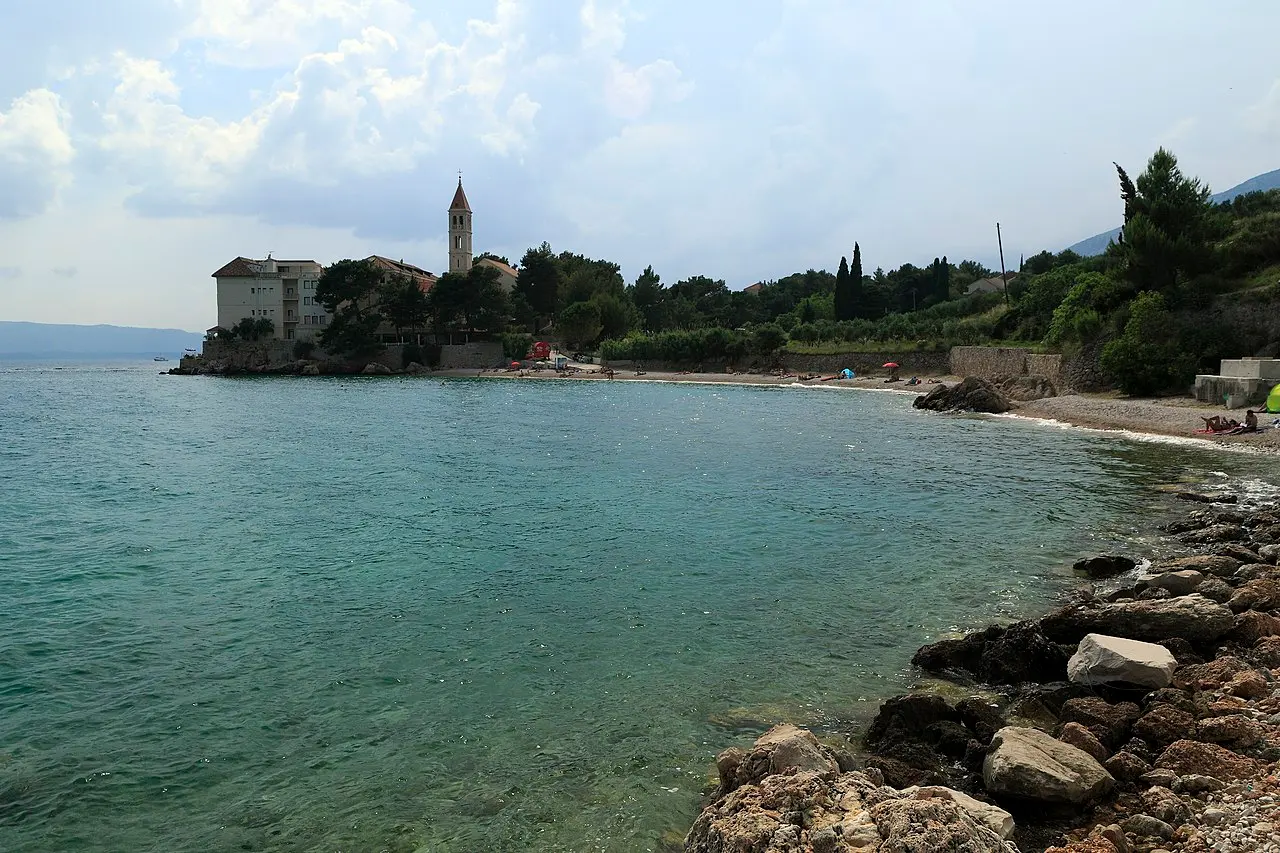
Bol, on the south coast, is the island’s main resort and the base for Zlatni Rat. It’s a proper old stone town rather than a strip of hotels: a working harbour, a long waterfront promenade lined with cafes and konobas, and a 15th-century Dominican monastery on a headland at the eastern edge, with a small museum and a Tintoretto-school altarpiece. The setting, with Vidova Gora rising straight behind the town, is the best on the island.
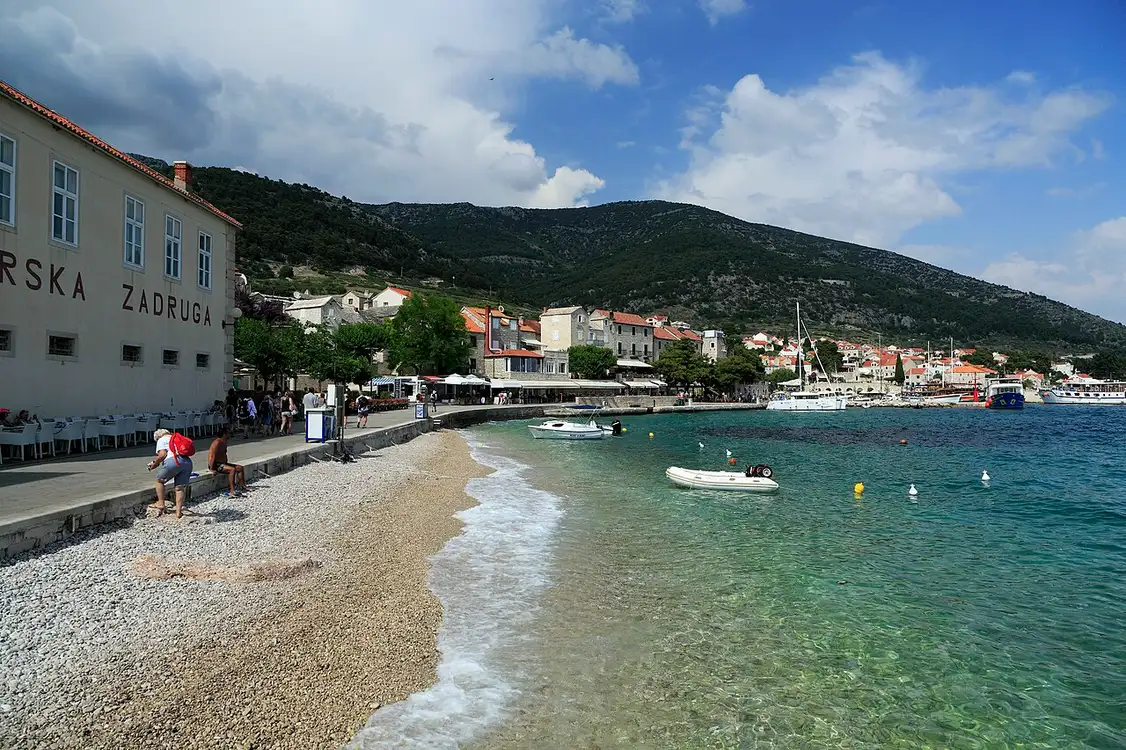
Bol is also a wine town. Brač grows Plavac Mali, the big Dalmatian red, on steep slopes above the coast, and the Stina winery sits right on the Bol waterfront in the old cooperative building - an easy tasting stop between the beach and dinner. Our Croatian wine guide explains Plavac Mali and the coast’s wine roads. For a wider tour of what to order and drink along this coast, our guide to what to eat in Croatia covers the black risotto, grilled fish and Plavac you’ll meet on Brač menus.
Vidova Gora: the highest island peak in the Adriatic
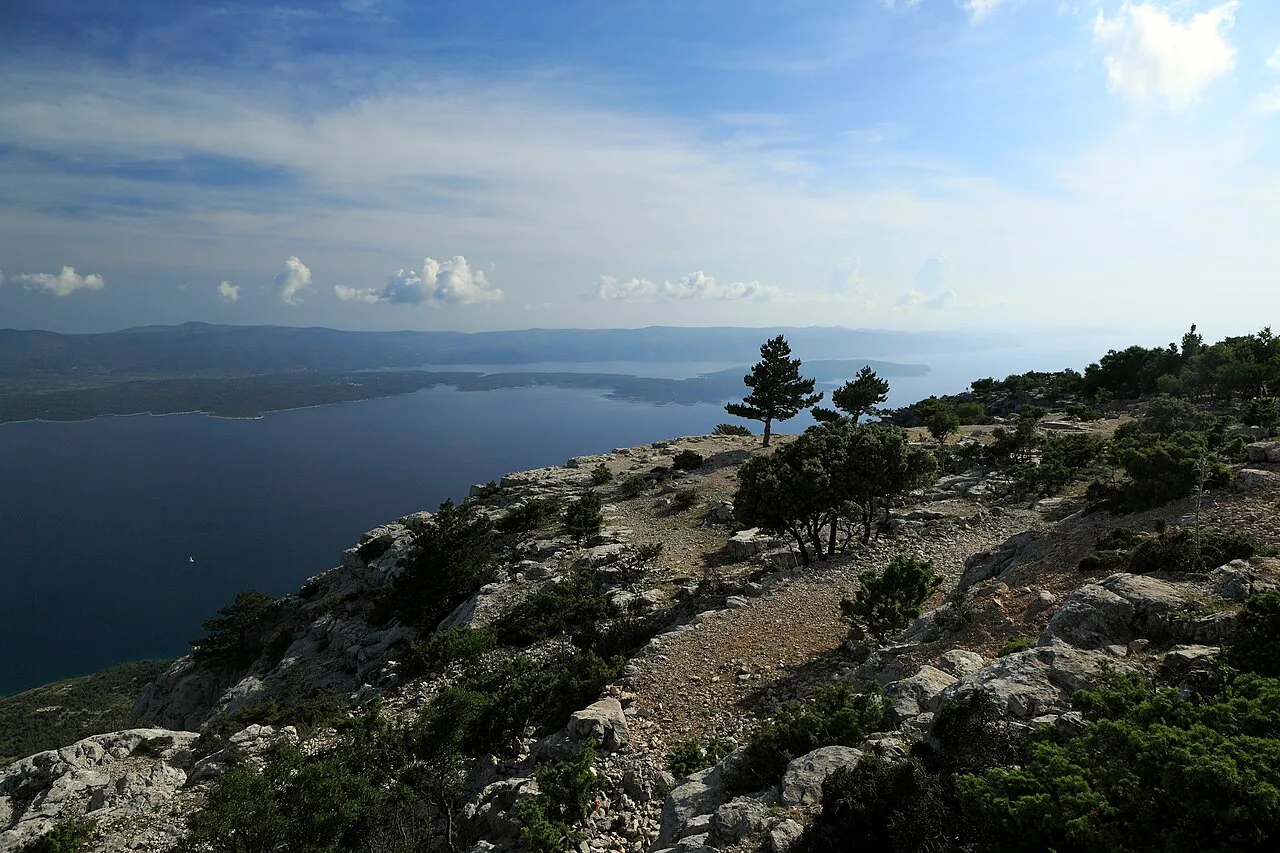
The one thing to do beyond the beach is climb Vidova Gora. At 778 metres it’s the highest point on Brač and the highest peak on any Adriatic island, and it stands directly above Bol. The view is the payoff of the whole trip: Zlatni Rat sits far below you like a scale model, and beyond it the island of Hvar stretches across the channel, with Vis, the Pelješac peninsula and the mainland’s Biokovo mountains filling the horizon on a clear day.
You can get up two ways. The easy option is to drive - a sealed road climbs to near the summit, with the turnoff signposted off the main island road close to Nerežišća. The honest option is to hike up from Bol, a steady climb of around two hours on a marked trail through pine and scrub; start early, take water and a hat, because there’s little shade and the last stretch is hot. Near the top are the remains of a small chapel to St Vitus (Sveti Vid), which gives the mountain its name, and usually a simple stone hut selling drinks.
White stone and the Pučišća myth
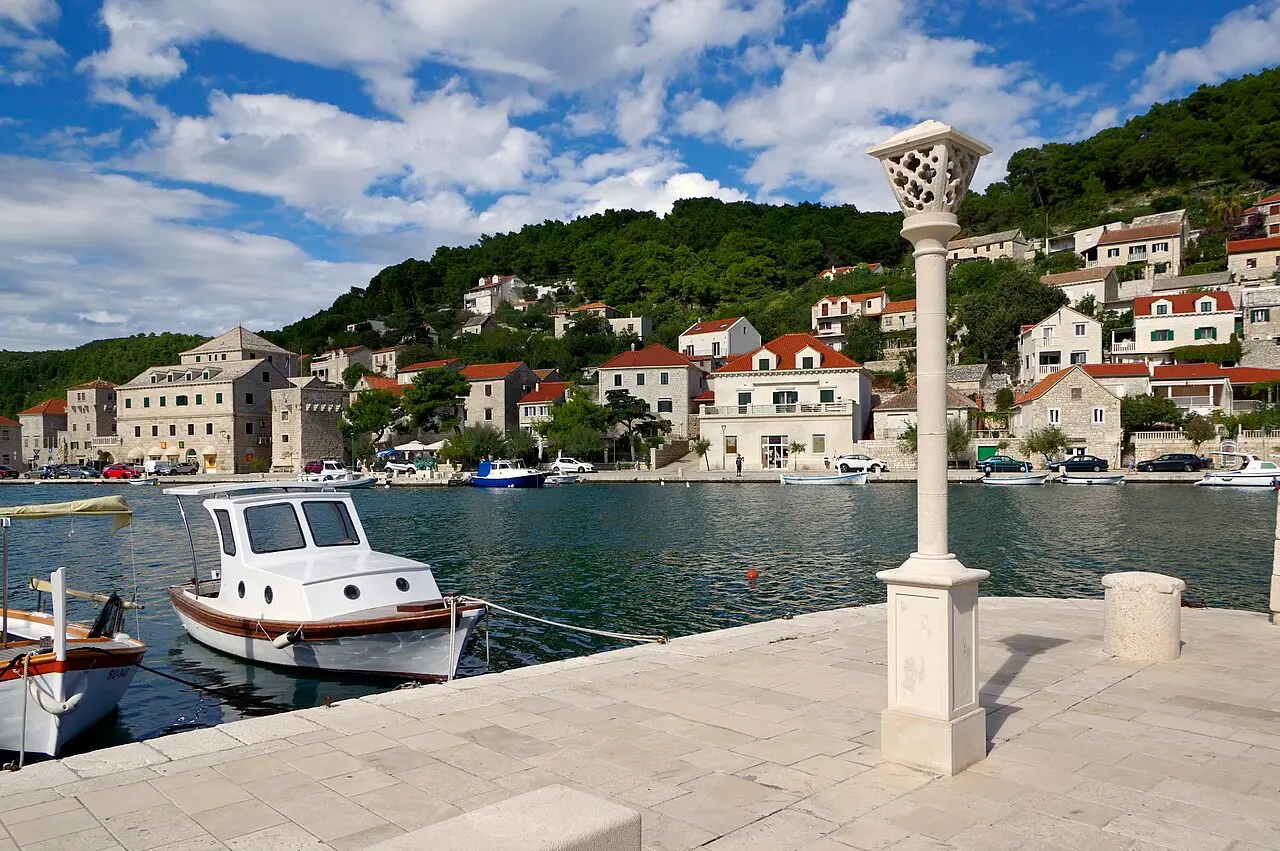
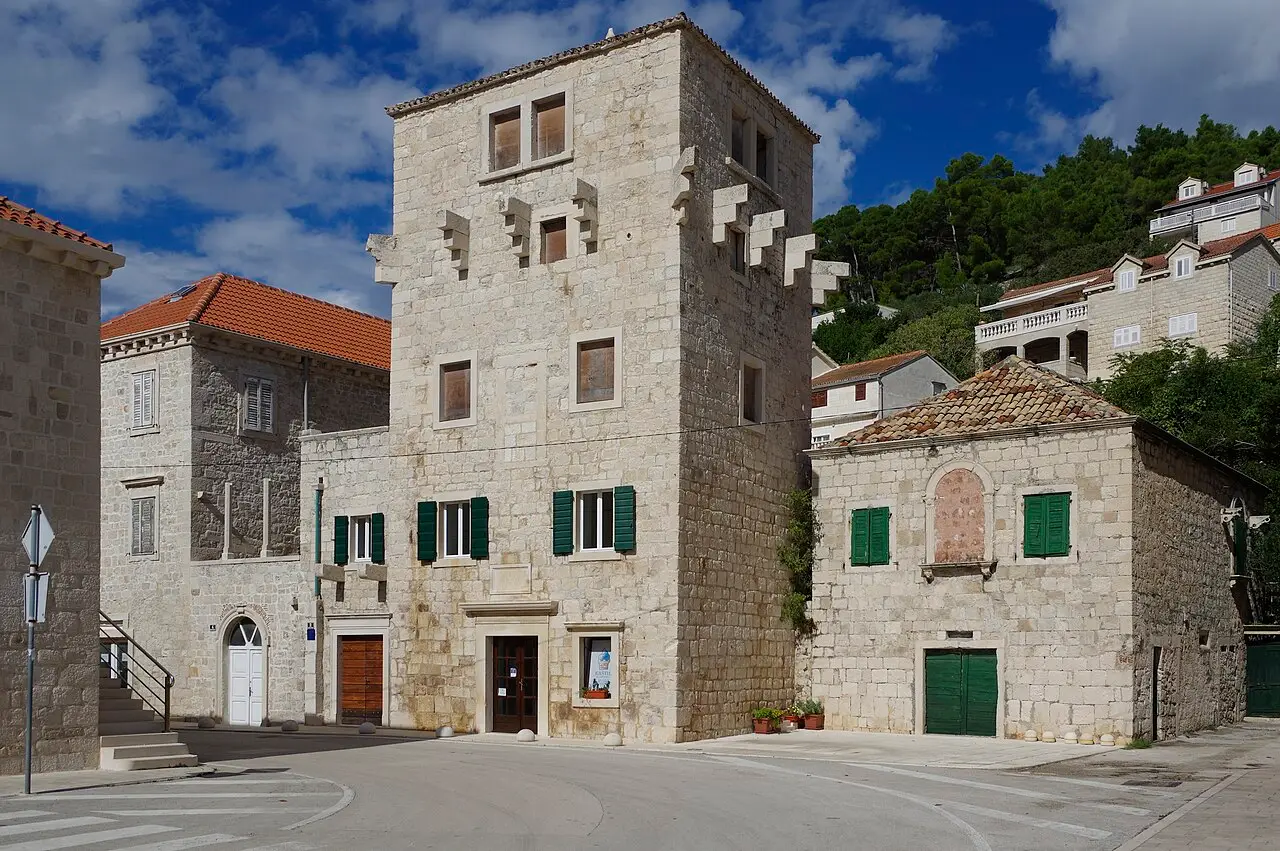
Brač is built of a hard white limestone that has been quarried here for two thousand years, and it is the island’s other claim to fame. The stone-cutting tradition centres on Pučišća on the north coast, a handsome town wrapped around a deep bay, home to a working stonemasonry school where students still learn to carve by hand - you can often watch them and buy a piece. The stone genuinely faced Diocletian’s Palace in Split (our guide to Diocletian’s Palace covers the ruin the whole city grew inside) and turns up in grand buildings across the region.
Here’s the correction worth making, because you’ll hear it everywhere: guides and menus love to claim that Brač stone built the White House in Washington. It didn’t. The White House is faced with Aquia Creek sandstone from Virginia, and the story is a well-travelled myth. Brač stone has a real and impressive record without it - Diocletian’s Palace, and churches and palaces up and down Dalmatia. Enjoy the tale, but do not repeat it as fact.
Blaca and the quieter corners
For something wilder, the Blaca Hermitage (Pustinja Blaca) is a former monastery founded by monks fleeing the Ottomans in the 16th century, wedged into a gorge on the island’s remote south side and now a museum. Getting there’s part of it: you reach Blaca either by boat and an uphill walk, or on a longer hike from the nearest road, so check access and opening before you set out. It’s the antidote to Zlatni Rat - you may have it almost to yourself.
Elsewhere the island rewards a wander by car. Milna is a pretty yacht harbour on the west coast, Sutivan and Sumartin are low-key fishing villages, and the interior is a rocky plateau of olive groves, dry-stone walls and near-empty villages like Škrip, the island’s oldest settlement. Brač lamb, raised on that herb-scented scrub, and the island’s olive oil are both worth seeking out at a village konoba.
Supetar and how to get to Brač
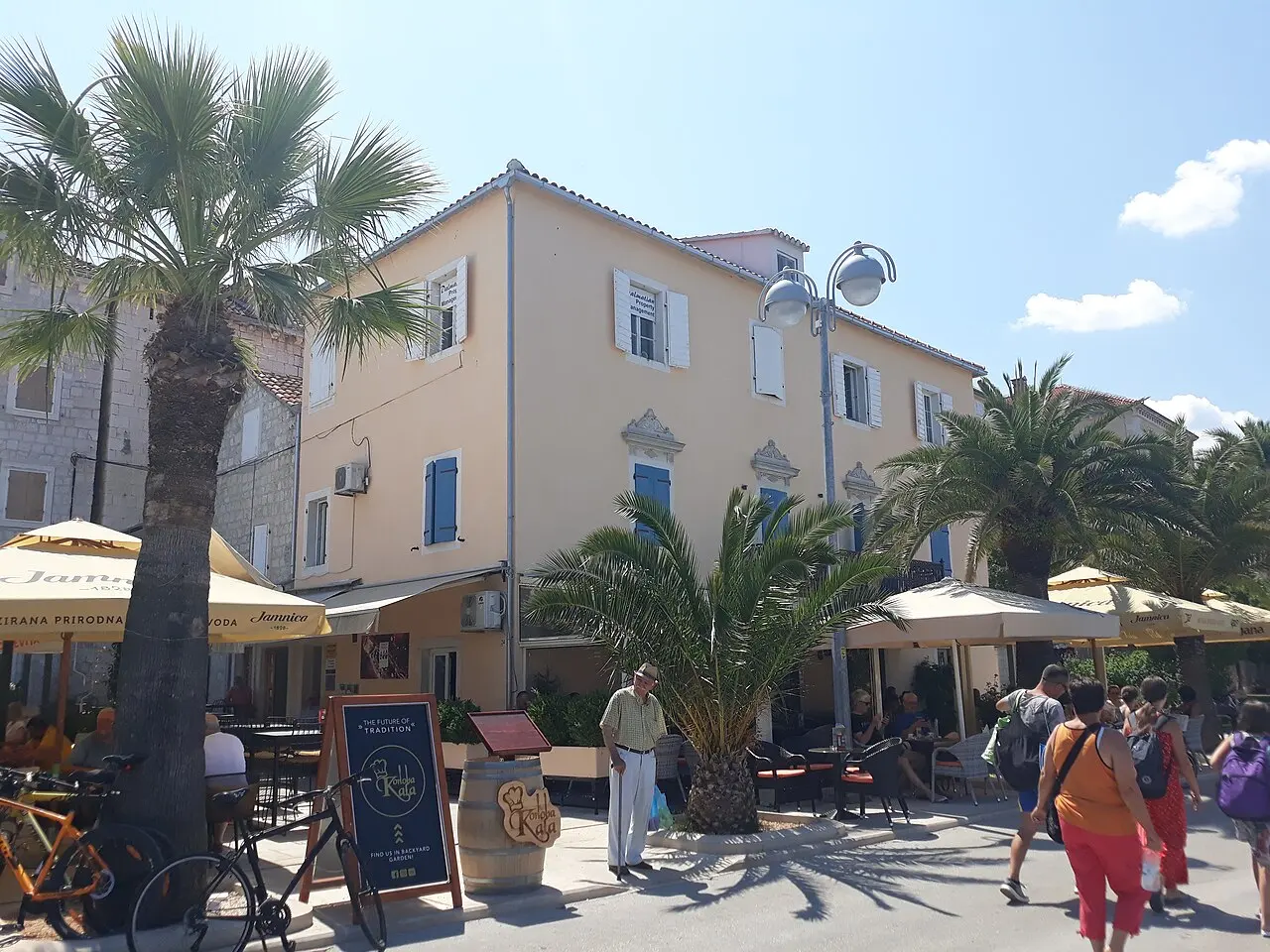
Almost everyone arrives at Supetar, the main town and ferry port on the north coast, facing Split. It’s a relaxed place with a palm-lined waterfront, a good town beach and an unusually fine cemetery of white-stone tombs - a decent lunch stop rather than a destination, and about an hour’s drive over the island’s spine to Bol.
Getting to Brač is simple, and you have two routes. The workhorse is the Jadrolinija car ferry from Split to Supetar - about a 50-minute crossing and the busiest ferry route in Croatia, with up to 14 sailings a day in July and August. As a rough guide, reckon on around 6 euros per foot passenger and about 25 euros for a car one way in summer, with no discount for a return; fares and timetables are seasonal, so check before you go. If you are heading straight for the beach without a car, a seasonal passenger catamaran runs from Split direct to Bol on the south coast, which skips the cross-island drive. Book the car ferry and, in peak weeks, the catamaran ahead. For how the boats work in general, see our guide to how Croatia’s ferries work, and for stringing several islands together, Croatia island hopping.
When to go, and how long
May, June and September are the sweet spot: warm sea, everything open, and Zlatni Rat and the ferries far less jammed than in July and August, when Split’s port and the Supetar crossing are at their busiest. A day trip from Split is enough to see Zlatni Rat and Bol if you catch an early boat, but you’ll be fighting the crowds both ways. Two or three nights lets you climb Vidova Gora, drive to Pučišća and find a quiet cove, and it’s the better trip.
Brač pairs naturally with its glossier neighbour: Hvar is the party-and-lavender island just across the channel, and the two make an easy combination by catamaran. Most people use Split as the gateway to both.
Is Brač worth it?
Yes - and it’s the most sensible first island if you’re based in Split, because it’s close, cheap to reach and big enough to hold more than one day. Come for Zlatni Rat, but don’t stop there: the view from Vidova Gora, an afternoon among the stone-cutters of Pučišća and a plate of island lamb are what turn a beach day-trip into a proper island. Just remember the beach will have moved a little since the last photo you saw of it.
Opening hours, prices, timetables and seasonal services change through the year - the figures here are planning estimates, not quotes. Confirm current details with the operators and official sources before you go.
Photos
On the map
The map loads on click - to keep the page lightweight.
The map didn’t load. Check your connection and refresh the page.
Good to know
Zlatni Rat beach is free and always open; the little tourist train and taxi boats from Bol are seasonal. Ferry and catamaran timetables and fares change with the season and there is no return discount - confirm current details with Jadrolinija and Kapetan Luka before you travel. In July and August book the car ferry and your accommodation ahead.
Details checked: July 12, 2026
Distance ≈15 km · ~50 min car ferry Split-Supetar
- Split ≈15 km · ~50 min car ferry Split-Supetar Brač sits just off Split in central Dalmatia. The main way on is the Jadrolinija car ferry from Split to Supetar on the north coast (~50 min, the busiest ferry route in Croatia); a seasonal passenger catamaran also runs from Split direct to Bol on the south coast, next to Zlatni Rat. There are no scheduled flights.
Read also

Cities · 12 min read
Motovun Travel Guide: Walls, Truffles & Teran
Verified · September 4, 2026Motovun hilltown guide: walls ticket €5 in 2026, St Stephen, Teran cellars, Mirna views, parking climb, and why the film festival no longer plays here.

Cities · 10 min read
Dugi Otok & Sakarun Beach: Island Day-Trip Guide
Updated · August 31, 2026Day-trip Dugi Otok from Zadar: Jadrolinija ferry to Brbinj, Sakarun beach, Veli Rat lighthouse, and Telašćica cliffs - DIY or boat tour.

Cities · 10 min read
Opatija Travel Guide: Habsburg Riviera & Lungomare
Verified · August 25, 2026Opatija on the Kvarner Gulf: the 10 km Lungomare, Villa Angiolina museum, Maiden with the Seagull, and how it differs from Rijeka and Istria.

Cities · 10 min read
Omiš Travel Guide: Pirates, Zipline & Cetina Canyon
Verified · August 21, 2026Omiš is 25 km from Split: Promet bus €2.50, Mirabela €4-6, Cetina rafting and an 8-line zipline over the canyon.