
Diocletian's Palace, Split: A Visitor's Guide to the Ruins
How to visit Diocletian's Palace in Split: the Peristyle, the cellars, the cathedral bell tower, tickets, hours and how to beat the cruise crowds.
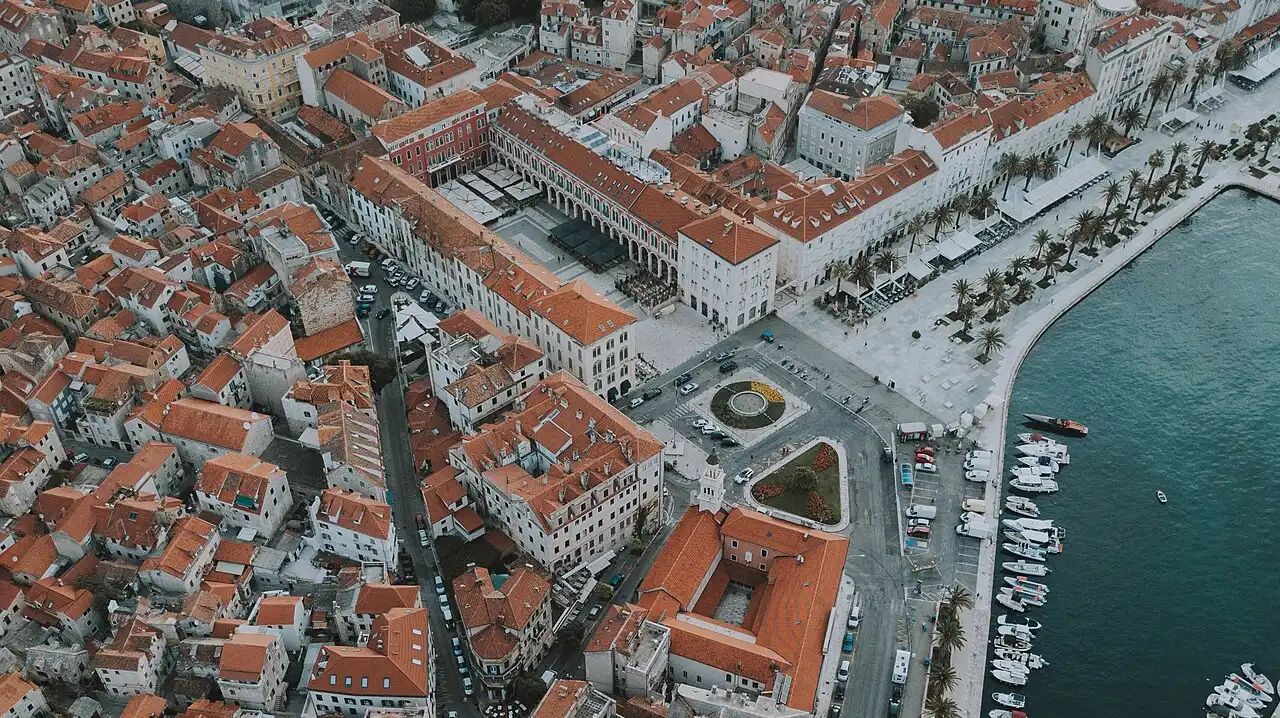
Diocletian’s Palace isn’t a ruin you look at from behind a rope - it’s the living old town of Split, and you walk straight into it off the waterfront for free. The Roman emperor Diocletian built it around AD 305 as his retirement home, and 1,700 years later people still live inside the walls, hang washing between the columns and run cafés in the courtyards. The grand set-pieces - the Peristyle, the cellars, the cathedral bell tower - are the paid or ticketed bits; everything around them is a working neighbourhood you wander through at any hour.
The trick here’s timing more than ticketing: the lanes are free and open around the clock, but at midday they clog with cruise-ship groups, so early morning or evening turns the same walk into something you can actually enjoy. Only a handful of set-pieces cost anything, and it all slots naturally into the rest of a Split trip.
What exactly is Diocletian’s Palace?
Call it a palace and you picture one grand building. It was really a fortified compound the size of a small town - roughly 215 by 180 metres, half imperial villa and half army camp, with high walls, watchtowers and four gates. Diocletian, the emperor who split the Roman Empire into eastern and western halves and then did the almost unheard-of thing of voluntarily abdicating, retired here to grow cabbages by the sea. The southern half held his apartments, facing the water; the northern half housed the garrison and staff.
After Rome fell, refugees from the nearby Roman town of Salona moved inside the sturdy walls for protection, and never left. That is why it feels the way it does: over the centuries residents built houses into the Roman shells, punched windows through imperial walls and turned temples into churches. It’s a UNESCO World Heritage Site (listed in 1979), but a lived-in one - about 220 buildings and a few thousand residents inside the old perimeter. You’re walking through someone’s front garden, not a museum.
The four gates and how to orient yourself
The palace is a rough rectangle with a gate in the middle of each wall, and knowing them is the fastest way to stop getting lost:
- Golden Gate (north) - the grand landward entrance, and the most impressive of the four. Just outside stands the giant statue of Gregory of Nin (see below).
- Silver Gate (east) - opens onto the daily green market; a good, quieter way in.
- Iron Gate (west) - leads to the People’s Square (Pjaca), the town’s café living room, with a medieval clock above it.
- Bronze / Brass Gate (south) - the small sea gate, opening from the Riva waterfront straight into the cellars.
Aim for the Bronze Gate first if you arrive by ferry or bus - it puts you at the bottom of the cellars and lets you climb up through the palace to the Peristyle, which is the way the Romans meant you to enter.
The Peristyle: the heart of it
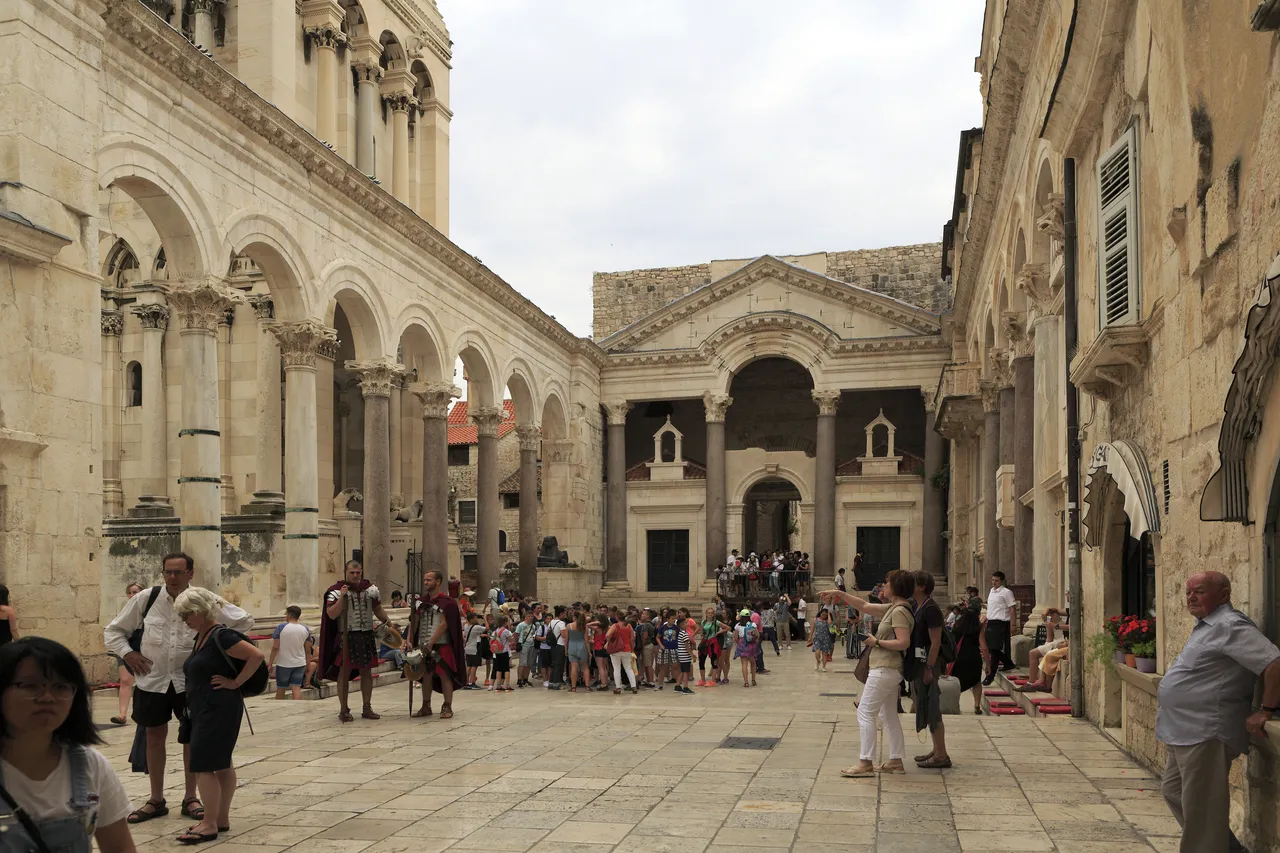
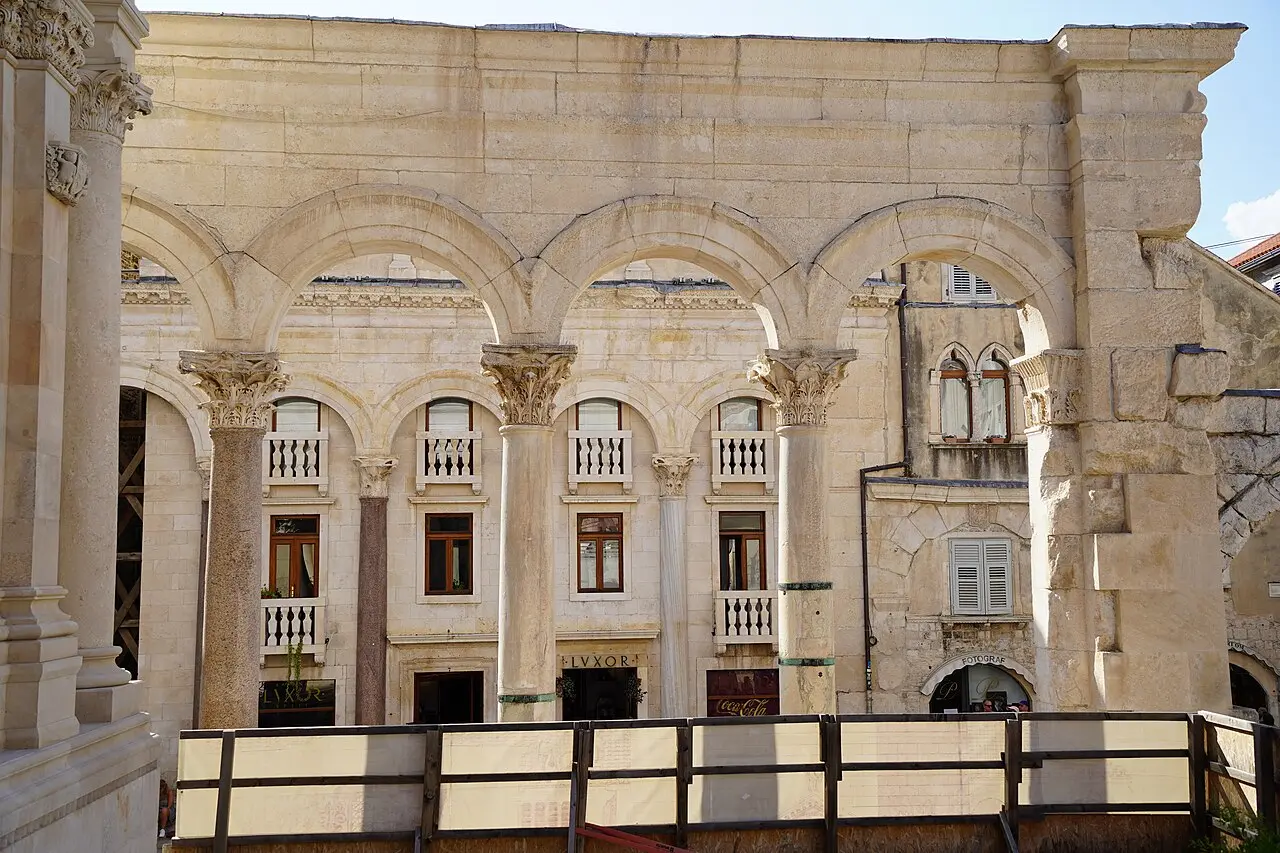
The Peristyle is the sunken colonnaded courtyard at the centre, and it’s the one spot everyone photographs. This was the ceremonial forecourt to the emperor’s apartments; Diocletian, who had himself styled as a living god, would appear at the top of the steps and his subjects would kneel. Red granite columns from Egypt line both sides, holding up arches that spring straight from the capitals - an early move away from the flat Roman lintel, and one that architectural historians point to as a hinge between classical and medieval building.
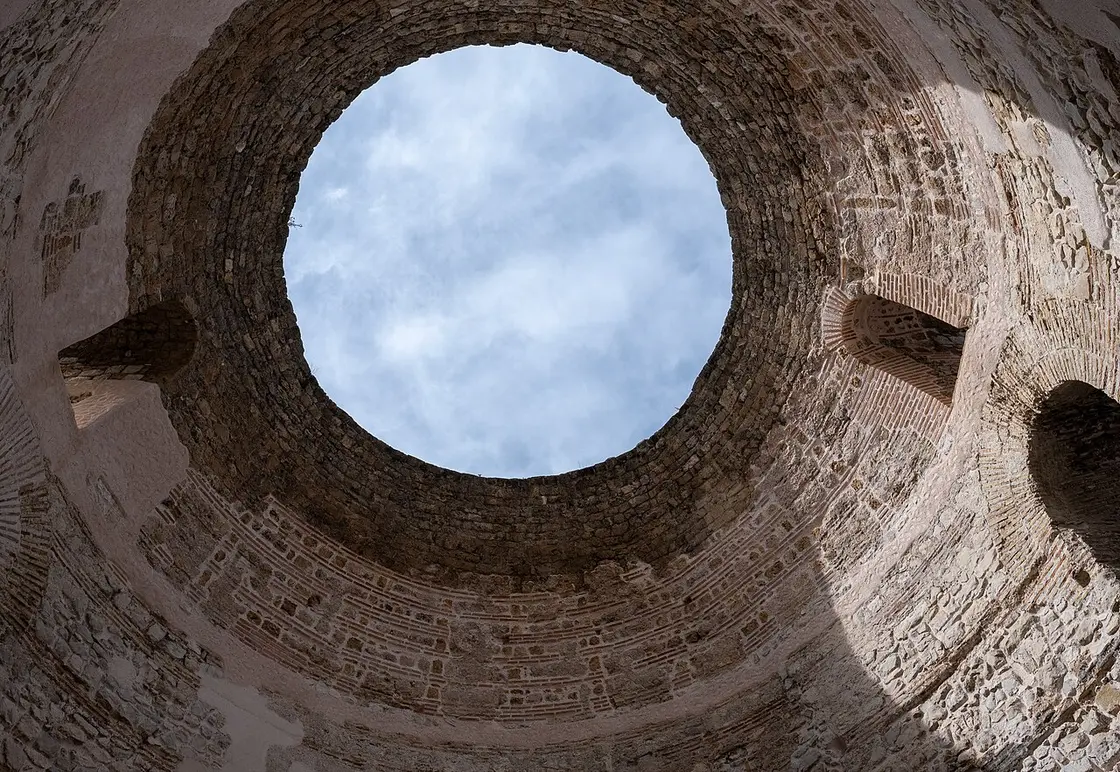
Two details reward a closer look. On the east side sits the cathedral entrance guarded by a black granite sphinx - one of a dozen that Diocletian shipped from Egypt, already over 1,500 years old when it arrived, and now around 3,500 years old. Most were smashed by later Christians who saw them as pagan; this one, headless neighbours aside, survives. And at the south end, a domed rotunda called the Vestibule was the formal entrance hall to the imperial quarters. Stand under its open dome and clap or sing - the acoustics are extraordinary, which is why you’ll often find a klapa group (Dalmatian a cappella singers) performing there for tips.
The cellars (substructures): the best-value ticket
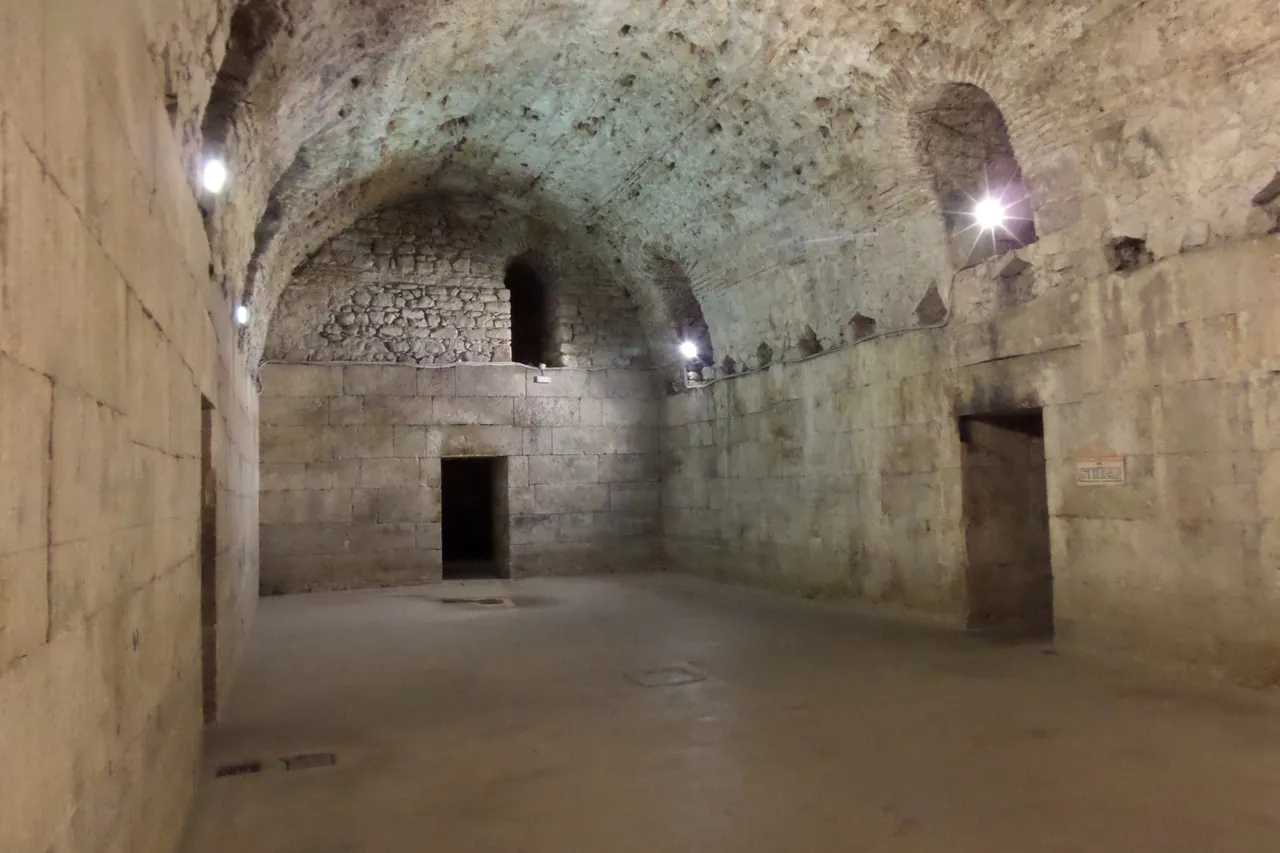
Directly beneath the imperial apartments run the cellars, or substructures - a maze of vast vaulted stone halls that are among the best-preserved Roman interiors anywhere. They weren’t living space; they were the engineering solution to building a palace on a slope by the sea. The Romans raised the emperor’s rooms to a level, sea-view height by constructing this whole storey underneath, and because the halls mirror the floor plan above, walking them is like reading the ghost of Diocletian’s lost apartments.
For centuries they were packed with rubbish and silt, which ironically preserved them; only the eastern halls opened to the public in 1995. Here is the thing worth knowing: a central corridor of the cellars, now lined with souvenir stalls, connects the Bronze Gate on the Riva to the Peristyle, and you can walk that passage for free. The ticket - reported at around €10 in 2026 - is for the atmospheric side chambers off it, where you get the full scale of the vaulting with no shops. If you’ve seen the show, this is where Game of Thrones filmed Daenerys’s throne room and dragon dungeon.
The Cathedral of St Domnius and its bell tower
The strangest twist in the palace is its cathedral. Diocletian was the emperor behind the Great Persecution of AD 303, the bloodiest Roman campaign against Christians. His octagonal mausoleum stood on the east side of the Peristyle. Within a few centuries, Christians turned that mausoleum into a church - and dedicated it to St Domnius (Sveti Duje), a bishop that Diocletian is said to have had executed. So the emperor’s own tomb became a cathedral to one of his victims, and his body vanished from it entirely. As reversals of fortune go, it’s hard to beat.
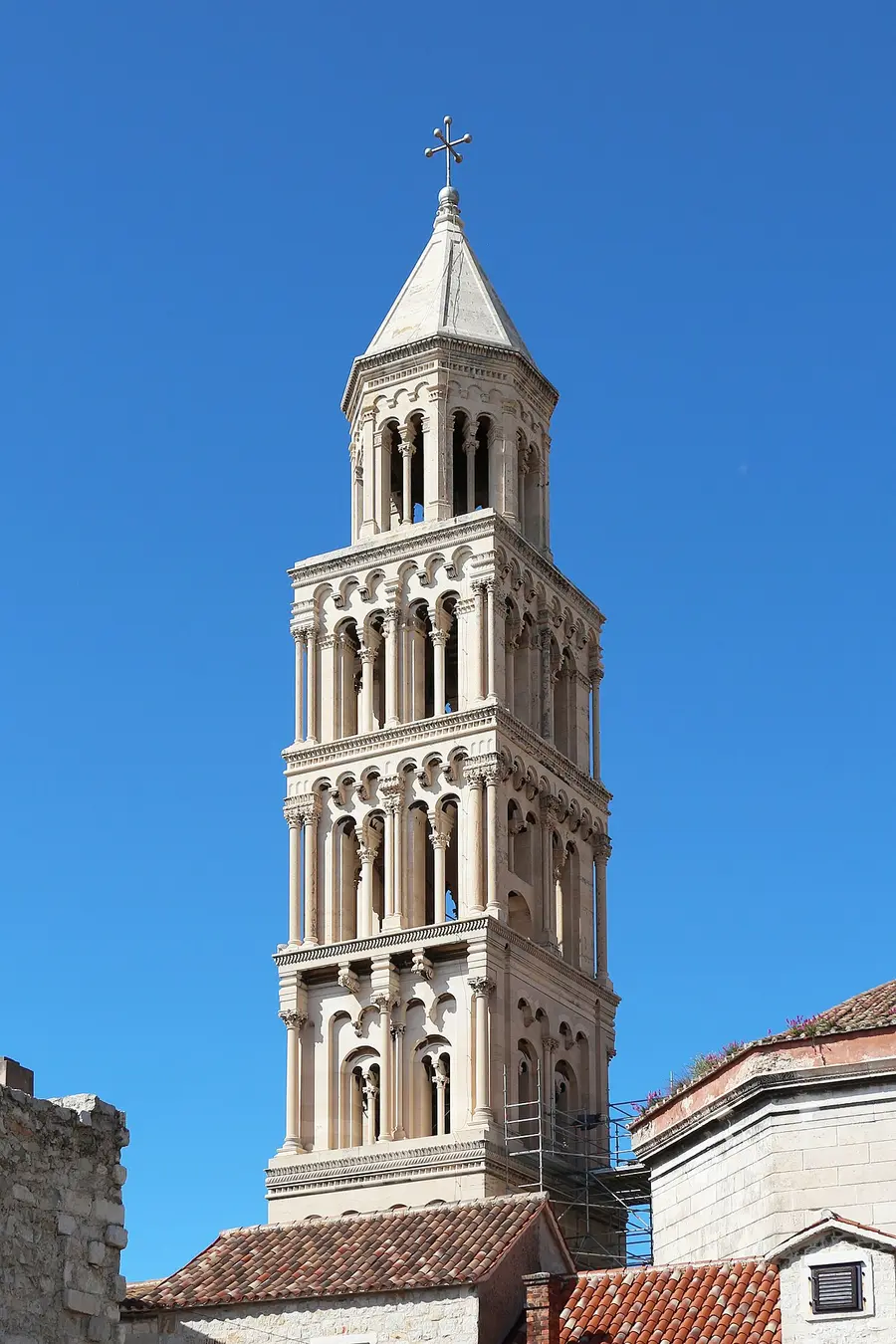
The Cathedral of St Domnius is one of the oldest buildings still used as a cathedral anywhere, and worth the ticket for the Romanesque wooden doors and the domed interior alone. But the real draw is the bell tower - a slender Romanesque campanile about 57 metres tall, rebuilt in the late 19th century. The climb is up steep, open metal-and-stone stairs (not for anyone who dislikes heights), and the reward at the top is the best view in Split: the whole terracotta maze of the palace below you, the harbour, the islands and the Marjan hill beyond.
Across the Peristyle, the small Temple of Jupiter - later a baptistery - is worth the short detour for its coffered stone ceiling and a black granite sphinx guarding the door. It carries its own small ticket.
Gregory of Nin and rubbing the toe
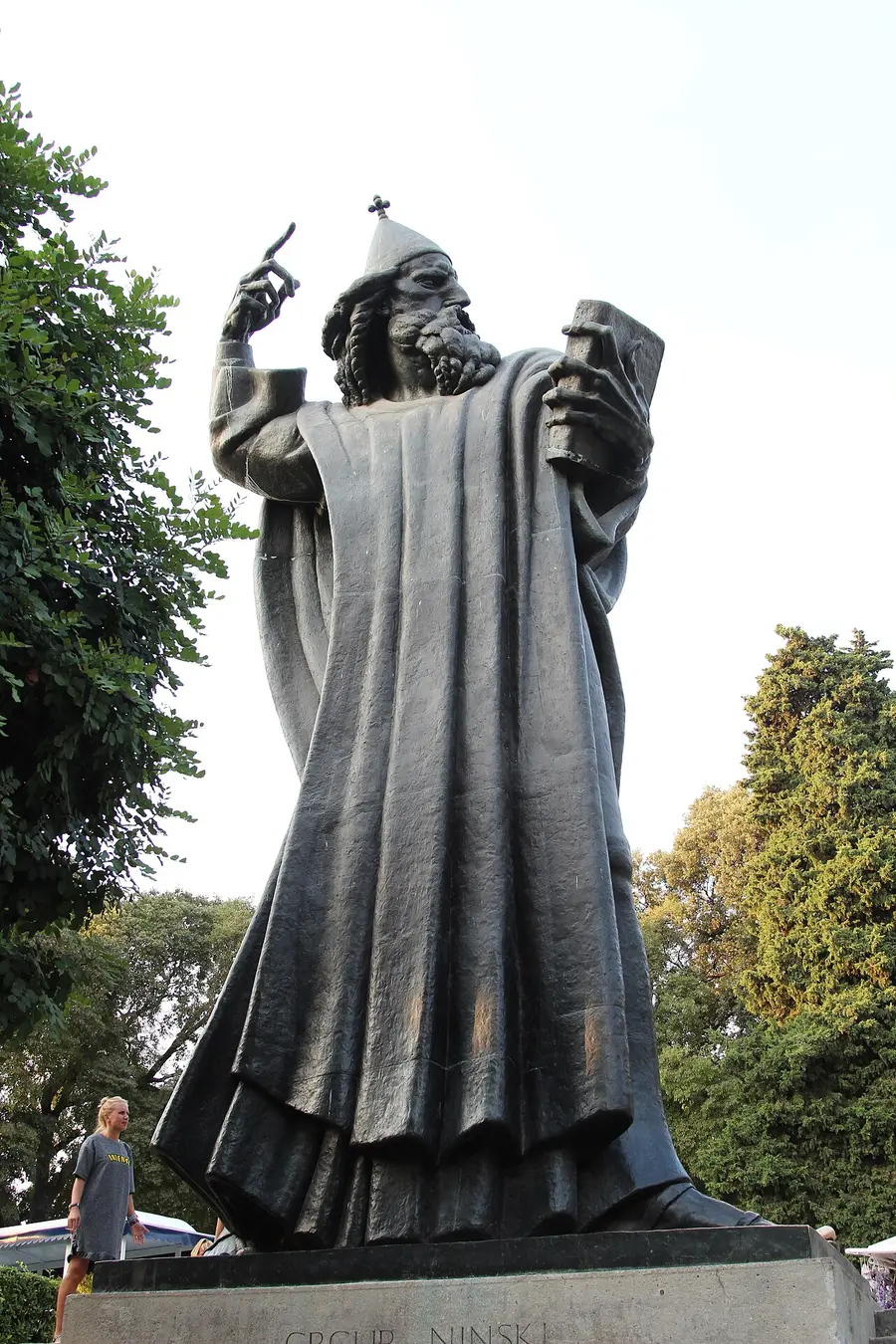
Step out of the Golden Gate and you meet the palace’s most photographed modern resident: a towering bronze statue of Gregory of Nin (Grgur Ninski), a 10th-century Croatian bishop who fought for the right to hold mass in Croatian rather than Latin. Ivan Meštrović, Croatia’s great sculptor, made the 8.5-metre figure in 1929. Local lore says rubbing his left big toe brings good luck and a return to Split - which is why that one toe is polished to a bright gold while the rest of the statue has gone green. It’s harmless fun and, for once, a queue that moves fast.
Tickets, hours and what actually costs money
Most of the palace is free. You pay only for specific interiors, and this is where people get confused, so to keep it simple:
| What | Roughly | Notes |
|---|---|---|
| Palace streets, gates, Peristyle | Free, 24h | It is a public old town |
| Cellars (substructures) - side halls | ~€10 | The central shop corridor is free |
| Cathedral interior | ~€5 | Former mausoleum of Diocletian |
| Bell tower climb | ~€5-7 | Steep open stairs; best view |
| Combined cathedral + tower + treasury | ~€12 | ”Green package” |
| Temple of Jupiter (baptistery) | ~€3-4 | Small, quick |
These figures are approximate and were the going rates reported for 2026; prices and opening hours change with the season and aren’t always posted consistently online. Buy at each entrance and confirm current prices with the Split tourist board and the cathedral before you count on a number. Paid sites broadly run 08:00-20:00 in summer and shorten in the shoulder months and winter; the cathedral keeps shorter Sunday hours around services. There’s no single combined “palace ticket” - you pay per attraction.
How to beat the crowds
The palace has one real problem: cruise ships. Split’s cruise port is a two-minute walk from the Bronze Gate, and when several ships are in, the Peristyle and the cellar corridor jam solid from roughly mid-morning to mid-afternoon. The fix is simple and free.
Come before 9am. The Peristyle is empty, the low sun turns the stone gold, and you can stand in the middle of it alone - genuinely the best hour of the day here. Do the cellars and the bell tower first thing too, before the tour groups form. Then, when the crowds peak at lunchtime, go and eat or hit a beach, and come back in the early evening, when the day-trippers have sailed and the squares fill with locals and the good light returns. Avoiding the middle of the day is the single most useful thing you can do inside this old town.
How to get there and where to stay
You don’t really “get to” the palace so much as arrive in Split and find you’re already in it. The old town is right behind the Riva waterfront; the ferry port, bus station and train station all sit together at the eastern end of the harbour, a five-minute walk from the Silver and Bronze gates. From Split Airport it’s about 24 km, half an hour by shuttle, bus or taxi - the full run-down is in our guide to getting from Split Airport to the city centre.
Staying inside the palace walls is atmospheric but comes with stone-lane noise and no car access; many visitors prefer a base just outside. Our guide to where to stay in Split breaks down the areas, and the wider Split travel guide covers beaches, food and day trips. From here the coast unrolls south - our Dalmatia route from Split to Dubrovnik strings the palace together with Trogir, Hvar and beyond, and you’re a short hop from UNESCO-listed Trogir and cathedral-city Šibenik.
Is it worth it?
Yes - and the best of it’s free. Walking the lanes, standing in the Peristyle at dawn and rubbing Gregory’s toe cost nothing, and they’re the heart of the experience. Of the paid interiors, the cellars and the bell-tower climb are the two to prioritise if you buy anything; the cathedral is a lovely bonus. Give the palace a slow half-day, come early, and let the fact sink in that a Roman emperor’s tomb, apartments and forecourt are still being used as a town centre eighteen centuries on. Few ruins anywhere let you do that.
Opening hours, prices, timetables and seasonal services change through the year - the figures here are planning estimates, not quotes. Confirm current details with the operators and official sources before you go.
Photos
On the map
The map loads on click - to keep the page lightweight.
The map didn’t load. Check your connection and refresh the page.
Admission and opening hours
- Admission price
- The palace grounds, streets and Peristyle are free and open around the clock. The cellars (substructures), the Cathedral of St Domnius, its bell tower and the Temple of Jupiter are ticketed - roughly €5-15 depending on which combination you buy.
- Opening hours
- Palace gates open 24h. Paid interiors keep seasonal hours, broadly 08:00-20:00 in summer and shorter in winter - confirm before you go.
Prices and opening times change by season and are not always posted consistently online - buy at each entrance and check current figures with the Split tourist board and the cathedral before your visit.
Details checked: July 8, 2026
Distance ≈24 km · ~30-40 min from Split Airport
- Split ≈24 km · ~30-40 min from Split Airport The palace IS the old town, right behind the Riva waterfront - a 5-minute walk from the ferry port, bus station and train station, which all cluster at the eastern harbour. From Split Airport it is about 24 km.
Read also

What to see · 12 min read
Paklenica National Park: Canyons, Climbing and Trails
Updated · August 29, 2026Paklenica National Park in 2026: canyon and cave tickets from €5, Anića Kuk climbing routes, and trails from Starigrad near Zadar.

What to see · 9 min read
Best Beaches near Split: Bačvice to the Riviera
Updated · August 26, 2026Best beaches near Split in 2026: sandy Bačvice, Marjan coves, Žnjan and Makarska Riviera day trips - plus Brač by catamaran.

What to see · 10 min read
Elaphiti Islands: Lopud, Šipan & Koločep
Verified · August 15, 2026Jadrolinija 807 from Gruž: €5.40 in season to Koločep, Lopud or Šipan. Times, Šunj, and why one island beats hopping all three.

What to see · 7 min read
Klis Fortress: Game of Thrones Views above Split
Updated · August 13, 2026Klis Fortress above Split was Meereen in Game of Thrones. Adults 12 EUR, kids 4 EUR; open daily 08:30-20:30 - confirm on tvrdavaklis.com.