
Vis Island Guide: Blue Cave, Beaches & Getting There
A guide to Vis, Croatia: the Blue Cave on Biševo, Stiniva beach, the Mamma Mia 2 locations, Komiža and Vis town, and the ferry from Split.
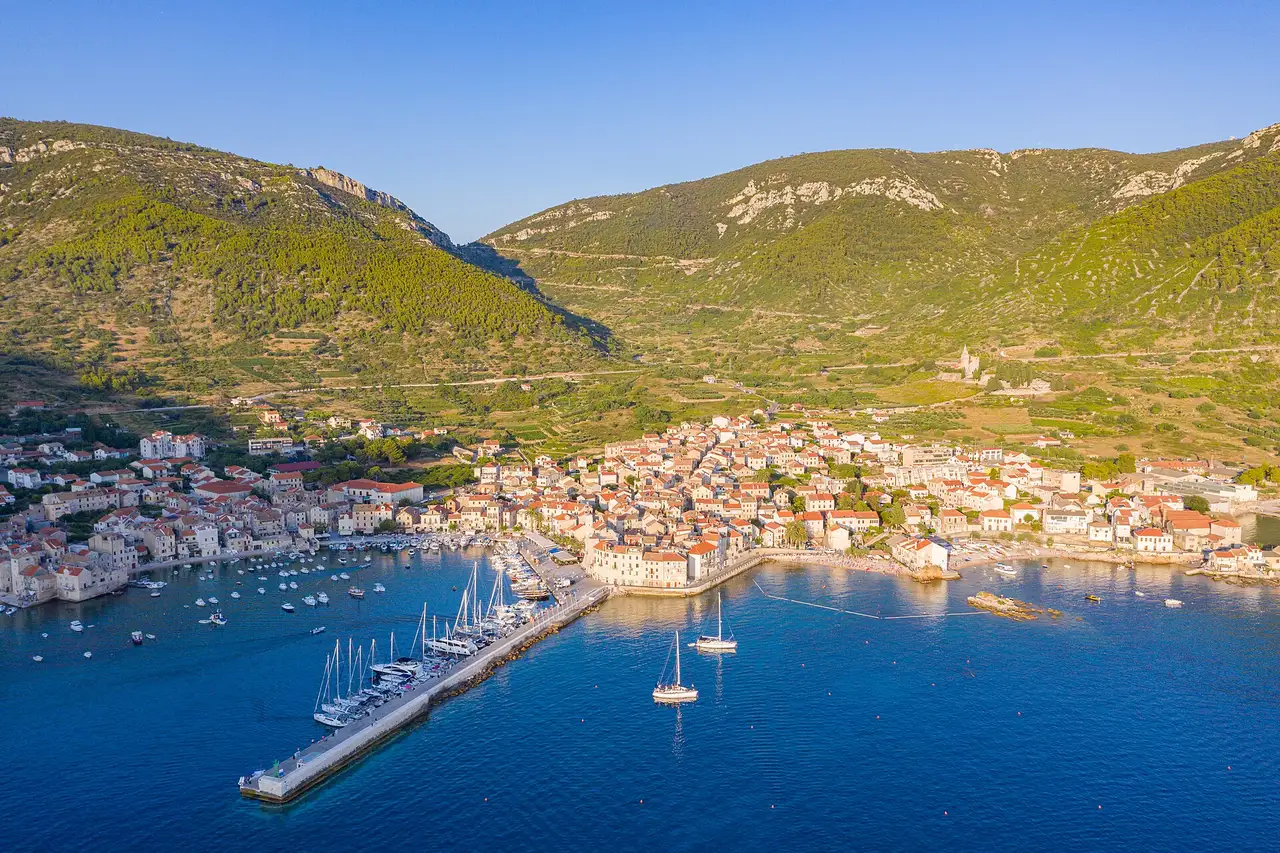
Vis is the Croatian island that stayed different. It sits about 45 km off Split, the farthest inhabited island from the mainland, and it was a closed military zone until 1989 - so there are no high-rise resorts, no airport and no chain hotels, just two old fishing towns, a Greek harbour founded in 397 BC, and some of the clearest water in the Adriatic. Most people come for three things: the Blue Cave on the islet of Biševo, the cliff-locked cove of Stiniva, and the fact that Mamma Mia 2 was filmed here. This guide covers all three, plus how the ferry actually works.
Here’s the shape of a trip. You reach Vis by boat from Split and base yourself in one of the two towns - Vis town on the east coast or Komiža on the west. The Blue Cave and most island tours leave from Komiža; the ferry lands at Vis town. Give the island two nights if you can, one if you must.
The Blue Cave on Biševo
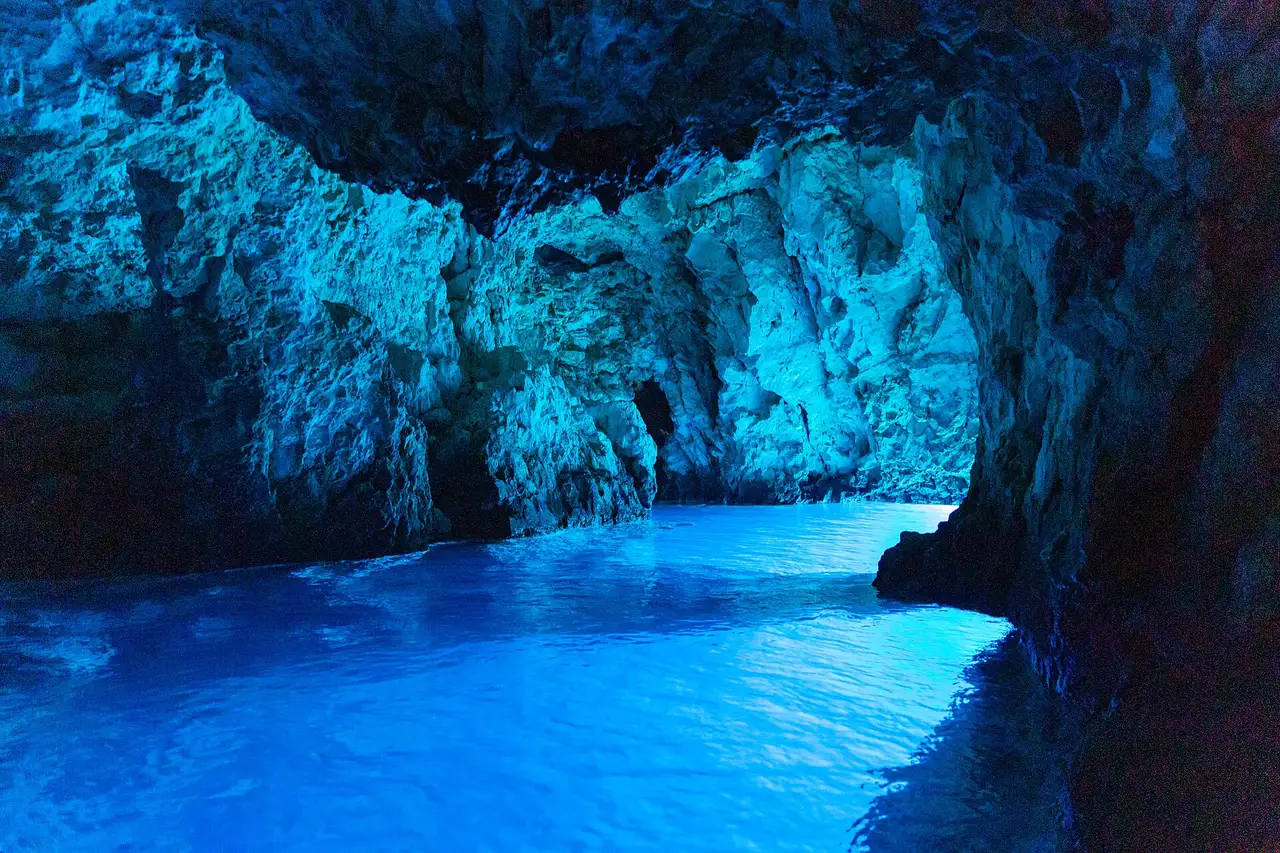
The Blue Cave (Modra špilja) is the island’s headline sight, and it’s not on Vis itself but on Biševo, a small island about 5 km southwest, reached by boat from Komiža in roughly 15 minutes on a fast boat (nearer 45 on the slower scheduled run). The draw is simple physics: in the morning, when the sun shines in from the east, sunlight enters through an underwater opening and reflects off the pale sandy seabed, and the whole chamber fills with an electric blue glow that lights the boats from below. It’s genuinely startling in person, not just a filter on a postcard.
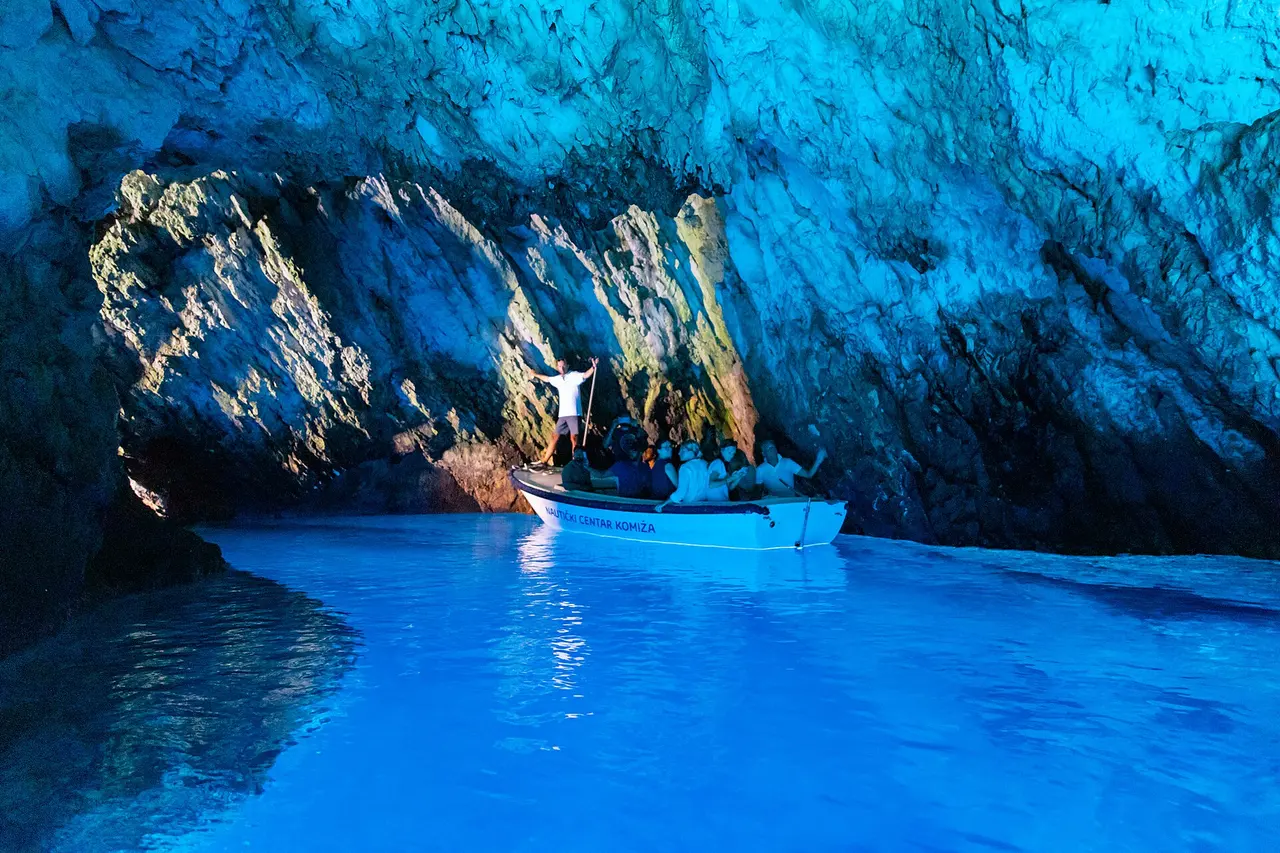
A few practical things the tour listings often skip. The concessionaire sells tickets from 1 April to 31 October, but the cave only opens when the sea is calm - a bit of swell and the entrance closes for the day, so it’s never guaranteed. The best light is in the morning, when the sun shines in from the east; that’s when the Komiža visitor centre says the glow fills the cave. There’s a separate entry ticket on Biševo (€18 an adult from 1 April to 19 June and from 11 September, €24 from 20 June to 10 September, €9-12 for children aged 6-12), on top of whatever you pay for the boat; the concessionaire lists cash and card payment, but some tour operators say it’s cash only on site, so bring small euro notes. At the cave you transfer from your tour boat into a little wooden boat that seats six to eight and ducks through the low opening.
You can reach it three ways. A tour from Komiža is the shortest and cheapest hop and gets you there before the day boats from further afield. Full-day tours from Split or Hvar bundle the cave with Stiniva and other stops, but they add hours at sea, and the Split boats we checked all aim for the same morning slot, reaching the cave at around 09:30. If you’re staying on Vis, take the Komiža option and go early. Many tours also stop at the Green Cave (Zelena špilja) on the nearby islet of Ravnik, a bigger, brighter cavern you can swim in - a good pairing. For the full rundown of tour options, timings and the entry fee, see our guide to the Blue Cave.
Stiniva: the beach through the keyhole
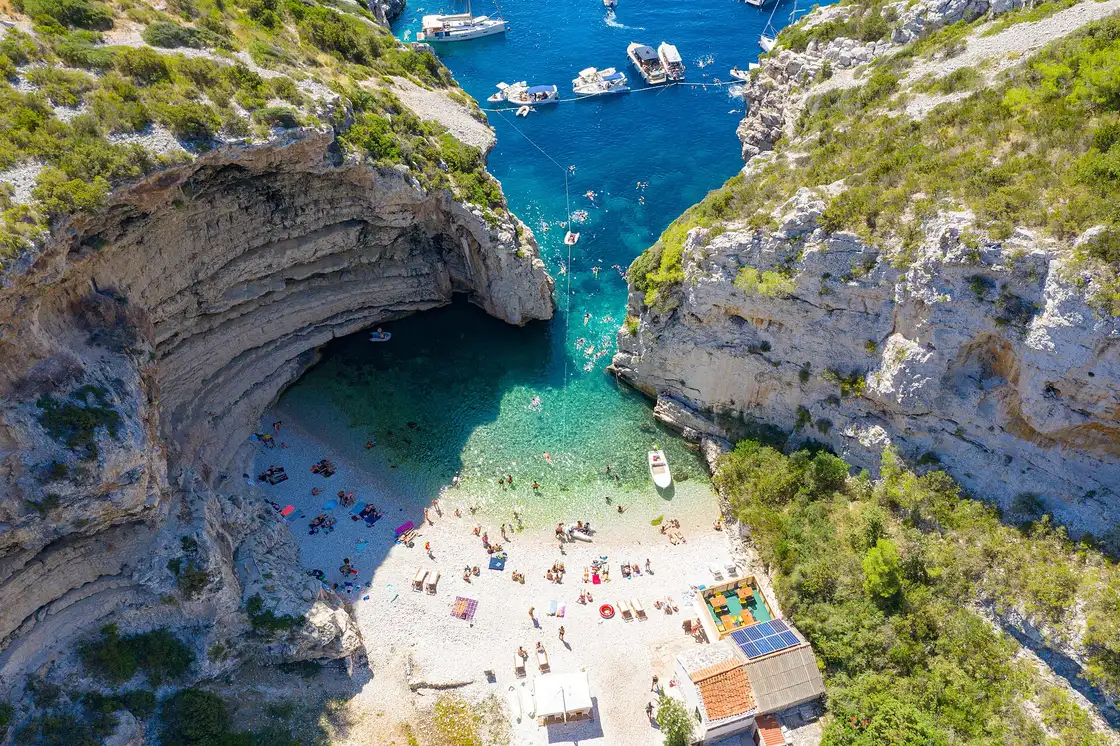
Stiniva is the beach everyone photographs from above: a pebble cove almost fully enclosed by tall cliffs, with the sea reaching it through a gap barely wide enough for a boat. It was voted the best beach in Europe in 2016, and the shape is the whole point - from the water it looks like a hidden lagoon behind a stone doorway.
There are two ways in, and they’re not equal. By boat it’s a set piece, and most island tours pull in through the gap. On foot you park at the top and walk down a steep, rocky path that takes at least 20 minutes and longer coming back up in the heat - wear real shoes, bring water, and don’t attempt it in flip-flops. The reward for the hike is the same cove with a fraction of the crowd if you time it away from the tour flotilla. There’s a small konoba by the pebbles for a drink and grilled fish.
Following Mamma Mia 2
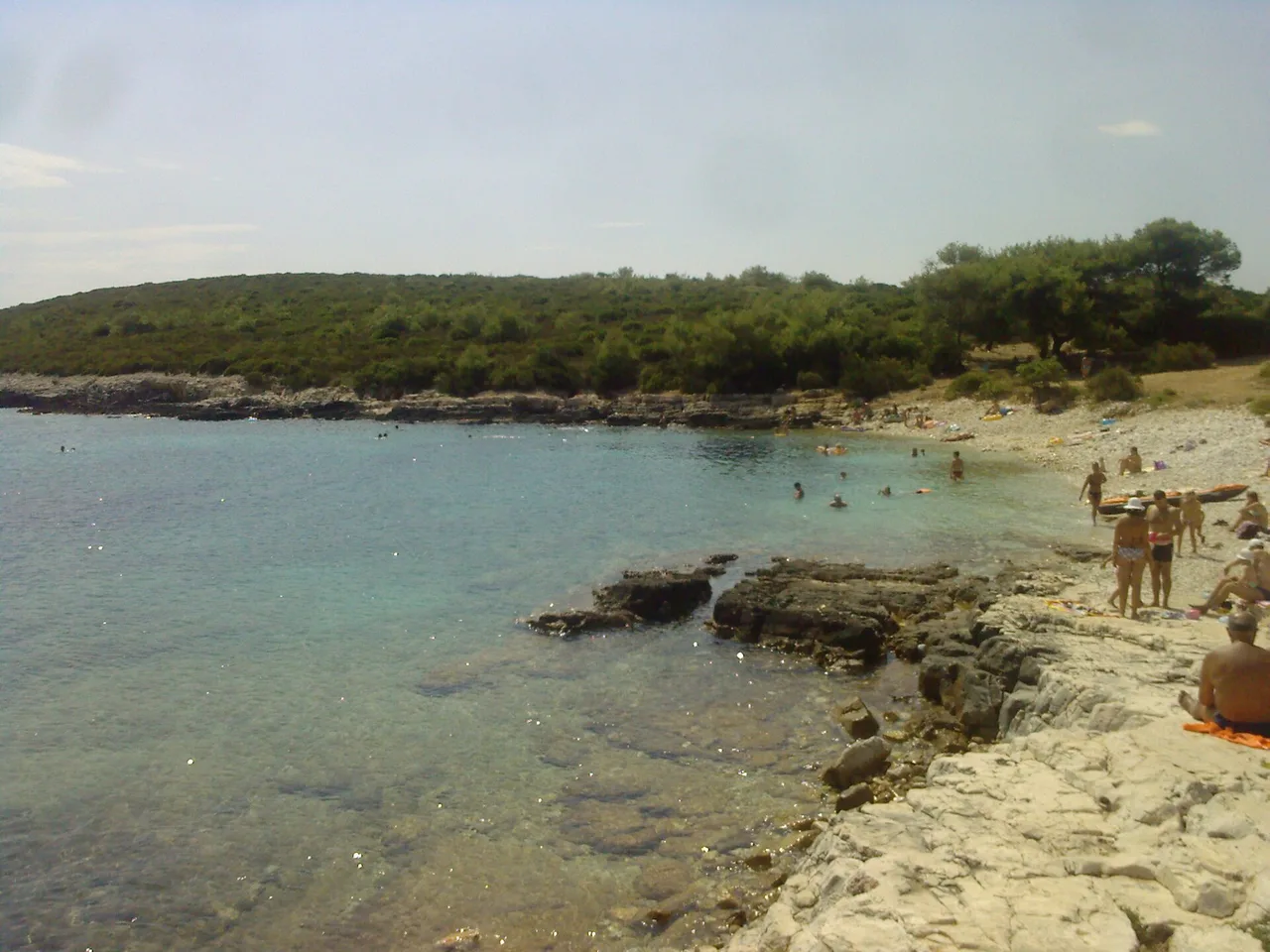
If the island looks oddly familiar, it’s because Mamma Mia! Here We Go Again was shot here over about six weeks in September 2017, with Vis standing in for the fictional Greek island of Kalokairi. There’s no theme-park about it - the locations are just the island going about its business. The moonlit “Andante, Andante” walk was filmed at Srebrna beach, a white-pebble cove on the south coast; other scenes used Barjoška bay on the far western tip, the lanes of Komiža, and Stiniva. Half the fun is recognising a corner of a real harbour rather than a built set.
Komiža and Vis town
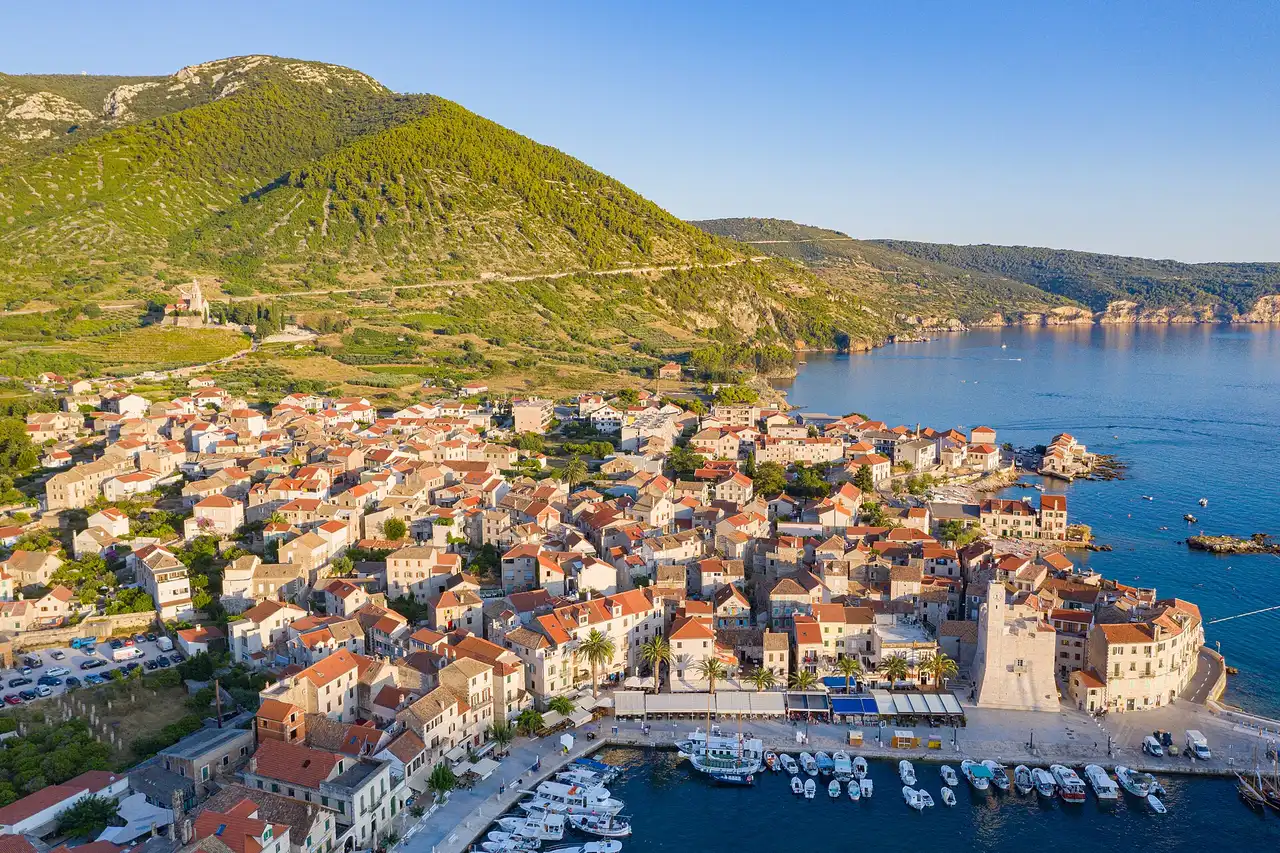
The two towns have different characters and it’s worth seeing both. Komiža, on the west coast, is the working fishing town - a tight tangle of stone houses around a small harbour, a squat 16th-century Venetian tower on the waterfront, and the boats for Biševo tied up along the quay. It’s the base for the Blue Cave and the prettier of the two at sunset, when the light comes straight in off the sea.
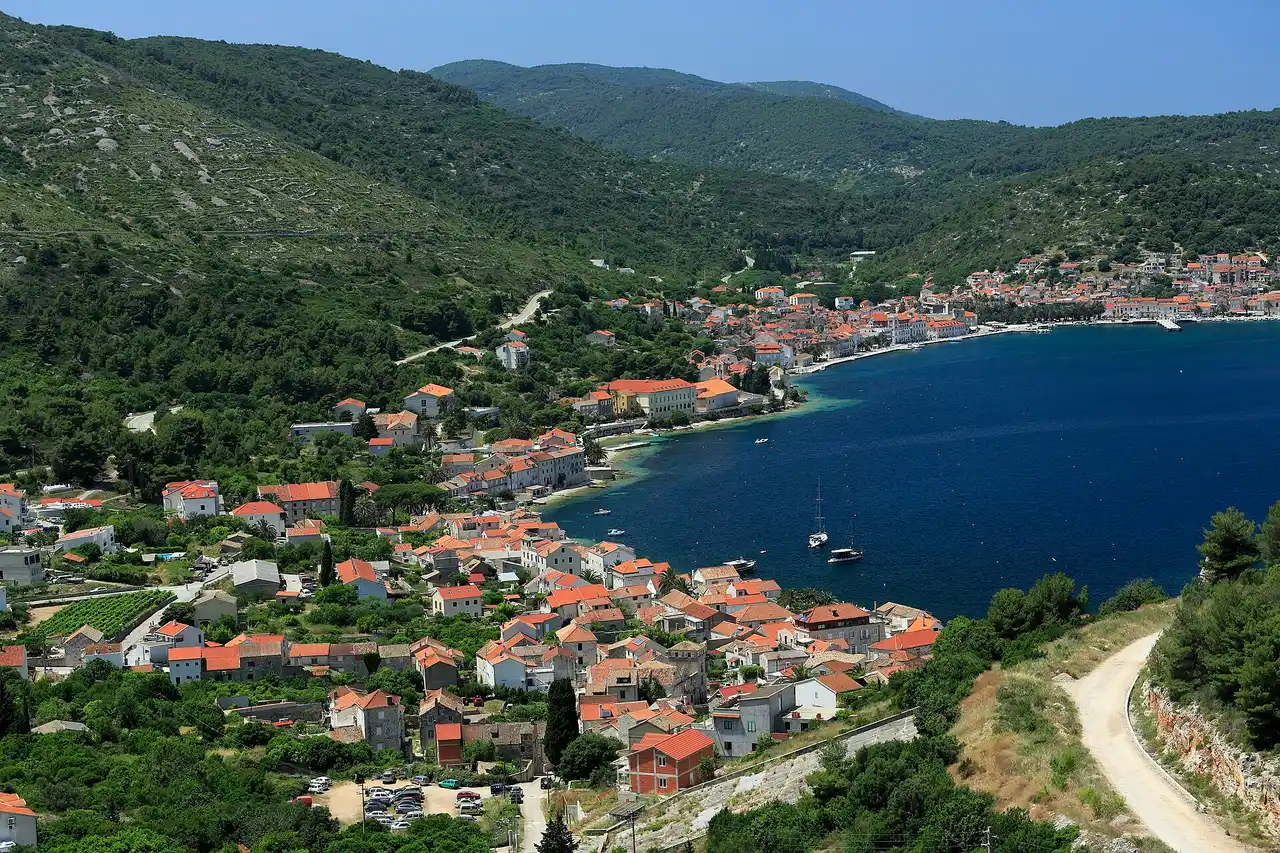
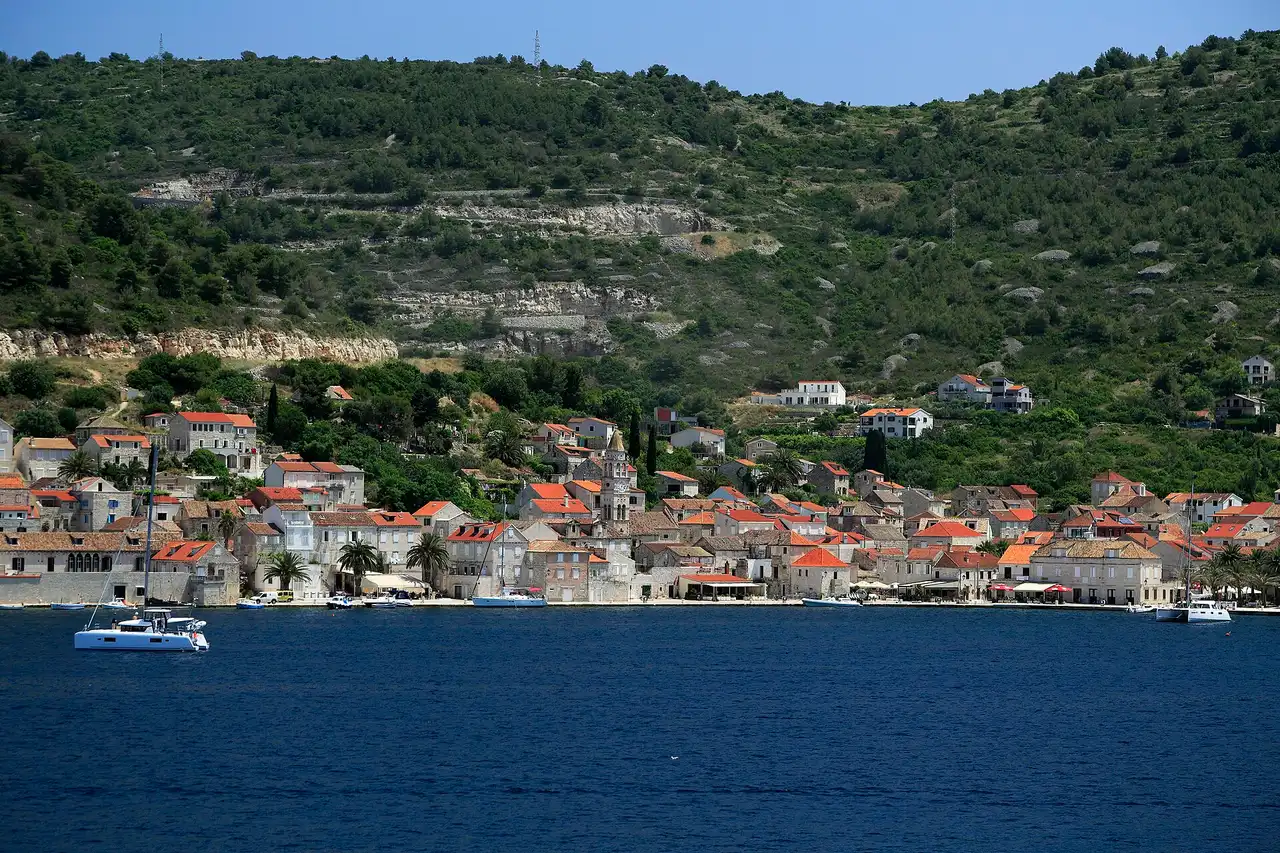
Vis town, where the ferry lands, is the older and grander of the pair, built over the Greek colony of Issa. Its best corner is Kut, an eastern quarter of narrow lanes and Renaissance stone houses built by island nobility, now full of good konobas. Both towns are where you’ll eat: Vis is a serious food island, known for the flatbread-and-anchovy komiška pogača, fresh fish straight off the boats, and a local white wine, Vugava, that goes with all of it. For what to order along this coast in general, see our guide to Croatian wine and what to eat in Croatia.
The military island
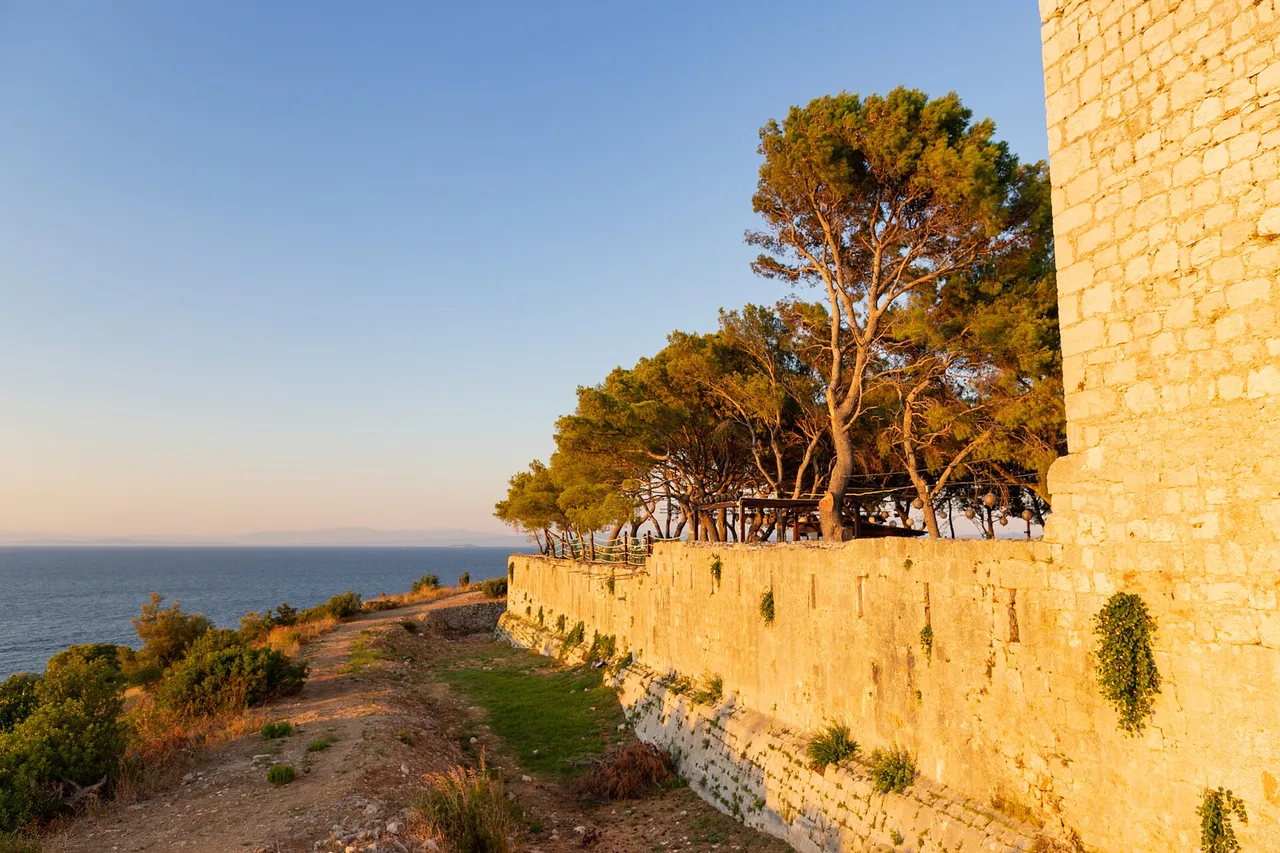
Vis has a second, stranger layer that most beach islands lack. After the Battle of Lissa in 1811 the British fortified it and built Fort George on the headland above Vis town - now restored, with a bar and sunset views, and open to walk around. In the Second World War the island was Tito’s base: the partisan leader ran operations from a cave on the slopes of Mount Hum, and there’s a British and Commonwealth military cemetery here too. Then Yugoslavia turned the whole island into a closed naval fortress, off-limits to foreigners until 1989, and left it riddled with tunnels, gun positions and a submarine pen carved into the rock near Vis town. Local military tours by jeep or speedboat string these together - Tito’s Cave, the rocket bunkers, the submarine tunnel you can nose a boat into. It’s the reason Vis feels frozen in time: while the rest of the coast was building hotels, this island was a secret.
How to get to Vis
Almost everything comes through Split - Vis has no airport, and outside the summer peak the Split sailings are the only way on and off the island. In high season Jadrolinija’s catamaran line 659 also calls at Bol on Brač and at Hvar town on its way, so a direct hop from Hvar is possible for part of the year; dates move, so check the operator before counting on it. You’ve two options. The Jadrolinija car ferry (line 602, the Petar Hektorović) is the workhorse: it carries vehicles and foot passengers and takes about two hours twenty, and it’s your only way to bring a car. The faster catamarans - Jadrolinija’s and the private Kapetan Luka (Krilo) line - do the crossing in around 1 hour 15 minutes but carry foot passengers only, no cars, and land you right in Vis town. As a rough guide, foot fares start around 7 euros; timetables are seasonal, sailings drop to roughly one a day out of season, and summer fills up - so book ahead and confirm the current schedule with the operator.
Do you need a car? Honestly, only if you want to explore the interior and the far beaches at your own pace - the island is small, and you can scooter, cycle or take tours instead. If you’re bringing one, take the car ferry and note that summer vehicle space books out. For how the boats work in general, see our guide to how Croatia’s ferries work; to string Vis together with other islands, our Croatia island hopping guide covers the catamaran routes. Vis pairs naturally with Hvar next door, and most people use Split as the gateway to both.
When to go, and is it worth it
June and September are the island’s sweet spot: warm sea, calm days for the Blue Cave, everything open, and none of the July-August squeeze on the Split boats. Come in the shoulder season and you get Vis close to how it always was - quiet harbours, empty coves, dinner without a reservation. High summer is beautiful but busier, and the Blue Cave queues; go early in the day whatever month you pick.
Is Vis worth the longer haul from Split? Yes, and precisely because it’s the longer haul. The distance that made it a naval secret is the same distance that kept the resorts away, so you get an island that still runs on fishing boats and vineyards rather than sun-lounger rentals. Come for the Blue Cave and Stiniva, but stay for the quiet - and for a plate of grilled fish and a glass of Vugava in a Kut courtyard, which is the real reason to make the crossing.
Opening hours, prices, timetables and seasonal services change through the year - the figures here are planning estimates, not quotes. Confirm current details with the operators and official sources before you go.
Photos
On the map
The map loads on click - to keep the page lightweight.
The map didn’t load. Check your connection and refresh the page.
Good to know
Vis town, Komiža and the beaches are free to wander. The Blue Cave on Biševo has its own entry ticket (€18 an adult from 1 April to 19 June and from 11 September to 31 October, €24 from 20 June to 10 September; the concessionaire lists cash and card payment, but some tour operators say it is cash only on site, so bring small notes), and the cave only opens when the sea is calm. Ferry and catamaran timetables and fares are seasonal and there is no return discount - confirm current details with Jadrolinija and Kapetan Luka before you travel, and book summer boats ahead.
Details checked: July 16, 2026
Distance ≈45 km · ~2 h 20 min car ferry, or ~1 h 15 min catamaran from Split
- Split ≈45 km · ~2 h 20 min car ferry, or ~1 h 15 min catamaran from Split Vis is the farthest inhabited Croatian island from the mainland, roughly 45 km out from Split. The Jadrolinija car ferry from Split takes vehicles and foot passengers; the faster Jadrolinija and Kapetan Luka (Krilo) catamarans are foot passengers only. There is no airport, and out of season Split is the only way on and off; in high summer the Jadrolinija catamaran (line 659) also calls at Bol and Hvar en route.
Read also

Cities · 12 min read
Motovun Travel Guide: Walls, Truffles & Teran
Verified · September 4, 2026Motovun hilltown guide: walls ticket €5 in 2026, St Stephen, Teran cellars, Mirna views, parking climb, and why the film festival no longer plays here.

Cities · 10 min read
Dugi Otok & Sakarun Beach: Island Day-Trip Guide
Updated · August 31, 2026Day-trip Dugi Otok from Zadar: Jadrolinija ferry to Brbinj, Sakarun beach, Veli Rat lighthouse, and Telašćica cliffs - DIY or boat tour.

Cities · 10 min read
Opatija Travel Guide: Habsburg Riviera & Lungomare
Verified · August 25, 2026Opatija on the Kvarner Gulf: the 10 km Lungomare, Villa Angiolina museum, Maiden with the Seagull, and how it differs from Rijeka and Istria.

Cities · 10 min read
Omiš Travel Guide: Pirates, Zipline & Cetina Canyon
Verified · August 21, 2026Omiš is 25 km from Split: Promet bus €2.50, Mirabela €4-6, Cetina rafting and an 8-line zipline over the canyon.