
Blue Cave Croatia: Tours, Tickets & How to Visit
The Blue Cave on Biševo, Croatia: tours from Split and Hvar, the separate €18-24 entry ticket, when it glows blue and when rough seas shut it.
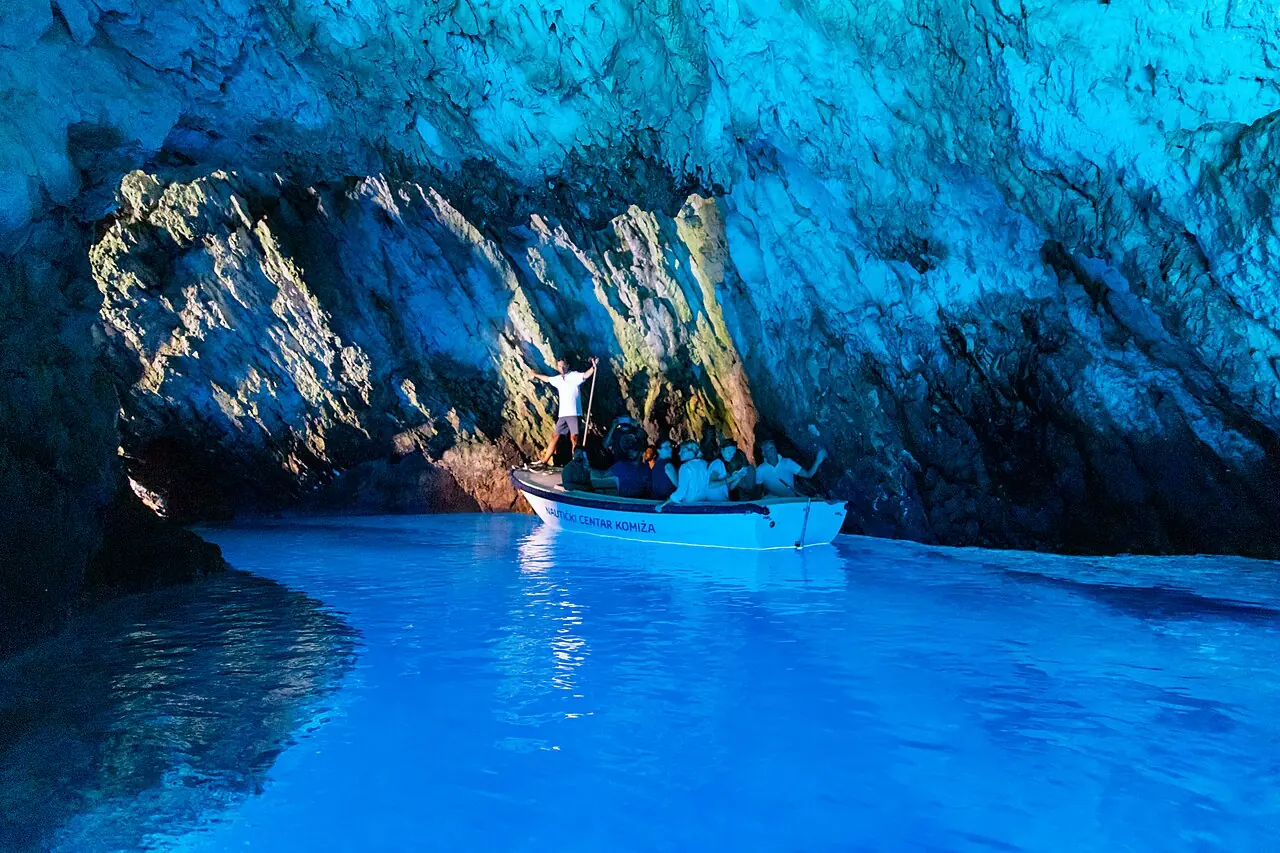
The Blue Cave (Modra špilja) is a sea cave on the tiny island of Biševo, off Vis in southern Dalmatia, and on a sunny morning its water lights up an unreal electric blue. You can’t drive or walk to it - you go in a small boat, either on a full-day tour from Split or Hvar, or under your own steam from the fishing town of Komiža on Vis. There is a separate entry ticket on top of whatever you pay to get there, the glow needs the morning sun, and a bit of wind can close the whole thing. Get the timing and the weather right and it’s genuinely one of the most beautiful ten minutes in Croatia.
The rest of this guide walks through the visit in order: why it glows, the three ways in, what it costs, when to go, and whether it is worth the effort.
Why it glows blue
The colour isn’t a light show or a filter - it’s physics. The cave has a second opening below the waterline, and in the morning, when the sun shines in from the east, sunlight passes through that underwater gap, bounces off the pale sandy floor, and floods the chamber from beneath. The water turns a luminous cobalt and everything in the cave - the walls, the boat, your hands trailing in the water - picks up a silvery-blue cast. The Komiža visitor centre puts the glow in the morning for exactly that reason, and the Split day tours we checked make the cave their first stop, reaching it at around 09:30.
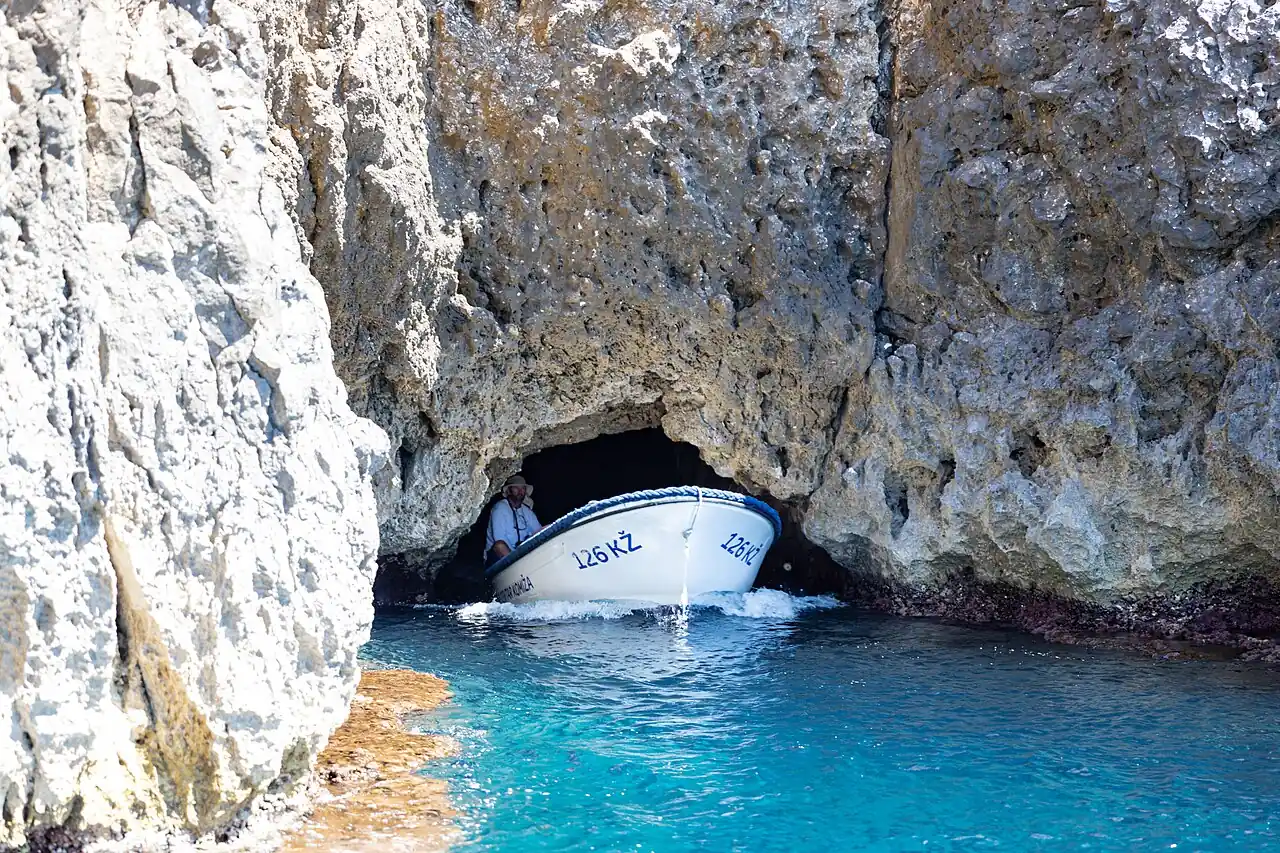
The boat-sized entrance you actually go through is a low arch on the side, and here is the detail most people miss: it’s not natural. The original opening was too small for boats, so in 1884 it was blasted wider so visitors could be rowed in. That is why you duck as you enter - the roof is barely above head height, and in any swell the skipper waits for a lull before sliding through.
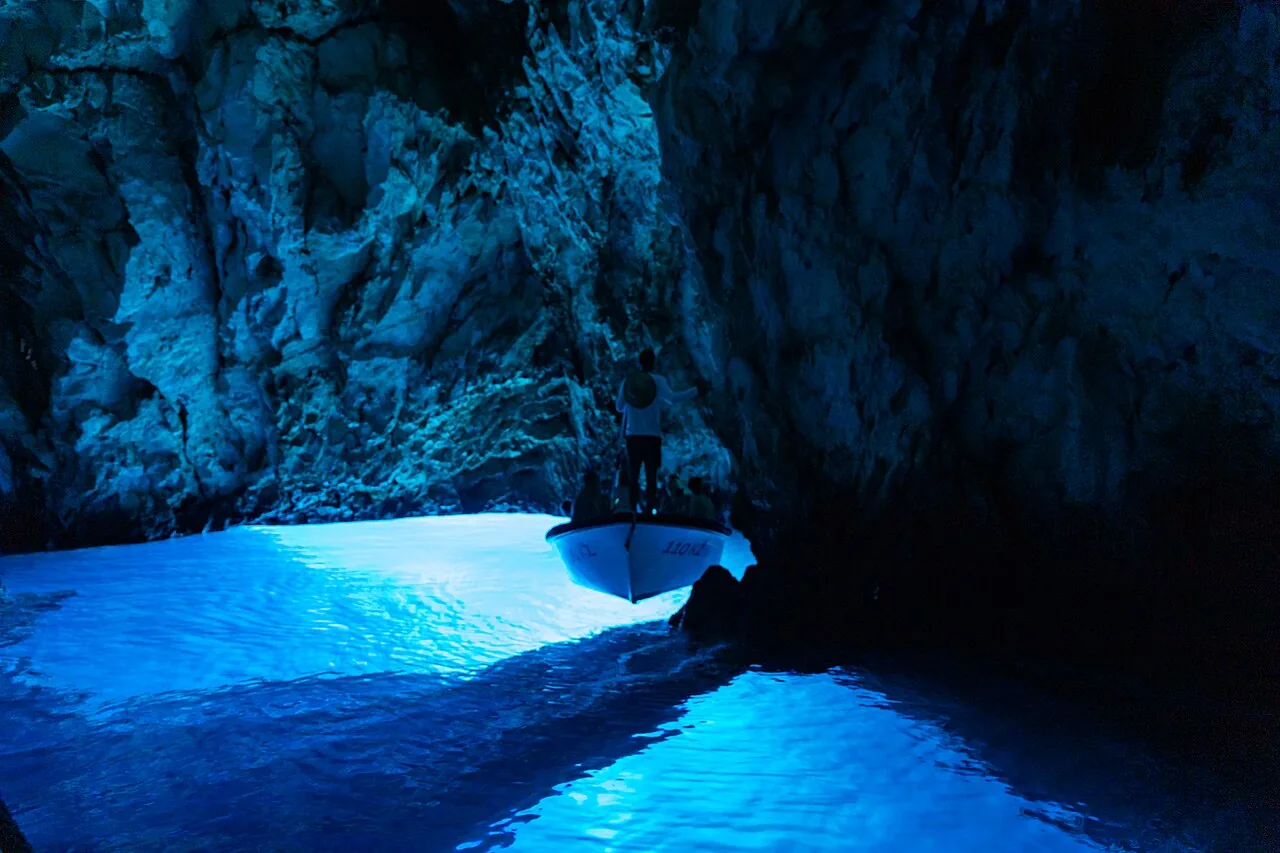
The chamber is smaller than the photos suggest - roughly 24 metres long and up to 15 m high, with the water some 10-12 m deep - so the visit is genuinely brief. The boats glide in, turn a slow loop while everyone gasps and takes the same photo, and glide straight back out. Before that 1884 blast the only way in was to dive under the rock at the waterline, which is part of why the cave stayed a quiet local marvel for so long.
The three ways to visit
1. A full-day tour from Split or Trogir. This is how most people do it, and it’s the least fuss. A “5 islands” speedboat tour runs about 10-11 hours, takes roughly an hour and a half to blast down to Biševo, and pairs the cave with a swim in Stiniva cove, the fishing town of Komiža, the Budikovac lagoon, the Green Cave on Ravnik and a stop on Hvar or the Pakleni islands. It is a big, busy day out - fun if you like being on the water, a lot if you get seasick.
2. A tour from Hvar. If you are already island-hopping and based on Hvar, similar full-day boat trips run from there, cutting the transfer time to Biševo.
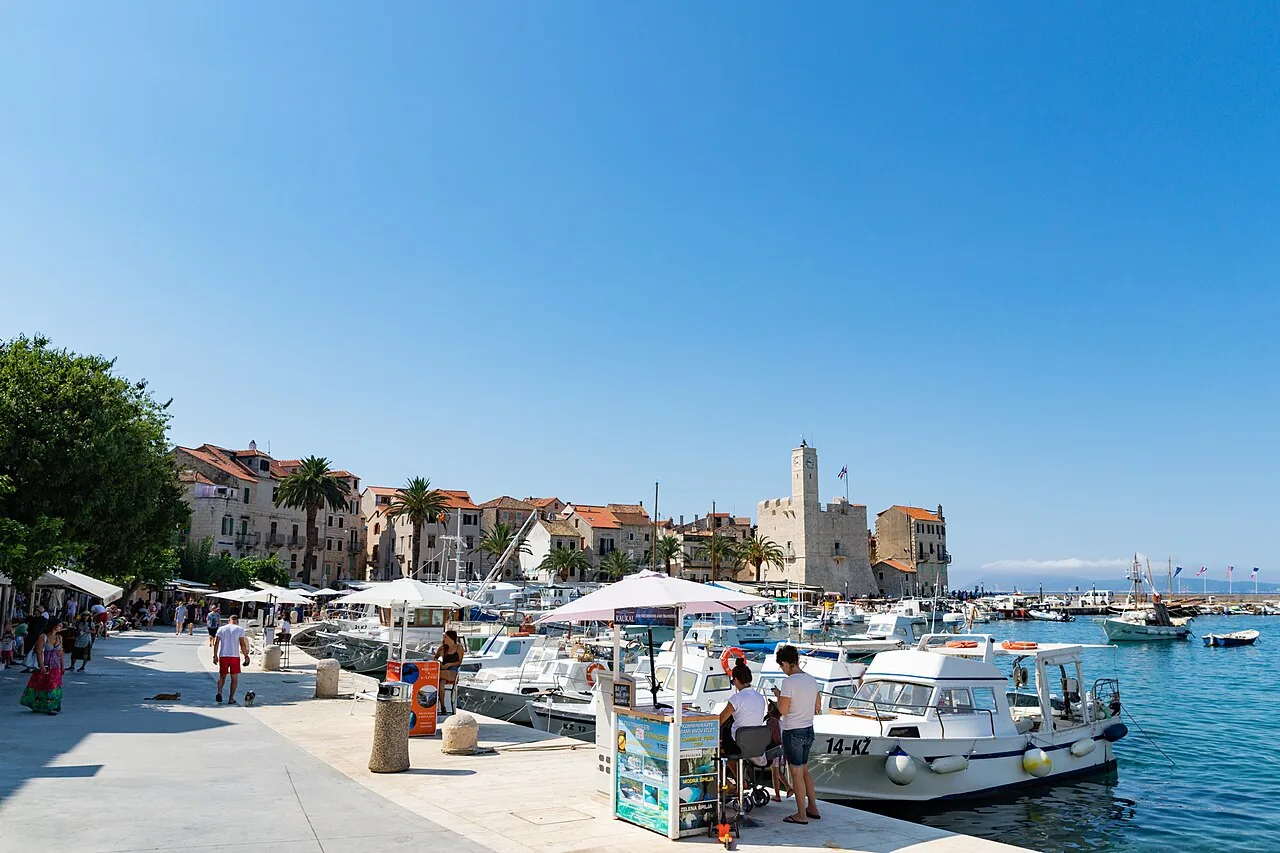
3. Do it yourself from Komiža (Vis). The purist’s route, and the cheapest. Get yourself to Vis by catamaran from Split, base in Komiža, and take the local boat across to Biševo (about 45 minutes to the Mezuporat jetty), where you transfer to one of the small licensed cave boats. It takes a full day and some planning, but you travel at your own pace and skip the speedboat crowd. The island logistics are in our Croatia island hopping guide, and Vis features in our Croatia islands itinerary.
Blue Cave, Blue Lagoon, Green Cave: what’s what
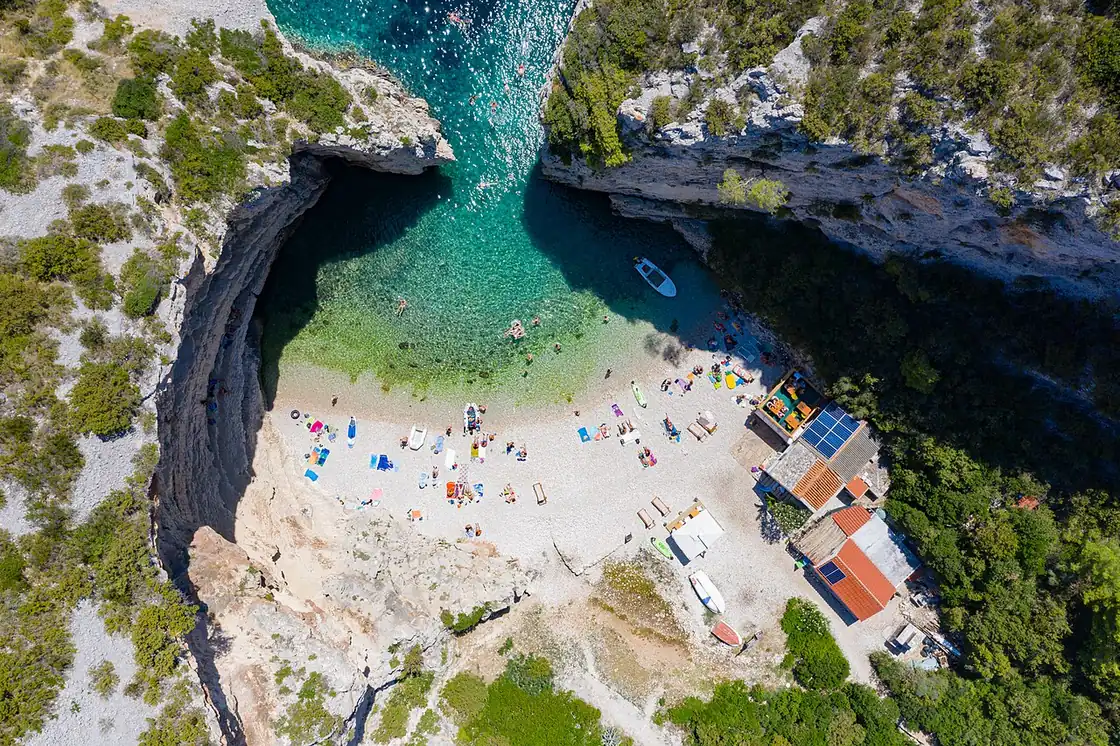
One thing worth untangling before you book, because the names blur together and people turn up expecting the wrong thing. The Blue Cave is the glowing sea cave on Biševo, and you do not swim in it - you sit in a small boat and look. The Blue Lagoon is a different place entirely: a shallow, bright-turquoise bay off Budikovac island where you very much do swim, and it’s one of the day’s best stops. The Green Cave on Ravnik is a third thing again, a larger cave you can swim and even jump into, and the usual substitute when rough seas shut the Blue Cave. A “5 islands” tour typically strings the Blue Cave, the Blue Lagoon, Stiniva, Komiža and a Hvar or Pakleni stop into one day, so you end up seeing all three without having to choose between them.
Tickets and what it costs
Two separate payments, and this trips people up. First, whatever you pay to get there - a Split speedboat day tour starts at €108 per person with Mayer Charter, and Providenca’s own price list runs from €110 in spring to €150 in July and August before the 10% discount it applies; it’s far less from Komiža, where the state boat to Biševo (line 612, 08:00 from Komiža) is €4.38 each way from 29 May to 27 September and €3.19 outside those dates - but it sails every day only from 3 July to 30 August, skips Thursdays from 29 May to 2 July and from 31 August to 27 September, and the rest of the year runs on Tuesdays, Fridays and Sundays only, so match your day to the timetable. Second, the entry ticket sold on Biševo, which the group tours we checked do not include.
That ticket is priced by the cave’s concessionaire, Nautički centar Komiža, and moves with the season: €18 per adult (over 12) from 1 April to 19 June and from 11 September to 31 October, €24 from 20 June to 10 September, €9 and €12 for children aged 6-12, free under 6. That price list has been in force since 1 June 2025 and was the one published on the visitor centre site when we checked on 17 September 2026 - confirm before you go.
Three practical things follow from how that ticket is sold:
- Bring small euro notes anyway. The concessionaire’s price list takes cash and cards, but some Split tour operators still tell guests the fee is cash only on site - Split Blue Cave does.
- You can pay ahead. The price list allows prepayment by bank transfer and offers a private VIP transfer - one boat with its skipper for 2-12 people, a transfer of up to 20 minutes and up to 15 minutes in the cave, tickets included: €460 off-season and €660 in peak, booked at least one working day ahead.
- Because entry is extra, a “cheap” tour isn’t always cheaper once you add it on; compare like with like.
For the wider money picture, our Croatia trip cost guide breaks down what a trip runs day to day - and moments like this are exactly why a little cash still matters.
When to go, and the catch
Two conditions have to line up. The light wants the morning sun - plan to be at the cave in the morning for the full glow. And the sea has to be calm: because the entrance is so low, even a moderate swell closes it, and the boats simply cannot get in. That is why access is realistic mainly from June to September, even though the concessionaire sells tickets from 1 April to 31 October - the sea decides, not the calendar.
Two honest warnings. In July and August the cave is busy, and boats queue outside to go in one at a time, so you may wait; the actual time inside is only about five to ten minutes. And if the bura or jugo wind is up, your tour will either skip the cave or swap it for the Green Cave on Ravnik instead - so build in a flexible day and don’t pin your whole trip on a single morning.
What to bring, and when to book
In July and August, book a Split or Hvar tour a few days ahead and take a morning departure: the cave glows in the morning light, and the Split tours we checked make it their first stop. Pack swimwear and a towel for the swim stops (not the cave), water shoes for the sharp pebble coves, sun cover and a light layer for the open speedboat, which is fast and gets you wet, plus motion-sickness tablets if you’re prone, because the open crossing can be bouncy in any wind. Carry the entry fee in small euro notes, since some tour operators say it’s cash only on site. And check what your ticket actually includes: the group tours we checked leave the Blue Cave entry out, so read the small print before you compare two operators on headline price alone. Check the age rules too: Mayer Charter takes no under-6s on its group tour, Providenca sells its tour as 10+, and both advise against the ride in pregnancy or with back problems.
One accessibility note: this trip involves stepping down into a small boat and ducking under a low rock arch, so it does not suit anyone who can’t manage that or who really dislikes small, enclosed boats on open water.
Is it worth it?
Yes - with your eyes open. If the sea is calm and you hit it in the morning light, the colour is genuinely astonishing and unlike anything else on the coast, and the five minutes inside stay with you. What sours people is mismatched expectations: it’s a short visit, often after a queue, at the end of a long and sometimes bumpy boat ride, and you do not swim inside it. Go in knowing that, and treat the surrounding day - Stiniva, Komiža, the swims - as the real value, with the cave as the highlight rather than the whole trip.
For the boats, ports and passes that get you out to this corner of the Adriatic, see our Croatia ferries guide; if you are basing the trip on Hvar or Split, the Hvar travel guide and Split travel guide cover where to stay and which tours leave from where.
Entry fees, tour prices and sailing seasons change year to year, and the cave can close at short notice in rough weather - confirm current fees and conditions with your operator or the Komiža boat service before you count on getting in.
On the map
The map loads on click - to keep the page lightweight.
The map didn’t load. Check your connection and refresh the page.
Admission and opening hours
- Admission price
- Separate entry ticket on Biševo, on top of any group tour: €18 per adult over 12 (1 Apr-19 Jun and 11 Sep-31 Oct) and €24 in peak (20 Jun-10 Sep), €9-12 for children 6-12, free under 6. Mayer Charter's Split speedboat day tour is from €108; Providenca lists €110 in spring and €150 in July-August before its 10% discount. Entry not included.
- Opening hours
- Daylight only; the glow comes in the morning, when the sun shines in from the east through the underwater opening, and the Split day tours we checked reach the cave at around 09:30. Access is realistic mainly June-September.
The cave concessionaire lists cash and card payment, but some Split tour operators tell guests the fee is cash only on site, so carry small euro notes. The price list also offers prepayment by bank transfer and a private VIP transfer: €460-660 for one boat with its skipper for 2-12 people, covering a transfer of up to 20 minutes, up to 15 minutes in the cave and the tickets, booked one working day ahead. Confirm current fees and sailings before you go.
Details checked: September 17, 2026
Read also

What to see · 12 min read
Paklenica National Park: Canyons, Climbing and Trails
Updated · August 29, 2026Paklenica National Park in 2026: canyon and cave tickets from €5, Anića Kuk climbing routes, and trails from Starigrad near Zadar.

What to see · 9 min read
Best Beaches near Split: Bačvice to the Riviera
Updated · August 26, 2026Best beaches near Split in 2026: sandy Bačvice, Marjan coves, Žnjan and Makarska Riviera day trips - plus Brač by catamaran.

What to see · 10 min read
Elaphiti Islands: Lopud, Šipan & Koločep
Verified · August 15, 2026Jadrolinija 807 from Gruž: €5.40 in season to Koločep, Lopud or Šipan. Times, Šunj, and why one island beats hopping all three.

What to see · 7 min read
Klis Fortress: Game of Thrones Views above Split
Updated · August 13, 2026Klis Fortress above Split was Meereen in Game of Thrones. Adults 12 EUR, kids 4 EUR; open daily 08:30-20:30 - confirm on tvrdavaklis.com.