
Croatia Without a Car: Buses & Ferries Itinerary
A 10-day Croatia itinerary with no car: exact intercity buses and passenger catamarans from Zagreb through Plitvice, Split and the islands to Dubrovnik.
You don’t need to rent a car to see the best of Croatia. Intercity buses cover the mainland cheaply and often, and fast passenger catamarans link the coast and the islands - so this 10-day, one-way trip from Zagreb to Dubrovnik runs entirely on buses and boats. That’s the whole point. You’ll fly into Zagreb, fly home from Dubrovnik, and never double back, never park, never pay a toll or a one-way drop-off fee. Each leg below names the actual bus or catamaran that makes it work - you’ll see the operators called out.
The honest trade-off up front: without a car you follow the network, not your own whims, so the plan sticks to the spine that public transport serves well - the capital, Plitvice on the main bus corridor, Split as the ferry hub, then three island and coastal towns tied together by one catamaran line. You give up the freedom to chase a hidden cove; you gain not driving the coast road, not hunting for old-town parking, and arriving in the centre of every town. For the car version instead, see the Croatia road trip itinerary; to weigh the choice itself, our guide to whether you need a car in Croatia; for a shorter coastal hop, the 5-day Split to Dubrovnik plan.
Before you book. Bus and catamaran times, fares and seasons change each year, and the fast island boats are seasonal - the full Split-Dubrovnik catamaran runs roughly late spring to mid-October, usually once a day. The figures here are 2026 planning numbers from the operators; confirm current timetables and prices with the bus companies and ferry lines, and book the summer boats ahead. Last checked: 15 July 2026.
Why no car actually works here
Four of the towns on this route - the cores of Split, Hvar, Korčula and Dubrovnik - are pedestrianised old quarters where a car is a liability, not a help: you park it on the edge and pay for the privilege. The islands make the case even more clearly. A passenger catamaran lands you right in the town harbour, while the car ferry often ties up at an out-of-town port (the Split car ferry to Hvar arrives at Stari Grad, 20 km from Hvar Town). Crossing as a foot passenger costs a fraction of taking a vehicle across, and the boats are faster. The mechanics of all this are in our Croatia ferries guide.
Where no car does cost you is flexibility and the deep countryside - Istria’s hill towns, the quieter islands, and any beach not on a bus line are harder without wheels. That’s the trade-off. If those are your priority, you’ll want to rent for a couple of days rather than the whole trip. But for the greatest-hits line down the coast, buses and boats do the job and you’ll skip the extras that a hire car quietly piles on.
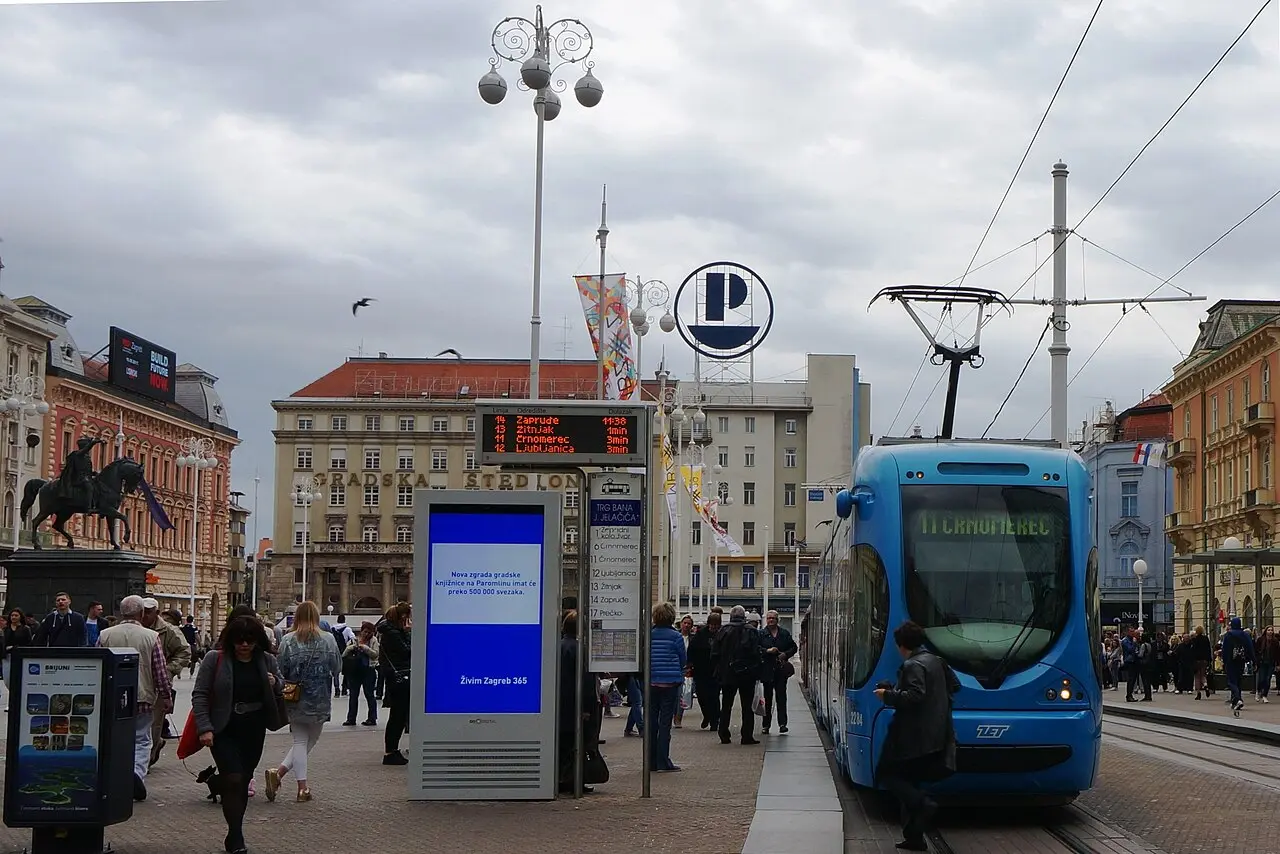
Days 1-2: Zagreb on foot
Start in the capital, which almost everyone skips on the way to the coast and which rewards a couple of unhurried days. Zagreb is compact and walkable, with the blue trams filling any gap: the cathedral and the red-roofed St Mark’s church in the Gornji Grad upper town, the Dolac market, the string of good museums, and a café culture that turns Tkalčićeva street into one long terrace. It also has the international flights, so it’s the logical entry point for a one-way trip that ends in the south.
Two nights is enough to see the city and shake off the flight before you move. When you’re ready for the coast, walk or tram to the main bus station (Autobusni kolodvor) and take the corridor south - the same road that serves Plitvice.
Day 3: Bus to Plitvice Lakes
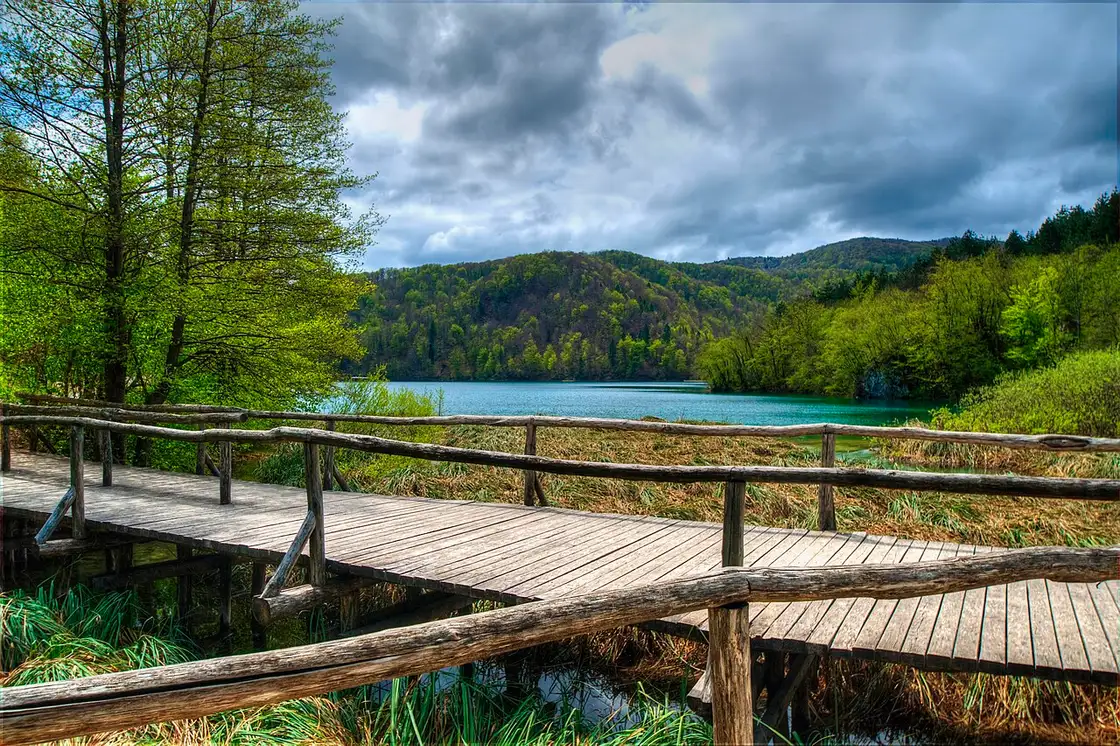
Here’s where a car-free plan gets lucky. The main Zagreb-Zadar/Split bus corridor passes the entrances to Plitvice Lakes National Park, and long-distance buses stop at Ulaz 1 and Ulaz 2 (the two park gates) on request. So you ride roughly two to two and a half hours from Zagreb, get off at the park, and you’re there - no transfer, no car. Store your bag at the entrance, spend the day on the boardwalks that thread past the turquoise lakes and waterfalls, and sleep at one of the park hotels or a nearby guesthouse.
Buy the park ticket ahead in summer, when entry is capped and slots sell out. In the morning, flag a southbound bus from the same stop and carry on to Split - about three and a half to four hours down to the coast. If you would rather do Plitvice as a day trip from the coast instead, our Plitvice from Split guide covers that direction.
Days 4-5: Split, the ferry hub
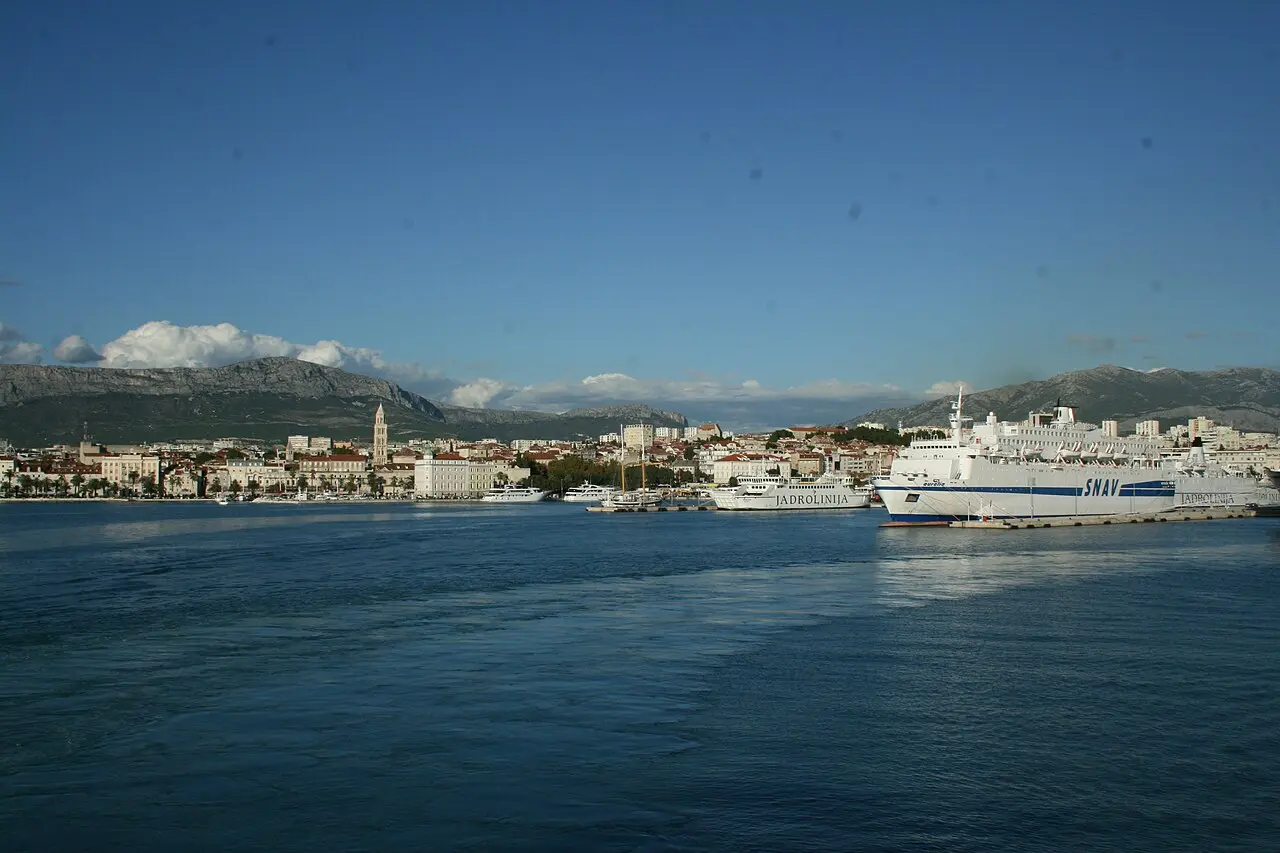
Split is the pivot of the whole trip. Base yourself inside or just beside Diocletian’s Palace, the fourth-century Roman compound the old town is built into, and give the first afternoon to getting lost in it - the Peristyle, the cathedral, the cellars, the palm-lined Riva. It costs nothing to wander, and the Split travel guide covers the beaches and food.
Use the second day for a ferry day trip - Brač for the Zlatni Rat beach, or a boat tour to the Blue Cave and Vis - all as a foot passenger from the harbour a few minutes from the old town. Then it’s the launch pad for the islands. Everything from here’s by catamaran, so this is the moment to have your onward boat seats booked. How the boats and buses connect across the country is in getting around Croatia.
Day 6: Hvar by catamaran
This is the first of three legs where you’re entirely in the catamaran’s hands, so book it along with Korčula and Dubrovnik as soon as your dates are set. The passenger boat from Split lands you right in Hvar town itself in about an hour; the car ferry alternative ties up at Stari Grad, 20 km away, with no quick way to close that gap once you’ve left the car behind. Once ashore, the day is yours: the hilltop Fortica fortress, a taxi-boat out to the Pakleni islands for the clearest swim of the trip, and the marble main square under the cathedral bell tower to close it.
Hvar earns its one night twice over - lovely by day, and after dark the coast’s most famous nightlife, so the evening is whatever you make it. The Hvar travel guide has the beaches and the bases.
Day 7: Catamaran on to Korčula
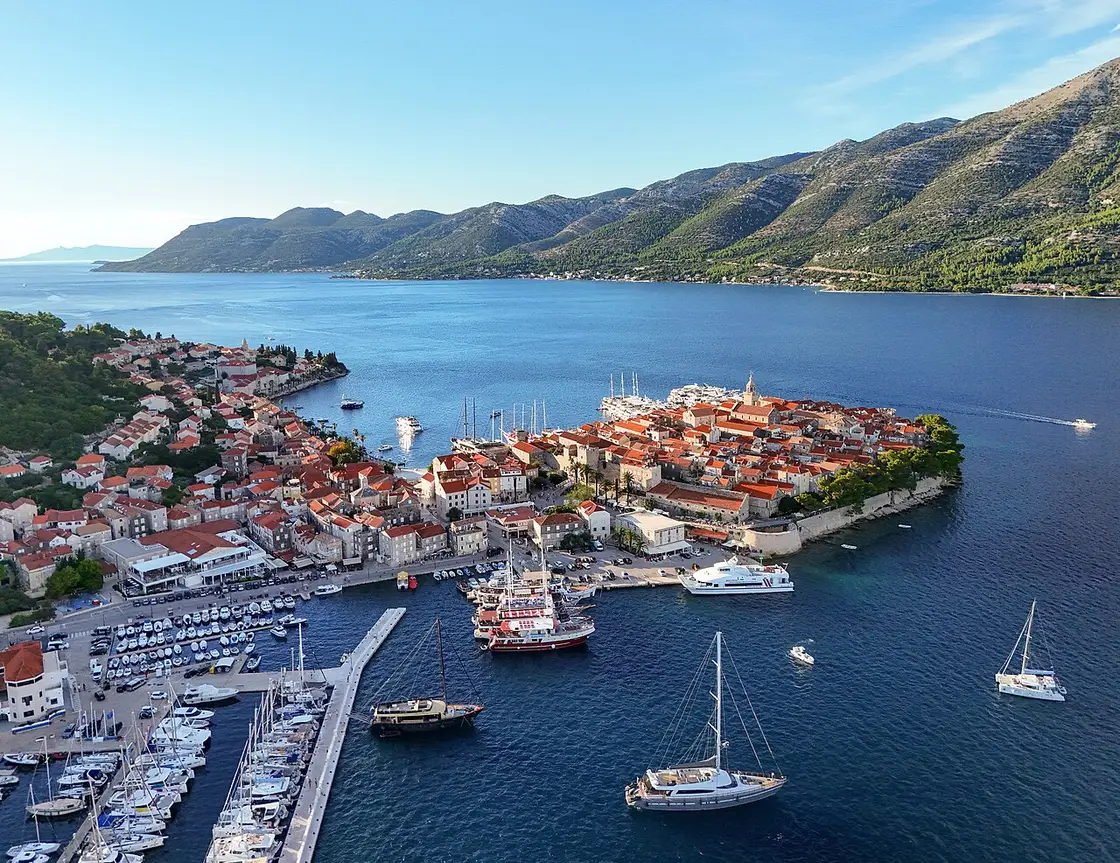
Stay on the Kapetan Luka (Krilo) through-catamaran, which carries on from Hvar down to Korčula - the same daily boat that will take you to Dubrovnik tomorrow. Korčula town is a walled stone peninsula, its lanes laid out in a herringbone to catch the breeze and block the wind, and it’s quieter and more lived-in than Hvar. Walk the ramparts, climb the cathedral tower, and eat well on the waterfront.
It makes a natural halfway house on the run south, and it breaks what would otherwise be a long single boat day into two easy hops. Full detail is in the Korčula travel guide, and if you want to fold in the Mljet lakes, the same line passes them too.
Days 8-9: Dubrovnik to finish
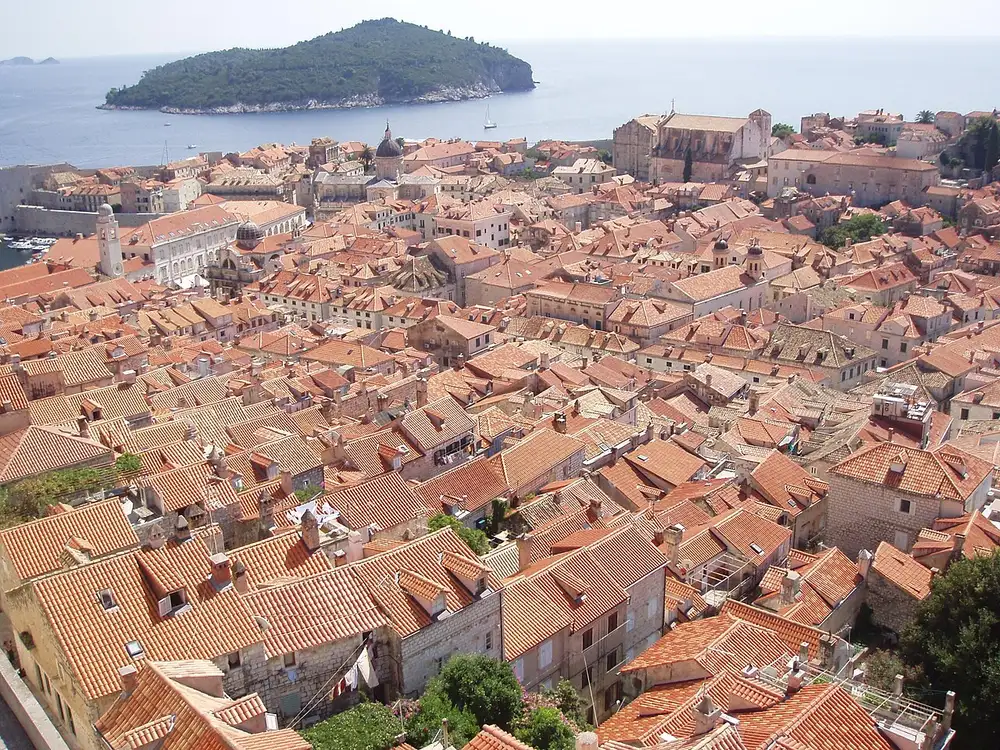
The catamaran carries you the last leg down to Dubrovnik, arriving in the afternoon. Do nothing ambitious on arrival - watch the old town warm up as the cruise crowds thin, walk the polished Stradun, and find the tiny Buža bar on the sea-cliff for a sundown drink. Save the big one for the next morning.
Get to a City Walls entrance right when it opens: the 2 km circuit of medieval rampart is the best thing you’ll do in Dubrovnik, and a slog once the midday heat and the cruise crowds arrive, which is exactly why the early slot wins. For once there’s no boat to catch, just a choice: the cable car up Mount Srđ if you want the view without the walk, or a crossing to the green island of Lokrum if you’d rather be on the water. When it’s finally time to leave, the airport shuttle bus runs to flights from near the old town - no car to hand back, no drop-off fee, the one point on this whole trip where travelling without wheels costs you nothing extra. Bases inside versus outside the walls are in where to stay in Dubrovnik.
Booking the buses and boats
The two systems work differently, so plan them differently.
- Buses are run by private operators - Arriva, FlixBus, Croatia Bus, Cazmatrans - with modern coaches, air-conditioning and often Wi-Fi. Book online through the operators’ own sites or an aggregator like GetByBus; Zagreb-Split runs from around €19, usually €23-28, and takes about five hours. Advance-book in summer, and note that hold luggage often carries a small fee (about €1-€2 a bag) paid to the driver.
- Catamarans are foot-passenger only and seasonal. The Krilo through-boat runs the Split-Hvar-Korčula-Mljet-Dubrovnik line once a day in season, so a missed sailing means falling back on the bus. Book the Hvar and Korčula legs ahead in July and August, when they sell out. Skip a sailing and you’re not stuck, just slower: the bus from Split to Dubrovnik (about 3.5-4.5 hours; most direct services now use the Pelješac Bridge and skip the border, but confirm with your operator) covers the same route by road - see Split to Dubrovnik transport.
Budgeting the trip, and picking your dates
Plan on roughly €85 a day per person for a mid-range budget, and expect Dubrovnik - especially in August - to run well past it. Transport is the cheap part of this trip: the buses are inexpensive, and foot-passenger catamaran fares are a fraction of what a hire car plus fuel, tolls, parking and a one-way fee would add up to. Beds and the Dubrovnik City Walls ticket are where the real money goes.
Here the real limit isn’t your ten days, it’s the sailing you didn’t book. The catamaran season and good weather line up from late May to September, and June or September is the sweet spot: warm sea, boats running on schedule, and none of the July-August crush. But the through-boat sails once a day and, in high summer, sells out - miss the Hvar or Korčula leg and the fallback is a whole extra day on a bus, not a quick rebooking. Go in the shoulder and that risk barely exists; go in peak and it still works, but book every leg - buses and boats alike - the moment your dates are fixed, not when you land.
Plan variations
Short on time? Skip Zagreb and Plitvice and start in Split for the 5-day Split, Hvar and Dubrovnik plan. Want more islands instead of the capital? The same catamaran spine underpins the Croatia islands itinerary and our island-hopping guide. For the broader 7 to 10 day picture with variations, see the Croatia itinerary hub, and to budget the whole trip, the Croatia trip cost guide breaks down beds, boats and tickets.
Opening hours, prices, timetables and seasonal services change through the year - the figures here are planning estimates, not quotes. Confirm current details with the operators and official sources before you go.
Route day by day
- Days on the road
- 10
- Distance
- ≈560 km
- Budget from
- 85 EUR
- Best season
- May, June, July, August, September
-
Zagreb
Route startstop ≈2880 min
Two nights in the walkable capital. Fly in, get around on foot and the blue trams, and see the upper town, the markets and the museums before you head for the coast. No car needed anywhere in the city.
Photo: Naturpuur / Wikimedia Commons, CC BY-SA 4.0 ( source) -
Plitvice Lakes
135 km from the startstop ≈1440 min
One night at the park. Buses on the Zagreb-Zadar/Split corridor stop at the park entrances (Ulaz 1 and 2), so Plitvice drops straight into a no-car trip. Walk the boardwalks past the waterfalls, sleep near the gates, and take a morning bus onward.
Photo: Manas Mayur / Wikimedia Commons, CC BY-SA 4.0 ( source) -
Split
385 km from the startstop ≈2880 min
Two nights and the ferry hub of the trip. A bus from Plitvice brings you down to the coast; base inside or beside Diocletian's Palace, use one day for a ferry day trip, and start every island leg from the harbour here.
Photo: Ian Gratton / Wikimedia Commons, CC BY 2.0 ( source) -
Hvar
425 km from the startstop ≈1440 min
One night. A ~1-hour catamaran from Split lands you right in Hvar town (the car ferry lands at Stari Grad, 20 km away, so foot passengers win here). Climb the fortress, swim off the Pakleni islands, and enjoy the coast's liveliest evening.
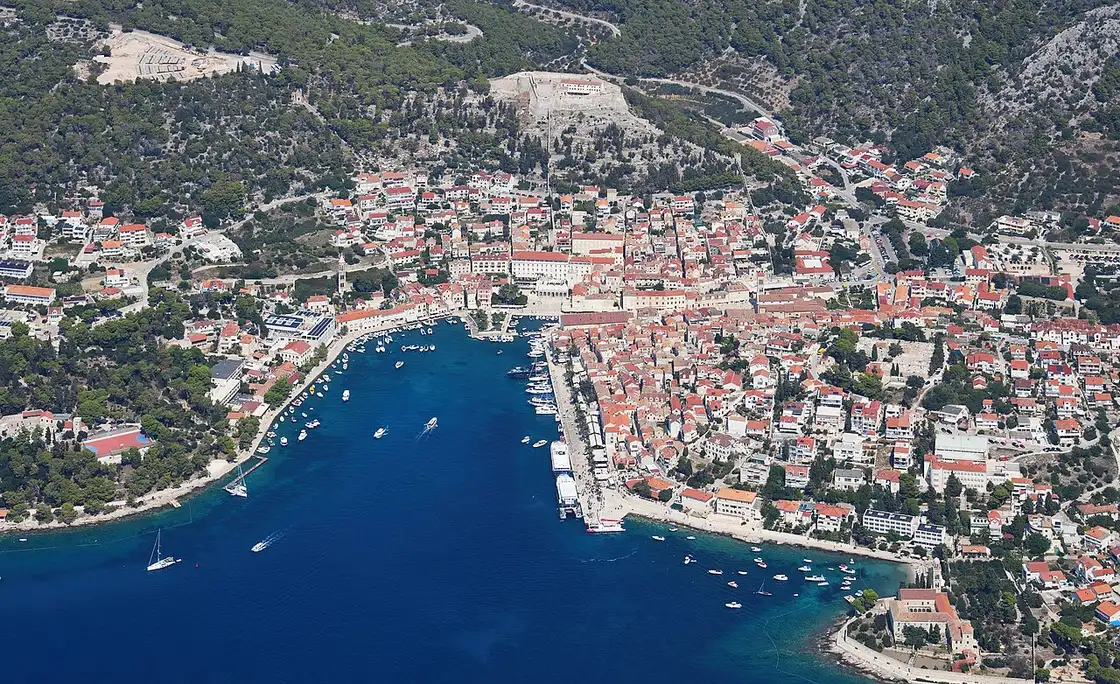
Photo: Carsten Steger / Wikimedia Commons, CC BY-SA 4.0 ( source) -
Korčula
470 km from the startstop ≈1440 min
One night. Stay on the Krilo through-catamaran as it carries on from Hvar to Korčula town, a walled peninsula of stone lanes laid out like a fish skeleton. Quieter than Hvar, and a natural halfway house down to Dubrovnik.
Photo: Quintin Soloviev / Wikimedia Commons, CC BY 4.0 ( source) -
Dubrovnik
560 km from the startstop ≈2880 min
Two nights to end. The catamaran carries you down to Dubrovnik; walk the medieval city walls early, ride the cable car up Mount Srđ, and fly home from Dubrovnik Airport on the shuttle bus. No car returned, no drop-off fee.
Photo: japus / Wikimedia Commons, CC BY 2.5 ( source)
Route map
The map with stops loads on click - to keep the page lightweight.
The map didn’t load. Check your connection and refresh the page.