
Korčula Island Guide: Old Town, Beaches & Wine
A guide to Korčula, Croatia: the walled old town, Marco Polo, the best beaches, Pošip and Grk wine, the Moreška sword dance and how to get there.
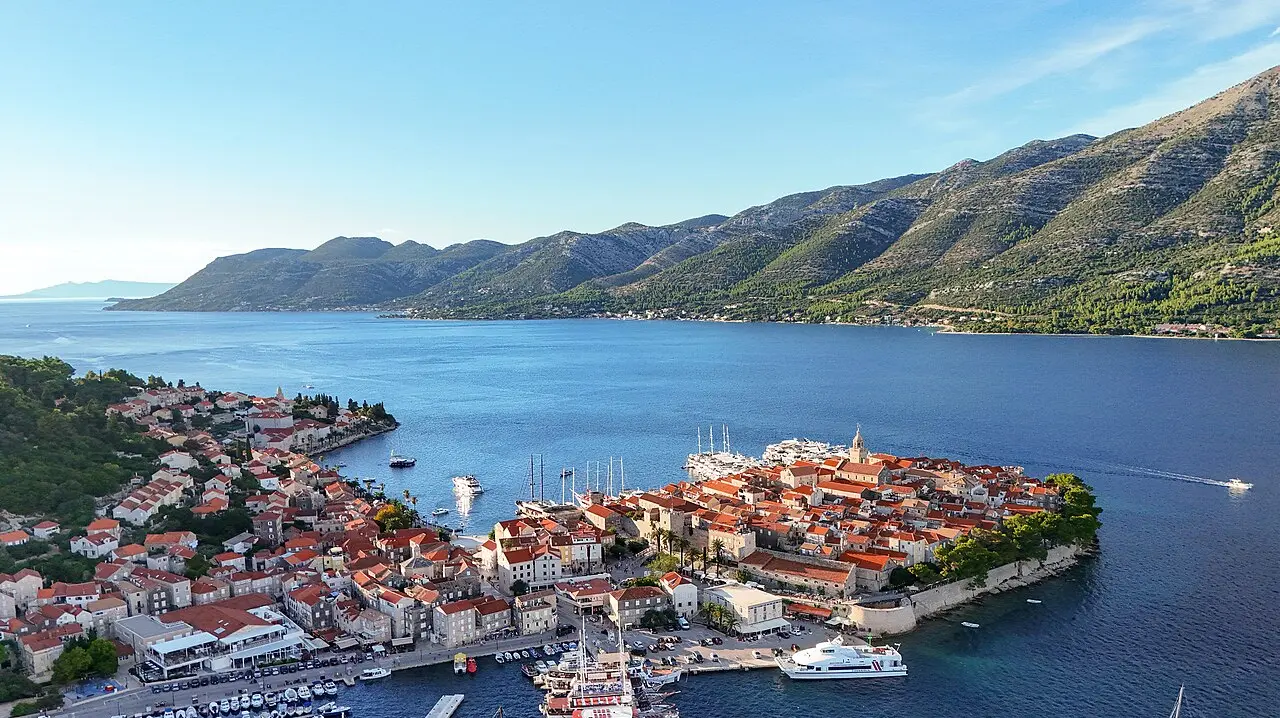
Korčula is the Dalmatian island for people who want a walled medieval old town and serious wine without Hvar’s party crowds or Dubrovnik’s cruise crush. Its main town, also called Korčula, is a compact fortress of honey-coloured stone stacked on a little peninsula - nicknamed “Little Dubrovnik” - and it claims, on thin evidence, to be the birthplace of Marco Polo. Around it, the island grows two white grapes you’ll struggle to find anywhere else, Pošip and Grk, and hides pebble coves and a couple of genuinely sandy beaches. It sits between Split and Dubrovnik, off the Pelješac peninsula, and you reach it by ferry.
What makes Korčula worth the ferry is that it hands you the walled-town beauty of Dubrovnik and the wine of a serious region without the cruise crush or the party crowds - and the two whites it pours, Pošip and Grk, you’ll struggle to find anywhere else on earth. The old town, the Moreška sword dance and the tall Marco Polo tale are the extras on top.
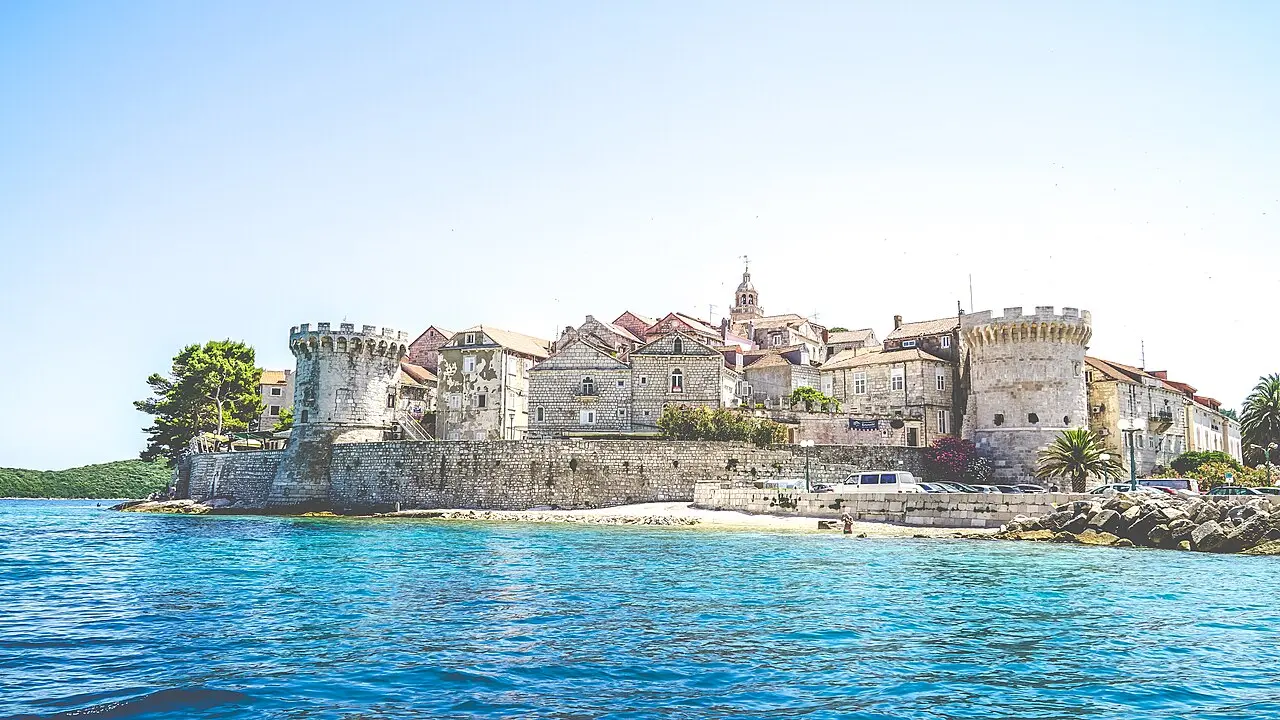
Korčula Town: the walled old town
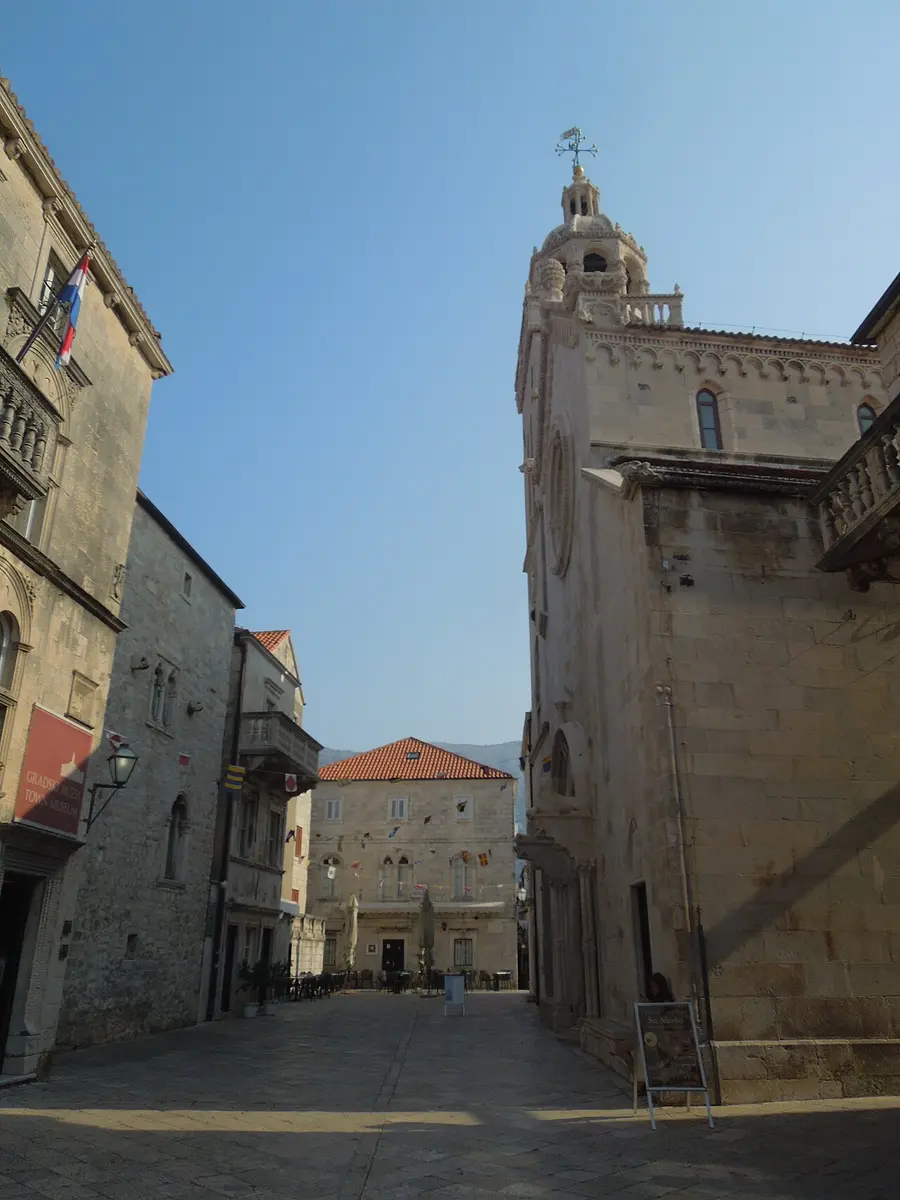
The old town is the reason most people come, and it’s small enough to see in an afternoon - but clever enough to reward a slow one. It sits on a thumb of land poking into the sea, ringed by 14th- and 15th-century walls and round towers built when Venice ruled here and Ottoman raids were a real threat. It’s on Croatia’s UNESCO tentative list (not a full World Heritage Site, despite what some guides claim), and it’s one of the best-preserved fortified towns in the Adriatic.
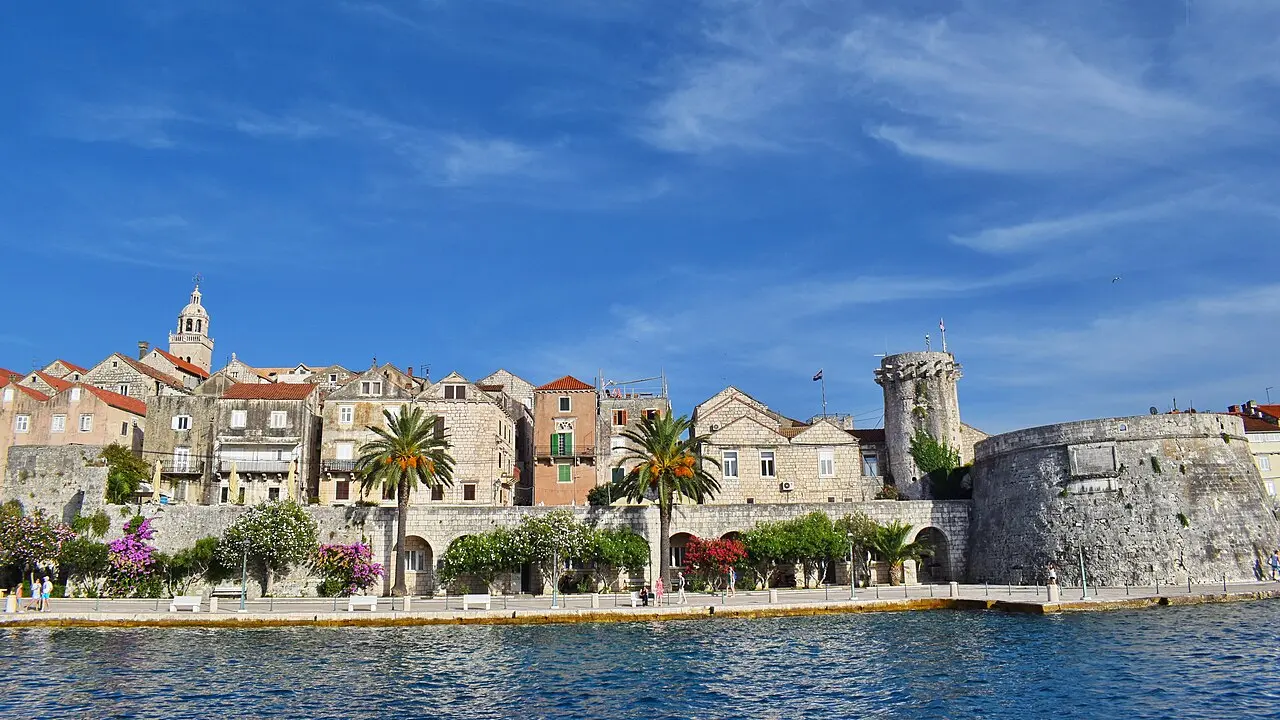
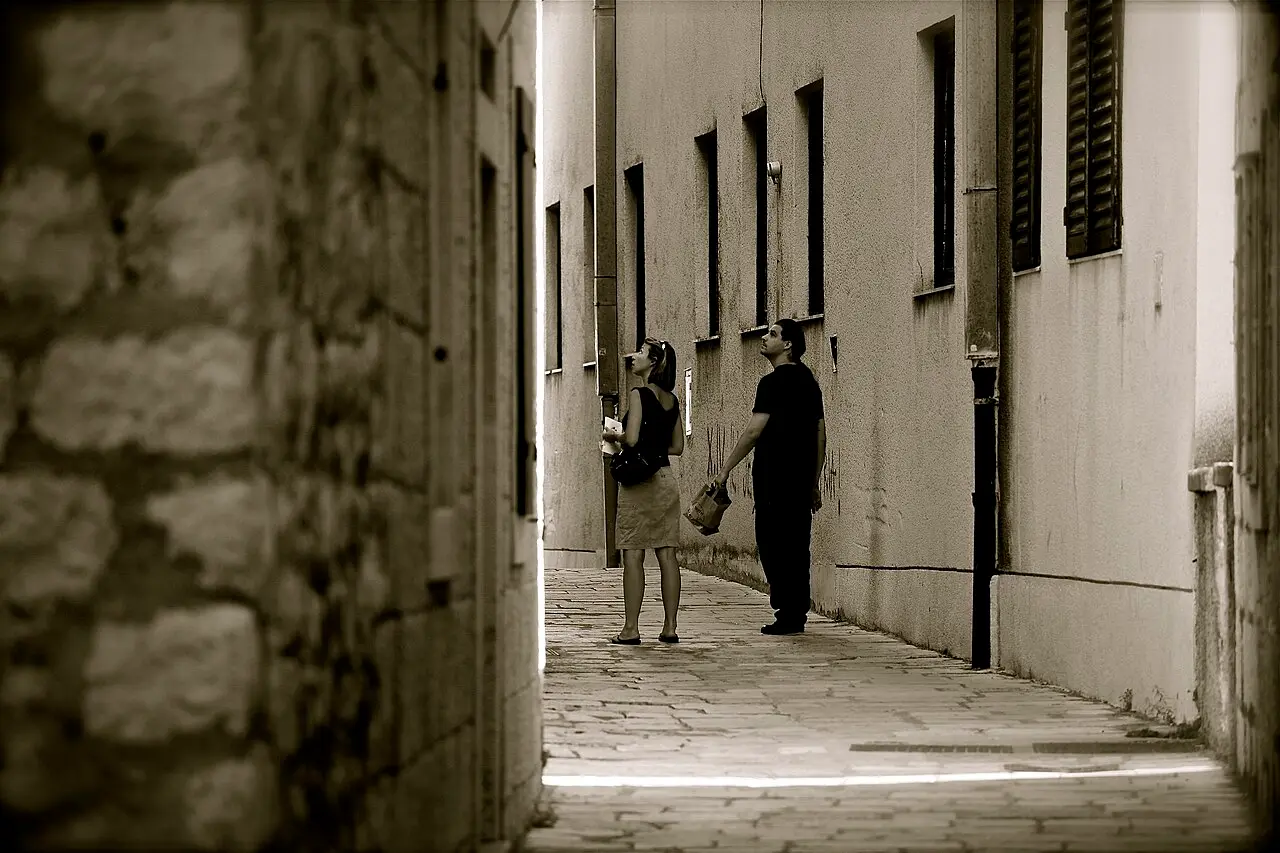
The detail worth knowing - and the thing that makes Korčula genuinely different from the usual pretty-old-town - is the street plan. The lanes come off the central spine in a herringbone (fishbone) pattern, and it was no accident. The streets on the west side are gently curved to block the cold winter Bura wind, while those on the east are straight to funnel in the cooling summer Maestral breeze off the sea. It’s a piece of medieval climate engineering you can walk through, and once someone points it out you notice it everywhere.
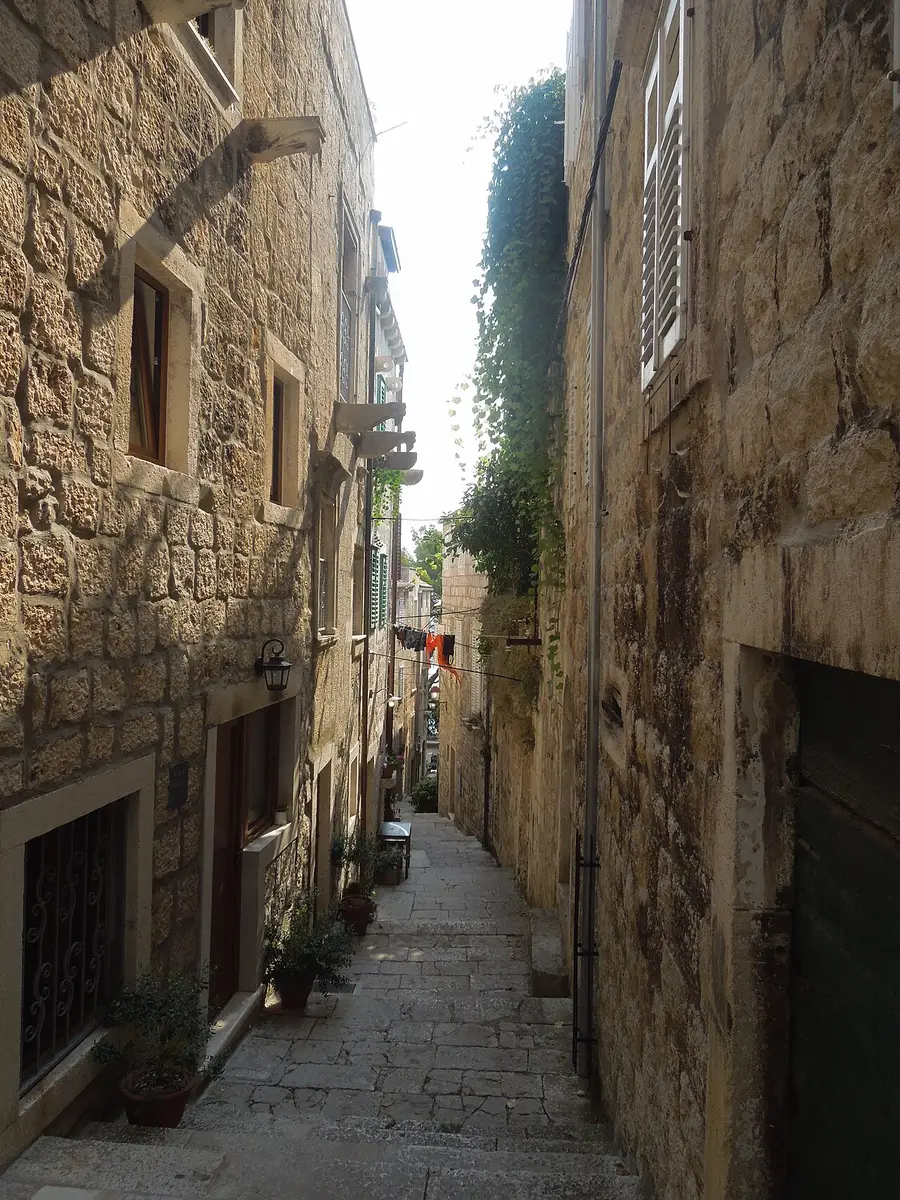
At the top of it all is the Cathedral of St Mark, a late-Gothic and Renaissance church that has held the main square for over five hundred years, with a carved façade and a tower you can climb. Around the square sit the old bishop’s palace and Venetian mansions; below, a broad seafront promenade rings the walls, lined with restaurants and cafés where the town spends its evenings. Enter through the grand Land Gate and its staircase and you’re straight into the heart of it.
The Marco Polo question
Korčula tells everyone it’s the birthplace of Marco Polo, the 13th-century Venetian traveller, and it commits to the bit: there’s a house billed as his, a Marco Polo museum and plenty of “Marco Polo” bars. Be aware, though, that this is legend, not documented fact - there’s no credible historical record that Polo was born on Korčula, and the conventional claim is Venice itself. The town’s case rests mainly on the Polo family name appearing locally and the fact that Korčula was Venetian territory. Treat it as a fun story rather than history, enjoy the tower and the view from the top, and don’t expect a museum full of proof.
The Moreška sword dance
The island’s real living tradition is the Moreška, a sword dance performed in Korčula Town that goes back to at least the 16th century. It stages a story in choreographed swordplay: two kings, the Black and the White, fight over a kidnapped princess, and their two armies clash in a clanging, rhythmic “battle” with real swords and live music. It was once danced across the Mediterranean and now survives essentially only here. Performances run in the summer season (typically a set evening or two each week - check the current schedule locally); catching one is the most distinctive thing you can do on the island.
Wine: Pošip and Grk
Korčula punches far above its size for wine, and its two signature whites are the draw. Pošip is the island’s flagship - a full-bodied, aromatic dry white, and one of Croatia’s best, grown mainly in the inland villages of Čara and Smokvica. Grk is the rarity: a white grape grown almost exclusively around Lumbarda in the island’s southeast, in sandy soil the vines love, and made in tiny quantities that barely leave Croatia. If you’ve never had either, this is the place.
Most producers are small, family-run cellars, and tastings are relaxed and cheap, often with a plate of local cheese and pršut. A half-day around Lumbarda or the Čara-Smokvica villages, tasting as you go, is one of the best ways to spend time here - and a good reason to build in a designated driver or a guided tour. For the wider Croatian picture, our Dalmatia coast route from Split to Dubrovnik runs right past Korčula and its Pelješac neighbours (Pelješac is Croatia’s other great red-wine peninsula).
Beaches on Korčula
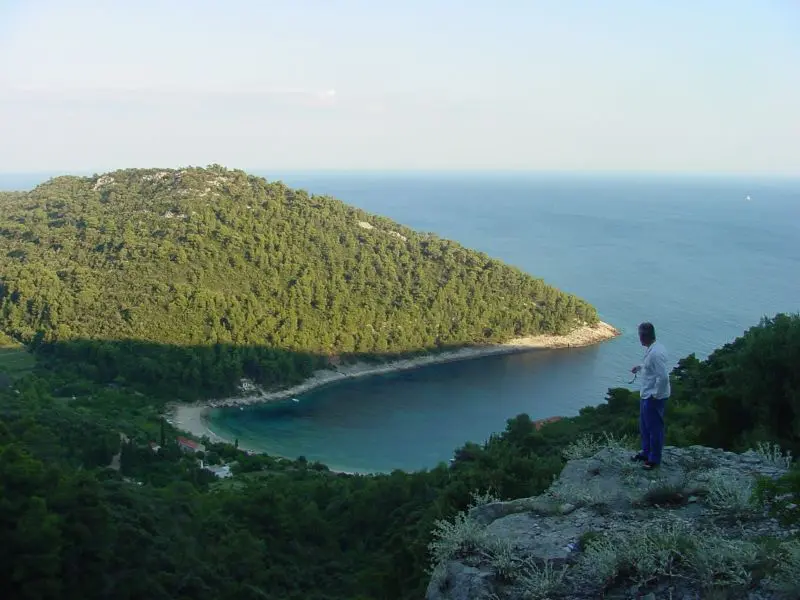
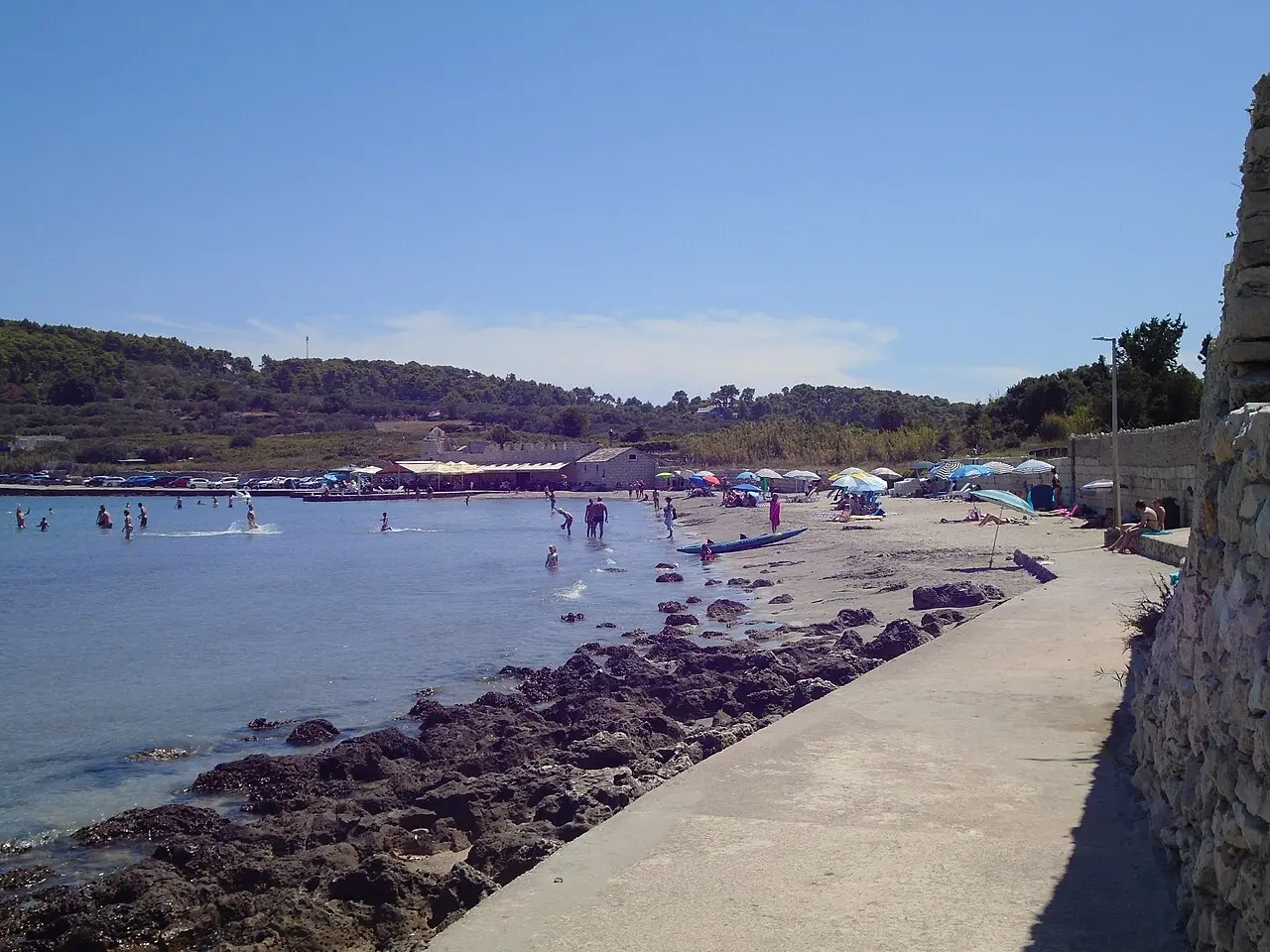
Korčula’s coast is mostly pebble and rock coves backed by pine, with a few unusual patches of sand - more sand than most Dalmatian islands manage. The best-known spots:
- Pupnatska Luka - widely called the most beautiful beach on the island: a horseshoe pebble cove reached down a steep, winding road about 12 km west of Korčula Town. Worth the drive; bring what you need, as facilities are limited.
- Lumbarda - the sandy corner. Pržina and Bilin Žal, a short drive southeast of Korčula Town, have shallow, sandy entries that suit families, with the Grk vineyards right behind them.
- Vela Pržina and small coves near Vela Luka on the west end round out the choice.
The other towns: Vela Luka, Lumbarda and Blato
Korčula is a long, narrow island (about 47 km end to end), and there’s more to it than the walled town. Vela Luka, at the far western tip, is the island’s second hub and a working town wrapped around a deep bay - the other main ferry port, a base for sunsets and boat trips, and home to Vela Spila, a cave that has been lived in for thousands of years and is a serious prehistoric site. Lumbarda, close to Korčula Town, is the low-key wine-and-beach village. Blato, inland, is a handsome old town strung along an avenue of lime trees, quieter and more local than the coast.
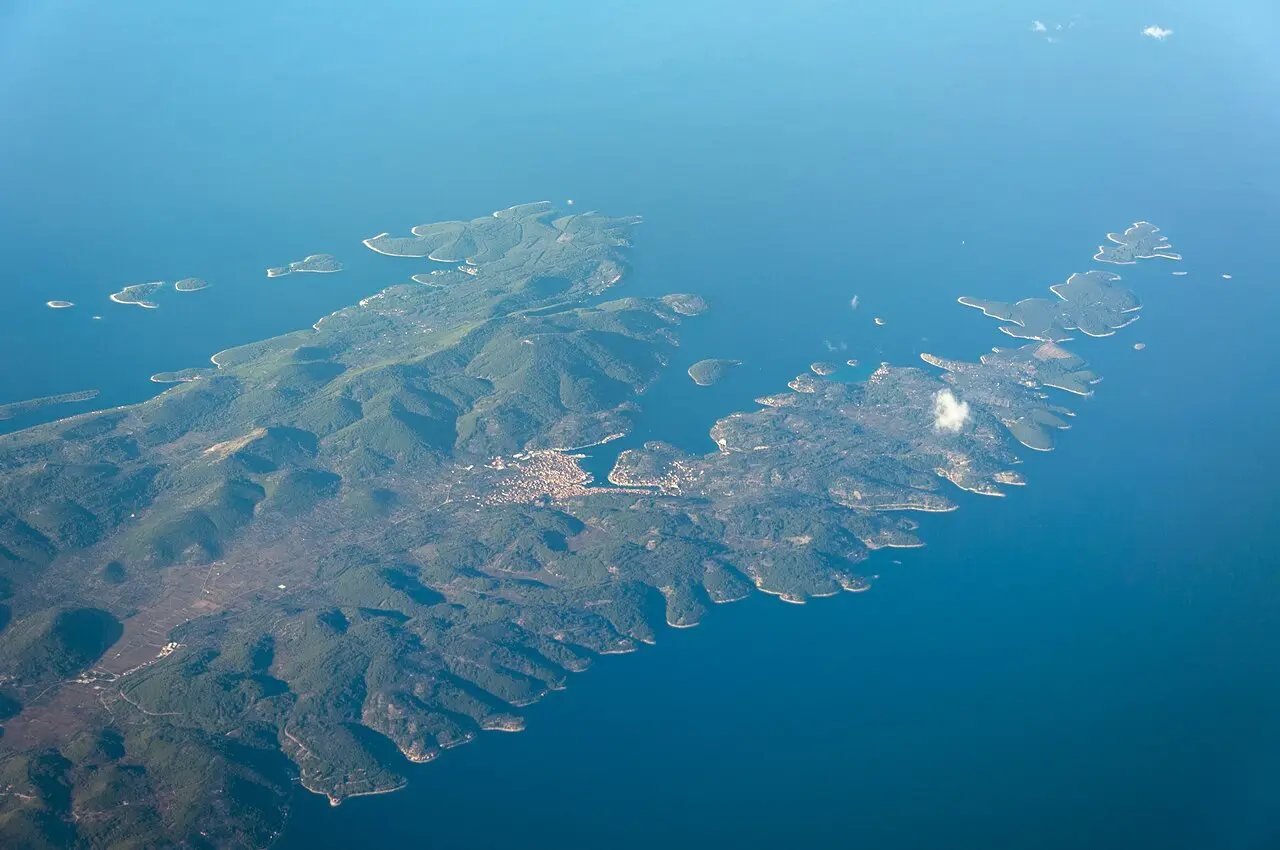
If you have a car, driving the length of the island - from the old town through the wine villages to Vela Luka and back - is an easy, pretty day, and it shows you a Korčula that most day-trippers never see. The interior is greener and hillier than you expect, with olive groves and forest between the villages.
How to get to Korčula
There’s no airport on the island, so every route in is by ferry: a short year-round hop from Orebić on the Pelješac peninsula, a catamaran or car ferry from Split, or a seasonal catamaran from Dubrovnik. Our dedicated guide, how to get to Korčula, breaks down all four routes with current times, fares and which one to pick. Once the boat is chosen, where to stay in Korčula matches the bed to the landing - old town, Lumbarda or Vela Luka.
When to go, and how long
May-June and September are ideal: warm sea, open wineries and restaurants, and far fewer people than July and August, when the town and beaches fill and the Moreška runs weekly. Winter is very quiet, with many places closed. Give Korčula at least a full day for the old town and a beach, or two to three days to add the wine villages, Pupnatska Luka and a slower pace - it rewards not rushing.
Korčula pairs naturally with the livelier island next door: see the Hvar island guide if you’re combining the two, and Hvar or Korčula for the head-to-head on ferries, vibe and who each island suits. The classic Dalmatian island run links Split, Hvar, Vis and Korčula in one loop. For where Korčula sits in a bigger trip, our Dalmatia coast route threads it between Split and Dubrovnik.
Is Korčula worth it?
If your idea of a good island is a walled old town, a glass of Pošip on the seafront at sunset and a beach the next morning - rather than beach clubs and a superyacht marina - then yes, Korčula is one of the most rewarding islands in Croatia, and quieter than its fame suggests. Come for the old town, stay for the wine, and don’t take the Marco Polo story too seriously. The same Krilo catamaran that serves Korčula also calls at Mljet - our Mljet island guide and national park guide cover it - so the island lakes make an easy day away.
Opening hours, prices, timetables and seasonal services change through the year - the figures here are planning estimates, not quotes. Confirm current details with the operators and official sources before you go.
Photos
On the map
The map loads on click - to keep the page lightweight.
The map didn’t load. Check your connection and refresh the page.
Good to know
Getting to Korčula is by ferry only - the crossing from Orebić takes 15-20 minutes and runs year-round, while seasonal catamarans link Split and Dubrovnik to Korčula Town. Ferry timetables, fares and the Moreška dance schedule are seasonal; check current details with Jadrolinija, the catamaran operators and the Korčula tourist board before you travel.
Details checked: July 8, 2026
Distance ≈130 km · ~3 h by catamaran
- Split ≈130 km · ~3 h by catamaran Korčula sits off the Pelješac peninsula in southern Dalmatia. The quickest way on is the 15-20 minute ferry from Orebić on Pelješac; catamarans also run from Split (~3 h) and Dubrovnik (~2 h) in season. There is no airport on the island.
Read also

Cities · 12 min read
Motovun Travel Guide: Walls, Truffles & Teran
Verified · September 4, 2026Motovun hilltown guide: walls ticket €5 in 2026, St Stephen, Teran cellars, Mirna views, parking climb, and why the film festival no longer plays here.

Cities · 10 min read
Dugi Otok & Sakarun Beach: Island Day-Trip Guide
Updated · August 31, 2026Day-trip Dugi Otok from Zadar: Jadrolinija ferry to Brbinj, Sakarun beach, Veli Rat lighthouse, and Telašćica cliffs - DIY or boat tour.

Cities · 10 min read
Opatija Travel Guide: Habsburg Riviera & Lungomare
Verified · August 25, 2026Opatija on the Kvarner Gulf: the 10 km Lungomare, Villa Angiolina museum, Maiden with the Seagull, and how it differs from Rijeka and Istria.

Cities · 10 min read
Omiš Travel Guide: Pirates, Zipline & Cetina Canyon
Verified · August 21, 2026Omiš is 25 km from Split: Promet bus €2.50, Mirabela €4-6, Cetina rafting and an 8-line zipline over the canyon.