
Mljet Island Guide: Lakes, Beaches & How to Visit
How to visit Mljet, Croatia's greenest island: ferries from Dubrovnik, the Pelješac car ferry, Saplunara's sand, Odysseus Cave and the lakes.
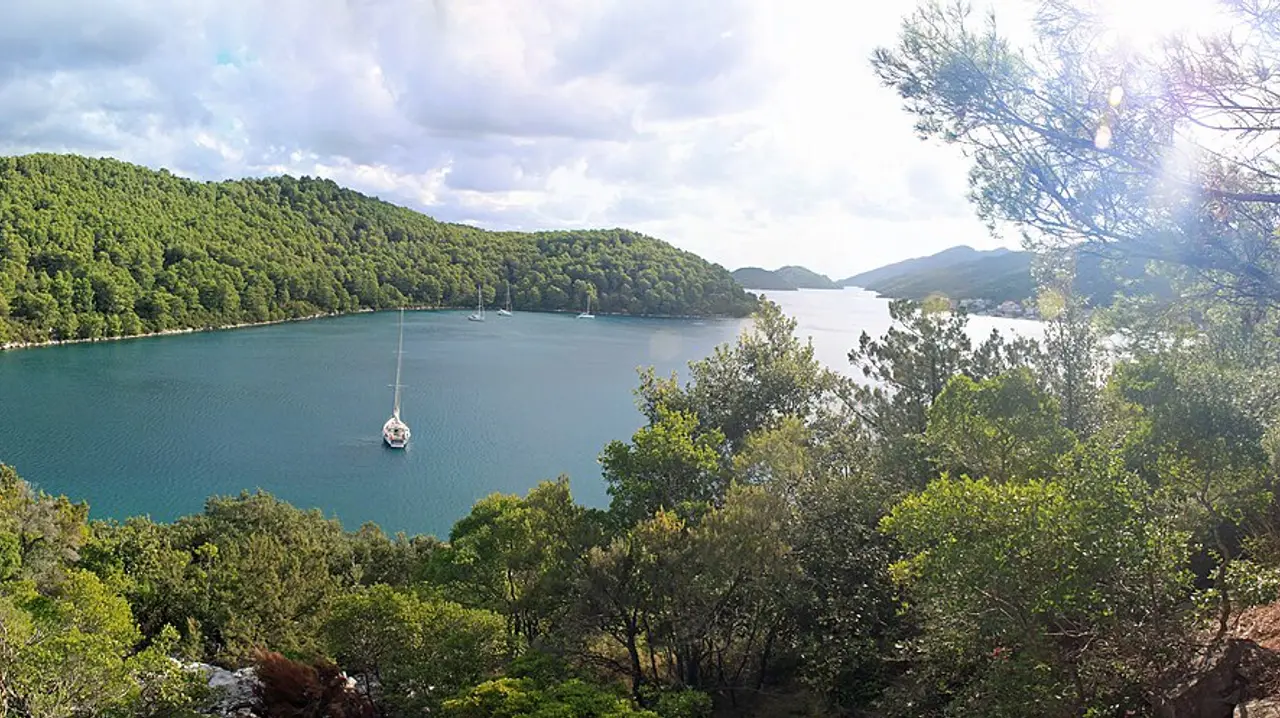
Mljet is the greenest and most low-key of southern Dalmatia’s islands: over two-thirds forest, about 1,000 people spread across a handful of hamlets, and a national park of saltwater lakes filling its western third. Most people see it as a day trip from Dubrovnik and never leave the park - which is the mistake. The island splits neatly in two, and the quieter eastern half hides the things that make Mljet worth more than an afternoon: a genuinely sandy beach at Saplunara, the sea grotto called Odysseus Cave, and villages where nothing much happens on purpose. There’s no airport, so every arrival is by boat, and which boat you take decides most of your trip.
The single decision that shapes a Mljet visit is your port. The lakes sit at the western end, so if the park is all you want, aim for Pomena or Polače; if you’re bringing a car or staying a few nights to reach the wild east, you want Sobra and the car ferry. Get that wrong and you can land an hour’s drive from where you meant to be, on an island where the bus runs once or twice a day. Here’s how the pieces fit.
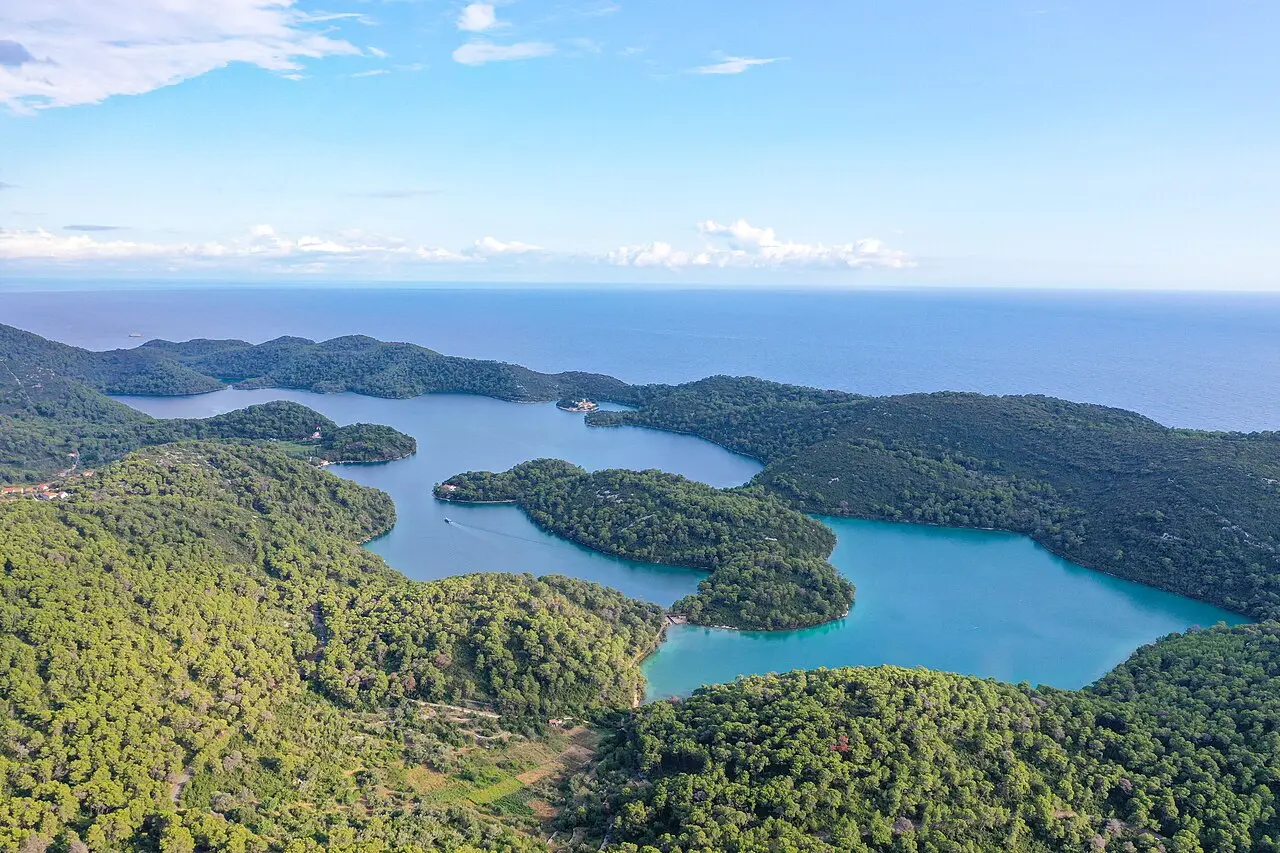
The island in two halves
Mljet runs about 37 km long and stays narrow, a green ridge of Aleppo pine and holm oak dropping to a rocky coast. The western third is Mljet National Park, established in 1960 around Malo Jezero and Veliko Jezero, the two connected saltwater lakes with a 12th-century Benedictine monastery on an islet in the larger one. That’s the postcard, and it draws the day boats.
The eastern two-thirds is where locals live and day-trippers rarely go: the administrative village of Babino Polje in the middle, the sandy coves of Saplunara at the far tip, Odysseus Cave on the south coast, and small harbours like Okuklje and Prožura. It has no ticket gate and no crowd. If you only ever see the park you’ve seen a beautiful third of Mljet and missed the point of the rest.
Getting to Mljet: ferries and the car ferry
Because there’s no airport and no bridge, your options come down to three boat routes, and they leave from two very different places.
- Catamaran from Dubrovnik (Gruž) to Sobra - the workhorse. TP Line’s state fast catamaran runs year-round, takes about 1 hour to 1 hour 20 minutes, and costs roughly €5.40 off-season and €8.70 in peak summer for an adult, one way. Foot passengers only. Sobra is the main harbour, mid-island.
- Catamaran from Dubrovnik to Pomena or Polače - the park route. In season, the Krilo (Kapetan Luka) catamaran runs daily (roughly 1 May to mid-October) from Dubrovnik to Pomena, the port right beside the lakes, leaving Dubrovnik in the late morning and reaching Pomena in a bit over an hour; it carries on to Korčula. TP Line also calls at Polače on some seasonal sailings (around €10.75 one way). Both are foot-passenger boats and land you closest to the park.
- Car ferry from Prapratno (Pelješac) to Sobra - the only way with a vehicle. Jadrolinija’s line 832 crosses in about 45 minutes, runs all year (around 4 sailings a day off-season, 5 to 6 in summer), and costs about €6.10 per adult and €25.50 for a standard car in high season (€3.90 and €19.60 off-season, 2026). To reach Prapratno you drive roughly an hour from Dubrovnik down the D8 past Ston, now that the Pelješac Bridge skips the old crossing through Bosnia.
A useful quirk of the car ferry: the ticket is valid for any departure on the printed date, so a missed sailing just means you wait for the next one rather than losing your fare. Turn up at the ramp about 30 minutes early with a car. All timetables and fares here are seasonal 2026 planning figures - confirm live sailings with the operators before you build a day around them, and in July and August book the popular catamarans ahead. For how Croatia’s boats work in general, foot versus vehicle and catamaran versus car ferry, our guide to Croatia’s ferries covers the mechanics.
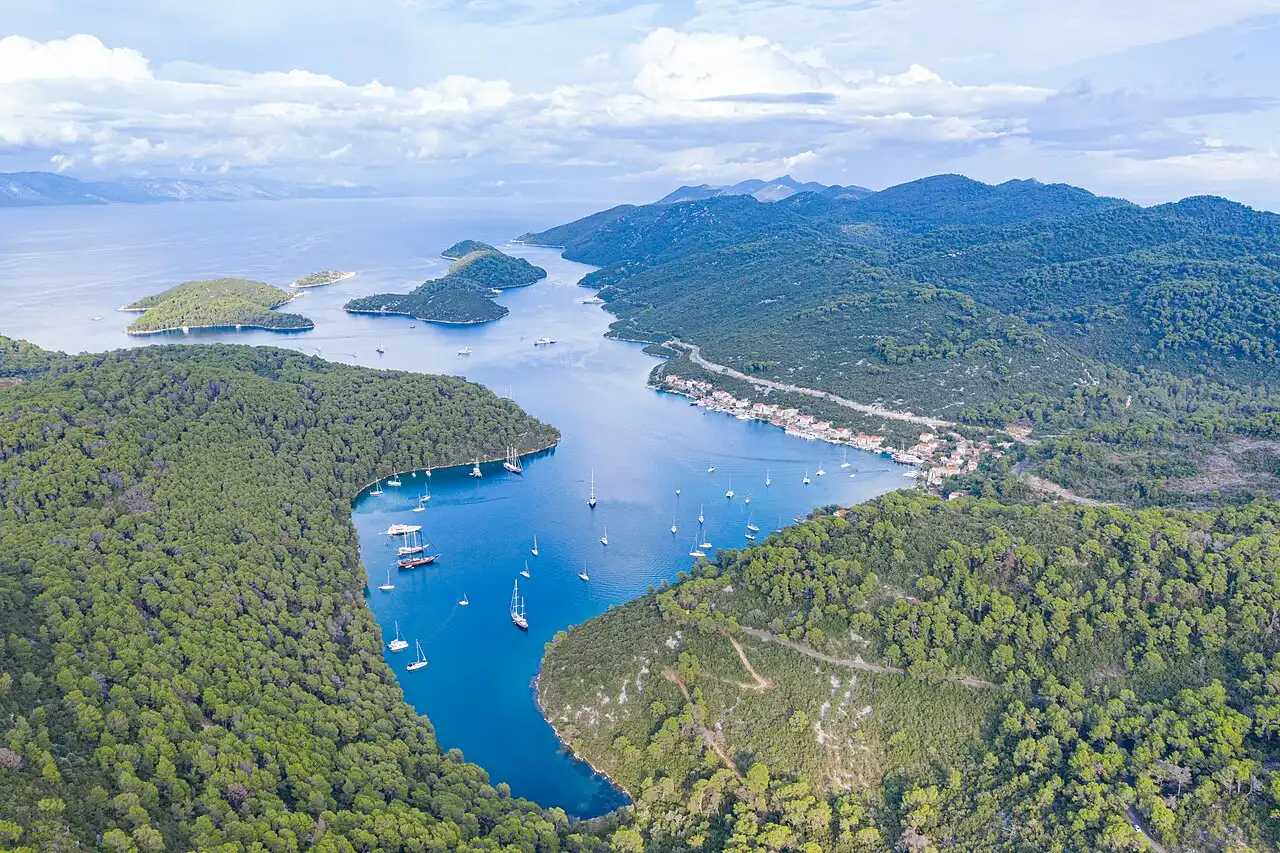
Which port should you aim for?
The three ports aren’t interchangeable, and the difference is bigger than it looks on a map.
- Pomena - closest to the lakes, a short walk from the western park entrance and home to the island’s only hotel. Best if the national park is your whole plan and you’re travelling light. Only served in season, foot passengers only.
- Polače - a sheltered natural harbour a little further from the lakes but with a park entrance, Roman ruins on the quay, and more places to eat and sleep. Also seasonal.
- Sobra - the year-round, cheapest, most frequent option and the only car port, but it sits mid-island, roughly 20 to 25 km from the park and about the same from Saplunara. Land here without a car and you’re relying on the island bus.
That last point catches people out. Sobra is the easy boat to catch and the wrong place to be stranded, because the connecting bus isn’t frequent.
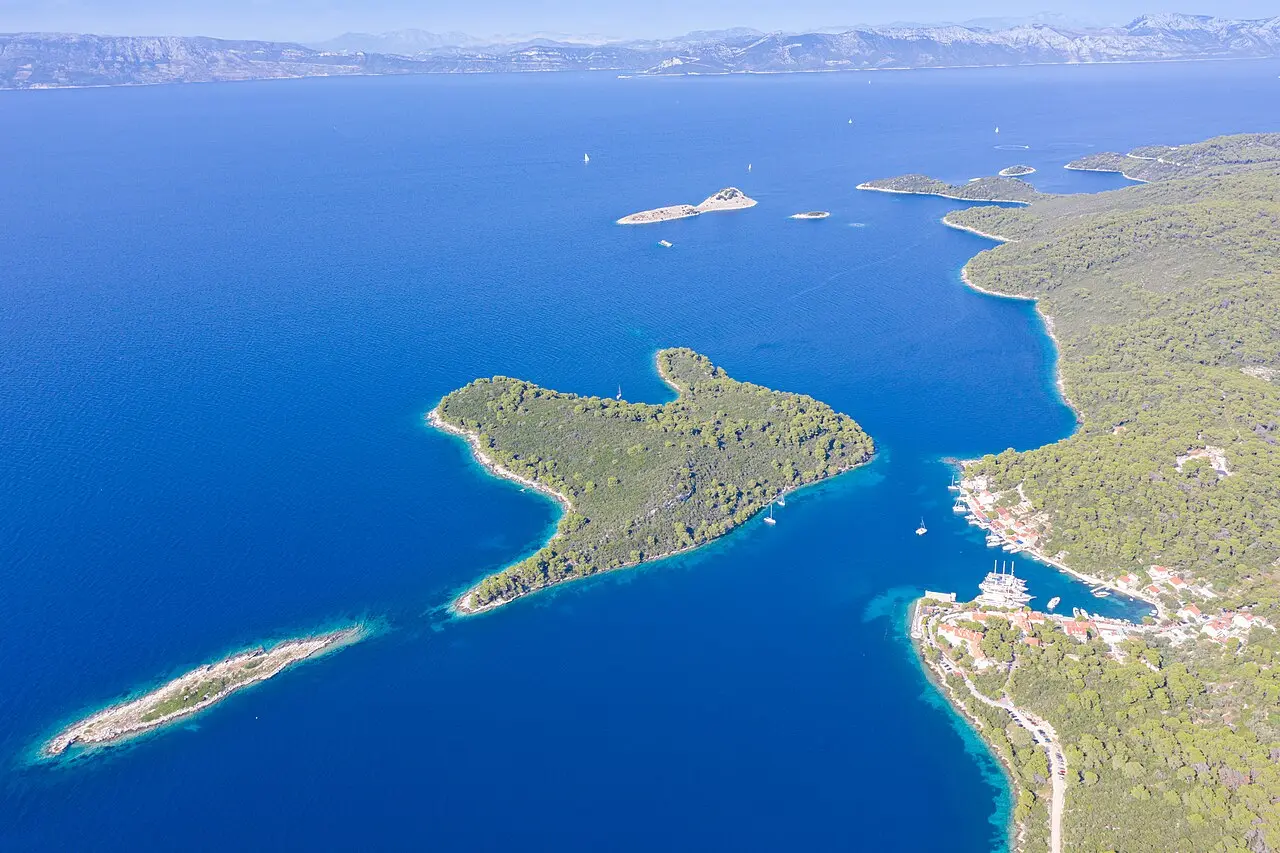
Getting around the island
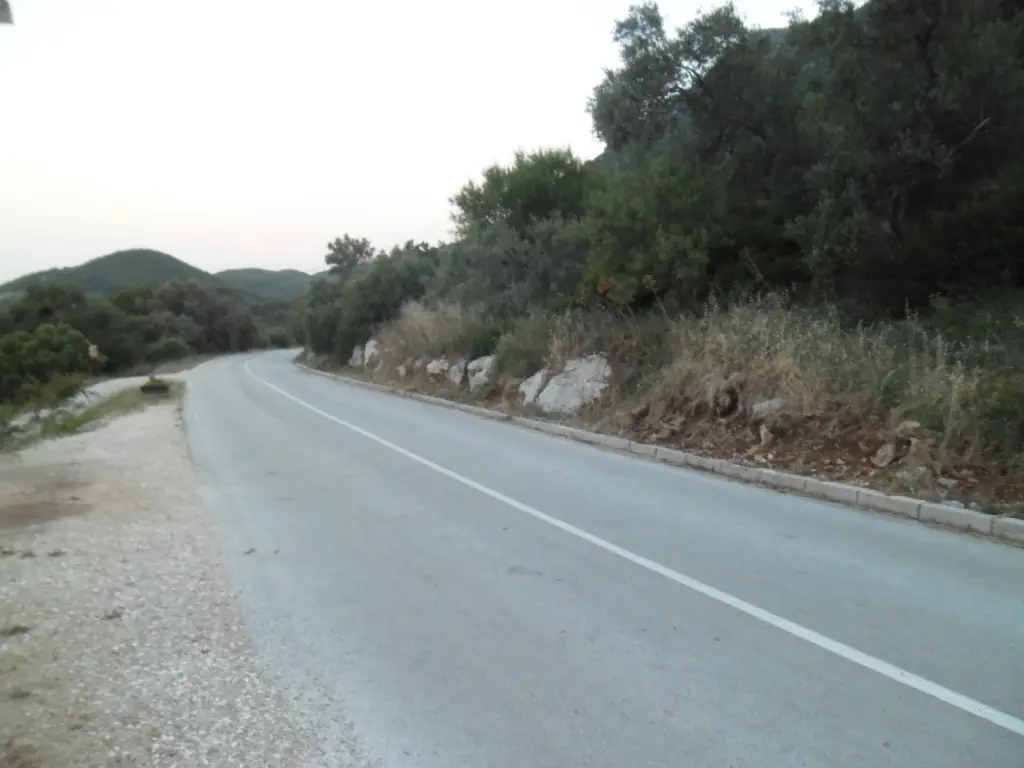
Mljet has one main road running its length and very little traffic. Your realistic options:
- Island bus. Two lines connect Sobra with the rest: line 18 west to Pomena and the park, line 19 east to Saplunara. The catch is frequency - usually only one or two runs a day, timed loosely to the main ferries. Check the day’s times the moment you land, because a mistimed boat-and-bus combination is the classic way to lose half a day here.
- Bike. The best way to see the park and the flat lakeside loop; rentals are easy to find in Pomena, Polače and around the lakes. Good for the western half, hard work for the hilly east.
- Car or scooter. Bring a car on the Prapratno ferry if you want the east and the freedom to move on a bad bus day; a few local rentals and taxi transfers exist but are limited and worth arranging ahead in summer.
The national park: what to know
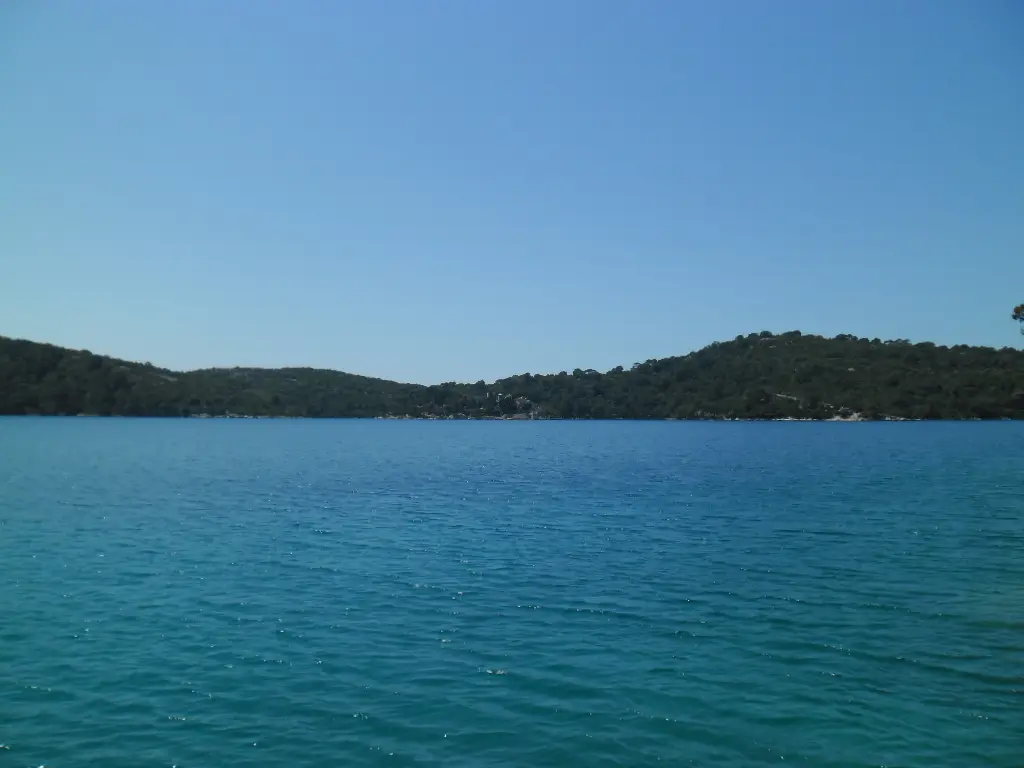
The lakes are the reason the island is famous, and they earn it: two connected saltwater lakes, warmer and calmer than the open sea, ringed by a flat shaded loop path made for walking or cycling, with the little Benedictine monastery on St Mary islet in the middle of Veliko Jezero. The 2026 adult ticket runs about €25 in high season and €15 in the low season, and it includes the boat out to the islet. It’s the gentlest of Croatia’s headline parks - no waterfalls, no scramble, just still green water.
Rather than repeat it all here, the lakes, the monastery, the ticket detail and the exact day-trip timings have their own full write-up: see our Mljet National Park guide. Treat the park as one half-day of your island rather than the whole trip.
Saplunara and the sandy beaches
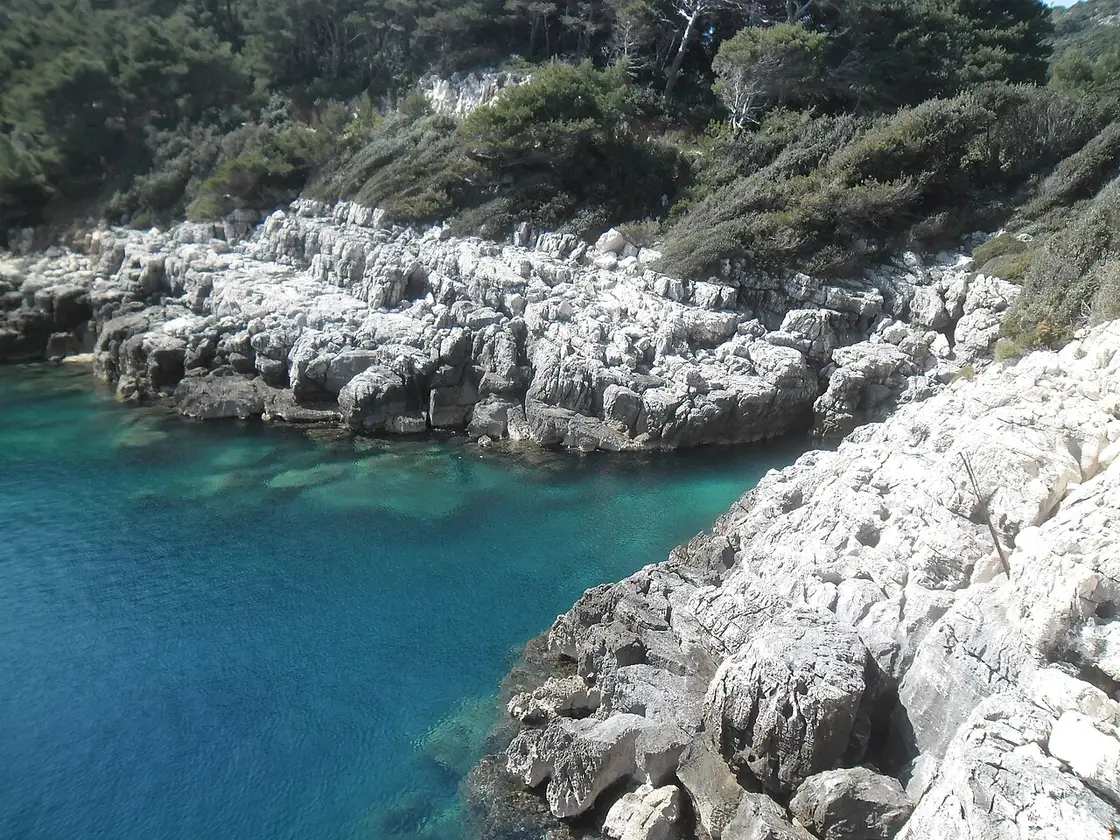
Here’s Mljet’s quiet trump card. Croatia’s coast is almost all pebble and rock, so genuine sand is rare - and Saplunara, at the island’s far southeast tip, has two soft sand beaches inside a protected pine-backed bay. The water shelves in shallow and warm, which makes it one of the better family beaches in southern Dalmatia, and because it’s at the wrong end of the island from the day boats, it stays calm even in August. Facilities are light: a few konobas and rooms, not a resort strip.
Nearby, Blace near Limuni bay is the other sandy stretch, shallower and even wilder. Reaching either means driving or the eastbound bus 19 from Sobra, which is exactly why they’re so quiet. If your idea of an island day is sand and shade rather than a ticketed park, base yourself down here.
Odysseus Cave
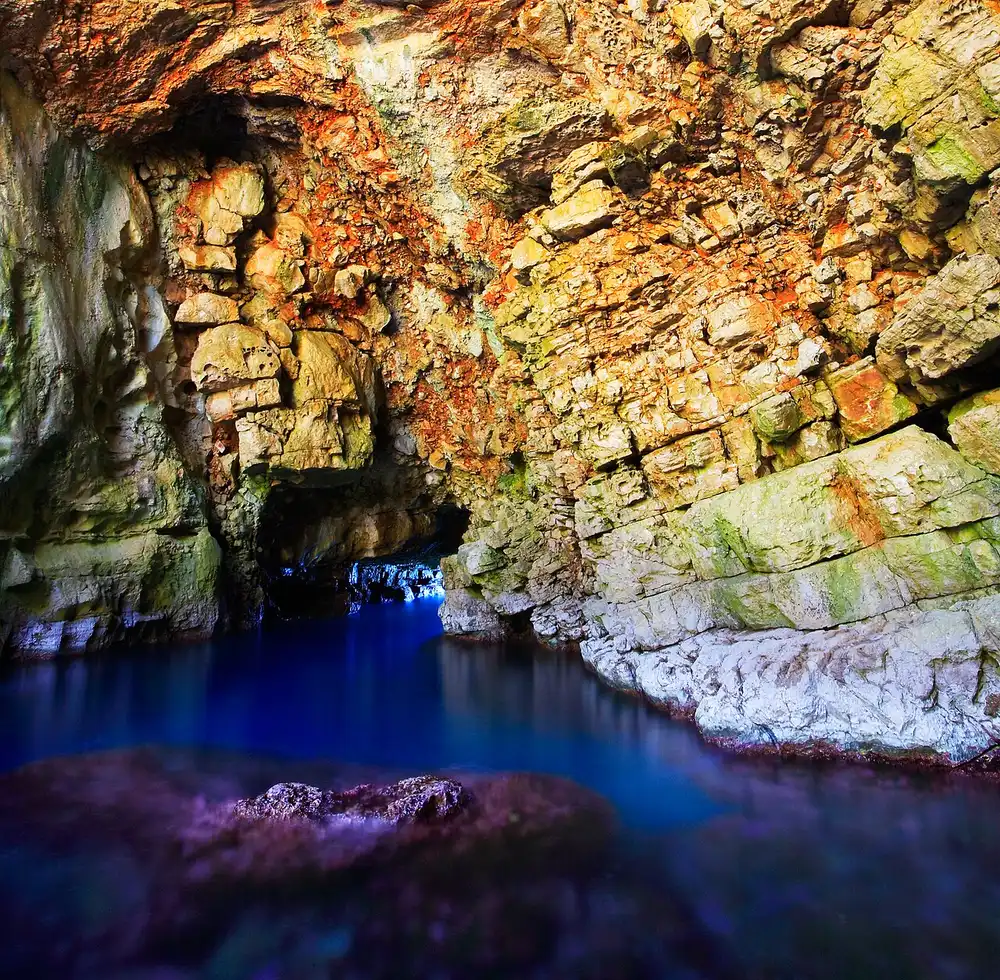
On the south coast below Babino Polje is Odysseus Cave (Odisejeva špilja), a sea grotto with a collapsed roof that opens to the water. Local legend ties it to Homer: this, the story goes, is where Odysseus was shipwrecked and kept for seven years by the nymph Calypso. Whatever you make of the myth, the effect is real - around midday in summer, when the sun angles into the opening, the water inside glows an electric blue.
You reach it two ways. By land it’s a hike of about 45 minutes from Babino Polje, partly on a rough downhill track, so wear proper shoes and bring water; there’s no ticket and no facilities. By sea, small boat and kayak tours from Saplunara or the park run in and let you swim inside, which is the easiest way to catch the blue at its best. Either way, go when the sun is high.
The villages: Babino Polje, Polače and Sobra
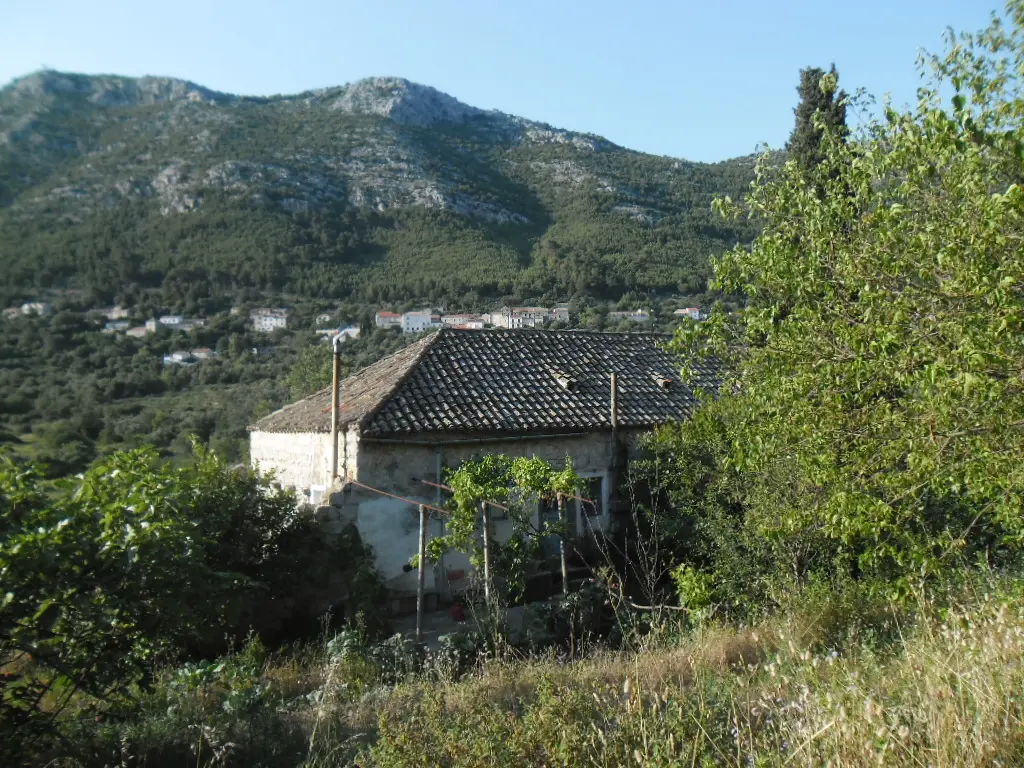
Mljet’s settlements are small and worth a wander. Babino Polje is the largest and the island’s administrative centre, a spread of stone hamlets on the southern slope above the coast - the trailhead for Odysseus Cave and the everyday heart of the island. Polače takes its name from the ruins of a large late-Roman palace right on its waterfront, an unusual thing to stumble on at a marina. Sobra is the working ferry port more than a destination. Inland, tiny Goveđari, founded in 1793 as the first village inside what’s now the park, looks down over Veliko Jezero.
None of these are sights in the ticketed sense; they’re the texture of a lived-on island. Half an hour in Babino Polje or Polače, a coffee and a look at the Roman stones, tells you more about Mljet than another lap of the lakes.
Where to stay on Mljet
The island has exactly one hotel, the 3-star Hotel Odisej in Pomena, right on the water inside the national park, with a restaurant and a dive centre - handy if you want the lakes on your doorstep and no logistics. Everything else is private apartments, rooms and campsites, plentiful and generally good value, concentrated in Pomena, Polače, Sobra, Babino Polje and around Saplunara. Base in the west (Pomena or Polače) for the park and an early-morning lake before the day boats arrive; base at Saplunara for sand and quiet. Book ahead for July and August, when the small stock fills.
Day trip, or stay the night?
You can do Mljet as a day trip from Dubrovnik - the morning Krilo catamaran to Pomena and a late-afternoon return give you the lakes, a swim and lunch. But a day ties you to a single boat each way, and it keeps you in the park; the sand, the cave and the empty east need more time. Give the island a full day for the park alone, or two to three days to add Saplunara, Odysseus Cave and a slower pace. Staying over flips the trip: you get the lakes at dawn and dusk with the day boats gone.
Mljet pairs naturally with the same corner of Dalmatia. The Krilo catamaran that serves the island carries on to Korčula, so our Korčula island guide is an easy add-on, and most visitors base in Dubrovnik first - see our Dubrovnik travel guide and the wider day trips from Dubrovnik. For threading Mljet into a longer island run, our Croatia island hopping guide shows how the boats connect.
Ferry timetables, fares and park prices change each year - confirm the current figures with Jadrolinija, Kapetan Luka (Krilo), TP Line and np-mljet.hr before you travel. Last checked: 20 July 2026.
Photos
On the map
The map loads on click - to keep the page lightweight.
The map didn’t load. Check your connection and refresh the page.
Good to know
There is no airport on Mljet, so every arrival is by boat. Foot-passenger catamarans run from Dubrovnik to Sobra (year-round) and Pomena/Polače (seasonal); the only car ferry is Prapratno (Pelješac) to Sobra. Timetables and fares are seasonal - confirm current sailings with Jadrolinija, Kapetan Luka (Krilo) and TP Line before you travel.
Details checked: July 20, 2026
Distance ≈30 km · ~1 h by catamaran to Sobra
- Dubrovnik ≈30 km · ~1 h by catamaran to Sobra Mljet lies roughly 30 km (about 15 nautical miles) northwest of Dubrovnik across the water. Foot passengers take the TP Line catamaran from Gruž to Sobra (about 1 hour) or, in season, the Krilo catamaran to Pomena, the port next to the national park. With a car, drive to Prapratno on Pelješac (about 1 hour) and take the year-round Jadrolinija car ferry to Sobra.
Read also

Cities · 12 min read
Motovun Travel Guide: Walls, Truffles & Teran
Verified · September 4, 2026Motovun hilltown guide: walls ticket €5 in 2026, St Stephen, Teran cellars, Mirna views, parking climb, and why the film festival no longer plays here.

Cities · 10 min read
Dugi Otok & Sakarun Beach: Island Day-Trip Guide
Updated · August 31, 2026Day-trip Dugi Otok from Zadar: Jadrolinija ferry to Brbinj, Sakarun beach, Veli Rat lighthouse, and Telašćica cliffs - DIY or boat tour.

Cities · 10 min read
Opatija Travel Guide: Habsburg Riviera & Lungomare
Verified · August 25, 2026Opatija on the Kvarner Gulf: the 10 km Lungomare, Villa Angiolina museum, Maiden with the Seagull, and how it differs from Rijeka and Istria.

Cities · 10 min read
Omiš Travel Guide: Pirates, Zipline & Cetina Canyon
Verified · August 21, 2026Omiš is 25 km from Split: Promet bus €2.50, Mirabela €4-6, Cetina rafting and an 8-line zipline over the canyon.