
Croatia in Winter: Weather, Advent & What's Open
Croatia from November to March: official weather by city, which ferries and parks still run, winter tyre rules and flights. Checked 23 October 2026.
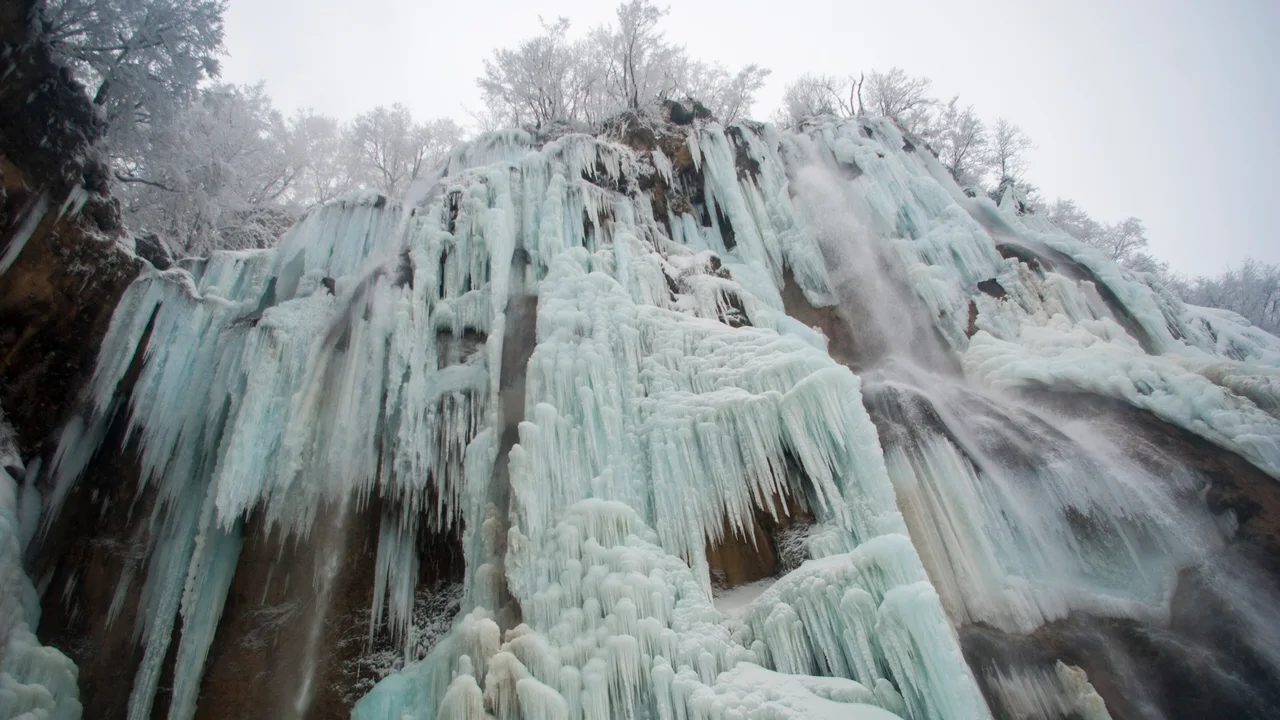
Winter splits Croatia in two. Inland you’ll get frost, Advent lights and a capital that carries on as normal. On the coast you’ll get mild, wet days, quiet old towns and a transport map with gaps. Choose one on purpose, because the sun matters more than the thermometer: in an average December Zagreb gets 49.6 hours of sunshine for the whole month, Split 120.8, which works out at roughly 1.6 hours a day against 3.9.
Three dates checked on 23 October 2026 frame the season: Jadrolinija won’t sail to Italy until 5 January 2027, the Saturday Heathrow-Split flight stops after 2 January 2027, and winter equipment becomes compulsory on major roads from 15 November. For the rest of the year month by month, see the best time to visit Croatia; winter’s price tiers are in the cheapest time to visit Croatia.
Two climates, one country
Croatia’s weather service, DHMZ, publishes long-term monthly means for its main stations. The table takes the winter months from those records. The periods differ by station (Zagreb-Maksimir 1949-2024, Rijeka and Split-Marjan 1948-2024, Dubrovnik 1961-2024), so read the numbers as a typical winter, not a forecast. The Split figures on our month-by-month page use the shorter 1991-2020 normals, so they come out slightly different: same station, different period.
| Station (DHMZ) | Mean air temperature, Dec / Jan / Feb | Sunshine in December | Rain days in December |
|---|---|---|---|
| Zagreb-Maksimir | 1.7 / 0.3 / 2.4 °C | 49.6 h | 10 |
| Rijeka | 7.1 / 5.8 / 6.4 °C | 98.4 h | 11 |
| Split-Marjan | 9.4 / 8.0 / 8.5 °C | 120.8 h | 12 |
| Dubrovnik | 10.6 / 9.2 / 9.6 °C | 119.9 h | 13 |
Zagreb hovers around freezing: in the station’s long-term record the minimum drops below 0 °C on 20 days of a typical December and 23 of January, and fog sits on the city for nine days in December. Split sees a sub-zero night on one or two days in those months. Rain is the one thing the coast and Zagreb share: the table gives Zagreb 10 rain days in a typical December, Split 12 and Dubrovnik 13, so the coast trades frost for wet, not for dry. Dubrovnik collects 138.8 mm in a typical December against Split’s 103.7 mm, and both see rain on more than a third of the days. Pack for rain everywhere and for proper cold in Zagreb; a packing list written for August covers neither.
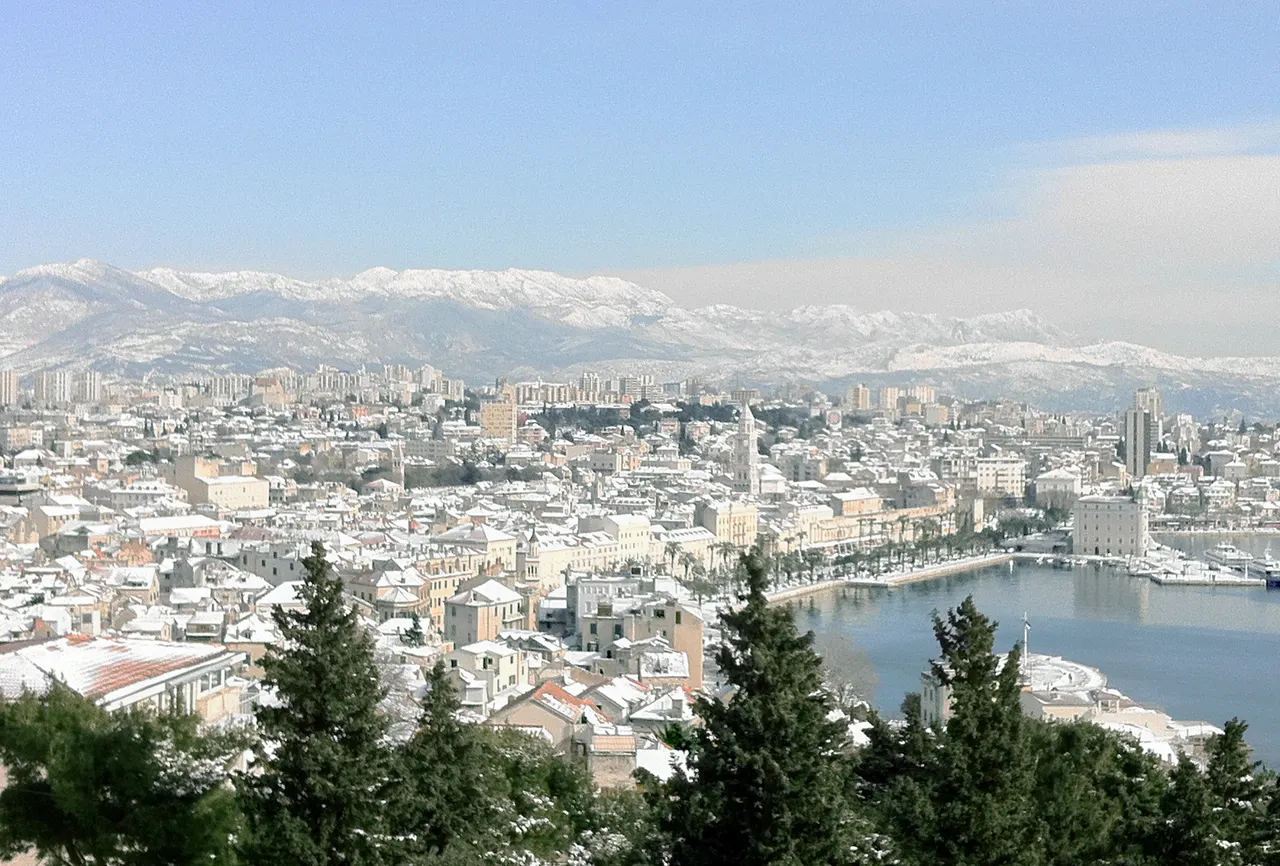
If a swim is part of your plan, winter isn’t your season; the sea numbers are in our sea temperature guide.
Boats: what still sails
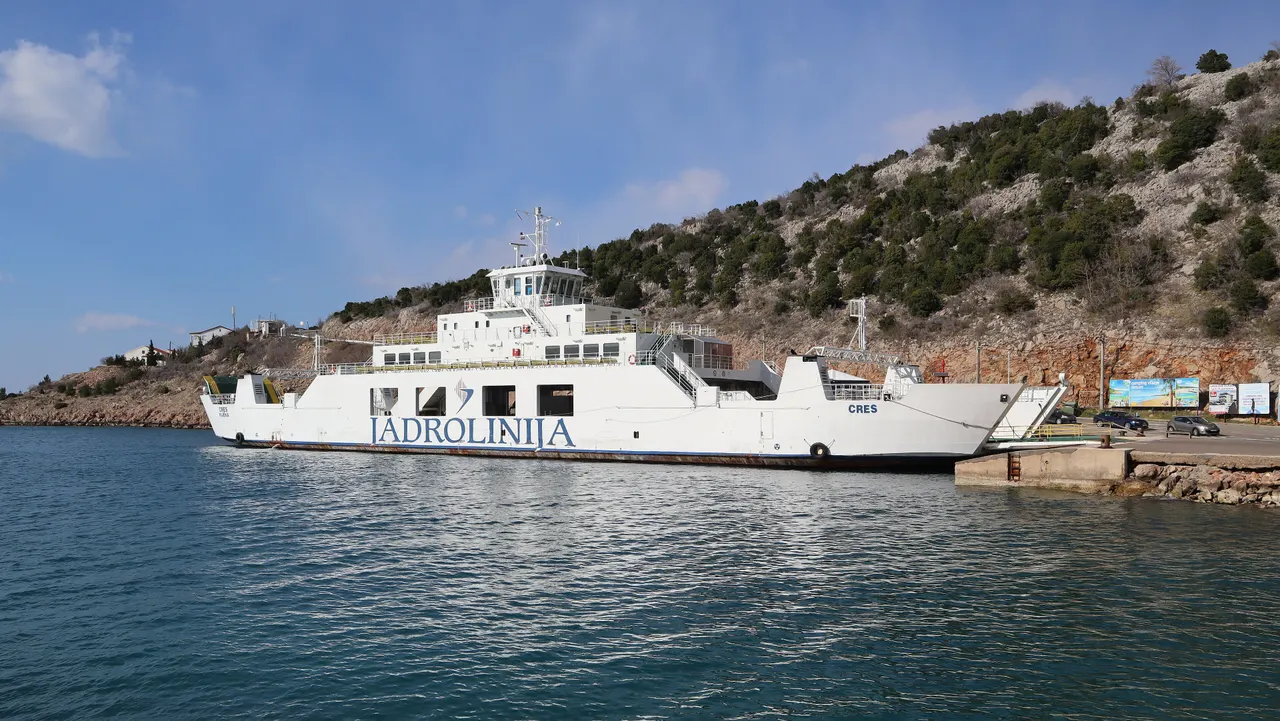
Start with the one that breaks itineraries. Jadrolinija’s notice of 21 October 2026 says that, because of a technical issue with the ferry Dalmacija, it “will not operate any sailings on its international routes until 5 January 2027”. As of 23 October 2026 that removes the Italy crossings from the first weeks of winter, so plan a Jadrolinija crossing to Italy for 5 January 2027 or later, and check on the line’s page that it sails in winter before you book. The line-by-line picture lives in our ferries guide.
The domestic network thins out rather than stops. On Jadrolinija’s 2026 timetable the Split-Supetar car ferry to Brač keeps 12 departures each way between 1 October and 31 December. From 1 November the 05:00 sailing stops running on Saturdays, Sundays and holidays, and the last sailing of the day in each direction skips 24, 25 and 31 December. Brač is one of the busiest island lines, so it’s the generous end of winter service: the smaller the island, the fewer boats. So far Jadrolinija has published only its 2026 timetables; for January to March 2027, check the line’s page before you pay for a night on an island. Wind can cancel a fast catamaran while a heavier car ferry still goes, so give yourself a spare day before any flight. Island hopping in Croatia shows how to plan around that.
Krka and Plitvice in the cold months
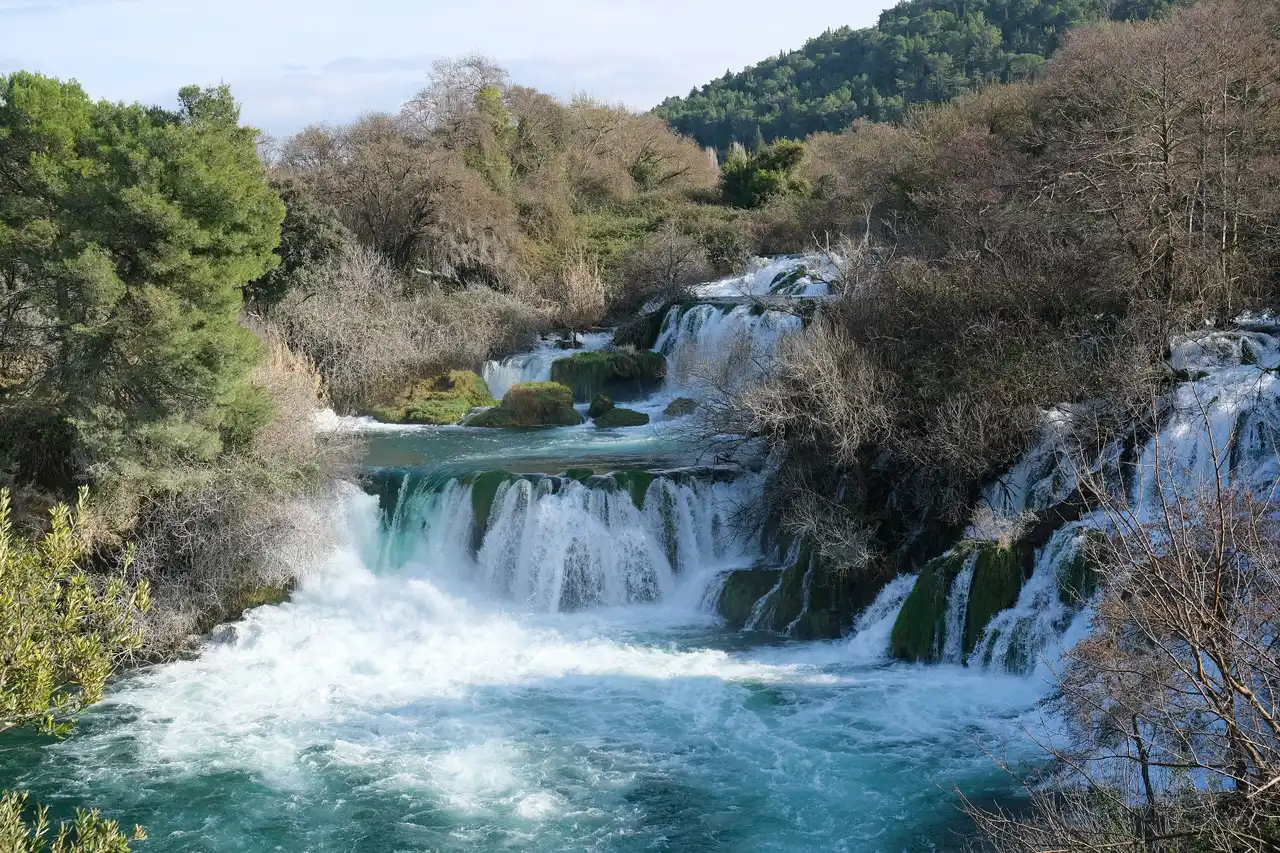
Krka stays open, but part of it is missing. On the park’s working-hours page, Skradinski Buk and Roški slap are open 09:00-16:00 from November to February and 09:00-17:00 in March, while the Manojlovac waterfall and Burnum are listed as not open in those months, and so is the Stinice locality by Roški slap. The park closes at 12:00 on 24 and 31 December and is shut on 25 and 26 December; on 1 January only the Lozovac entrance opens. The adult ticket drops to its cheapest tier, €7 in January-March and November-December on both the 2026 and 2027 price lists. What’s gone with the summer is the transport included in the ticket: the Skradin boats run from April to October, and so do the Lozovac buses.
Here’s a winter detail that changes the day. From Lozovac, the paved 4 km road to the start of the falls trail is open to cars from November to March; if you’d rather walk, an 875 m trail to Skradinski Buk starts beside the barrier at the entrance. Skradin is the harder way in during winter: you walk the 3,400 m trail from Skradin Bridge. By car, then, Lozovac is the simple choice for a short winter day. Hours month by month are in the Split to Krka route, and the rest of the park is in our Krka guide.
Plitvice is open 365 days a year but says less than Krka about winter hours. The park warns that in the colder part of the year most hospitality facilities are closed and its own Hotel Jezero is where visitors can stay. The 2026 price list charges €10 for an adult day ticket from 1 January to 31 March and from 1 November to 31 December; the park hadn’t published a 2027 list on 23 October 2026, so confirm the January-March 2027 price before you buy. As of 23 October 2026 the park’s hours page shows only the current timetable, with no winter table yet, and asks visitors to check its website in the colder months, so confirm the hours for your date before you drive out. The Plitvice guide has the routes, and Zagreb to Plitvice the day-trip logistics.
Driving in winter: tyres, chains and headlights
Croatia’s winter-equipment rule is a legal date, not a suggestion. According to Your Europe, the EU’s official portal, winter equipment is mandatory on major roads from 15 November to 15 April regardless of the weather: winter tyres (M+S) on all wheels, or summer tyres with at least 4 mm of tread plus snow chains in the car, ready for the driven wheels. On other roads the same applies when they’re covered with snow or ice. Studded tyres are banned. The same page adds a rule visitors miss: daytime running lights are mandatory for cars and other vehicles during winter time, meaning from the day the clocks go back (25 October 2026) until they go forward again.
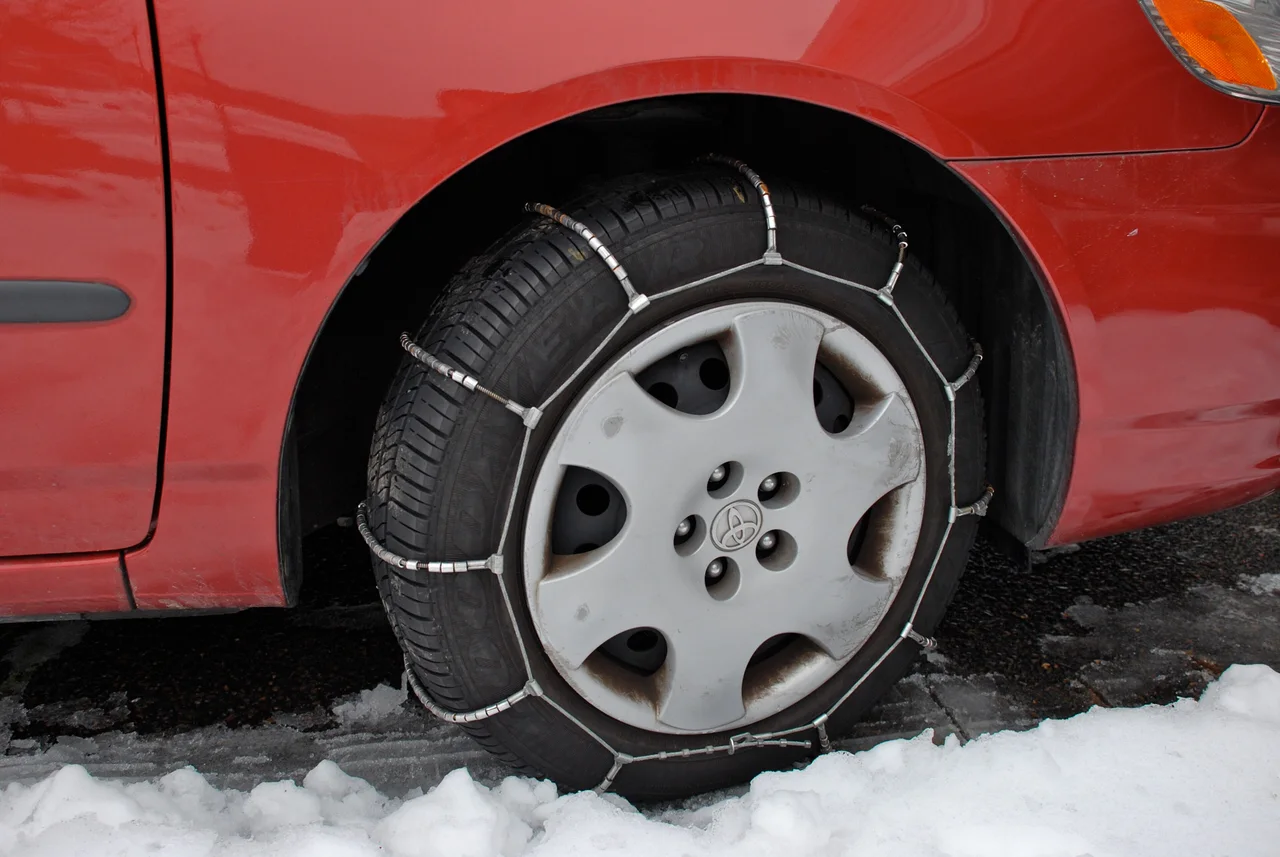
For a rental, ask at the desk what the car is fitted with and whether chains are in the boot before you sign, and get it on the paperwork. The airport desks are covered in car rental at Split Airport and at Zagreb Airport. If a motorway in frost isn’t how you want to start a holiday, a fixed-price transfer from the airport lets you skip it.
Getting there when the schedules thin
Croatia Airlines’ own London page, read on 23 October 2026, lists Heathrow-Split on Saturdays from 31 October 2026 to 2 January 2027. Heathrow-Zagreb runs all year on Monday, Wednesday and Friday, with a Saturday added from 4 January to 27 March 2027, and Dubrovnik is sold via Zagreb. On Croatia Airlines, in other words, Zagreb is the winter door. Dubrovnik keeps nonstops of its own: the airport’s winter 2026/2027 timetable lists Ryanair from London Stansted on Sundays from 25 October 2026 to 21 March 2027 and on most Fridays, and easyJet from Gatwick on Tuesdays and Saturdays until late November 2026 and again from mid-February 2027. From the US and Canada you’ll connect in Europe all winter, and the final hop is the one that thins, so price that leg first and the transatlantic one second. Flights from London to Split shows which airlines stop on which date.
What the cold season is good for
Advent is the headline. Advent Zagreb runs from 28 November 2026 to 7 January 2027 according to its official site; the markets, the food prices and the tram diversions are in our Zagreb Advent guide, and the other cities’ programmes are in Christmas markets across Croatia. For the night itself, see New Year’s Eve in Croatia.
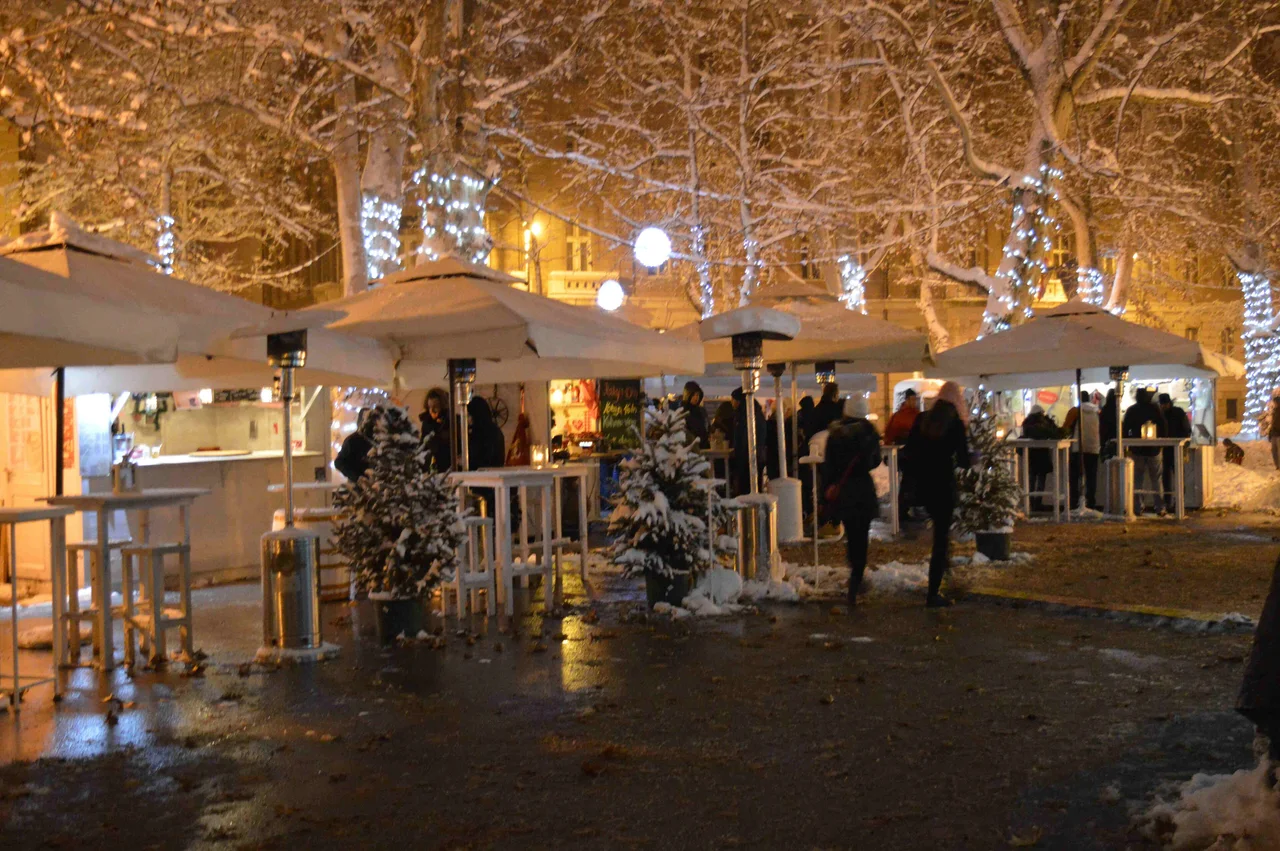
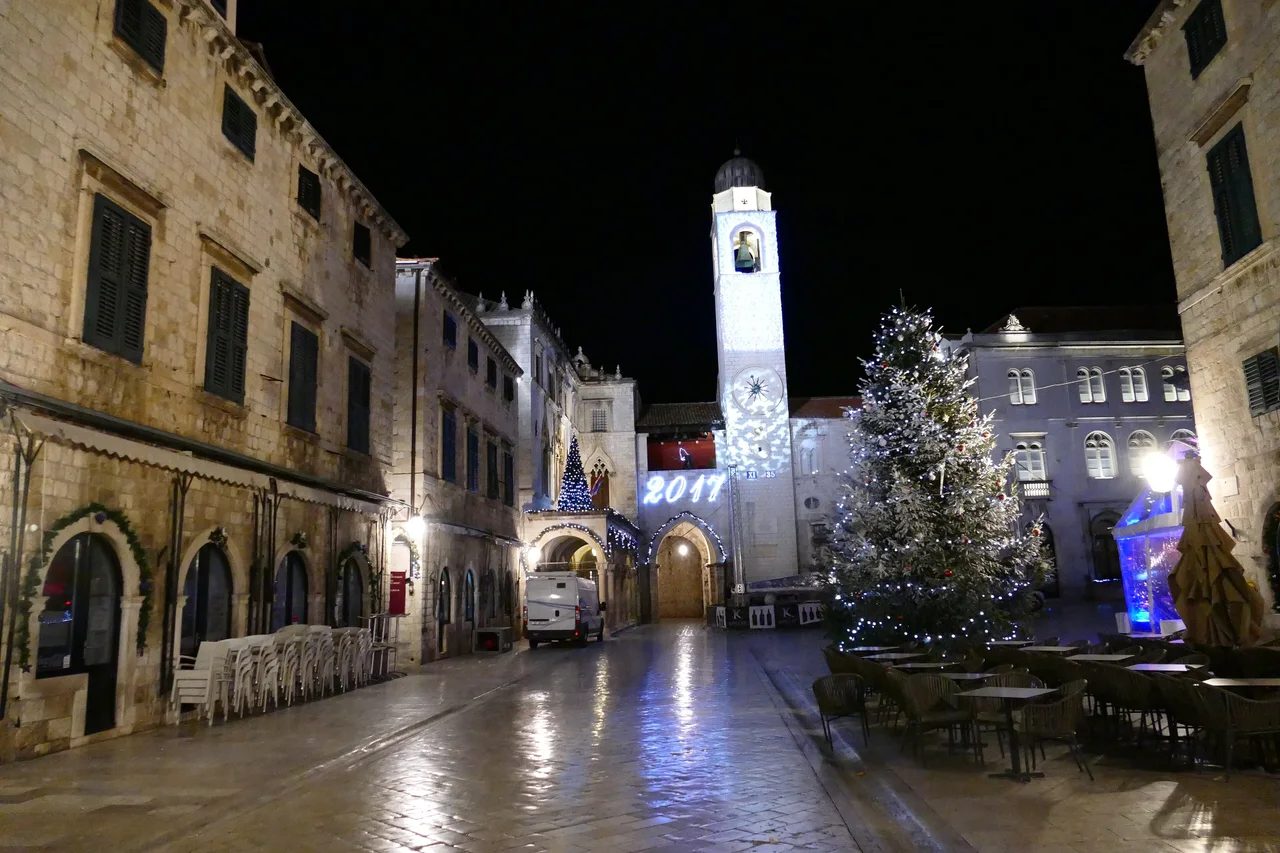
Beyond Advent, three things suit the weather. Quiet old towns come first: Dubrovnik’s walls shorten their hours in winter, with the figures on the City Walls page, and a queue-free stroll is realistic. Inland thermal pools are next, and cold air suits them (Croatia’s thermal spas). Then Istria’s truffle weekends: the Istrian Truffle Festival in Buzet falls on Saturday and Sunday, 7 and 8 November 2026, according to the Istria Tourist Board, and truffle hunting in Istria covers the full season. October, the month before all this, has its own page: Croatia in October.
A week built only from things that run
Seven nights that don’t rely on anything closed for the season:
- Nights 1-3, Zagreb. Fly into Zagreb, which keeps Heathrow flights on three weekdays all winter. If your dates fall between 28 November and 7 January, the evenings are Advent. Spend one day at Plitvice, where the park is open every day and the winter ticket is €10 on the 2026 price list.
- Nights 4-7, Split. Use the Zagreb to Split transfer options, then one day to Krka by car through Lozovac: Skradinski Buk to 16:00, ticket €7. The remaining days are Diocletian’s Palace without crowds, and a Brač crossing for a day by the sea (up to 12 departures each way a day to the end of December).
- Going home. Croatia Airlines flies Split-Heathrow on Saturdays up to 2 January 2027, so a trip that ends on a Saturday can fly home from Split. Otherwise fly home from Zagreb on a Monday, Wednesday or Friday (from 4 January to 27 March 2027 also on Saturdays) and allow a travel day back from Split.
Ferries and flights are the parts that change, so reconfirm both with Jadrolinija and Croatia Airlines the week you book.
Opening hours, prices, timetables and seasonal services change through the year - the figures here are planning estimates, not quotes. Confirm current details with the operators and official sources before you go.
Read also

Before you go · 10 min read
Where to Stay in Korčula: Old Town to Vela Luka
Verified · September 5, 2026Korčula Town for walls and boats, Lumbarda for sand, Vela Luka for the Split car ferry. Match the base to how you arrive - then book.

Before you go · 10 min read
Sailing in Croatia: Yacht Charter Costs & Routes
Updated · September 5, 2026Croatia yacht charter 2026: bareboat weekly ranges, skipper and deposit separate, APA on crewed boats, season guides, island routes.

Before you go · 10 min read
Where to Stay in Makarska: Riviera Bases Compared
Updated · August 30, 2026Brela, Baška Voda, Makarska, Tučepi or the quieter south - which Riviera base fits beach weeks, families, nightlife and Brač ferry mornings.

Before you go · 8 min read
Hvar or Korčula: Which Island Fits Your Trip?
Verified · August 28, 2026Hvar or Korčula in 2026? Split catamarans (~€25 like-for-like), vibe, beaches and who each Dalmatian island suits - plus the hop between them.