
Dubrovnik City Walls: Tickets, Hours & Is It Worth It?
What the Dubrovnik city walls cost in 2026, opening hours, where to start the circuit, how long it takes and whether the price is really worth it.
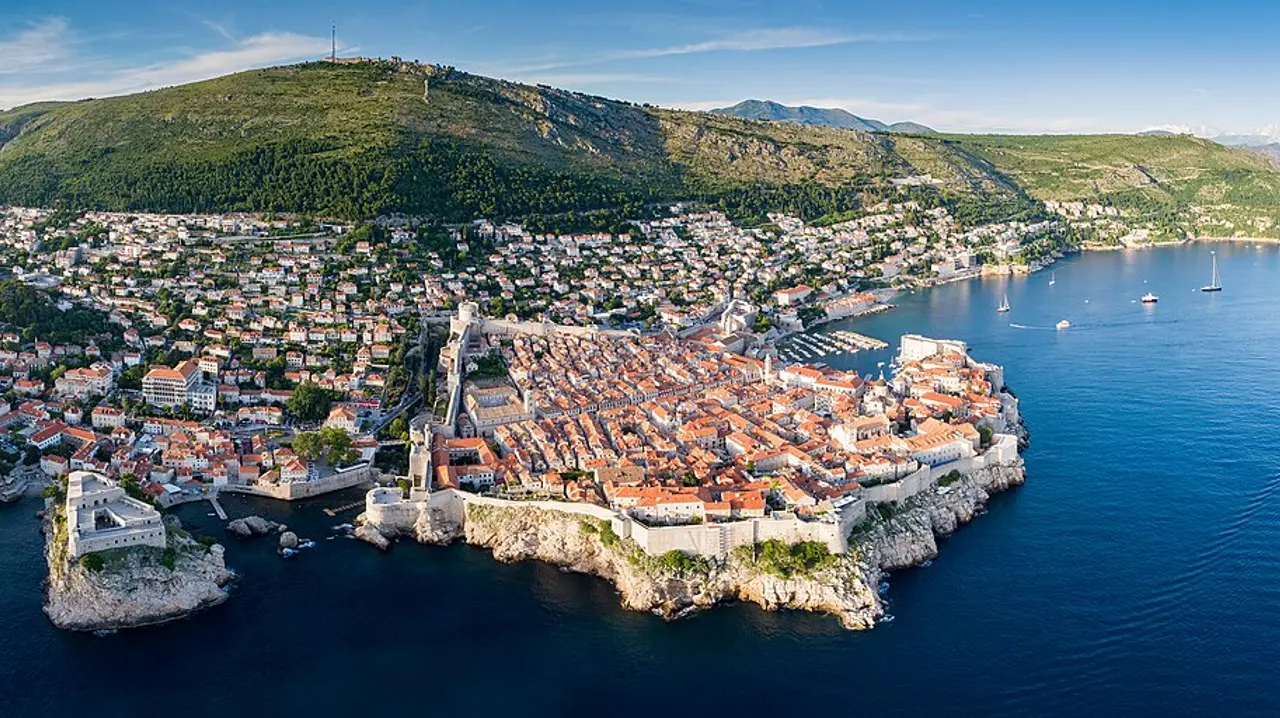
Walking the Dubrovnik city walls costs about €40 for an adult in summer, takes 1.5 to 2 hours around a 2 km circuit, and is almost everyone’s favourite thing they do in the city. That single ticket also gets you into Fort Lovrijenac, the fort across the bay. The catch is the price and the crowds: at midday in August, in full sun with three cruise ships in port, the walls are hot, slow and packed. Time it right and it’s worth every euro; time it wrong and you’ll wonder what you paid for.
The honest answer to the €40 question is that it depends almost entirely on when you go: first thing in the morning or late afternoon, with the sea breeze and the light low, it’s the best hour-and-a-half in Dubrovnik; at noon in an August scrum it’s a hot, shuffling queue with a view. Everything else - what the ticket includes, where to start, which way to walk - is really about protecting that timing.
What a ticket costs in 2026
The walls are run by the Society of Friends of Dubrovnik Antiquities, a non-profit that ploughs the ticket money back into restoring the ramparts, so the high price at least goes somewhere useful. For 2026 the standard adult ticket is about €40 in high season (roughly March to October) and drops to about €15 in winter (November to February). Children aged 7 to 18 pay around €15 in season and €5 in winter, and under-7s go free. Treat these as current guide figures and check the official webshop before you travel, because the number creeps up most years.
One ticket covers a single loop of the walls plus one entry to Fort Lovrijenac, the freestanding fort just west of the Old Town, and the western outer walls. You can’t re-enter the walls once you’ve walked them and left, but the ticket is usually valid for a few days, so you can walk the ramparts one morning and save the fort for another. Confirm the validity when you buy.
Two ways to soften the cost. First, buy online in advance through the official shop: it costs the same but you skip the ticket-window queue at Pile, which in August can be twenty minutes in the sun. Second, if you plan to ride buses and visit several museums, the Dubrovnik Pass (the city tourist card, sold for one, three or seven days) includes wall entry along with public transport and a clutch of museums, and can work out cheaper than buying everything separately. Check what the current pass covers and costs against your plans before you assume it saves money.
Opening hours and the best time to go
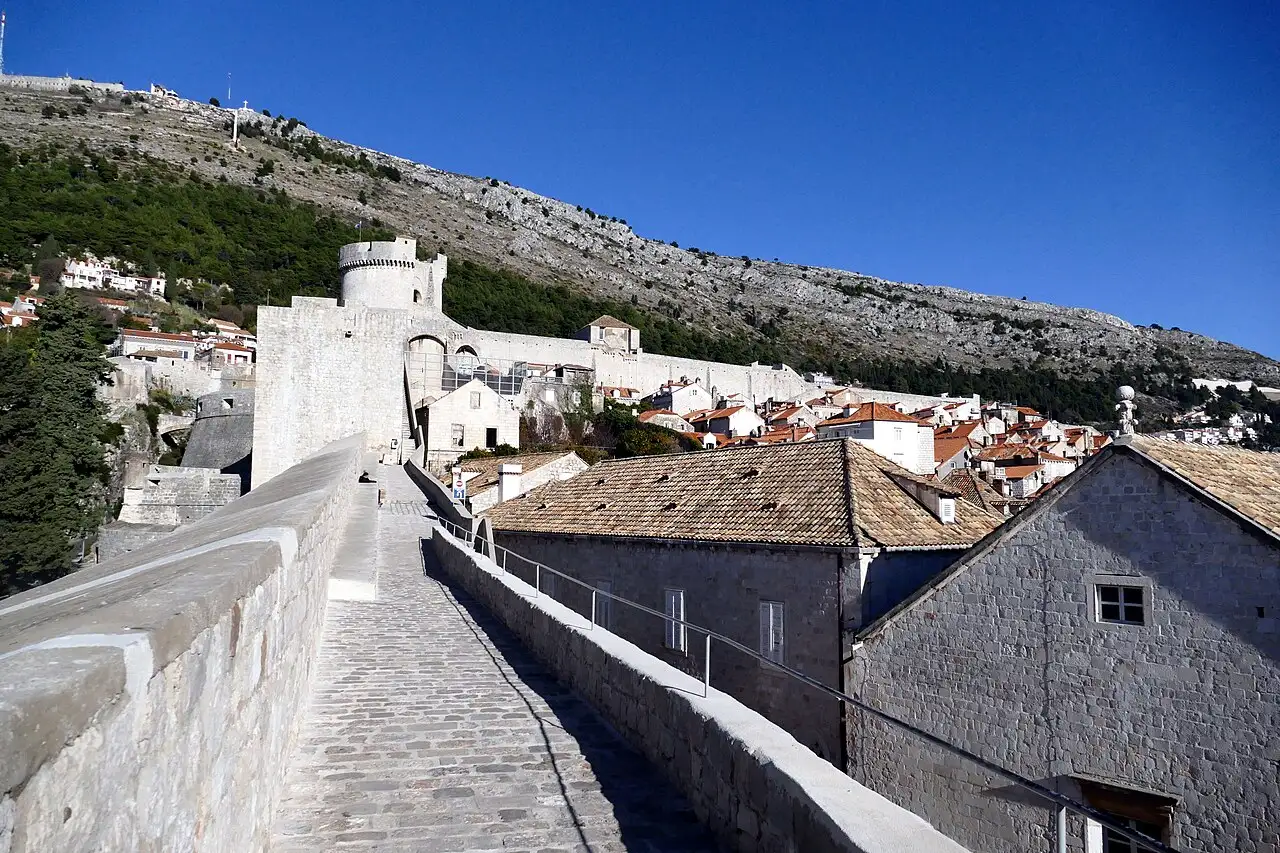
Hours change with the season and there’s no single year-round timetable, so this is where people get caught out. In peak summer (July to early October) the walls open at 08:00 and close in the early evening (roughly 19:30 in July, 19:00 in August, tapering back through September to about 17:30 by late October). In spring (April to June) opening is later, at 10:00, with a 17:00 close. In winter (November to March) they open later still and close by mid-afternoon, around 15:00. Crucially, the posted closing time is the last entry, not the time you’ve to be off, so don’t turn up ten minutes before close expecting a full loop.
The best time to walk is at opening or in the last two hours before close. Two things ruin the middle of the day: heat and crowds. Cruise passengers and tour groups pour onto the walls from about 10:00, and the walkway is narrow with almost no shade, so a midday circuit in July can mean shuffling behind a queue in 35-degree heat. Go right at opening for cool light and near-empty ramparts, or start around two hours before closing to catch the walls emptying out and the low afternoon sun on the rooftops. One catch in spring: the 10:00 opening is also about when the tour groups arrive, so from April to June the late-afternoon slot is the surer way to dodge the crowds. Before you commit to a day, it’s worth checking how many cruise ships are in port that morning.
Where to start and which way you walk
There are three entrances: the main one just inside Pile Gate on the west (where most people start), one at Ploče Gate on the east by the Dominican monastery, and one by the Maritime Museum at Fort St John on the Old Port. You can enter at any of them, but the walk itself is one-way and anticlockwise, with checkpoints that stop you doubling back, so you commit to the full circuit once you start.
Start at Pile. Beginning there means you save the steep climb up to Minceta Tower, the highest point of the walls, for near the end, and you finish on the big panoramic views rather than opening with them. From Pile you rise quickly above the rooftops, curve around the landward side past Minceta, drop down to the Old Port and Fort St John, then run along the seaward wall high above the Adriatic back toward the start. Reckon on 1.5 to 2 hours at a normal pace with photo stops, less if you march, longer if you keep stopping (and you’ll).
What you actually see up there
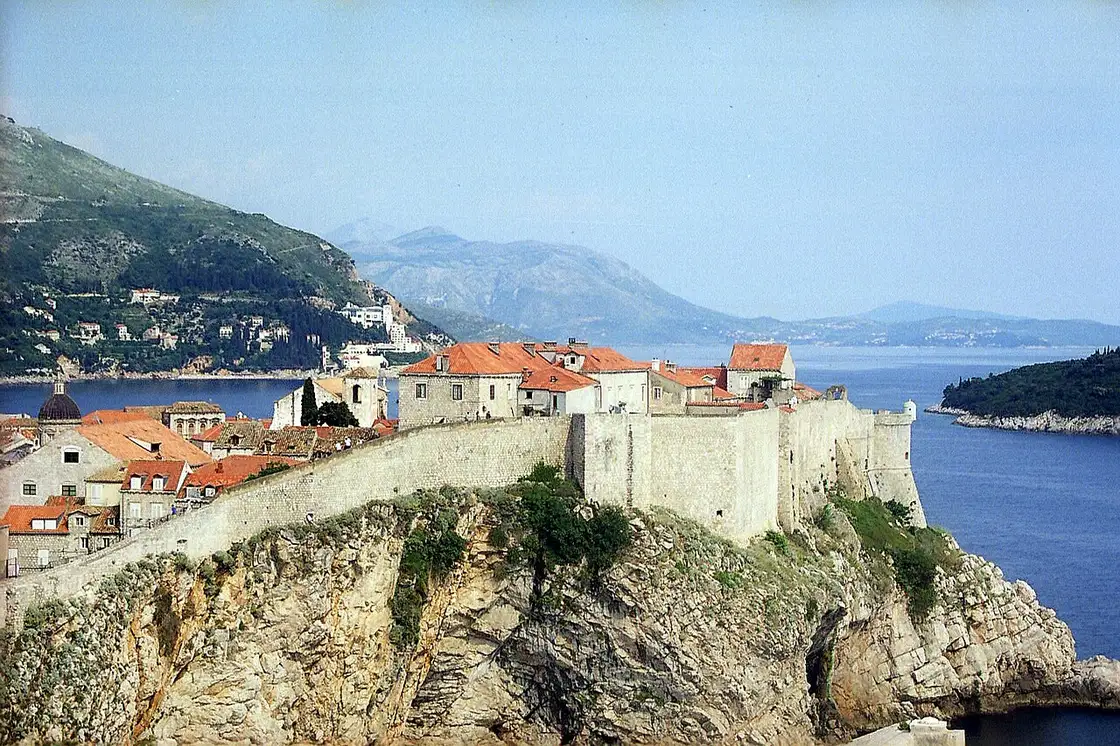
The walls run about 1,940 metres right around the Old Town, stand up to 25 metres high, and are as much as 6 metres thick on the landward side where an attack was most likely. They were built and strengthened mainly between the 13th and 17th centuries by the Republic of Ragusa, and no hostile army ever broke through them.
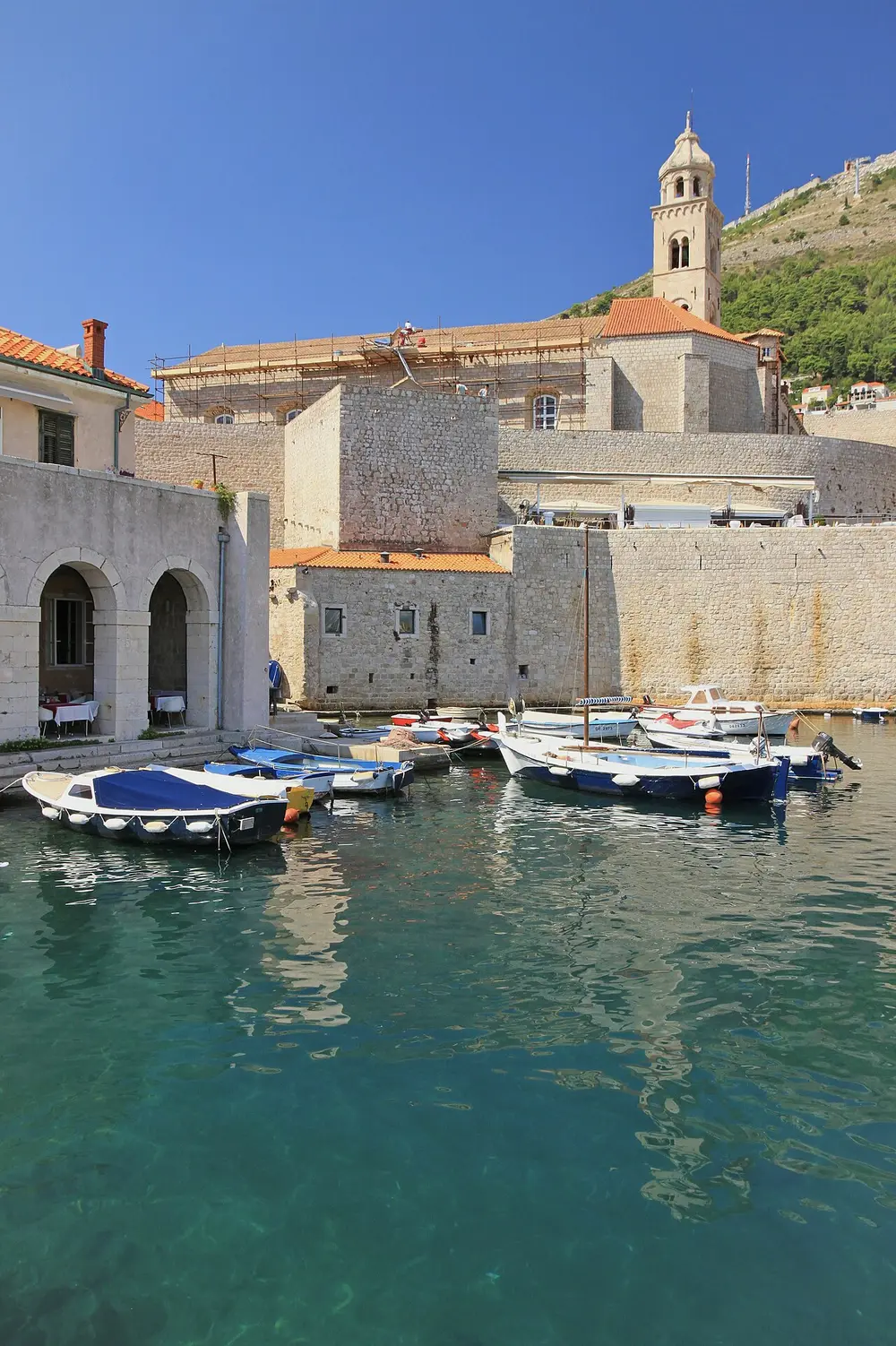
The circuit strings together the city’s big defensive set pieces. Minceta, the round tower on the northwest corner, is the landmark on the skyline and the highest point you reach. Bokar guards the southwest by Pile, Fort St John anchors the Old Port (it houses the Maritime Museum and aquarium below), and Revelin covers the eastern approach by Ploče. What sells the walk, though, is the constant change of view: a sea of terracotta rooftops on one side, the deep blue Adriatic and the wooded island of Lokrum on the other, and the green mass of Mount Srđ rising behind.
Look closely at the rooftops and you can still read recent history. The Old Town was shelled during the 1991-92 siege in the Homeland War, and the brighter, more orange tiles mark roofs rebuilt afterwards, next to the faded originals that survived. If the walls look familiar even on a first visit, that’s because they, along with Bokar and Fort Lovrijenac, stood in for King’s Landing in Game of Thrones; our Dubrovnik Game of Thrones locations guide maps exactly what was filmed where.
Fort Lovrijenac is included, so use it
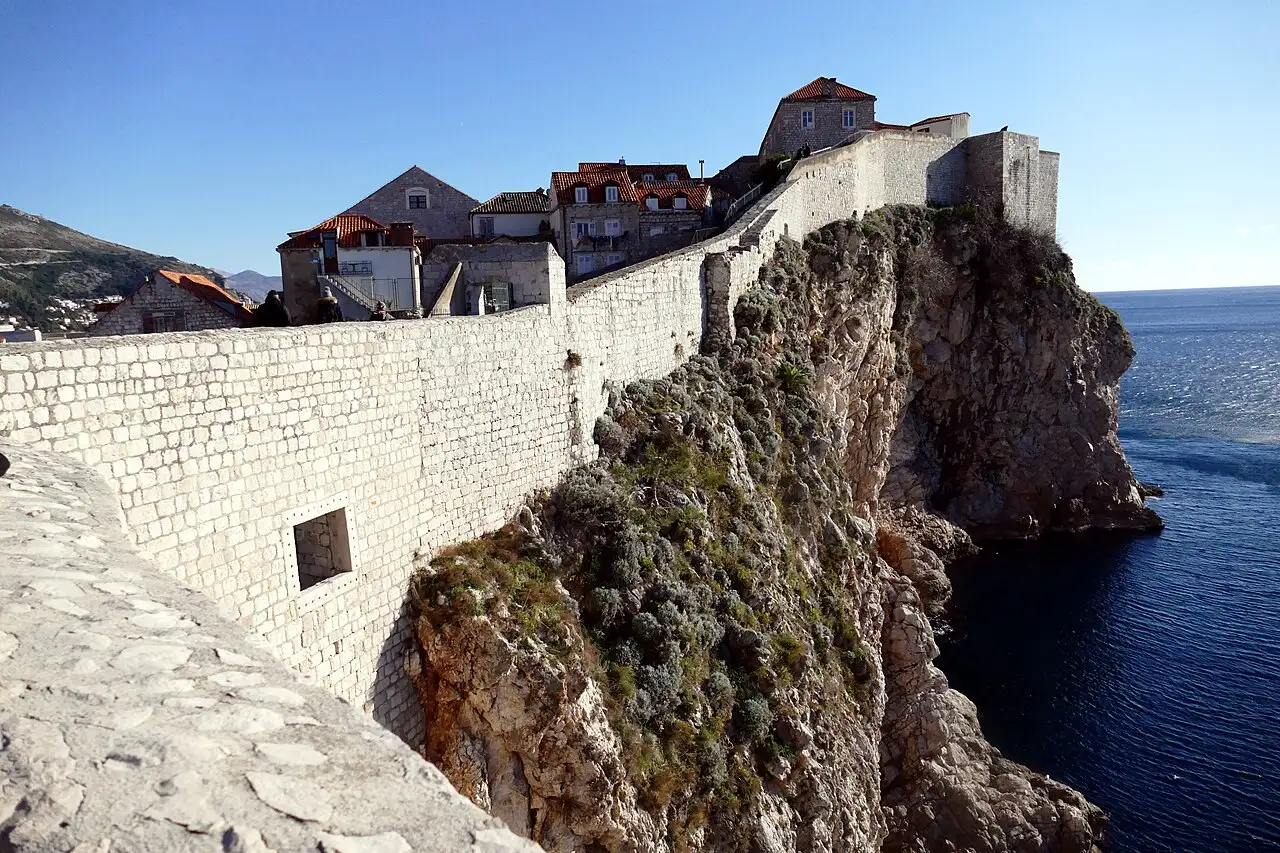
The thing most visitors miss is that their walls ticket already covers Fort Lovrijenac (St Lawrence Fortress), the standalone fort perched on a 37-metre rock just west of Pile. It has been called “Dubrovnik’s Gibraltar”, it played the Red Keep in Game of Thrones, and the view back at the city walls from its ramparts is one of the best in Dubrovnik. Because it’s a separate site with its own steep climb, plenty of people skip it or don’t realise it’s free with their ticket. Don’t: it’s a ten-minute walk from Pile and, if you’ve already walked the walls, it reframes the whole thing from the outside.
Is it worth €40?
Yes, with one condition: get the timing right. Walked at 08:00 or late afternoon, out of the worst heat and crowds, the circuit is the single best experience in Dubrovnik and easily justifies the ticket. Walked at midday in peak August, it’s a hot, shuffling queue and you’ll feel the price. The walls don’t change; your morning does.
If the €40 genuinely doesn’t fit your budget, you aren’t shut out of the views. The Mount Srđ cable car gives you the classic aerial panorama of the walled city for less, the exterior of Fort Lovrijenac and the paths around Pile give you the walls from below for nothing, and the cliffside Buža bars let you sit at the foot of the seaward walls with a drink. None of these replace being up on the ramparts, but they’re honest alternatives if the ticket is a stretch. For where this sits in a wider budget, see our Croatia trip cost guide.
Practical tips before you climb
- Wear proper shoes. The walkway is uneven stone with a lot of steps up and down; flip-flops are a bad idea and it’s not wheelchair accessible.
- Bring water, a hat and sunscreen. Shade is scarce. There are a few cafes on the walls (near Fort St Peter, the Tower of St Saviour and Minceta) but drinks are priced for a captive audience.
- Allow more time than you think. The photo stops add up, and there’s no shortcut back once you’ve started.
- Card is fine at the ticket windows, but buying online still saves the queue.
For a full day that builds the walls in at the right hour, see our one day in Dubrovnik plan; for the wider city, where to base yourself and how to get in from the airport, the Dubrovnik travel guide and our guide to where to stay in Dubrovnik cover the rest.
Ticket prices and opening hours change year to year and by season - confirm the current rates and times on the official site (citywallsdubrovnik.hr) before you go.
On the map
The map loads on click - to keep the page lightweight.
The map didn’t load. Check your connection and refresh the page.
Admission and opening hours
- Admission price
- Adult ticket about €40 in high season (roughly March to October) and about €15 in winter (November to February). Children 7-18 pay about €15 in season and €5 in winter; under 7 free. One ticket also covers Fort Lovrijenac. Confirm current prices on the official webshop before you go.
- Opening hours
- Seasonal. In peak summer (July to early October) the walls open at 08:00 and close in the early evening (about 19:30 in July, 19:00 in August, tapering to 17:30 by October). In spring (April to June) opening is later, at 10:00, with a close around 17:00. In winter (Nov-Mar) hours shrink to roughly 09:00/10:00-15:00. The posted closing time is the last entry.
Buy online to skip the ticket queue. The walk is one-way and takes 1.5-2 hours; there is little shade and no re-entry. Card accepted. Confirm current hours and prices with citywallsdubrovnik.hr.
Details checked: July 14, 2026
Read also

What to see · 12 min read
Paklenica National Park: Canyons, Climbing and Trails
Updated · August 29, 2026Paklenica National Park in 2026: canyon and cave tickets from €5, Anića Kuk climbing routes, and trails from Starigrad near Zadar.

What to see · 9 min read
Best Beaches near Split: Bačvice to the Riviera
Updated · August 26, 2026Best beaches near Split in 2026: sandy Bačvice, Marjan coves, Žnjan and Makarska Riviera day trips - plus Brač by catamaran.

What to see · 10 min read
Elaphiti Islands: Lopud, Šipan & Koločep
Verified · August 15, 2026Jadrolinija 807 from Gruž: €5.40 in season to Koločep, Lopud or Šipan. Times, Šunj, and why one island beats hopping all three.

What to see · 7 min read
Klis Fortress: Game of Thrones Views above Split
Updated · August 13, 2026Klis Fortress above Split was Meereen in Game of Thrones. Adults 12 EUR, kids 4 EUR; open daily 08:30-20:30 - confirm on tvrdavaklis.com.