
What to Pack for Croatia: Summer Packing List & Essentials
What to pack for Croatia: water shoes for the pebbles, grippy soles for polished stone, a cover-up for town rules, and the right plug adapter.
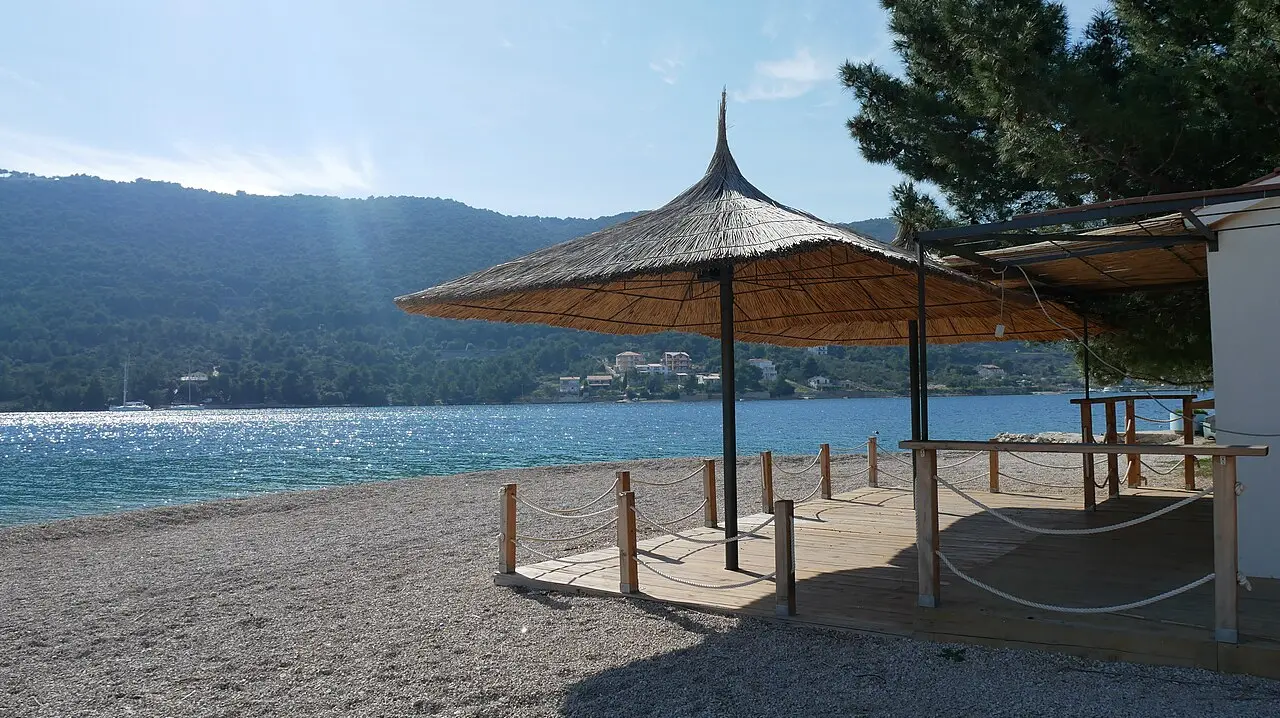
Pack for Croatia the way you would pack for a rocky Mediterranean coast rather than a sandy one. The four items that make the biggest practical difference here are water shoes (almost every beach is pebble or rock, and sea urchins live on the rocks), closed shoes with a grippy sole for old-town limestone polished slick by six centuries of feet, a cover-up you can pull on over swimwear because several towns fine you for walking around in it, and a type C/F plug adapter if you’re coming from the UK or North America. Everything else is normal summer holiday kit.
Croatia in July and August is hot, dry and bright, but it’s also a country of ferries, national parks with strict rules and old towns with local by-laws, and those are the bits people get wrong. A traveller who lands with flip-flops, a beach towel and no adapter will spend the first afternoon in a pharmacy queue buying reef shoes and a plug.
Shoes: two pairs doing two different jobs
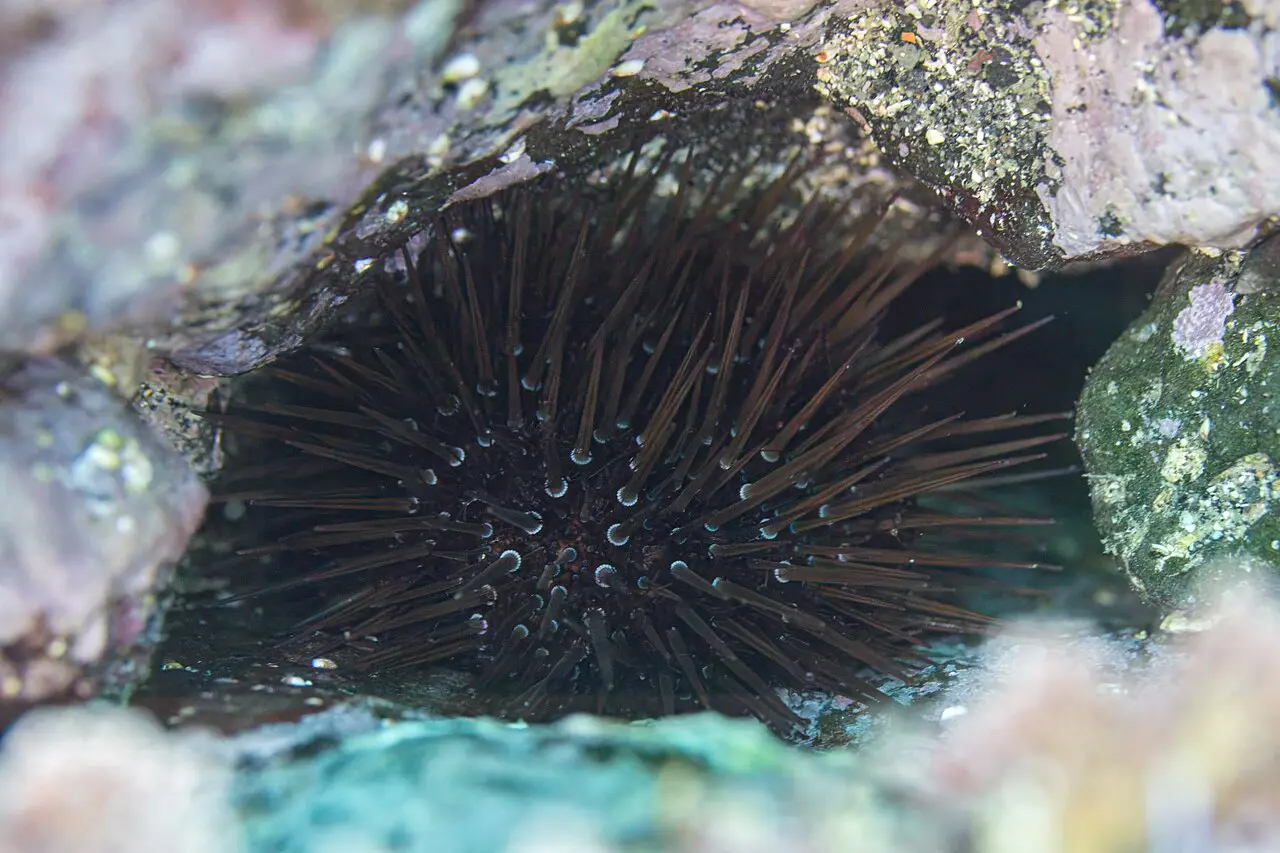
This is the single most common packing mistake. Water shoes or reef shoes aren’t optional on this coast. Croatian beaches are pebble, shingle or bare rock; entering the sea over rounded stones is uncomfortable barefoot, and the rocks at the edges of most swimming spots host sea urchins, whose spines break off in your foot and are miserable to remove. Cheap rubber-soled beach shoes solve both problems and cost a few euros locally if you forget.
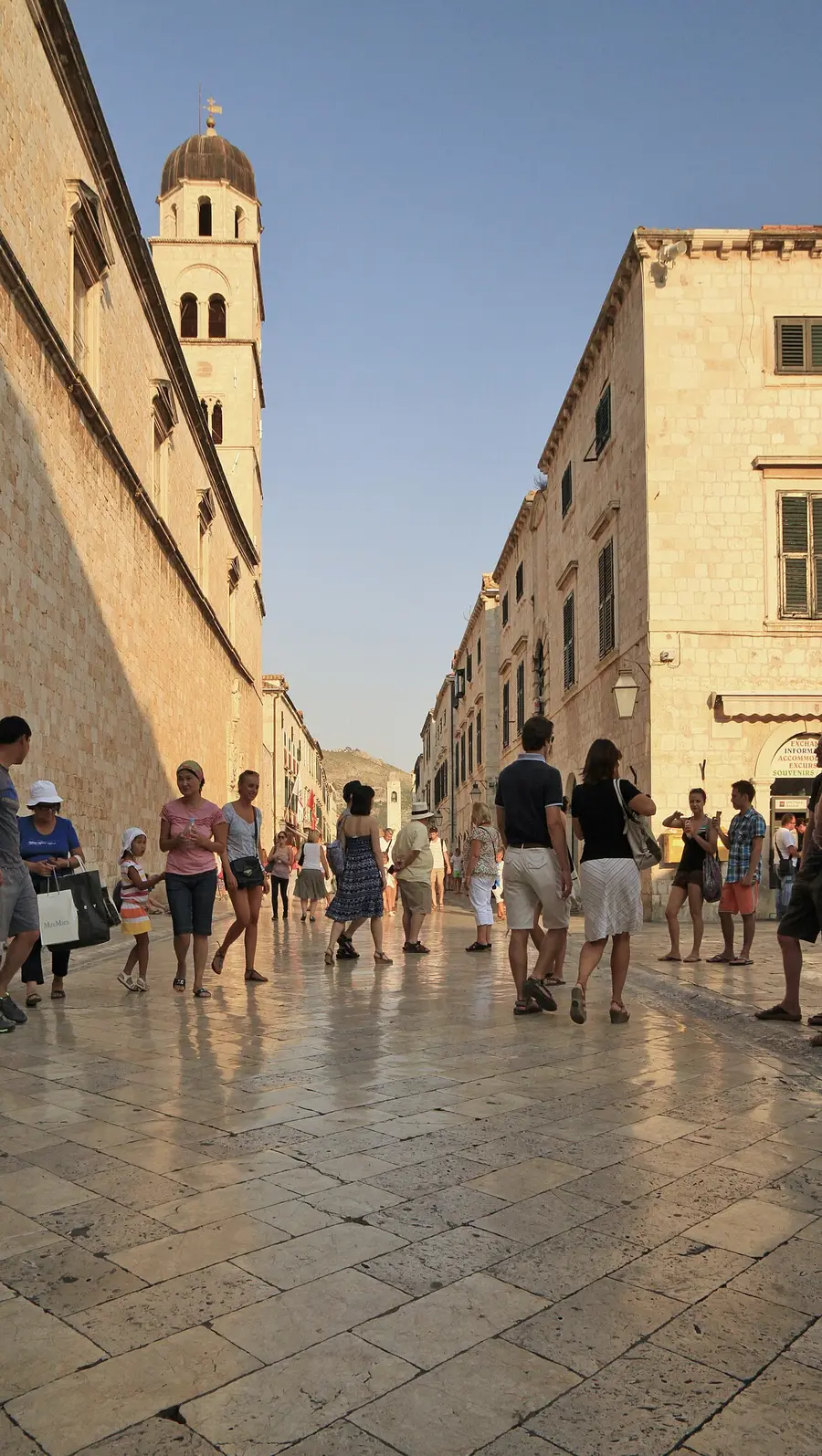
The second pair is for the towns. Split, Trogir, Dubrovnik, Korčula and every other historic core are paved in limestone that has been walked smooth, and it’s slippery when wet and even when dry under a hard smooth sole. Trainers or sandals with actual grip beat fashion soles. If you plan to walk the boardwalks at Plitvice or Krka, bring those too: the walkways sit at water level, they stay damp, and there are no handrails on long stretches.
Flip-flops still earn their place - for the apartment, the campsite shower and the ten metres from towel to sea - but they shouldn’t be your only footwear.

Clothes, and the swimwear rule that carries a fine
Dress in Croatia is relaxed. Beach towns are casual, a decent restaurant expects a shirt rather than a jacket, and nothing on the coast requires formal wear. There’s one rule worth taking seriously, because it’s written into local by-laws and enforced.
Split has run a communal order since 1 January 2023 under which walking through the city in swimwear carries a fine of 150 euros, the same amount as drinking alcohol in public. On Hvar, a 2017 package of fines set penalties of up to 600 euros for wearing swimwear away from the beach zones, and up to 500 for walking shirtless or in very revealing clothing through the town centre. The UK Foreign Office also warns of on-the-spot fines for walking through towns shirtless or in swimwear in destinations like Split and Dubrovnik, and of penalties up to 4,000 euros for public order offences such as fighting or drunken behaviour.
None of this is a morality campaign about beachwear; it is a revenue-backed rule about where beachwear belongs. Pack a light cover-up, sarong or T-shirt in the beach bag and the problem disappears. The same layer covers you for churches: Croatian cathedrals and monasteries expect shoulders and knees covered, and doorway attendants do turn people away.
Beyond that, pack light natural fabrics, one long-sleeved layer for evenings and boat trips, and a compact rain jacket if you’re travelling in the shoulder months. Our guide to the best time to visit Croatia sets out what each month actually feels like.
Plugs and power: what fits a Croatian socket
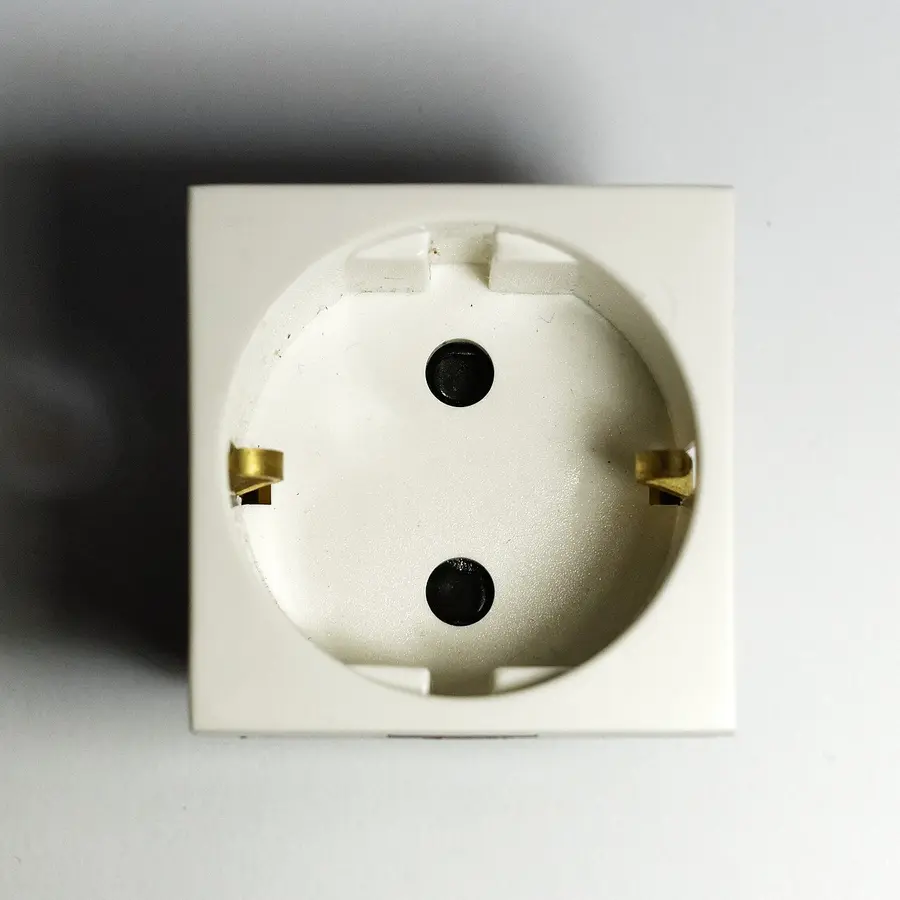
Croatia uses type C and type F sockets at 230 volts, 50 Hz - the round two-pin Europlug and the same fitting with side earthing clips, called Schuko. One socket takes both.
- From the UK or Ireland (type G): bring a plug adapter and nothing more. Croatia runs on the same 230 V, so chargers, hairdryer and shaver work once they physically fit.
- From the US or Canada (120 V): you need an adapter and a voltage check. Phone, laptop and camera chargers are almost all dual-voltage (“100-240V” on the brick) and fine; 120 V-only hairdryers and straighteners aren’t, because an adapter changes the plug shape, not the voltage.
- From continental Europe: your plugs already fit.
A power bank earns its place here - ferry, park and beach days all run long without a socket, and under airline (IATA) rules spare lithium batteries must fly in cabin baggage, never the hold. An eSIM saves the roaming faff too; see SIM cards and eSIMs in Croatia.
Sun, heat and the wind nobody warns you about
Adriatic summer sun is strong, and it reflects off pale stone and water from both directions. Pack high-factor sunscreen (it’s available everywhere but costs more in resort shops), a hat, and sunglasses. A rash vest for children is worth more than repeated sunscreen application on a boat.
The wind is the part first-timers miss. The bura, a cold, dry northeasterly, can arrive suddenly and drop temperatures sharply, whip up a flat bay into whitecaps and, at its strongest, cancel ferries and close exposed bridges and coastal roads. The opposite wind, the humid southerly jugo, brings cloud and swell. Neither ruins a holiday, but both explain why a windproof layer belongs in the bag even in August.
For anyone travelling at the height of the season, our guide to Croatia in July covers heat, crowds and how to plan the day around them.
Water, health and documents
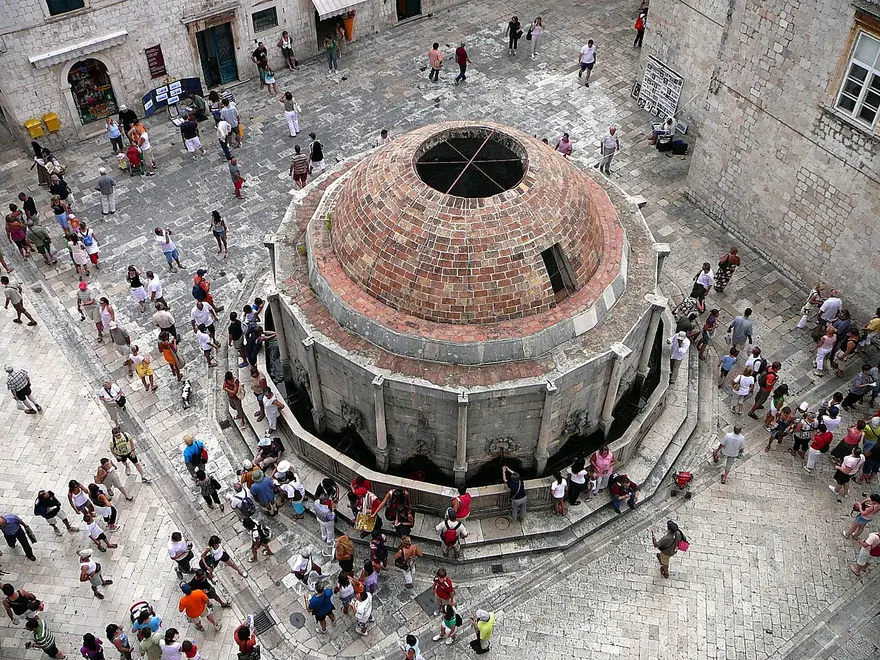
Tap water is drinkable across almost all of Croatia and meets EU standards; Dubrovnik’s supply comes from the Ombla karst spring and Split’s from the Jadro, another karst spring. Pack an empty reusable bottle and refill it - inside Dubrovnik’s walls you can top up at Onofrio’s Fountain, and towns have public taps. On remote islands or after heavy rain, ask locally before you fill up.
Bring a small first-aid kit with plasters, blister patches, painkillers, rehydration sachets and anything for insect bites; pharmacies (ljekarna) are good and widespread, but not always open late or on islands. Add motion-sickness tablets if you’re catching catamarans - the crossing to the outer islands can be lively in a jugo.
On paperwork: Croatia uses the euro and is in the Schengen area, so most European visitors carry nothing unusual. UK travellers should bring a GHIC, which entitles you to state healthcare in Croatia on the same terms as residents - but it does not cover private clinics, repatriation, cancellation or lost baggage, so it’s not a substitute for travel insurance. Card payment is near-universal, though a small amount of cash is useful for markets, konobas in villages, parking machines and beach kiosks; see how much a Croatia trip costs for the numbers behind the budget.
Beach and boat days
Beyond the water shoes: a quick-dry towel, a dry bag for phone and wallet on boat trips, and a snorkel mask if you like clear water, because Croatian visibility rewards it. Many of the best beaches have no shade at all, so a hat and a small parasol or a shady pine matter more than a beach umbrella you have to carry.
Don’t bother packing a snorkel for the national parks. Swimming is banned throughout Plitvice Lakes, and at Krka it has been prohibited at the main Skradinski buk falls since January 2021, though it’s still allowed at some other points in the park. Drones are banned at Plitvice and restricted at many protected sites, so check before you pack one at all.
What you can leave at home
- Beach towels for hotel stays - most accommodation supplies them, and they are heavy.
- A voltage converter if you’re European or your chargers say 100-240V.
- Formal clothes. Almost nowhere on the coast requires them.
- Large amounts of cash. Cards work almost everywhere, including small konobas.
- A hard-shell suitcase you can’t carry. Old towns are stairs and cobbles, ferry gangways are steep, and many apartments are on the third floor with no lift.
The short checklist
Water shoes · trainers or grippy sandals · flip-flops · light cover-up or sarong · one long-sleeved layer · windproof or light rain jacket · swimwear (two sets) · sun hat · sunglasses · high-factor sunscreen · after-sun · reusable water bottle · quick-dry towel · dry bag · snorkel mask · plug adapter (UK/US) · multi-port charger · power bank · basic first-aid kit and motion-sickness tablets · GHIC or insurance documents · a little cash.
That is the whole list, and most of it fits in a carry-on. Croatia is a well-supplied European country - anything you forget can be bought within a day, usually at a small premium in a resort shop. The only items genuinely worth getting right before you fly are the shoes, the adapter and the insurance.
Opening hours, prices, timetables and seasonal services change through the year - the figures here are planning estimates, not quotes. Confirm current details with the operators and official sources before you go.
Photos
Read also

Before you go · 10 min read
Where to Stay in Korčula: Old Town to Vela Luka
Verified · September 5, 2026Korčula Town for walls and boats, Lumbarda for sand, Vela Luka for the Split car ferry. Match the base to how you arrive - then book.

Before you go · 10 min read
Sailing in Croatia: Yacht Charter Costs & Routes
Updated · September 5, 2026Croatia yacht charter 2026: bareboat weekly ranges, skipper and deposit separate, APA on crewed boats, season guides, island routes.

Before you go · 10 min read
Where to Stay in Makarska: Riviera Bases Compared
Updated · August 30, 2026Brela, Baška Voda, Makarska, Tučepi or the quieter south - which Riviera base fits beach weeks, families, nightlife and Brač ferry mornings.

Before you go · 8 min read
Hvar or Korčula: Which Island Fits Your Trip?
Verified · August 28, 2026Hvar or Korčula in 2026? Split catamarans (~€25 like-for-like), vibe, beaches and who each Dalmatian island suits - plus the hop between them.