
Lokrum Island, Dubrovnik: Day-Trip Boat Guide
Lokrum in half a day: the €30 ticket that includes the boat, the 2026 timetable from the Old Port, the last sailing back and what to do on the island.
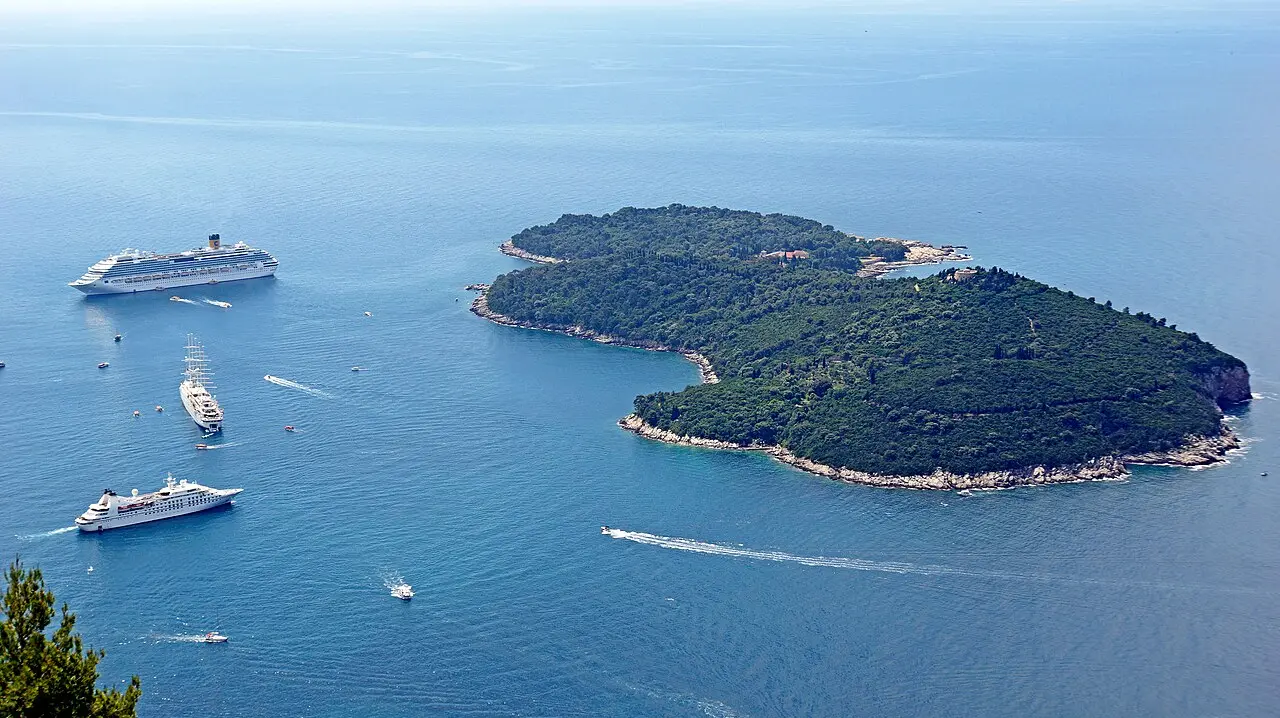
Lokrum is a ten-to-fifteen-minute boat ride from Dubrovnik’s Old Port, and the whole trip runs on one ticket: €30 for an adult in 2026, which covers both the crossing and entry to the nature reserve. Boats leave the Old City Harbour every half hour, the last one comes off the island at 20:00, and nobody stays the night. Half a day is the right size for it.
Lokrum is run far more tightly than most day-trippers expect. There are no hotels, no camping and no campfires, and because ninety per cent of the island is forest, no cigarettes anywhere either. Rangers patrol, the paths are marked, and the peacocks at your table are an introduced species under watch, not tame birds - feeding them is out. Treat Lokrum as a national park with a swimming pool attached and you’ll get the day right.
What the €30 ticket actually buys
The Public Institution Lokrum Reserve publishes one price list a year, and the 2026 edition (signed October 2025) is short. An adult ticket is €30. Children under 7 travel and enter free; from 7 to 18 the ticket is €5, and a student with proof of the current academic year pays €10. Organised groups pay less per head: €25 in a group of ten or more, €27 for two to nine people. There’s also a voucher for ten tickets at €110, with two conditions worth reading first: it’s non-transferable to another person and valid only in the current year.
This isn’t a boat fare with an entrance fee bolted on: the reserve’s terms put the island’s natural and cultural sites inside the ticket, so the monastery grounds, the botanical garden, Fort Royal and the paths are all in the €30. Nothing you need costs extra beyond food, drink and souvenirs - but guiding does: the same price list bills a walk with a ranger at €67 an hour and expert guiding at €107 an hour.
One detail worth knowing before you queue: a ticket can be used up to three days after the date on it. Buy in the morning, get blown out by an afternoon squall, and it’s still good tomorrow. Buy online at lokrum.hr and board with a phone barcode, or at the two sales points - Luža in the Old City Harbour (08:00-18:00 daily) and Portoč on the island. Everyone shows a ticket before boarding, so there’s no “pay at the other end” on the official boat; the Portoč counter is for people who arrive under their own steam.
The 2026 timetable, and the one time that matters
From 30 May 2026 the official schedule reads like a bus route. The first departure from the Old City Harbour is at 09:00, the next at 10:00, and from then on every 30 minutes until 19:00. Boats come back from Lokrum from 10:15, also every half hour, until 19:15. Then there’s the line printed in the biggest type on the whole timetable: the last boat leaves the island at 20:00.
That 20:00 isn’t a suggestion. The code of conduct bans anyone from being on Lokrum before the first boat or after the last, and there’s no accommodation, no ferry and no bridge. Miss it and you’re relying on the goodwill of a passing skipper.
The 09:00 sailing has no matching return until 10:15, so the shortest possible visit is an hour and a quarter - and it’s genuinely the quietest slot of the day. In bad weather the boat doesn’t run at all: when the jugo, the wet southerly, is blowing, the crossing is simply cancelled - that’s exactly when that three-day ticket validity earns its keep.
Winter is the other thing to check - don’t assume summer hours. The island shuts for part of the off-season: in 2025 the last sailing day was 14 December. It reopened for the Feast of St Blaise, 31 January to 3 February 2026, free to every visitor, then ran weekends only until 31 March, with tickets sold Wednesday to Sunday, 08:30-15:30. The shape repeats most years but the dates move, so between December and Easter check lokrum.hr rather than assuming the boats are running.
The monastery, the peacocks and the Iron Throne
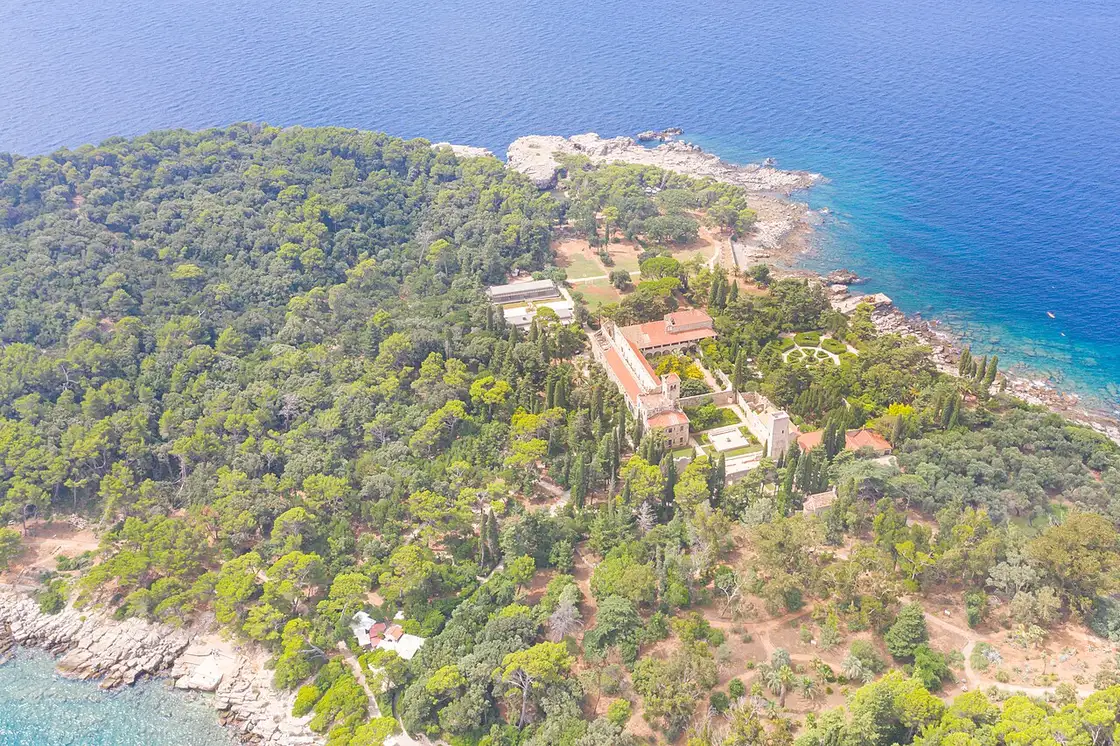
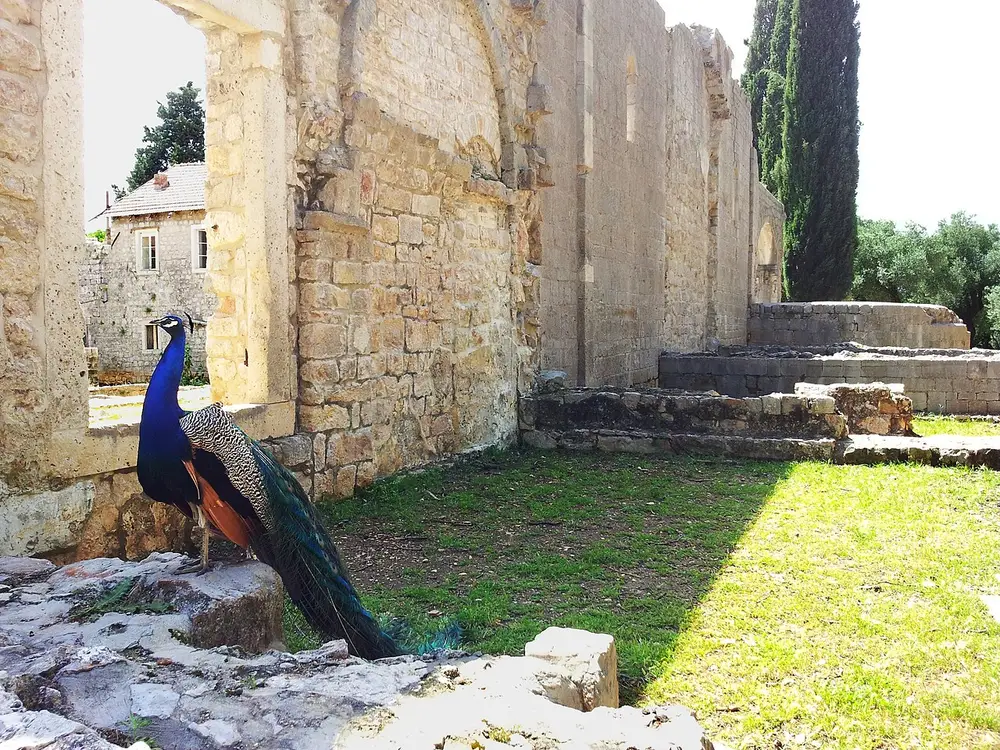
Everything on Lokrum orbits the Benedictine monastery of St Mary, a few minutes uphill from the landing at Portoč. The complex is older than most of what you’ll have walked past in the Old Town: the monastery is first mentioned in 1023, and the reserve’s history pages cite records putting Benedictines here as early as 915. The monks built a Renaissance cloister in the 15th century; the earthquake of 6 April 1667 brought down the church and the medieval buildings, which is why you wander through half-standing arcades rather than a working abbey. In 1800 monastery and island alike were sold off.
The peacocks were introduced in the mid-19th century, most likely during the stay of Archduke Maximilian of Habsburg, who built a summer villa in the monastery courtyard in the early 1860s and later became Emperor of Mexico. And in the visitor centre sits HBO’s full-size Iron Throne replica, left behind after Lokrum played the city of Qarth in season two of Game of Thrones. Photographs of it are free. For the rest of the King’s Landing map, our guide to Game of Thrones filming locations in Dubrovnik covers the staircases and forts on the mainland - you’ll want that for the city side.
The monks left the island its best story, too - that’s the curse tale that stuck. Forced off Lokrum, legend says they walked a night procession carrying candles turned upside down and cursed anyone who would take the island. The run of owners who came to a bad end afterwards, Maximilian included, has kept the tale alive for two centuries. Local tradition adds a second arrival: Richard the Lionheart, driven ashore by a storm in the 12th century at Skalica, the island’s oldest pier.
Swimming: the Dead Sea, the rocks and the far end
Lokrum has no sand and no shelving beach. What it has is flat rock, ladders and clear water, plus one genuine oddity.
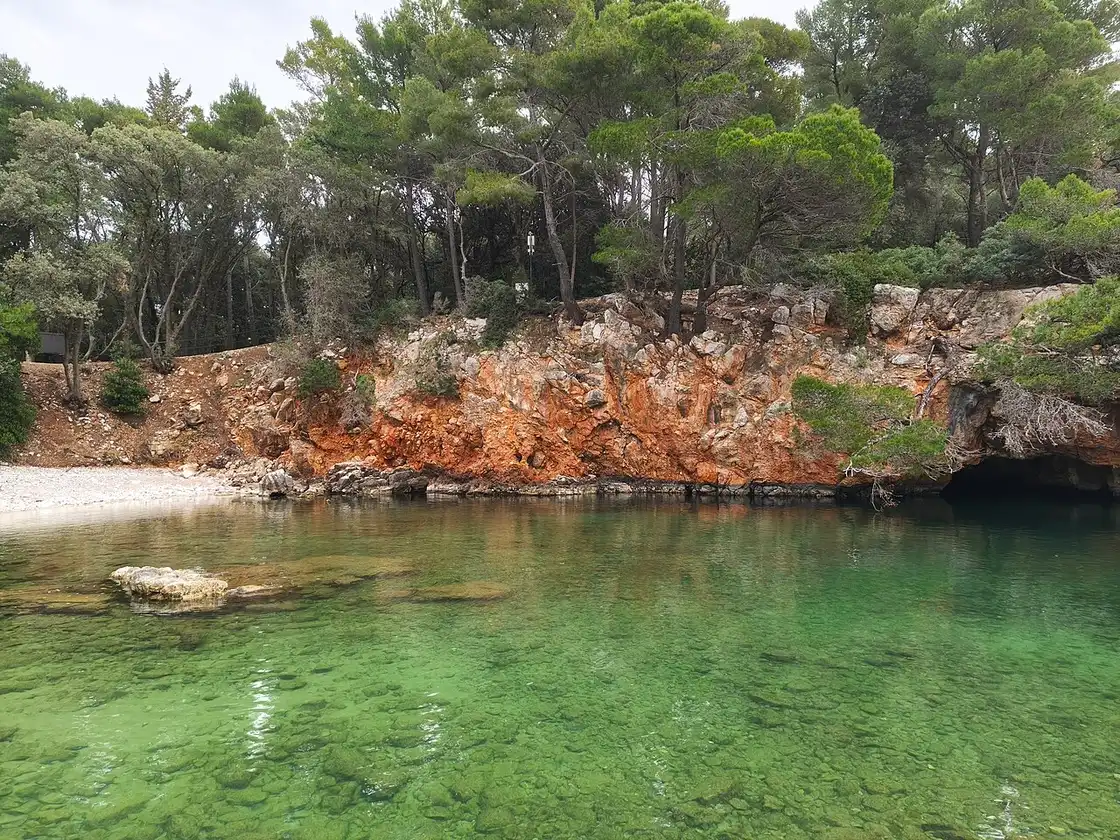
Mrtvo more, the “Dead Sea”, is a small salt lake at the south end of the island, about 10 metres deep, formed when a sea cave roof collapsed and still linked to the open Adriatic underground. It’s warmer and calmer than the sea outside and the only sheltered swim here, so by noon in August it’s busy with families. Come at 09:00 or after 17:00 to have it to yourself.
The rest of the swimming is off rock shelves reached from the coastal paths, with metal ladders at the popular spots. Water shoes make the entry much less comedic. A naturist section at the eastern end is signposted on the ground, though the reserve’s own material doesn’t mention it; the long walk out is exactly why it stays quieter than everywhere else.
Fort Royal: the climb worth making
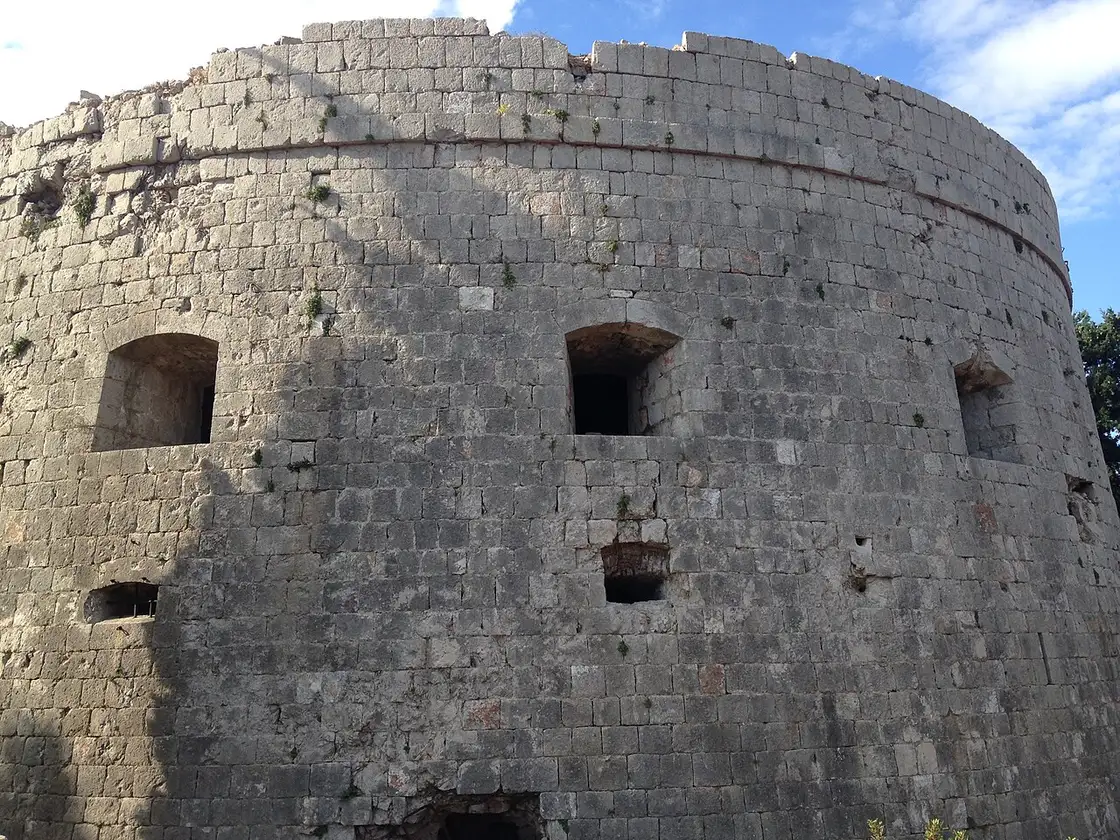
The high point of the island, 96 metres above the sea, carries a squat round fort. The French took Dubrovnik in 1806 and started building it that year for the obvious reason: whoever holds Lokrum holds the approach to the city. Austria enlarged it in 1835, and that’s roughly the building you climb through today.
The walk up from the monastery takes about twenty minutes through pine and holm oak, and the terrace at the top gives you the view no boat trip sells you: Dubrovnik’s walls from the sea, the Elaphiti Islands to the north-west, open water to the south. Bring water. Ninety-six metres sounds like nothing until you do it at two in the afternoon in July - and the reserve bans leaving the marked paths, so the shortcut on the satellite map isn’t an option.
A garden, an olive grove and 72 hectares of forest
Lokrum covers 72 hectares and has been a special reserve of forest vegetation since 1948, the third oldest protected area in Croatia. It and a 150-metre belt of sea around it sit in Natura 2000, and it falls inside the UNESCO listing that covers Dubrovnik’s old town.
The botanical garden was founded in 1959 as an experiment in what would survive here. Of its 3.3 hectares, the part you actually walk is the 1.45-hectare display area, where the 500 or so plant species are; the 200-odd succulents live in a greenhouse outside it for which the reserve publishes no hours, so treat the glasshouse as a maybe. Damaged in the war of 1991-92 and under renovation since 1993, it’s a garden with gaps, not a showpiece. Beside it, the olive grove is all that’s left of the Benedictines’ own plantations.
What you can’t do on Lokrum
The code of conduct is posted at the harbour. Beyond the fires, the cigarettes and the last boat, the rules people trip over are these: no drone without permission, nothing taken off the island, and no walking off the marked paths.
There’s also a line in the price list that repays a moment’s thought. The institution may charge €10 to get you back to Dubrovnik if a third-party operator can’t return you, and only at the Portoč point on the island. Translation: private taxi boats drop people here, and when one fails to come back, the reserve becomes your ride home at your expense. The official boat has a printed timetable and 20 sailings a day each way; the cheap alternative has neither.
Fitting Lokrum into a Dubrovnik day
Four to five hours is the sweet spot. A workable shape: catch the 09:00 or 10:00 boat, walk up to the monastery while the paths are cool, do Fort Royal before the heat, swim through the middle of the day, eat at the monastery cafes or bring a picnic, and take a boat back around 16:00 or 17:00 with the afternoon still ahead of you in town. There’s a restaurant and a couple of bars by the monastery and the lake, but hours shift with the season - carry water and a snack if you’ve children.
Pair it with the right half-day and it works even better: the city walls are best walked at opening time, which leaves the middle of the day for the island - the combination our one day in Dubrovnik plan uses. The Dubrovnik travel guide covers where to stay and eat, day trips from Dubrovnik covers the Elaphiti Islands, Mljet and Cavtat, and for a proper beach day rather than rock ledges see Croatia’s best beaches.
Is Lokrum worth it?
For €30 including the boat, yes - as long as you go for what it is. Do the sum first: two adults and two teenagers is €70 for half a day, and the ten-ticket voucher only helps a household that will use all ten within the same year. This isn’t a beach island, and anyone expecting sand will feel short-changed. It’s a wooded reserve fifteen minutes from a UNESCO old town where you swim in a collapsed sea cave, climb a Napoleonic fort and sit in the ruins of an abbey first recorded in 1023, all before dinner.
With only one day in Dubrovnik, take the walls and an afternoon at Banje instead - Lokrum earns its place on day two. With two, the choices that make or break it are which boat you take out (early, for cool paths and an empty lake) and which one back. Not the 20:00: everybody aims for it, it’s the fullest sailing of the day, and there’s nothing behind it if the weather turns.
Prices, timetables and the winter closure change season by season - check the current price list and boat schedule on lokrum.hr before you travel.
Photos
On the map
The map loads on click - to keep the page lightweight.
The map didn’t load. Check your connection and refresh the page.
Admission and opening hours
- Admission price
- Adult €30, child 7-18 €5, student €10, under-7s free; organised groups €25-27 per person and a 10-ticket voucher €110. The price includes the return boat crossing and entry to the reserve; a ticket stays valid for three days from the date on it (2026 price list of the Public Institution Lokrum Reserve).
- Opening hours
- From 30 May 2026: departures from the Old City Harbour at 09:00, then 10:00 and every 30 minutes until 19:00; returns from Lokrum from 10:15 every 30 minutes until 19:15, with the last boat off the island at 20:00. Ticket office at Luža 08:00-18:00 daily.
The boat does not run in bad weather, and the island closes to visitors for part of the winter (last sailing day 14 December 2025; in 2026 the island opened for the Feast of St Blaise, 31 January to 3 February, then weekends only until 31 March). Guided walks are charged separately. Check the current timetable and price list on lokrum.hr before you go.
Details checked: July 24, 2026
Read also

What to see · 12 min read
Paklenica National Park: Canyons, Climbing and Trails
Updated · August 29, 2026Paklenica National Park in 2026: canyon and cave tickets from €5, Anića Kuk climbing routes, and trails from Starigrad near Zadar.

What to see · 9 min read
Best Beaches near Split: Bačvice to the Riviera
Updated · August 26, 2026Best beaches near Split in 2026: sandy Bačvice, Marjan coves, Žnjan and Makarska Riviera day trips - plus Brač by catamaran.

What to see · 10 min read
Elaphiti Islands: Lopud, Šipan & Koločep
Verified · August 15, 2026Jadrolinija 807 from Gruž: €5.40 in season to Koločep, Lopud or Šipan. Times, Šunj, and why one island beats hopping all three.

What to see · 7 min read
Klis Fortress: Game of Thrones Views above Split
Updated · August 13, 2026Klis Fortress above Split was Meereen in Game of Thrones. Adults 12 EUR, kids 4 EUR; open daily 08:30-20:30 - confirm on tvrdavaklis.com.