
Dubrovnik to Kotor Coastal Route: 2-3 Day Road Trip
Dubrovnik to Kotor as a 2-3 day coastal road trip: Cavtat, the border, Herceg Novi, Perast and Kotor - stops, driving times and car-hire tips.
The drive from Dubrovnik to Kotor is only about 90 km, but rushing it as a day trip wastes the best part: the coast road that hugs the Croatian Riviera, crosses into Montenegro and curls around the fjord-like Bay of Kotor. Give it two or three days instead, sleep in Herceg Novi or Kotor, and a border-crossing slog turns into one of the Adriatic’s great short road trips. Below is the route stop by stop, with the border, the car paperwork and where to break the drive.
The order runs Dubrovnik - Cavtat - the Karasovići/Debeli Brijeg border - Herceg Novi - Perast - Kotor, all on a single coastal road with no ferries. It is a short distance on paper, so the time goes on the bay, the old towns and the one thing you can’t schedule: the wait at the frontier.
Day trip or road trip?
Be honest about which trip you want. You can do Dubrovnik to Kotor and back in one long day, and if that’s the plan, our Dubrovnik to Kotor transport guide compares the bus, the organised tour and the self-drive, plus whether the day trip is worth it. Kotor is also one of the best day trips from Dubrovnik if you are staying put.
This guide is the opposite idea: not how to get there and back, but how to make the getting-there the holiday. Two nights lets you swim off Herceg Novi’s promenade, catch the light on Perast at dusk, and be on Kotor’s walls at 8am before the cruise crowds and the heat. The border is far less painful when you’re not racing a same-day return, and you get the coast at both ends of the day rather than only the middle.
Day 1: Dubrovnik and down to Cavtat
Start in Dubrovnik. Walk the city walls at opening, then collect your hire car on the way out rather than paying to park it by the gates - the Old Town is pedestrian-only and the Pile and Ploče car parks are expensive. Everything on what to see and where to stay is in the Dubrovnik travel guide.
Eighteen kilometres south, near the airport, Cavtat makes the ideal first stop, or even a calmer first-night base than the city. It wraps around a palm-lined bay, has a walkable seafront and the Račić mausoleum up in the cypresses, and it’s the last easy place for lunch and a swim before the frontier. From here the road climbs away from the coast toward the border.
The border: Karasovići to Debeli Brijeg
This is the part that decides how your day goes. Croatia is in the EU and the Schengen zone; Montenegro is in neither, so this is a Schengen external border. Non-EU travellers (UK, US, Canada, Australia and the like) need a passport; EU, EEA and Swiss citizens can cross on a national ID card, though a passport is simpler - Montenegro allows 30 days on an ID card, 90 with a passport. The main crossing is Karasovići on the Croatian side and Debeli Brijeg on the Montenegrin side, on the Adriatic highway; a smaller crossing at Konfin (Vitaljina) can be quieter for cars.
The wait is the wild card. Off-season you might clear it in 15 to 30 minutes; at the peak of July and August the queue regularly runs two to five hours, and the EU’s Entry/Exit System now records non-EU travellers, which adds time on busy days. The single best move is simply to cross early - be at the border by mid-morning at the latest in summer, before the day-tour buses stack up. If you left the overnight decision open, this is the argument for it: an early crosser in a car will be having coffee in Herceg Novi while the day-trippers are still idling in line.
Day 1-2: Herceg Novi, the first town in Montenegro
Herceg Novi is the first town you reach, about 11 km past the border and roughly 40 km from Dubrovnik, right at the mouth of the bay. It’s a town built on stairs, sunnier than almost anywhere on the coast, with three forts stacked up the hillside: Forte Mare at the waterline, the Ottoman Kanli Kula above it (a small fee, often around €4, and now an open-air stage), and the free hilltop ruin of Španjola for the widest view. Wear real shoes - the Old Town is all steps - and give it an afternoon and a night. The sister-site Herceg Novi guide has the forts and beaches in full.
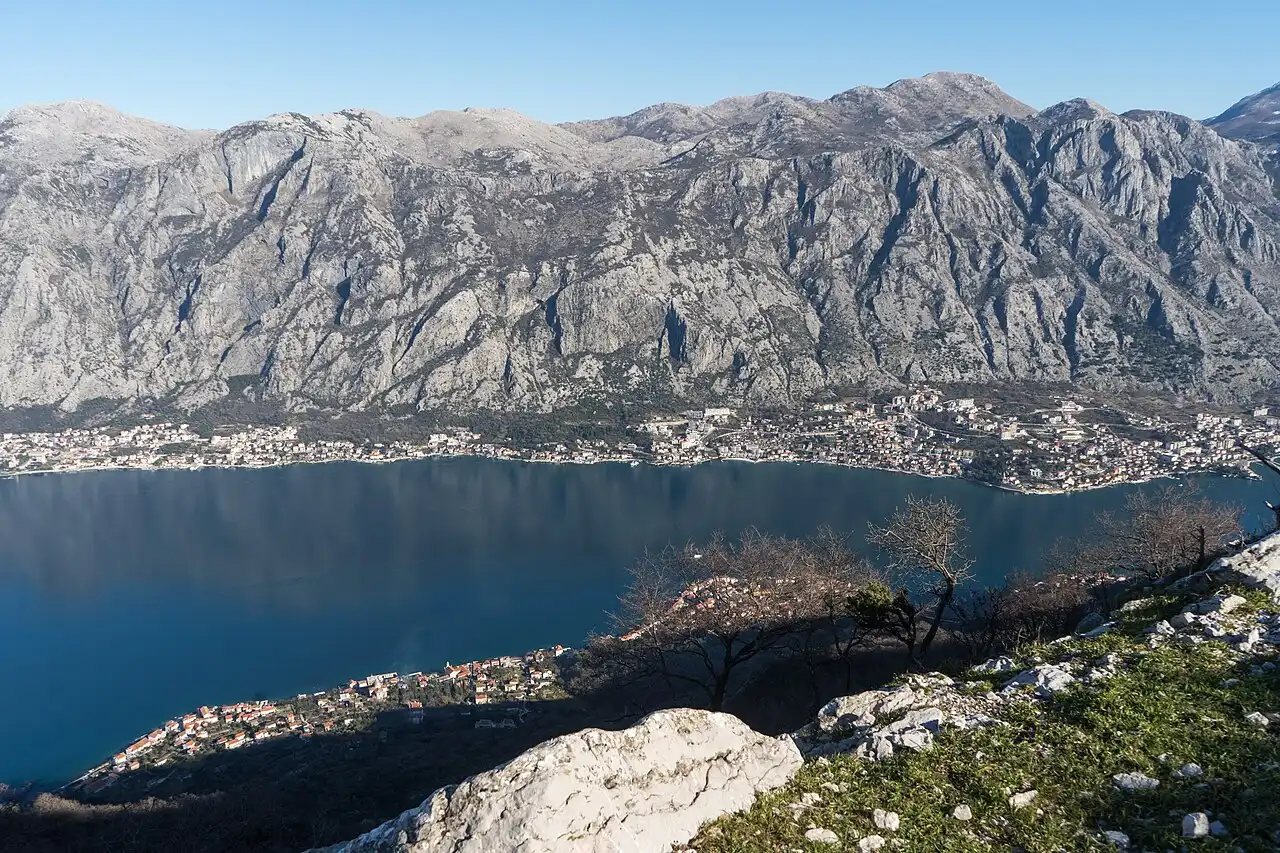
One driving note for this leg: there’s a frequent Kamenari-Lepetane car ferry across the narrows, but it lands you on the Tivat side and skips Perast. For this route you stay on the shore road around the inner bay through Risan, which is the pretty way anyway.
Day 2: Perast and Our Lady of the Rocks
About 12 km short of Kotor, Perast is the prettiest pause on the whole drive: a single row of Baroque stone palazzi along the water, no through-traffic, and two islands sitting just offshore. Park in the pay lot at the edge of town and walk in - cars are kept out of the centre. From the waterfront, a shuttle boat runs out to Our Lady of the Rocks (Gospa od Škrpjela) for about €10 return, a man-made islet built up over centuries on sunken ships and dropped stones, topped by a blue-domed church and a small museum (a couple of euros to go in). The natural islet beside it, St George, has a cypress-shaded monastery that is closed to visitors.
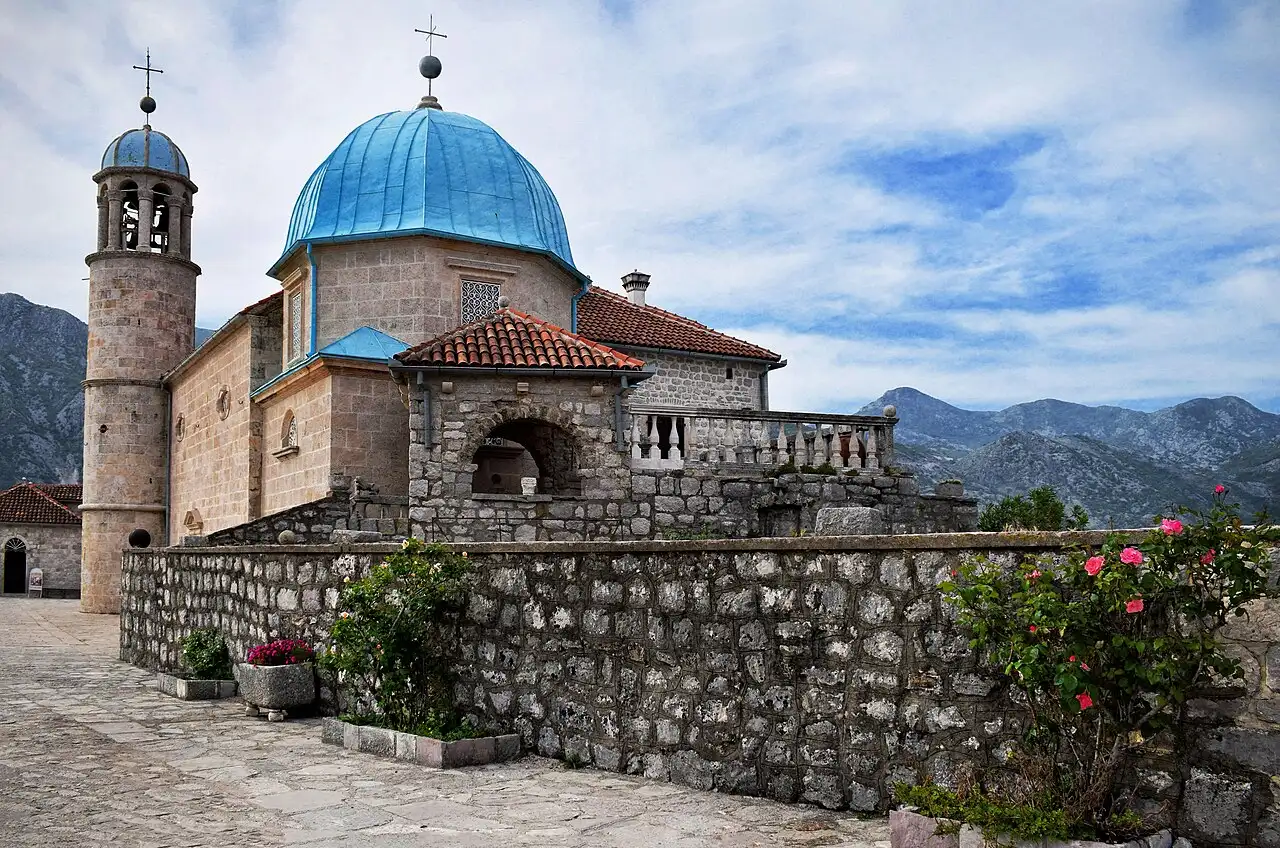
Half an hour on the island and a slow coffee on the Perast waterfront is the right speed here. Then it’s a ten-minute drive on to Kotor.
Day 2-3: Kotor, the finale
Kotor sits at the very back of the bay, where the water is stillest and the cliffs steepest. The walled Old Town is a UNESCO World Heritage Site and completely car-free, so park in one of the lots outside the walls and walk in through the Sea Gate. The set-piece is the climb up the city walls to the Fortress of San Giovanni on the ridge above the town - roughly 1,350 steps, 45 minutes to an hour each way, with the rooftops and the whole bay dropping away beneath you. The upper, ticketed section costs about €15 in 2026 (up from €8-10 a couple of years ago; confirm at the gate, as the price has been climbing), cash euro at the gate; lower stretches of the wall are free. Go at opening or in the late afternoon, both to dodge the heat and to beat the cruise-ship day-trippers.
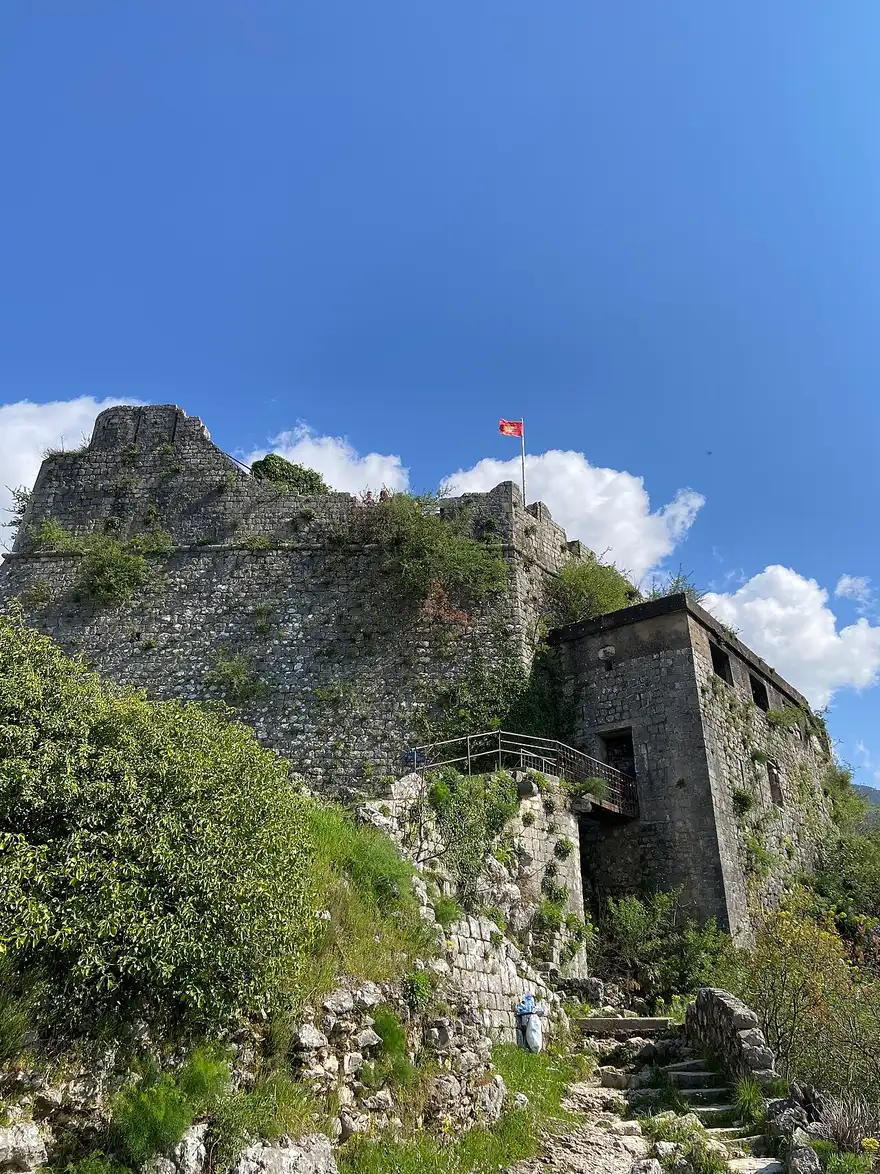
Stay the night. Kotor changes character completely once the last day boat pulls out: the lanes empty, the cafés fill with locals, and the walls glow gold at dusk. What to see, eat and do is in our sister site’s Kotor guide. If you have a spare morning, the serpentine road up to Lovćen or a boat around the bay both start here - but that’s really the next trip.
Renting a car and taking it across the border
This is the one bit of admin that catches people out, and it is worth sorting before you drive. If you’re taking a Croatian hire car into Montenegro, you must tell the rental company when you book and get their written cross-border permission in your contract - turning up at the border without it can mean being turned back. Confirm two things in writing:
- Insurance valid for Montenegro. Montenegro is outside the EU, so an EU number plate alone isn’t always accepted as proof at this external border. The clearest evidence is a Green Card (the international insurance certificate) with the Montenegro box ticked; ask the company to issue one. If your cover doesn’t extend there, you can buy short-term liability insurance at the Montenegrin border.
- The cross-border fee. Most companies charge a one-off fee to allow the trip, commonly around €25-75; it is cheaper arranged at booking than bargained for at the desk.
One practical catch shapes the whole route: many Dubrovnik rental firms will not let you drop the car in Montenegro, so this is usually an out-and-back or a loop rather than a one-way hop. Plan to return to Croatia with the car, or check one-way terms carefully first - our guides to renting a car in Croatia and one-way car rental explain the paperwork and the fees. Money is easy on both sides, at least: Croatia and Montenegro both use the euro, though cards are less universal in Montenegro, so keep some cash for the boat, parking and small cafés.
The route at a glance
| Leg | Distance | Notes |
|---|---|---|
| Dubrovnik - Cavtat | ~18 km | Coast road, lunch/swim stop |
| Cavtat - border | ~15 km | Karasovići/Debeli Brijeg crossing |
| Border - Herceg Novi | ~11 km | First town in Montenegro |
| Herceg Novi - Perast | ~35 km | Shore road via Risan |
| Perast - Kotor | ~12 km | Head of the bay |
Distances and the day count are guidelines, not exact figures - they depend on your stops, the season and where you sleep. The budget from €70 is a rough shoulder-season daily floor per person (a modest room, a shared car, simple meals); the coast is dearer in July and August.
Best time to go: May-June and September-October give warm water, open forts and old towns, and far shorter border queues than the July-August peak. For more ideas on this stretch of coast, browse the routes hub and our other Croatia road trips.
Route day by day
- Days on the road
- 3
- Distance
- ≈90 km
- Budget from
- 70 EUR
- Best season
- May, June, September, October
The route at a glance
-
Dubrovnik
Route startstop ≈1440 min
Start in the walled Old Town. Walk the city walls, then pick the car up on your way out - Dubrovnik is a pedestrian maze and parking near the gates is among the priciest in Croatia.
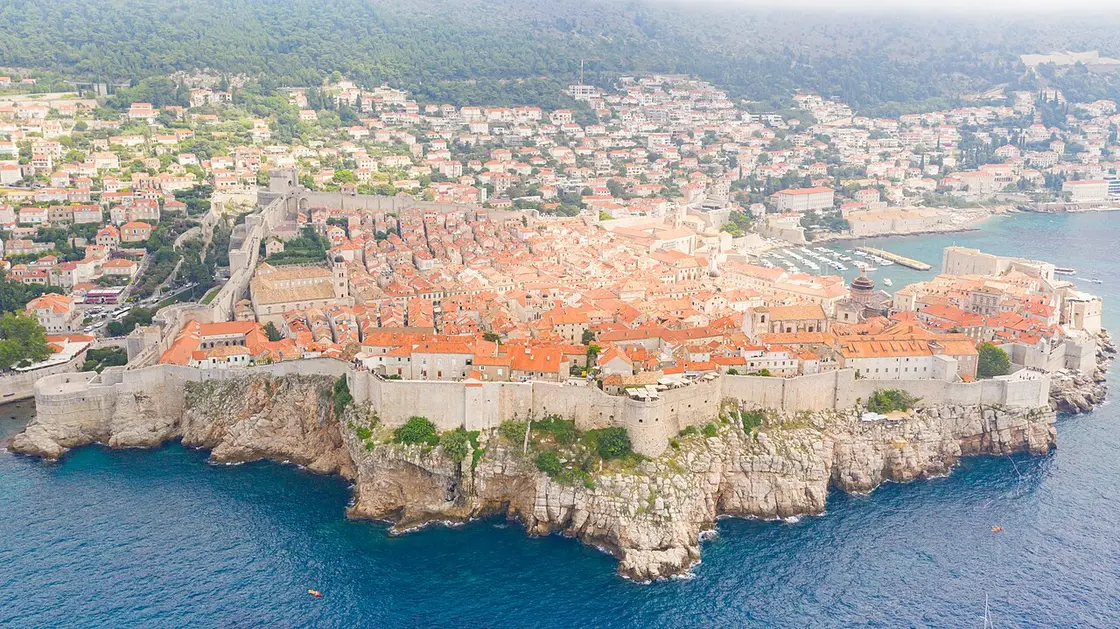
Photo: dronepicr / Wikimedia Commons, CC BY 2.0 ( source) -
Cavtat
18 km from the startstop ≈180 min
A calm resort town 18 km south, near the airport - a good coffee-and-swim stop, or a quieter first-night base than Dubrovnik. The last easy bite before the border.
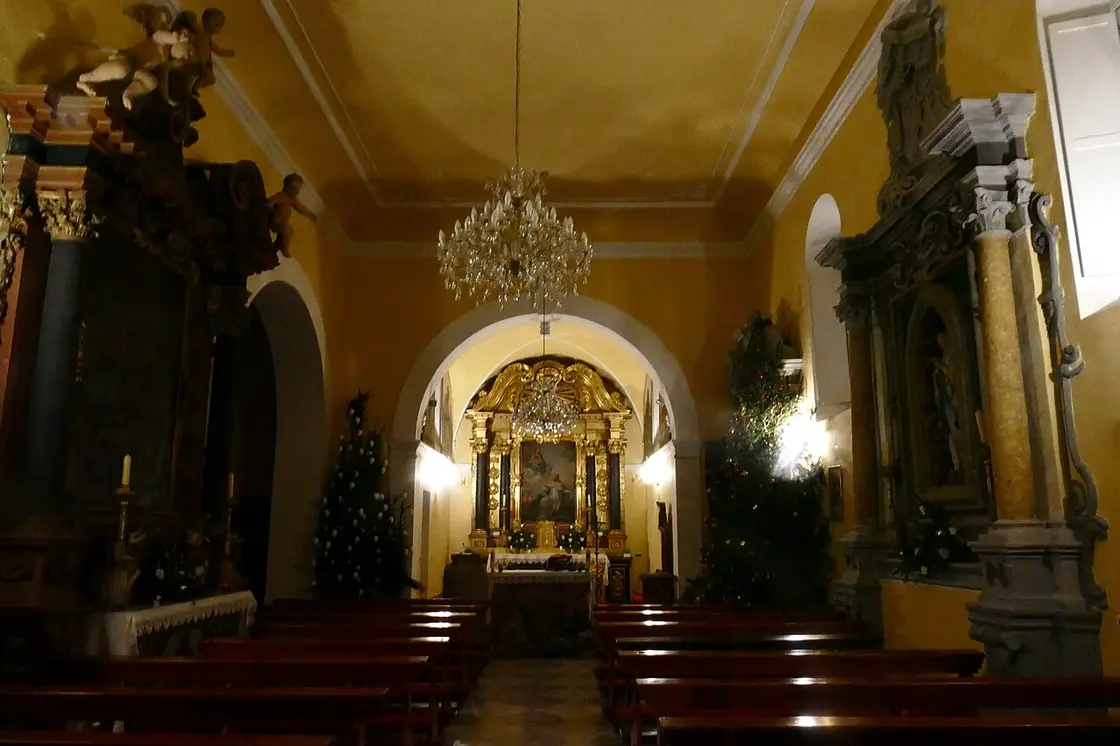
Photo: donald judge / Wikimedia Commons, CC BY 2.0 ( source) -
Herceg Novi
43 km from the startstop ≈480 min
The first Montenegrin town after the border, about 11 km past the crossing at the mouth of the bay. A sunny town of stairs and three hilltop forts - a natural first night in Montenegro.
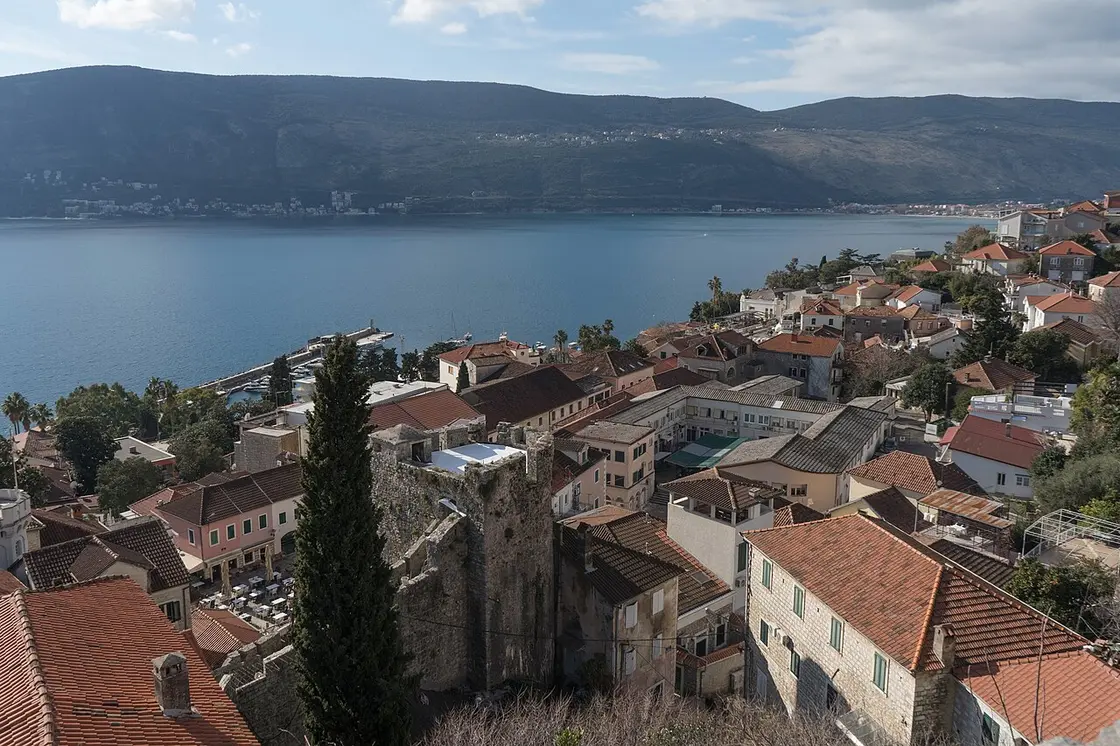
Photo: Alexkom000 / Wikimedia Commons, CC BY 4.0 ( source) -
Perast
78 km from the startstop ≈180 min
A Baroque waterfront town 12 km short of Kotor, reached on the inner-shore road via Risan. Take the short shuttle boat out to the island church of Our Lady of the Rocks.
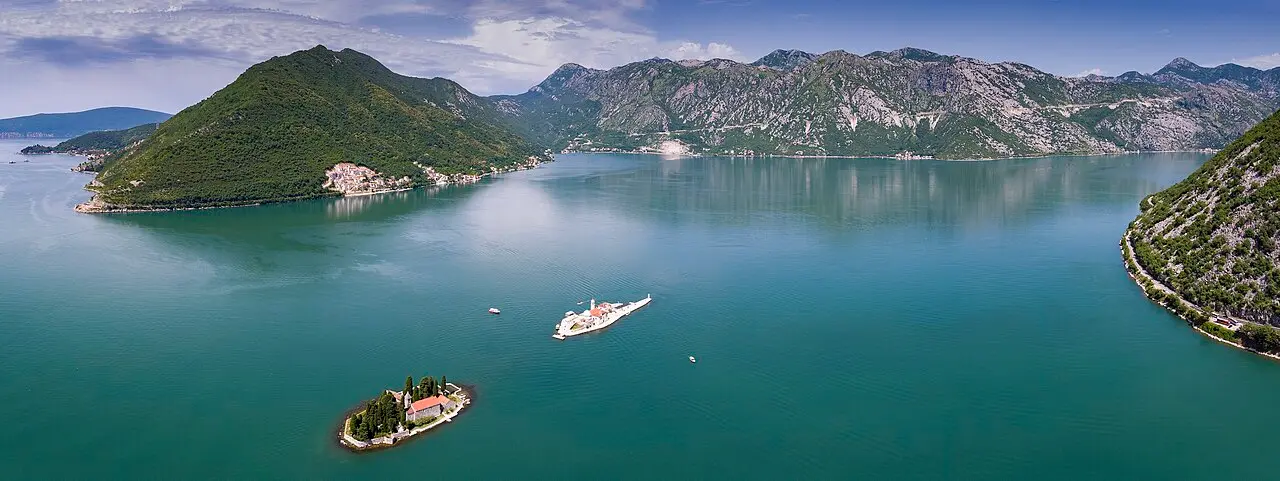
Photo: Chensiyuan / Wikimedia Commons, CC BY-SA 4.0 ( source) -
Kotor
90 km from the startstop ≈1440 min
The finale: a walled UNESCO old town at the head of the bay. Climb the city walls to the San Giovanni fortress early or near sunset, and stay the night once the day boats leave.
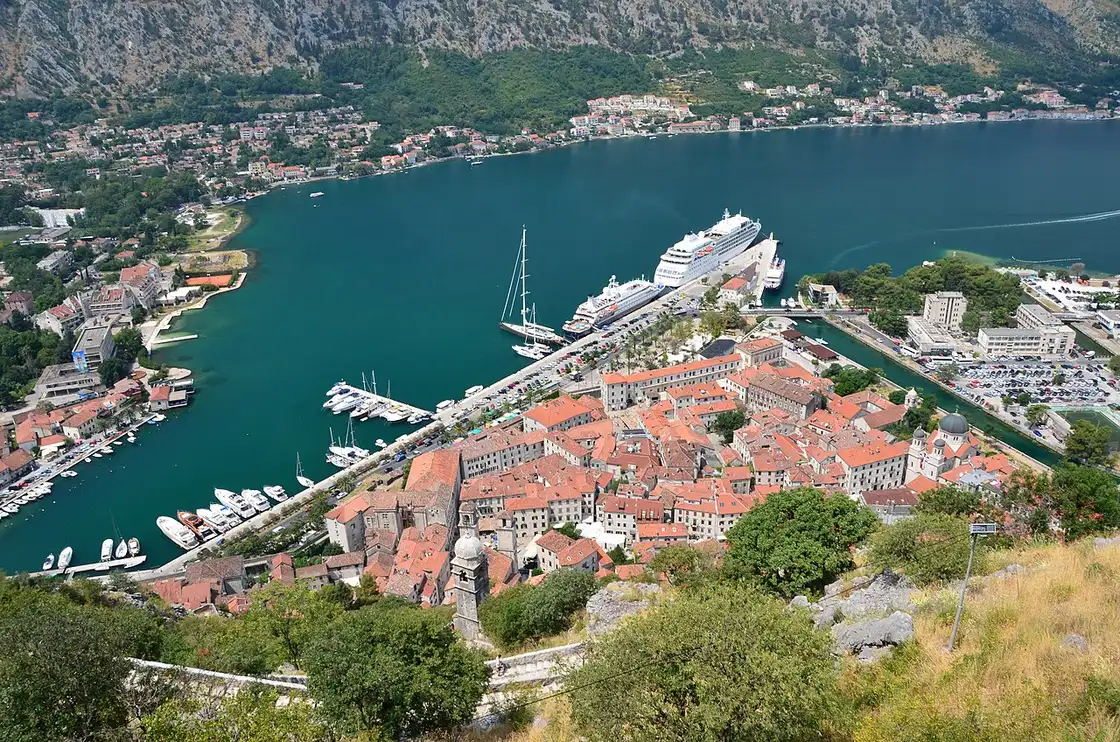
Photo: Gzzz / Wikimedia Commons, CC BY-SA 4.0 ( source)
Route map
The map with stops loads on click - to keep the page lightweight.
The map didn’t load. Check your connection and refresh the page.