
Croatia Digital Nomad Visa: requirements & how to apply 2026
EU, euro and Schengen, up to 18 months and 0% Croatian tax on foreign income - who qualifies, the income threshold and how to apply.
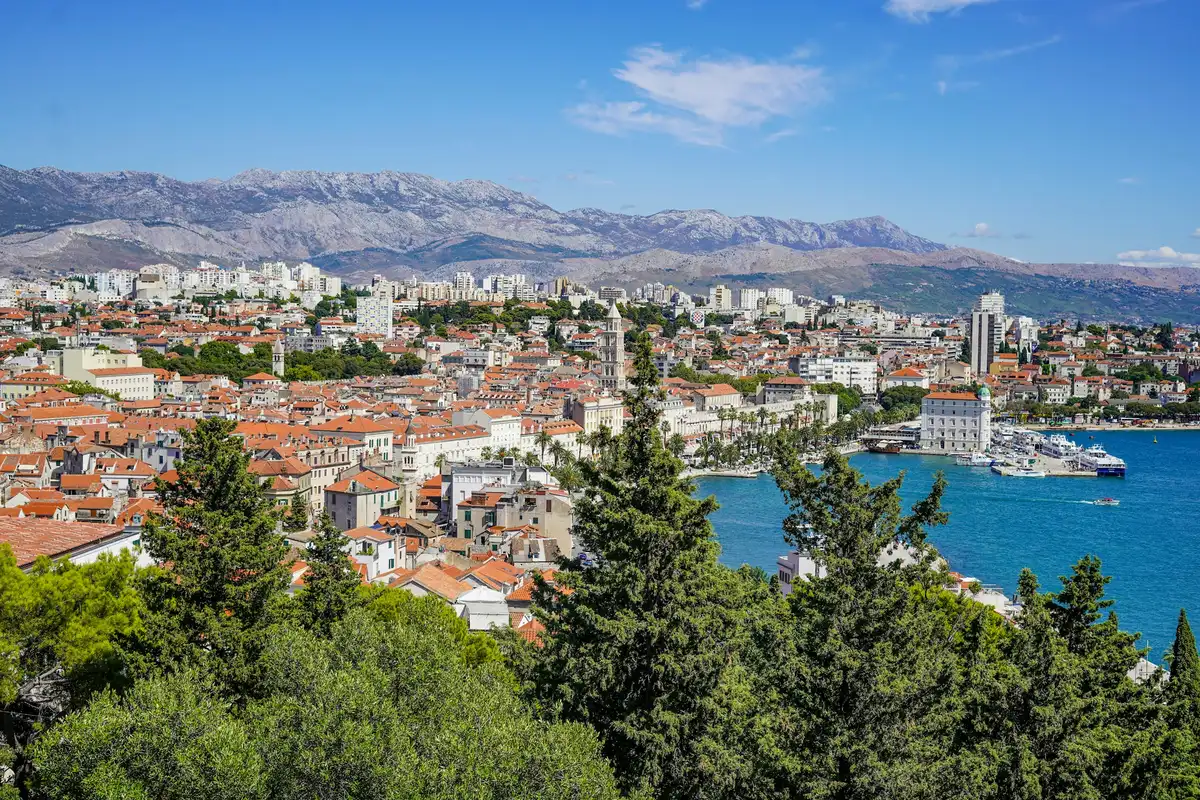
Croatia is one of the few European bases that pairs a relaxed Mediterranean lifestyle with a real legal route for remote workers. Since 1 January 2023 the country uses the euro and is part of the Schengen Area, on top of EU membership since 2013 - so a Croatian permit puts you inside the EU, not next to it. The headline draw for remote workers is the digital nomad “temporary stay”: up to 18 months and 0% Croatian income tax on your foreign earnings. For many non-EU remote workers it’s the most straightforward legal way to spend a long stretch inside the EU, provided you can show the income.
Heads-up (verify before you apply). Visas, residence rules and the income threshold change - and the threshold is re-indexed every year. The figures below were checked against MUP in July 2026, but confirm the current numbers on the official source mup.gov.hr before you lodge an application. Nothing here is legal advice.
Who it’s for
The nomad temporary stay (in Croatian, a boravak) is for people who work remotely for an employer or clients based outside Croatia, or run their own business registered abroad. You can’t use it to work for a Croatian company. You’ll also need valid health insurance for the stay and proof of accommodation in Croatia. You can bring close family - a spouse or partner and children - on the same permit, though each dependant raises the income you must prove.
The scheme is a third-country-national route: it does not apply to EU/EEA or Swiss citizens, who already have freedom of movement and don’t need it. MUP defines a digital nomad as a non-EU/EEA/Swiss national; EU/EEA/Swiss citizens simply register their stay at a police administration instead.
How long it lasts
A single permit is granted for up to 18 months. It’s not renewable in place the way some permits are: once it expires you must wait six months before applying again. If MUP issues you a shorter initial permit, you can apply for an extension - lodged at least 60 days before expiry - up to the 18-month cap.
You may have seen headlines say “up to 3 years.” That figure is the cumulative time you could spend across several cycles, not one permit. The primary source - MUP - describes 18 months per permit, so plan around that number. Because there’s no in-place renewal and a mandatory gap, the nomad stay suits a fixed 12-18 month chapter rather than an open-ended move; if you want to stay on without leaving, line up a different basis - work, business or family - before it runs out.
The income threshold
You must show a stable income of at least:
- €3,622.50 per month (set at 2.5× the average net Croatian salary), and
- the equivalent over your whole stay: about €43,470 for 12 months or €65,205 for 18 months.
For each accompanying family member the required income rises by 10% of the average monthly net salary - about €145 per person per month at current figures (10% of the ~€1,449 average net salary), not 10% of the threshold itself.
The monthly figure is recalculated each spring once the new average salary is published; for 2026 it was re-confirmed at €3,622.50 in the official gazette (Narodne novine 3/26, March 2026). Treat the numbers above as a guideline and take the live amount from MUP on the day you apply.
What documents you need
MUP asks for a consistent set of documents, and gathering them is the slow part - start early. In practice you’ll need:
- a valid passport, with comfortable validity beyond your intended stay;
- proof of remote work - an employment contract, or proof you own or work through a company registered outside Croatia, and that you don’t work for Croatian clients;
- proof of income - bank statements or payslips covering the last six months, or the lump-sum savings above (about €43,470 for 12 months, €65,205 for 18);
- valid health insurance covering you in Croatia for the whole stay;
- proof of accommodation in Croatia - a lease, property deed or a host’s statement;
- a criminal background check from your country of origin, often needing an apostille and a certified Croatian translation;
- a biometric photo for the residence card.
Get the background check and any translations moving first: they take the longest and can expire, so time them to still be valid when you file.
Tax: the 0% headline, with caveats
Croatia exempts a registered digital nomad’s foreign-source income from Croatian income tax (Income Tax Act, Art. 9). That’s the real advantage over many EU countries.
Two caveats worth checking with the Tax Administration before you rely on them: the exemption is generally understood to cover active (work) income, while passive income - dividends, rent, capital gains - is taxed normally; and there are reports that it does not apply to EU/EEA/Swiss nationals or to income paid by Croatian residents. Spending more than 183 days in Croatia also generally makes you tax-resident, which interacts with this exemption and with your home country’s rules, so the real picture is narrower than the “0% tax” headline suggests. Get specifics from porezna-uprava.gov.hr before you rely on it.
In practice the exemption applies only while you hold the nomad permit and are properly registered - it is a benefit of the status, not an automatic perk of being in the country. If you invoice your own clients, take local tax advice before you arrive: setting up your residency and invoicing correctly from the start is far cheaper than fixing it later.
How to apply
You can apply at a Croatian embassy/consulate before you travel, or in Croatia at a police administration office, and much of it now runs through the official online portal at digitalnomadscroatia.mup.hr. You submit the documents above, and processing typically takes two to three months, so start well ahead of any planned move. There are state fees: applying in Croatia comes to about €46.45 for granting the stay, €9.29 in administrative costs and €31.85 for the biometric residence card - roughly €88 in total; applying at a consulate is a little higher (around €55.74), and a separate visa D (about €93) may be needed just to enter. Amounts are re-set periodically - confirm the current figures on mup.gov.hr before you pay. Once approved, you register your Croatian address and collect a biometric residence card, and you’re assigned an OIB (personal identification number) - the number you need for almost anything official, from a phone contract to a bank account or a lease. One long-game caveat: permanent residence requires five years of continuous legal residence, and the nomad stay - capped at 18 months with a mandatory six-month gap before a new application - can’t deliver that continuity on its own; if settling is the plan, confirm with MUP how your time will be treated.
Before you go
- Health insurance is required for the permit, and a private policy is worth having anyway - see our full guide to Croatia travel insurance for what to look for and the long-stay options. For long stays, monthly nomad cover such as SafetyWing is convenient (compare SafetyWing); travellers from CIS countries and Ukraine should look at EKTA, which some Western insurers exclude.
- Budgeting the move? See the cost of living in Croatia and, if you’ll invoice clients, taxes for foreigners and whether to open a Croatian d.o.o. company.
- Planning to stay for the long run? The 18-month cap and mandatory six-month gap break the continuity that permanent residence requires, so it helps to know which legal basis actually builds toward it - our guide to the types of Croatian residence permit compares the temporary, work, family and long-term routes for non-EU citizens.
- Still deciding where to actually live? Our guide to the best cities in Croatia for digital nomads compares Zagreb, Split, Zadar, Rijeka and Istria on rent, coworking and seasonality so you pick the right base before you lock in a lease.
- More practical settling-in steps - SIM, opening a bank account, housing - are in the relocation section. If Split is your target base, our guide to living in Split as a digital nomad gets specific about neighbourhoods, coworking and the seasonal rental squeeze.
This guide is informational, not legal or tax advice. Visa, residence and tax rules change; always confirm the current details with the official Croatian sources linked above before you act.
Read also

Relocation · 13 min read
Buying Property in Croatia as a Foreigner
Verified · August 24, 2026Can foreigners buy property in Croatia? EU and non-EU buyers follow different rules. Reciprocity, taxes, costs and the purchase steps, checked August 2026.

Relocation · 9 min read
Best Cities in Croatia for Digital Nomads
Verified · July 6, 2026The best cities in Croatia for digital nomads compared: Zagreb, Split, Zadar, Rijeka and Istria on rent, coworking, seasonality and which suits you.

Relocation · 10 min read
How to Open a Bank Account in Croatia as a Foreigner
Verified · July 6, 2026Open a Croatian bank account as a foreigner: OIB first, resident vs non-resident accounts, documents, the new free basic account and Wise. Checked 2026.

Relocation · 10 min read
Croatia Residence Permit Types for Non-EU Foreigners
Verified · July 6, 2026Croatia residence permit types for non-EU citizens in 2026: temporary vs permanent, the legal grounds, EU Blue Card, study and family routes. Checked 2026.